
Patron/Executive Editor
Dr. Muhammad Akram Shaikh
Director General, PASTIC
Managing Editors
Ms. Nageen Ainuddin
Mr. M. Aqil Khan
Editor
Dr. Saima Tanveer
Composing
Ms. Tasnim-Un-Nisa
Mr. Fasih ul Islam
T
ECHNOLOGY
R
OUNDUP
Technology Information Section (TIS)
Pakistan Scientific & Technological Information Centre
PASTIC
Sep-Oct, 2012
Vol. 4, No. 5
A NEWS BULLETIN FROM
Tech News Headlines
Tech & Trade Offers
Phone: 051-9248103-4, 9248111
Fax: 051-9248113
Email:editor@pastic.gov.pk
Web: www.pastic.gov.pk
PASTIC National Centre
Quaid-i-Azam University Campus
P.O. Box 1217, Islamabad
Editorial Board
l
New Screening Technique for Salt Tolerance in Maize (Zea mays L.)
Seedlings
l Treatment with purple corn for Type 2 Diabetes & Kidney Disease
l New Healthy Cell Signature Technique for Faster and Accurate
Blood Tests
l Biofuel Process for Improving Energy Recovery by Using
Agricultural Waste
l Imaging Lungs Technique for Diagnosis and Treatment of Lung
Disease (COPD)
l Nanotech Device Mimics Dog's Nose to Detect Explosives
l Synthetic Molecule Stores Solar Energy for Several Years and could
Generate Heat on Demand
l
l
l India Rubber Expo
l Arab Health
l
l
Conference on Life Science and Technology 2013
3rd International Conference on Life Science and Technology
(ICLST 2013)
l Oil Spill & Ecosystem Science Conference
2nd International Conference on Applied Physics and Mathematics
(ICAPM 2013)
Annual International conference on Optelectronics, Photonics &
Applied Physics (OPAP)
l International Conference on Nuclear Data for Science and
Technology.
Battery Charging Appliances
Metal Lamps
Forthcoming Tech Events

Technology Roundup
2
Tech News
Indigenous
Technology
New Screening Technique for Salt Tolerance in Maize (Zea mays L.)
Seedlings
An efficient and simple mass screening technique for selection of maize hybrids for salt
tolerance has been developed. Genetic variation for salt tolerance was assessed in hybrid maize
(zea mays L.) using solution-culture technique. The study was conducted in solution culture
exposed to four salinity levels (control, 40, 80 and 120 mM NaCl). Seven days old maize
seedlings were transplanted in thermopol sheet in iron tubs containing ½ strength Hoagland
nutrient solutions and salinized with common salt (NaCl). The experiment was conducted in
the rain protected wire house of Stress Physiology Laboratory of NAIB, Faisalabad, Pakistan.
Ten maize hybrids were used for screening against four salinity levels. Seedling for each hybrid
was compared for their growth under saline conditions as a percentage of the control values.
Considerable variations were observed in the root, shoot, length and biomass of different
hybrids at different salinity levels. The leaf sample analyzed for inorganic osmolytes (sodium,
potassium and calcium) showed that hybrid pioneer32B33 and Pioneer30Y87 have high
biomass, root, shoot, fresh weight and high K+/Na+ ratio and showed best salt tolerance
performance at all salinity levels on overall basis.
Courtesy
Pakistan Journal of Botany, 2010 42(1): 141-154 refs 44
Authors: AKRAM, Muhammad; MOHSIN, Muhammad (Pluses Research Institute, AARI,
Faisalabad, Pakistan); ASHRAF, Muhammad Yasin (NAIB), Faisalabad Pakistan; AHMAD,
Rashid; WARAICH, Ejaz Ahmed; IQBAL, Javed (University of Agriculture, Faisalabad,
Pakistan)

3
Technology Roundup
New Healthy Cell Signature Technique
for Faster and Accurate Blood Tests
Researchers from the University of Illinois at Urbana-Champaign (UIUC) have
pioneered a technique that will allow doctors to ascertain the healthy shape of red blood
cells in just a few seconds, by analyzing the light scattered off hundreds of cells at a
time.
Misshapen red blood cells (RBCs) are a sign of serious illnesses, such as malaria and
sickle cell anemia. Until recently, the only way to assess whether a person's RBCs were
of the correct shape was to look at them individually under a microscope which is a time
Treatment with Purple Corn for Type 2 Diabetes & Kidney Disease
Diabetic nephropathy is one of the most serious complications related to diabetes, often leading to end stage kidney disease.
Purple corn grown in Peru and Chile is a relative of blue corn is rich in anthocyanins (also known as flavonoids), which are
reported to have anti-diabetic properties. Scientists from the Department of Food and Nutrition and Department of
Biochemistry at Hallym University, Korea investigated the cellular and molecular activity of purple corn anthocyanins
(PCA) to determine whether and how it affects the development of diabetic nephropathy (DN). Their findings suggest that
PCA inhibits multiple pathways involved in the development of DN, which may help in developing therapies aimed at type
2 diabetes and kidney disease.
The study comprises of two parts. In the first part, an in vitro experiment was carried out to investigate the effects of PCA on
human endothelial cells cultured under hyperglycemic kidney conditions. The cultured cells were exposed to 1-20 µg/ml of
PCA for six hours (control cells were not exposed), then assessed for level of monocyte-endothelial cell adhesion, a major
factor in the development of diabetic glomerulosclerosis.
In the second part, an in vivo study was carried out to find out the effects of PCA on kidney tissue in diabetic mice. The
diabetic and control mice were dosed with PCA for eight weeks, then changes in kidney tissue were assessed and
immunohistological analyses were performed. Kidney tissue was further analyzed for levels of inflammatory chemokines,
which are key components in DN.
Researchers found that in human endothelial cells cultured in hyperglycemic kidney conditions, induction of endothelial
cell adhesion molecules decreased in a dose-dependent manner with PCA exposure, meaning that the PCA likely interfered
with cell-cell adhesion in glomeruli. PCA also appeared to interfere with leukocyte recruitment and adhesion to glomerular
endothelial cells. While in diabetic mice, PCA exposure slowed mesangial expansion and interrupted the cellular signaling
pathway that may instigate glomerular adhesion and infiltration of inflammatory cells responsible for diabetic
glomerulosclerosis. Finally, PCA inhibited levels of macrophage inflammatory protein-2 and monocyte chemotactic
protein-1 in kidney tissue, demonstrating that it may inhibit macrophage infiltration, which is closely related to renal
inflammation.
The research results showed that the anthocyanins may be the main biofunctional compound in purple corn that protect
against mesangial activation of monocytes and infiltration of macrophages in glomeruli, the two major contributors to DN.
It was also found that renoprotection by PCA against mesangial activation may be specific therapies targeting diabetes-
associated diabetic glomerulosclerosis and renal inflammation. Therefore, PCA supplementation may be an important
strategy in preventing renal vascular disease in type 2 diabetes. PCA may have a potential to act as reno-protective agent.
treating diabetes-associated glomerulosclerosis.
WWW.ScienceDaily.com

4
Technology Roundup
Biofuel Process for Improving Energy Recovery Using Agricultural Waste
A new biofuel production process created by researchers of Michigan State University,
USA produced energy more than 20 times higher than existing methods.
The results, published in the current issue of Environmental Science and Technology,
showcase a novel way to use microbes (First bacterium) to produce biofuel and
hydrogen, all while consuming agricultural wastes.
The scientists have developed bioelectrochemical systems known as microbial
electrolysis cells, or MECs, using bacteria to breakdown and ferment agricultural waste into ethanol. The process is unique
because it employs a second bacterium, which, when added to the mix, removes all the waste fermentation by products or
nonethanol materials while generating electricity.
Similar microbial fuel cells have been investigated before. However, maximum energy recoveries from corn stover, a
common feedstock for biofuels, hover was around 3.5 percent. While through this process despite the energy invested in
chemical pretreatment of the corn stover, averaged 35 to 40 percent energy recovery is just from the fermentation process.
This is because the fermentative bacterium was carefully selected to degrade and ferment agricultural wastes into ethanol
efficiently and to produce by products that could be metabolized by the electricity-producing bacterium. By removing the
waste products of fermentation, the growth and metabolism of the fermentative bacterium also was stimulated.
The second bacterium, Geobacter sulfurreducens, generates electricity. The electricity, however, isn't harvested as an
output. It is used to generate hydrogen in the MEC to increase the energy recovery process even more. When the MEC
generates hydrogen, it actually doubles the energy recoveries and increased energy recovery to 73 percent. So the potential
is definitely there to make this platform attractive for processing agricultural wastes.
WWW.Sciencedaily.com
consuming process for pathologists.
A healthy RBC looks like a disc with a depression called a dimple in the top and bottom. Stressed RBCs often have deeper
dimples than healthy ones, giving the cells a deflated look; others may have shallow dimples or no dimples at all. The
researchers found that if they shone light on a sample of blood and analyzed the light scattering off that sample, they would
get a pattern that is a sort of signature produced by the way light interacts with itself in a three-dimensional space which
would be different from the pattern collected from blood containing mostly misshapen cells. But these light-cell
interactions were too complicated to analyze with the usual mathematical tools. So researchers made use of the Born
approximation, a mathematical rule that can be used when the object of interest is small and transparent.
By running Fourier Transform Light Scattering (FTLS), a method developed by the same group three years ago, on
individual RBCs, the scientists found that the pattern changed significantly with the diameter and dimple width of the cells.
Using this information, the researchers applied the Born approximation to their findings and calculated what the
appropriate scattering signature for healthy cells should be. They then used this new "healthy cell signature" to identify the
correct morphology of cells in a blood smear. The new technique may allow for faster, accurate blood tests that could help
doctors to diagnose various types of anemia, and could be especially useful in resource-poor areas of the world.
WWW.ScienceDaily.com
5
Technology Roundup
Imaging Lungs Technique for Diagnosis and Treatment of Lung Disease
(
COPD)
A team of researchers from the University of Michigan Medical School, USA reported
a technique called parametric response mapping, or PRM. They used PRM to analyze
computed tomography, or CT, scans of the lungs of patients with chronic obstructive
pulmonary disease, known as COPD.
The researchers reported that the PRM technique for analyzing CT scans allows them to
better distinguish between early-stage damage to the small airways of the lungs, and
more severe damage known as emphysema. They've also shown that the overall
severity of a patient's disease, as measured with PRM, matches closely with the patient's
performance on standard lung tests based on breathing ability.
COPD limits a patient's breathing ability, causing shortness of breath, coughing, wheezing and reduced ability to exercise,
walk and do other things. Over time, many COPD patients become disabled as their disease worsens. Most often associated
with smoking, COPD can also result from long-term exposure to dust, and certain gases and chemicals. The researchers
with the PRM technique would be able to tell sub-types of COPD apart, distinguishing functional small airway disease from
emphysema and normal lung function. They believe this offers a new path to more precise diagnosis and treatment
planning, and a useful tool for precisely assessing the impact of new medications and other treatments. The PRM technique
allows researchers to identify COPD specific changes in three-dimensional lung regions over time. In the last decade, CT
scan techniques for imaging COPD have improved steadily, but PRM is the
missing link giving the researchers a robust way to see small airway disease and personalize treatment. Originally
developed to show the response of brain tumors to treatment, For PRM technique, the researchers use powerful computer
techniques to overlay the CT scan taken during a full inhalation with an image taken during a full exhalation. The overlaid,
or registered, CT images share the same geometric space, so that the lung tissue in the inflated and deflated lungs aligns. The
density of healthy lung tissue will change more between the two images than the density of diseased lung, allowing
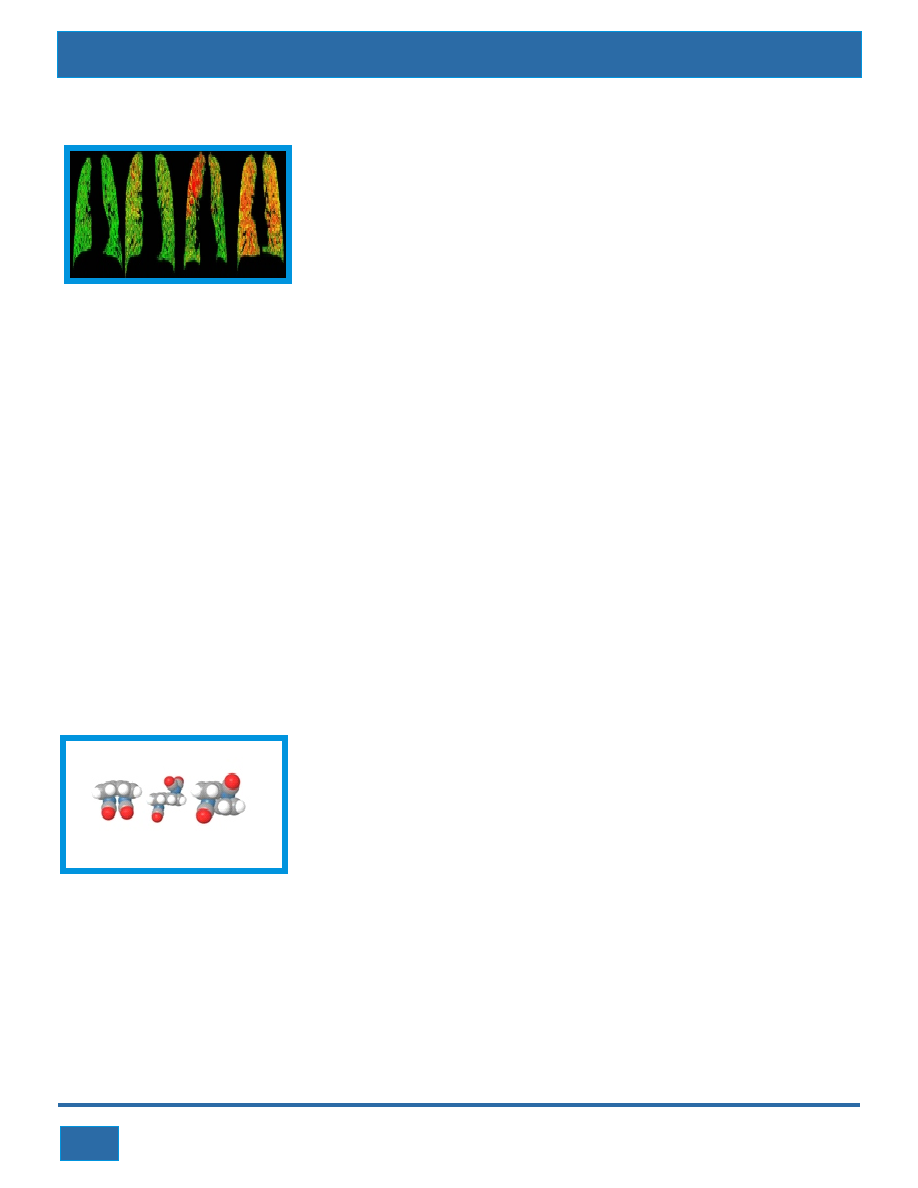
researchers to create a three-dimensional "map" of the patient's lungs. PRM assign colors to each small 3-D area, called a
voxel, according to the difference in signal changes within each of the areas between the two scans. Green means healthy,
yellow means a reduced ability to push air out of the small sacs, and red means severely reduced ability. The PRM technique
is a step forward in being able to better sub-classify patients with COPD so that targeted therapies can be developed
WWW.Sciencedaily.com
Synthetic Molecule Stores Solar Energy for Several Years
and could Generate Heat on Demand
Many researchers believe that using the sun as the energy source offers the best
opportunities for developing a sustainable energy system. One challenge in this area
is to find efficient storage methods for saving the captured energy and transporting it
to other locations.
Researchers at Chalmers University of Technology in Sweden have made progress in
developing an "all-in-one" system for the capture, storage and use of solar energy. The method is known as the
thermochemical process. It attracted a lot of interest during the 1980s, but researchers at that time were unable to resolve the
issue. Two years ago, a group of American researchers demonstrated that the method is theoretically possible. Chalmers
researchers working with researchers from UC Berkeley in California have now progressed from theory to practical devices.
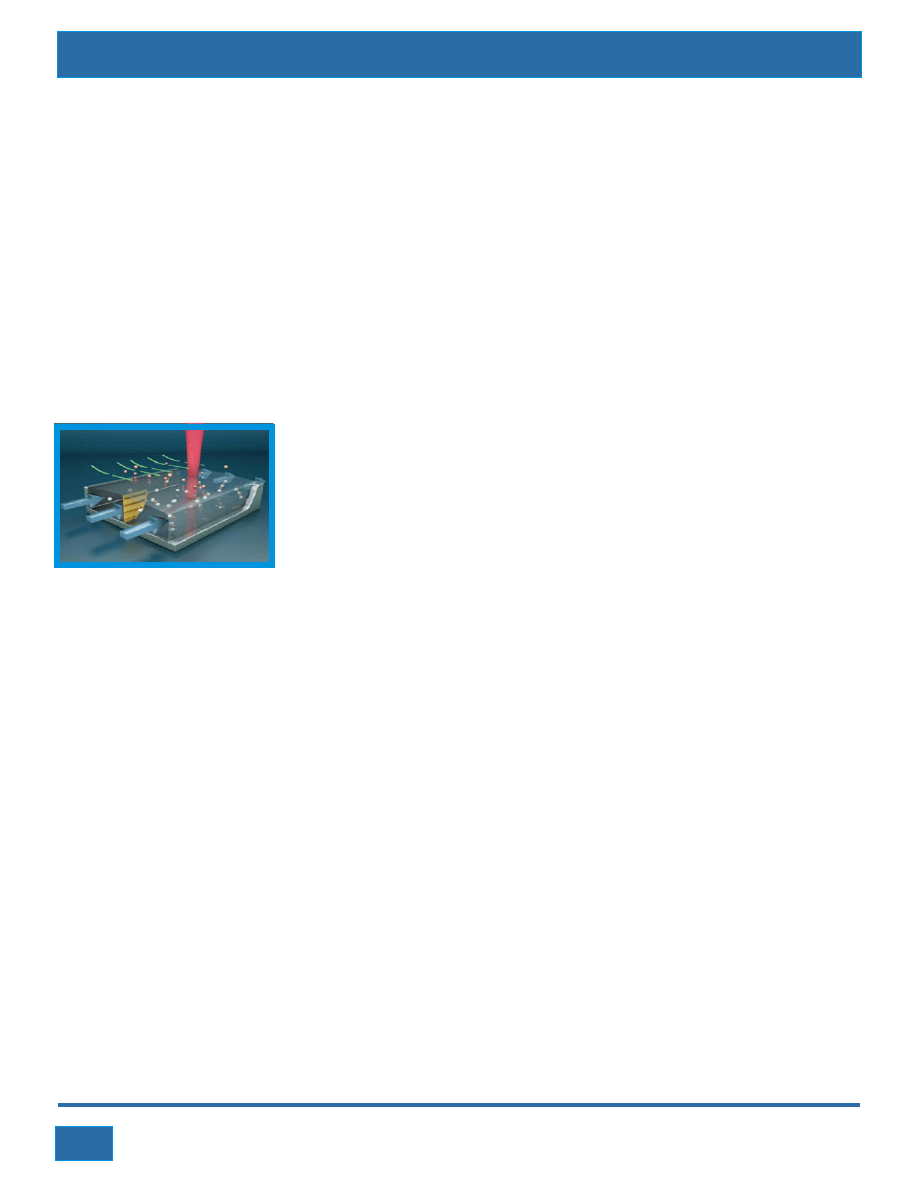
The research team has created a demonstration unit made up of three components: a solar collector, a catalytic reactor and a
heat exchanger. The three components are connected in a micro fluidic system. The
designed molecule, fulvalene
diruthenium, which has high energy density, is the heart of the system. The molecule's structure is changed in the solar
collector with the aid of sunlight. The catalyst enables the molecular to regain its original state, releasing heat in the process.
The molecule can be transported and stored for several years without loss, as all heat is bound in a stable chemical
compound. This means that the system can be reused many times over.
6
Technology Roundup
Nanotech Device Mimics Dog's Nose to Detect Explosives
Researchers (mechanical engineers & chemists) at University of California, Santa
Barbara (UCSB) have developed a portable, accurate, and highly sensitive devices that
sniff out vapors from explosives and other substances could become as commonplace as
smoke detectors in public places. It uses micro fluidic nanotechnology to mimic the
biological mechanism behind canine scent receptors. The device is both highly sensitive
to trace amounts of certain vapor molecules, and able to tell a specific substance apart
from similar molecules.
Dogs are still the gold standard for scent detection of explosives. But like a person, a dog
can have a good day or a bad day, get tired or distracted. But the scientists have developed a device with the same or better
sensitivity as a dog's nose that feeds into a computer to report exactly what kind of molecule it's detecting.
The key to this technology is in the merging of principles from mechanical engineering and chemistry. The device can detect
airborne molecules of a chemical called 2,4-dinitrotoluene, the primary vapor emanating from TNT-based explosives. The
human nose cannot detect such minute amounts of a substance, but "sniffer" dogs have long been used to track these types of
molecules. The technology is inspired by the biological design and micro scale size of the canine olfactory mucus layer,
which absorbs and then concentrates airborne molecules.
The device is capable of real-time detection and identification of certain types of molecules at concentrations of 1 ppb or
below. Its specificity and sensitivity are unparalleled. The technology has been patented and exclusively licensed to Spectra
Fluidics, a company that Piorek co-founded with private investors.
Packaged on a fingerprint-sized silicon microchip and fabricated at UCSB's state-of-the-art cleanroom facility, the
underlying technology combines free-surface microfluidics and surface-enhanced Raman spectroscopy (SERS) to capture
and identify molecules. A microscale channel of liquid absorbs and concentrates the molecules by up to six orders of
magnitude. Once the vapor molecules are absorbed into the microchannel, they interact with nanoparticles that amplify their
spectral signature when excited by laser light. A computer database of spectral signatures identifies what kind of molecule has
been captured
“The device consists of two parts. There's a microchannel, which is like a tiny river that we use to trap the molecules and
present them to the other part, a mini spectrometer powered by a laser that detects them. These microchannels are twenty
times smaller than the thickness of a human hair
.
The technology could be used to detect a very wide variety of molecules and the applications could extend to certain disease
diagnosis or narcotics detection also.
Http://engineering.ucsb.edu
The Chalmers researchers have therefore been able to prove that the theory works in practice. The ongoing challenges
revolve around making the system more efficient, with greater increases in temperature. Another difficulty with solar energy
is adapting the technology to large-scale application and integrating it into existing energy production.
The researchers have built the first demonstration unit but their next step will be to improve the materials and processes
involved in solar energy storage to make it cheaper and more efficient. If they could develop better and cheaper materials
there is nothing to prevent them applying the concept on a larger scale. They hope that they can help develop systems which
fit into an energy system where use of renewable energy is expanding as there is an increasing need for energy storage.
One benefit of this new method is that it provides a holistic solution for solar energy. Many other solar energy systems
require several different technologies to be interlinked for the energy to reach the end user. In this system, energy storage is
built in from the start, which means that solar energy can be easily stored until needed, for example at night or in the winter.
In the long term, this technology can be considered an alternative to thermal solar energy storage in water.
Http://www.chalmers.se

7
Technology Roundup
Forthcoming Tech Events
Conference on Life Science and Technology 2013
Http://www.zapaday.com
3rd International Conference on Life Science and Technology (ICLST 2013)
Website: http://www.iclst.org/
Oil Spill & Ecosystem Science Conference
gulfresearchinitiative.org/
India Rubber Expo
indiarubberexpo.in/
Arab Health
www.biztradeshows.com
2nd International Conference on Applied Physics and Mathematics
(ICAPM 2013)
www.icapm.org/
Annual International Conference on Optelectronics, Photonics & Applied
Physics (OPAP)
www.physics-conf.org
International Conference on Nuclear Data for Science and Technology
WWW.bnl.gov/
5 - 7 January, 2013
Hong Kong, China
19- 20 January, 2013
Dubai, United Arab Emirates
21-23 January, 2013
New Orleans, Louisiana
22 - 24 January, 2013
Bombay Exhibition Center (BEC)
Mumbai, India
28 - 31 January, 2013
Dubai, United Arab Emirates
2 - 3 Feburary,2013
Hongkong.
4 - 5 Feburary,2013
Singapore.
4 - 8 March, 2013
New York, USA.

8
Technology Roundup
About PASTIC
PASTIC serves as a gateway for
Scientific & Technological
Information for R&D by
catering to the information
n e e d s o f r e s e a r c h e r s ,
entrepreneurs, industrialists,
educationists, policy makers
a n d p l a n n e r s t h r o u g h
anticipatory and responsive
information services.
T e c h n o l o g y I n f o r m a t i o n
Service Section of PASTIC
works exclusively for support
and promotion of technological
information on trade and
industry in the country.
“Technology Roundup” is a
news bulletin that provides
l a t e s t a n d i n n o v a t i v e
technology news, forthcoming
events, etc. It also promotes
products, technologies and
services globally in sectors
such as Agro-Industry, Bio-
Technology, Building Material,
B u s i n e s s , C h e m i c a l s ,
Electronics, Energy, Fisheries,
Food Processing, Machinery,
P a c k a g i n g , M i n i n g
Pharmaceuticals and Textiles.
Please give us your feedback and address queries to editor@pastic.gov.pk
Metal Lamps
A less expensive range of lamps is available with 6 " UL listed power cord,
on/ off switch, polarized plug and 15W bulb.950 ~ 1050 ionic/ Treatment area
is 64 square feet .Electricity consumption is 30 Watt.
Company Contact:
Indus Valley Crafts
Mr. Masroor Saeed (Director/CEO/General Manager)
Mobile: 923217802222
Phone: 92-61-6781458
Fax: 92-42-7707384
Address: 103 Hadiat Ullah Block, Mustafa Town, Lahore, Pakistan
Website:
http://indusvalleycrafts.com
Tech & Trade Offers
Battery Charging Appliances
www.akhtar solar.com
This module is suitable for medium to large domestic use, mobile caravans
etc. These are for 12V applications ranging from 40W to 135W. These
modules have a very good quality and more protective designs, having rugged
junction box, robust for extreme conditions and having long term
performance warranties.
Akhtar Solar Limited
Contact Person: Mr. Shams ur Rehma Malik
th
Address: Office no 405, 4 Floor Poonch House Complex Saddar,
Rawalpindi, Pakistan.
Phone: +92-51-5111221
Fax: +92-51-5515835
Email:
Website:
Company Contact:
Mars Traders/
sulehri@akhtarsolar.com
sharjeel@akhtar.com