
Patron/Executive Editor
Dr. Khalil Ahmed Ibupoto
Director General, PASTIC
Editors
Ms. Nageen Ainuddin
Mr. M. Aqil Khan
Dr. Saima Tanveer
Ms. Saima Majeed
Composer
Ms. Shazia Parveen
T
ECHNOLOGY
R
OUNDUP
Technology Information Section (TIS)
Pakistan Scientific & Technological Information Centre
PASTIC
Jan-Feb, 2012
Vol. 4, No. 1
A NEWS BULLETIN FROM
Tech News Headlines
Forthcoming Tech Events
Tech & Trade Offers
Phone: 051-9248103-4, 9248111
Fax: 051-9248113
Email:editor@pastic.gov.pk
Web: www.pastic.gov.pk
PASTIC National Centre
Quaid-i-Azam University Campus
P.O. Box 1217, Islamabad
Editorial Board
l Solar Still Technology for Potable Safe Water in Rural
Areas
l Detection of Breast Cancer through Nanoprobes and
SQUID
l World's Smallest Electronic Circuit
l Fast High Precision Eye-Surgery Robot Developed
l Paint-On Solar Cells Developed
l Self-Healing Electronics could Work Longer and Reduce
Waste
l Information & Communication Technologies Exhibition & Conference 2012
l 9th International Bhurban Conference on Applied Sciences & Technology
l 5th Power Generation Conference & Exhibition, 2012
l International Trade & Industrial Machinery Show
l 2nd International Conference on Energy, Environment & Sustainable
Development
l Materials Challenges in Alternative and Renewable Energy
l MEGATECH Pakistan 2012
l The 2nd International Conference on Information Science and Technology
l 8th International Conference and Exhibition on Ceramic Interconnect and
Ceramic Microsystems Technologies 2012
Transformer Turns Ratio
Finder
Motorized Crockmeter

Technology Roundup
2
Tech News
Technology Roundup
Indigenous
Technology
Solar Still Technology for Potable Safe Water in Rural Areas
Supply of fresh and clean drinking water is a basic need for all human beings. Many people throughout
the world do not have access to clean water and the problem of availability of adequate supplies of safe
drinking water is worsened with increase in human population.
The presence of high level of salts in water is a great threat to human life. About eighty percent of all
illnesses in the developing world results from waterborne diseases. Since majority of people live in rural
areas where the low population density and remote locations make it very difficult to install the
traditional clean water solutions. Due to high cost to treat contaminated water by the current
technological processes it is not considered suitable to utilize these technologies. The locally developed
solar still technology could provide one of the possible solutions to this problem. A research was
conducted to develop a cheaper solar still which could be easily fabricated with less technical expertise.
The effectiveness of sand bed as base energy absorbing surface to evaporate brackish water was studied
and its performance was compared with those obtained from conventional basin type solar still.
Scientists at Mechanical Engineering Department of Quaid-e-Awam University of Engineering, Science
& Technology, Shaheed Banazirabad, Nawabshah carried out a research to determine effectiveness of
common sand bed for desalination of brackish water. A locally manufactured basin type solar still having
2
equal angled double slope covers with an effective area of 1.5m using common sand as solar energy
absorber medium was used. Various samples of water with different degree of hardness were collected
from the different areas in the vicinity of QUEST (Quaid-e-Awam University of Engineering, Science &
Technology, Shaheed Banazirabad, Nawabshah). The system under study showed good performance in
terms of quality of water. It was observed that concentration of salts was reduced at remarkable level. The
chemical analysis of the desalinated water showed significant reduction in TDS and pH values. The
present set-up showed identical performance as compared to the conventional basin type solar still.
Sand bed system provides cheaper system for application in rural areas for getting potable water. Solar
still could be an attractive option to overcome potable water shortage problems in remote areas. An
optimum brine depth of 20mm was determined for maximum water production in the solar still.
Maintenance, energy costs, reliability, water quality are the advantages of solar distillation system. Hike
in energy prices and scarcity of fresh water seem bound to create early market for small manufactured
solar water distilling units. Although the input of one still is not sufficient for daily requirement of
average family comprising of four members, it could be enhanced by increasing surface area of the solar
still.
Courtesy:
Prof. Dr. Abdul Hameed Memon
Dean Faculty of Engineering
Quaid-e-Awan University of Engineering Sciences & Technology, Shaheed Banazirabad,
Nawabshah, Sindh, Pakistan
E-mail:dr ahameed_memon@hotmail.com

3
Technology Roundup
Detection of Breast Cancer through Nanoprobes and SQUID
www.biomedcentral.com/
Mammography saves lives by detecting very small tumors. However, it fails to find 10-25% of tumors and is
unable to distinguish between benign and malignant disease. New research provides a new and potentially more
sensitive method using tumor-targeted magnetic nanoprobes and superconducting quantum interference
device (SQUID) sensors.
A team of researchers from University of New Mexico School of Medicine and Cancer Research and Treatment
Center, Senior Scientific, LLC, and the Center for Integrated Nanotechnologies facility at Sandia National
Laboratories created nanoprobes by attaching iron-oxide magnetic particles to antibodies against HER-2, a
protein overexpressed in 30% of breast cancer cases. Using these tiny protein-iron particles the team was able
to distinguish between cells with HER-2 and those without, and were able to find HER-2 cancer cells in biopsies
from mice. In their final test the team used a synthetic breast to determine the potential sensitivity of their system.
Dr Helen Hathaway explained, one million cells were pinpointed at a depth of 4.5 cm. This is about 1000x fewer
cells than the size at which a tumor can be felt in the breast and 100x more sensitive than mammographic x-ray
imaging. While researchers do not expect the same level of nanoparticle uptake in the clinic, the system has an
advantage in that dense breast tissue, which can mask traditional mammography results, is transparent to the
low-frequency magnetic fields detected by the SQUID sensors.
Future refining of the system could allow not only tumor to be found but to be classified according to protein
expression (rather than waiting for biopsy results). This in turn could be used to predict disease progression and
refine treatment plans and so improve patient survival.
World's Smallest Electronic Circuit
http://www.mcgill.ca/
A team of scientists, led by Guillaume Gervais from McGill's Physics
Department and Mike Lilly from Sandia National Laboratories, has
engineered one of the world's smallest electronic circuits. It is formed
by two wires separated by only about 150 atoms or 15 nanometers
(nm).
The discovery could have a significant effect on the speed and power of
the ever smaller integrated circuits of the future in everything from
smartphones to desktop computers, televisions and GPS systems.
This is the first time that anyone has studied how the wires in an electronic circuit interact with one
another when packed so tightly together. The effect of one wire on the other can be either positive or
negative. This means that a current in one wire can produce a current in the other one that is either in
the same or the opposite direction. This discovery, based on the principles of quantum physics,
suggests a need to revise our understanding of how even the simplest electronic circuits behave at the
nanoscale.
In addition to the effect on the speed and efficiency of future electronic circuits, this discovery could
also help to solve one of the major challenges facing future computer design. This is managing the ever-
increasing amount of heat produced by integrated circuits
Well-known theorist Markus Büttiker speculates that it may be possible to harness the energy lost as
heat in one wire by using other wires nearby. Moreover, Buttiker believes that these findings will have
an impact on the future of both fundamental and applied research in nanoelectronics.
4
Technology Roundup
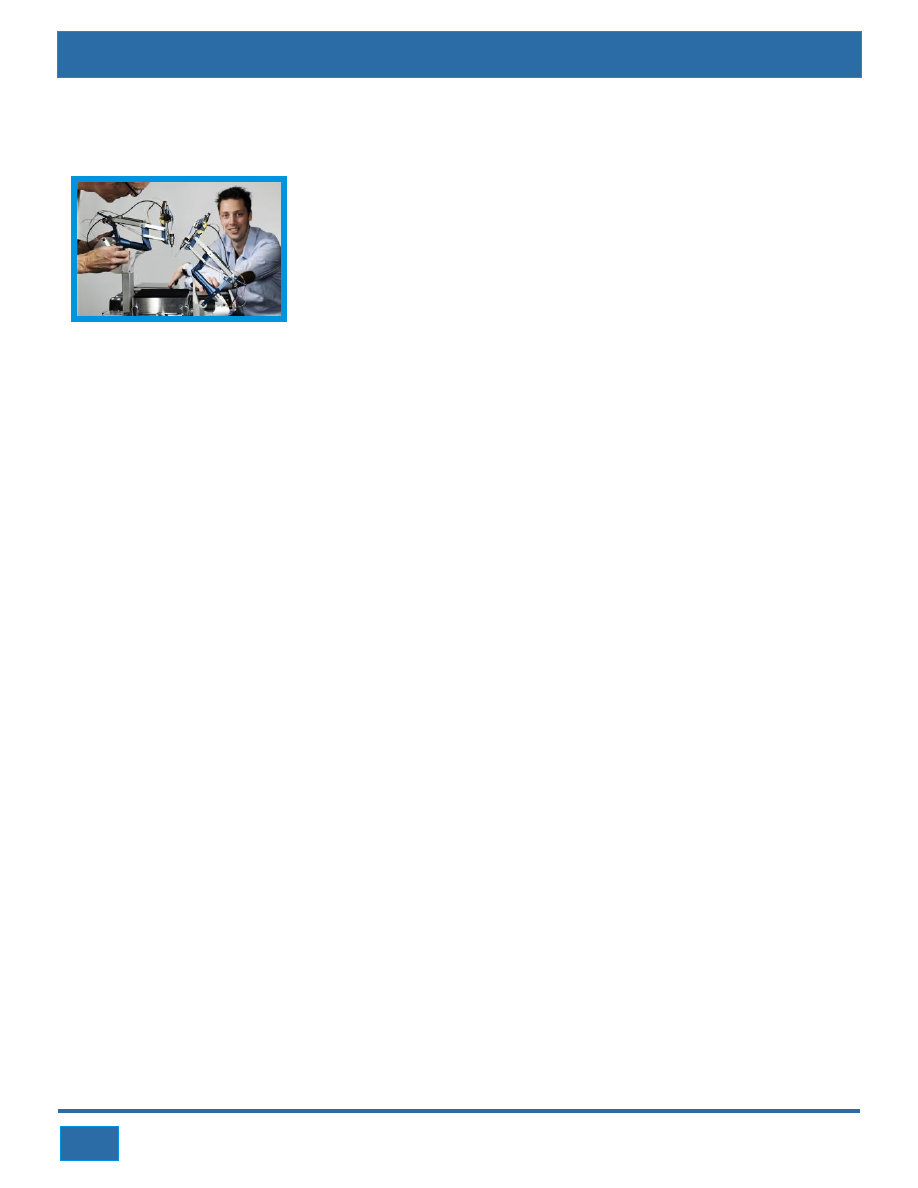
Fast High Precision Eye-Surgery Robot Developed
http://www.tue.nl/
Researcher Thijs Meenink at Eindhoven University of Technology (TU/e)
has developed a smart eye-surgery robot that allows eye surgeons to
operate with increased ease and greater precision on the retina and the
vitreous humor of the eye. The system also extends the effective period
during which ophthalmologists can carry out these intricate procedures.
Eye operations such as retina repairs or treating a detached retina
demands high precision. In most cases surgeons can only carry out these
operations for a limited part of their career. Thijs Meenink told that when
ophthalmologists start operating they are usually already at an advanced stage in their careers,". "But
at a later age it becomes increasingly difficult to perform these intricate procedures." The new system
can simply filter-out hand tremors, which significantly increases the effective working period of the
ophthalmologist.
The robot consists of a 'master' and a 'slave'. The ophthalmologist remains fully in control, and
operates from the master using two joysticks. Two robot arms copy the movements of the master and
carry out the actual operation. The tiny needle-like instruments on the robot arms have a diameter of
only 0.5 millimeter, and include forceps, surgical scissors and drains. The robot is designed such that
the point at which the needle enters the eye is always at the same location, to prevent damage to the
delicate eye structures. Meenink has also designed a unique 'instrument changer' for the slave allowing
the robot arms to change instruments, for example from forceps to scissors, within only a few seconds.
This is an important factor in reducing the time taken by the procedure. Some eye operations can
require as many as 40 instrument changes, which are normally a time consuming part of the overall
procedure.
The surgeon's movements are scaled-down, for example so that each centimeter of motion on the
joystick is translated into a movement of only one millimeter at the tip of the instrument. According to
Meenink this greatly increases the precision of the movements," says Meenink. The master also
provides haptic feedback. Ophthalmologists currently work entirely by sight -- the forces used in the
operation are usually too small to be felt. However Meenink's robot can 'measure' these tiny forces,
which are then amplified and transmitted to the joysticks. This allows surgeons to feel the effects of
their actions, which also contributes to the precision of the procedure. The system developed by
Meenink and Hendrix also offers ergonomic benefits. While surgeons currently are bent statically over
the patient, they will soon be able to operate the robot from a comfortable seated position. In addition,
the slave is so compact and lightweight that operating room staff can easily carry it and attach it to the
operating table.
Scientists are enthusiastic about the system -- not only because of the time savings it offers, but also
because the limits of manual procedures have now been reached. "Robotic eye surgery is the next step
in the evolution of microsurgery in ophthalmology, and will lead to the development of new and more
precise procedures. Both slave and master are ready for use, and Meenink intends to optimize them in
the near future. The first surgery on humans is expected within five years. He also plans to investigate
the market opportunities for the robot system. Robotic eye surgery is a new development; eye surgery
robots are not yet available on the market.
3
5
Technology Roundup
Paint-On Solar Cells Developed
http://www.nd.edu
Now the coat of paint on the outside of home can generates electricity from
light electricity that can be used to power the appliances and equipment on
the inside. A team of researchers at University of Notre Dame have made a
solar paint that uses semiconducting nanoparticles to produce energy.
Prashant Kamat, John A. Zahm Professor of Science in Chemistry and
Biochemistry and an investigator in Notre Dame's Center for Nano
Science and Technology (Ndnano) told that they want to do something
transformative, to move beyond current silicon-based solar technology.
By incorporating power-producing nanoparticles, called quantum dots, into a spreadable compound,
they have made a one-coat solar paint that can be applied to any conductive surface without special
equipment.
The team's search for the new material centered on nano-sized particles of titanium dioxide, which
were coated with either cadmium sulfide or cadmium selenide. The particles were then suspended in a
water-alcohol mixture to create a paste. When the paste was brushed onto a transparent conducting
material and exposed to light, it created electricity.
This paint can be made cheaply and in large quantities by improving the efficiency. Scientist may be
able to make real difference in meeting energy needs in the future. Kamat and his team have started
work on the ways to improve the stability of the new material.
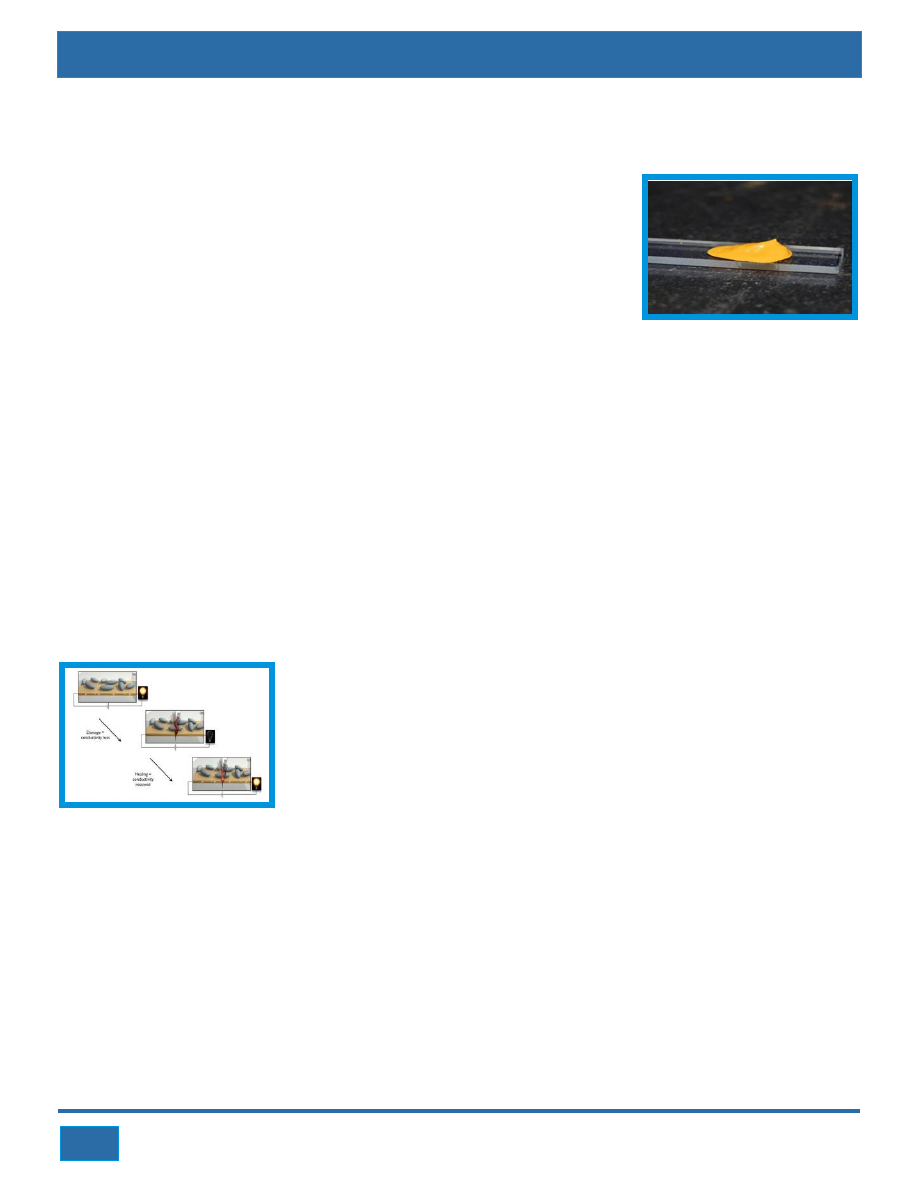
Self-Healing Electronics could Work Longer and Reduce Waste
A team of the researchers Led by aerospace engineering professor Scott
White and materials science and engineering professor Nancy Sottos
University of Illinois has developed a self-healing system that restores
electrical conductivity to a cracked circuit in less time than it takes to
blink.
According to scientists it simplifies the system and is designed to take care
of the problem itself. In a multilayer integrated circuit, there is no opening
it up. Normally the whole chip has to be replaced. It is true for a battery
too. a battery cannot be pulled apart to find the source of the failure. Most consumer devices are meant
to be replaced with some frequency, adding to electronic waste issues, but in many important
applications such as instruments or vehicles for space or military functions electrical failures cannot
be replaced or repaired.
The Illinois team previously developed a system for self-healing polymer materials and decided to
adapt their technique for conductive systems. They dispersed tiny microcapsules, as small as 10
microns in diameter, on top of a gold line functioning as a circuit. As a crack propagates, the
microcapsules break open and release the liquid metal contained inside. The liquid metal fills in the
gap in the circuit, restoring electrical flow.
Everything prior to this has been on structural repair. This is on conductivity restoration. A failure
interrupts current for mere microseconds as the liquid metal immediately fills the crack. The
researchers demonstrated that 90 percent of their samples healed to 99 percent of original

6
Technology Roundup
conductivity, even with a small amount of microcapsules.
The self-healing system also has the advantages of being localized and autonomous. Only the
microcapsules that a crack intercepts are opened, so repair only takes place at the point of damage.
Furthermore, it requires no human intervention or diagnostics, a boon for applications where
accessing a break for repair is impossible, such as a battery, or finding the source of a failure is difficult,
such as an air or spacecraft. In an aircraft, especially a defense-based aircraft, there are miles and miles
of conductive wire, it cannot be found manually where the break occurs. The autonomous part is nice it
knows where it broke. The researchers are particularly interested in applying the microcapsule-based
self-healing system to batteries, improving their safety and longevity.
http://illinois.edu/
Forthcoming Tech Events
Information & Communication Technologies Exhibition & Conference
2012
www.conferencealerts.com
9th International Bhurban Conference on Applied Sciences &
Technology
www.conferencealerts.com
5th Power Generation Conference & Exhibition 2012
International Trade & Industrial Machinery Show
www.itifasia.com
07-09 January, 2012
Lahore, Pakistan
09-12 January, 2012
Islamabad, Pakistan
21 -23 February, 2012
Karachi, Pakistan
02 February, 2012
Karachi, Pakistan
37
Technology Roundup
2nd International Conference on Energy, Environment & Sustainable
Development
www.conferencealerts.com
Materials Challenges in Alternative and Renewable Energy
www.conferencealerts.com
MEGATECH Pakistan 2012
www.megatechpakistan.com
The 2nd International Conference on Information Science and Technology
www.conferencealerts.com
8th International Conference and Exhibition on Ceramic Interconnect and
Ceramic Microsystems Technologies 2012
27 -29 February, 2012
Jamshoro, Sindh, Pakistan
26 February -01 March, 2012
Florida, USA
1-3 March, 2012
Lahore, Paksitan
12.-23 March, 2012
Wuhan, China.
16-19 April, 2012
Erfurt, Germany
Tech & Trade Offers
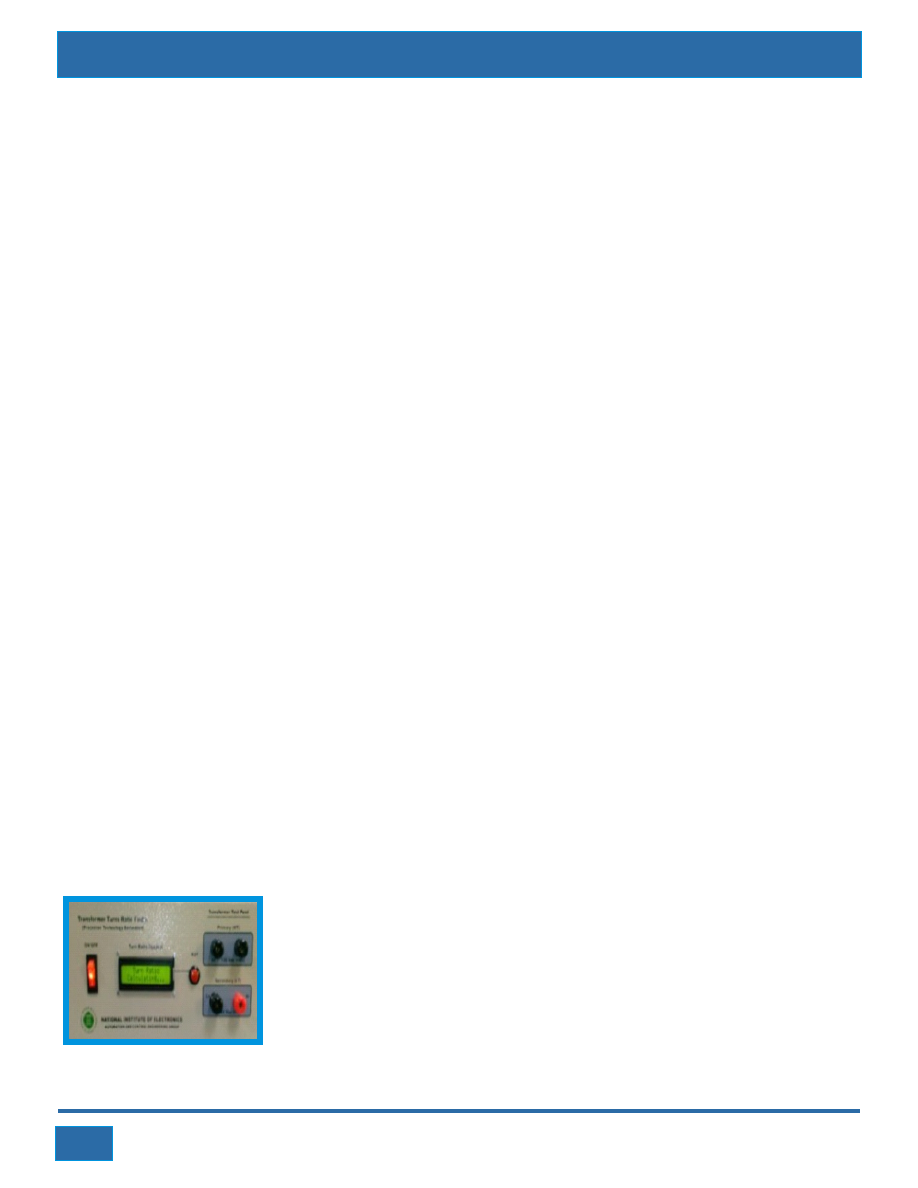
TRANSFORMER TURNS RATIO FINDER
This finder is designed and developed to meet the needs of local manufacturer of
High Tension Transformers. It can measure the turns ratio of step down HT
transformers in manufacturing. For measuring turns ratio of step up transformers
contact the designer. The monitor's LCD displays primary voltage, secondary
voltage and turns ratio simultaneously. The finder has a serial bus interface. By
using serial port interface the finder communicates with personal computer (PC).
The finder displays the results just by completing connections without pressing
any button. This feature enables the users/ operators to use measurements/ results
for data record or future reference.
3
8
Technology Roundup
About PASTIC
PASTIC serves as a gateway for
Scientific & Technological
Information for R&D by
catering to the information
n e e d s o f r e s e a r c h e r s ,
entrepreneurs, industrialists,
educationists, policy makers
a n d p l a n n e r s t h r o u g h
anticipatory and responsive
information services.
T e c h n o l o g y I n f o r m a t i o n
Service Section of PASTIC
works exclusively for support
and promotion of technological
information on trade and
industry in the country.
“Technology Roundup” is a
news bulletin that provides
l a t e s t a n d i n n o v a t i v e
technology news, forthcoming
events, etc. It also promotes
products, technologies and
services globally in sectors
such as Agro-Industry, Bio-
Technology, Building Material,
B u s i n e s s , C h e m i c a l s ,
Electronics, Energy, Fisheries,
Food Processing, Machinery,
P a c k a g i n g , M i n i n g
Pharmaceuticals and Textiles.
Please give us your feedback and address queries to editor@pastic.gov.pk
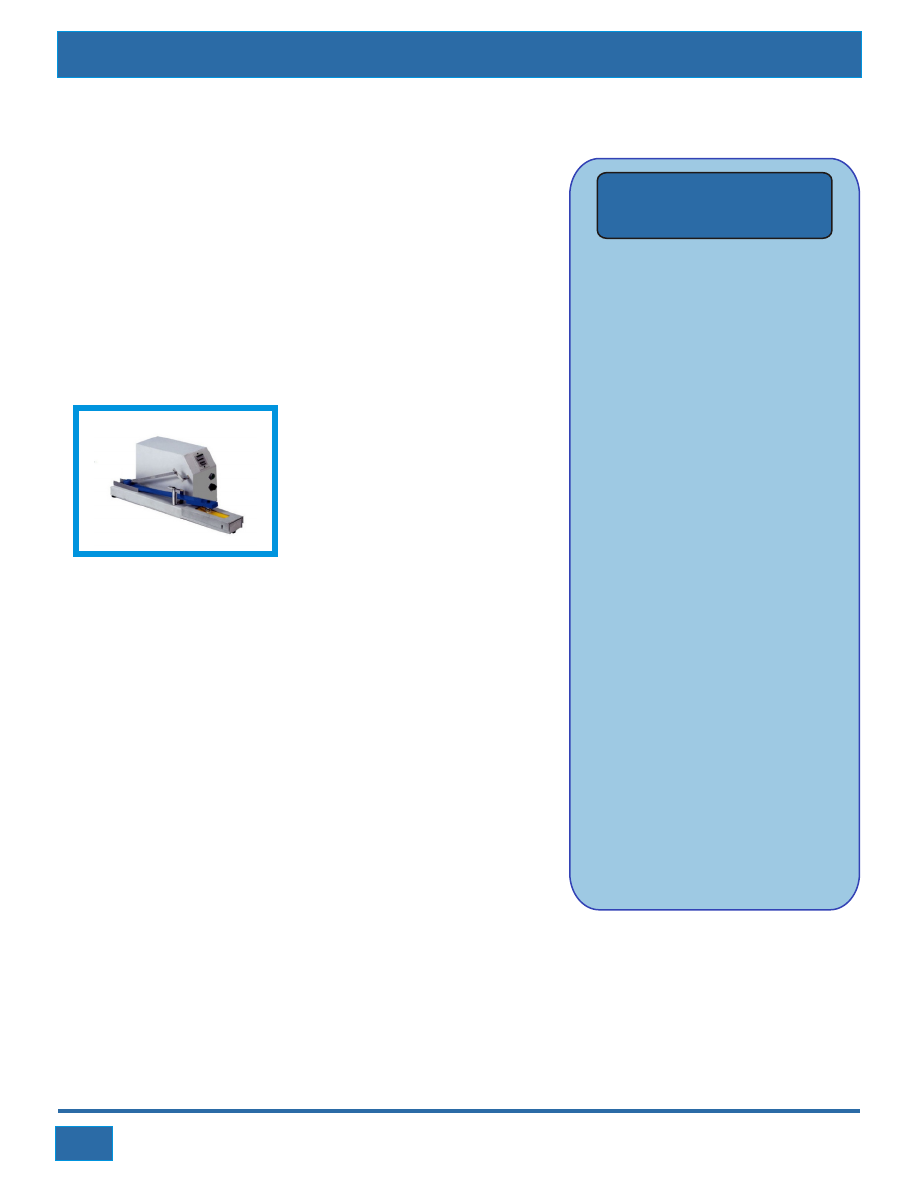
Motorized Crockmeter
www.marstraders.com
Crock Meter Motorized is an advance
version of Crockmeter, operated by a
geared motor
Standards
: AATCC 8/165, ISO
105/D02, BSEN 20105
Specification
: Rubbing Fastness Tester
to determine the color fastness of
textiles to dry or wet rubbing, wet
friction color fastness test of cotton chemical fiber all kinds of pure
to spin or blending print and dye cloth scrub fastness of color test.
Company Contact
Mars Traders
Mr. Ziauddin Qureshi [Chief Executive]
Address: A-51, Sector 11-B, North Karachi-75850, Pakistan
Mobile : 92-301-8235127
Phone: 92-21-2016522, 92-301-8235127
Fax : 92-21-5206702, 1-630-981-0641
Company Contact:
National Institute of Electronics
Ahmed Nadeem Siddiqui (Director Marketing)
# 17, Street 6, Sector H-9/1, Islamabad
Phone: 92-51-9257379, 92-51-58501-03
Fax: 051-9258515
Address: Plot
www.nie.gov.pk