
Patron/Executive Editor
Dr. Khalil Ahmed Ibupoto
Director General, PASTIC
Editors
Ms. Nageen Ainuddin
Mr. M. Aqil Khan
Dr. Saima Tanveer
Ms. Saima Majeed
Composer
Ms. Shazia Parveen
T
ECHNOLOGY
R
OUNDUP
Technology Information Section (TIS)
Pakistan Scientific & Technological Information Centre
PASTIC
Nov-Dec, 2011
Vol. 3, No. 6
A NEWS BULLETIN FROM
Tech News Headlines
Forthcoming Tech Events
Tech & Trade Offers
Phone: 051-9248103-4, 9248111
Fax: 051-9248113
Email:editor@pastic.gov.pk
Web: www.pastic.gov.pk
PASTIC National Centre
Quaid-i-Azam University Campus
P.O. Box 1217, Islamabad
Editorial Board
l Quality Control in Pharmaceutical Industry-Quantitative
and qualitative determination of pharmaceuticals using
HPLC
l New Weapon against Cancer: Microwaves can be used to
create Medical Images
l 'Magnetic Tongue' ready to help produce tastier Processed
Food
l New Method to build important Heparin Drug
l Electromobility: New Components going for a Test Run
l Microring' Device could aid in future Optical Technologies
l Robots learn to Handle Objects, understand New Places
l International Conference on Sustainable Development
l Food Security 2011
l International Conference on Chemical, Ecology and Environmental Sciences
(ICCEES'2011)
l International Conference on Chemical, Biological and Environmental
Engineering
l International Conference on Ecological, Environmental and Biological
Sciences (ICEEBS'2012)
l International Conference on Electrical Energy and Networks (ICEEN 2012
l International Bhurban Conference on Applied Sciences & Technology
l Oil & Gas Asia Exhibition & Conference
H
eat Exchangers
Radiators
Coil Products
Air Curtains(with door
Automation)

Technology Roundup
2
Tech News
Technology Roundup
Indigenous Technology
Quality Control in Pharmaceutical Industry-Quantitative and
qualitative determination of pharmaceuticals using HPLC
Courtesy to
Quality control is an essential operation of the pharmaceutical industry. It involves the
examination of a product, service, or process for certain minimum levels of quality. Drugs must
be marketed as safe and therapeutically active formulations whose performance is consistent
and predictable. The goal of a quality control unit in pharmaceutical industry is to identify
products or services that do not meet a company's specified quality standards. If a problem is
identified, the production of drug may be stopped temporarily. Quality control units' of
pharmaceutical industries use various HPLC techniques to analyze different drugs. Some of
these methods are ultraviolet (UV) detection, whereas others use expensive fluorescence and
diode array detection which are not commonly available in every laboratory/industry.
In the present study more sophisticated and economic analytical methods are being
developed for the evaluation of different pharmaceuticals like paracetamol, ciprofloxacin and
azithromycin. Because of their good market value it is analyzed in almost every pharmaceutical
industry for the use in medicine. Nearly, all other reported methods uses buffer in their mobile
phase, for their analyses which not only decrease the column life, but are very expensive as well.
So, in our work we tried to get rid of buffer in the mobile phase. The scientists of the present study
claim that besides developing economic methods for analyses of drugs they can help
pharmaceutical industry in their product approval for export purposes also.
SMurtaza Sayed & Hasan M.Khan
Radiation Chemistry Laboratory, NCE Physical Chemistry
University of Peshawar
3
Technology Roundup
New Weapon against Cancer: Microwaves can be used to create
Medical Images
www.chalmers.se
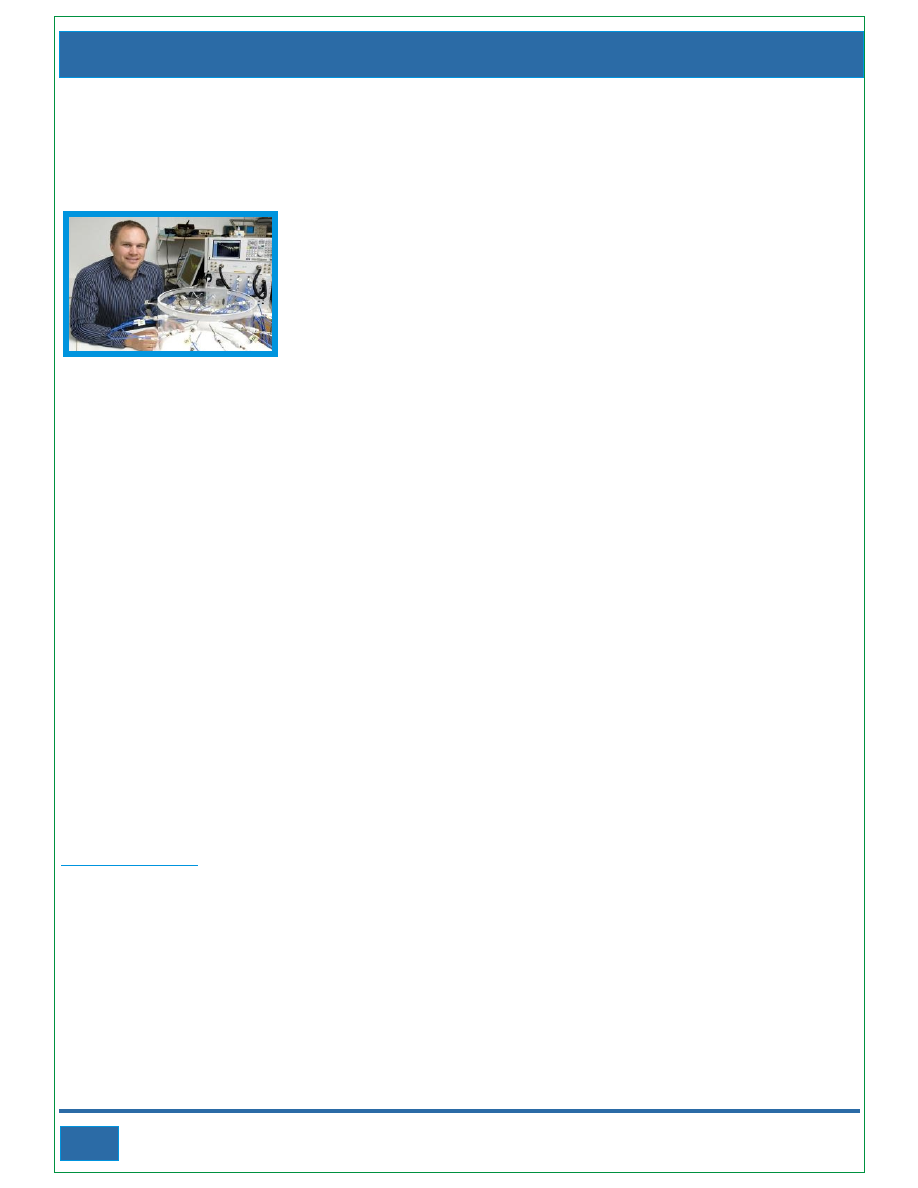
A research team from Chalmers University of Technology has developed new
techniques of cancer diagnosis and treatment with the aid of microwaves, which
could play a pioneering role in the battle against cancer. Andreas Fhager,
Associate Professor of Biomedical Electromagnetic, has developed a system to
detect breast cancer with the new technique. He points out that the method has
several advantages over mammography.
Chalmers team expects to test two different techniques on patients within the
next six months. One method is an alternative to mammography, i.e. using X-rays
to detect breast cancer. The other aims to treat tumours in the head and neck by heating the cancer cells.
Microwaves can be used to create medical images, a new technique known as microwave tomography.
Researchers obtain three-dimensional images showing significantly better contrast between healthy and
malignant tissue compared to X-rays. That makes it easier to detect even really small tumours that may currently
be obscured by healthy tissue, thus creating the preconditions for much more reliable diagnosis.
Unlike X-rays, the technique also emits negligible doses of non-ionising radiation less than a hundredth of the
radiation to which you are exposed when talking on a mobile phone.
The idea is to use the technique in conjunction with a treatment couch, equipped with holes for the breasts, to
which the thirty or so antennas required by the examination are connected. It should be considerably more
comfortable for patients than mammography. The method is also much less expensive, not only because
microwave equipment is not so costly, but also because the clearer images make interpretation easier for the
doctors.
In the second Chalmers project, the microwaves are actually used to destroy the tumours by heating them, a
process known as hyperthermia. Clinical studies have shown that treatment with conventional radiotherapy and
chemotherapy in combination with hyperthermia may double the long-term ability to cure certain forms of cancer,
such as cervical cancer and soft-tissue sarcoma.
Researchers are now developing a new hyperthermia system that can reach deep-seated tumours in the head
and neck with high accuracy. In this way, higher temperatures can be reached in the tumour without affecting the
surrounding tissue.
With time, the Chalmers team hopes to be able to combine both methods. As soon as a tumour is detected, the
already connected antennas could be used to start treating the tumour directly while at the same time monitoring
that the right tissue is heated up. The method should also be applicable for other parts of the body than breasts,
head and neck. The Strokefinder is currently undergoing clinical trials at Sahlgrenska Hospital.
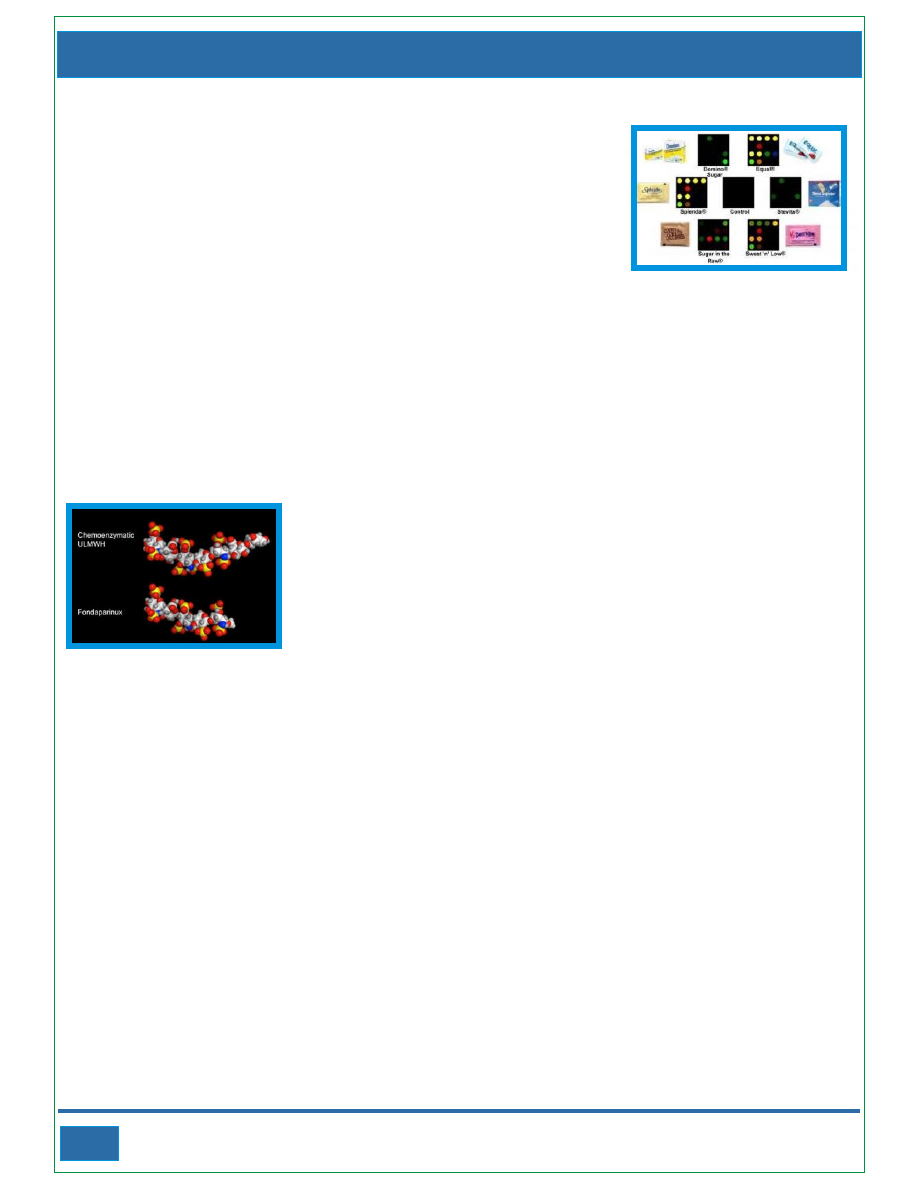
‘Magnetic Tongue' ready to help produce tastier Processed Foods
The emerging futuristic "e-sensing" devices intended to replace abilities that once were strictly
human-and-animal-only. It is a "magnetic tongue” a method used to "taste" food and identify
ingredients that people describe as sweet, bitter, sour, etc.
Antonio Randazzo, Anders Malmendal, Ettore Novellino and colleagues explained that sensing the
odor and flavor of food is very complex process. It depends not only on the combination of ingredients
in the food, but also on the taster's emotional state. Trained taste testers eliminate some of the
variation, but food processors need more objective ways to measure the sensory descriptor of their
4
Technology Roundup
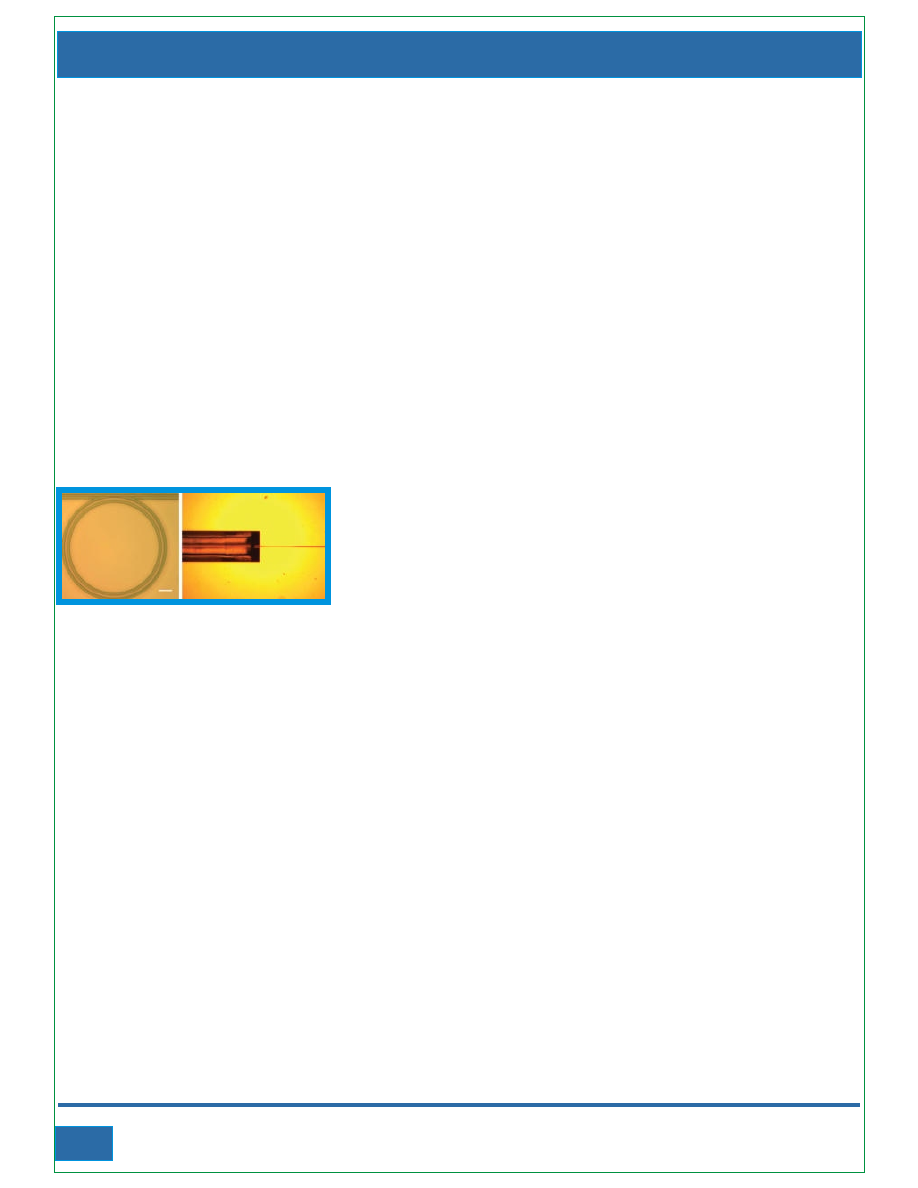
New Method to build important Heparin Drug
Linhardt, Senior Constellation Professor of Biocatalysis and Metabolic
Engineering at Rensselaer Polytechnic Institute, and Jian Liu, a professor
in the Eshelman School of Pharmacy at the University of North Carolina
have discovered an entirely new process to manufacture ultra-low
molecular weight heparin. The researchers have announced an important
step toward making this a reality.
The research shows that the drug is identical in performance and safety to
the current and successful anticoagulant fondaparinux, but is purer,
faster, and less expensive to produce. This research represents an entirely new paradigm in drug
manufacturing, with this discovery the researchers have successfully demonstrated that replacing the
current model of drug production with a chemoenzymatic approach can greatly reduce the cost of drug
development and manufacturing, while also increasing drug performance and safety, and reduce the
possibility of outside drug contamination. It is expected that this is the first step in the adoption of this
method for the manufacture of many other drugs.
According to Linhardt the new process uses chemicals and enzymes to reduce the number of steps in
production of fondaparinux from approximately 50 steps down to just 10 to 12. In addition, it increases
the yield from that process 500-fold compared to the current fondaparinux process, and could
decrease the cost of manufacture by a similar amount.
Fondaparinux, which is sold as a name-brand drug and was also recently approved by the FDA as a
generic drug, is a synthetic anticoagulant used to treat deep vein thrombosis, with over $500 million in
annual sales. It is part of a much larger family of anticoagulant drugs known as heparins. But, unlike
most heparin products, it is chemically synthesized from non-animal materials. All other heparin-
based drugs currently on the market use materials from the intestines of pigs and lungs of cattle as
source materials. Such animal materials are more likely to become contaminated.
Linhardt said, relying on animals open the way for spreading viruses and prion diseases like mad cow
disease through the use of these heparins, and because most of the raw material is imported, one
cannot be sure of exactly what one is getting. But, fondaparinux is extremely costly to produce, the
process to produce the drug involves many steps to purify the material and creates tons and tons of
hazardous waste to dispose of.
products. That is where electronic sensing technologies, like E-noses,
come into play. However, current instruments can only analyze certain
food components and require very specific sample preparation. To
overcome these shortcomings, Randazzo and Malmendal's team
turned to nuclear magnetic resonance spectroscopy (NMR) to test its
abilities as "a magnetic tongue."
The researchers analyzed 18 canned tomato products from various
markets with NMR and found that the instrument could estimate most
of the tastes assessed by the human taste testers. But the NMR
instrument went even farther. By determining the chemical composition, it showed which compound
is related to which sensory descriptor. The researchers say that the "magnetic tongue" has good
potential as a rapid, sensitive and relatively inexpensive approach for food processing companies to
use. These techniques could save many lives and are more effective, less invasive and simpler than
currently available alternatives
http://portal.acs.org

3
5
Technology Roundup
Electromobility: New Components going for a Test Run
The researchers at 33 Fraunhofer institutes put their heads together in the
Fraunhofer System Research for Electromobility project to move
electromobility one big step ahead.
In the future electric cars will replace the internal combustion engine.
Professor Ulrich Buller is the Senior Vice President for Research at
Fraunhofer Gesellshaft. He describes the idea behind system research:
"We take care of overarching aspects starting with generating the energy
and going all the way down to business models." Professor Holger
Hanselka told that they have defined a total of five concentrations: issues of decentralized power
generation and power transport to vehicles, energy storage, vehicle engineering and system
integration.
After the completion of the project, the institutes involved unveiled their findings on the ATP test track
in Papenburg, Germany Researchers invited visitors for a test ride in the experimental vehicles. Both of
these electrical cars are based upon Artega GT, a two-seater sports car. Franz-Josef Wostmann,
Fraunhofer Institute for Manufacturing Technology and Advanced Materials IFAM in Bremen,
Germany, told that they installed commercially available components into the Frecc0 1.0 and
concentrated on streamlining the way these components interact.
Frecc0 2.0 contains components recently developed by these scientists. A case in point are wheel hub
motors that the researchers from IFAM conceived in teamwork with their colleagues Institute for
Integrated Systems and Device Technology IISB, the Institute for Mechanics of Materials IWM and the
Institute for Structural Durability and System Reliability LBF. Franz-Josef Wostmann stressesed, that
they engineered the motor from the onset for the European market and selected a diameter to make
sure it has room in a 15-inch wheel rim. In turn, the engine is adapted to the available construction
space. This is why they had to come up with completely new components with maximum power density
starting with the power electronics through setting up the cooling right down to the design.
Totally new vehicle designs are possible since the researchers moved the entire drive train the entire
engine including the center tunnel, cardan shaft and transmission out of the car and into the wheel
hubs or even eliminated them altogether. For instance, the passenger compartment on a vehicle that is
about the same size as a VW Passat would be as big as an S-Class Mercedes. Another advantage is the
fact that every wheel gets the performance it needs. This means greater safety for each passenger
The new process developed by Linhardt and Liu greatly reduces the number of steps involved in the
production of the drug. This reduces the amount of waste produced and the overall cost of producing
the drug.
The process uses sugars and enzymes that are identical to those found in the human body to build the
drug piece by piece. The backbone of the material is first built sugar by sugar and then decorated with
sulfate groups through the use of enzymes to control its structure and function in the body.
Linhardt and Liu have already start testing the drug in animal models with successful results and think
the drug could be quickly transferred to the market.
Linhardt also thinks that this combined chemical and enzymatic synthesis can be quickly brought to
patients in need and adapted for the production of many other improved carbohydrate-containing
drugs. It can be quickly and easy commercialized to reduce the cost of this drug and help to shift how
pharmaceutical companies approach the synthesis of carbohydrate-containing drugs.
http://www.rpi.edu
6
Technology Roundup
because each individual wheel cannot be separately braked,and accelerated. That gives the wheel hub
motor torque vectoring; advancement over today's ESP.
Another innovation is the cast coil. NFraunhofer researchers can cast coils with a new technique instead
of winding them as previously. This has the benefit that the installation space in the drive motor is used
more efficiently. In contrast to the lot fill factor of approximately 55 percent normal today, experts
achieve lot fill factors in excess of 90 percent. This permits higher power density and greater efficiency
with an equally large coil installation space. Much smaller coils can be used due to the higher lot fill
factors, or aluminum can be used with the same dimensions if engine output is supposed to stay the
same. In the future, automobile manufacturers and suppliers will be able to use Frecc0 together with the
Fraunhofer Institute for Manufacturing Technology and Advanced Materials for testing or advancing
new components.
http://www.fraunhofer.de
Microring' Device could aid in future Optical Technologies
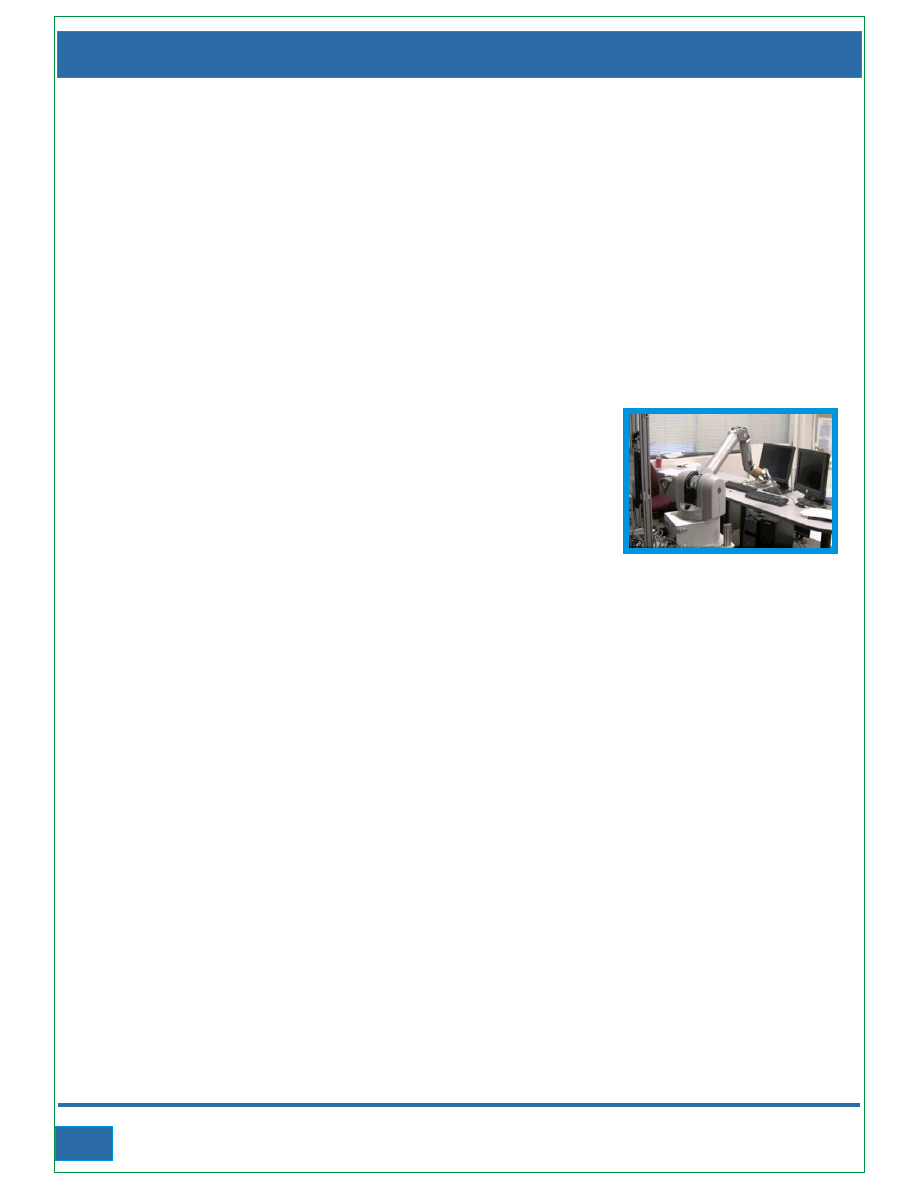
Researchers at Purdue University and the National Institute of
Standards and Technology (NIST) have created a device small
enough to fit on a computer chip that converts continuous laser
light into numerous ultrashort pulses. Andrew Weiner, Professor
of Electrical and Computer Engineering told that these pulses
repeat at very high rates, corresponding to hundreds of billions of
pulses per second.
The tiny "microring resonator" is about 80 micrometers, or the width of a human hair, and is fabricated
from silicon nitride, which is compatible with silicon material widely used for electronics. Infrared
light from a laser enters the chip through a single optical fiber and is directed by a structure called a
waveguide into the microring.
The pulses have many segments corresponding to different frequencies, which are called "comb lines"
because they resemble teeth on a comb when represented on a graph.
By precisely controlling the frequency combs, researchers hope to create advanced optical sensors that
detect and measure hazardous materials or pollutants, ultrasensitive spectroscopy for laboratory
research, and optics-based communications systems that transmit greater volumes of information
with better quality while increasing bandwidth. The comb technology also has potential for a
generation of high-bandwidth electrical signals with possible applications in wireless communications
and radar.
The light originates from a continuous wave laser, also called a single-frequency laser.
This is a very common type of laser; the intensity of this type of laser is constant, not pulsed. But in the
microring the light is converted into a comb consisting of many frequencies with very nice equal
spacing. The microring comb generator may serve as a competing technology to a special type of laser
called a mode-locked laser, which generates many frequencies and short pulses. One advantage of the
microrings is that they can be very small.
The laser light undergoes "nonlinear interaction" while inside the microring, generating a comb of new
frequencies that is emitted out of the device through another optical fiber.
Fahmida Ferdous, Doctoral student told that the nonlinearity is critical to the generation of the comb
with the nonlinearity a comb of many frequencies can be obtained including the original one, and the
rest are new ones generated in the microring
3
7
Technology Roundup
Although other researchers previously have demonstrated the comb-generation technique, the team
is the first to process the frequencies using "optical arbitrary waveform technology," The researchers
were able to control the amplitude and phase of each spectral line, learning that there are two types of
combs -- "highly coherent" and "partially coherent" -- opening up new avenues to study the physics of
the process.
Ferdous told that future work will include efforts to create devices that have the proper frequency for
commercial applications.
http://www.purdue.edu
Robots Learn to Handle Objects, understand New Places
In Cornell's Personal Robotics Laboratory, a team led by Ashutosh
Saxena, assistant professor of computer science is teaching robots
to manipulate objects and find their way around in new
environments for example, to handle your particular set of dishes
and put them in your particular dishwasher.
A common thread running through the research is "machine
learning" -- programming a computer to observe events and find
commonalities. With the right programming, for example, a computer can look at a wide
array of cups, find their common characteristics and then be able to identify cups in the future.
A similar process can teach a robot to find a cup's handle and grasp it correctly. Saxena's team
has found that placing objects is harder than picking them up, because there are many
options. A cup is placed upright on a table, but upside down in a dishwasher, so the robot must
be trained to make those decisions.
Saxena explained that they just show the robot some examples and it learns to generalize the
placing strategies and applies them to objects that were not seen before. It learns about
stability and other criteria for good placing for plates and cups, and when it sees a new object,
it applies them.
In early tests they placed a plate, mug, martini glass, bowl, candy cane, disc, spoon and tuning
fork on a flat surface, on a hook, in a stemware holder, in a pen holder and on several different
dish racks. Surveying its environment with a 3-D camera, the robot randomly tests small
volumes of space as suitable locations for placement. For some objects it will test for "caging"
the presence of vertical supports that would hold an object upright. It also gives priority to
"preferred" locations: A plate goes flat on a table, but upright in a dishwasher.
After training, their robot placed most objects correctly 98 percent of the time when it had
seen the objects and environments previously, and 95 percent of the time when working with
new objects in a new environment. Performance could be improved by longer training.
The researchers trained a robot by giving it 24 office scenes and 28 home scenes in which they
had labeled most objects. The computer examines such features as color, texture and what is

3
8
Technology Roundup
nearby and decides what characteristics all objects with the same label have in common. In a
new environment, it compares each segment of its scan with the objects in its memory and
chooses the ones with the best fit.
Saxena told that the novelty of this work is to learn the contextual relations in 3-D. For
identifying a keyboard it may be easier to locate the monitors first, because the keyboards are
found below the monitors.
In tests, the robot correctly identified objects about 83 percent of the time in home scenes and
88 percent in offices. In a final test, it successfully located a keyboard in an unfamiliar room.
According to Saxena said, context gives this robot an advantage. The keyboard only shows up
as a few pixels in the image, but the monitor is easily found, and the robot uses that information
to locate the keyboard.
http://www.cornell.edu
Forthcoming Tech Events
International Conference on Sustainable Development
www.ontariointernational.org
Food Security 2011
www.chathamhouse.org
International Conference on Chemical, Ecology and Environmental Sciences
(ICCEES'2011)
http://psrcentre.org
International Conference on Chemical, Biological and Environmental
Engineering
http://www.interscience.ac.in
5-7 December, 2011
Putrajaya, Malaysia
14-15 December, 2011
London, United Kingdom
17-18 December, 2011
Pattaya, Thailand
18-19 December, 2011
Bangalore, Karnataka, India

39
Technology Roundup
International Conference on Ecological, Environmental and Biological Sciences
(ICEEBS'2012)
http://psrcentre.org
International Conference on Electrical Energy and Networks (ICEEN 2012)
www.iceen.org
IInternational Bhurban Conference on Applied Sciences & Technology
http://events.hellotrade.com
Oil & Gas Asia Exhibition & Conference
http://events.hellotrade.com/pakistan
7-8 January, 2012
Dubai, United Arab Emirates
7-8 January, 2012
Chengdu, China
9-12 January, 2012
Islamabad, Pakistan
21-23-Febuarey, 2012
Karachi, Pakistan
Tech & Trade Offers
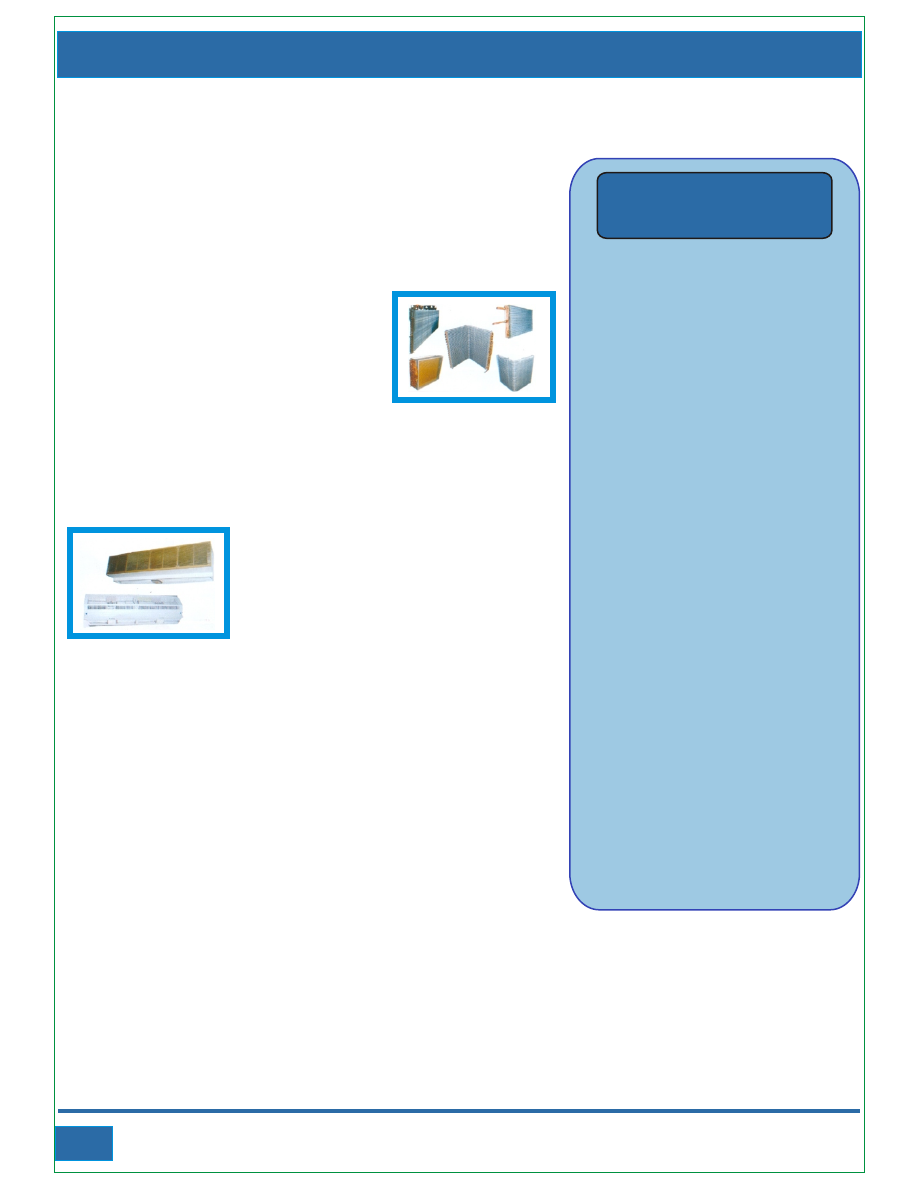
Heat Exchangers
Radiators
l
S
piral and Flat Type Finned Tube Heat Exchanger Shell and Tube Heat Exchangers
l Tube Bundles & Tube Stacks
l Air Cooled Finned Tube Heat Exchangers Steam Finned Tube Exchangers
l Air Preheaters
l Radiators for Earth Moving Machines
l Locomotives Radiators
l Radiators Assemblies & Cores
l Heavy Duty Radiator for Industrial Engines & OEM Replacement
3
10
Technology Roundup
About PASTIC
PASTIC serves as a gateway for
Scientific & Technological
Information for R&D by
catering to the information
n e e d s o f r e s e a r c h e r s ,
entrepreneurs, industrialists,
educationists, policy makers
a n d p l a n n e r s t h r o u g h
anticipatory and responsive
information services.
T e c h n o l o g y I n f o r m a t i o n
Service Section of PASTIC
works exclusively for support
and promotion of technological
information on trade and
industry in the country.
“Technology Roundup” is a
news bulletin that provides
l a t e s t a n d i n n o v a t i v e
technology news, forthcoming
events, etc. It also promotes
products, technologies and
services globally in sectors
such as Agro-Industry, Bio-
Technology, Building Material,
B u s i n e s s , C h e m i c a l s ,
Electronics, Energy, Fisheries,
Food Processing, Machinery,
P a c k a g i n g , M i n i n g
Pharmaceuticals and Textiles.
Please give us your feedback and address queries to editor@pastic.gov.pk
l Heavy Duty Mechanical Bonded Tubes Radiators (MBTR)
l Industrial Radiators for Heavy Duty Diesel Engines & DG Sets
l Chilled Water
l Condenser (Air Cooled & Water Cooled)
Evaporator (DX)
l Hot Water
l Standard Distribution
l Tube in tube Coil
l OEM & Replacement Coils
l Domestic Air Curtains
l Commercial Air Curtains
l Industrial Air Curtains
l As per customer requirements (Design
Facility available)
Coil Products
Air Curtains (with Door Automation)
Coil Industries (Pvt) Ltd.
www.coilindustries.crn
Company Contact:
Address:16-K,M Multan Road Near EME Society,
Canal Road Lahore
Phone: 042-7511278-7511279
Fax: 042-75112!6
Mobile: 0300-8439030
E-mail: coilinds@wol.net.pk
info@coilindustries.com