
Patron/Executive Editor
Dr. Khalil Ahmed Ibupoto
Director General, PASTIC
Editors
Ms. Nageen Ainuddin
Mr. M. Aqil Khan
Dr. Saima Tanveer
Ms. Saima Majeed
Composer
Ms. Shazia Parveen
T
ECHNOLOGY
R
OUNDUP
Technology Information Section (TIS)
Pakistan Scientific & Technological Information Centre
PASTIC
Sep-Oct, 2011
Vol. 3, No. 5
A NEWS BULLETIN FROM
Tech News Headlines
Forthcoming Tech Events
Tech & Trade Offers
Phone: 051-9248103-4, 9248111
Fax: 051-9248113
Email:editor@pastic.gov.pk
Web: www.pastic.gov.pk
PASTIC National Centre
Quaid-i-Azam University Campus
P.O. Box 1217, Islamabad
Editorial Board
l Pakistan: Bioanalyzer: An Efficient Tool for Sequence
Retrieval, Analysis and Manipulation
l Stress Protection: How Blue-Green Algae Hoard Energy
l New Process could Lead to Production of Hydrogen using
Bioengineered Microorganisms
l Intelligent Street Lighting Saves 80% Energy
l Forklift Trucks that Run on a Green Charge
l Particle Trap Paves way for Personalized Medicine
l Computers: The Art of Magnetic Writing
l Advanced Gas Chromatography
l
5th European Solar Thermal Energy Conference
l China International Pharmaceutical Machinery Exposition
l International Conference on Solid Waste Management and
Exhibition
l International Conference on Advanced Materials Engineering
(ICAME 2011)
Pipe Line Laying
Auto Bag Filling

Technology Roundup
2
Tech News
Technology Roundup
Indigenous Technology
Pakistan: Bioanalyzer: An Efficient Tool for Sequence Retrieval,
Analysis and Manipulation
Courtesy to
Email: sobia_binm@live.com
“Bioanalyzer” is a user-friendly bioinformatics toolkit to support bioinformatics lab work.
It has powerful features of sequence analysis ( i-e. DNA sequence, RNA Sequence,
Protein Sequence) and 3D Protein Modelling with excellent Graphical view.
The functionalities included in the software are Database Parsing, in silico central dogma
analysis tools, sequence and structure alignment, Sequence Calculations, Format
Conversion, In silico mutations, 3D protein Modelling, Primer Designing and many other
features that are never assembled together. It has a simple Graphic User Interface (GUI)
in which user can provide information and presses submit button and resulted
information can be visualized in output area. It provides detail description of the tools
available to enhance the knowledge of the user about the usage of the system.
This software can help researchers of bioinformatics and computational biology to
analyze their data in more efficient and better way. It can be used in biological research
institutes and can help researchers in drug designing, primer designing and sequence
analysis.
Sobia Idrees, Shahid Nadeem, Hassan Tariq
Department of Bioinformatics and Biotechnology, Government College University,
Faisalabad, Pakistan.
3
Technology Roundup
Stress Protection: How Blue-Green Algae Hoard Energy
www.ruhr-uni-bochum.de
The researchers at the Ruhr-University found that under normal
conditions, cyanobacteria, also termed blue-green algae, build
up energy reserves that allow them to survive under stress such
as long periods of darkness. They do this by means of a
molecular switch in an enzyme. By removing this switch,
researchers now show that it is possible to use the excess energy
of the bacteria for biotechnological purposes such as hydrogen
production, without the bacteria suffering.
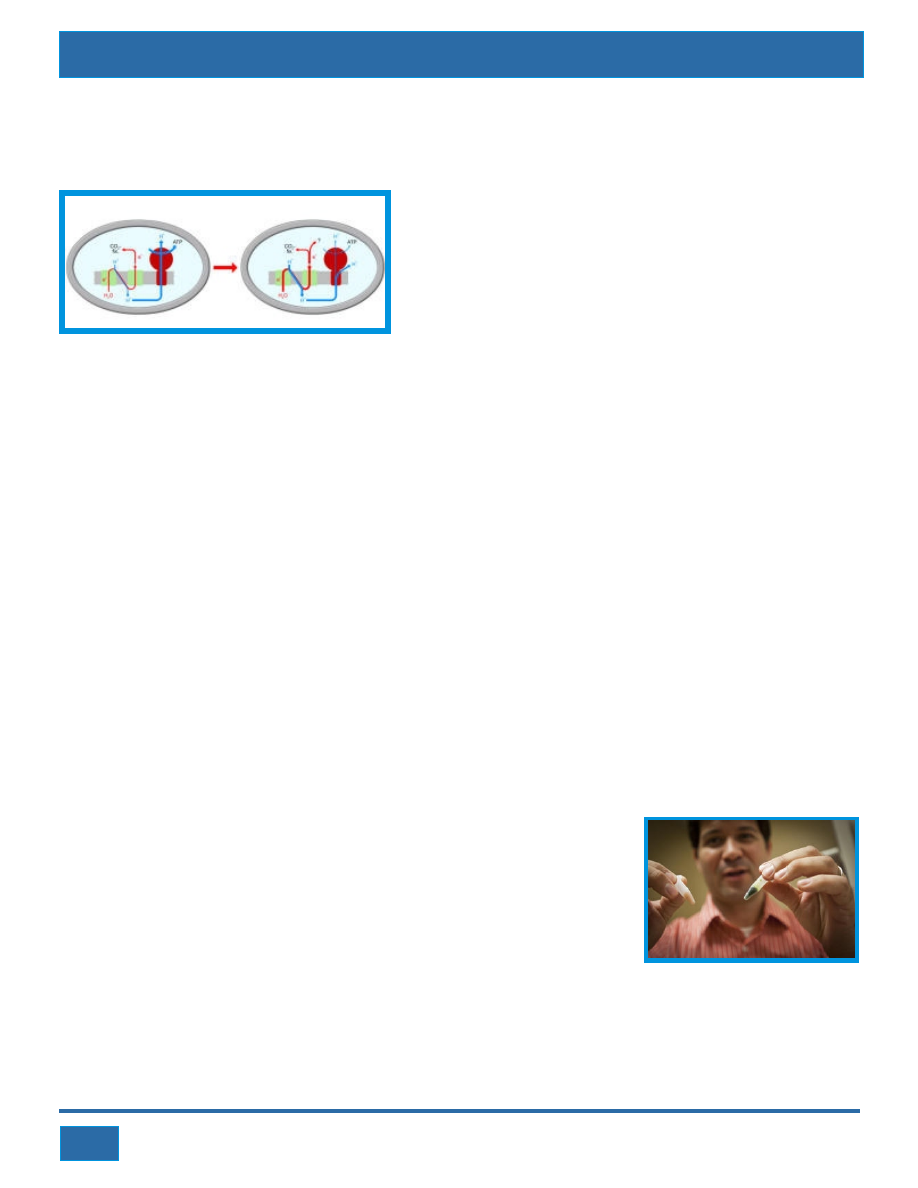
The energy-rich molecule ATP serves as a store for the energy gained through photosynthesis in plants. It is built
up, and where necessary broken down again, by the enzyme ATPase. To guard the bacterium against stress
situations with too much or too little light, the ATPase of the cyanobacteria has a small area which acts like a
switch. It prevents the ATP from being broken down prematurely in the dark, when no photosynthesis takes
place. The bacterium thus creates a store of energy which helps it through stress phases. However, this switch
also slows the rate of photosynthetic electron transport with the water splitting in light
In the experiment the researchers removed the switch area of the ATPase in cyanobacteria by means of genetic
engineering. They expected that the bacteria would suffer much more afterwards and that they would become
much slower, but that was not the case. The bacteria grew just as usual under laboratory conditions -- without
light stress. However, they create lower ATP energy reserves, so they cannot survive very long dark periods as
well as the wild type. On the other hand, the excess energy in light, which otherwise went into the reserves, is now
available for biotechnological use.
Prof. Roger estimated that this should make it possible to use at least 50% of the energy gained from light-driven
water splitting for other processes in the future, e.g. for solar-powered biological hydrogen production through
cyanobacterial mass cultures in photobioreactors," estimates Prof. Roegner.”
New Process could Lead to Production of Hydrogen using
Bioengineered Microorganisms
Many kinds of algae and cyanobacteria, common water-dwelling
microorganisms, are capable of using energy from sunlight to split
water molecules and release hydrogen, which holds promise as a
clean and carbon-free fuel for the future. One reason of this
approach has not yet been harnessed for fuel production is that
under ordinary circumstances, hydrogen production takes a back
seat to the production of compounds that the organisms use to
support their own growth.
Shuguang Zhang, associate director of MIT's Center for Biomedical Engineering, together with
researchers have found a way to use bioengineered proteins to flip this preference, allowing
more hydrogen to be produced.
The algae are really not interested in producing hydrogen, they want to produce sugar, says the
sugar is what they need for their own survival, and the hydrogen is just a byproduct. But a

4
Technology Roundup
Intelligent Street Lighting Saves 80% Energy
Delft University of Technology (TU Delft) is currently testing an
intelligent street lighting system on its campus, which uses up to 80%
less electricity than the current systems and is also cheaper to maintain.
The system consists of street lights with LED lighting, motion sensors
and wireless communication. This enables the installation to dim the
lights when there are no cars, cyclists or pedestrians in the vicinity.
Wireless communication between the street lights and a control room is
also possible. The system was developed by TU Delft alumnus
Management of Technology, Chintan Shah, with the concept for
improving energy efficiency.
The network of street lighting emits over 1.6 million tons of CO2 a year. The lights are always on at
full power, regardless of whether there is anyone in the area. Compared with the current street-
lighting system, Chintan Shah's intelligent system can reduce energy consumption and CO2
emission by up to 80%, is cheaper to maintain and can also help solve the problem of light
pollution.
Shah's system consists of electronic gear that can be added to any dimmable street light. The
system comprises street lights with LED lighting, motion sensors and wireless communication. At
first glance, it looks a lot like a widely available type of garden light with a motion sensor, but there
multitasking enzyme, introduced into the liquid where the algae are at work, both suppresses
the sugar production and redirects the organisms energies into hydrogen production. Yacoby
said adding the bioengineered enzyme increases the rate of algal hydrogen production by
about 400 percent. He explained the sugar production is suppressed but not eliminated,
because if it went to zero, it would kill the organism.
The research demonstrates for the first time how the two processes carried out by algae
compete with each other; it also shows how that competition could be modified to favor
hydrogen production in a laboratory environment. Zhang and Yacoby plan to continue
developing the system to increase its efficiency of hydrogen production.
Zhang said it is one step closer to an industrial process. First, you have to understand the
science which has been achieved through this experimental work. Zhang said that now,
developing it further through refinements to produce a viable commercial system for
hydrogen fuel manufacturing is a matter of time and money.
The researchers say ultimately, such a system could be used to produce hydrogen on a large
scale using water and sunlight. The hydrogen could be used directly to generate electricity in a
fuel cell or to power a vehicle, or could be combined with carbon dioxide to make methane or
other fuels in a renewable, carbon-neutral way.
Yacoby said in the long run, the only viable way to produce renewable energy is to use the sun,
to make electricity or in a biochemical reaction to produce hydrogen. There is no one solution,
he adds, but rather many different approaches depending on the location and the end uses.
This particular approach is simple enough that it has promise not just in industrialized
countries, but in developing countries as well as a source of inexpensive fuel. The algae needed
for the process exist everywhere on Earth, and there are no toxic materials involved in any
part of the process.
http://www.mit.edu
3
5
Technology Roundup
Forklift Trucks that Run on a Green Charge
http://www.ieeeusa.org
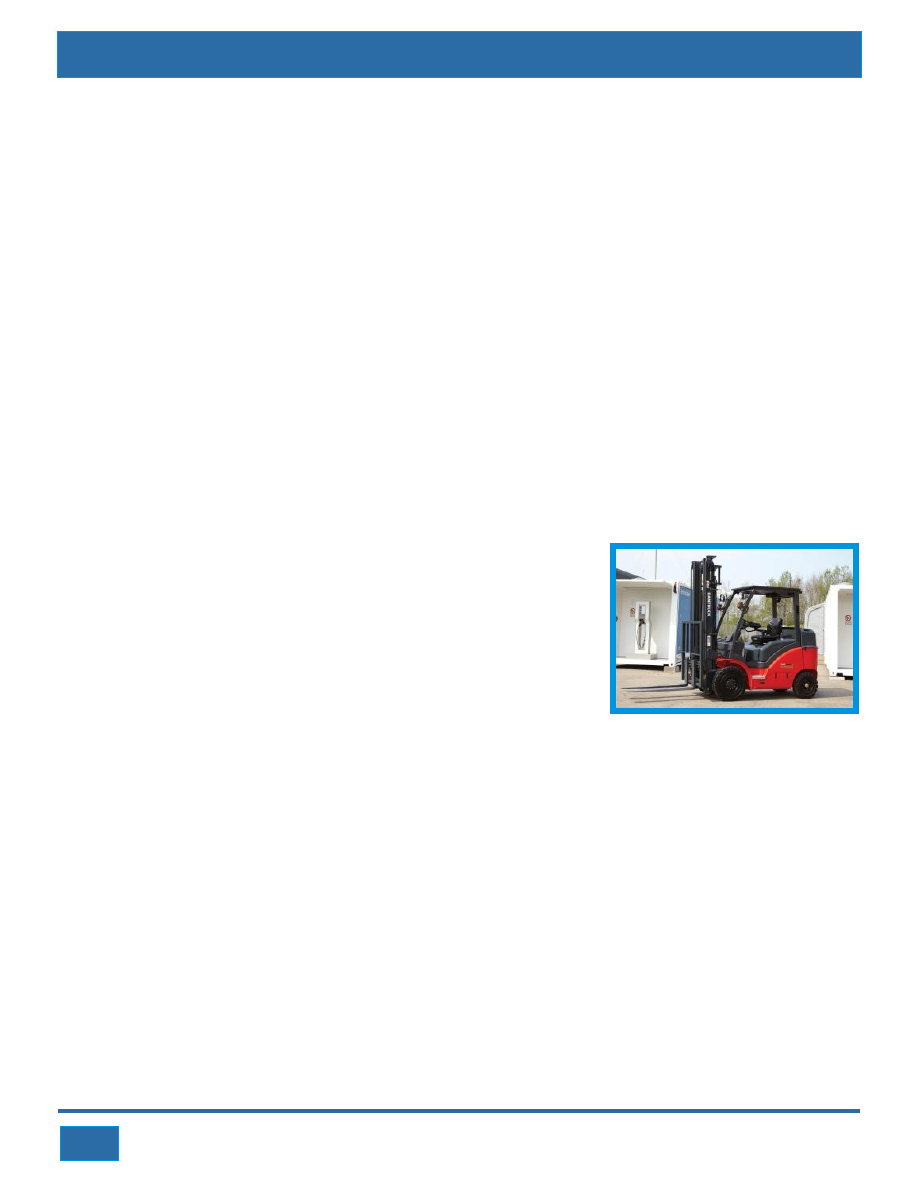
The first forklift trucks in Europe that will run on fuel cells and with
hydrogen in their tanks are on the way to the market.
The SINTEF scientist points out that a forklift truck fitted with fuel
cells and operating two eight-hour shifts a day reduces CO2 emissions
by the equivalent of eight private cars.
Steffen Møller-Holst is a participant in the project's development
phase, which will bring the green European truck to its final goal.
Under its bodywork, the truck houses a miniature power station in the
shape of a fuel cell that runs on hydrogen, and which delivers power to
its electric motor. All that the truck emits in operation is water vapour.
A hydrogen-driven forklift truck running on fuel cells combines the advantages of diesel and battery-
driven vehicles. The hydrogen-based technology means rapid refuelling, just like diesel, while it is also
energy-efficient and every bit as environmentally friendly as a battery truck.
The truck's power system has been developed in the course of a joint European effort run by the
European Union.
SINTEF is to perform laboratory tests that will explore how much fuel cell performance falls by over
time. At the same time, SINTEF will systematize and analyze feedback from the trials of the 30
demonstration trucks. The knowledge gained in this process will be used to improve the control system
and optimize operation, which will ensure that the fuel cell will have a life-cycle that meets the
commercial requirements of the market.
The Danish company H2 Logic AS has been responsible for developing the trucks' fuel-cell technology.
These large forklift trucks in the joint European project have been designed to carry heavy loads.
are significant differences. In Shah's system, all surrounding street lights light up if anyone
approaches. And the lights never go out completely; they are dimmed to approx. 20% of the
standard power. Passers-by move in a safe circle of light as it were. An added bonus is the fact that
the lights automatically communicate any failures to the control room. This makes maintenance
cheaper and more efficient than it is now.
The aim of the pilot on the TU Delft campus is to thoroughly test and fine-tune the system, to
prevent swaying branches or passing cats from switching the lights to full power, for instance. Shah
is working with his TU Delft spin-off company Tvilight on the market introduction of the system,
which he expects to be profitable within 3-5 years. Shah said that this technology differs in certain
aspects from the existing systems of other companies and all of this new technology has been
patented. TU Delft is also curious to know the results of the pilot. Professor of Wind Energy, Gijs
van Kuik, is actively involved in making the campus more sustainable: This is a promising
opportunity to save energy on street lighting.
http://home.tudelft.nl
6
Technology Roundup
Particle Trap Paves way for Personalized Medicine
www.yale.edu
Sequencing DNA base pairs the individual molecules that
make up DNA is key for medical researchers working toward
personalized medicine. Being able to isolate, study and
sequence these DNA molecules would allow scientists to tailor
diagnostic testing, therapies and treatments based on each
patient's individual genetic makeup.
But being able to isolate individual molecules like DNA base
pairs, which are just two nanometers across or about
th
1/50,000 the diameter of a human hair is incredibly
expensive and difficult to control. In addition, devising a way to
trap DNA molecules in their natural aqueous environment
further complicates things. Scientists have spent the past decade struggling to isolate and trap
individual DNA molecules in an aqueous solution by trying to thread it through a tiny hole the
size of DNA, called a "nanopore," which is exceedingly difficult to make and control.
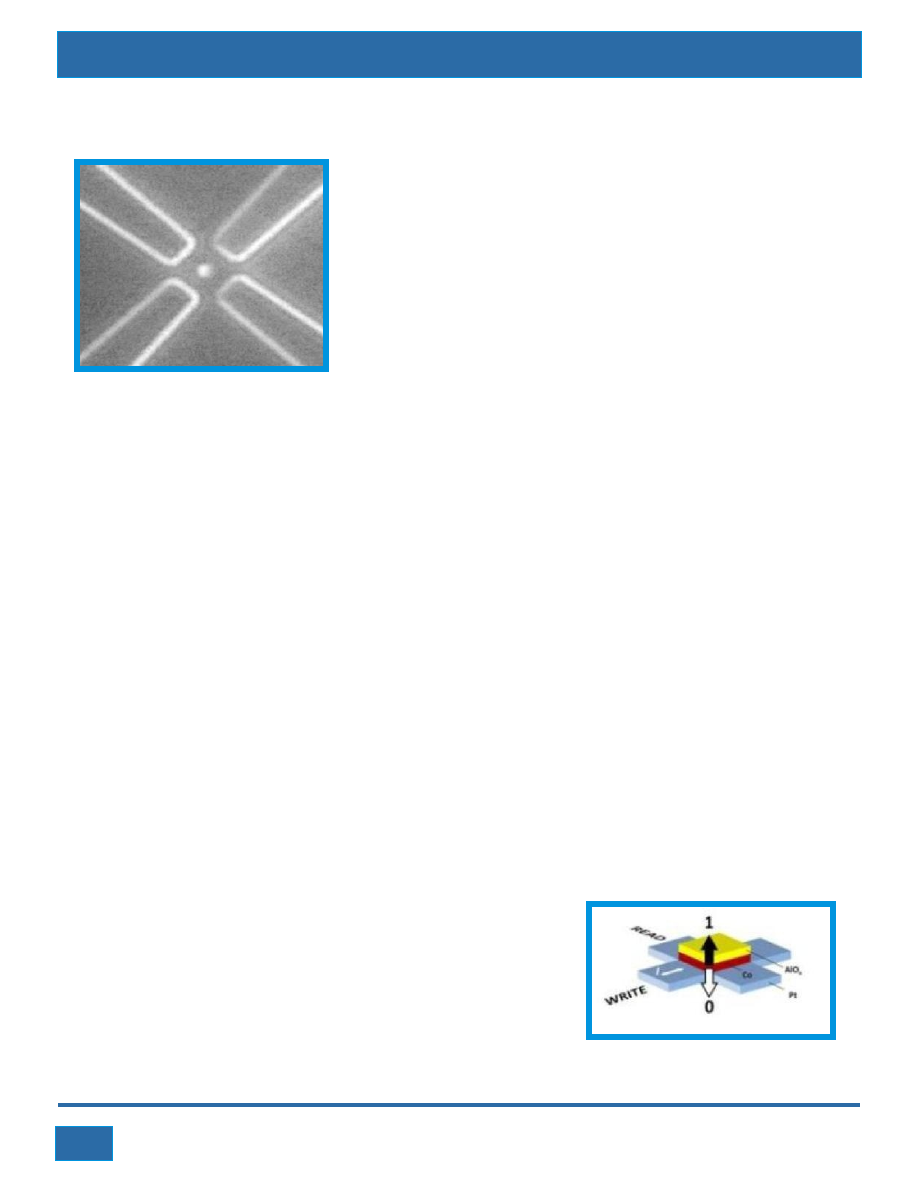
A team led by Yale University researchers has proven that isolating individual charged
particles, like DNA molecules, is indeed possible using a method called Paul trapping, which
uses oscillating electric fields to confine the particles to a space only nanometers in size. The
technique is named for Wolfgang Paul, who won the Nobel Prize for the discovery. Until now,
scientists have only been able to use Paul traps for particles in a vacuum, but the Yale team was
able to confine a charged test particle in this case, a polystyrene bead to an accuracy of just 10
nanometers in aqueous solutions between quadruple microelectrodes that supplied the
electric field.
Their device can be contained on a single chip and is simple and inexpensive to manufacture.
The idea would be that doctors could take a tiny drop of blood from patients and be able to run
diagnostic tests on it right there in their office, instead of sending it away to a lab where testing
can take days and is expensive. In addition to diagnostics, this "lab-on-a-chip" would have a
wide range of applications, Guan said, such as being able to analyze how individual cells
respond to different stimulation. While there are several other techniques for cell-
manipulation available now, such as optical tweezers, the Yale team's approach actually works
better as the size of the targets gets smaller, contrary to other approaches.
Computers: The Art of Magnetic Writing
Computer files that allow us to watch videos, store pictures,
and edit all kinds of media formats are nothing else but
streams of bits of digital data zeros and ones. Modern
computing technology is based on our ability to write, store,
and retrieve digital information as efficiently as possible. In a
computer hard disk, this is achieved in practice by writing
information on a thin magnetic layer, where magnetic
domains pointing "up" represent a "1" and magnetic domains pointing down represent a "0."

3
7
Technology Roundup
The size of these magnetic domains has now reached a few tens of nanometers, allowing us
to store a terabyte of data in the space of just about 4 square centimeters. Miniaturization,
however, has created numerous problems that physicists and engineers worldwide
struggle to solve at the pace demanded by an ever growing information technology
industry. The process of writing information on tiny magnetic bits one by one, as fast as
possible, and with little energy consumption, represents one of the biggest hurdles in this
field.
A team of scientists from the Catalan Institute of Nanotechnology, ICREA, and Universitat
Autonoma de Barcelona, Mihai Miron, Kevin Garello, and Pietro Gambardella, in
collaboration with Gilles Gaudin and colleagues working at SPINTEC in Grenoble, France,
have discovered a new method to write magnetic data that fulfills all of these requirements.
Magnetic writing is currently performed using magnetic fields produced by wires and
coils, a methodology suffering severe limitations in scalability and energy efficiency. The
new technique eliminates the need for cumbersome magnetic fields and provides
extremely simple and reversible writing of memory elements by injecting an electric
current parallel to the plane of a magnetic bit. The key to this effect lies in engineering
asymmetric interfaces at the top and bottom of the magnetic layer, which induces an
electric field across the material, in this case a cobalt film less than one nanometer thick
sandwiched between platinum and aluminum oxide. Due to subtle relativistic effects,
electrons traversing the Co layer effectively see the material's electric field as a magnetic
field, which in turn twists their magnetization. Depending on the intensity of the current
and the direction of the magnetization, one can induce an effective magnetic field, intrinsic
to the material that is strong enough to reverse the magnetization.
The research team showed that this method works reliably at room temperature using
current pulses that last less than 10 ns in magnetic bits as small as 200 x 200 square
nanometers, while further miniaturization and faster switching appear easily within
reach. Although there is currently no theory describing this effect, this work has many
interesting applications for the magnetic recording industry, and in particular for the
realization of magnetic random access memories, so-called MRAMs. By replacing
standard RAMs, which need to be refreshed every few milliseconds, non-volatile MRAMs
would allow instant power up of a computer and also save a substantial amount of energy.
An additional advantage of the discovery reported here is that current-induced magnetic
writing is more efficient in "hard" magnetic layers than in "soft" ones. This is somehow
counterintuitive, as soft magnetic materials are by definition the easier to switch using
external magnetic fields, but very practical since hard magnets can be miniaturized to
nanometer dimensions without losing their magnetic properties. This would allow the
information storage density to be increased without compromising the ability to write it.
The results of this work have also led to three patent applications dealing with the
fabrication of magnetic storage and logic devices.
www.nanocat.org

38
Technology Roundup
Forthcoming Tech Events
Advanced Gas Chromatography
www.analytica-world.com
5th European Solar Thermal Energy Conference
www.estec2011.eu
China International Pharmaceutical Machinery Exposition
www.cipm-expo.com
International Conference on Solid Waste Management and Exhibition
www.environbusiness.com
12-14 October, 2011
Berlin, Germany
20-21 October, 2011
Marseille, France
29 October-1 November, 2011
QINGDAO, China
9-11 November, 2011
Kolkata, India
Pipe Line Laying
Specifications:
l
High pressure cross country pipeline
l
Plant piping work.
l
Upgrading existing pipelines.
l
Cathodic protection activities.
Company Contact
Asia Engineers
Address: Suit No. 212, Mashrique centre, Sir Sulman Shah Road, Block-14,
Gulshan-e-Iqbal, Karachi, Pakistan.
Phone: +92-21-34146258
Fax: +92-21-34146259
www.asiaengineers.com
Tech & Trade Offers
3
9
Technology Roundup
About PASTIC
PASTIC serves as a gateway for
Scientific & Technological
Information for R&D by
catering to the information
n e e d s o f r e s e a r c h e r s ,
entrepreneurs, industrialists,
educationists, policy makers
a n d p l a n n e r s t h r o u g h
anticipatory and responsive
information services.
T e c h n o l o g y I n f o r m a t i o n
Service Section of PASTIC
works exclusively for support
and promotion of technological
information on trade and
industry in the country.
“Technology Roundup” is a
news bulletin that provides
l a t e s t a n d i n n o v a t i v e
technology news, forthcoming
events, etc. It also promotes
products, technologies and
services globally in sectors
such as Agro-Industry, Bio-
Technology, Building Material,
B u s i n e s s , C h e m i c a l s ,
Electronics, Energy, Fisheries,
Food Processing, Machinery,
P a c k a g i n g , M i n i n g
Pharmaceuticals and Textiles.
Please give us your feedback and address queries to editor@pastic.gov.pk
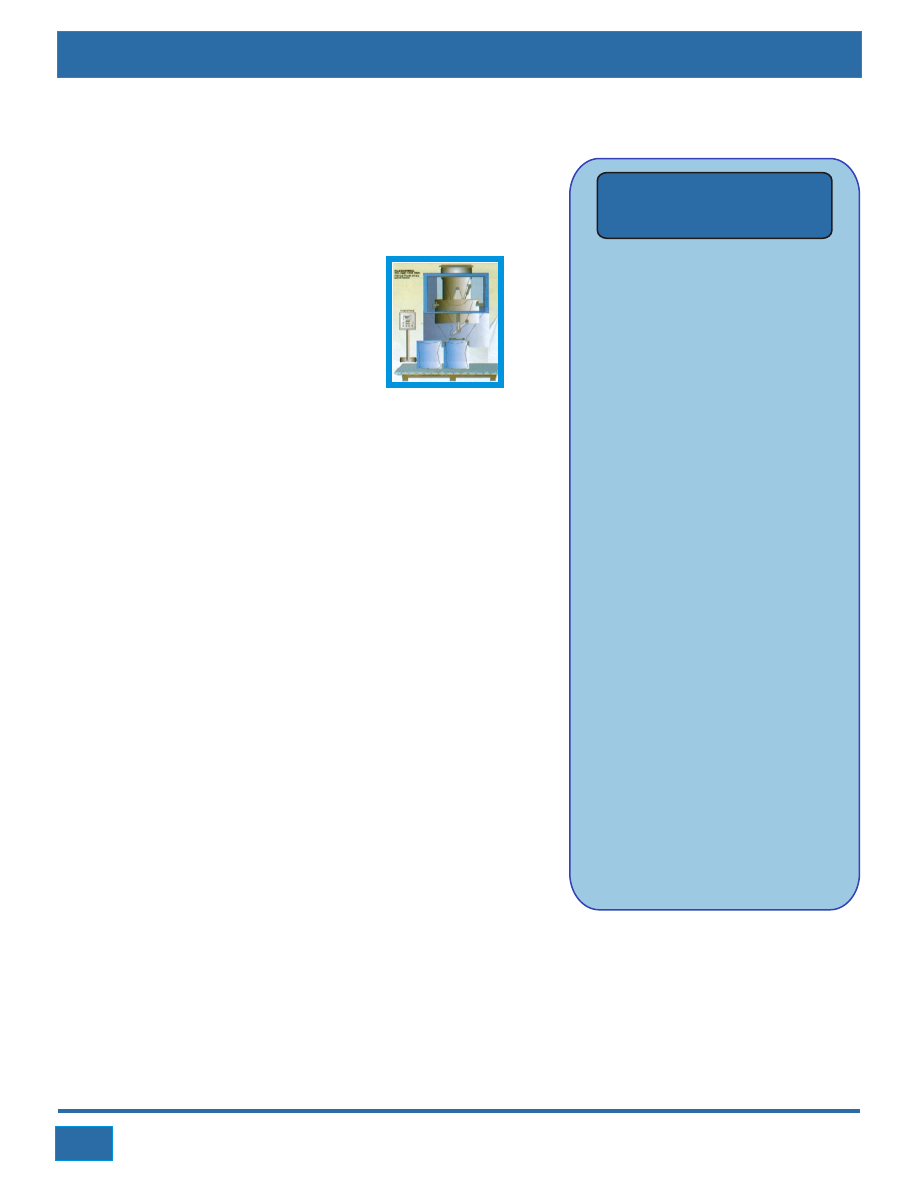
Auto Bag Filling System
www.newtech.pk
Specifications:
Machine type:
Weighing
Control type:
PLC based
Packing weight:
5-50 Kg.
Accuracy:
± 20 grams
Machine speed:
10-12 Bag/min
Power supply:
220 VAC
Pneumatic supply:
4-6 bar
Address: 523-J Block, Johar town, Lahore, Pakistan
Phone: +92-42-35304214, 35302198
Fax: +92-42-35304215
Cell No: +92-301-8401531
Company Contact:
Industrial Process Solutions