
Patron/Executive Editor
Dr. Manzoor Hussain Soomro
Director General, PASTIC
Editors
Ms. Nageen Ainuddin
Mr. M. Aqil Khan
Dr. Saima Tanveer
Ms. Saima Majeed
Composer
Ms. Shazia Parveen
T
ECHNOLOGY
R
OUNDUP
Technology Information Section (TIS)
Pakistan Scientific & Technological Information Centre
PASTIC
May-June, 2011
Vol. 3, No. 3
A NEWS BULLETIN FROM
Tech News Headlines
Forthcoming Tech Events
Tech & Trade Offers
Phone: 051-9248103-4, 9248111
Fax: 051-9248113
Email:director@pastic.gov.pk
Web: www.pastic.gov.pk
PASTIC National Centre
Quaid-i-Azam University Campus
P.O. Box 1217, Islamabad
Editorial Board
l Syn-Gas Nano Catalyst-Step towards Production of Fuel from
Coal Gas
l Fish Robot as an Alternative Marine Propulsion System of the
Future
l First Practical Nanogenerator Produces Electricity with Pinch
of the Fingers
l Advancement in Making Biodegradable Plastics from Waste
Chicken Feathers
l Scientists Steer Car with the Power of Thought
l Gene Therapy Prevents Retinal Degeneration
l Scientists bring Cancer Cells back under Control
l Bomb Disposal Robot
l International Conference on Food Engineering and
Biotechnology (ICFEB 2011)
l POOGEE 9th International Exhibition for Energy Industry
l Technology Exhibition: Food & Agriculture Sectors (2011)
l Eurasia Business and Economics Society (EBES) 2011
l Medifest 2011
Steam Generators (Boilers)
Telecom Power Solutions
Technology Roundup
2
Tech News
Indigenous Technology
Syn-Gas Nano Catalyst-Step towards Production of Fuel from Coal Gas
Courtesy to
P
akistan is the seventh in the list of top 20 countries of the world having lignite coal reserves of
185 billion tons out of which 3.3 billion tons is in proven/measured category while 11 billions are
indicated as reserves. In global electricity generation share of coal
has exceeded 37%. Thar Coal of Pakistan is one of the largest coal
reserves in the world having a total reserve of 850 Trillion Cubic
feet which can possibly enable us to produce enough electricity to
power the whole country.
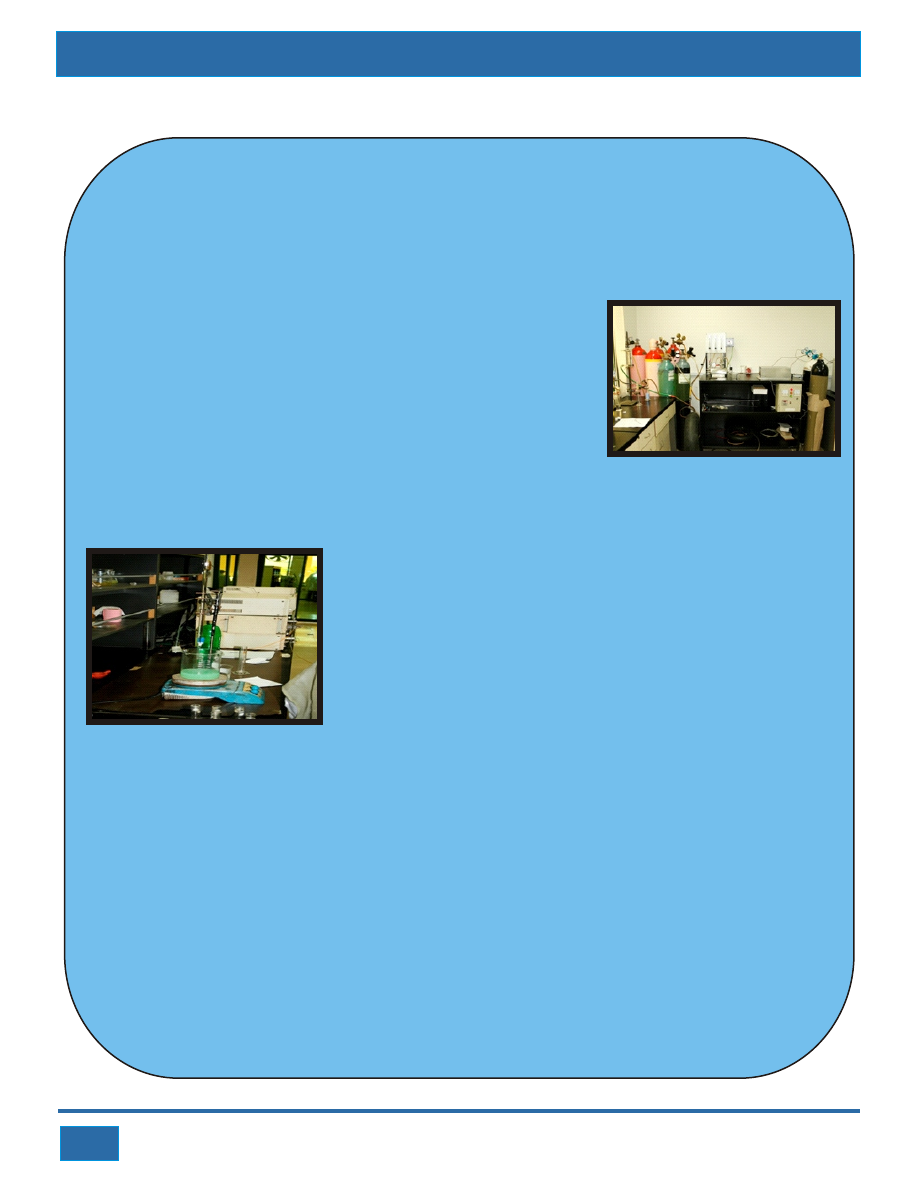
Nano Scientists of National Centre for Physics, Quaid-i-Azam
University Campus, Islamabad have developed a lab. scale nano
catalyst and testing system which converts syn gas to Ethylene and
Propylene- a building block for the production of diesel. A step towards the production of fuel
from coal gas (Syn Gas).
The syn gas conversion technology “Fischer Tropsch Synthesis”
was developed during the Second World War by two German
Scientists Fischer and Tropsch. It is produced by reacting carbon
(constituent of coal) with air or oxygen and water (CO+H ). It is
2
one of the most important technologies and Sasol plant in South
Africa is the only commercially operational plant in the world.
The main component of this technology is the catalyst which is
not only expensive but also most important and tedious part of
the whole process
This discovery of this nano catalyst and testing system has opened up a new era of R & D in the
country. This lab scale catalyst can help not only to use the developed infrastructure for the
production of other industrial nano catalyst but also help directly to overcome the present
country energy crisis.
Submission of US patent is in progress at present.
Dr. Syed Tajamul Hussain
National Centre for Physics , Islamabad
3
Technology Roundup
Fish Robot as an Alternative Marine Propulsion System of the Future
www.tu-darmstadt.de
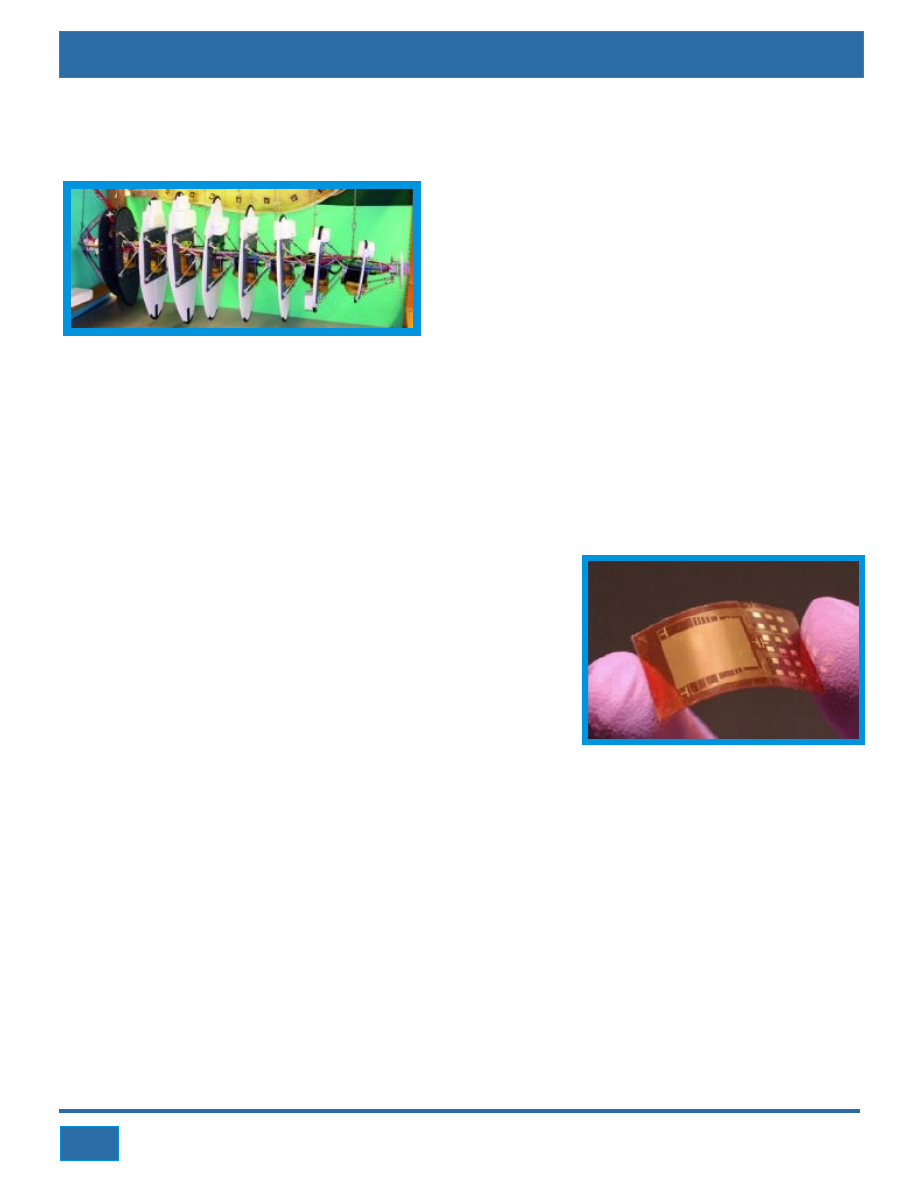
The team of Darmstadt researchers analyzed fish's
motions to develope a prototype fish robot The fish
robot, dubbed “Smoky,” consists of a “skeleton”
composed of ten segments enshrouded in an elastic
skin that are free to move relative to one another and
caused to undergo snaking motions similar to those of
fish by waterproof actuators. Including its tail fin, the
fish robot, which is a 5:1 scale model of a gilt-head sea
bream, is 1.50 meters long.
The researchers said that use of their fish robot for ship propulsion will help prevent shoreline erosion
and the undermining of submarine installations caused by ships screws. The fish robot's “soft” drive
action should also prevent the churning up of sea beds and riverbeds and its effects on marine plants
and aquatic-animal populations.
First Practical Nanogenerator Produces Electricity with Pinch of the Fingers
S
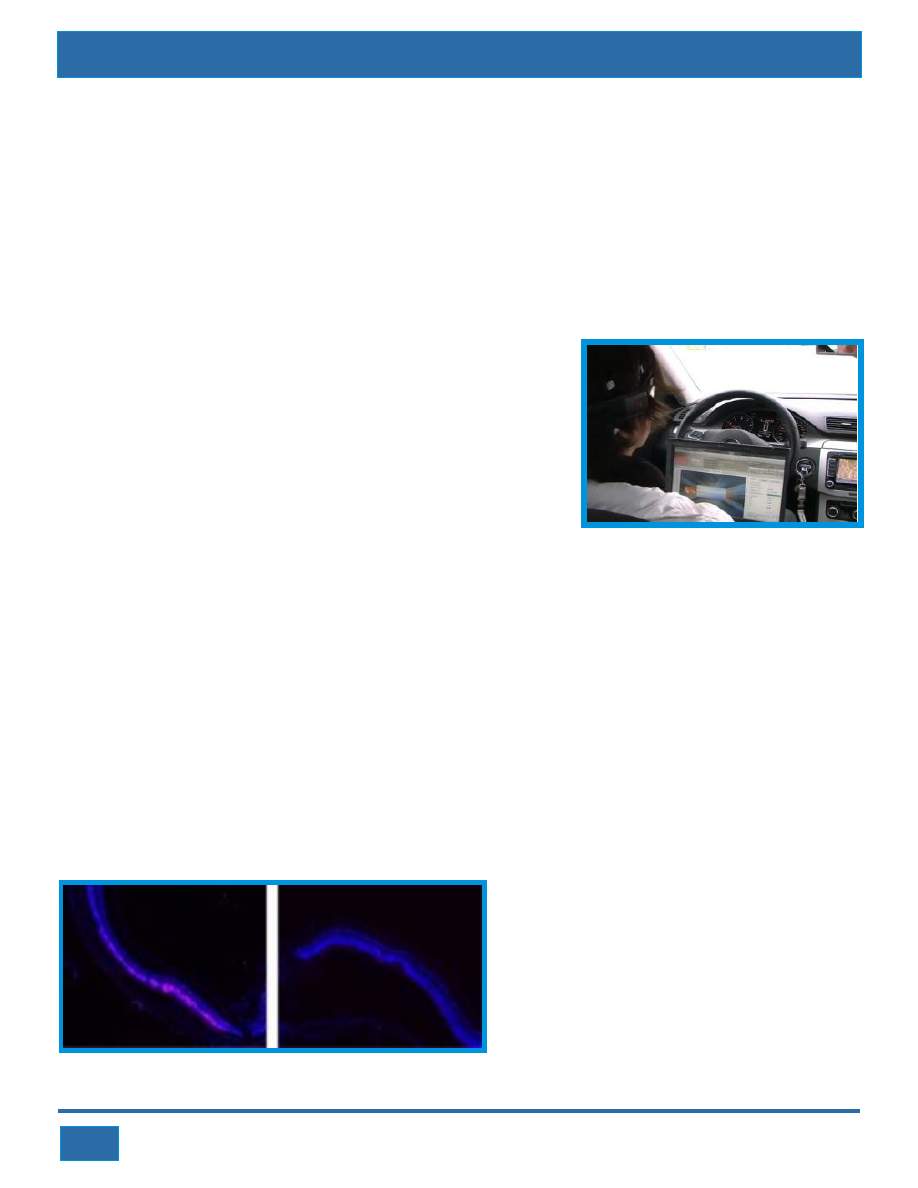
cientists at Georgia Institute of Technology have developed first
commercially viable nanogenerator, a flexible chip that can use
body movements a finger pinch now enroute to a pulse beat in the
future to generate electricity. They described boosting the device's
power output by thousands times and its voltage by 150 times to
finally move it out of the lab and toward everyday life.
Lead scientist Zhong Lin Wang said that this development
represents a milestone toward producing portable electronics that
can be powered by body movements without the use of batteries or
electrical outlets.
Wang and colleagues demonstrated commercial feasibility of the latest nanogenerator by using it to
power an LED light and a liquid crystal display like those widely used in many electronic devices, such
as calculators and computers. The power came from squeezing the nanogenerator between two fingers.
The key to the technology is zinc oxide (ZnO) nanowires. ZnO nanowires are piezoelectric they can
generate an electric current when strained or flexed. That movement can be virtually any body
movement, such as walking, a heartbeat, or blood flowing through the body. The nanowires can also
generate electricity in response to wind, rolling tires, or many other kinds of movement.
The diameter of a ZnO nanowire is so small that 500 of the wires can fit inside the width of a single
human hair. Wang's group found a way to capture and combine the electrical charges from millions of
the nanoscale zinc oxide wires. They also developed an efficient way to deposit the nanowires onto
flexible polymer chips, each about a quarter the size of a postage stamp. Five nanogenerators stacked
together produce about 1 micro Ampere output current at 3 volts about the same voltage generated by
two regular AA batteries (about 1.5 volts each).
Additional nanowires and more nanogenerators, stacked together, could produce enough energy for
powering larger electronics, such as an iPod or charging a cell phone.

4
Technology Roundup
Advancement in Making Biodegradable Plastics from Waste Chicken Feathers
In a scientific advancement literally plucked from the waste
heap, scientists at the Institute of Agriculture & Natural
Resources at the University of Nebraska-Lincoln have
described a key step toward using the billions of pounds of
waste chicken feathers produced each year to make one of the
more important kinds of plastic.
The researcher Yiqi Yang told that by using this technique, they
are the first to demonstrate that they can make chicken-
feather-based thermoplastics stable in water while still
maintaining strong mechanical properties.
Thermoplastics are one of two major groups of plastics, and include nylon, polyethylene, polystyrene,
polyvinyl chloride, and dozens of other kinds. They are used to make thousands of consumer and
industrial products ranging from toothbrush bristles to soda pop bottles to car bumpers.
Thermoplastics got that name because they need heat (or chemicals) to harden from a liquid into a
final shape, and can be melted and remolded time and again. The other group, thermosetting plastics,
hardens once and can not be remelted again.
Yang pointed out that both kinds of plastics are made mainly from ingredients obtained from oil or
natural gas. Because of concerns about petroleum supplies, prices, and sustainability, dozens of
scientific teams are working to find alternative ingredients. One major goal is to use agricultural waste
and other renewable resources to make bioplastics that have an additional advantage of being
biodegradable once discarded into the environment.
Yang said they are trying to develop plastics from renewable resources to replace those derived from
petroleum products. Utilizing current wastes as alternative sources for materials are one of the best
approaches toward a more sustainable and more environmentally responsible society.
Chicken feathers are an excellent prospect, because they are inexpensive and abundant. Few shoppers
think about it, but every shrink-wrapped broiler in the supermarket cooler leaves behind a few ounces
of feathers. Annually there are more than 3 billion pounds of waste chicken feathers in the United
States alone. These feathers can be processed into a low-grade animal feed, but that adds little value to
the feathers and may also cause diseases in the animals. All too often, they become a waste
disposal/environmental pollution headache, incinerated or stored in landfills.
Yang explained that chicken feathers are made mainly of keratin, a tough protein also found in hair,
hoofs, horns, and wool that can lend strength and durability to plastics. The mechanical properties of
feather films outperform other biobased products, such as modified starch or plant proteins.
To develop the new water-resistant thermoplastic, Yang and colleagues processed chicken feathers
with chemicals, including methyl acrylate, a colorless liquid found in nail polish that undergoes
polymerization. That is the process used in producing plastics in which molecules link together one by
Wang said the next step is to further improve the output power of the nanogenerator and find a
company to produce the nanogenerator.
www.acs.org
5
Technology Roundup
Scientists Steer Car with the Power of Thought
www.fu-berlin.de
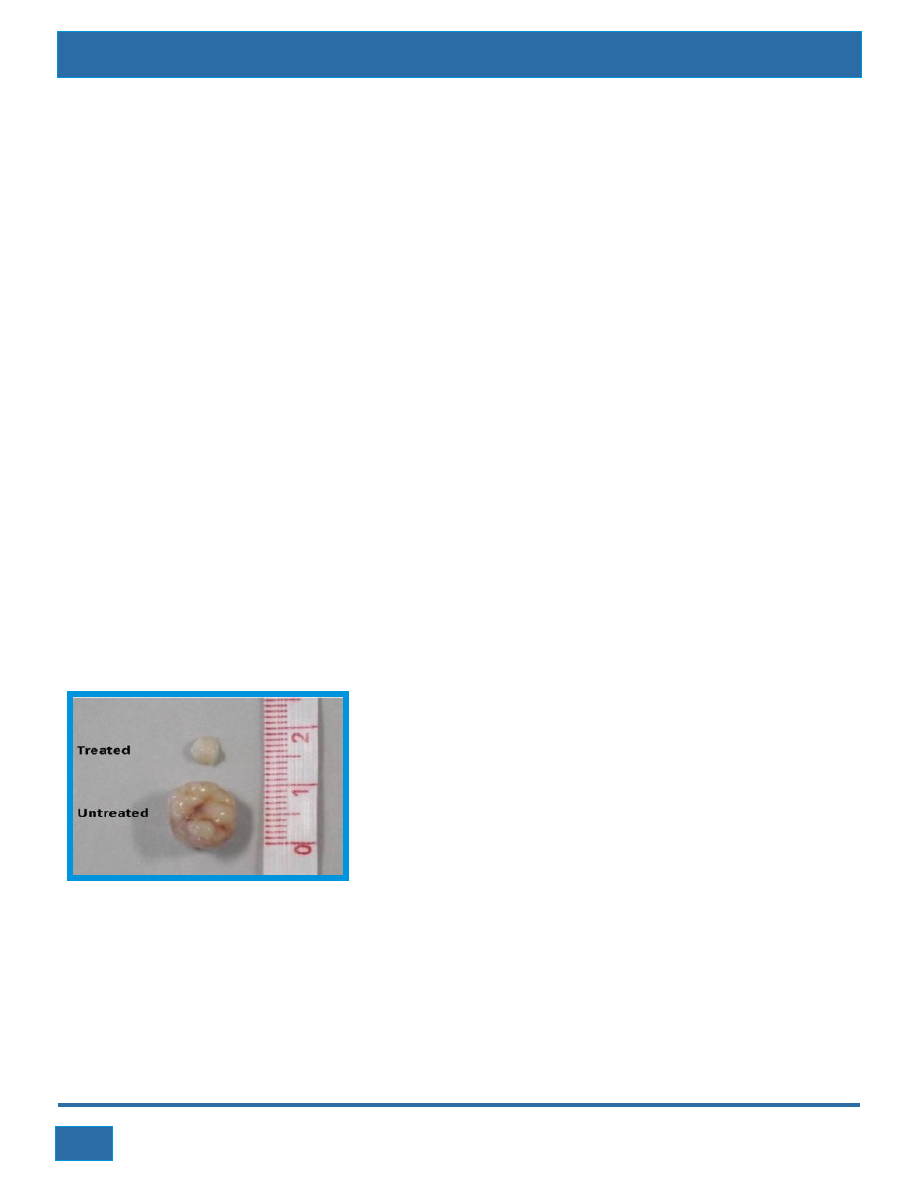
The computer scientists at AutoNOMOS innovation labs of Freie
University Berlin have developed a system of steering a car with
thoughts. Using new commercially available sensors to measure
brain waves sensors for recording electroencephalograms (EEG)
the scientists are able to distinguish the bioelectrical wave patterns
for control commands such as "left," "right," "accelerate" or
"brake" in a test subject.
They then succeeded in developing an interface to connect the
sensors to their otherwise purely computer-controlled vehicle, so
that it can now be "controlled" via thoughts. Driving by thought
control was tested on the site of the former Tempelhof Airport.
The scientists first used the sensors for measuring brain waves in such a way that a person can move a
virtual cube in different directions with the power of his or her thoughts. The test subject thinks of four
situations that are associated with driving, for example, "turn left" or "accelerate." In this way the
person trained the computer to interpret bioelectrical wave patterns emitted from his or her brain and
to link them to a command that could later be used to control the car. The computer scientists
connected the measuring device with the steering, accelerator, and brakes of a computer-controlled
vehicle, which made it possible for the subject to influence the movement of the car just using his or her
thoughts.
With the EEG experiments they investigate hybrid control approaches, i.e., those in which people work
with machines.
Gene Therapy Prevents Retinal Degeneration
A study from researchers at Tufts University
School of Medicine and the Sackler School of
Graduate Biomedical Sciences at Tufts
demonstrates that non-viral gene therapy can
delay the onset of some forms of eye disease
and preserve vision. The team developed
nanoparticles to deliver therapeutic genes to
the retina and found that treated mice
temporarily retained more eyesight than
one into huge chains. This process resulted in films of what Yang's group terms "feather-g-poly(methyl
acrylate)" plastic. It had excellent properties as a thermoplastic, was substantially stronger and more
resistant to tearing than plastics made from soy protein or starch, and as a first among chicken-feather
plastics had good resistance to water.
www.acs.org.com
6
Technology Roundup
controls.
The work shows that it is possible to attain therapeutic results using non-viral gene delivery methods,
specifically, nanoparticles. Nanoparticles, which are small enough to penetrate cells and stable enough
to protect DNA, are capable of preventing retinal cell death and preserving vision.
The most common approach to gene therapy involves using a virus to deliver DNA to cells. While viruses
are very efficient carriers, they can prompt immune responses that may lead to inflammation, cancer, or
even death. Non-viral methods offer a safer alternative, but until now, efficiency has been a significant
barrier.
In a model simulating the progression of human retinal degeneration, the researchers treated mice with
nanoparticles carrying a gene for GDNF (Glial Cell Line-Derived Neurotrophic Factor), a protein known
to protect the photoreceptor cells in the eye. Retinas treated with the GDNF-carrying nanoparticles
showed significantly less photoreceptor cell death than controls. Preservation of these cells resulted in
significantly better eyesight in the treatment group seven days after treatment, compared to controls.
The protection conferred by the GDNF-carrying nanoparticles was temporary, as tests fourteen days
after treatment showed no difference in eyesight between treated mice and controls.
The next step in this research is to prolong this protection by adding elements to the DNA that permit its
retention in the cell. Bringing forth a more potent and enduring result will move closer to clinical
application of non-viral gene therapy.
AMD, which results in a loss of sharp, central vision, is the number one cause of visual impairment
among age 60 and older.
www.tufts.edu
Scientists bring Cancer Cells back under Control
Breast cancer is diagnosed in about 1.4 million women
throughout the world every year, with half a million dying from
the disease. A common cause of cancer is when cells are altered
or mutated and the body's tumour suppressor genes are
switched off.
Scientists at The University of Nottingham have brought cancer
cells back under normal control by reactivating their cancer
suppressor genes. The discovery could form a powerful new
technology platform for the treatment of cancer of the breast and
other cancers.
Dr Cinzia Allegrucci from the School of Veterinary Science and Medicine and Dr Andrew Johnson in
the Centre for Genetics and Genomics reactivated tumour suppressor genes and stopped the cancer
from growing by treating them with Axolotl oocyte extract. After 60 days there was still no evidence of
cancerous growth.
Cancers occur when the mechanisms that control normal cell division are mutated. The process of cell
division is controlled by specific genes and these are turned "on" or "off" depending on their function.
Among the most important of these genes are tumour suppressor genes. These genes repress the
development of cancers and normally act as a control point in the cell division cycle. Therefore, the
7
Technology Roundup
switching off of tumour suppressor genes is a common cause of cancers, including breast cancer.
Dr Allegrucci, said that the on/off switch in genes is controlled by the modification of proteins that are
bound to the DNA in a cell so called epigenetic modifications. Tumour suppressor genes in many breast
cancers are switched off by epigenetic marks, which is the underlying cause of tumours. They sought to
reverse this process, activating the tumour suppressor genes, in hope of stopping cancerous cell
divisions.
Dr Johnson said that by doing this they use novel technology that makes use of the eggs of the axolotl
salamander. Over the years it has shown that humans evolved from animals that closely resemble
axolotls, and because of this the proteins in axolotls are very similar to those in humans. Axolotl oocytes
which are the eggs prior to ovulation, are packed with molecules that have very powerful epigenetic
modifying activity. Previously Johnson's lab showed that extracts prepared from these oocytes have
powerful capacity to change epigenetic marks on the DNA of human cells.
In a breakthrough, they showed it is important to use oocytes from the ovary, because if the oocytes are
ovulated their activities are lost. By treating cancer cells with extracts made from axolotl oocytes they
could reverse the epigenetic marks on tumour suppressor genes, causing these genes to reactivate, and
thereby stopping the cancerous cell growth
The identification of the proteins responsible for this tumour reversing activity in axolotl oocytes is a
major goal of future research which could form a powerful new technology platform for the treatment of
cancers from the breast, and other tissues
www.nottingham.ac.uk
Bomb Disposal Robot
www.gre.ac.uk
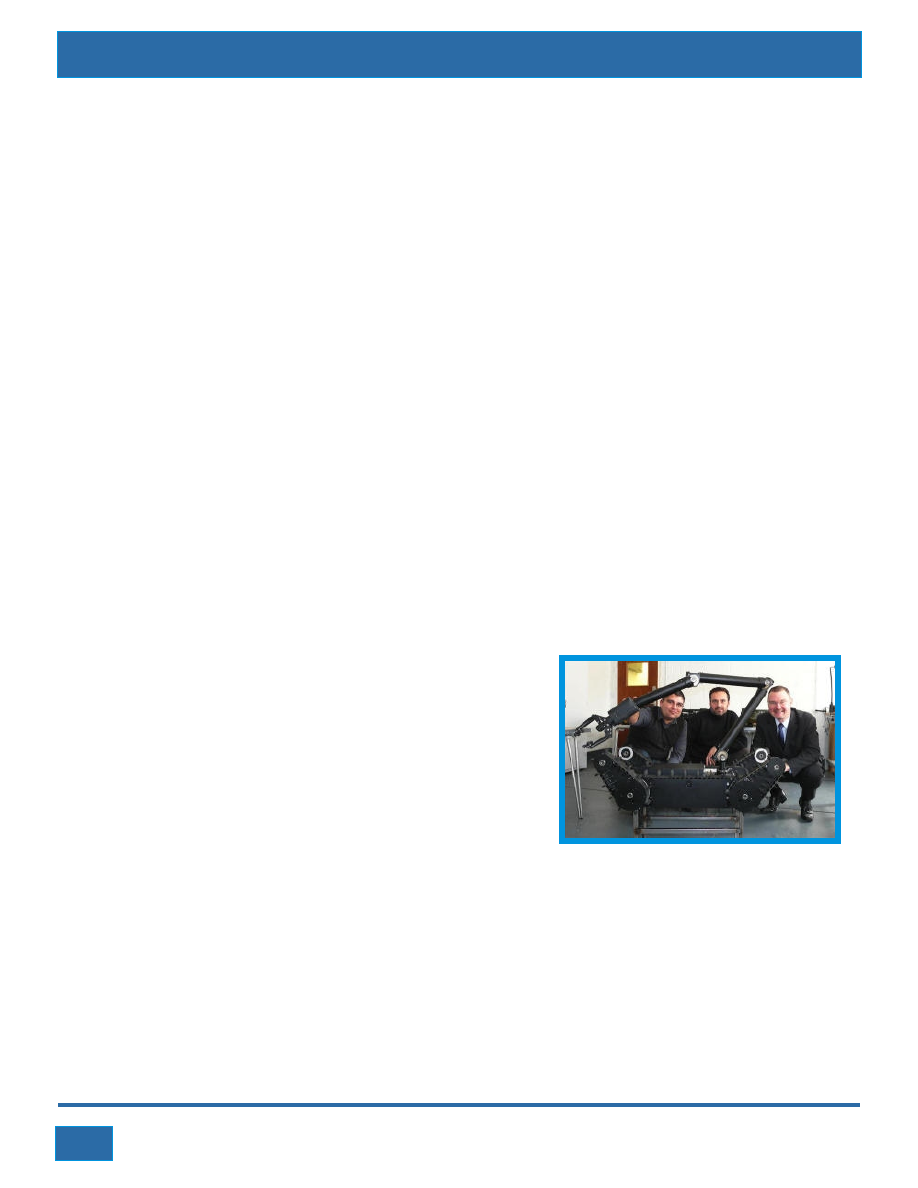
The University of Greenwich has joined forces with a Kent-based
company to create a light weight, remote-operated vehicle that
can be controlled by a wireless device from a distance of several
hundred meters.
The innovative robot, which can climb stairs and even open
doors, will be used by soldiers on bomb disposal missions.
Experts from the Department of Computer & Communications
Engineering are working on the project alongside NIC
Instruments Limited of Folkston, manufacturers of security
search and bomb disposal equipment.
Much lighter and more flexible than traditional bomb disposal units, the robot is easier for soldiers to
carry and use when out in the field. It has cameras on board, which relay images back to the operator
via the hand-held control, and includes a versatile gripper which can carry and manipulate delicate
items.
The robot also includes nuclear, biological and chemical weapons sensors.
Measuring just 72cm by 35cm, the robot weighs 48 kilogrammes and can move at speeds of up to eight
miles per hour.

8
Technology Roundup
Forthcoming Tech Events
Tech & Trade Offers
International Conference on Food Engineering and Biotechnology
(ICFEB 2011)
http://www.icfeb.org
TH
POOGEE 9 International Exhibition for Energy Industry
www.pogee.com.pk
Technology Exhibition: Food & Agriculture Sectors (2011)
www.pastic.gov.pk
Eurasia Business and Economics Society (EBES) 2011
http://www.ebesweb.org
Medifest 2011
www.vantagemedifest.com
7-9 May, 2011
Bangkok, Thailand
17-19 May, 2011
Karachi, Pakistan
st
21 May, 2011.
Lahore, Pakistan
1-3 June, 2011
Istanbul, Turkey
7-9 June, 2011
Cape Town, South Africa.
Steam Generators (Boilers)
This industrial type steam generator is a forced circulation water tube boilers. Unlike the
conventional 3-pass steam boilers (fire/smoke tube boiler), the water in the steam generators
contains a very small water and steam volume (content of the pressure vessel inside the tube).
The steam generators are delivered in the range 100 - 1,000 kg/h steam at 3 bar and all the way
up to 10 bars (for special applications). These complete units are easy to install and does not
require any special foundation, but can be place directly on a concrete floor.
9
Technology Roundup
About PASTIC
PASTIC serves as a gateway for
Scientific & Technological
Information for R&D by
catering to the information
n e e d s o f r e s e a r c h e r s ,
entrepreneurs, industrialists,
educationists, policy makers
a n d p l a n n e r s t h r o u g h
anticipatory and responsive
information services.
T e c h n o l o g y I n f o r m a t i o n
Service Section of PASTIC
works exclusively for support
and promotion of technological
information on trade and
industry in the country.
“Technology Roundup” is a
news bulletin that provides
l a t e s t a n d i n n o v a t i v e
technology news, forthcoming
events, etc. It also promotes
products, technologies and
services globally in sectors
such as Agro-Industry, Bio-
Technology, Building Material,
B u s i n e s s , C h e m i c a l s ,
Electronics, Energy, Fisheries,
Food Processing, Machinery,
P a c k a g i n g , M i n i n g
Pharmaceuticals and Textiles.
Please give us your feedback and address queries to editor@pastic.gov.pk
Company Contact:
Address: Plot # 20 Street # 3 Sector F
Manzoor Colony, Karachi, Pakistan
Phone: +92 213 538 5553
FAX: +92 213 538 3350
Cell No: +92 321 227 2717
www.masterengineering.com.pk
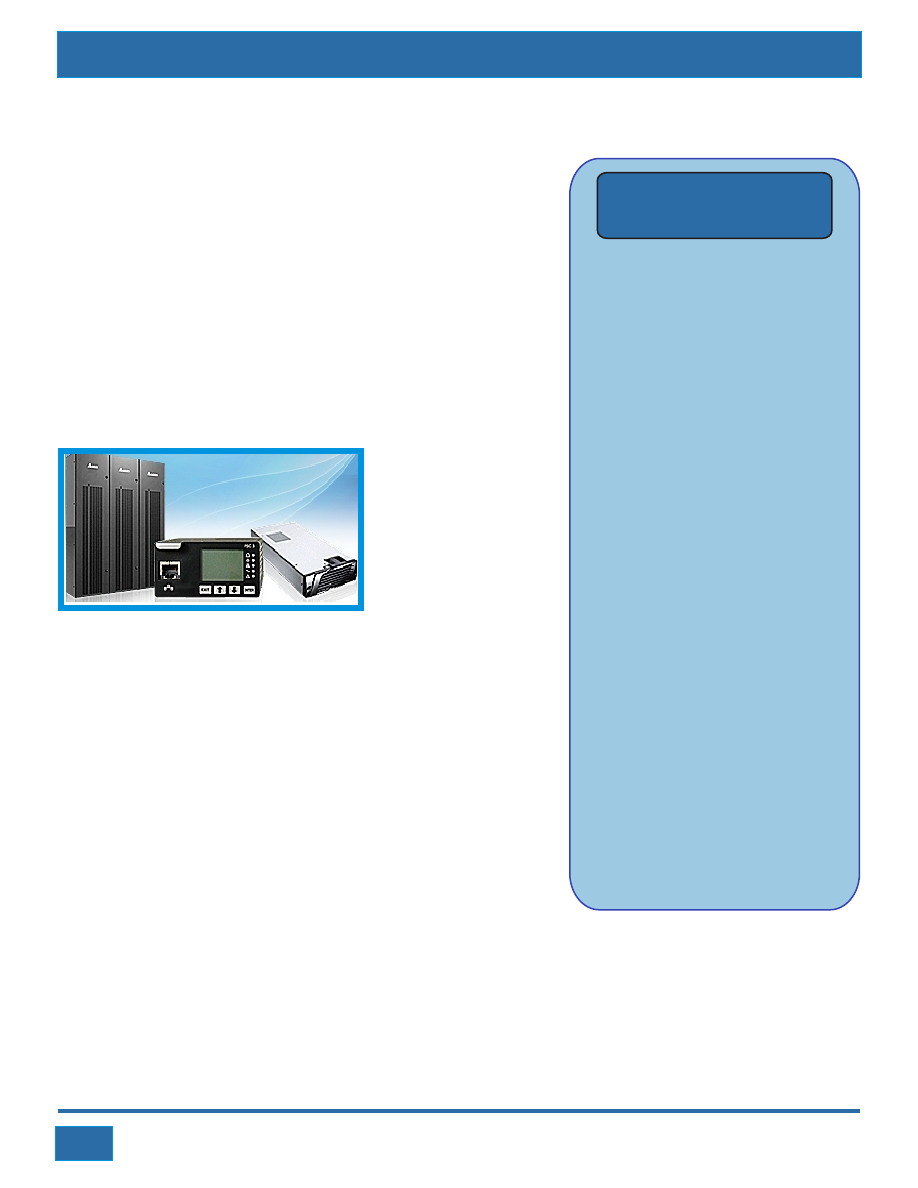
Telecom Power Solutions
www.newtech.pk
With its high reliability
and economic efficiency,
D e l t a E l e c t r o n i c s
provides telecom power
s y s t e m s f o r t h e
t e l e c o m m u n i c a t i o n s
industry. Most modern
r e m o t e m o n i t o r i n g
technologies provide
significant savings for easy site maintenance. The company's telecom
power systems are widely used in wireless and fixed line environments
and are applicable to network equipment, xDSL terminal, mobile
broadband, cellular sites, and transmission applications.
Delta's telecom power system offer solutions with international and
regional telecom and environmental standards and are manufactured
in TL 9000 / ISO 14000 facilities
Address: 809 - Ravi Block near Khrak Stop, Multan Road Lahore.
Pakistan.
Phone: +92-42-37490497
Cell No: +92-321-8801111 & +92-322-8091111
Company Contact: