
Patron/Executive Editor
Dr. Manzoor Hussain Soomro
Director General, PASTIC
Editors
Ms. Nageen Ainuddin
Mr. M. Aqil Khan
Dr. Saima Tanveer
Ms. Saima Majeed
Composer
Ms. Shazia Parveen
T
ECHNOLOGY
R
OUNDUP
Technology Information Section (TIS)
Pakistan Scientific & Technological Information Centre
PASTIC
Nov-Dec, 2010
Vol. 2, No. 6
A NEWS BULLETIN FROM
Tech News Headlines
Forthcoming Tech Events
Tech & Trade Offers
Phone: 051-9248103-4, 9248111
Fax: 051-9248113
Email:director@pastic.gov.pk
Web: www.pastic.gov.pk
PASTIC National Centre
Quaid-i-Azam University Campus
P.O. Box 1217, Islamabad
Editorial Board
l Artificial White Light becomes Eye-Friendly
l Bacteria Grow Electrical Hair: Specialized Bacterial Filaments Shown to
Conduct Electricity
l Cardiac Imaging Breakthrough Developed
l Wind Farms Extend Growing Season in Certain Regions
l Mimicking Nature, Water-Based Artificial Leaf Produces Electricity
l Plastic Made to Conduct Electricity
l Graphene Technology for Improvements in Bluetooth Headsets and
other Devices
l Twelfth International Conference on Information and Communications
Security (ICICS - 2010)
l BIT Life Sciences 1st Annual World Congress of EndoBolism
l The Optical Fiber Communication Conference Exposition and the National
Fiber Optic Engineers Conference
th
l 8 Engineering Asia International Exhibition and Conference
l Power & Alternative Energy Asia 2011 International Exhibition & Conference
l Oil & Gas Asia 2011 International Exhibition & Conference
lFix Panel
lStand-Alone Solar Power
Systems

Technology Roundup
2
Tech News
Technology Roundup
Artificial White Light Becomes Eye-Friendly
http://ichf.edu.pl
Tired eyes and the impression that white is artificial are known to everyone who
spends time in places lighted by popular non-thermal sources like fluorescent lamps
or LEDs. Scientists from laboratories all over the world have been trying to eliminate
these unpleasant side effects for years in their search for methods to recreate
sunlight, which is the most natural light for humans. The Researchers team led by Dr
Jerzy Karpiuk from Institute of Physical Chemistry of the Polish Academy of
Sciences and the Faculty of Chemistry of the University of Warsaw have discovered a
class of organic molecules emitting white light with continuous spectrum covering almost the entire visible
range. It is also important that the emission of the white light was obtained from one chemical compound
with a very simple structure.
White is a special color which is created as a result of mixing light of all wavelengths in the visual range i.e.,
from approximately 420 to 730 nanometers (one nanometer is one billionth part of a meter). The white color
of fluorescent lamps and similar artificial sources is created by the mixture of three colors only: red, green
and blue, which come mainly from the non-continuous emissions of various inorganic (halophosphate or
triphosphate) luminophores. The light obtained in this way is devoid of many color components, and it is
this effect that is responsible for the unpleasant visual sensations. In addition, the need to use several
substances lowers the energetic efficiency of light sources and complicates their manufacturing technology.
The research team observed white light emission continuously covering virtually the entire visible range. Its
source is crystal violet lactone (CVL), a substance produced in mass quantities and commonly used in copy
paper as the so-called dye precursor. A CVL molecule has two fluorophores embedded in its structure and
responsible for the emission of light: one for blue and the other one for orange. The contribution of each of
them to CVL's dual fluorescence heavily depends on the environment of the molecule which modifies the
energetic of their excited states. "By properly adjusting the molecule's surrounding, it is possible to control
the parameters of the emission spectrum, and consequently, to change the color or shade of the white light
obtained.
The deeper significance of research lies in the discovery that white fluorescence is a general property of CVL
type molecules. The dependence of excited state energetic on molecular structure allows predicting the
width, shape and other parameters of the dual fluorescence spectrum, and so enables the engineering and
customized design of white fluorophores. It turns out that even very small molecules can emit continuous
white light. This fact opens up a new perspective for the construction of innovative eye-friendly light sources.
Bacteria Grow Electrical Hair: Specialized Bacterial Filaments Shown to
Conduct Electricity
The team of biophysicists led by El-Naggar, assistant professor of physics and astronomy
at the College of Letters, Arts and Sciences from University of Southern California
discovered that Some bacteria grow electrical hair that lets them link up in big biological
circuits. The finding suggests that microbial colonies may survive, communicate and
share energy in part through electrically conducting hairs known as bacterial nanowires.
This is the first measurement of electron transport along biological nanowires produced by bacteria; it is the
first step in finding ways to destroy harmful colonies, such as biofilms on teeth. Biofilms have proven highly
resistant to antibiotics.
The same knowledge could help to promote useful colonies, such as those in bacterial fuel cells under
development at USC and other institutions. The flow of electrons in various directions is intimately tied to the
metabolic status of different parts of the biofilm. Bacterial nanowires can provide the necessary links for the

3
Technology Roundup
survival of a microbial circuit.
A bacterial nanowire looks like a long hair sticking out of a microbe's body. Like human hair, it consists mostly
of protein. To test the conductivity of nanowires, the researchers grew cultures of Shewanella oneidensis MR-
1, a microbe previously discovered by co-author Kenneth Nealson, Wrigley Professor of Geobiology at USC
College. Shewanella tends to make nanowires in times of scarcity. By manipulating growing conditions, the
researchers produced bacteria with plentiful nanowires.
The bacteria, were then deposited on a surface dotted with microscopic electrodes. When a nanowire fell
across two electrodes, it closed the circuit, enabling a flow of measurable current. The conductivity was similar
to that of a semiconductor modest but significant. When the researchers cut the nanowire, the flow of current
stopped. Electricity carried on nanowires may be a lifeline. Bacteria respire by losing electrons to an acceptor
for Shewanella, a metal such as iron. (Breathing is a special case: Humans respire by giving up electrons to
oxygen, one of the most powerful electron acceptors.) When an electron acceptor is scarce nearby, nanowires
may help bacteria to support each other and extend their collective reach to distant sources.
The researchers noted that Shewanella attach to electron acceptors as well as to each other, forming a colony
in which every member should be able to respire through a chain of nanowires. This would be basically a
community response to transfer electrons and it would be a form of cooperation.
Nanowires also have been proposed as conductive pathways in several diverse microbes.The current
hypothesis is that bacterial nanowires are in fact widespread in the microbial world, and it is suggested that
nanowires may help bacteria to communicate as well as to respire.Bacterial colonies are known to share
information through the slow diffusion of signaling molecules. Nealson argued that electron transport over
nanowires would be faster and preferable for bacteria communal strategy for survival may hold lessons for
higher life forms.
In addition to El-Naggar, Gorby and Nealson, the study's authors were Thomas Yuzvinsky of USC College;
Greg Wanger of The J. Craig Venter Institute; and Kar Man Leung, Gordon Southam, Jun Yang and Woon
Ming Lau from the University of Western Ontario.
www.usc.edu
Cardiac Imaging breakthrough Developed
Research led by Dr. James White and his colleagues at The University of Western
Ontario has led to a new imaging technique, which provides a single, 3D high-
resolution image of the heart revealing both its vasculature and the presence of scar
tissue within the muscle. This novel imaging was performed using a 3-Tesla MRI at
Western's Robarts Research Institute.
Myocardial (heart) scar tissue can be imaged using MRI, but now it is possible to take
this imaging to another level. This is the first time that researchers have been able to
visualize myocardial scar and the heart's blood vessels at the same time. They are able
to construct a three dimensional model of a person's heart to immediately understand the relationship
between the heart's blood vessels and related permanent injury. This will help and direct surgeons and
cardiologists to better target the blood vessels that lead to muscle capable of responding to their therapy,
rather than to muscle that is irreversibly diseased. The technique works by first acquiring a 3D coronary
image using a continuous infusion of a contrast called gadolinium, which makes the blood-pool light up
brightly. The 3-T MRI takes images as this contrast is infused into the blood stream, providing a high
resolution, 3-D image of the heart showing coronary blood vessels. Scar tissue is slow to give up this contrast
agent and its signal is therefore retained despite a washing out of contrast from the blood stream and normal
tissues. A repeat image, performed 20 minutes later, highlights the heart's scar, also in 3D. Because the two
images are taken in the identical way using the exact same MRI pulse sequence, they're already perfectly
suited to be fused to one another. The result is a fused, 3D model of the heart that shows both the heart's
vessels and scar tissue.
The imaging technique was performed on 55 patients referred for either bypass surgery or a specialized

4
Technology Roundup
pacemaker designed to improve heart function called Cardiac Resynchronization Therapy (CRT),
demonstrating that the procedure was clinically feasible. The study was able to demonstrate that this novel
imaging technique may be valuable in the planning of these vascular-based cardiac interventions. Dr White
describes that in bypass or angioplasty procedures surgeons have to decide whether or not to open up blocked
blood vessels, but if they can see there is scar in that region, no benefit will be expected. Similarly, CRT
pacemaker leads delivered to regions of scarred heart muscle may prevent any benefit from this therapy.
www.uwo.ca
Wind Farms Extend Growing Season in Certain Regions
http://illinois.edu
Wind power is likely to play a large role in the future of sustainable, clean energy, but wide-
scale adoption has remained elusive. The researcher's team led by University of Illinois
professor of atmospheric sciences Somnath Baidya Roy, have found wind farms' effects on
local temperatures and proposed strategies for mediating those effects, increasing the
potential to expand wind farms to a utility-scale energy resource.
Roy first proposed a model describing the local climate impact of wind farms in one of his
research paper of 2004 paper. But this and other similar studies have been based solely on
models because of lack of available data. In fact, no field data on temperature were publicly
available for researchers to use, until Roy met Neil Kelley at a 2009 conference. Kelley, a principal scientist
at the National Wind Technology Center, part of the National Renewable Energy Laboratory, had collected
temperature data at a wind farm in San Gorgonio, Calif., for more than seven weeks in 1989.
Analysis of Kelley's data corroborated Roy's modeling studies and provided the first observation-based
evidence of wind farms' effects on local temperature. The study found that the area immediately
surrounding turbines was slightly cooler during the day and slightly warmer at night than the rest of the
region.
As a small-scale modeling expert, Roy was most interested in determining the processes that drive the
daytime cooling and nocturnal warming effects. He identified an enhanced vertical mixing of warm and cool
air in the atmosphere in the wake of the turbine rotors. As the rotors turn, they generate turbulence, like the
wake of a speedboat motor. Upper-level air is pulled down toward the surface while surface-level air is
pushed up, causing warmer and cooler air to mix.
The question for any given wind-farm site then becomes, will warming or cooling be the predominant effect.
It depends on the location. For example, in the Great Plains region; the winds are typically stronger at night,
so the nocturnal effect may dominate. In a region where daytime winds are stronger for example a sea breeze
then the cooling effect will dominate. It is a very location-specific thing.
Many wind farms, especially in the Midwestern United States, are located on farmland. According to Roy,
the nocturnal warming effect could offer farmland some measure of frost protection and may even slightly
extend the growing season.Understanding the temperature effects and the processes that cause them also
allows researchers to develop strategies to mitigate wind farms' impact on local climate. The group
identified two possible solutions. First, engineers could develop low-turbulence rotors. Less turbulence
would not only lead to less vertical mixing and therefore less climate impact, but also would be more
efficient for energy generation. However, research and development for such a device could be a costly,
labor-intensive process.
The second mediation strategy is locational. Turbulence from the rotors has much less consequence in an
already turbulent atmosphere. The researchers used global data to identify regions where temperature
effects of large wind farms are likely to be low because of natural mixing in the atmosphere, providing ideal sites.
These regions include the Midwest and the Great Plains as well as large parts of Europe and China," Roy said. "This
was a very coarse-scale study, but it would be easy to do a local-scale study to compare possible locations."
Next, Roy's group will generate models looking at both temperature and moisture transport using data from and
simulations of commercial rotors and turbines. They also plan to study the extent of the thermodynamic effects, both in
terms of local magnitude and of how far downwind the effects spread.
5
Technology Roundup
Mimicking Nature, Water-Based 'Artificial Leaf' Produces Electricity
www.ncsu.edu
A researcher team led by Dr. Orlin Velev, Invista Professor of Chemical and
Bimolecular Engineering has shown that water-gel-based solar devices
"artificial leaves" can act like solar cells to produce electricity. The findings
prove the concept for making solar cells that more closely mimic nature. They
also have the potential to be less expensive and more environmentally friendly
than the current standard-bearer: silicon-based solar cells.
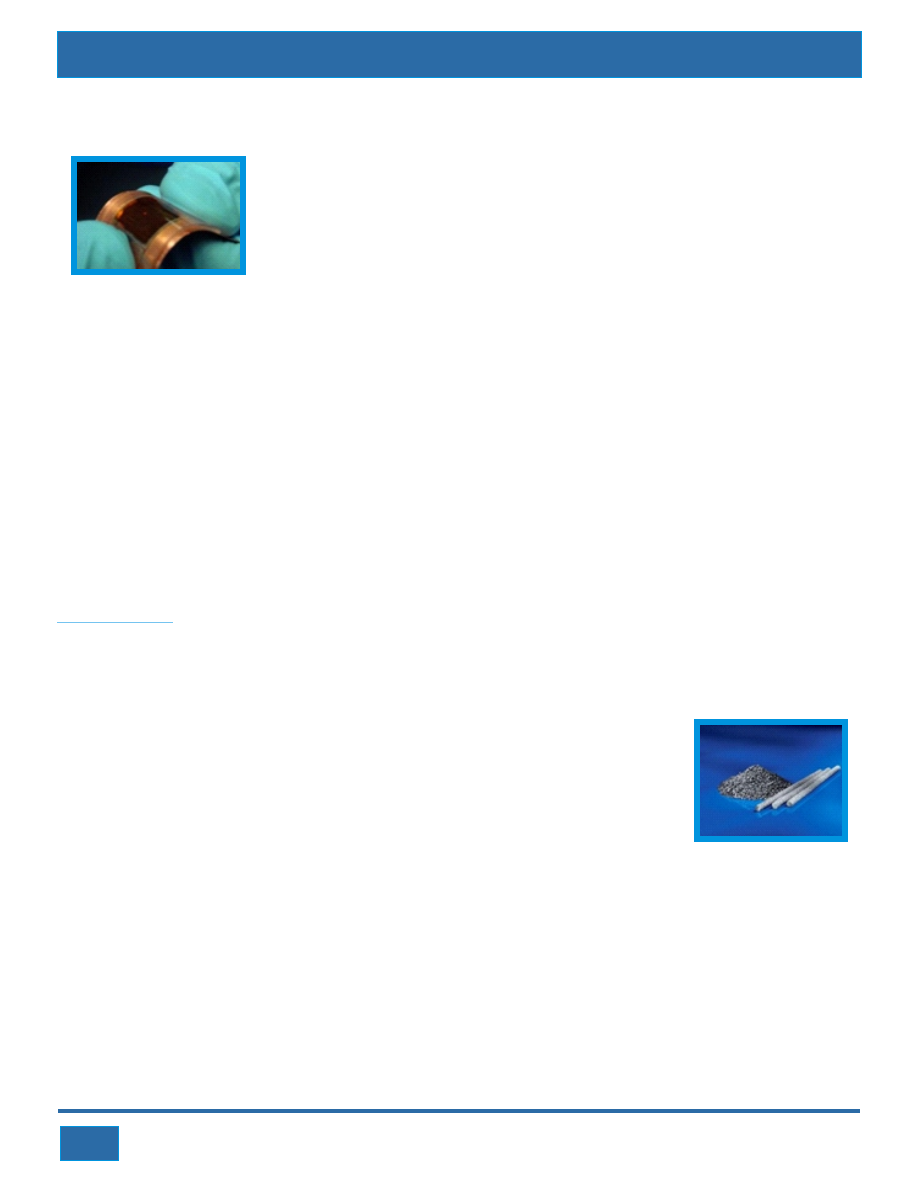
The bendable devices are composed of water-based gel infused with light-
sensitive molecules. The researchers used plant chlorophyll in one of the experiments coupled with
electrodes coated by carbon materials, such as carbon nanotubes or graphite. The light-sensitive
molecules get excited by the sun's rays to produce electricity, similar to plant molecules that get excited
to synthesize sugars in order to grow. The research team hopes to learn how to mimic the materials by
which nature harnesses solar energy." Although synthetic light-sensitive molecules can be used, Velev
says naturally derived products like chlorophyll are also easily integrated in these devices because of
their water-gel matrix.
The concept is proved. Now the researchers will work to fine-tune the water-based photovoltaic devices,
making them even more like real leaves.
The other challenge is to change the water-based gel and light-sensitive molecules to improve the
efficiency of the solar cells. Velev even imagines a future where roofs could be covered with soft sheets of
similar electricity-generating artificial-leaf solar cells. The researchers believe that the concept of
biologically inspired 'soft' devices for generating electricity may in the future provide an alternative for
the present-day solid-state technologies. Researchers from the Air Force Research Laboratory and
Chung-Ang University in Korea co-authored the study.
Plastic Made To Conduct Electricity
Plastic that conducts electricity and metal that weighs no more than a feather
sounds like an upside-down world. Yet researchers have succeeded in making
plastics conductive and cutting production costs at the same time. Plastic is light
and inexpensive, but insulates electric current. Metal is resilient and conducts
electricity, but it is also expensive and heavy. Up to now, it has not been possible
to combine the properties of these two materials. The IFAM in Bremen has
devised a solution that combines the best of both worlds without requiring new
machinery to process the components.
The greatest challenge for the researchers was getting the plastic to conduct electricity, for plastic-metal
hybrids are to be used in the very places where plastic components are equipped with printed circuit
boards, for instance in cars or aircraft. Until now, this was only possible via the roundabout route of
punching and bending metal sheets in an elaborate process in order to integrate them in a component.
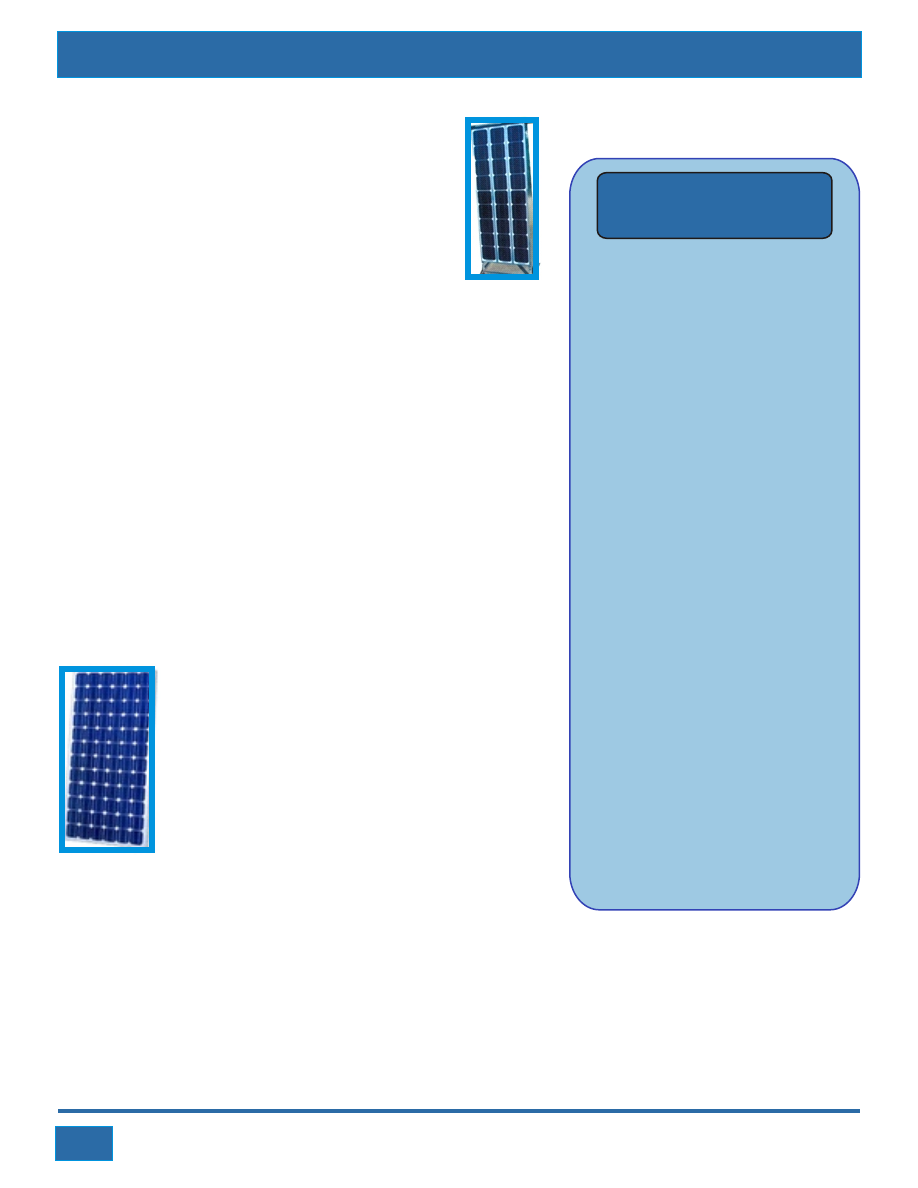
The new solution is simple: a composite material. The different materials are not merely slotted together
or bonded, but mixed in a special process to form a single material. This process produces a
homogeneous and fine-meshed electrically conductive network. The composite possesses the desired
chemical stability and low weight, coupled with the electrical and thermal conductivity of metals. As it
will no longer be necessary in future to integrate metal circuit boards and the components will soon be
able to be produced in a single work step, the production costs and the weight of the material are
drastically reduced.
Automobile and aircraft manufacturers, in particular, will benefit from this development. The

6
Technology Roundup
Graphene Technology for Improvements in Bluetooth Headsets and
Other Devices
Alexander Balandin, a professor of electrical engineering, along with a graduate
student at the UC Riverside Bourns College of Engineering have built and
successfully tested an amplifier made from graphene that could lead to more
efficient circuits in electronic chips, such as those used in Bluetooth headsets and
toll collection devices in cars. Graphene, a single-atom thick carbon crystal, was
first isolated in 2004 by Andre Geim and Konstantin Novoselov, who won the
Nobel Prize in physics for that work. Graphene has many extraordinary
properties, including superior electrical and heat conductivity, mechanical strength and unique optical
absorption.
The demonstration at UCR of the graphene amplifier with signal processing functions is a major step
forward in graphene technology because it is a transition from individual graphene devices to graphene
circuits and chips.
The triple-mode amplifier based on graphene has advantages over amplifiers built from conventional
semiconductors, such as silicon, The graphene amplifier reveals greater functionality and a faster speed
because of graphene's electrical am bipolarity (current conduction by negative and positive charges).
It can be switched between different modes of operation by a simple change of applied voltage. These
characteristics are expected to result in simpler and smaller chips, a faster system response and less
power consumption.
The fabrication and experimental testing were performed in Balandin's Nano-Device Laboratory. The
co-authors of the paper are Guanxiong Liu, one of Balandin's graduate students, Kartik Mohanram, an
assistant professor at Rice University, and Xuebei Yan, one of Mohanram's graduate students.
The triple-mode amplifier can be charged at anytime during operation in the three modes: positive,
negative or both. By combining these three modes, the researchers demonstrated the amplifier can
achieve the modulation necessary for phase shift keying and frequency shift keying, which are widely
used in wireless and audio applications.
These applications include: Bluetooth headsets for cell phones; radio frequency identification (RFID),
which is used in wireless products, including toll collection devices in cars, cards used to pay for public
transportation and identification tags on animals; and ZigBee, a communication protocol used in
devices as such as wireless light switches with lamps and electrical meters with in-home-display.
www.ucr.edu
headlamp housings on a car, for example, are made of plastic. Until now, punched metal sheets have
been installed in order to illuminate the headlamps. If the housings were fitted with circuit boards made
of the conductive plastic-metal hybrids, they could be produced more efficiently and at lower cost than
ever before. Many components of an aircraft, such as the fuselage, are partly made of carbon fiber
composites (CFC). However, they lack the ability to conduct electricity. A stroke of lightning would have
fatal consequences. A plastic-metal hybrid would be a good alternative for discharge structures on
components.
www.fraunhofer.de

7
Technology Roundup
Forthcoming Tech Events
Tech & Trade Offers
Twelfth International Conference on Information and Communications Security (ICICS - 2010)
www.conferencealerts.com
BIT Life Sciences' 1st Annual World Congress of EndoBolism
www.bitlifesciences.com
The Optical Fiber Communication Conference Exposition and the National Fiber Optic
Engineers Conference
www.conference-service.com
th
8 Engineering Asia International Exhibition and Conference
www.engineeringasia.net
Power & Alternative Energy Asia 2011 International Exhibition & Conference
www.powerasia.com.pk
Oil & Gas Asia 2011 International Exhibition & Conference
www.ogpoasia.com
15-17 December, 2010
Barcelona, Spain
25 - 27 January, 2011
Xiamen, China
06 -10 March 2011
Los Angeles, United States
28 - 30 March 2011
Karachi Expo Centre
28 - 30 March, 2011
Karachi Expo Centre
28 - 30 March, 2011
Karachi Expo Centre, Pakistan
Fix Panel
Solar Cells:
Solar absorber
Mono-crystalline cells
Solar Cells Performance
20-Years 100% and 30-Years 95%
Panel Capacity
144-Watts
288-Watts
432-Watts
576-
Watts
Energy output percentage
Average 70% for 6-hrs
Average 90% for 9 hrs
Net energy output per day
605-watt
1210-watts
1815-watts
2420-watts
8
Technology Roundup
About PASTIC
PASTIC serves as a gateway for
Scientific & Technological
Information for R&D by
catering to the Information
n e e d s o f r e s e a r c h e r s ,
entrepreneurs, Industrialists,
educationists, policy makers
a n d p l a n n e r s t h r o u g h
anticipatory and responsive
information services.
T e c h n o l o g y I n f o r m a t i o n
Service Section, PASTIC works
exclusively for support and
promotion of technological
information on trade and
industry in the country.
“Technology Roundup” is a
news bulletin that provides
l a t e s t a n d i n n o v a t i v e
technology news, forthcoming
events, etc. It also promotes
products, technologies and
services globally in sectors
such as Agro-Industry, Bio-
Technology, Building Material,
B u s i n e s s , C h e m i c a l s ,
Electronics, Energy, Fisheries,
Food Processing, Machinery,
P a c k a g i n g a n d M i n i n g ,
Pharmaceuticals and Textiles.
Please give us your feedback and address queries to director@pastic.gov.pk
Panel:
Battery
Controllers
panel Dimensions (HxW)
73”x30” 73”x60” 73”x90” 73”x120”
Battery Storage :
70-AH 100-SH 160-AH 200-AH
Battery Life
4 to 6 years
Charge Controller Auto Cut off at 14.2/27.4 V Inverter
12/24-V to 220-V
Low cut off 11 V/22V
Monitoring
GPRS/GPS (Optional)
Overload Cut off
95% Load
Company Contact:
AGECO (Pvt.) Ltd.
M. Aslam Azad (Managing Director)
7&8 First Floor Hill View Plaza Blue Area, Islamabad.
Phone: 051-2823336
Fax: 051-2270126
E-mail:
ageco@economia.com.pk
www.economia.com.pk
Stand-Alone Solar Power Systems
www.sharifinternational.net.
Solar for villages in remote areas, homes and summer
cottage, microwave / Radio repeater stations, Medical
facilities in rural areas, emergency communication, water
quality and environmental data monitoring, drinking
water and livestock water pumping
Small-scale irrigation pumping, Cathodic protection,
Environmental data monitoring , Railway signals, Street
lighting and scale desalination
Company Contact:
Sharif International
Lt. Col® Tariq Khattak (CEO)
House # 151-A, St # 08, Chaklala Scheme No.3, Rawalpindi.
Phone: 051-5766380
Fax: 051-5598354
E-mail:
bilal.malik@sharifinternational.net