
Patron/Executive Editor
Dr. Manzoor Hussain Soomro
Director General, PASTIC
Editors
Ms. Nageen Ainuddin
Mr. M. Aqil Khan
Dr. Saima Tanveer
Ms. Saima Majeed
Composer
Ms. Shazia Parveen
T
ECHNOLOGY
R
OUNDUP
Technology Information Section (TIS)
Pakistan Scientific & Technological Information Centre
PASTIC
Sep-Oct, 2010
Vol. 2, No. 5
A NEWS BULLETIN FROM
Tech News Headlines
Forthcoming Tech Events
Tech & Trade Offers
Phone: 051-9248103-4, 9248111
Fax: 051-9248113
Email:director@pastic.gov.pk
Web: www.pastic.gov.pk
PASTIC National Centre
Quaid-i-Azam University Campus
P.O. Box 1217, Islamabad
Editorial Board
l
VRp (precision PWM voltage
regulator)
l
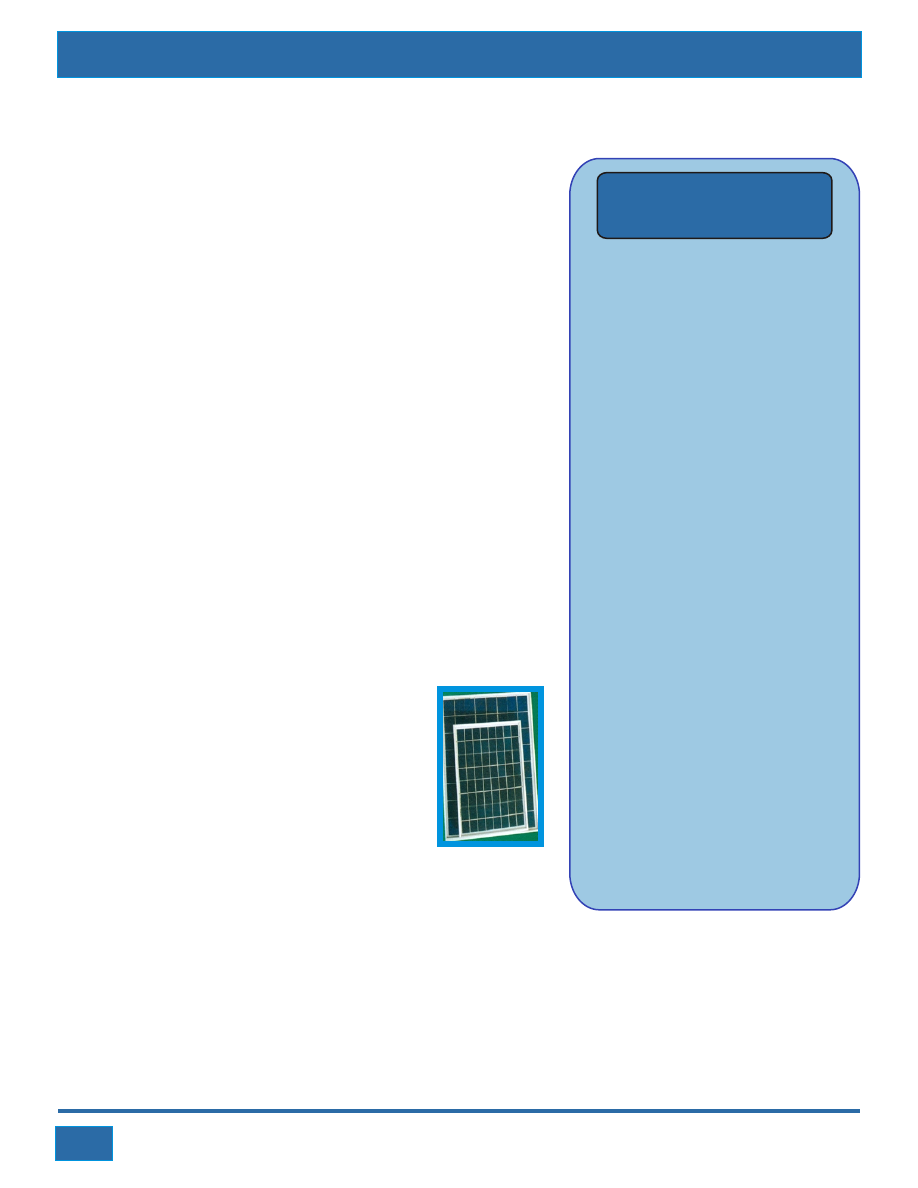
Akhter PV Modules
lCrime Solving made Digital through mobile phone.
lGenetic Code 20: Novel Artificial Proteins for Industry and Science
lNext Generation CT Scanner Views Whole Organs in a Second
lVirus-Built Battery could Power Cars & Electronic Devices
lHighly Directional Terahertz Laser: Semiconductor Suitable for
Security Screening, Chemical Sensing and Astronomy
lEngineered Tobacco Plants have more Potential as a Biofuel
l'Smart' Polymer Reduces Radioactive Waste at Nuclear Power Plants
l
The Middle East Chemical Summit
l
MTAP 2010 (6th International Machine Tools & Automation
Exhibition Incorporating Automotive Technology)
l
4th Annual Uniqsis Flow Chemistry Symposium
l
Saudi MediHealth
l
Health Asia
l
ITIF Asia (International Trade & Industrial Machinery Show)

Technology Roundup
2
Tech News
Technology Roundup
Crime Solving made Digital through mobile phone
www.aip.org
Researchers at Purdue University in West Lafayette, Indiana designed a device to extract the memory
of a mobile phone for crime scene evidence that help to catch the criminals. Solving crimes is not easy
but this new technology may help cops get one step ahead of the bad guys. The phone's memory card is
placed in the device where computer software extracts and decodes the information revealing call
history, text messages, emails, images, video and the calendar. This information is then used by police
as evidence in crimes.
At nearly every crime scene cell phones, computers or PDAs are found by police in USA. A lot of times,
these evidences take police to next step in the investigative lead and will tell who this person has been
in touch with or who they have been emailing or texting. Cyber forensic researchers developed a device
called a flasher box used for extracting a full memory of mobile phone and transfer it to a computer.
The phone's memory card is removed and plugged into flasher box and computer software extracts the
phone's coded information and decodes the information to reveal the phone's call history, text
messages, e-mails, calendar, images and videos. This information is then used by cops as clues to solve
crimes. It is an inside look into that person, much more than just a fingerprint. The technology also
helps victims of serious crimes by finding clues from computers to show who last contacted the victim
and last visited Web sites or e-mails. It's a way of helping to find the perpetrator or the suspect.
Researchers are now developing a first-responder digital evidence collection kit to gather evidence
immediately at the scene of a crime. In addition to computers, cyber forensics specialists can also
recover information from cellular phones, mp3 players, CDs, DVDs and more. Approximately 80
to
90 percent of legal cases today involve some sort of digital evidence in the United States of America.
Genetic Code 20: Novel Artificial Proteins for Industry and Science
The creation of synthetic proteins plays an important role for economy and
science. By the integration of artificial amino acids in proteins (genetic
code engineering), their already existing qualities can be systematically
improved allowing new biological features to arise. Scientists at the Max
Planck Institute of Biochemistry (MPIB) in Martinsried near Munich,
Germany, have succeeded in taking another important step in this
research area. For the first time, they were able to integrate three different
synthetic amino acids into one protein in a single experiment.
The translation of information during the production of proteins
(protein synthesis) is determined by the genetic code. 20 amino acids form
the standard set of which proteins are built. In natural conditions, however, several hundred amino
acids can be found and, of course, new amino acids can also be produced in the laboratory. With
regard to their properties, they differ from the 20 standard amino acids, and by their integration in
proteins, specific structural and biological characteristics of proteins can be systematically changed.
So far, only one type of synthetic amino acid could be inserted into a protein during a single
experiment in a residue-specific manner; thus, only one property of a protein could be modified at
once. The research group of Molecular Biotechnology at the MPIB, has now made important
methodical progress in the area of genetic code engineering. They are able to substitute three

3
Technology Roundup
different natural amino acids by synthetic ones at the same time in a single experiment. The research
area of genetic code engineering and code extension has with this result reached a new development
phase. This method could be of great importance, particularly for the industry because the production
of artificial proteins by genetic code engineering which demonstrates a solid basis for the
development of new technologies. During integration, synthetic amino acids confer their
characteristics to proteins. Thus, the development will allow the synthesis of totally new classes of
products, whose chemical synthesis has not been possible so far by conventional protein engineering
using only the 20 standard amino acids. This method, in the future will make possible to tailor
industrial relevant proteins with novel properties: for example proteins containing medical
components.
www.mpg.de
Next Generation CT Scanner Views Whole Organs in a Second
Next generation CT scanners Aquilion one has been launched by UT
Southwestern Medical Centre in North Texas which allows doctors to image an
entire organ in less than a second or track blood flow through the brain or to a
tumor all with less radiation exposure to patients. Aquilion One dynamic
volume computed tomography (CT) can create a detailed 3-D movie of an organ
in real time that makes it particularly useful for quickly diagnosing strokes and
heart attacks, for example, where diagnostic speed can be a critical factor in
survival and recovery. Because of this machine's technology radiologists
anticipate better visualization in neurology, trauma, whole body, lung, cardiac,
vascular and pediatric studies. Other applications include providing distinctive
capabilities in orthopedic and joint studies, diagnosing renal function, and
even vocal-cord analysis.
For patients, the new technology can mean less time in a scanner and less exposure to radiation. Since
dose has been a concern in the medical literature for a long time and people have been very concerned
about it. One of the great things about this is that you can do a scan with about half the radiation dose
and half the contrast media, so the dose is less and the image is better. Other scanners piece together
strips of images to compile a complete picture, using four-, 16-, 32- or 64-slice machines. Aquilion
One, manufactured by Toshiba, exposes patients to less radiation because one strip covers a larger
area, therefore requiring fewer swaths overall and less time. The result can be as much as 80 percent
less radiation in some cases, according to published research.
Aquilion One uses 320 high-resolution X-ray detectors in each rotation. What takes 12 to 15 seconds
for other scanners to complete takes only about a third of a second for the 320-slice machine. It can
take images continuously or intermittently, allowing doctors to see the heart pumping, or blood or
medication working through the vascular system.
One of the most exciting things about this technology is the real-time ability to image changing
anatomy that enables the doctors to image physiology such as blood flow in parts of the brain, but now
one can image the entire brain faster and more safely. The faster speed may also mean less required
contrast materials and can also benefit patients who have difficulty remaining still, such as children,
the elderly and trauma patients. Using Aquilion One, UT Southwestern physicians said they will be
able to accurately diagnose a stroke or heart attack in about 20 minutes, as well as be able to gauge
tissue damage. Currently, doctors often perform a battery of tests to confirm a heart attack an EKG,
CT angiography, nuclear testing and catheterization, which can take hours or even days.

4
Technology Roundup
Virus-Built Battery could Power Cars & Electronic Devices
For the first time, USA researchers have genetically engineered viruses
that build both the positively and negatively charged ends of a lithium-
ion battery. The new virus-produced batteries have the same energy
capacity and power performance as state-of-the-art rechargeable
batteries being considered to power plug-in hybrid cars, and they could
also be used to power a range of personal electronic devices. The new
batteries could be manufactured with a cheap and environmentally
benign process. The synthesis takes place at and below room
temperature and requires no harmful organic solvents, and the materials that go into the battery
are non-toxic.
In a traditional lithium-ion battery, lithium ions flow between a negatively charged anode, usually
graphite, and the positively charged cathode, usually cobalt oxide or lithium iron phosphate. Three
years ago, an MIT team reported that it had engineered viruses that could build an anode by coating
themselves with cobalt oxide and gold and self-assembling to form a nanowire. In the latest work,
the team focused on building a highly powerful cathode to pair up with the anode. Cathodes are
more difficult to build than anodes because they must be highly conducting to be a fast electrode,
however, most candidate materials for cathodes are highly insulating (non-conductive).To achieve
that, the researchers of MIT genetically engineered viruses that first coat themselves with iron
phosphate, then grab hold of carbon nanotubes to create a network of highly conductive material.
Because the viruses recognize and bind specifically to certain materials (carbon nanotubes in this
case), each iron phosphate nanowire can be electrically "wired" to conducting carbon nanotube
networks. Electrons can travel along the carbon nanotube networks, percolating throughout the
electrodes to the iron phosphate and transferring energy in a very short time. Since the viruses are a
common bacteriophage, which infect bacteria but are harmless to humans.The team found that
incorporating carbon nanotubes increases the cathode's conductivity without adding too much
weight to the battery. In lab tests, batteries with the new cathode material could be charged and
discharged at least 100 times without losing any capacitance that is fewer charge cycles than
currently available lithium-ion batteries. The prototype is packaged as a typical coin cell battery,
but the technology allows for the assembly of very light weight, flexible and conformable batteries
that can take the shape of their container., MIT President Susan Hockfield took the prototype
battery to a press briefing at the White House where she and U.S. President Barack Obama spoke
about the need for federal funding to advance new clean-energy technologies. Now that the
researchers have demonstrated they can wire virus batteries at the nanoscale, they intend to pursue
even better batteries using materials with higher voltage and capacitance, such as manganese
phosphate and nickel phosphate, once that next generation is ready, the technology could go into
commercial production. The research was funded by the Army Research Office Institute of the
O
ther clinical applications include patients who can not get an MRI due to the presence of a
pacemaker, or vocal-cord analysis capturing a patient phonating. The machine provides added
flexibility in properly positioning patients with trauma or disabilities, and is sturdy enough to
accommodate obese patients. UT Southwestern physicians also anticipate the Aquilion One device
will be valuable in many of the medical centre’s unique research projects. For example, the ability to
move backward and forward in time through the images may help researchers to visualize better the
effects of tissue damage or vascular flow.
http://www.swmed.edu/

5
Technology Roundup
Institute of Collaborative Technologies, and the National Science Foundation through the Materials
Research Science and Engineering Centres program.
web.mit.edu
Highly Directional Terahertz Laser: Semiconductor Suitable for Security
Screening, Chemical Sensing and Astronomy
www.harvard.edu
A collaborative team of applied scientists from Harvard University and
the University of Leeds have demonstrated a new terahertz (THz)
semiconductor laser that emits beams with a much smaller divergence
than conventional THz laser sources. This new technology opens the
door to a wide range of applications in terahertz science and technology
and Harvard university has filed a broad patent on the invention.
Terahertz rays (T-rays) can penetrate efficiently through paper,
clothing, plastic, and many other materials, making them ideal for
detecting concealed weapons and biological agents, imaging tumors
without harmful side effects, and spotting defects, such as cracks,
within materials. THz radiation is also used for high-sensitivity
detection of tiny concentrations of interstellar chemicals.
Existing THz semiconductor lasers are not suitable for many of these applications because their
beam is widely divergent similar to how light is emitted from a lamp. However by creating an
artificial optical structure on the facet of the laser, researchers are able to generate highly
collimated (i.e., tightly bound) rays from the device. This leads to the efficient collection and high
concentration of power without the need for conventional, expensive, and bulky lenses.
Specifically, to get around the conventional limitations, the researchers sculpted an array of sub-
wavelength-wide grooves, dubbed a metamaterial, directly on the facet of quantum cascade lasers.
The devices emit at a frequency of 3 THz (or a wavelength of one hundred microns), in the invisible
part of the spectrum known as the far-infrared. The researchers are able to reduce the divergence
angle of the beam emerging from these semiconductor lasers dramatically, whilst maintaining the
high output optical power of identical un patterned devices. This type of laser could be used by
customs officials to detect illicit substances and by pharmaceutical manufacturers to check the
quality of drugs being produced and stored.
The use of metamaterials, artificial materials engineered to provide properties which may not be
readily available in Nature, was critical to the researchers' successful demonstration. While
metamaterials have potential use in novel applications such as cloaking, negative refraction and
high resolution imaging, their use in semiconductor devices has been very limited to date. In this
case, the metamaterial serves a dual function: strongly confining the THz light emerging from the
device to the laser facet and collimating the beam, The ability of metamaterials to confine strongly
THz waves to surfaces makes it possible to manipulate them efficiently for applications such as
sensing and THz optical circuits.

6
Technology Roundup
Engineered Tobacco Plants have more Potential as a Biofuel
http://www.jeffersonhospital.org
Researchers from the Biotechnology Foundation Laboratories at
Thomas Jefferson University UK have identified a way to increase the
oil in tobacco plant leaves, which may be the next step in using the
plants for biofuel. Tobacco can generate biofuel more efficiently than
other agricultural crops. However, most of the oil is typically found in
the seeds Tobacco seeds are composed of about 40 percent oil per dry
weight. Although the seed oil has been tested for use as fuel for diesel
engines, tobacco plants yield a modest amount of seeds, at only about
600 kg of seeds per acre. Researchers sought to find ways to engineer
tobacco plants, so that their leaves expressed the oil.
Tobacco is very attractive as a biofuel because the idea is to use plants that are not used in food
production. The researchers have found ways to genetically engineer the plants so that their leaves
express more oil. In some instances, the modified plants produced 20-fold more oil in the leaves.
Typical tobacco plant leaves contain 1.7 percent to 4 percent of oil per dry weight. The plants were
engineered to overexpress one of two genes: the diacyglycerol acytransferase (DGAT) gene or the
leafy cotyledon 2 (LEC2) gene. The DGAT gene modification led to about 5.8 percent of oil per dry
weight in the leaves, which about two-fold the amount of oil produced normally. The LEC2 gene
modification led to 6.8 percent of oil per dry weight. Based on these data, tobacco represents an
attractive and promising 'energy plant' platform, and could also serve as a model for the utilization of
other high-biomass plants for biofuel production.
New 'Smart' Polymer Reduces Radioactive Waste at Nuclear Power Plants
www.acs.org
Scientists in Germany and India are reporting development of a
new polymer that reduces the amount of radioactive waste
produced during routine operation of nuclear reactors. The
structural materials such as carbon steel in power plants' water
cooling systems form deposits of metal oxides when they
interact with coolants. In nuclear power plants, these oxides
trap radioactive ions, leading to buildups of radioactivity that
require costly cleanups of reactor surfaces. Cobalt, present in
some alloys used in the reactors' water systems, is a major
contributor toward this problem because of its long half-life. In
the present study the researchers created an adsorbent material
that unlike conventional ion-exchange resins that are frequently used in reactors is selective for
cobalt but has the unique ability of disregarding iron-based ions. The polymer's high selectivity
increases its appeal, the researchers add, for use in decontamination processes in reactors that
utilize a variety of structural materials.

7
Technology Roundup
Forthcoming Tech Events
The Middle East Chemical Summit
www.wraconferences.com
MTAP 2010 (6th International Machine Tools & Automation Exhibition
Incorporating Automotive Technology)
www.machinetoolpakistan.com
4th Annual Uniqsis Flow Chemistry Symposium
www.scientificupdate.co.uk
Saudi MediHealth
www.saudimedihealth.com
Health Asia
www.health-asia.com
ITIF Asia (International Trade & Industrial Machinery Show)
www.itifasia.com
10-13 October, 2010
Manama, Bahrain.
28 - 30 November
Dammam, Eastern Province, Saudi Arabia.
22 - 24 March 2011
Karachi, Pakistan.
28 - 30 March 2011
Karachi, Pakistan
Karachi, Pakistan.
11 - 13 November, 2010
16 - 17 November, 2010
Cambridge, MA, USA.
Tech & Trade Offers
VRp (precision PWM voltage regulator)
(2-7.5 kwatt, single-phase 120 vac models & 2-22.5 kwatt, three-phase 120/208 vac
models)
(2-15 kwatt, single-phase 230 vac models & 6-45 watt, three-phase 230/400 vac models)
l
Complete cycle correction in 20n mili seconds.
l
Operating AC input voltage range 150-315 with output of 188-275 respectively (for
230 vac).
8
Technology Roundup
About PASTIC
PASTIC serves as a gateway for
Scientific & Technological
Information for R&D by
catering to the information
n e e d s o f r e s e a r c h e r s ,
entrepreneurs, Industrialists,
educationists, policy makers
a n d p l a n n e r s t h r o u g h
anticipatory and responsive
information services.
T e c h n o l o g y I n f o r m a t i o n
Services Section, PASTIC
works exclusively for support
and promotion of technological
information on trade and
industry in the country.
“Technology Roundup” is a
news bulletin that provides
l a t e s t a n d i n n o v a t i v e
technology news, forth coming
events, etc. It also promotes
products, technologies and
services globally in sectors
such as Agro-Industry, Bio-
Technology, Building Material,
B u s i n e s s , C h e m i c a l s ,
Electronics, Energy, Fisheries,
Food Processing, Machinery,
P a c k a g i n g a n d M i n i n g
Pharmaceuticals and Textiles.
Please give us your feedback and address queries to director@pastic.gov.pk
l
No Moving parts.
l
Soft start
l
Automatic Bypass.
RAMCON
Syed Ajmal Shah Gillani [Business Develop Manger]
House # 13, St-60, F-6/3, Islamabad, Pakistan
Phone: 0092-51-2273073, 2824634
Fax: 0092-51-22730036
Mobile: 0092-307-5007766, 0092-302-5500760
E-mail: ashah@ramconpk.com
Ajmal2u@hotmail.com
Company Contact
www.ramconpk.com
Akhter PV Modules
www.akhtersolar.com
Akhter solar modules are a versatile solution for stand-alone power
systems, home light system, solar display, telecommunication and
water pumps. Due to higher system voltages Akhter solar modules
are also suitable for grid connected photovoltaic applications.
l
Quality, protective Design
l
Horizontal or vertical position
l
Robust for extreme conditions
l
Long term performance warranties.
Company Contact:
Akhter Solar LTD.
Mr. Sharjeel Ahmed Sulehri [Manager Sales]
405, Poonch House Complex Saddar, Rawalpindi
Phone: 0092-51-5111221
Mobile: 0092-321-8552534
Fax: 0092-51-5515835
E-mail: sulehri@isb.netsolir.com