
Patron/
Editors
Composer
Executive Editor
Dr. Manzoor Hussain Soomro
Director General PASTIC
Ms. Nageen Ainuddin
Mr. M. Aqil Khan
Dr. Saima Tanveer
Ms. Saima Majeed
Ms. Shazia Parveen
T
R
ECHNOLOGY
OUNDUP
Technology Information Services (TIS)
Pakistan Scientific & Technological Information Centre
PASTIC
May-June, 2010
Vol. 2, No. 3
A NEWS BULLETIN FROM
Tech News Headlines
Forthcoming Tech Events
Tech & Trade Offers
Phone: 051-9248103-4, 9248111
Fax:
051-9248113
Web: www.pastic.gov.pk
Email:director@pastic.gov.pk
PASTIC National Centre
Quaid-i-Azam University Campus
P.O. Box 1217, Islamabad
Editorial Board
l LPG Cylinders and
Gas appliances
Solar Azimth Path
Rotator.
Leksell Gamma Knife®
l
l
n
European Biomass Conference and Exhibition
Pharmatech 2010
7th International Plastic and Packaging Industry Exhibition
Asia-Pacific Desalination Conference 2010
ICBTE-2010, International Conference on Business Technology
and Engineering
BIT 3rd World Congress of Industrial Biotechnology
n
n
n
n
n
n
Solar driven homogeneous water oxidation catalyst
Clams: The Secret Pollutant-detectives in water way
New way to make water
Analytical Eye: Viewing through the data Jungle
World's first Molecular Transistor
Bacterial Computers
Battery Powered Vehicles to be revolutionized by new technology
New Solar pond distillation system
n
n
n
n
n
n
n
Technology Roundup
2
Tech News
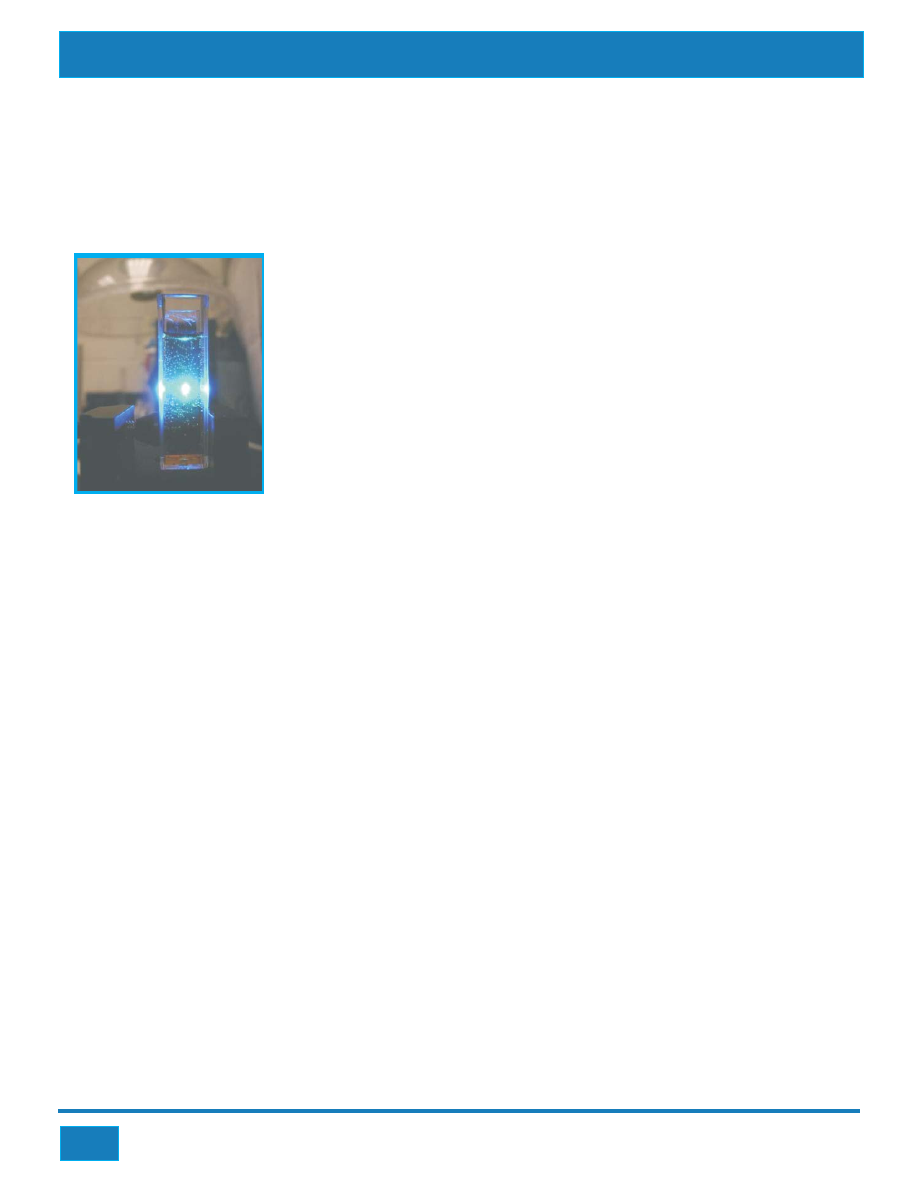
Solar driven homogeneous Water Oxidation catalyst
Emory University chemists in collaboration with Paris Institute of Molecular Chemistry have developed
the most potent homogeneous catalyst known for water oxidation. It is a crucial component for generating
clean hydrogen fuel using only water and sunlight. This fastest, carbon-free molecular water oxidation
catalyst (WOC) has really changed the standard from the other known
homogeneous WOCs. Its Homogeneity not only boosts efficiency but makes
the WOC easier to study and optimize. The new WOC has all qualities, and it
is based on the cheap and abundant element cobalt, adding to its potential to
help solar energy go to mainstream. The research aims to mimic natural
processes of photosynthesis to generate clean fuel. The next step involves
incorporating the WOC into a solar-driven, water-splitting system.
The long-term goal is to use sunlight to split water into oxygen and hydrogen.
Hydrogen becomes the fuel. Its combustion produces the by-product of water
which flows back into a clean, green, renewable cycle. Three main technical
challenges being faced are developing a light collector, a catalyst to oxidize
water to oxygen and a catalyst to reduce water to hydrogen. All three
components need improvement. A viable WOC may be the most difficult
scientific challenge because enzymes are nature's catalysts. The enzyme in
the oxygen-evolving center of green plants is about the least stable catalyst in nature, and one of the
shortest lived. Emory chemists duplicated this complex natural process by taking some of the essential
features from photosynthesis and using them in a synthetic, carbon-free, homogeneous system. The result
is a water oxidation catalyst that is far more stable than the one found in nature.
Nearly all of the more than 40 homogeneous WOCs developed such as containing organic components
that burn up quickly during the water oxidation process but two years back Hill's lab and collaborators
developed the first prototype of a stable, homogenous, carbon-free WOC, which also worked faster than
others known at the time. The prototype, however, was based on ruthenium, a relatively rare and
expensive element. The researchers began experimenting with the cheaper and more abundant element
cobalt. The cobalt-based WOC has proved even faster than the ruthenium version for light-driven water
oxidation.
www.emory.edu
Clams: The Secret Pollutant-detectives in water way
Many streams and rivers are contaminated with pollutants like pesticides, lead, arsenic and PCBs. It is costly to
clean them up. Scientists are using a new, inexpensive way to solve the problem. Contaminants are
lurking in many rivers and streams. Some can be seen, and some cannot. These hidden chemicals ruin
waterways and everything in it. Biologists are able to determine the sources of toxins in water by using
clams as pollutant traps. Clams naturally clean water by feeding absorbing toxins in their tissues as they
draw in water. By placing the clams downstream of industrial parks and highways, they can be analyzed
for pollutants. These clams are opened after exposure to these waters and detach them from their shells;
various lab tests reveal contaminants in the waterway.
Scientists from University of the District of Columbia, Washington, D.C., are teaming up with local
high school students to dredge up clams to use as tiny detectives. They help by finding the source
of toxic leaks. Students put the clams in streams that lead to rivers. Clams then suck in water
swept down from industrial parks and highways. Clams clean the water as they feed, absorbing
Technology Roundup

3
Technology Roundup
New way to make water
http://illinois.edu/
Two scientists from University of Illinois, America have discovered a new way to make water. Not only can
they make water from unlikely starting materials, such as alcohols. Their work could also lead to a better
catalyst, less expensive and more efficient fuel cells.
The unconventional metal hydride is used in oxygen reduction reaction (2H2 + O2 =
2H2O + Energy) for water production since two centuries, but until now no one has
made it work in a homogeneous solution.
In a typical hydrogen fuel cell, the diatomic hydrogen gas enters one side of the cell;
diatomic oxygen gas enters the other side. The hydrogen molecules lose their electrons
and become positively charged through oxidation, while the oxygen molecules gain
four electrons and become negatively charged through reduction. The negatively
charged oxygen ions combine with positively charged hydrogen ions to form water and
release electrical energy. The difficult side of the fuel cell is the oxygen reduction
reaction, not the hydrogen oxidation reaction
These scientists investigated a new generation of transfer hydrogenation catalysts for use as unconventional
metal hydride for oxygen reduction. They used iridium-based transfer hydrogenation catalysts for oxygen
reduction in a homogenous, non-aqueous solution that affects both the oxidation of alcohols, and the
reduction of the oxygen. Since most compounds react with either hydrogen or oxygen, but this catalyst reacts
with both. It reacts with hydrogen to form a hydride, and then reacts with oxygen to make water in a
homogeneous, non-aqueous solvent.
toxins in their tissues. The clams are collected back from streams. Then, scientists open the clams and
detach them from their shell. Later, lab tests will reveal the clam's secret, the kinds and quantities of
pollutants in the water.
www.aip.org
Analytical Eye: Viewing through the data Jungle
www.fraunhofer.de
A large amount of information floods into business databases every day. To achieve their corporate
objectives, companies try to evaluate information relevant to their activities as effectively as possible. In the
day-to-day working environment they use business intelligence programs to collect, evaluate and present
data. But many of the current analytical methods can only display information statically, as
lists or reports. Visualization techniques help to present the information in a form that can
be more easily understood. Scientists are developing analytical techniques that make use
of our ability to identify complex data relationships by means of pictorial images.
Scientist from the Fraunhofer Institute for Computer Graphics Research (ICGD) in
Darmstadt, have developed such analytical methods and visualization techniques that can
be combined into Visual Analytics. The user and the computer interact closely, but the user
is always in the forefront. He or she makes the decisions, not the system.
Instead of tables of figures, the system can display a mosaic of colored surfaces. If columns
of figures differ from the customary data, they are shown in a different color or with a different structure, so
that they catch the eye immediately. By concentrating on these patterns, users can evaluate the data more
accurately. Connections or relationships that could easily be overlooked also become more noticeable. This
makes it easier to reach reliable decisions. Visual Analytics has a lot to offer the financial market in particular.
Trends and risks in global finance could be identified more quickly.

3
4
Technology Roundup
World's first Molecular Transistor
www.yale.edu
A group of scientists from Yale University and the Gwangju Institute of Science and Technology in
South Korea, has succeeded in creating the first transistor made from a single molecule. The
researchers showed that a benzene molecule attached to gold contacts could behave just like a silicon
transistor. They were able to manipulate the molecule's different energy states depending on the
voltage they applied to it through the contacts. By manipulating the energy states, they were able to
control the current passing through the molecule. It is like rolling a ball up and over a hill, where the ball
represents electrical current and the height of the hill represents the molecule's
different energy states. They were able to adjust the height of the hill, allowing
current to get through when it was low, and stopping the current when it was high."
In this way, the molecule is used in the same way as regular transistors are used.
The work builds on previous research of the group in 1990, which demonstrated
that individual molecules could be trapped between electrical contacts. Now they
developed additional techniques over the years that allowed them to "see" what was
happening at the molecular level. Being able to fabricate the electrical contacts on
such small scales, identifying the ideal molecules to use, and figuring out where to
place them and how to connect them to the contacts were also key components of
the discovery. There were a lot of technological advances and understanding was built up over many
years to make this happen. There is a lot of interest in using molecules in computer circuits because
traditional transistors are not feasible at such small scales. This scientific research has fulfilled a
decade-long quest and shown that molecules can act as transistors.
Bacterial Computers
www.biomedcentral.com
A research team of graduate students from the biology and mathematics departments at Missouri
Western State University in Missouri and Davidson College in North Carolina, USA engineered the DNA
of Escherichia coli bacteria, to create 'bacterial computers' with the potential to solve complicated
mathematics problems. The findings of the research demonstrate that computing in living cells is
feasible, thus opening the door to a number of applications. The second-generation bacterial computers
illustrate the feasibility of extending the approach to other computationally challenging math problems,
creating bacterial computers capable of solving a classic mathematical problem
known as the Hamiltonian Path Problem. The research extends previous work to
produce bacterial computers that could solve the Burnt Pancake Problem. The
Hamiltonian Path Problem asks whether there is a route in a network from a
beginning node to an ending node, visiting each node exactly once. The student and
faculty researchers modified the genetic circuitry of the bacteria to enable them to
find a Hamiltonian path in a three-node graph. Bacteria that successfully solved the
problem reported their success by fluorescing both red and green, resulting in yellow
colonies. Since synthetic biology is the use of molecular biology techniques,
engineering principles, and mathematical modeling to design and construct genetic
circuits that enable living cells to carry out novel functions. This research contributed more than 60
parts to the Registry of Standard Biological Parts, which are available for use by the larger synthetic
biology community, including the newly split red fluorescent protein and green fluorescent protein
genes, synthetic biology can be used to solve mathematical problems. Its applications can be found in
medicine, energy and the environment. Synthetic biology has great potential in the real world.
5
5
Technology Roundup
Battery Powered Vehicles to be revolutionized by new technology
www.umontreal.ca
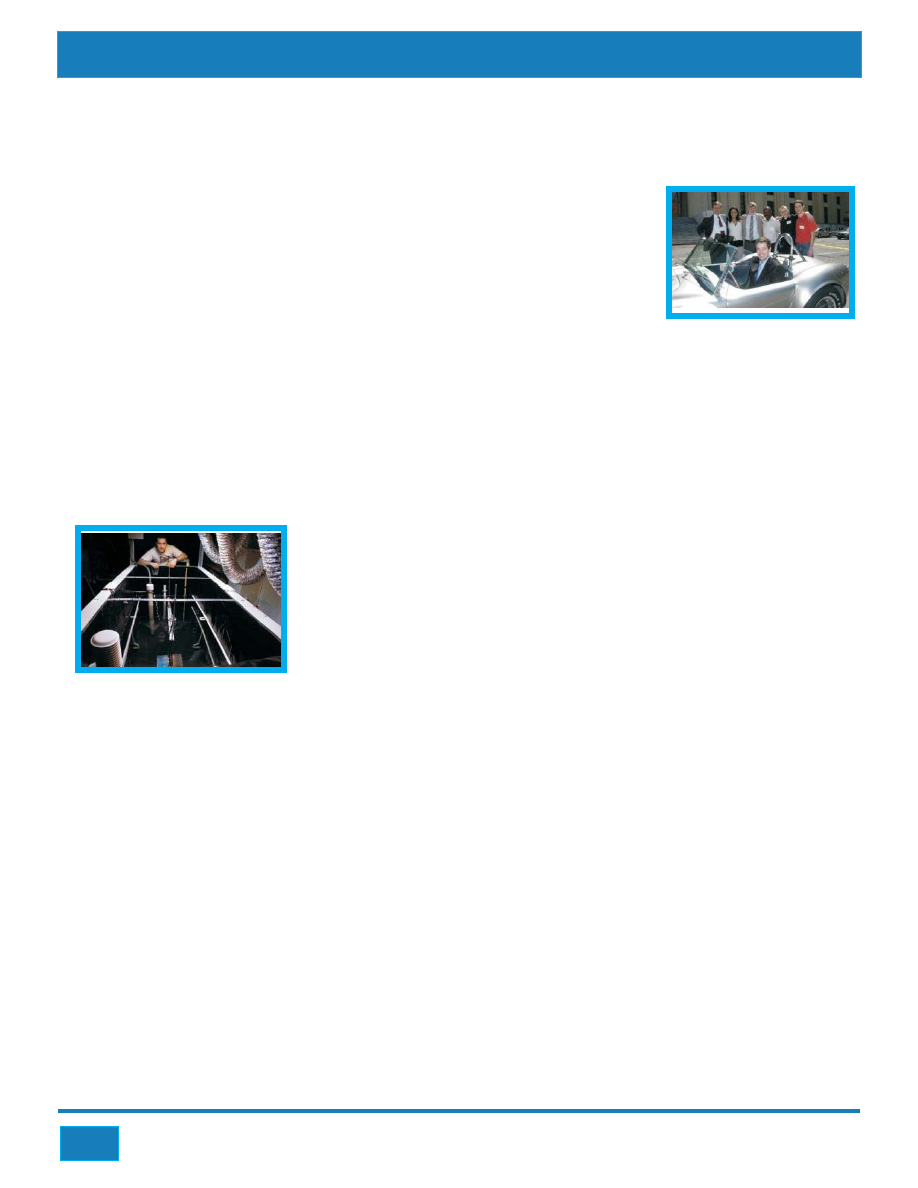
Universite de Montreal researchers have developed a LifePO4 battery that powered thousands of small
electric scooters, bicycles and wheelchairs throughout Europe and Asia. This
revolutionary battery is made from non-toxic materials abundant in the
Earth's crust so it is not expensive. This battery is much more stable and
much safer. In addition, it recharges much faster than previous batteries. The
theoretical principle behind the battery was patented in 1995 by a texas
university professor. This battery could eventually make the electric car very
profitable. Electric Phostech Lithium's production plant in Quebec produces
the black LifePO4 powder, which is shipped across the world in tightly sealed
barrels. The NSERC Research Chair will investigate ways to improve the LifePO4 battery. Even then
lithium, iron and phosphate were theoretically promising materials, there is a need to make them
efficient, to find the right voltage and maintain the right charging and discharging properties
New Solar Pond distillation system
www.unr.edu
Scientists at University of Nevada, Reno has developed a new system
that desalinate water using a specialized low-cost solar pond. The
patented membrane distillation system powered by renewable energy
will make safe aquatic habitat. The ecosystems of terminus lakes
around the world could be benefited from this new system. These lakes
see a decline in water levels and an increase in salinity from both human
and natural processes. High levels of salinity are dangerous and
unsustainable for aquatic life. In this system an artificial salt-gradient
stratification process has been developed to trap solar heat at the
bottom of the solar pond and uses the collected energy to power the membrane distillation system
recently patented by the University. The system is designed to help sustain the ecosystems of the
closed-basin regions where there is no outflow for the water and a high evaporation rate, leaving a
high concentration of minerals and salts.
The hot brine in the lower storage zone of the pond, which can reach temperatures greater than 195
degrees Fahrenheit, may then be used directly for heating, thermal desalination, or for other low-
temperature thermal applications. The model results show that in a two-week period, the
temperature in the bottom of the solar pond increased from 68 to 126 degrees Fahrenheit and, even
though the insulating layer is being eroded by double-diffusive convection, the solar pond remained
stable.
The cost to run the system is negligible because it uses the renewable energy of the sun, trapped as
heat in the bottom, to power most of the system. This can operate 24 hours a day using the stored
energy and little amount of electricity. For every surface acre of solar pond three acre-feet of
freshwater can be made in about one year. The system has many advantages. The system has low
maintenance and the stratification process that helps drives the process uses the salts from the lake
itself. This process could serve as one component of a salinity management program and, coupled
with other remediation efforts, could desalinate the lakes enough to make it a safe aquatic habitat.
The new technology could be applied to declining water systems anywhere, with preference to areas
with good solar capabilities and adequate freshwater flows

3
6
Technology Roundup
Forthcoming Tech Events
European Biomass Conference and Exhibition
Pharmatech 2010
7th International Plastic and Packaging Industry Exhibition
Asia-Pacific Desalination Conference 2010
ICBTE-2010, International Conference on Business Technology and Engineering
BIT 3rd World Congress of Industrial Biotechnology
http://cordis.europa.edu/news
www.pharmatechnol.com
www.plasticpakistan.com
www.desalination.biz
www.iqraisb.edu.pk/icbte
www.bit.ibio.com
03-07 May, 2010
Lyon, France.
25-27 May, 2010
Kuala Lumpur, Malaysia.
22-25 June, 2010
Qingdao, China.
23-24 July, 2010
Islamabad, Pakistan.
Qingdao,
31 May-3 June, 2010
Karachi, Pakistan.
25-27 July, 2010
China.
Tech & Trade Offers
LPG Cylinders and Gas appliances
www.freewebs.com
International Engineering Company is the pioneer in manufacturing of LPG cylinders from 1 Kg to 45 Kg with lamp,
burner and heater. The company is well equipped with advanced testing facilities and got the ISO-9001 certification.
The company is selling its products throughout Pakistan and also supplying cylinders in Saudi Arabia, Dubai, Bahrain,
South Africa and Yemen. The company has capability of producing 600 units per day.
Company Contact
International Engineering Company
Mr. Ghulam Abbas [Director/CEO/General Manager]
Ameer Park, Street No.3, D.C. Road, Gujranwala, Pakistan
Phone: 92-300-7799422
Fax: 92-55-3254440

3
7
Technology Roundup
About PASTIC
PASTIC serves as a gateway for
Scientific & Technological
Information for R&D by
catering to the information
n e e d s o f r e s e a r c h e r s ,
entrepreneurs, Industrialists,
educationists, policy makers
a n d p l a n n e r s t h r o u g h
anticipatory and responsive
information services.
T e c h n o l o g y I n f o r m a t i o n
Services Section of PASTIC
works exclusively for support
and promotion of technological
information on trade and
industry in the country.
“Technology Roundup” is a
news bulletin that provides
l a t e s t a n d i n n o v a t i v e
technology news, forthcoming
events, etc. It also promotes
products,
services
globally in sectors
such as Agro-Industry,
Energy,
Food
P r o c e s s i n g ,
M a c h i n e r y ,
Pharmaceuticals and Textiles.
technologies and
Bio-
Technology, Building Material,
B u s i n e s s O p p o r t i n i t e s ,
C h e m i c a l s , E l e c t r o n i c s ,
Fisheries,
P a c k a g i n g a n d M i n i n g
Please give us your feedback and address queries to
director@pastic.gov.pk
Solar azimuth path rotator
atozvariety786@yahoo.com
Solar azimuth path rotator can bear the total live load of system around
200 kgs Upto 1000 sq yds just sitting in the room the direction of
hundreds of kgs weight can be changed with this rotator. It has finger
touch operate controller.
The whole system of rotation is manufactured in Pakistan.
Specification:
Glow 40 energy savers & 10 dc fans
Solar panels life 50 years
Output guaranty of solar panels are 50 years
Manufacturing fault guaranty is 2 years
A to Z Variety
Mr. Hammad Sabri [Sales]
72-M, Block 6,PECHS, Karachi,Pakistan
Phone: -92-300 252 99 22
Company Contact
Leksell Gamma Knife®
www.firstglink.com
Leksell Gamma knife for non-invasive brain surgery (without opening
the skull) treats patients with malignant (cancerous) and benign tumor,
vascular malformations, parkinson, epilepsy, and functional disorders.
It provides a safe accurate and reliable treatment option.Company's
product line covers from small hand held metal detector to bomb jammer
and explosive detector. The company provides state-of-the-art
technology worldwide.
First Global Link, LLC (California, USA ) Sales and Service Branch
Office, Lahore, Pakistan.
Mr. Sohail Aslam Bhatti [Sales]
238-Eden Canal Villas, Canal Bank Road, Thokar Niaz Baig
Lahore, Pakistan.
Phone: 92-42-7514722
Mobile: 92-300-4486095
Fax: 92-42-7498220
Company Contact