
Patron
Executive Editor
Editors
Composer
Muhammad Farid Khan Wazir
Chairman PSF
Dr. Manzoor Hussain Soomro
Ms. Nageen Ainuddin
Mr. M. Aqil Khan
Dr. Saima Tanveer
Ms. Saima Majeed
Ms. Shazia Parveen
T
R
ECHNOLOGY
OUNDUP
Technology Information Services (TIS)
Pakistan Scientific & Technological Information Centre
PASTIC
March-April, 2010
Vol. 2, No.2
A NEWS BULLETIN FROM
Tech News Headlines
Forthcoming Tech Events
Tech & Trade Offers
Phone: 051-9248103-4, 9248117
Fax:
051-9248113
Email:director@pastic.gov.p
k
PASTIC National Centre
Quaid-i-Azam University Campus
P.O. Box 1217, Islamabad
Editorial Board
lIndustrial Automotion &
Controls Solutions
Biztek Power UPS
Lubricant for Automotive and
Industries.
l
l
l
Power and Electricity Asia 2010
POGEE, Pakistan Oil, Gas and Energy Exhibition
7th International Plastic and Packaging Industry Exhibition
Pharmatech 2010
KazStimOil 2010
Save Energy, Save Water, Save the Planet, International
Conference and Exhibition
l
l
l
l
l
n
Lithium-AirBatteriescouldReplaceGasolineinFutureCars
Sniffing Out Bombs: Physicists Create Highly Sensitive Explosives Detector
New Meaning for the Term 'Computer Bug': Genetically Altered Bacteria for Data
Storage
NanosievesSaveEnergyinBiofuelProduction
Smart Pants: Computer Engineers Develop Clothes that Sense and Interpret
Movements
Fresh Water for the World's Poorest
Toward Home-Brewed Electricity with 'Personalized Solar Energy’
Breakthrough toward Industrial-Scale Production of Nanodevices
Growing Greener Lawns: Soil Scientists Stabilize Fire Ravaged Topsoil with New
Technology
HandsFreeComputerMouse:ElectricalEngineersCreateVoice-ControlledMouse
Bacteria Engineered to Turn Carbon Dioxide into Liquid Fuel
Stopping Sinkholes: Engineers Design Sensor that Detects Leaky Pipes from
n
n
n
n
n
n
n
n
n
n
n
the
Inside
Technology Roundup
2
Tech News
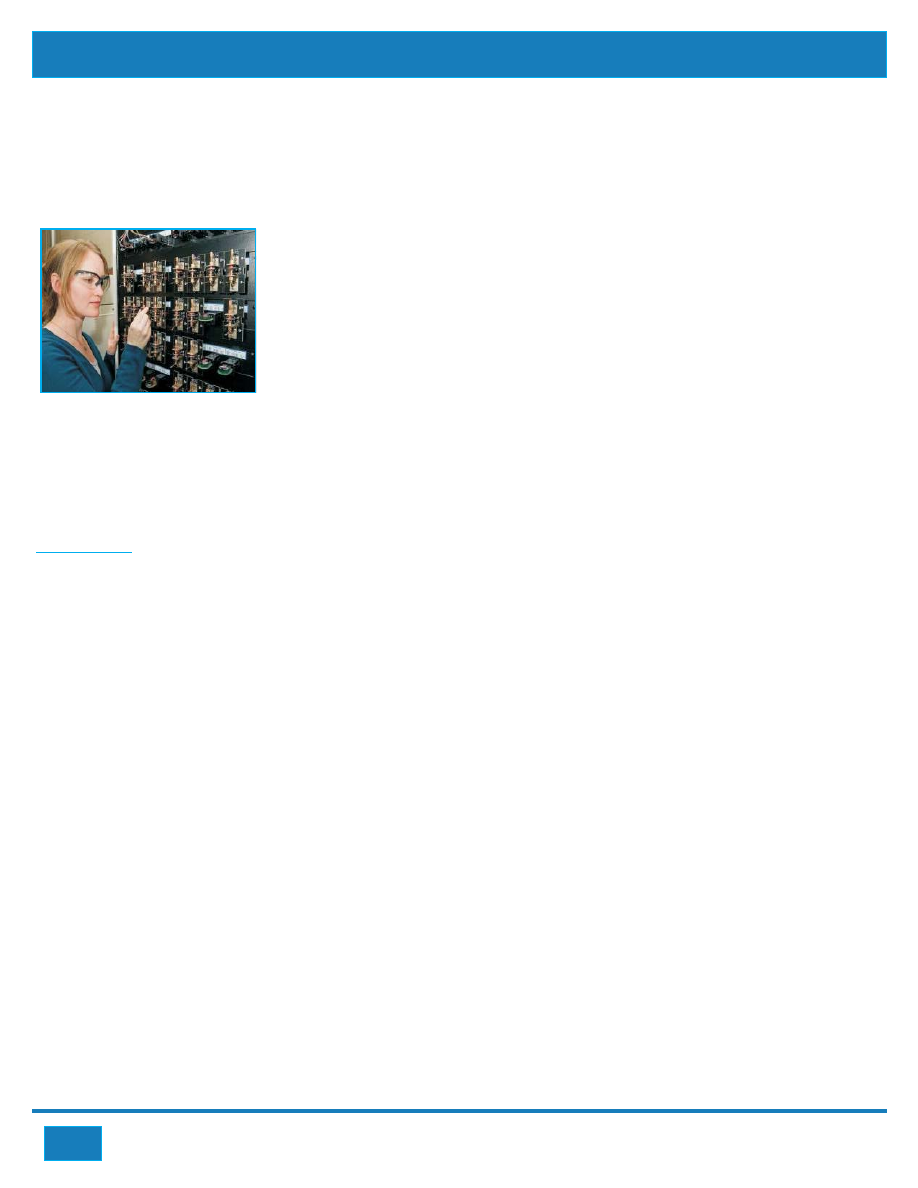
Lithium-Air Batteries could replace Gasoline in Future Cars
Scientists race to find environmentally sound solutions to fuel the world's ever-growing
transportation needs. Researchers at the U. S. Department of Energy's (DOE) Argonne
National Laboratory are exploring the promise of lithium-air battery technology. They
are leveraging their broad and deep understanding of safe, high-energy and long-life Li-
ion battery development to leap the high hurdles required for the development of
commercially viable Li-air batteries.
Li-air batteries use a catalytic air cathode that supplies oxygen, an electrolyte and a
lithium anode. The technology has the potential to store almost as much energy as a tank
of gasoline, and will have a capacity for energy storage that is five to 10 times greater
than Li-ion batteries. This technology is going to take time and collaborations across
several scientific disciplines to address the four main challenges of this battery development effort: safety, cost, life and
performance. The potential of Li-air batteries is great and the research will take time and involves working with industry,
which will eventually adopt the technology for commercial application. Argonne has already worked with several
industrial partners on the commercialization of Li-ion batteries and battery materials. The lab is now working with the
Commonwealth of Kentucky to develop the Kentucky-Argonne National Battery Manufacturing Center, which will
support the development of a viable U.S. battery manufacturing industry.
www.anl.gov
Sniffing Out Bombs
Physicists Create Highly Sensitive Explosives Detector
A tiny sensor that monitors electrical conductivity, allows scientists to detect the presence of explosives. TATP, a
peroxide-based explosive has been used in many suicide bombings and there is no easy way to detect this chemical in the
field. But terrorists may soon find their bombs harder to hide. A team of physicists and chemists at the University of
California, San Diego in La Jolla, California has built a machine with an electronic nose able to sniff out this explosive
chemical. No bigger than a penny, the sensor chip can detect the tiniest traces of hydrogen peroxide vapor. The sensor
measures the conductivity of two different thin films, one made of a cobalt compound and another made of a copper
compound. When reacting to most fumes, the two films respond in similar ways, but when exposed to hydrogen peroxide
the films show a difference in electrical conductivity and copper's current strength increases while cobalt's decreases.
When the sensor indicates this difference it means that trace amounts of hydrogen peroxide (a common ingredient of
explosives) is present. This small and low-powered tiny sensor chip capitalizes on this property could detect very small
amounts of hydrogen peroxide. It could be fit in a variety of packages for use by the military or homeland security.
www.aip.org

3
New Meaning for the Term 'Computer Bug': Genetically Altered Bacteria for Data Storage
US researchers have created 'living computers' by genetically altering bacteria. The findings of the research demonstrate
that computing in living cells is feasible, opening the door to a number of
applications including data storage and, as a tool for manipulating genes for genetic
engineering. A research team from the biology and the mathematics departments of
Davidson College, North Carolina and Missouri Western State University,
Missouri, USA added genes to
bacteria, creating bacterial
computers able to solve a classic mathematical puzzle, known as the burnt pancake
problem. The burnt pancake problem involves a stack of pancakes of different sizes,
each of which has a golden and a burnt side. The aim is to sort the stack so the largest
pancake is on the bottom and all pancakes are golden side up. Each flip reverses the
order and the orientation of one or several consecutive pancakes, to stack them properly in the fewest number of flips. In
this experiment, the researchers used fragments of DNA as the pancakes. They added genes from a different type of
bacterium to enable the
to flip the DNA 'pancakes'. They also included a gene that made the bacteria resistant to an
antibiotic, but only when the DNA fragments had been flipped into the correct order. The time required to reach the
mathematical solution in the bugs reflects the minimum number of flips needed to solve the burnt pancake problem. The
system offers several potential advantages over conventional computers. A single flask can hold billions of bacteria, each
of which could potentially contain several copies of the DNA used for computing. These 'bacterial computers' could act
in parallel with each other, meaning that solutions could potentially be reached quicker than with conventional
computers, using less space and at a lower cost. In addition to parallelism, bacterial computing also has the potential to
utilize repair mechanisms and, of course, can evolve after repeated use.
Escherichia coli
E. coli
www.jbioleng.org
Technology Roundup
Nanosieves save Energy in Biofuel Production
A new type of membrane, developed by scientists of the University of
Twente in the Netherlands, can stand high temperatures for a long period
of time. It is an energy efficient alternative to existing techniques like
distillation even after testing during 18 months, the new membranes
prove to be highly effective, while having continuously been exposed to a
temperature of 150 ºC. Existing ceramic and polymer membranes will
last considerably shorter periods of time, when exposed to the
combination of water and high temperatures. The scientists managed to
do this using a new 'hybrid' type of material combining the best of both
worlds of polymer and ceramic membranes. The result is a membrane
with pores sufficiently small to let only the smallest molecules pass
through.
Ceramic membranes, made of silica, degrade because they react with
water and steam. In the new membrane, part of the ceramic links is therefore replaced by organic links. By doing this,
water does not have the chance to 'attack' the membranes. Manufacturing the new hybrid membranes is simpler than that
of ceramic membranes, because the material is flexible and will not show cracks. What they have in common with
ceramic membranes is the rapid flow: an advantage of this is that the membrane surface can be kept small. The hybrid
membranes are suitable for 'drying' solvents and biofuels, an application for which there is a large potential market
worldwide. The main advantage of membrane technology is that it consumes far less energy than common distillation
techniques. The scientists also foresee opportunities in separating hydrogen gas from gas mixtures. This implies a broad
range of applications in sustainable energy. Apart from that, the hybrid membranes are suitable for desalinating water.
Using a hybrid membrane that is much smaller than the current polymer membranes, the same result can be achieved.
The invention has been patented worldwide.
www.universiteittwente.nl
4
Technology Roundup
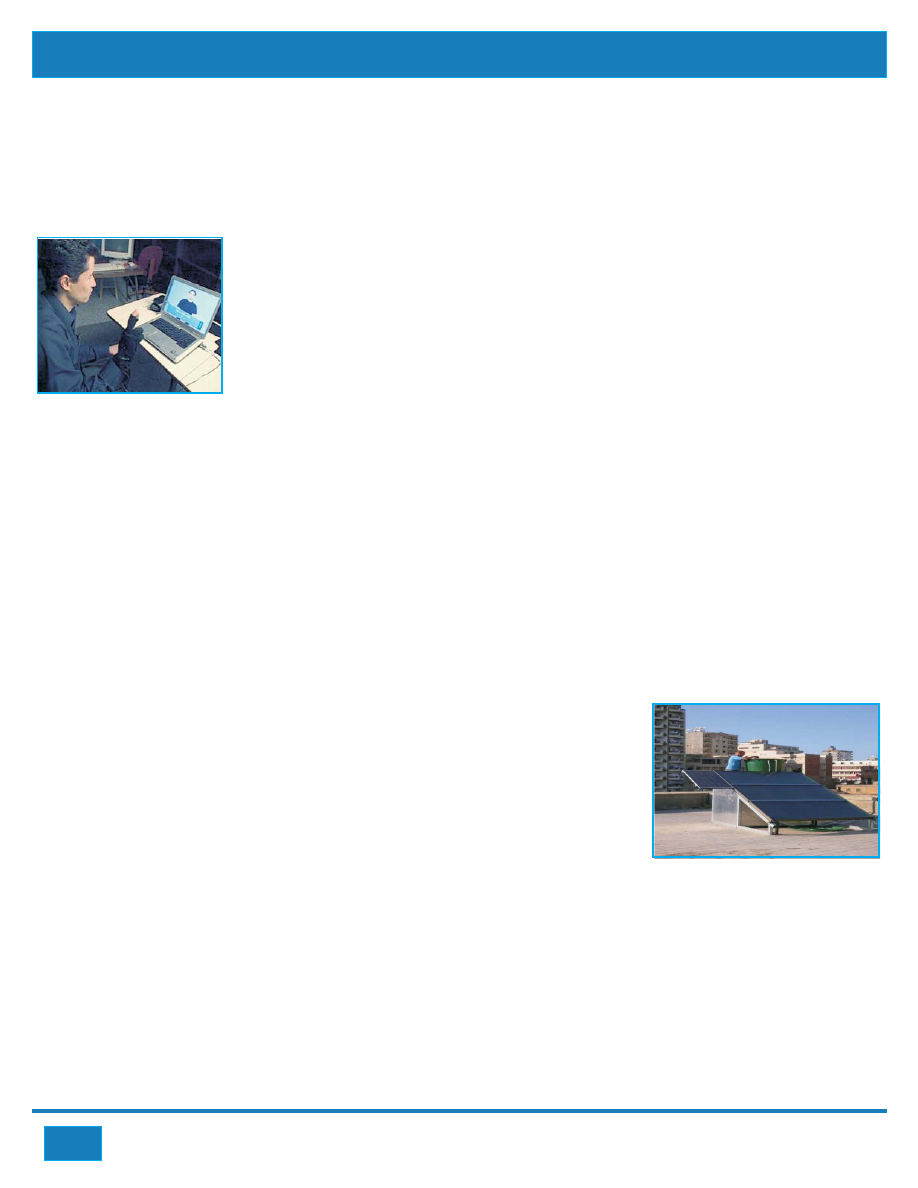
Smart Pants
Computer Engineers Develop Clothes that Sense and Interpret Movements
Scientists at Virginia Tech's E-textiles Laboratory are developing clothes that appear and feel normal, but provide
sensing and computing capabilities. Wires and sensors are woven into the fabric, which can then be used to make shirts,
pants, hats, gloves or other clothing items. It turns clothing into "wearable computers," capable of monitoring things like
how fast and how far a jogger runs, or the blood pressure and heart rate of a cardiac patient.
Now, electronics and computer science technology may help your clothing to think.
Electronic textiles are sort of, where computing meets the fabric. This high-tech marriage is
breeding the latest in wearable computers, like pants that detect every move. A loom helps
sew the wires and fabric together. Then sensors embedded in the fabric measure the speed,
rotation and flexibility of the pants with every movement. Wireless signals are sent from the
pants to a computer to display the activity. E-textiles are a way to build wearable computers
that look like normal clothing to build pervasive computing devices that fit in seamlessly
with the environment. Researchers also hope wearable computers will help save lives. It
can tell what activity that person is doing. That sort of information is extremely valuable
when trying to monitor someone with a chronic illness such as heart condition. And monitoring every step is something
clever clothing can watch a little easier. Researchers plan on developing more smart clothes to integrate computers into
shirts, hats and gloves.
The Virginia Tech researchers are working with a major textile manufacturer in Virginia, Dan River, Inc., to determine
whether e-textiles can be made using traditional manufacturing techniques. To that end, they will test a prototype e-
textile fabric on Dan River's existing looms. If this works, wiring will be woven into the fabric using the looms, and the
sensors (Sensors are tiny electronic devices that can both detect and generate electrical signals from the movement and
position of any given object, including the motion of the human body. These signals are then transmitted wirelessly to a
microcontroller and analyzed using specially designed algorithms) will be attached after the garments are completed.
www.aip.org
Fresh Water for the World's Poorest
Lack of water causes great distress among the population in large parts of Africa and
Asia. Small decentralized water treatment plants with an autonomous power supply
can help solve the problem. They transform salty seawater or brackish water into pure
drinking water. Large industrial plants for the desalination of seawater deliver 50
million cubic meters of fresh water every day particularly in the coastal cities of the
Middle East. However, the technology is complex and consumes large amounts of
energy. It is not suitable for the arid and semiarid regions of Africa and Asia, though
these are the very places where it is becoming increasingly difficult to supply drinking
water, particularly in rural areas.
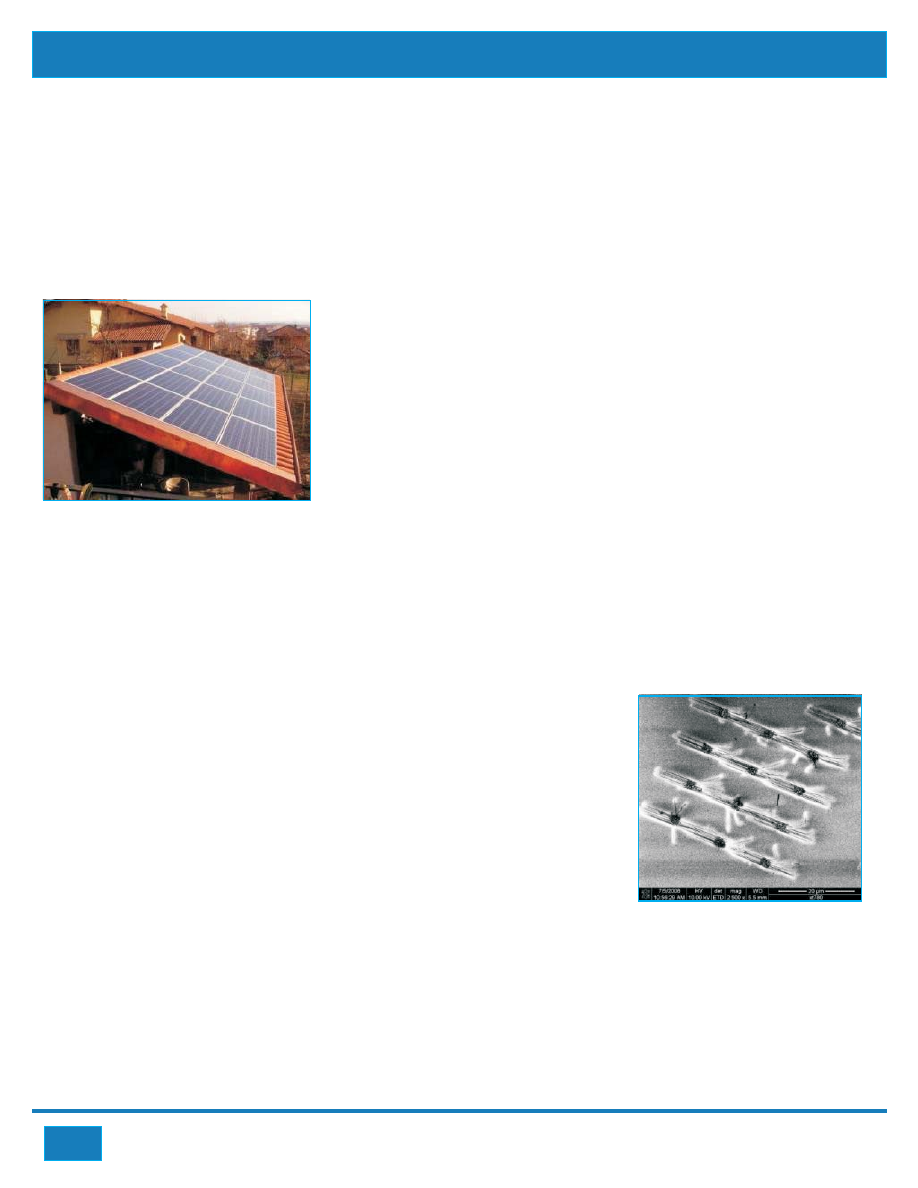
Researchers of Joachim Solar Energy Systems ISE in Freiburg have developed small, decentralized water desalination
plants that produce fresh drinking water with their own independent solar power supply. The plants work on the principle
of membrane distillation. This can best be explained by the principle of a Gore-Tex jacket, in which the membrane
prevents rainwater from penetrating through to the skin. At the same time, water vapor formed inside the jacket by
perspiration is passed through to the outside. In this plant, the salty water is heated up and guided along a micro-porous,
water-repellent membrane. Cold drinking water flows along the other side of the membrane. The steam pressure gradient
resulting from the temperature difference causes part of the salt water to evaporate and pass through the membrane. The
salt is left behind, and the water vapor condenses as it cools on the other side. It leaves clean, germ-free water. The
researchers have so far built two different systems, both with their own energy supply. This compact system for about 120
liters of fresh water per day consists of six square meters of thermal solar collectors, a small photovoltaic module to power
5
Technology Roundup
a pump, and the desalination module itself. In the dual-circuit system, on the other hand, several desalination modules
are connected in parallel, enabling several cubic meters of water to be treated every day. The test plants in Gran Canaria
and in Jordan have been operating successfully for some time. The researchers are therefore planning to market the
plants through a spin-off known as “Solar Spring” from the middle of this year.
www.fraunhofer.de/en/
Toward Home-Brewed Electricity with 'Personalized Solar Energy'
http://portal.acs.org
New scientific discoveries are moving society toward the era of "personalized
solar energy," in which the focus of electricity production shifts from huge
central generating stations to individuals in their own homes and communities.
That is the topic of a report by an international expert on solar energy scheduled
for the November 2 issue of ACS' Inorganic Chemistry, a bi-weekly journal. It
describes a long-awaited, inexpensive method for solar energy storage that
could help power homes and plug-in cars in the future while helping keep the
environment clean. The global energy need will double by mid-century and
triple by 2100 due to rising standards of living world population growth.
Personalized solar energy i.e. the capture and storage of solar energy at the
individual or home level could meet that demand in a sustainable way,
especially in poorer areas of the world. The report describes development of a
practical, inexpensive storage system for achieving personalized solar energy.
At its heart is an innovative catalyst that splits water molecules into oxygen and hydrogen that become fuel for
producing electricity in a fuel cell. The new oxygen-evolving catalyst works like photosynthesis, the method plants use
to make energy, producing clean energy from sunlight and water.
Breakthrough toward Industrial-Scale Production of Nanodevices
www.acs.org
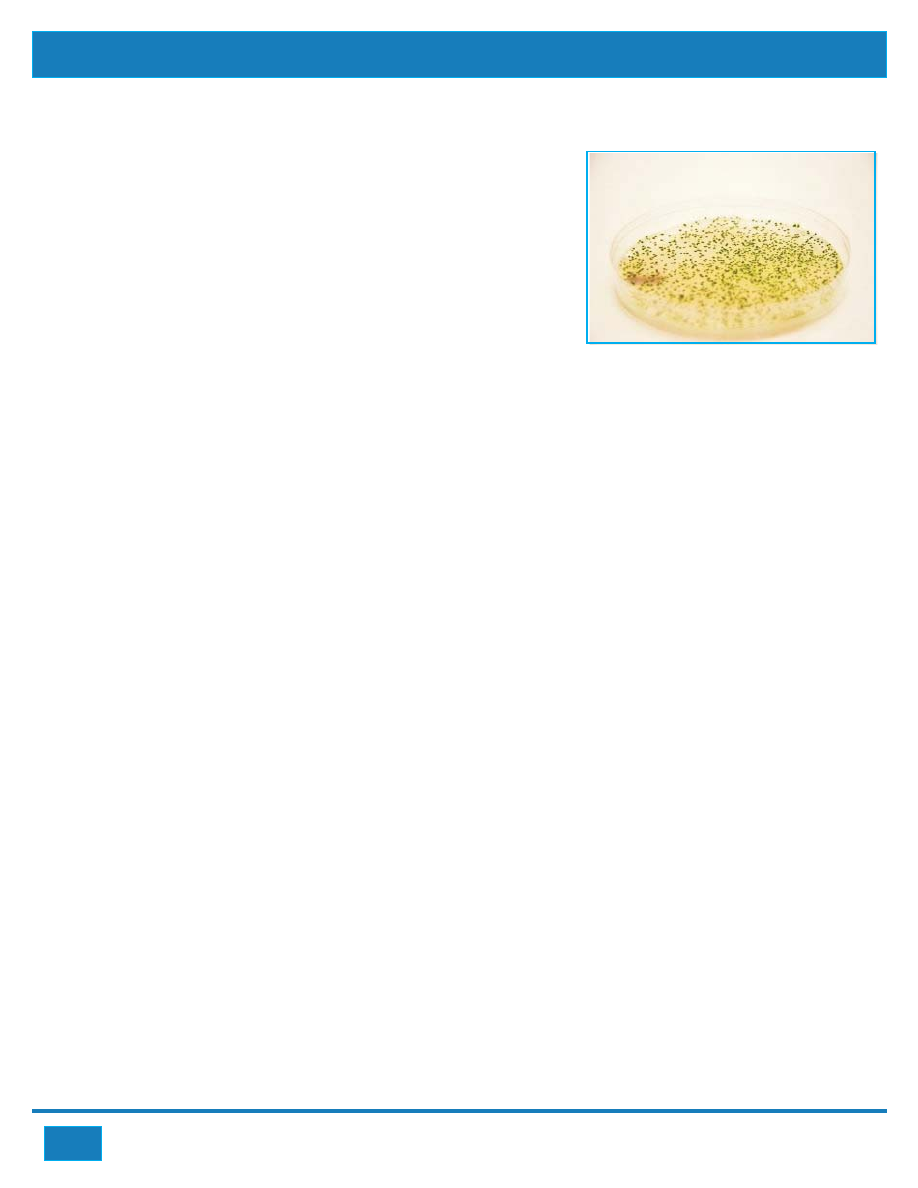
Scientists in Maryland are reporting an important advance toward the long-sought
goal of industrial-scale fabrication of nanowire-based devices like ultra-sensitive
sensors, light emitting diodes, and transistors for inexpensive, high-performance
electronic products. The existing state-of-the-art assembly methods for nanowire-
based devices require complicated, multi-step treatments, painstaking alignments
steps, and other processing for nanowires , which are thousands of times smaller than
the diameter of a human hair. The goal is to electrically address the coordinates of
millions of nanowires on a surface in order to produce the components of electronic
circuits. The study describes a new method in which zinc oxide nanowires are grown
in the exact positions where nanodevices later will be fabricated, in a way that
involves a minimum number of fabrication steps and is suitable for industrial-scale
applications. This method, due to its scalability and ease of device fabrication, goes
beyond the current state-of-the-art assembly of nanowire-based devices. It is believed to be an attractive approach for
mass fabrication of nanowire-based transistors and sensors and is expected to impact nanotechnology in fabrication of
nonconventional nanodevices.

6
Technology Roundup
Growing Greener Lawns
Soil Scientists Stabilize Fire Ravaged Topsoil with New Technology
www.aip.org
Chemists and engineers designed a technology that protects soil. A polymer encased in
recycled paper bonds to positive ions in soil to form clumps. These clods of dirt break up
the hard surface that can form following a fire, promoting the absorption of water, which
stops soil from being flushed away during a heavy rain. This process helps promote the
plant growth that will keep the topsoil in place over the long term. Every summer,
wildfires consume thousands of acres of vegetation, threaten wildlife and set the stage for
mudslides that can wreak even more havoc. Now, scientists have developed a new kind of
soil technology that could stabilize those areas and help them grow again. One could keep
lawn greener. Now, a new kind of soil technology offers solutions for both. Soil scientists
in Wisconsin have developed a way to turn office waste into a product that can stabilize
the soil. Recycled paper is dried and combined with chemically made polymers and other ingredients. When mixed with
soil, the ingredients are attracted together like a magnet creating a net. Industrial engineer Mike Krysiak, Industrial
Engineer & President of ENCAP, calls it AST (the term used for the product that helps stabilize fire-ravaged soil against
erosion). It consists of polymers encased in recycled paper which bond to positive ions in the soil. This process forms
clumps, breaking up the hard surface that can form following a fire. This promotes the absorption of water, stopping rain
from flushing away soil. This process promotes the plant growth that will hold topsoil in place for the long term.
Advanced soil technology is about engaging the soil to do the work, stops erosion, helps with better water penetration;
dropped by aircraft. The product, called Pam 12 is now being used by the forest service to stabilize burn areas.
Researchers say that same technology is used in soil-binding lawn products that do not wash away, and will not damage
the environment. They have even developed a new kind of seed watering technology that actually tells you when it needs
watering. It is new technology designed to reduce paper waste, save water, restore burned hillsides and make your world a
little greener
Hands Free Computer Mouse
Electrical Engineers Create Voice-Controlled Mouse
www.aip.org
Computer scientists worked with electrical engineers to move the cursor on a computer screen with the user voice instead
of a mouse. Software interprets vocal commands to move the cursor, allowing people who cannot use their arms to browse
the web, play video games, or use photo editing software. Simple sounds matched with new software are helping people
get where they want to go and it is all hands-free. Vocal joystick software being developed at the University of Washington
is making hands-free mouse movement a reality. The vocal joystick is to a mouse what speech recognition is to a
keyboard. Computer scientists with the help of some of electrical engineers, has paired a regular personal computer and an
inexpensive computer microphone with software to create fluid computer movements using only the voice that about a
100 times per second, so every 10 milliseconds, the computer listens to what voice is doing. They are also experimenting
using the software to control a small robotic arm. As for the symphony of sounds it takes to run the software: People who
use a new kind of wheel chair can now move it using their tongue rather than their hands. Mechanical engineers and
computer scientists worked together to develop the wheelchair controls. Moving the tongue changes the air pressure in the
users' ears. In the new wheelchair design, a microphone near the ears picks up the change in air pressure and issues
commands to a computer chip, which moves the chair in a specified direction.
7
Technology Roundup
Bacteria Engineered to Turn Carbon Dioxide into Liquid Fuel
www.ucla.edu
Global climate change has prompted efforts to drastically reduce emissions of
carbon dioxide, a greenhouse gas produced by burning fossil fuels. In a new
approach, researchers from the UCLA Henry Samueli School of Engineering
and Applied Science have genetically modified a cyanobacterium to consume
carbon dioxide and produce the liquid fuel isobutanol, which holds great
potential as a gasoline alternative. The reaction is powered directly by energy
from sunlight, through photosynthesis. This new method has two advantages
for the long-term, global-scale goal of achieving a cleaner and greener energy
economy. First, it recycles carbon dioxide, reducing greenhouse gas
emissions resulting from the burning of fossil fuels. Second, it uses solar
energy to convert the carbon dioxide into a liquid fuel that can be used in the
existing energy infrastructure, including in most automobiles. While other
alternatives to gasoline include deriving biofuels from plants or from algae, both of these processes require several
intermediate steps before refinement into usable fuels. This new approach avoids the need for biomass deconstruction,
either in the case of cellulosic biomass or algal biomass, which is a major economic barrier for biofuel production.
Therefore, this is potentially much more efficient and less expensive than the current approach. Using the
cyanobacterium Synechoccus elongatus, researchers first genetically increased the quantity of the carbon dioxide-fixing
enzyme RuBisCO. Then they spliced genes from other microorganisms to engineer a strain that intakes carbon dioxide
and sunlight and produces isobutyraldehyde gas. The low boiling point and high vapor pressure of the gas allows it to
easily be stripped from the system. The engineered bacteria can produce isobutanol directly, but it is currently easier to use
an existing and relatively inexpensive chemical catalysis process to convert isobutyraldehyde gas to isobutanol, as well as
other useful petroleum-based products. An ideal place for this system would be next to existing power plants that emit
carbon dioxide, potentially allowing the greenhouse gas to be captured and directly recycled into liquid fuel.
Stopping Sinkholes
Engineers Design Sensor that Detects Leaky Pipes from the Inside
www.aip.org
Engineers are using the tether-controlled Sahara sensor inside water mains to pinpoint even the smallest leaks without
disrupting pipeline service. Consumers can not see the technology but nonetheless reap the benefits: the sensors ensure that
water keeps flowing through pipes reliably. This is the only system in the world for looking at leaks in large diameter pipes.
Instead of replacing whole mains in aging pipe systems, utilities can simply fix the problem spots, saving money and saving
millions of gallons of water that would otherwise be lost. Right now, 40 cities across the U.S. are proactively managing their
pipes with the new system. The system will locate three leaks per mile in any given pipe line.
The system is inserted into a live transmission main through any tap two inches or more in diameter. It is safe for all drinking
water systems. The probe is carried along the pipe by the flow of water, and the system locates leaks as small as one-quarter of
a gallon per hour. It does this, in real time, through the identification of distinctive acoustic signals generated by leaks in the
pipe walls, the joints, or steel welds. Once a leak has been detected, the sensor head can be stopped at the precise position of
the leak. Its location within the main can be identified from the surface and accurately marked for subsequent excavation and
repair. As a result, operators can also use Sahara to accurately map the course of a pipeline.
Depending on the pipe configuration, lengths of up to 6000 feet can be surveyed with a single insertion, and inspections can
be conducted in mains with a diameter of at least 12 inches. The ability to identify individual leaks has many benefits, such as
helping water transmission pipeline operators pinpoint the exact location of the leaks causing a pipeline to fail a pressure test.
Based on this information, it is easier to establish priorities for repair and replacement of parts. More generally, being able to
establish the structural integrity of a given water transmission main makes it easier to more accurately value pipeline assets,
and comply with legal requirements.

8
Technology Roundup
Forthcoming Tech Events
Power and Electricity Asia 2010 (Exhibition)
POGEE,
Oil, Gas and Energy Exhibition
7th International Plastic and Packaging Industry Exhibition
Pharmatech 2010
KazStimOil 2010
Save Energy, Save Water, Save the Planet, International Conference and Exhibition
www.terrapinn.com/2010/asiapower
www.pogeepakistan.com
www.plasticpakistan.com
www.pharmatechnol.com
www.caspian-events.com/KazStimOil
www.viaexpo.com
Pakistan
5-9 April, 2010
Suntec, Singapore.
19-22 May, 2010
Karachi, Pakistan.
31May-3 June, 2010
Karachi, Pakistan.
25-27 May, 2010
Kuala Lumpur, Malaysia.
Symposium and Exhibition on Oil and Gas Production Stimulation
3-4 June, 2010
Almaty, Kazakhstan.
3-5 June, 2010
Sofia, Bulgaria.
Industrial Automotion & Controls Solutions
G-TEK an Engineering Company is actively involved in providing state-of-the-art Industrial
Automation and Controls solutions to Industrial Processing and OEMs companies.
World renowned Brands include
Masoneilan Control Valves,Consolidated Safety Valves,
Carrarro Pressure Regulators
Honeywell; Fisher-Rosemount; Emerson; Foxboro; Yokogawa; Westinghouse; Aoip; P+ F; ABB;
Tech & Trade Offers

9
Technology Roundup
GE; Omron;
Siemens; Alan Bradley; Mitsubishi; Reliance; Fuji;
Square D; Modicon; Danfoss; Schneider; Yaskawa
G-TEK
Mr. Shomail Akbar Gill [Director/CEO/General Manager]
15-Robert Road, c/o Gill Law Associates, Nila Gumbad
Lahore, Pakistan
Phone: 92-42-7358213
Mobile: 92-42-03004142741
Fax: 92-42-7358213
Gtek2005@ yahoo.com
Company Contact
About PASTIC
PASTIC serves as a gateway for
Scientific & Technological
Information for R&D by catering
to the information needs of
r e s e a r c h e r s , e n t r e p r e n e u r s ,
Industrialists, educationists,
policy makers and planners
t h r o u g h a n t i c i p a t o r y a n d
responsive information services.
Technology Information Services
S e c t i o n ,
PA S T I C
w o r k s
exclusively for support and
promotion of technological
information on trade and industry
in the country. “Technology
Roundup” is a news bulletin that
provides latest and innovative
technology news, forth coming
events, etc. It also promotes
products,
services globally in sectors such
a s A g r o - I n d u s t r y ,
E n e r g y,
F o o d
P r o c e s s i n g ,
M a c h i n e r y,
Pharmaceuticals and Textiles.
technologies and
B i o -
Technology, Building Material,
Business, Chemicals, Electronics,
F i s h e r i e s ,
P a c k a g i n g
a n d
M i n i n g
P l e a s e
g i v e
u s
y o u r
f e e d b a c k
a n d
a d d r e s s
q u e r i e s
t o
Lubricants for Automotive & Industries
United Lubricants manufacture high class Lubricants for Automotive & Industries. DGDP, POF, HIT, Textile,
Cement, Automobile, and Engineering (Construction) Sugar, cable & Power Generation industry
Company Contact
United Lubricants (Pvt.) Limited
Mr. Gohar Ayyub [Director/CEO/General Manager]
Suite #2,1st Floor, 2.L.M.C Market, Badami Bagh
Lahore, Pakistan.
Phone: +92-42-7720735
Fax: +92-42-7720737
Biztek Power UPS
www.intechps.com
Intec power solutions provides export quality
& powerful factory manufactured automatic
power ups, overload protection and builtin
Avr,
Intech power solutions (Biztek ups
manufacture, sales & service)
Mr. AFTAB ASHRAF [Director/CEO/General Manager]
147/A, R.A.C.H.S.Malir Halt, Karachi, Pakistan.
Phone: 03003775277
Mobile: 03003775277
E-mail: biztekpower@yahoo.com
Company Contact