Patron/Executive Editor
Dr. Muhammad Akram Shaikh
Director General, PASTIC
Managing Editors
Ms. Nageen Ainuddin
Mr. M. Aqil Khan
Editor
Dr. Saima Huma Tanveer
Saima Siddique Tariq
Composer
Kashif Farooqui
T
ECHNOLOGY
R
OUNDUP
Technology Information Section (TIS)
Pakistan Scientific & Technological Information Centre
PASTIC
September-October, 2016
Vol. 8, No.5
A NEWS BULLETIN FROM
Tech News Headlines
Tech & Trade Offers
Phone: 051-9248103-4, 9248111
Fax: 051-9248113
Email:editorpastic@gmail.com
Web: www.pastic.gov.pk
PASTIC National Centre
Quaid-i-Azam University Campus
P.O. Box 1217, Islamabad
Editorial Board
l
Dairy Wastewater for Electricity Generation
l
l
l
l
l Exploding Smartphones: A Silent danger lurking in our
Rechargeable Devices
l
l
l
Mixed Matrix Membranes for CO
Separation
2
Wireless Power Transfer to Drones during Flight
The Ultimate Radar Detector
Fuel Cells with Increased Flexibility and Lower Cost
Nanowires for Biomedical Procedures
Lightweight Rotor Blades Made from Plastic Foams for
Offshore Wind Turbines
Soft Robots Can Mimic Human Muscles
The Compact Workhorse:
T64H-Relay PLC
Forthcoming Tech Events
l
l
l
l
l
International Conference on Innovative Computing Technology
Frontiers of Information Technology
th
5 Annual Entrepreneurship Conference LEARN. CREATE.
LEAD
st
131 International
Conferences
on Engineering and Natural Science
(ICENS)
th
The 8 World Congress on Power and Energy Engineering
(WCPEE'2016)
th
ISER 94 International Conference on Nanoscience,
Nanotechnology & Advanced Materials (IC2NAM)
th
ISER 106 International Conference on Nanoscience,
Nanotechnology & Advanced Materials (IC2NAM
th
l 7 Annual Congress on Materials Research and Technology
l
l

Technology Roundup
2
Indigenous
Technology
Dairy Wastewater for Electricity Generation
Courtesy:
Global industrialization and rapid rise in the non-sustainable use of fossil resources is increasing the amount of CO2
that enters the atmosphere leading to a warming of the planet and resulting in climate changes. Moreover, rising
population and increasing consumption, and land use, have caused a rapid acceleration of climate change over the
past twenty years. Parallel to the global warming issues, the rapid depletion of fossil fuels is leading to increased
global tension towards resource availability. Most of the human race is striving for growth; development and
urbanization, with a corresponding enhance energy requirements.
Microbial Fuel Cells (MFCs) provide a novel bioprocessing strategy to produce sustainable energy and wastewater
treatment. It produces electricity and under certain conditions, biogas from biodegradable compounds and
simultaneously reduces carbohydrates and complex substrates in wastewater. MFC with saline catholyte is used in
this laboratory scale study. Salt-bridge of dimensions of 5 cm length and 2 cm diameter was used in a plastic MFC
unit with electrodes manufactured to the same dimensions (5×5). Dairy wastewater was used as the substrate, with
its microorganism as the biocatalyst.
The dual chambered MFC was operated at room temperature. The study was carried out in three experiments. In the
first experiment, the maximum voltage of 0.36 V and current of 0.35A was generated. In experiment 2 and 3 the
maximum voltages were 0.42 V, 0.46 V and maximum current were 0.36A and 0.42A respectively were obtained per
liter of the dairy wastewater. The MFC was operated for 7 days while the performance was monitored every 1 hr.
The main aspects of MFC research are to produce the cost of treatment as well as simplifying operational or
functional conditions. MFCs can be the next generation of fuel cell technology and thus might play an important
role in energy conservation, electricity generation, bio-hydrogen production, biosensors and wastewater treatment
as well as in alternate fuel utilization using microbes to generate electricity
NUST Journal of Engineering Sciences, 2015 , 8 (1), 44-50
Anand Parkash*, Shaheen Aziz, Imran Nazir and Suhail A Soomro
Department of Chemical Engineering, Mehran University of Engineering & Technology, Jamshoro

Technology Roundup
3
Indigenous
Technology
Mixed Matrix Membranes Comprising for CO Separation
2
Courtesy:
The excessive use of fossil fuels such as coal and petroleum products is one of the primary sources of CO2
emissions. CO2 thus emitted is a major contributor to the greenhouse effect of earth, resulting in increase in
global warming. Membrane technology is an attractive choice to perform this task due to its many
advantages over other separation techniques such as environment friendly, cheap and energy efficient.
Mixed matrix membranes (MMMs) comprising of an inorganic filler and a polymer matrix have shown the
potential to increase the performance of gas separation membranes. SEM images of cross-sections of
MMMs containing (a) 20 and (b) 30% loading of COK-12 particles. In this research, new types of MMMs
composed of novel polymer, a fluorinated and sulfonated aromatic poly (ether ether ketone) (FSPEEK) and
SO3 functionalized mesoporous silica spheres were prepared by solution casting method. The dispersion of
the fillers in the polymer matrix was improved by employing solution blending and probe sonication
techniques. The thickness of the membranes was controlled at 50-65 µm. Sulfonated polymers have shown
their potential to surpass the Robeson upper bound .
The incorporation of bulky fluorinated groups in the polymer is expected to further increase the separation
performance due to inhibition of chain packing and increased steric in Process Industries hindrance. The
presence of C2F6 type fluorinated groups improves the fractional free volume by the inhibition of chain
packing. These bulky groups also restrict the torsional motion of the polymeric chains and simultaneously
increase the rigidity of polymer resulting in strong ability of size sieving. The degree of sulfonation was
fixed at 50% for all the synthesized MMMs. CO2 permeation and SEM images of the synthesized MMMs
suggest that the fillers adhered well to the polymer matrix. The non-functionalized COK-12 based MMMs
showed up to 26% increase in CO2 permeability at 30% filler loading. The selectivity values however
decreased upon addition of more COK-12. In contrast, the SO3 functionalized filler showed a 35% and 29%
higher CO2/CH4 and CO2/N2 selectivity respectively at the 30 wt. %. This behavior resulted from the
increase in the content of polar SO3 sites, the introduction of fixed mesopores by the filler and disruption of
chain packing by the addition of fillers. The performance of the synthesized MMMs were also tested under
mixed gas conditions to evaluation their commercial application. The results showed slightly lower
permselectivity values in comparison to pure gas tests. This was attributed to the competitive sorption effect
of the permeating gas molecules. The effect of pressure was also studied to evaluate the plasticization
performance. The observed increase in permeability and selectivity along with good anti-plasticization
properties make this novel fluorinated and sulfonated polymer with -SO3 based mesoporous COK-12 a
promising candidate for gas separation membranes
Asim Laeeq Khan Department of Chemical Engineering, COMSATS Institute of Information
Tecnology, Defence Road, Off Raiwind Road, Lahore, Pakistan.
4
Technology Roundup
Wireless Power Transfer to Drones during Flight
The Ultimate Radar Detector
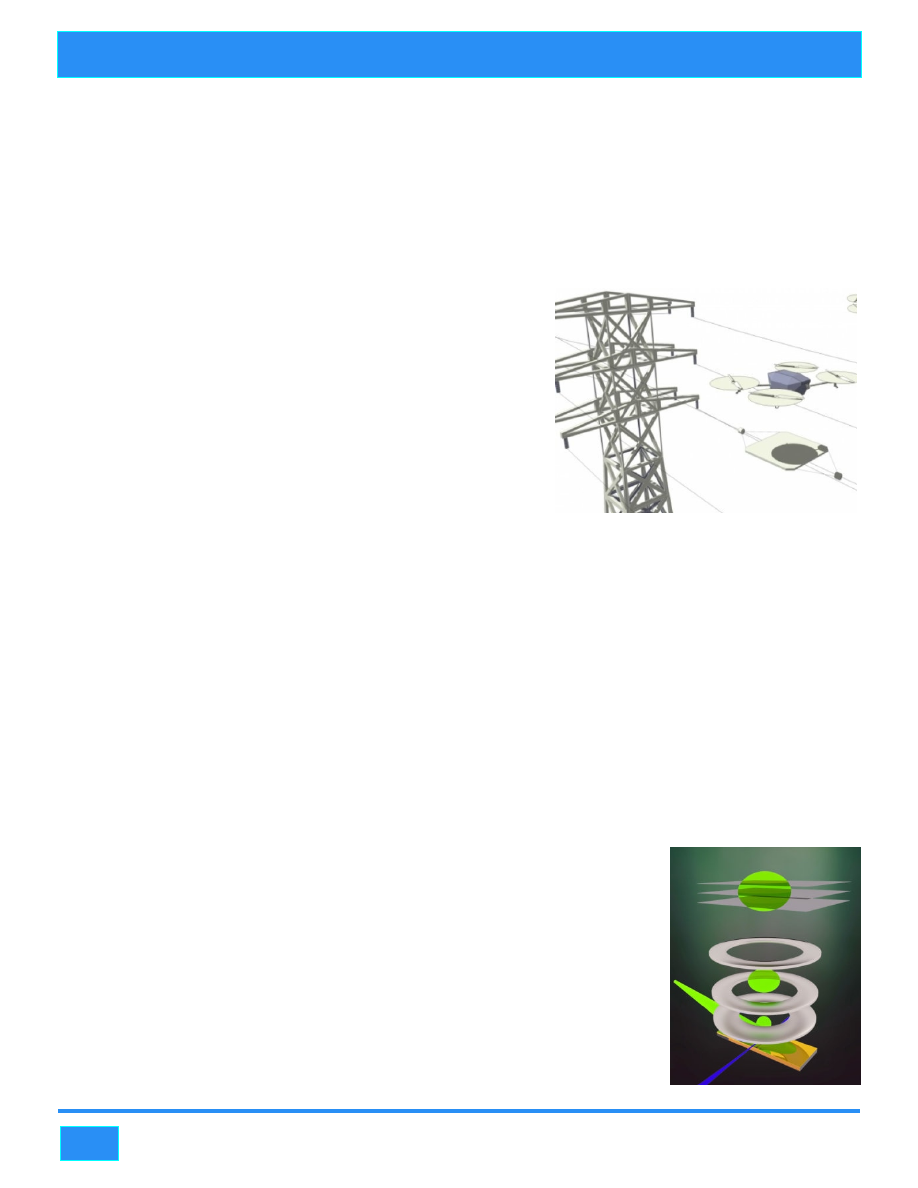
Scientists have demonstrated a highly efficient method for wirelessly transferring power to a drone while it is flying. The
technology uses inductive coupling, a concept initially demonstrated by inventor Nikola Tesla over 100 years ago. Two
copper coils are tuned into one another, using electronics, which enables the wireless exchange of power at a certain
frequency. Scientists have been experimenting with this technology for decades. Now, scientists from Imperial College
London have removed the battery from an off-the-shelf mini-drone and demonstrated that they can wirelessly transfer power
to it via inductive coupling. They believe this wireless charging method can be efficiently done with a flying object like a
drone, potentially paving the way for wider use of the technology.
To demonstrate their approach the researchers bought an off-the-shelf
quadcopter drone, around 12 centimetres in diameter, and altered its
electronics and removed its battery. They made a copper foil ring, which is a
receiving antennae that encircles the drone's casing. On the ground, a
transmitter device made out of a circuit board is connected to electronics
and a power source, creating a magnetic field. The drone's electronics are
tuned or calibrated at the frequency of the magnetic field. When it flies into
the magnetic field an alternating current (AC) voltage is induced in the
receiving antenna and the drone's electronics convert it efficiently into a
direct current (DC) voltage to power it. The technology is still in its
experimental stage. The drone can only currently fly ten centimeters above
the magnetic field transmission source. The team estimate they are one year
away from a commercially available product. When commercialized they
believe their breakthrough could have a range of advantages in the
development of commercial drone technology and other devices.
The use of small drones for commercial purposes, in surveillance, for reconnaissance missions, and search and rescue
operations are rapidly growing. However, the distance that a drone can travel and the duration it can stay in the air is limited
by the availability of power and re-charging requirements. wireless power transfer technology will solve this, wirelessly
transferring power could have also applications in other areas such as sensors, healthcare devices and further afield, on
interplanetary missions. Professor Paul Mitcheson, from the Department of Electrical and Electronic Engineering at
Imperial College London, said that imagine using a drone wirelessly transmitting power to sensors on things such as bridges
to monitor their structural integrity. This would cut humans labour to reach these difficult places to re-charge them.
The Nesbitt group has invented a nifty technique for exploring the physics and chemistry of a
gas interacting with molecules on the surface of a liquid. The group originally envisioned the
technique because it is impossible to overestimate the importance of understanding surface
chemistry. For instance, ozone depletion in the atmosphere occurs because of chemical
reactions of hydrochloric acid on the surface of ice crystals and aerosols in the upper
atmosphere. Interstellar chemistry takes place on the surface of tiny grains of dust. And, any
time industrial chemists want to react a gas with a liquid or solid, the secret is getting the gas
to touch the surface of whatever they want the gas to react with. At the surface of the ocean,
wave action generates small little liquid droplets that get popped up into the air. This is why
we smell the ocean and, there is a great deal of chemistry occurs at the interfaces of these
microscopic to nanoscopic aerosol particles. Nesbitt added that it is even possible that life
itself may have originated inside microscopic liquid particles formed early in Earth's history.
www.imperial.ac.uk
3
5
Technology Roundup
Back in present time, however, the new technique will help the group investigate the complex chemistry that occurs on the
surface of liquids. For instance, the technique (which Nesbitt has dubbed the ultimate radar detector
)
can identify the
quantum states of new molecules produced in chemical reactions that occur when a supersonic jet of gas molecules
interacts with a liquid-like surface called a self-assembled monolayer, or SAM.
Some neat things about a SAM are that the SAM sways around like a liquid even though it is attached to a solid anchor at
one end and it is possible to link different kinds of molecules to it. Different molecules on the SAM will react differently
with the same supersonic jet of gas molecules. The new technique is able to not only identify the products of these chemical
reactions, but also detect the flight paths and speed of all the molecules that come flying off the SAM. The researchers
responsible for inventing the new ultimate radar detection system, which they call Quantum-State Resolved 3D Velocity
Map Imaging. Researchers are graduate student Carl Hoffman and Fellow David Nesbitt.
new class of fuel cells based on a newly discovered polymer-based material could bridge the gap between the operating
temperature ranges of two existing types of polymer fuel cells, It will accelerate the commercialization of low-cost fuel
cells for automotive and stationary applications. A Los Alamos National Laboratory team, in collaboration with Yoong-
Kee Choe at the National Institute of Advanced Industrial Science and Technology in Japan and Cy Fujimoto of Sandia
National Laboratories, has discovered that fuel cells made from phosphate-quaternary ammonium ion-pair can be operated
between 80°C and 200°C with and without water, enhancing the fuel cells usability in a range of conditions.
The Polymer-based fuel cells are regarded as the key technology
of the future for both vehicle and stationary energy systems, There
is a huge benefit to running fuel cells at the widest possible
operating temperature with water tolerance. But current fuel-cell
vehicles need humidified inlet streams and large radiators to
dissipate waste heat, which can increase the fuel-cell system cost
substantially, so people have looked for materials that can conduct
protons under flexible operating conditions. Los Alamos has been
a leader in fuel-cell research since the 1970s. Fuel cell
technologies can significantly benefit the nation's energy security,
the environment and economy through reduced oil consumption,
greenhouse gas emissions, and air pollution. The current research
work supports the Laboratory's missions related to energy security
and materials for the future.
Currently, two main classes of polymer-based fuel cells exist. One is the class of low-temperature fuel cells that require
water for proton conduction and cannot operate above 100°C. The other type is high-temperature fuel cells that can operate
up to 180°C without water; however, the performance degrades under water-absorbing conditions below 140°C. The
research team found that a phosphate-quaternary ammonium ion-pair has much stronger interaction, which allows the
transport of protons effectively even under water-condensing conditions. The Los Alamos team collaborated with
Fujimoto at Sandia to prepare quaternary ammonium functionalized polymers. The prototype fuel cells made from the ion-
pair-coordinated membrane demonstrated excellent fuel-cell performance and durability at 80-200°C, which is
unattainable with existing fuel cell technology. The performance and durability of this new class of fuel cells could even be
further improved by high-performing electrode materials, within five to ten years that is another critical step to replace
current low-temperature fuel cells used in vehicle and stationary applications.
www.jila.colorado.edu
Fuel Cells with Increased Flexibility and Lower Cost
A
www.lanl.gov
6
Technology Roundup
including carbon monoxide. The
gases are potentially fatal, they can cause strong irritations to the skin,
eyes and nasal passages, and harm the wider environment. Many
people may be unaware of the dangers of overheating, damaging or
using a disreputable charger for their rechargeable devices. In the new
study, the researchers investigated a type of rechargeable battery,
known as a "lithium-ion" battery, which is placed in two billion
consumer devices every year. According to Dr. Jie Sun Nowadays,
lithium-ion batteries are being actively promoted by many
governments all over the world as a viable energy solution to power everything from electric vehicles to mobile devices. The
lithium-ion battery is used by millions of families, so it is imperative that the general public understand the risks behind this
energy source. The dangers of exploding batteries have led manufacturers to recall millions of devices: Dell recalled four
million laptops in 2006 and millions of Samsung Galaxy Note 7 devices were recalled during this year after reports of
battery fires. But the threats posed by toxic gas emissions and the source of these emissions are not well understood.
Dr. Sun and her colleagues identified several factors that can cause an increase in the concentration of the toxic gases
emitted. A fully charged battery will release more toxic gases than a battery with 50 percent charge. The chemicals contained
in the batteries and their capacity to release charge also affected the concentrations and types of toxic gases released.
Identifying the gases produced and the reasons for their emission gives manufacturers a better understanding of how to
reduce toxic emissions and protect the wider public, as lithium-ion batteries are used in a wide range of environments.
Such dangerous substances, in particular carbon monoxide, have the potential to cause serious harm within a short period of
time if they leak inside a small, sealed environment, such as the interior of a car or an airplane compartment. Almost 20,000
lithium-ion batteries were heated to the point of combustion in the study, causing most devices to explode and all to emit a
range of toxic gases. Batteries can be exposed to such temperature extremes in the real world, if the battery overheats or is
damaged in some way. The researchers now plan to develop this detection technique to improve the safety of lithium-ion
batteries so they can be used to power the electric vehicles of the future safely. They hope this research will allow the
lithium-ion battery industry and electric vehicle sector to continue to expand and develop with a greater understanding of
the potential hazards and ways to combat these issues.
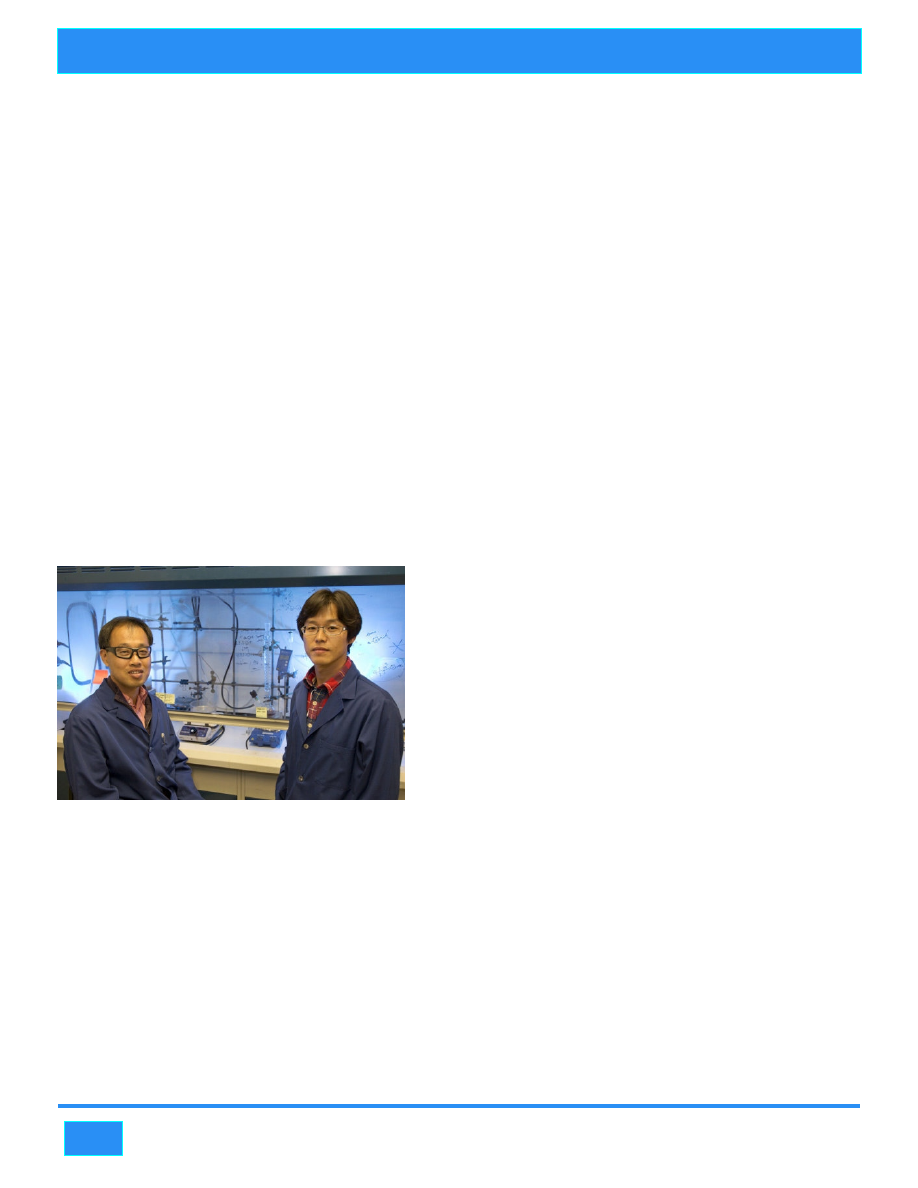
Grown like a snowflake and sharpened with a sewing machine, a novel
device by Kansas State University researchers may benefit biomedical
professionals and the patients they serve during electrode and organ
transplant procedures. The device uses gold nanowires and was
developed by Bret Flanders, associate professor of physics, and
Govind Paneru, former graduate research assistant in physics, to
manipulate and sense characteristics of individual cells in medical
procedures. The gold nanowires are 1,000 times smaller than a human
hair. Conventional surgical tools, including electrodes that are
implanted in people's tissue, are unfavorably large on the cellular level,
Working at the individual cellular level is of increasing importance in
areas such as neurosurgery. Flanders said the size of the nanowires is
Exploding Smartphones: A Silent Danger Lurking in Our Rechargeable
Devices
Nanowires for Biomedical Procedures
Dozens of dangerous gases are produced by the batteries found in
billions of consumer devices, like smartphones and tablets. The
research, published in Nano Energy, identified more than 100 toxic
gases released by lithium batteries,
www.elsevier.com

7
Technology Roundup
what makes their device so unique. Each wire is less than 100 nanometers in diameter. Cells in skin and hair are about 10-
20 micrometers in diameter, while red blood cells measure about 7 micrometers. Because the wire is so small, it can pierce
a biological cell to stimulate the cell membrane and investigate its interior. The nanowires are electrochemically grown,
meaning they do not grow by a lengthening or enlarging an existing wire, but rather by accumulating particles from
solution into a new wire. In heavily zoomed video footage the nanowire appears to grow out of the micrometer-thick
electrode. Actually, the nanowire forms similarly to how a snowflake is assembled in the sky when water vapor molecules
in the air condense onto the surface of pollen or dust and grow non-uniformly until they become a recognizable
snowflake. Similar to snowflake formation, the gold atoms condense onto its sharp tip. Like the water condensing onto
the snowflake seed, the golden solution condenses onto the gold 'seed,' or the microelectrode. The researchers developed
sharp electrodes with an unconventional tool not found in many laboratories: a sewing machine. It is like putting the wire
in a pencil sharpener to turn the crank to sharpen it, except we do not do it mechanically with a pencil sharpener it is done
with a common salt solution and a sewing machine. This turned out to be the approach that worked the best, and the
sewing machine cost only $10 at the Salvation Army. The sewing machine oscillates the microelectrode up and down in a
beaker of potassium chloride solution. Application of a voltage dissolves the tip of the microelectrode. The process
sharpens the electrode because the tip is in the solution longer than any other point, Instead, dipping the tip in and out
causes the tip to dissolve the most, and
it. The sharpen
electrode allows the nanowire to grow. The researchers
then dismount the nanowire from the electrode and ship it to collaborators across the country, including a nanofabrication
company that may incorporate the invention into a pre-existing device to provide it with greater power.
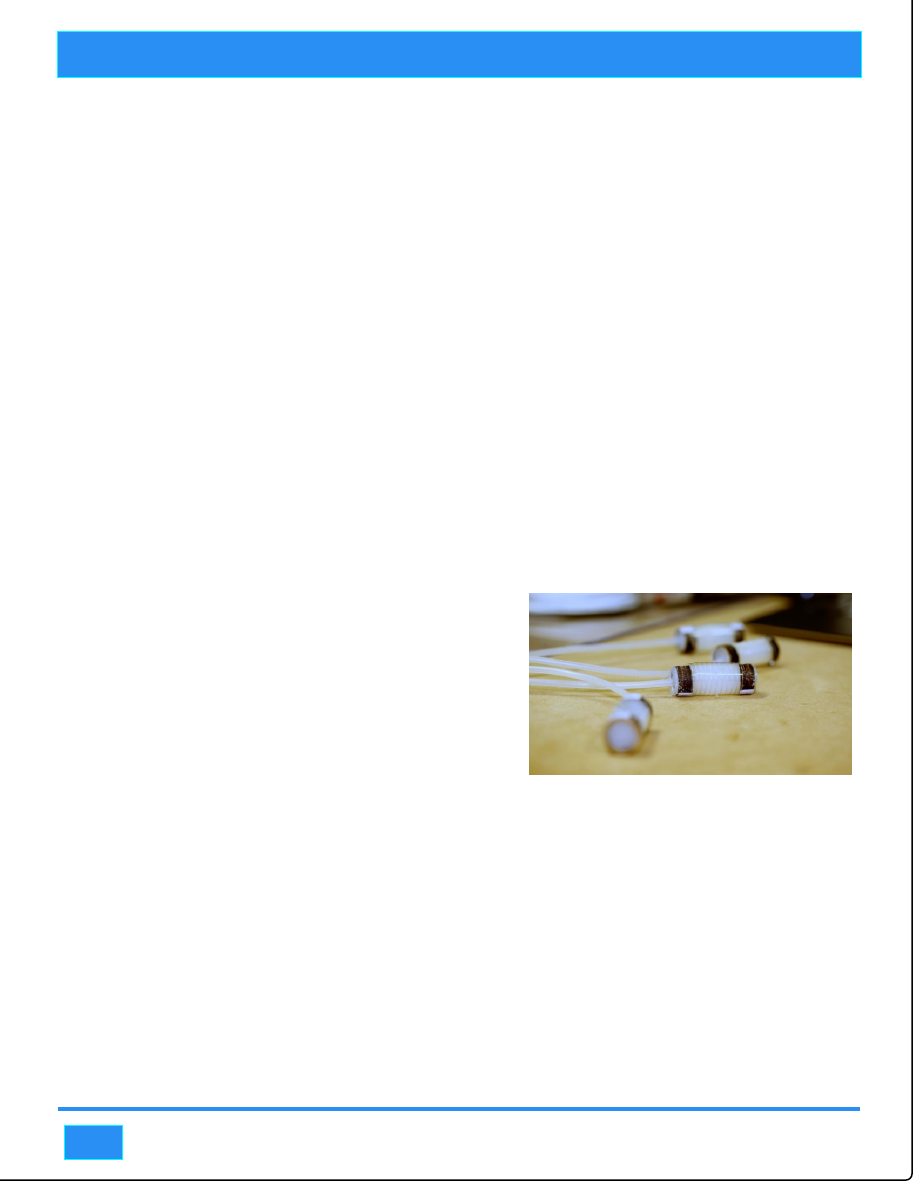
Offshore wind turbines are becoming ever larger, and the transportation, installation, disassembly and disposal of their
gigantic rotor blades are presenting operators with new challenges. Fraunhofer researchers have partnered with industry
experts to develop highly durable thermoplastic foams and composites that make the blades lighter and recyclable. The
new materials are also suitable for other lightweight structures, for instance in the automotive sector. The trend toward
ever larger offshore wind farms continues unabated. Wind turbines with rotor blades measuring up to 80 meters in length
and a rotor diameter of over 160 meters are designed to maximize energy yields. Since the length of the blades is limited
by their weight, it is essential to develop lightweight systems with high material strength. The lower weight makes the
wind turbines easier to assemble and disassemble, and also improves their stability at sea. By Improving the design and
materials used, they hope to reduce the weight of the blades and thus increase their service life.
These days, rotor blades for wind turbines are largely made by hand
from thermosetting resin systems. These, however, do not permit
melting, and they do not suitable for material recycling. At best,
granulated thermoset plastic waste is recycled as filler in simple
applications. "In the project, they are pursuing a completely new
blade design by We are switching the material class and using
thermoplastics in rotor blades for the first time. These are meltable
plastics that can process efficiently in automated production
facilities. The goal is to separate the glass and carbon fibers and to
reuse the thermoplastic matrix material. For the outer shell of the
rotor blade, as well as for segments of the inner supporting structure,
the project partners use sandwich materials made from
thermoplastic foams and fiber-reinforced plastics. In general,
carbon-fiber-reinforced thermoplastics are used for the areas of the
rotor blade that bear the greatest load, while glass fibers reinforce the
less stressed areas. For the sandwich core, Researchers are developing thermoplastic foams that are bonded with cover
layers made of fiber-reinforced thermoplastics in sandwich design. This combination improves the mechanical strength,
efficiency, durability and longevity of the rotor blade.
sharpens
ed
www.k-state.edu
Lightweight Rotor Blades made from Plastic Foams for Offshore Wind
Turbines
7
Technology Roundup
78
The ICT foams provide better properties than existing material systems, thus enabling completely new applications for
instance in the automotive, aviation and shipping industries. In vehicles, manufacturers have been using foam materials
in visors and seating, for example, but not for load-bearing structures. The current foams have some limitations, for
instance with regard to temperature stability, so they can not be installed as insulation near the engine. These meltable
plastic foams, by contrast, are temperature stable and therefore suitable as insulation material in areas close to the engine.
They can permanently withstand higher temperatures than, for example, expanded polystyrene foam (EPS) or expanded
polypropylene (EPP). Their enhanced mechanical properties also make them conceivable for use in door modules or as
stiffening elements in the sandwich composite. They can be processed quickly and they save material. Yet another
advantage is that thermoplastic foams are more easily available than renewable sandwich core materials such as bals
wood. These innovative materials are manufactured in the institute's own foam extrusion plant in Pfinztal. Researchers
explain the process. They melt the plastic granules, mix a blowing agent into the polymer melt and foam the material. The
foamed, stabilized particles and semi-finished products can then be shaped and cut as desired. In the area of foamed
polymers, the ICT foam technologies research group covers the entire thermoplastic foams production chain, from
material development and manufacture of extrusion-foamed particles and semi-finished products to process media and
finished components.
Robots are usually expected to be rigid, fast and efficient. But researchers at EPFL's Reconfigurable Robotics Lab (RRL)
have turned that notion on its head with their soft robots. Soft robots, powered by muscle-like actuators, are designed to
be used on the human body in order to help people move. They are made of elastomers, including silicon and rubber, and
so they are inherently safe. They are controlled by changing the air pressure in specially designed 'soft balloons', which
also serve as the robot's body.
Potential applications for these robots include patient rehabilitation,
handling fragile objects, biomimetic systems and home care. The
Researchers conducted numerous simulations and developed a
model for predicting how the actuators deform as a function of their
shape, thickness and the materials. One of the variants consists of
covering the actuator in a thick paper shell made by origami. This
test showed that different materials could be used. "Elastomer
structures are highly resilient but difficult to control. We need to be
able to predict how, and in which direction, they deform. And
because these soft robots are easy to produce but difficult to model,
our step-by-step design tools are now available online for roboticists
and students. In addition to these, other RRL researchers have
developed soft robots for medical purposes.
This work is described in
Soft Robotics
. One of their designs is a belt made of several inflatable components, which
holds patients upright during rehabilitation exercises and guides their movements. According to Matthew Robertson, the
Researcher Incharge of the project are working with physical therapists from the University Hospital of Lausanne
(CHUV) who are treating stroke victims. The belt is designed to support the patient's torso and restore some of the
person's motor sensitivity. The belt's soft actuators are made of pink rubber and transparent fishing line. The placement of
the fishing line guides the modules' deformation very precisely when air is injected. "For now, the belt is hooked up to a
system of external pumps. The next step will be to miniaturize this system and put it directly on the belt. Adaptable and
reconfigurable robots Potential applications for soft actuators do not stop there. The researchers are also using them to
develop adaptable robots that are capable of navigating around in cramped, hostile environments. And because they are
completely soft, they should also be able to withstand squeezing and crushing.Using soft actuators, Researchers can
come up with robots of various shapes that can move around in diverse environments," They are made of inexpensive
materials, and so they could easily be produced on a large scale. This will open new doors in the field of robotics.
a
www.fraunhofer.de
Soft Robots Can Mimic Human Muscles
www.epfl.ch/index.en.html

Technology Roundup
Technology Roundup
National
International Conference on Innovative Computing Technology
Frontiers of Information Technology
th
5 Annual Entrepreneurship Conference LEARN. CREATE. LEAD
st
131 International Conferences on Engineering and Natural Science (ICENS)
th
The 8 World Congress on Power and Energy Engineering (WCPEE'2016)
th
ISER 94 International Conference on Nanoscience, Nanotechnology & Advanced
Materials (IC2NAM)
th
ISER 106 International Conference on Nanoscience, Nanotechnology & Advanced
Materials (IC2NAM)
th
7 Annual Congress on Materials Research and Technology
22-24, November 2016
Bahawalpur, Pakistan
www.intech-bahawalpur
22-24, November 2016
COMSATS Institute of Information Technology, Pakistan
2-3 December 2016
Jinnah Convention Center Islamabad
Www.lcl.com.pk/2016/
29-30 January, 2017
Rawalpindi, Pakistan
/www.Conference2017/Pakistan/1/ICENS/
5-8 December, 2016
Luxor, Egypt
26-27 December 216
Manila , Philippines
www.iser.co/conference
29-30 January 2017
Tokyo Japan
www.iser.co
20-21 Feburary 2017
Berlin Germany
www.materialsresearch.conferenceseries.com
International Events
Forthcoming Tech Events
9
Tech & Trade Offers
About PASTIC
PASTIC serves as a gateway for
Scientific & Technological
Information for R&D by
catering to the information
n e e d s o f r e s e a r c h e r s ,
entrepreneurs, industrialists,
educationists, policy makers
a n d p l a n n e r s t h r o u g h
anticipatory and responsive
information services.
T e c h n o l o g y I n f o r m a t i o n
Service Section of PASTIC
works exclusively for support
and promotion of technological
information on trade and
industry in the country.
“Technology Roundup” is a
news bulletin that provides
l a t e s t a n d i n n o v a t i v e
technology news, forthcoming
events, etc. It also promotes
products, technologies and
services globally in sectors
such as Agro-Industry, Bio-
Technology, Building Material,
B u s i n e s s , C h e m i c a l s ,
Electronics, Energy, Fisheries,
Food Processing, Machinery,
P a c k a g i n g , M i n i n g
Pharmaceuticals and Textiles.
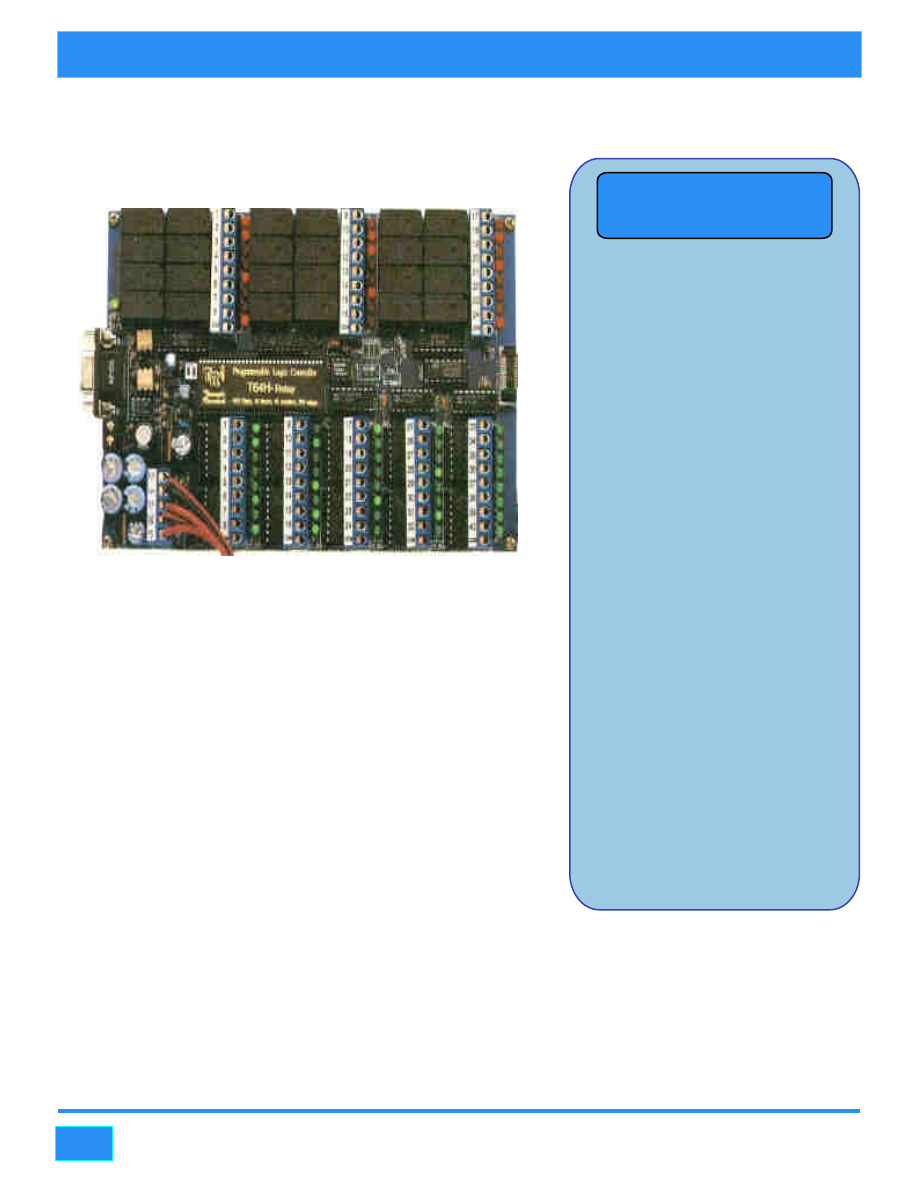
The Compact Workhorse: T64H-Relay PLC
Www.ah-automations.com
Built-in Power Supply
!
40 bi-directional opto-coupler isolated Inputs With LED Indicators
!
24 Relay Outputs with 2A @ 250V AC Rating
!
Programmable in Ladder Logic software With SIMULATOR -
TRiLOGI - Creates ladder program using meaningful names - Uses
simulator to fully test programs on the PC screen before downloading -
On-line monitoring of all I/O logic states on ladder diagram or on full
screen
!
Two Independent Serial Ports -
!
One opto-isolated RS232C connect directly to computer. - One RS485
interface. Each controller can assume an 8-bit ID. - Host computer can
access any controller linked to it by just two wires!
!
EEPROM Program Storage (800 steps, 40 years)
!
Very compact. Only 19.0cm (L) x 12.0cm (W) x 2.0cm (H)
!
Detachable Screw Terminal Blocks
!
Company Contact:-
AH AUTOMATIONS
Plot # 217, Street # 7 , I 9/3 Industrial Area Islamabad, 44000
Phone # +92-51-4435473 , 4100841 Fax +92-51-4441020
UAN: +92-51-111-500-900
Technology Roundup
Please give us your feedback and address queries to editorpastic@gmail.com
10