
Patron/Executive Editor
Prof. Dr. Muhammad Akram Shaikh
Director General, PASTIC
Managing Editors
Ms. Nageen Ainuddin
Mr. M. Aqil Khan
Editor
Saima Siddique Tariq
Composer
Kashif Farooqui
T
ECHNOLOGY
R
OUNDUP
Technology Information Section (TIS)
Pakistan Scientific & Technological Information Centre
PASTIC
November-December, 2016
Vol.8, No.6
A NEWS BULLETIN FROM
Tech News Headlines
Tech & Trade Offers
Phone: 051-9248103-4, 9248111
Fax: 051-9248113
Email:editorpastic@gmail.com
Web: www.pastic.gov.pk
PASTIC National Centre
Quaid-i-Azam University Campus
P.O. Box 1217, Islamabad
Editorial Board
l
l
l Soft, Micro Fluidic 'Lab on the skin' for Sweat Analysis
l Living Bio-Hybrid System
l Nanotechnology Captures Energy from people
l Solar Nanotech-Powered Clothing
l New Robot has a Human Touch
l Fuel from Sewage is the Future
Physicochemical Properties of Agricultural Biomass
Residues for Future 'Energy Mix' Potentiall
Energy Harvesting from Vehicle's Suspension Vibrations
Industrial Boilers
Forthcoming Tech Events
l
l
l
l
l
l
l
l
International Bhurban Conference on Applied Sciences &
Technology
International Conference on Innovation on Electrical
Engineering & Computational Technologies
nd
2 International Conference on Research and Practices in
Education
International Conference on Recent Innovations in Engineering
& Technology
nd
2 International Conference on Global Business, Social Sciences
& Technology
st
1 international conference on Energy Research & Social Science
th
7 International Conference on Science, Technology, Engineering
and Management
International Conference on Applications of Radiation Science
and Technology

Technology Roundup
2
Indigenous
Technology
Physicochemical Properties of Agricultural Biomass Residues for Future 'Energy Mix'
Potential
Courtesy:
This research characterizes various locally available agricultural residues in Pakistan to evaluate their potential as
feedstock for renewable energy production and contributing toward solving energy crisis and environmental issues.
The thermo-chemical characterization has been performed in order to determine if the residues have potential to be
used in biomass conversion technologies producing combined heat and power.
The characterization methods for comparing different agricultural residues include proximate and ultimate
analysis, heating value, ash content, thermo gravimetric analysis (TGA) and functional group analysis (FTIR).
Widely available agricultural wastes in Pakistan were selected for the characterization i.e. bagasse, corn cob, rice
husk, wheat straw and wood chip. The analysis showed that the corn cob had the highest moisture content that will
result in low energy efficiency of the thermal conversion technology due to energy requirement for drying whereas
wheat straw had the lowest moisture content. Ash and volatile contents were found to be highest in rice straw and
wood chip respectively. The thermo gravimetric analysis and functional group identification showed that most of
the agricultural residues can be easily decomposed and represent potential feedstock for biomass flexible combined
heat and power systems through pyrolysis or gasification.
Salman Raza Naqvi, Abdul Hadi Chara, Rida Mehtab, Shahzeb Zafar, Muhammad Zubair, School of
Chemical & Materials Engineering & Pakistan, Center for Advanced Studies in Energy, National University
of Sciences & Technology, Islamabad.

Technology Roundup
3
Indigenous
Technology
Energy Harvesting from Vehicle's Suspension Vibrations
Courtesy:
In this research, the fabrication and experimentation of a vibration-based, electromagnetic type energy
harvester is reported for vehicles vibration. The harvester is suitable for harvesting energy from vehicle
suspension vibrations and consists of movable permanent magnets and static wound coils. When the
harvester is subjected to vibration, due to the movement of magnets relative to coils, the coils experience the
change in magnetic flux density which causes an EMF to generate at the coils terminals. The developed
energy harvester can be easily attached to the vehicle suspension system and its power generation can be
easily utilized to operate the wireless sensor nodes in the smart vehicles.
The developed energy harvester is characterized under a sinusoidal vibration from 0.5 to 3 g base
acceleration. At base acceleration of 3 g and resonant frequency of 16 Hz, the energy harvester produced an
open circuit voltage of 13.43 V. However, under same excitation level, when a matching impedance of 256
ohms is attached to the harvester's coil, it produced a power of 151 mW.
Farid Ullah Khan, Aamir Fazal,
Institute of Mechatronics Engineering, University of Engineering and Technology, Peshawar
4
Technology Roundup
Soft, Micro Fluidic 'Lab on the Skin' for Sweat Analysis
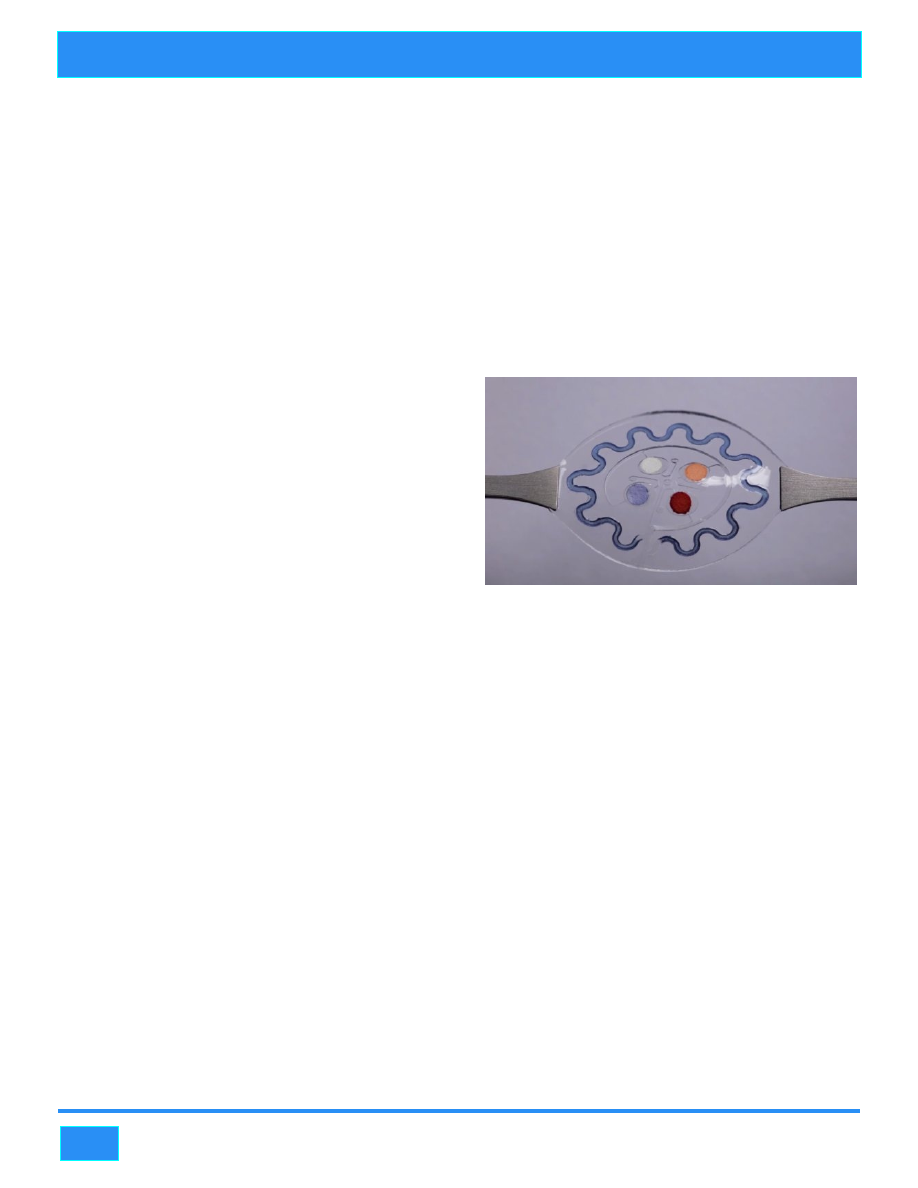
Northwestern University research team has developed a soft, flexible micro fluidic device that easily adheres to
the skin and measures the wearer's sweat to show how his or her body is responding to exercise. A little larger than a
quarter and about the same thickness, the simple, low-cost device analyzes key biomarkers to help a person decide
quickly if any adjustments, such as drinking more water or replenishing electrolytes, need to be made or if
something is medically awry. The device placed directly on the skin of the forearm or back, even detects the
presence of a biomarker for cystic fibrosis. In the future, it may be more broadly used for disease diagnosis. The
intimate skin interface created by this wearable, skin-like micro fluidic system enables new measurement
capabilities not possible with the kinds of absorbent pads and sponges currently used in sweat collection. John A.
Rogers (Professor of Materials Science and Engineering, Biomedical Engineering and Neurological Surgery in
the McCormick School of Engineering and Northwestern University Feinberg School of Medicine) is leading the
multi-institution research team that created the 'lab on the skin.'
Rogers and his collaborator Yonggang Huang (Professor
of Civil and Environmental Engineering and Mechanical
Engineering at the McCormick School) are pioneers in
developing skin-like stretchable electronics that move
naturally with the skin. The sweat analysis platform
developed will allow people to monitor their health on the
spot without the need for a blood sampling and with
integrated electronics that do not require a battery but still
enable wireless connection to a smart phone.
In a study of accuracy and durability, the device was tested
on two different groups of athletes: one cycling indoors in a
fitness center under controlled conditions and the other participating in the El Tour de Tucson, a long-distance
bicycle race in arid and complex conditions. The researchers placed the device on the arms and backs of the
athletes to capture sweat. During moderate or vigorous exercise, sweat winds through the tiny microscopic
channels of the device and into four different small, circular compartments. where reactions with chemical
reagents result in visible color changes in ways that quantitatively relate to pH and concentrations of glucose,
chloride and lactate.
When a smart phone is brought into proximity with the device, the wireless electronics trigger an app that captures
a photo of the device and analyzes the image to yield data on the biomarker concentrations. The researchers chose
four biomarkers because they provide a characteristic profile that's relevant for health status determination, the
device also can determine sweat rate and loss, and it can store samples for subsequent laboratory analysis, if
necessary. In the group that cycled indoors, the researchers compared the new device's biomarker readouts to
conventional laboratory analysis of the same sweat and found the two sets of results agreed with each other.
(Conventional methods include capturing sweat with absorbent patches taped to the skin and analyzing them off
site.) With the long-distance cyclists, the researchers tested the durability of the device in the complex and
unpredictable conditions of the desert. They found the devices to be robust: They stayed adhered to the athletes'
skin, did not leak and provided the kind of quality information the researchers sought. The device can capture,
store and analyze sweat in real time, the device can quantitatively determine biomarker levels using colorimetric
analysis. A power source is not required to display the results; instead, a smart phone camera and app are used to
read the biomarker change. The multidisciplinary work involved close collaborations with clinical investigators,
including Dr. Marvin J. Slepian, at the Sarver Heart Center of the University of Arizona, as well as contributions
from dermatology experts from L'Oréal, including Guive Balooch.
www.northwestern.edu

3
5
Technology Roundup
Living Bio-Hybrid System
Nanotechnology Captures Energy from People
One of the biggest challenges in cognitive or rehabilitation neurosciences is the ability to design a functional
hybrid system that can connect and exchange information between biological systems, like neurons in the brain,
and human-made electronic devices. A large multidisciplinary effort of researchers in Italy brought together
physicists, chemists, biochemists, engineers, molecular biologists and physiologists to analyze the
biocompatibility of the substrate used to connect these biological and human-made components, and investigate
the functionality of the adhering cells, creating a living bio-hybrid system. The research team used the interaction
between light and matter to investigate the material properties at the molecular level using Raman spectroscopy,
a technique that, until now, has been principally applied to material science. The coupling of the Raman
spectrometer with a microscope, spectroscopy becomes a useful tool for investigating micro objects such as cells
and tissues. Raman spectroscopy presents clear advantages
for this type of investigation:
The molecular composition and modification of sub cellular
compartments can be obtained in label-free conditions with
non-invasive methods and under physiological conditions,
allowing the investigation of a large variety of biological
processes both in vitro and in vivo. Once the
biocompatibility of the substrate was analyzed and the
functionality of the adhering cells investigated, the next part
is connecting with the electronic component. In this case a
memristor was used. Its name reveals its peculiarity
(memory resistor), it has "memory": depending on the
amount of voltage that has been applied to it in the past. It is
able to vary its resistance, because of a change of its microscopic physical properties. By combining memristors,
it is possible to create pathways within the electrical circuits that work similar to the natural synapses, which
develop variable weight in their connections to reproduce the adaptive/learning mechanism. Layers of organic
polymers, like polyaniline (PANI) a semiconductor polymer, also have memristive properties, allowing them to
work directly with biological materials into a hybrid bio-electronic system.
The researchers applied the analysis on a hybrid bio-inspired device but in a prospective view, this work provides
the proof of concept of an integrated study able to analyze the status of living cells in a large variety of
applications that merges nanosciences, neurosciences and bioelectronics. A natural long-term objective of this
work would be interfacing machines and nervous systems as seamlessly as possible. The multidisciplinary team
is ready to build on this proof of principle to realize the potential of memristor networks. Once assured the
biocompatibility of the materials on which neurons grow, the researchers want to define the materials and their
functionalization procedures to find the best configuration for the neuron-memristor interface to deliver a full
working hybrid bio-memristive system.
The day of charging cell phones with finger swipes and powering Bluetooth headsets simply by walking is now
much closer. Michigan State University engineering researchers have created a new way to harvest energy from
human motion, using a film-like device that actually can be folded to create more power. With the low-cost
device, known as a nanogenerator, the scientists successfully operated an LCD touch screen, a bank of 20 LED
lights and a flexible keyboard, all with a simple touching or pressing motion and without the aid of a battery.
www.aip.org

6
Technology Roundup
Nelson Sepulveda is the associate professor of electrical and computer engineering and lead investigator of the
project. According to Nelson he is foreseeing, relatively soon, is the capability of not charge your cell phone for an
entire week, because that energy will be produced by your movement.
The innovative process starts with a silicon wafer, which is then
fabricated with several layers, or thin sheets, of environmentally
friendly substances including silver, polyimide and
polypropylene ferroelectric. Ions are added so that each layer in
the device contains charged particles. Electrical energy is created
when the device is compressed by human motion, or mechanical
energy. The completed device is called a biocompatible
ferroelectric nanogenerator, or FENG. The device is as thin as a
sheet of paper and can be adapted to many applications and sizes.
The device used to power the LED lights was palm-sized, for
example, while the device used to power the touch screen was as
small as a finger. Being lightweight, flexible, biocompatible,
scalable, low-cost and robust could make FENG a promising and
alternative method in the field of mechanical-energy harvesting for many autonomous electronics such as
wireless headsets, cell phones and other touch-screen devices. Remarkably, the device also becomes more
powerful when folded. When folded each time increasing the exponentially the amount of voltage. By starting
with a large device when fold it once, and again, and again, it has more energy. It may be small enough to put in a
specially made heel of shoe so it creates power each time heel strikes the ground. Sepulveda and his team are
developing technology that would transmit the power generated from the heel strike.
University of Central Florida (UCF) Nano technologist Jayan Thomas & Nano Science Techology Center has
developed a filaments that harvest and store sun's energy and can be woven into textiles. The breakthrough would
essentially turn jackets and other clothing into wearable, solar-powered batteries that never need to be plugged in.
It could one day revolutionize wearable technology, helping everyone from soldiers who now carry heavy loads
of batteries to a texting-addicted teen who could charge his smart phone by simply slipping it in a pocket.
Thomas envisioned technology that could enable wearable tech. His research team developed filaments in the
form of copper ribbons that are thin, flexible and lightweight. The
ribbons have a solar cell on one side and energy-storing layers on the
other. Though more comfortable with advanced nanotechnology,
Thomas and his team then bought a small, tabletop loom. They wove
the ribbons into a square of yarn. The proof-of-concept shows that the
filaments could be laced throughout jackets or other outwear to
harvest and store energy to power phones, personal health sensors and
other tech gadgets. It is an advancement that overcomes the main
shortcoming of solar cells: The energy they produce must flow into
the power grid or be stored in a battery that limits their portability. A
major application could be with military. They are walking in the sun.
Some of them are carrying more than 30 pounds of batteries on their bodies. It is hard for the military to deliver
batteries to these soldiers in this hostile environment.
www.msu.edu
Solar Nanotech-Powered Clothing
7
Technology Roundup
A garment like this can harvest and store energy at the same time if sunlight is available. There are a host of
other potential uses, including electric cars that could generate and store energy whenever they are in the sun. It
is going to be very useful for the general public and the military and many other applications."
Most robots achieve grasping and tactile sensing through motorized means, which can be excessively bulky
and rigid. A Cornell University group has devised a way for a soft robot to feel its surroundings internally the
same way humans do. A group led by Robert Shepherd, assistant professor of mechanical and aerospace
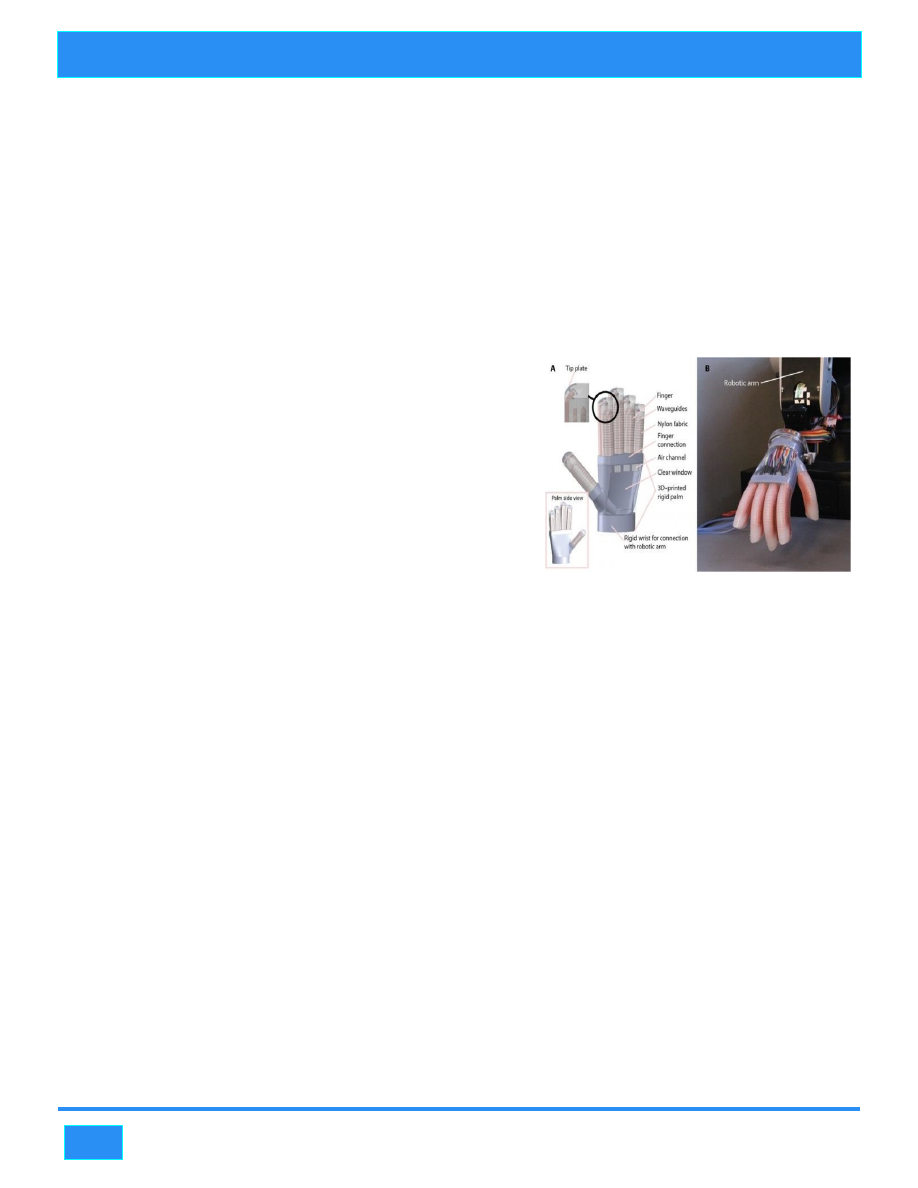
engineering and principal investigator of Organic Robotics Lab, described how stretchable optical waveguides
act as curvature, elongation and force sensors in a soft robotic hand. Doctoral student Huichan Zhao is lead
author of "Optoelectronically Innervated Soft Prosthetic Hand
via Stretchable Optical Waveguides, featured in the debut edition
of Science Robotics. Most robots today have sensors on the
outside of the body that detects things from the surface, but these
sensors are integrated within the body, so they can actually detect
forces being transmitted through the thickness of the robot, a lot
like we and all organisms do when we feel pain. Optical
waveguides have been in use since the early 1970s for numerous
sensing functions, including tactile, position and acoustic.
Fabrication was originally a complicated process, but the advent
over the last 20 years of soft lithography and 3-D printing has led
to development of elastomeric sensors that are easily produced
and incorporated into a soft robotic application.
Shepherd's group employed a four-step soft lithography process to produce the core (through which light
propagates), and the cladding (outer surface of the waveguide), which also houses the LED (light-emitting
diode) and the photodiode. The more the prosthetic hand deforms, the more light is lost through the core. That
variable loss of light, as detected by the photodiode, is what allows the prosthesis to sense its surroundings. The
group used its optoelectronic prosthesis to perform a variety of tasks, including grasping and probing for both
shape and texture. Most notably, the hand was able to scan three tomatoes and determine, by softness, which
was the ripest.
The new research at the Department of Energy's Pacific Northwest National Laboratory (PNNL) may sound
like science fiction but wastewater treatment plants across the United States may one day turn ordinary sewage
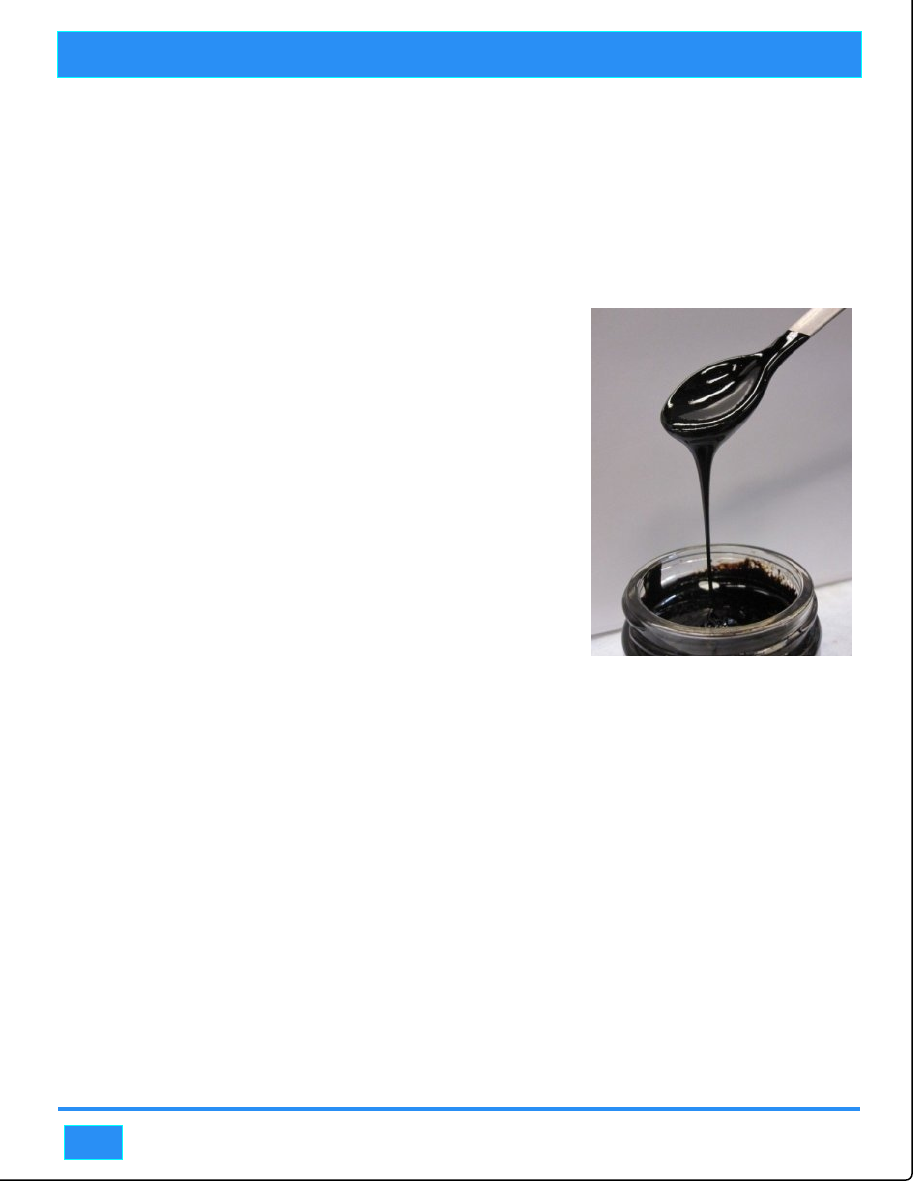
into biocrude oil. The technology, hydrothermal liquefaction, (HTL) mimics the geological conditions Earth
uses to create crude oil, using high pressure and temperature to achieve in minutes something that takes Mother
Nature millions of years. The resulting material is similar to petroleum pumped out of the ground, with a small
amount of water and oxygen mixed in. This biocrude can then be refined using conventional petroleum refining
operations.
Wastewater treatment plants across the U.S. treat approximately 34 billion gallons of sewage every day. That
amount could produce the equivalent of up to approximately 30 million barrels of oil per year. PNNL estimates
that a single person could generate two to three gallons of biocrude per year. Sewage, or more specifically
www.ucf.edu
www.cornell.edu
New Robot has a Human Touch
Fuel from Sewage is the Future
7
Technology Roundup
78
sewage sludge, has long been viewed as a poor ingredient for producing biofuel because it is too wet. The
approach being studied by PNNL eliminates the need for drying required in a majority of current thermal
technologies which historically has made wastewater to fuel conversion too energy intensive and expensive.
HTL may also be used to make fuel from other types of wet organic feedstock, such as agricultural waste.
Organic matter such as human waste can be broken down to simpler chemical compounds using hydrothermal
liquefaction. The material is pressurized to 3,000 pounds per square inch nearly one hundred times that of a car
tire. Pressurized sludge then goes into a reactor system operating at about 660 degrees Fahrenheit. The heat and
pressure cause the cells of the waste material to break down into different fractions -biocrude and an aqueous
liquid phase.
According to Corinne Drennan (for bioenergy technologist research at
PNNL) there is plenty of carbon in municipal waste water sludge and
interestingly, there are also fats, the fats or lipids appear to facilitate the
conversion of other materials in the wastewater such as toilet paper,
keep the sludge moving through the reactor, and produce a very high
quality biocrude that, when refined, yields fuels such as gasoline, diesel
and jet fuels. In addition to producing useful fuel, HTL could give local
governments significant cost savings by virtually eliminating the need
for sewage residuals processing, transport and disposal. The best thing
about this process is its simplicity. The reactor is literally a hot,
pressurized tube. The researchers have really accelerated hydrothermal
conversion technology over the last six years to create a continuous and
scalable process which allows the use of wet wastes like sewage sludge.
An independent assessment for the Water Environment (WE)& Reuse
Foundation (RF)calls HTL a highly disruptive technology that has
potential for treating wastewater solids. WE&RF investigators noted
the process has high carbon conversion efficiency with nearly 60
percent of available carbon in primary sludge becoming bio-crude.
PNNL has licensed its HTL technology to Utah-based Genifuel
Corporation, which is now working with Metro Vancouver, a partnership of 23 local authorities in British
Columbia, Canada, to build a demonstration plant. Biocrude, the liquid phase can be treated with a catalyst to
create other fuels and chemical products. A small amount of solid material is also generated, which contains
important nutrients. For example, early efforts have demonstrated the ability to recover phosphorus, which can
replace phosphorus ore used in fertilizer production.
www.pnnl.gov

Technology Roundup
Technology Roundup
National
International Bhurban Conference on Applied Sciences and Technology
nd
2 International Conference on Research and Practices in Education
International Conference on Recent Innovations in Engineering and Technology
International Conference on Innovation on Electrical Engineering &
Computational Technologies
nd
2 International Conference on Global Business, Social Sciences & Technology
st
1 international conference on Energy Research & Social Science
th
7 International Conference on Science, Technology, Engineering and
Management
International Conference on Applications of Radiation Science and Technology
10-14 January, 2017
Islamabad, Pakistan
www.ibcast.org.pk/
24-25 February, 2017
Islamabad, Pakistan
www.icrpe.aiou.edu.pk
29-30, March 2017
Rawalpindi, Pakistan
www.allconferencealert.com
5-7 April, 2017
Karachi, Pakistan
Www.indus.edu.pk
2-3 March 2017
Izmir Turkey
www.icgsst-march-2017
2-5, April 2017
Melia Spain
Www.erssconference.com
2-3 April 2017
Dubai, UAE
www.icstem.com
Vienna, Austria
24–28 April 2017
www.iaea.org
International Events
Forthcoming Tech Events
9
Tech & Trade Offers
About PASTIC
PASTIC serves as a gateway for
Scientific & Technological
Information for R&D by
catering to the information
n e e d s o f r e s e a r c h e r s ,
entrepreneurs, industrialists,
educationists, policy makers
a n d p l a n n e r s t h r o u g h
anticipatory and responsive
information services.
T e c h n o l o g y I n f o r m a t i o n
Service Section of PASTIC
works exclusively for support
and promotion of technological
information on trade and
industry in the country.
“Technology Roundup” is a
news bulletin that provides
l a t e s t a n d i n n o v a t i v e
technology news, forthcoming
events, etc. It also promotes
products, technologies and
services globally in sectors
such as Agro-Industry, Bio-
Technology, Building Material,
B u s i n e s s , C h e m i c a l s ,
Electronics, Energy, Fisheries,
Food Processing, Machinery,
P a c k a g i n g , M i n i n g
Pharmaceuticals and Textiles.
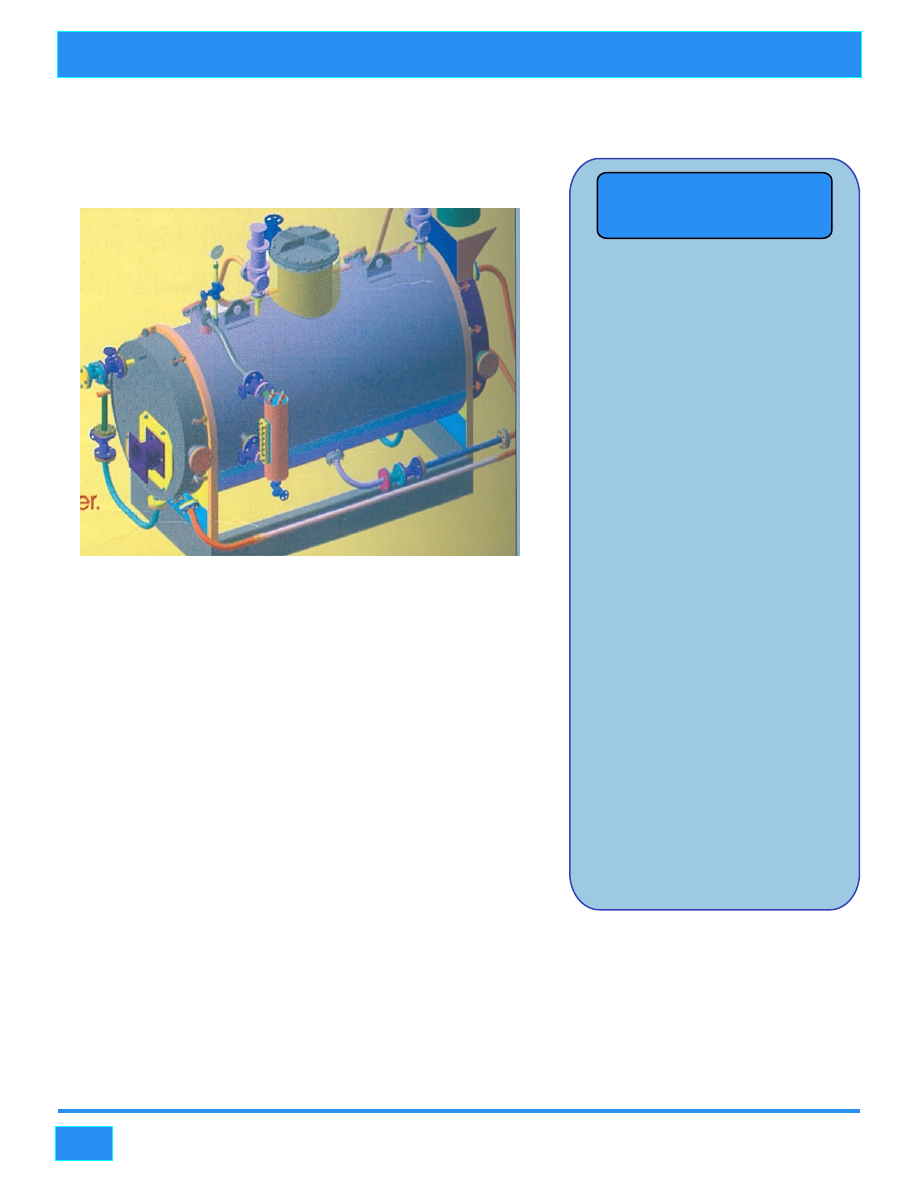
Industrial Boilers
Boilersbrothers@gmail.com
!
Execution, Commissioning
!
Coil type Boilers
!
Cross Drums water Tube Boilers
!
Wet Back Boilers
!
Moderen Control Devices
!
Own Design Special Burners
!
Water Softening Plant Designing
!
Oil & Gas Burner Designing
!
Complete Boiler Mountings
!
Complete Boiler Controls
!
Tube Assembly in water Tube Boilers
!
Designing of Economizer, Air pre Heater
!
Rice Husk Design and many others
Company Contact:-
Ramzan Group of Companies
10-Km G.T Road, Lahore
Phone # +92-55-3263700, 3263800 Fax +92-55-3264300
Technology Roundup
Please give us your feedback and address queries to editorpastic@gmail.com
10