
Patron/Executive Editor
Dr. Muhammad Akram Shaikh
Director General, PASTIC
Managing Editors
Ms. Nageen Ainuddin
Mr. M. Aqil Khan
Editor
Saima Siddique Tariq
Composer
Kashif Farooqui
T
ECHNOLOGY
R
OUNDUP
Technology Information Section (TIS)
Pakistan Scientific & Technological Information Centre
PASTIC
November-December, 2015
Vol. 7, No. 6
A NEWS BULLETIN FROM
Tech News Headlines
Tech & Trade Offers
Phone: 051-9248103-4, 9248111
Fax: 051-9248113
Email:editor@pastic.gov.pk
Web: www.pastic.gov.pk
PASTIC National Centre
Quaid-i-Azam University Campus
P.O. Box 1217, Islamabad
Editorial Board
l
l
Exploiting Smart Phone Accelerometer as a Personal Identification
Mechanism
l
Image Retrieval Based on Local Level Feature Extraction
Article can be Printed on a Hair now
l New Vessel for detecting Autism
l New Industrial Possibilities for Nanoporous thin Films
l Scientists Develop Diesel that Emits far Less Co2
l Major Breakthrough in Reading Ancient Scrolls
l Biologically Powered Chip
20KW Wind Turbine
Forthcoming Tech Events
l
1st National Conference on Trends and Innovations in Information
Technology (TIIT'16)
th
l 5 Invention to Innovation Summit 2016
l
l
l 22nd International Energy & Environment Fair & Conference
NCAES 2016: 1st National Conference on Agricultural Engineering
and Sciences
28th International Conference on Science, Technology, Engineering
and Management (ICSTEM)
l IEEE International Energy Conference (ENERGYCON)
l 18th International Conference on Aerosol Science and Technology
l Global Colloquium in Recent Advancement and Effectual
Researches in Engineering Science and
Technology (RAEREST)

Technology Roundup
2
Indigenous
Technology
Exploiting Smart Phone Accelerometer as a Personal Identification Mechanism
When some services are requested from a system, a personal recognition scheme is required to confirm the identity
of a person. The purpose of such system is to ensure the access of legitimate user to that service. ATM, Computer
systems and mobile phones are the examples of such systems. The contemporary technologies for personal identity
recognition schemes like PIN or password has been adopted and used extensively by the user community. However,
these schemes have certain drawbacks; i.e. they can be broken by using bruit force dictionary or by installing key
loggers on the system. On the other side, biometric techniques are safer as compared to password identification for
security purpose
This research presents a new biometric security mechanism using accelerometer of smart phone. Modern mobile
phones are equipped with many useful types of input sensors including camera (often multiple), microphone,
gyroscope, proximity sensor, GPS, magnetometer, tri axial accelerometer, etc. These sensors are inexpensive,
powerful and have versatile use in the modern research. Services using these sensors of Smartphone are also
increasing, especially some sensors like gyroscope or 3 axis accelerometer have a lot of use to recognize the activity
of a person holding that smart phone. Motion capturing sensors are rapidly becoming a key function in consumer
electronic devices including Smartphone. Researches have we have used tri axial accelerometer on Android OS
architecture. MATLAB was used for pattern analysis.
Accelerometer is a device used to measure the acceleration of a moving object. Acceleration is the change in
velocity, it is a powerful side channel that can also be used even the location based services are disabled on the
Smartphone. The electronic accelerometer uses piezoelectric properties of element. It behaves like a mass on a
spring. When it experiences the acceleration, the mass is displaced to the position at which spring can accelerate the
mass at same rate as smart phone. Now this mechanical motion is converted into electrical signals that are sensed
and measured. Accelerometer can measure static acceleration like gravitational acceleration and also the
acceleration of moving body in m/s2. In a smart phone (such as HTC Desire S) it generates its value up to 6 decimal
places. The researchers used HTC Desire S as a hardware platform for our experiment, one of the most widely used
smart phone in the market. It uses Google's Android as operating system. Researchers developed an android
application on HTC Desire S experiment. It allows the user to start the activity of doing his signature. The user picks
the mobile phone in his hand and by moving it in the air in the style of his hand written signature. The accelerometer
will send new reading as it senses a change of 0.3 m/s2 in the acceleration value. This approach is based upon the
accelerometer coordinates of smart phone, when the user performs the signature in air by holding smart phone in his
hand. Since this approach uses graph theory for identification, which has proven to be a good tool in the biometric
system. This system can also be used
for online identification applications
Courtesy:
www.muet.edu.pk
Mehran University Research Journal of Engineering & Technology, 2015 34 S(1) 21-26
WAHEED UR REHMAN*, ASADULLAH LAGHARI*, AND ZULFIQAR MEMON*: (Department of
Computer Science, Institute of Business Administration, Sukkur)

Technology Roundup
3
Indigenous
Technology
Image Retrieval based on Local Level Feature Extraction
Image retrieval based on text annotation has become obsolete and is no longer interesting for scientists
because of its high time complexity and low precision in results. Alternatively, increase in the amount of
digital images has generated an excessive need for an accurate and efficient retrieval system. This research
proposes content based image retrieval technique at a local level incorporating all the rudimentary features.
Image segmentation is therefore the foremost step for image retrieval like other CBIR techniques based on
the local approach for feature extraction. After segmentation, all the vital image features are extracted. The
proposed technique extracts all the three important features like color, texture and shape. EHDs and FDs are
also calculated to extort information at the edges.
Image retrieval is an important area in image processing which needs an efficient and accurate system for the
retrieval of the most similar image from the database. The more the number of features extracted the greater
will be the information taken out from the image and result is better retrieval. The entire three vital image
features need to be counted in the feature vector calculation to avoid any loss of information from different
parts of the image. Feature extraction at a local level needs a good segmentation technique to divide the
image into meaningful parts. The technique proposed in this research is based on the local approach for
calculation of feature vector. Euclidean distance is used as a distance measure to calculate the similarity
between query image and database image. Performance of proposed technique is measured through
precision and recall. Further improvement can be achieved by the application of computational techniques
like genetic algorithm to find the best distance measure for a specific image feature.
Mehran University Research Journal of Engineering & Technology, 2015 34(4) 337-348
SUMAIRA MUHAMMAD HAYAT KHAN, AYYAZ HUSSAIN, AND IMAD FAKHRI TAHA AL
SHAIKHLI: ( Department of Computer Science, International Islamic University, Islamabad &
International Islamic University Malaysia, Selangor, Malaysia)
Courtesy:
www.muet.edu.pk
4
Technology Roundup
Article can be Printed on a Hair now
www.dtu.dk
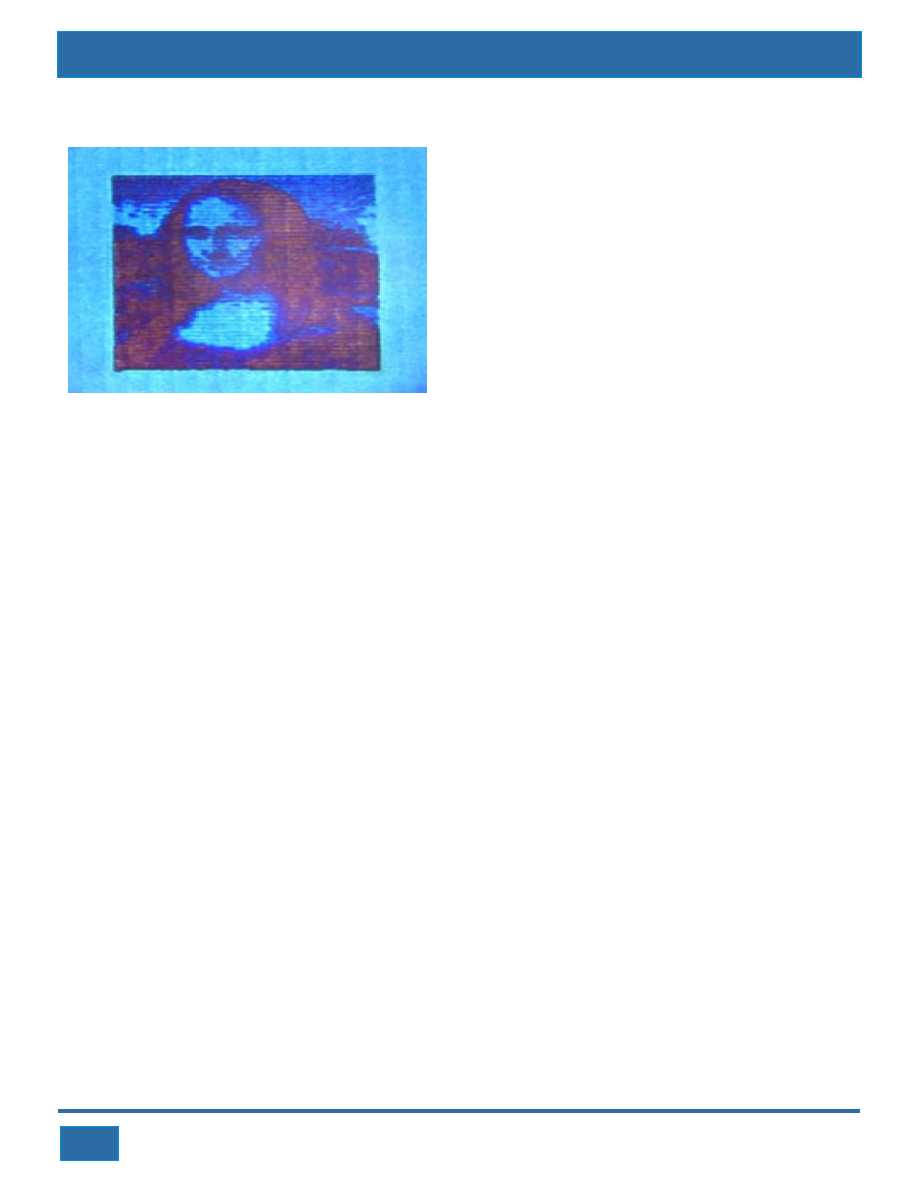
A nanotechnology breakthrough from DTU revolutionizes
laser printing technology, allowing printing of high-
resolution data and colour images of unprecedented quality
and microscopic dimensions. Using this new technology,
researchers from DTU Nanotech and DTU Fotonik have
reproduced a colour image of Mona Lisa which is less than
one pixel on an iPhone Retina display. The laser technology
allows printing in a mind-blowing resolution of 127,000
DPI. In comparison, weekly or monthly magazines are
normally printed in a resolution equivalent to 300 DPI.
Printing the microscopic images requires a special
nanoscale-structured surface. The structure consists of rows
with small columns with a diameter of merely 100 nanometres each. This structured surface is then covered by 20
nanometres of aluminium. When a laser pulse is transmitted from nanocolumn to nanocolumn, the nanocolumn is
heated locally, after which it melts and is deformed. The temperature can reach up to 1,500°C, but only for a few
nanoseconds, preventing the extreme heat from spreading.
The intensity of the laser beam determines which colours are printed on the surface, since the extent of column
deformation decides which colour is reflected. Low-intensity laser pulses lead to a minor deformation of the
nanocolumn, resulting in blue and purple colour tone reflections. Strong laser pulses create a drastic deformation,
which gives the reflection from the nanocolumn an orange and yellow colour tone. Professor N. Asger Mortensen
from DTU Fotonik explained that every time he makes a slight change to the column geometry, and he changes the
way it absorbs light. The light which is not absorbed is the colour that the eyes see. If the column absorbs all the
blue light, for example, the red light will remain, making the surface appear red. The researchers believe that there
is considerable scope for application of the new laser printing technology. Professor Anders Kristensen from DTU
Nanotech elaborated that It will be possible to save data invisible to the naked eye. This includes serial numbers or
bar codes of products and other information. The technology can also be used to combat fraud and forgery, as the
products will be labeled in a way that makes it very difficult to reproduce. It will be easier to determine whether the
product is an original or a copy.
The new laser printing technology can also be used on a larger scale to personify products such as mobile phones
with unique decorations, names, etc. Foreign companies producing parts for cars, such as instrument panels and
buttons, are already taking a keen interest in the technology as it can simplify the production. The technology has
been patented, and the researchers will now focus on developing the technology, so that it can replace the
conventional laser printers that we have at our offices and in our homes.
3
5
Technology Roundup
New Vessel for detecting Autism
www.nyu.edu
New Industrial possibilities for Nanoporous thin Films
A team of scientists including Zachary Saccomano, an NYU graduate student; Mohammed Alzoobaee, an NYU
undergraduate Maura Boldrini, a research scientist in the
Department of Psychiatry at Columbia University; and
Patricia Whitaker-Azmitia, a professor in the Department
of Psychology and director of the Graduate Program in
Integrative Neurosciences at Stony Brook University found
that evidence of autism may be found in the composition
and malfunction of the brain's blood vessels. According to
Azmitia in a typical brain, blood vessels are stable, thereby
ensuring a stable distribution of blood, whereas in the
autism brain, the cellular structure of blood vessels
continually fluctuates, which results in circulation that is
fluctuating and, ultimately, neurologically limiting. In their
study, the researchers examined human postmortem brain
tissue, some from normal brains and others from those with
an autism diagnosis. In the microscopic analysis, the scientists were blind to the nature of the tissue, not knowing
if it came from an autistic brain or a typical one, their Cellular studies uncovered angiogenesis, creation of new
blood vessels, in the autistic brain tissue. The distinction is significant and an evidence of angiogenesis indicates
that these vessels are repeatedly being formed and in constant flux, underscoring an instability in the blood's
delivery mechanism. Specifically, in autistic brains, they found increased levels of the proteins nestin and CD34,
molecular markers of angiogenesis, compared to typical brains.
Researchers found that angiogenesis is correlated with more neurogenesis in other brain diseases; therefore there
is the possibility that a change in brain vasculature in autism means a change in cell proliferation or maturation,
or survival, and brain plasticity in general. These changes could potentially affect brain networks. It's clear that
there are changes in brain vascularization in autistic individuals from two to 20 years that are not seen in normally
developing individuals beyond the age of two years. Now that Scientists know this, they have new ways of
looking at this disorder and, hopefully with this new knowledge, novel and more effective ways to address it.
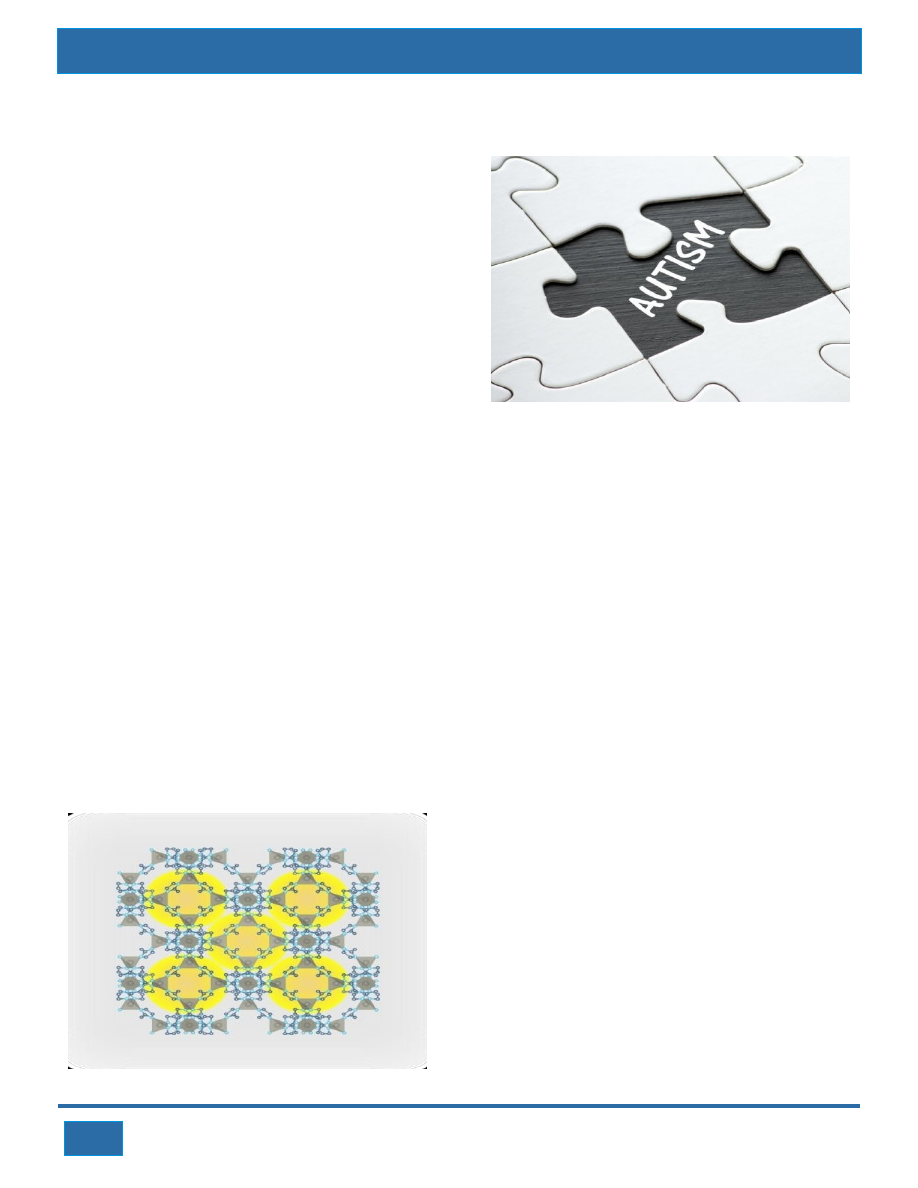
Metal-organic frameworks (MOFs) are a new type of materials with nanoscale pores. Bioscience engineers from
KU Leuven, Belgium, have developed an alternative
method that produces these materials in the form of very
thin films, so that they can easily be used for high-tech
applications such as microchips. Metal-organic
frameworks (MOFs) are a recently developed type of
materials that consist of a nanoporous grid of both organic
molecules and metal ions.
Researchers are already looking into these applications;
they are examining the use of MOFs as catalysts to
accelerate chemical reactions of guest molecules in the
MOF pores. Another possible application is gas storage, as
the internal surface of MOFs can hold large amounts. So

6
Technology Roundup
far, some applications were not considered feasible due to the production procedure for MOFs. The conventional
method involves lab-scale wet chemistry, the traditional chemistry with solutions and solvents. The end result is a
powder. For integrated, nanoscale applications, the particles of that powder are too large, while a method with
solutions is not pure enough. In the case of gas sensors, for instance, the MOF material has to be deposited as a thin
film over the surface of the electrical circuit. That is not possible by the use of the conventional production
procedure.
Lead researcher Ivo Stassen set out to find a production method other than wet chemistry. He used vapours and
gases instead of liquids. Vapour-phase deposition is already a common method to produce high-tech devices.
They are the first to use this method for the production of these highly porous materials. They first deposit layers
of zinc and let them react with the vapour of the organic material. The organic material permeates the zinc, the
volume of the whole expands, and it is fully converted into a material with a regular structure and nanopores. This
alternative production method opens up new possibilities for MOFs in terms of applications and industries.
Chemical vapour deposition is a common technique in nanofabrication. Therefore, new MOF applications can be
developed relatively quickly: gas sensors, nanochip components, and improved batteries.
Researchers from KU Leuven and Utrecht University have discovered a new approach to the production of fuels.
Their new method can be used to produce much cleaner diesel. It can quickly be scaled up for industrial use. The
production of fuel involves the use of catalysts. These substances trigger the chemical reactions that convert raw
material into fuel. In the case of diesel, small catalyst granules are added to the raw material to sufficiently change
the molecules of the raw material to produce usable fuel. Catalysts can have one or more chemical functions. The
catalyst that was used for this particular study has two functions, represented by two different materials: a metal
(platinum) and a solid-state acid. During the production process for diesel, the molecules bounce to and fro
between the metal and the acid. Each time a molecule comes into contact with one of the materials, it changes a
little bit. At the end of the process, the molecules are ready to be used for diesel fuel.
The assumption has always been that the metal and the
solid-state acid in the catalyst should be as close together as
possible. That would speed up the production process by
helping the molecules bounce to and fro more quickly.
Professor Johan Martens (KU Leuven) and Professor Krijn
de Jong (Utrecht University) have now discovered that this
assumption is incorrect. If the functions within a catalyst are
nanometers apart, the process yields better molecules for
cleaner fuel. Their results are the exact opposite of what
they had expected. At first, they thought that the samples
had been switched or that something was wrong with the
analysis. Researchers repeated t
experiments three times,
only to arrive at the same conclusion: the current theory is
wrong. There has to be a minimum distance between the
functions within a catalyst. This goes against what the industry has been doing for the past 50 years.
www.kuleuven.be
Scientists develop Diesel that emits far less Co2
he
7
Technology Roundup
The new method can optimize quite a few molecules in diesel. Cars that are driven by this clean diesel would
emit far fewer particulates and CO2. The researchers believe that their method can be scaled up for industrial
use with relative ease, so the new diesel could be used in cars in 5 years. The new technique can be applied to
petroleum-based fuels, but also to renewable carbon from biomass.
www.kuleuven.be
Major Breakthrough in Reading Ancient Scrolls
After working for more than 10 years on unlocking an ancient piece of history, what lies inside damaged
Herculaneum scrolls, University of Kentucky Department of Computer Science Chair and Professor Brent
Seales will accomplish the next step in allowing the world to read the scrolls, which cannot be physically
opened. Seales is building software that will visualize the scrolls' writings as they would be if unrolled. A
breakthrough not only in digital imaging techniques, the first-of-its-kind software could also have profound
impacts on history and literature.
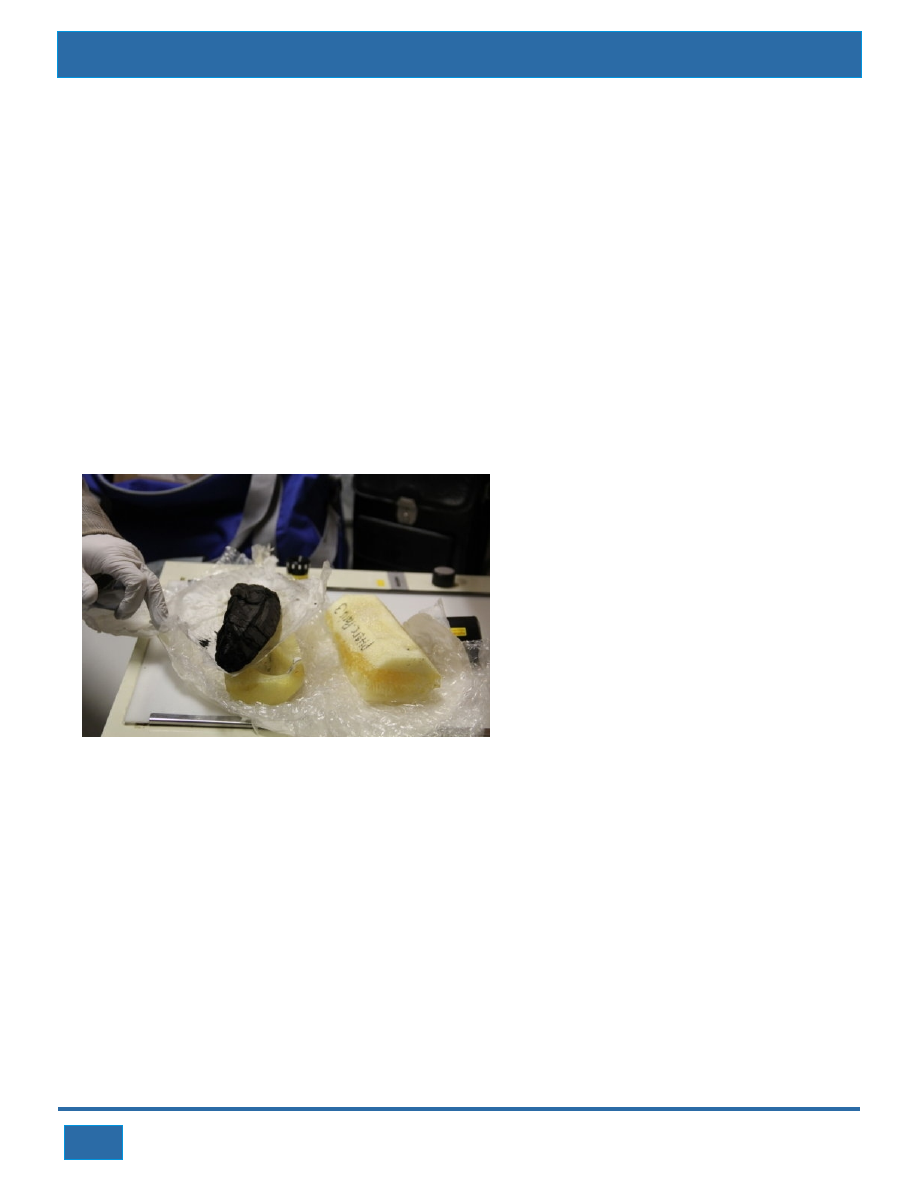
The scrolls are not typical 2,000-year old papyri
manuscripts; they were carbonized in the Mount
Vesuvius volcanic eruption of A.D. 79, and later
discovered as charred clumps in the Villa of the
Papyri in the ancient Italian city of Herculaneum
beginning in 1752. When attempting to open, the
artifacts would often shatter beyond repair. To
reveal the works inside the remaining intact
scrolls, Seales and his research collaborator from
the Institut de France, Daniel Delattre, knew that
"virtual unrolling" was the only way. After
successfully creating 2-D images of two
Herculaneum scrolls in 2009 but not being able to
detect the ink in them, Seales' colleagues believe
they have recently identified ink in the scrolls after
applying an x-ray method often used in the medical and archeology communities.
The method, called propagation-based phase contrast imaging, the researchers claim to see letters and, in a few
instances, whole words. Now that the researcher's team can see the writings, the next step in unveiling the
writings to the world is to organize them. Without unrolling the scrolls, the software will run extremely high-
resolution images from the tangled surfaces, making sense of the jumbled letters into words, and words into
passages. The software will combine novel methods for finding the scroll surfaces together with a user-guided
interface for correcting mistakes and improving the automatic first-guess. In other words, it will pull out a page
that displays writing from the data they currently have, and then identify where that page is inside the scrolls
that now resemble charcoal. Because of this, the researchers and physicists will be able to optimize the scanning
process on site, allowing them to see an entire page unwrapped without ever leaving the facility. Eventually,
the outcome will be as complete of a manuscript as possible of the remaining Herculaneum scrolls. The
researchers told that the project plan is to release working software and datasets as soon as possible for scholars
to examine. By project's end, the team hopes to have created a software tool and a set of scans of scrolls that
together will transform the hopelessly damaged Herculaneum collection into new literary discoveries.
7
Technology Roundup
78
Unmasking the Herculaneum writings is only the beginning. The researchers hope the work to uncover and
decipher these ancient scrolls will propel other efforts forward, leading to an even greater impact on our
understanding of classical history and literature, and revolutionary digital imaging.
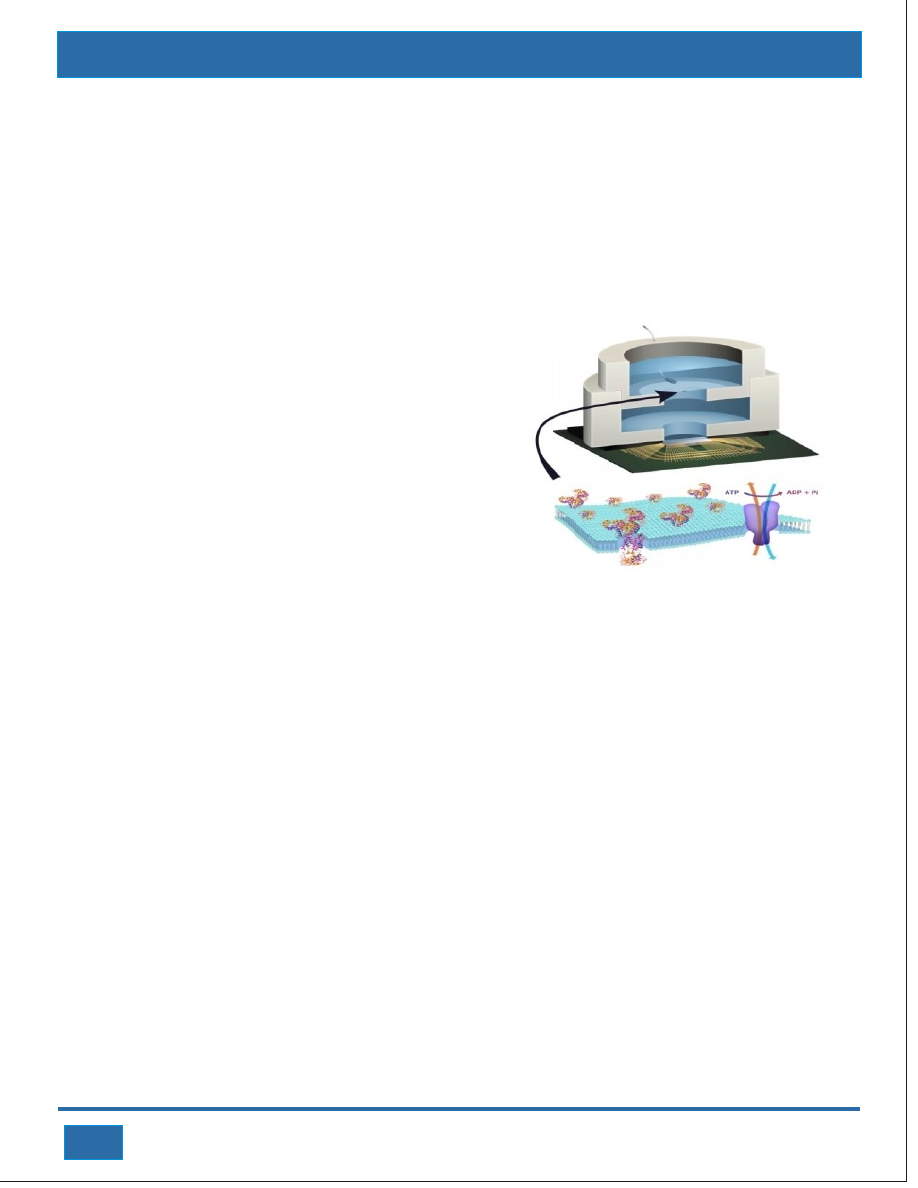
Columbia Engineering researchers have harnessed the molecular machinery of living systems to power an
integrated circuit from adenosine triphosphate (ATP), the energy currency of life. In combining a biological
electronic device with CMOS, The researchers will be able
to create new systems not possible with either technology
alone they are excited at the prospect of expanding the
palette of active devices that will have new functions, such
as harvesting energy from ATP, as was done here, or
recognizing specific molecules, giving chips the potential
to taste and smell. This was quite a unique new direction
and it has great potential to give solid-state systems new
capabilities with biological components.
According to Shepard, despite its overwhelming success,
CMOS solid-state electronics is incapable of replicating
certain functions natural to living systems, such as the
senses of taste and smell and the use of biochemical energy
sources. Living systems achieve this functionality with their own version of electronics based on lipid
membranes and ion channels and pumps, which act as a kind of biological transistor. They use charge in the
form of ions to carry energy and information channels control the flow of ions across cell membranes. Solid-
state systems, such as those in computers and communication devices, use electrons; their electronic signaling
and power are controlled by field-effect transistors. In living systems, energy is stored in potentials across lipid
membranes, in this case created through the action of ion pumps. ATP is used to transport energy from where it
is generated to where it is consumed in the cell. To build a prototype of their hybrid system, Shepard's team, led
by PhD student Jared Roseman, packaged a CMOS integrated circuit (IC) with an ATP-harvesting 'biocell.' In
the presence of ATP, the system pumped ions across the membrane, producing an electrical potential harvested
by the IC.
The researchers made a macroscale version of this system, at the scale of several millimeters, to see if it worked
the results provide new insight into a generalized circuit model, enabling us to determine the conditions to
maximize the efficiency of harnessing chemical energy through the action of these ion pumps. They will now
be looking at how to scale the system down. While other groups have harvested energy from living systems,
Shepard and his team are exploring how to do this at the molecular level, isolating just the desired function and
interfacing this with electronics. They do not need the whole cell they just grab the component of the cell that is
doing what they want. For this project, they isolated the ATPases because they were the proteins that allowed
to extract energy from ATP. The ability to build a system that combines the power of solid-state electronics with
the capabilities of biological components has great promise. With appropriate scaling, this technology could
provide a power source for implanted systems in ATP-rich environments such as inside living cells.
www.uky.edu
Biologically Powered Chip
www.engineering.columbia.edu

Technology Roundup
Technology Roundup
National
International Events
1st National Conference on Trends and Innovations in Information Technology (TIIT'16)
th
5 Invention to Innovation Summit 2016
NCAES 2016: 1st National Conference on Agricultural Engineering and Sciences
IEEE International Energy Conference (ENERGYCON)
18th International Conference on Aerosol Science and Technology
nd
22 International Energy & Environment Fair & Conference
10-12 February 2016,
Nawabshah,
www.tiit.quest.edu.pk
2-3, March, 2016
University of Punjab Lahore
www.irp.edu.pk, www.pastic.gov.pk
4-5 April 2016
Multan
www.ncaes2016.com
28th International Conference on Science, Technology, Engineering and Management
(ICSTEM)
Global Colloquium in Recent Advancement and Effectual Researches in Engineering
Science and Technology (RAEREST)
27 April 2016
Rawalpindi
www.researchworld.org
4-8, April, 2016
Leuvan, Belgium
www.ieee-energycon2016.org
27-29, April,2016
Istunbul, Turkey
www.icci.com.tr
14-15, April, 2016
Lisbon, Portugal
www.waset.org
22-23, April,2016
Kottayam, Kerala, India
www.sjcetsingularis.com
Forthcoming Tech Events
9

Tech & Trade Offers
About PASTIC
PASTIC serves as a gateway for
Scientific & Technological
Information for R&D by
catering to the information
n e e d s o f r e s e a r c h e r s ,
entrepreneurs, industrialists,
educationists, policy makers
a n d p l a n n e r s t h r o u g h
anticipatory and responsive
information services.
T e c h n o l o g y I n f o r m a t i o n
Service Section of PASTIC
works exclusively for support
and promotion of technological
information on trade and
industry in the country.
“Technology Roundup” is a
news bulletin that provides
l a t e s t a n d i n n o v a t i v e
technology news, forthcoming
events, etc. It also promotes
products, technologies and
services globally in sectors
such as Agro-Industry, Bio-
Technology, Building Material,
B u s i n e s s , C h e m i c a l s ,
Electronics, Energy, Fisheries,
Food Processing, Machinery,
P a c k a g i n g , M i n i n g
Pharmaceuticals and Textiles.
SI-20kW-Spec-Sheet-Hummer-Wind-Power
!
The 20kW wind turbine is a low wind speed, direct drive generator.
!
It has a low starting torque, and high generating efficiency.
!
The patented “in-the-hub” generator emits low noise and heat.
!
Lightweight, easy to install and low maintenance.
!
It’s slip ring yaw shaft means no cable un-twisting.
!
An LCD display is included for monitoring all system information and
auto control protection from overcharging, over discharging, short circuit
and overheating.
!
Grid Tied components include Inverter and PC Software.
!
Off Grid components include Wind-Solar Hybrid Control System,
Charger and Unloading System
Company Contact:-
Sharif International
House # 151-A Street # 8 Chaklala Scheme 3, Rawalpindi
Tel: 92-51-5766380, Fax: 92-51-5598354
bilal.malik@sharif.international.net
www.sharifinternational.net
Technology Roundup
Please give us your feedback and address queries to editorpastic@gmail.com
10