Patron/Executive Editor
Dr. Muhammad Akram Shaikh
Director General, PASTIC
Managing Editors
Ms. Nageen Ainuddin
Mr. M. Aqil Khan
Editor
Saima Siddique Tariq
Composer
Kashif Farooqui
T
ECHNOLOGY
R
OUNDUP
Technology Information Section (TIS)
Pakistan Scientific & Technological Information Centre
PASTIC
May-June, 2016
Vol. 8, No. 3
A NEWS BULLETIN FROM
Tech News Headlines
Tech & Trade Offers
Phone: 051-9248103-4, 9248111
Fax: 051-9248113
Email:editor@pastic.gov.pk
Web: www.pastic.gov.pk
PASTIC National Centre
Quaid-i-Azam University Campus
P.O. Box 1217, Islamabad
Editorial Board
l
l
l
l
l
l
l
l
Improved Data Model for Uncertain Data
Nonholonomic Mobile Robot Trajectory Tracking using Hybrid
Controller
Fast, Stretchy Circuits could Yield new Wave of Wearable Electronics
Light Driven process that could Revolutionize Agriculture , Food
Supply challenge
Solar Water Heating with Nanoparticles
Bionic Leaf turns Sunlight into Liquid Fuel
High-Tech Librarian Knows its Books
Meta-Lens Works in the Visible Spectrum, sees smaller than a
Wavelength of Light
Dies & Punches
Forthcoming Tech Events
l
th
56 International Conference on Nanoscience, Nanotechnology &
Advanced Materials IC2NM
l
l
l
l
Electrical, Electronics and Allied Engineering Industrial Exhibition
International Conference
st
21 International Conference on Science and Technology Indicators
First International Conference on Emerging Trends in Science and
Technology (ICETST)
Innovative Computing Technology
l
th
5 International Conference on Agriculture, Science and
Engineering (ICASE2016)
nd
l 2 International Conference on Engineering, Technology,
Management and Science 2016
l Tech Expo North America

Technology Roundup
2
Indigenous
Technology
Improved Data Model for Uncertain Data
In recent years, the field of uncertain databases has witnessed a revived interest due to the emergence of a wide range
of indirect data gathering methodologies employed in various fields such as sensor data management, moving
object management, web data integration, weather forecasting, and economic decision making, etc. RFID (Radio
Frequency Identification) systems have become much popular for the identification of moving objects. These
methodologies or applications generate large amounts of uncertain data that needs to be managed carefully. It is to
be noted that a lot of research for the management of uncertain data has been carried out in the past and it does not
study the nature of uncertain data generated as a result of new applications. Thus the broader issue in the field of
uncertain databases is to develop a data model (or simply a model) that could provide a mechanism for storage,
manipulation and retrieval of uncertain data
.
Uncertain data can be categorized as imprecise data and probabilistic data. In each of these categories, the
uncertainty can be found at different granularity levels. Conventional data models are developed for the purpose of
storing, manipulating and retrieving certain data. These data models do not extend their support for the management
of uncertain data. Thus, a standalone data model is required aimed at storing, manipulating and retrieving certain as
well as uncertain data. In this research, researchers introduce an uncertain data model for the management of
uncertain data along with certain data. Vertical partitioning approach is used to translate an uncertain relation into
UDM-relations. This data model supports ALU (Attribute-Level Uncertainty) as well as TLU (Tuple-Level
Uncertainty) for the finite sets of possible worlds. It follows the concept of standard relational database technology.
With slight modifications to standard relational algebra operators, they have introduced four relational operators
that are used to evaluate a query on UDM-relations.
The relational algebraic operators introduced in this research provide a guideline in order to efficiently evaluate a
standard relational query on UDM-relations. For future directions, researchers aim to extend their model for
probabilistic information and thus develop PUDM, a probabilistic uncertain data model that is a customized data
model for probabilistic data.
Mehran University Research Journal of Engineering & Technology, 2016 Volume 35(1) 84-94
Umar Hayat, Muhammad Usman & Ghani Khan (Department of Computer Science & Engineering,
University of Engineering and Technology, Lahore, Pakistan)
Courtesy:
www.muet.edu.pk

Technology Roundup
3
Indigenous
Technology
Nonholonomic Mobile Robot Trajectory Tracking using Hybrid Controller
In recent era, WMR (Wheeled Mobile Robot) has gained attention of the robotic community as it is suitable
for a variety of applications including transportation, security and exploration. WMR can be divided into
holonomic and non holonomic robot with respect to their mechanical design. Robots whose controllable
degree of freedom is equivalent to number of controllable inputs is known as holonomic robot. Whereas, non
holonomic robots comprise of less number of controllable inputs, as compare to holonomic robot causing
restriction in mobility, therefore it is considered as more challenging problem. Many researchers have
worked in this field and proposed various controllers that includes fuzzy logic, adaptive feedback ,
backstepping, feedback linearization, neural network, sliding mode control and many more. Trajectory
tracking can be done by taking information either from leader robot or reference path. When a robot takes a
reference path from leader robot this phenomena is called multi-robot formation control.
The purpose of this paper is to provide an innovative controller technique for the feedback controller of the
kinematic model of mobile robot. This innovative technique is a hybrid technique comprising of fuzzy Logic
and PID known as fuzzy PID controller (F-PID). Moreover, in this technique fuzzy logic is being used as
gains tuner of PID
.
A control scheme is being presented for the trajectory tracking of a nonholonomic kinematic model of
mobile robots. As a kinematic model of mobile robots is nonlinear in nature, therefore, it is controlling is
always being a difficult task. Thus, a control hybrid scheme comprises of fuzzy logic and PID (Proportional
Integral Derivative) is being proposed, in which adaptive gains of PID controller is being tuned by a fuzzy
logic controller. Moreover, the effectiveness of this innovative technique is also proved using the
simulations by adding model uncertainties and external disturbances in the system. Besides, the fuzzy logic
control system is also being compared by the proposed control system. Results attained show that the fuzzy
based PID controller drives improved results than fuzzy logic controller.
Mehran University Research Journal of Engineering & Technology, 2016 Volume 35(2) 161-170
Muhammad Safwan (Post-Graduate Student, Faculty of Engineering Science & Technology,
Hamdard University, Karachi) Vali Uddin (Faculty of Engineering Science & Technology, Hamdard
University, Karachi) Muhmmad Asif (Department of Electronic Engineering, Sir Syed University of
Engineering & Technology,Karachi, Pakistan
Courtesy:
www.muet.edu.pk
4
Technology Roundup
Fast, Stretchy Circuits could Yield new Wave of Wearable Electronics
Light Driven process that could Revolutionize Agriculture, Food Supply challenge
The consumer marketplace is flooded with a lively assortment of smart wearable electronics that do everything
from monitoring vital signs, fitness or sun exposure to play music, charge other electronics or even purify the air
around all wirelessly. A team of University of Wisconsin-Madison engineers has created the world's fastest
stretchable, wearable integrated circuits, an advance that could drive the Internet of things and a much more
connected, high-speed wireless world. The team led by Zhenqiang "Jack" Ma, the Lynn H. Matthias Professor in
Engineering and Vilas Professor in electrical and computer engineering at UW-Madison, the researchers
published details of these powerful, highly efficient integrated circuits in the journal Advanced Functional
Materials.
The advance is a platform for manufacturers seeking to
expand the capabilities and applications of wearable
electronics including those with biomedical
applications particularly as they strive to develop
devices that take advantage of a new generation of
wireless broadband technologies referred to as 5G.
With wavelength sizes between a millimeter and a
m e t e r, m i c r o w a v e r a d i o f r e q u e n c i e s a r e
electromagnetic waves that use frequencies in the .3
gigahertz to 300 gigahertz range. That falls directly in
the 5G range. In mobile communications, the wide
microwave radio frequencies of 5G networks will
accommodate a growing number of cellphone users
and notable increases in data speeds and coverage
areas. In an intensive care unit, epidermal electronic
systems (electronics that adhere to the skin like temporary tattoos) could allow health care staff to monitor patients
remotely and wirelessly, increasing patient comfort by decreasing the customary tangle of cables and wires.
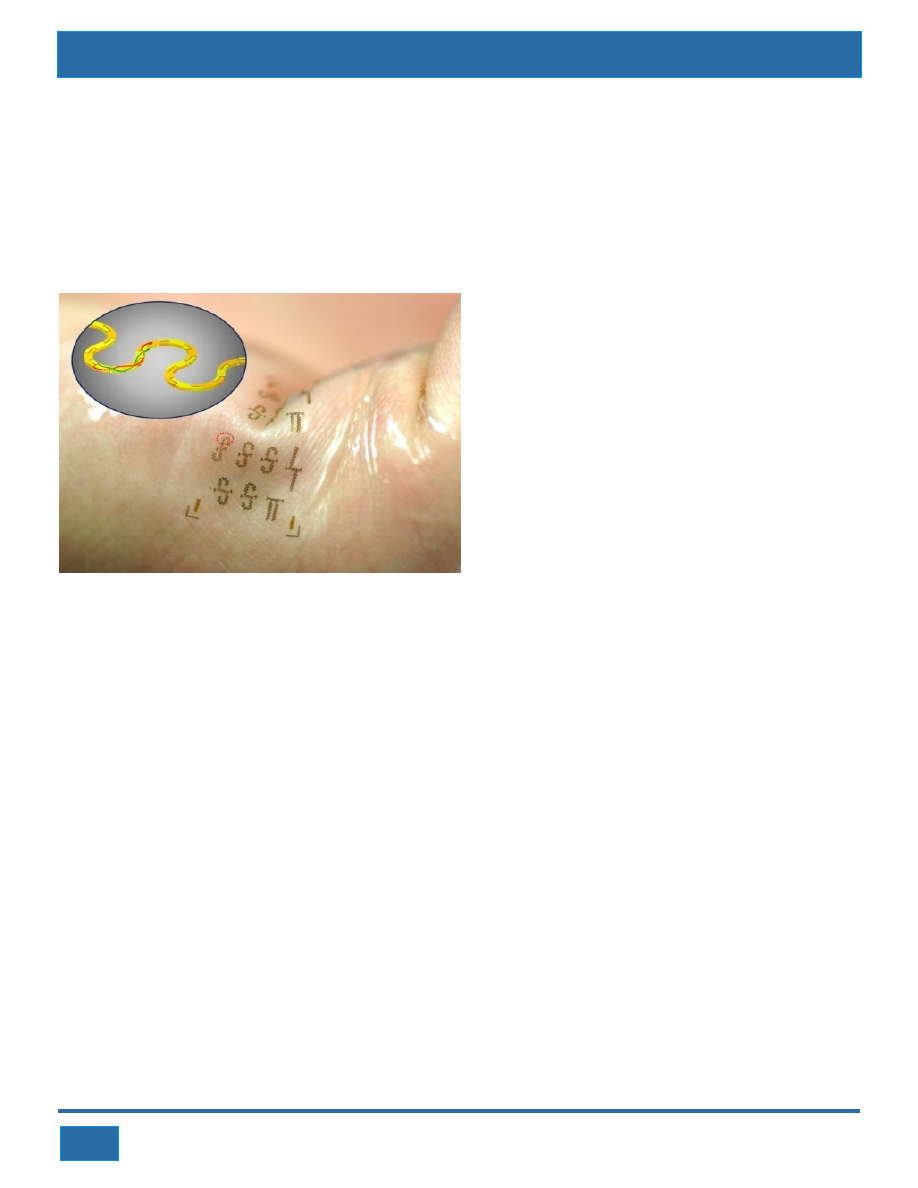
What makes the new, stretchable integrated circuits so powerful is their unique structure, inspired by twisted-pair
telephone cables. They contain, essentially, two ultra-tiny intertwining power transmission lines in repeating S-
curves. This serpentine shape formed in two layers with segmented metal blocks, like a 3-D puzzle gives the
transmission lines the ability to stretch without affecting their performance. It also helps shield the lines from
outside interference and, at the same time, confine the electromagnetic waves flowing through them, almost
completely eliminating current loss. Currently, the researchers' stretchable integrated circuits can operate at radio
frequency levels up to 40 gigahertz. And, unlike other stretchable transmission lines, whose widths can approach
640 micrometers (or .64 millimeters), the researchers' new stretchable integrated circuits are just 25 micrometers
(or .025 millimeters) thick. That is tiny enough to be highly effective in epidermal electronic systems, among
many other applications. Ma's group has been developing what are known as transistor active devices for the past
decade. This latest advance marries the researchers' expertise in both high-frequency and flexible electronics.
Researchers found a way to integrate high-frequency active transistors into a useful circuit that can be wireless.
This opens the door to lots of new capabilities.
All living things require nitrogen for survival, but the world depends on only two known processes to break
nitrogen's ultra-strong bonds to allow conversion to a form humans, animals and plants can consume. One is a
natural, bacterial process on which farmers have relied since the dawn of agriculture. The other is the century-old
www.wisc.edu
3
5
Technology Roundup
Haber-Bösch process, which revolutionized fertilizer
production and spurred unprecedented growth of the global
food supply. According to Utah State University biochemist
Lance Seefeldt, we live in a sea of nitrogen, yet our bodies can't
access it from the air, instead, we get this life-sustaining
compound from protein in our food.
But now, Seefeldt and colleagues announce a light-driven
process that could, once again, revolutionize agriculture, while
reducing the world food supply's dependence on fossil fuels
and relieving Haber-Bösch's heavy carbon footprint. The
research team, includes USU's Seefeldt, Derek Harris, Andrew
Rasmussen and Nimesh Khadka; Katherine A. Brown and Paul
W. King of Colorado's National Renewable Energy
Laboratory; Molly Wilker, Hayden Hamby and Gordana Dukovic of the University of Colorado and Stephen
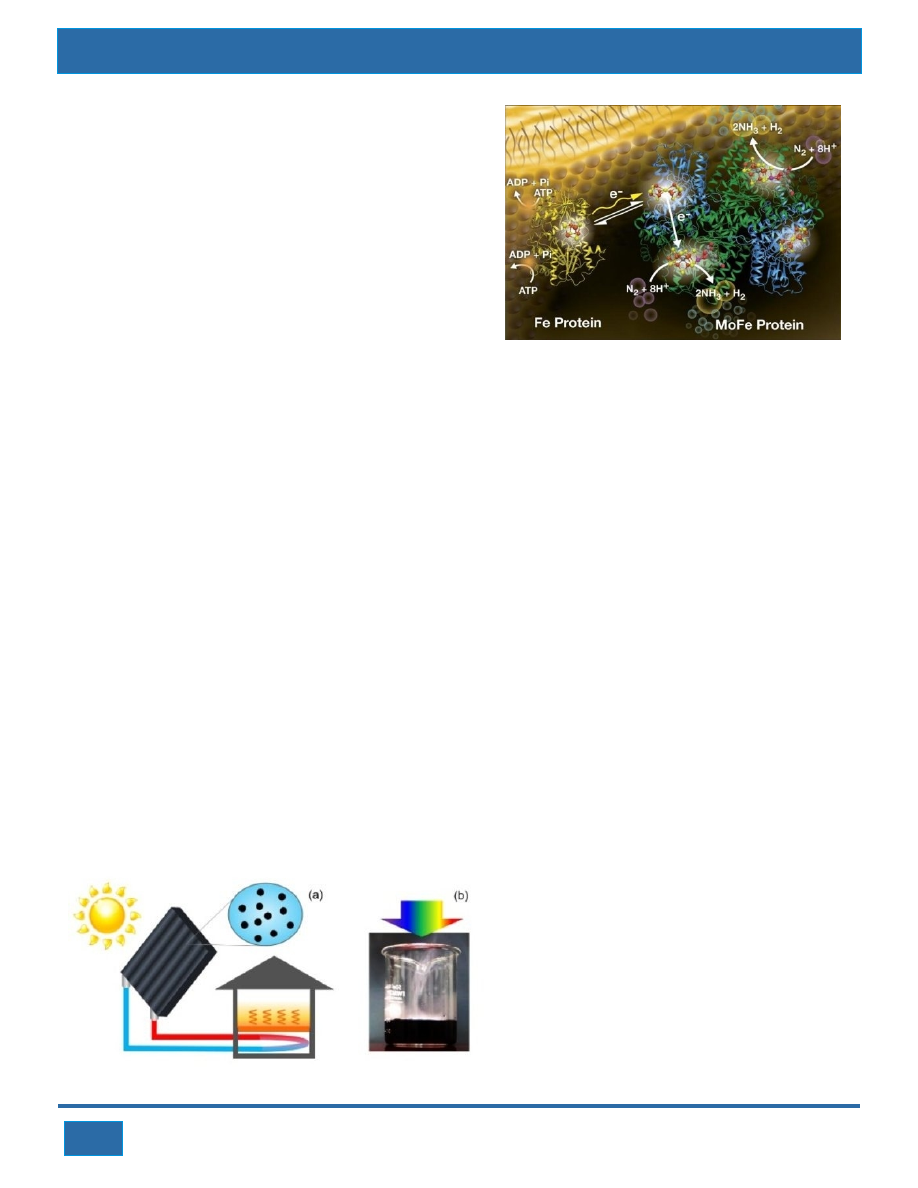
Keable and John Peters of Montana State University. The research demonstrates photochemical energy can
replace adenosine triphosphate, which is typically used to convert dinitrogen, the form of nitrogen found in the
air, to ammonia, a main ingredient of commercially produced fertilizers.
Nitrogen fixation is an energy-intensive process. The Haber-Bösch process currently consumes about two
percent of the world's fossil fuel supply, so, the new process, which uses nanomaterials to capture light energy,
could be a game-changer. Using light directly to create a catalyst is much more energy efficient. This new
ammonia-producing process is the first example of how light energy can be directly coupled to dinitrogen
reduction, meaning sunlight or artificial light can power the reaction. Energy-efficient production of ammonia
holds promise not only for food production, but also for development of technologies that enable use of
environmentally cleaner alternative fuels, including improved fuel cells to store solar energy. In addition to its
practical applications, the research sheds light on fundamental aspects of how bacterial enzymes known as
nitrogenases function; an area of chemistry Seefeldt has studied for nearly two decades. The research at USU is
supported by the U.S. Department of Energy.
A research team in Japan discovered through numerical calculations that nanoparticles of transition metal
nitrides and carbides absorb sunlight very efficiently, and confirmed experimentally that nitride nanoparticles,
when dispersed in water, quickly raise water temperature. A research team of Satoshi Ishii, MANA scientist, and
Tadaaki Nagao, group leader, Nano-System Photonics Group, International Center for Materials
Nanoarchitectonics (MANA), National
Institute for Materials Science (NIMS),
discovered through numerical calculations that
nanoparticles of transition metal nitrides and
carbides absorb sunlight very efficiently, and
confirmed experimentally that nitride
nanoparticles, when dispersed in water, quickly
raise water temperature. These nanoparticles
may be applied for heating and distillation of
water through efficient sunlight use. Sunlight is
one of the most promising renewable energies
www.usu.edu
Solar Water Heating with Nanoparticles
.
6
Technology Roundup
The examples of sunlight use are power generation using solar cells and water heating through photothermal
conversion, a process in which absorbed sunlight is converted into heat. Water and air heating accounts for 55% of
household energy consumption. If sunlight can be converted into heat very efficiently, it is possible to heat water
and air without using electricity, leading to reduction of carbon dioxide emissions. Absorption of sunlight using
conventional solar heat collector panels and heat collector tubes results in loss of heat through conduction. For
this reason, nanoparticles that can directly heat media including water when they are dispersed in the media are
attracting attention.
Recently, the research team jointly performed first-principles calculations to search for nanoparticle materials
suitable for photothermal conversion and to estimate their physical properties. As a result, the team found that
transition metal nitrides and carbides, which are ceramics, very efficiently absorb sunlight. Furthermore, after
choosing titanium nitride (TiN) out of a number of transition metal nitrides, the team dispersed TiN nanoparticles
in water, and applied sunlight to the aqueous solution. In this experiment, the team confirmed that the
nanoparticles converted sunlight into heat at high efficiency of nearly 90%. Since TiN nanoparticles exhibit
broadband plasmon resonances, their sunlight absorption efficiency is likely to be higher than those of gold and
carbon nanoparticles on a per nanoparticle basis. In future studies, the team is planning to apply these results to
floor heating, water heating, and distillation of sewage and seawater. Besides these projects, the team is also
working on other applications of nanoparticles such as the development of hybrid materials between polymers
and nanoparticles and the study of nanoparticle-mediated chemical reactions.
The days of drilling into the ground in the search for fuel may be numbered. Nocera, the Patterson Rockwood
Professor of Energy at Harvard University, and Pamela Silver, the Elliott T. and Onie H. Adams Professor of
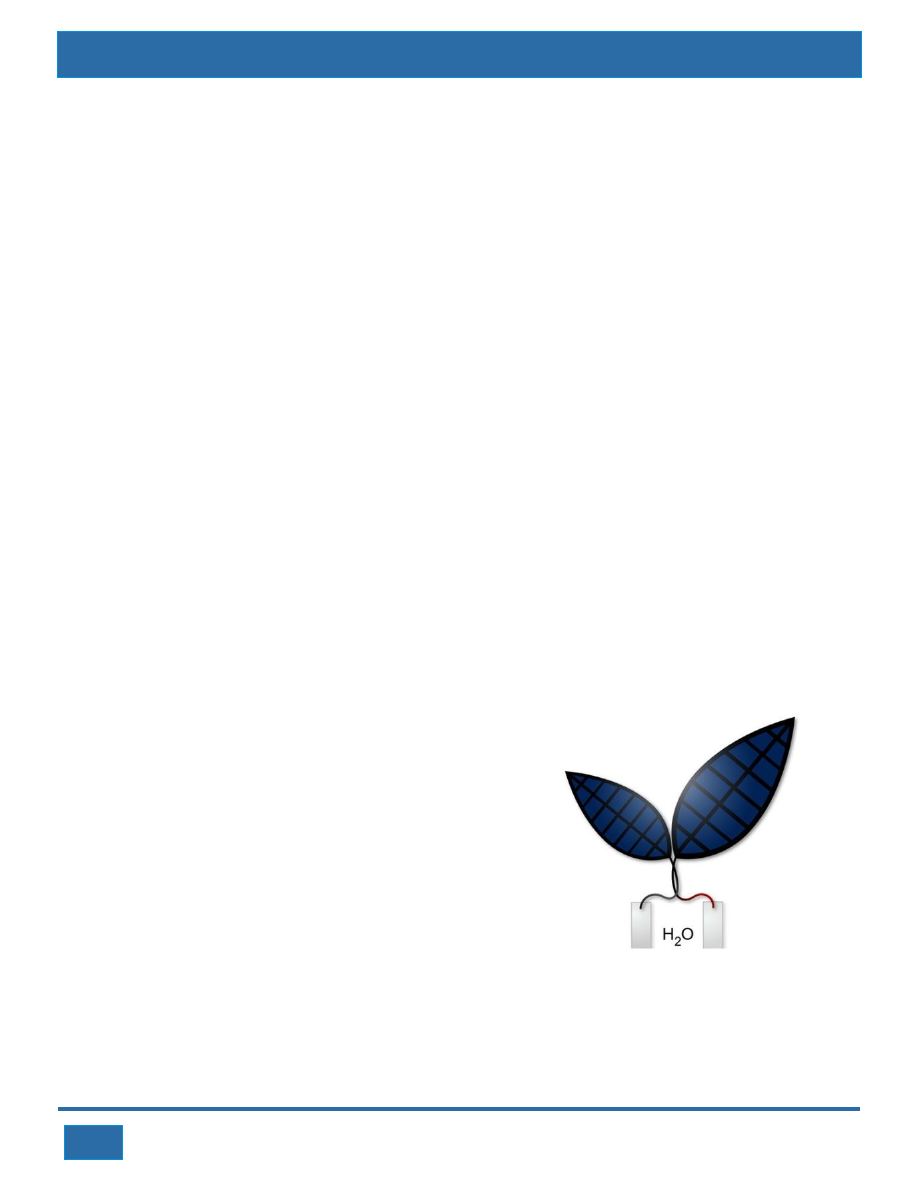
Biochemistry and Systems Biology at Harvard Medical School, have co-created a system that uses solar energy to
split water molecules and hydrogen-eating bacteria to produce liquid fuels. This is a true artificial photosynthesis
system, before, people were using artificial photosynthesis for water-splitting, but this is a true A-to-Z system,
and researchers have gone well over the efficiency of
photosynthesis in nature. While the study shows the system
can be used to generate usable fuels, its potential does not
end there.
According to researcher the beauty of biology is it's the
world's greatest chemist, biology can do chemistry we
cannot do easily. In principle, we have a platform that can
make any downstream carbon-based molecule. So this has
the potential to be incredibly versatile. Dubbed "bionic leaf
2.0," the new system builds on previous work by Nocera,
Silver and others, though it was capable of using solar
energy to make isopropanol yet faced a number of
challenges. The main challenge was the fact that the
catalyst used to produce hydrogen -- a nickel-molybdenum-zinc alloy -- also created reactive oxygen species,
molecules that attacked and destroyed the bacteria's DNA. To avoid that problem, researchers were forced to run
the system at abnormally high voltages, resulting in reduced efficiency.
Now they designed a new cobalt-phosphorus alloy catalyst, which does not make reactive oxygen species,
allowed to lower the voltage, and led to a dramatic increase in efficiency. The system can now convert sola
www.nims.go.jp
Bionic Leaf Turns Sunlight into Liquid Fuel
r
energy to biomass with 10 percent efficiency, far above the one percent seen in the fastest growing plants.
7
Technology Roundup
In addition to increasing the efficiency, Nocera and colleagues were able to expand the portfolio of the system
to include isobutanol and isopentanol. Researchers also used the system to create PHB, a bio-plastic precursor,
a process first demonstrated by MIT professor Anthony Sinskey. The new catalyst also came with another
advantage -- its chemical design allows it to "self-heal" meaning it wouldn't leech material into solution.
These catalysts are totally biologically compatible. Though there may yet be room for additional increases in
efficiency, Nocera said the system is already effective enough to consider possible commercial applications but
within a different model for technology translation. It is an important discovery--it can do better than
photosynthesis. In many ways, the new system marks the fulfillment of the promise of his "artificial leaf" --
which used solar power to split water and make hydrogen fuel.
www.harvard.edu
www.a-star.edu.sg
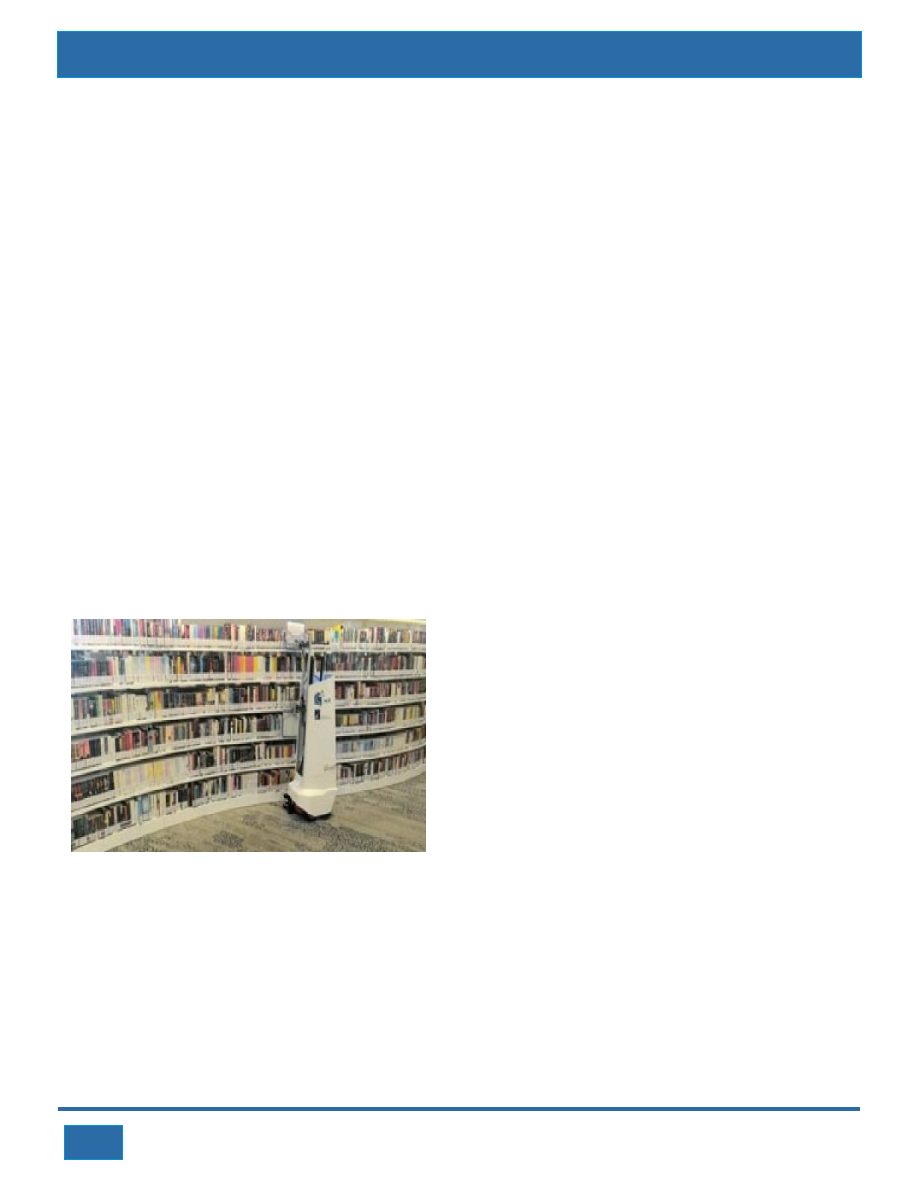
High-Tech Librarian Knows its Books
Automated robot that scans library shelves using laser mapping and radio tags can ensure no book is misplaced
again. Being able to access and download information in an instant is a hallmark of the digital age. But much of
the world's knowledge remains between the pages of printed books. Tracking these volumes in libraries is a
tedious, labor-intensive process, but improved access to these invaluable resources is now possible. Some
libraries are adapting to automation by placing Radio Frequency Identification (RFID) tags into their
collections. These computerized barcodes contain unique identifying labels that can be quickly scanned using
wireless, handheld RFID readers. Alternatively, 'smart shelves' containing multiple RFID antenna can
automatically register when books enter or are removed from their stacks. Such approaches are expensive,
however, and still rely on manual labor.
At A*STAR's Institute for Infocomm Research, Singapore, researchers Renjun Li, Zhiyong Huang, Ernest
Kurniawan, and Chin Keong Ho are designing robots that can relieve librarians of many menial tasks, while
enhancing searching and sorting of books. Their latest
project is an autonomous robotic shelf scanning (AuRoSS)
platform that can self-navigate through libraries at night,
scanning RFID tags to produce reports on missing and out-
of-sequence books. Li notes that this function required a
way to steer a tall, wheeled robot through complex mazes of
library stacks, while keeping a critical distance from
shelves at all times. To help track shelves in real-time, the
researchers assembled a 'macro-mini' manipulator, where
the mobile base robot contains an additional small robotic
arm. The mini manipulator can move laterally, and uses
ultrasonic sensors to position an RFID antenna to the
optimal distance for book scanning. It also measures
positioning errors, and feeds this data into the mobile
navigation unit to anticipate direction changes.
Real-world trials at Singapore libraries revealed the AuRoSS robot's potential up to 99 per cent scanning
accuracy was achieved, even with curved shelves. "During the re-opening of Pasir Ris Public Library, they put
on a public demonstration and received very positive reactions," says Li. Researchers are improving the
robustness and analytics engine and integrating into library operations. The A*STAR-affiliated researchers
contributing to this research are from the Institute for Infocomm Research.
7
Technology Roundup
78
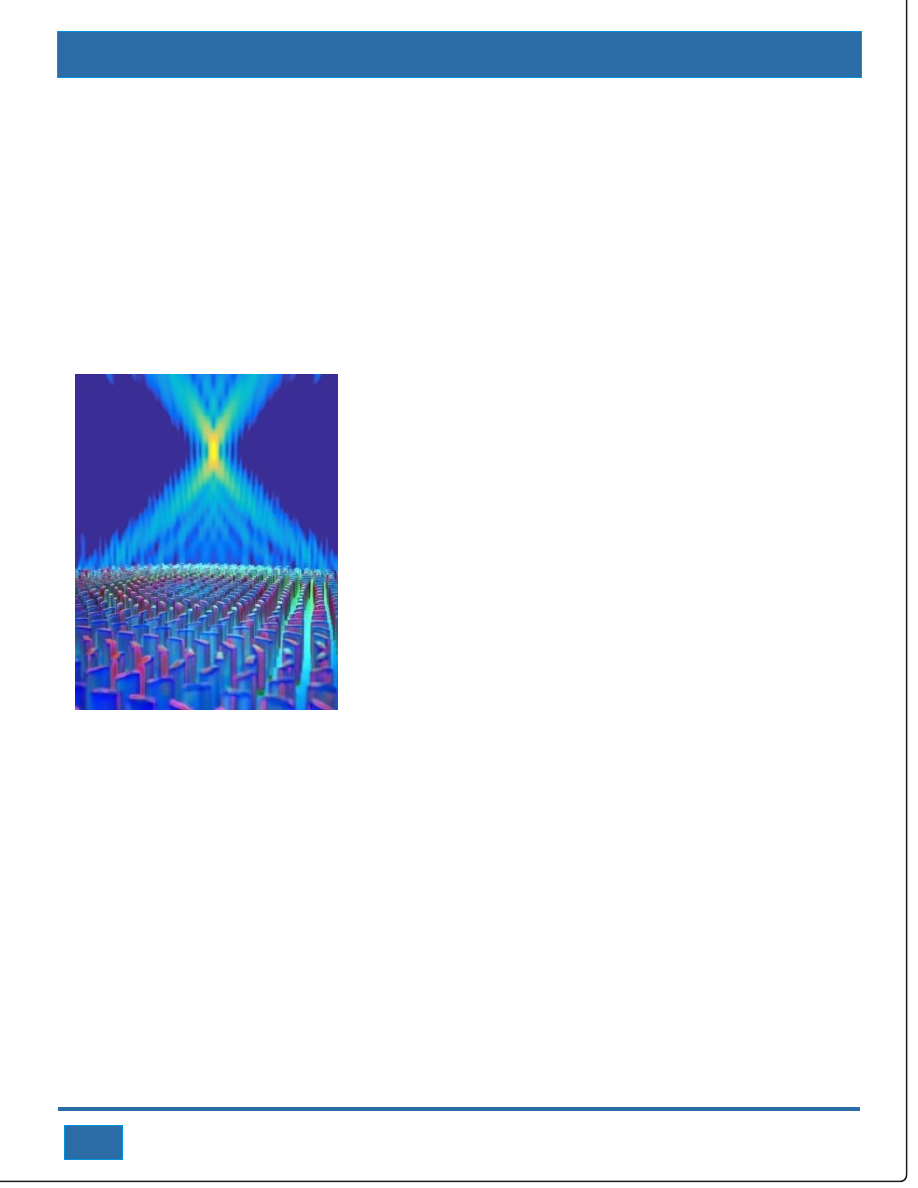
Meta-Lens Works in the Visible Spectrum, sees smaller than a
Wavelength of Light
Researchers from the Harvard John A. Paulson School of Engineering and Applied Sciences (SEAS) have
demonstrated the first planar lens that works with high efficiency within the visible spectrum of light covering
the whole range of colors from red to blue. The lens can resolve nanoscale features separated by distances
smaller than the wavelength of light. It uses an ultrathin array of tiny waveguides, known as a metasurface,
which bends light as it passes through, similar to a curved lens. This technology is potentially revolutionary
because it works in the visible spectrum, which means it has the capacity to replace lenses in all kinds of
devices, from microscopes to camera, to displays and cell phones, In the near future, metalenses will be
manufactured on a large scale at a small fraction of the cost of conventional lenses, using the foundries that
mass produce microprocessors and memory chips.
Correcting for chromatic spread over the visible spectrum in an efficient
way, with a single flat optical element, was until now out of reach. The
Capasso group's metalens developments enable the integration of
broadband imaging systems in a very compact form, allowing for next
generations of optical sub-systems addressing effectively stringent
weight, size, power and cost issues, such as the ones required for high
performance AR/VR wearable displays." In order to focus red, blue and
green light -- light in the visible spectrum, the team needed a material
that would not absorb or scatter light. Researchers needed a material
that would strongly confine light with a high refractive index and in
order for this technology to be scalable; they needed a material already
used in industry.
The team used titanium dioxide, a ubiquitous material found in
everything from paint to sunscreen, to create the nanoscale array of
smooth and high-aspect ratio nanostructures that form the heart of the
metalens. They wanted to design a single planar lens with a high
numerical aperture, meaning it can focus light into a spot smaller than
the wavelength. The more tightly you can focus light, the smaller your
focal spot can be which potentially enhances the resolution of the image. The team designed the array to
resolve a structure smaller than a wavelength of light, around 400 nanometers across. At these scales, the
metalens could provide better focus than a state-of-the art commercial lens. Normal lenses have to be precisely
polished by hand. Any kind of deviation in the curvature, any error during assembling makes the performance
of the lens go way down. Their lens can be produced in a single step -- one layer of lithography and they have a
high performance lens, with everything where you need it to be.
The amazing field of metamaterials brought up lots of new ideas but few real-life applications have come so
far. The Capasso group with their technology-driven approach is making a difference in that regard. This new
breakthrough solves one of the most basic and important challenges, making a visible-range meta-lens that
satisfies the demands for high numerical aperture and high efficiency simultaneously, which is normally hard
to achieve. One of the most exciting potential applications, is in wearable optics such as virtual reality and
augmented reality. Any good imaging system right now is heavy because the thick lenses have to be stacked on
top of each other. No one wants to wear a heavy helmet for a couple of hours. This technique reduces weight
and volume and shrinks lenses thinner than a sheet of paper. Imagine the possibilities for wearable optics,
flexible contact lenses or telescopes in space. The authors have filed patents and are actively pursuing
commercial opportunities.
www.seas.harvard.edu

Technology Roundup
Technology Roundup
National
International Events
th
56 International Conference on Nanoscience, Nanotechnology and Advanced
Materials IC2NM
Electrical, Electronics and Allied Engineering Industrial Exhibition
First International Conference on Emerging Trends in Science and Technology
(ICETST)
I
nternational Conference On Innovative Computing Technology
st
21 International Conference on Science and Technology Indicators
th
5 International Conference on Agriculture, Science and Engineering (ICASE2016)
2nd International Conference on Engineering, Technology, Management and
Science 2016
Tech Expo North America
23-24 July, 2016 Rawalpindi
2-4 August 2016
Expo Center Karachi
22-24, November 2016
Bahawalpur, Pakistan
www.intech-bahawalpur
6-10 September, 2016
Pearl Continental Hotel Rawalpindi
www.fjwu.edu.pk
14-16 September 2016
Valencia Spain
www.sti2016.org
26-29 September 2016
Abuja Nigeria
www.iatel.net
5-6 October, 2016
Dubai, United Arab Emirates
www.iotevents.org
20-21, October 2016
Santa Clara, United States
www.iotevents.org
Forthcoming Tech Events
9
Tech & Trade Offers
About PASTIC
PASTIC serves as a gateway for
Scientific & Technological
Information for R&D by
catering to the information
n e e d s o f r e s e a r c h e r s ,
entrepreneurs, industrialists,
educationists, policy makers
a n d p l a n n e r s t h r o u g h
anticipatory and responsive
information services.
T e c h n o l o g y I n f o r m a t i o n
Service Section of PASTIC
works exclusively for support
and promotion of technological
information on trade and
industry in the country.
“Technology Roundup” is a
news bulletin that provides
l a t e s t a n d i n n o v a t i v e
technology news, forthcoming
events, etc. It also promotes
products, technologies and
services globally in sectors
such as Agro-Industry, Bio-
Technology, Building Material,
B u s i n e s s , C h e m i c a l s ,
Electronics, Energy, Fisheries,
Food Processing, Machinery,
P a c k a g i n g , M i n i n g
Pharmaceuticals and Textiles.
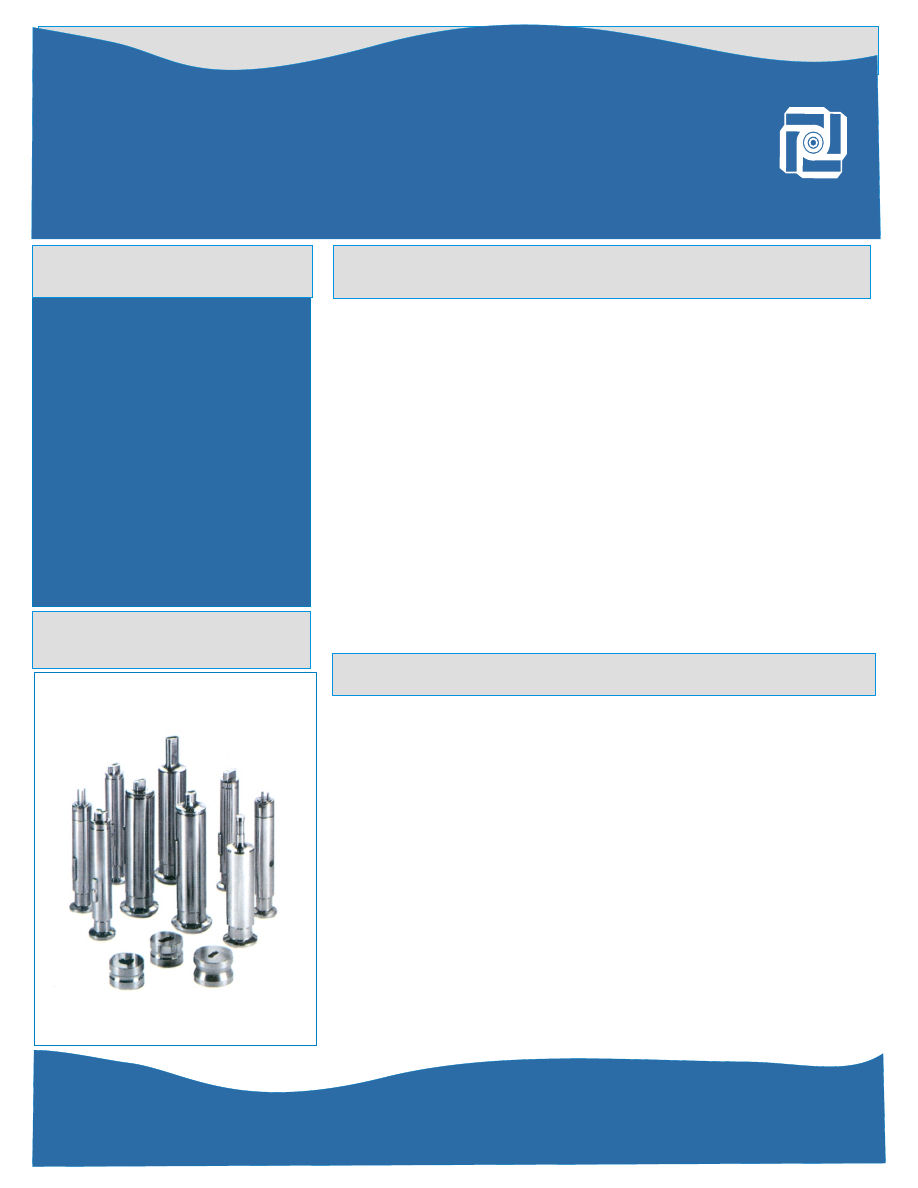
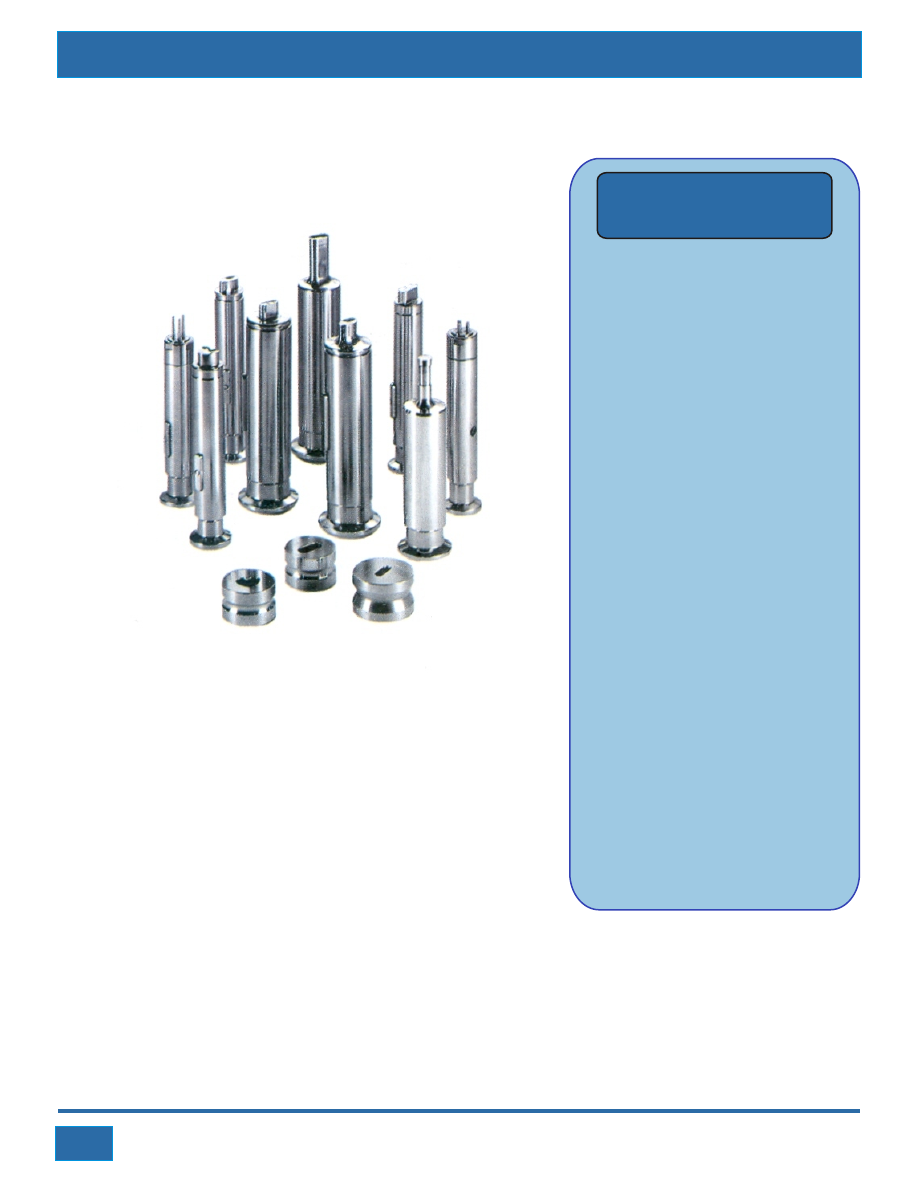
DIES AND PUNCHES
!
Manufacturer of Dies and Punches for the last 40 years.
!
Dies and Punches for Tablet Comperssion Machine for any size, shape
and model.
!
Food Grade Material
!
Ten Million Tablets
!
Perfect working
!
German Composition
!
Under Warranty Damage parts Replacement free of Cost
Company Contact:-
Rafiq Pharmaceutical Engineering Works
Faisal Street, Samundri Road Faisalabad
Tel: 92-41-8730304, Fax 92-41-8541242
E-mail: rafiqeng.works@hotmail.com
www.rewfsd.com
Technology Roundup
Please give us your feedback and address queries to editorpastic@gmail.com
10