
Patron/Executive Editor
Dr. Muhammad Akram Shaikh
Director General, PASTIC
Managing Editors
Ms. Nageen Ainuddin
Mr. M. Aqil Khan
Editor
Saima Siddique Tariq
Composer
Kashif Farooqui
T
ECHNOLOGY
R
OUNDUP
Technology Information Section (TIS)
Pakistan Scientific & Technological Information Centre
PASTIC
March-April, 2016
Vol. 8, No. 2
A NEWS BULLETIN FROM
Tech News Headlines
Tech & Trade Offers
Phone: 051-9248103-4, 9248111
Fax: 051-9248113
Email:editor@pastic.gov.pk
Web: www.pastic.gov.pk
PASTIC National Centre
Quaid-i-Azam University Campus
P.O. Box 1217, Islamabad
Editorial Board
l
l
l
l
l
l
l
Waste Marble Powder as Filler Material
l
Molecular Genetic Variation for Stripe Rust Resistance in Spring
Wheat
Physicits build Engine consisting of One Atom
3-D Heart Printed using multiple Imaging Techniques
The light stuff: New way to Produce Electron Spin Currents
Urine turned into Sustainable Power Source for Electronic Devices
Clean Energy generated using Bacteria-Powered solar panel
Magnetic Nanoparticles could Stop Blood Clot-caused Strokes
Load Banks upto
1 Mega Watt
Forthcoming Tech Events
l
l
Power Technology Pakistan
National Conference on Agricultural Engineering & Sciences
th
l 56 International Conference on Nanoscience, Nanotechnology &
Advanced Materials IC2NM
l South Asian International Conference
th
l 8 International Conference on Environmental Science &
Technology
l International Energy and Sustainability Conference 2016
th
l 9 Nano Congress for Next Generation
th
l 5 International Conference on Agriculture, Science and
Engineering (ICASE2016)

Technology Roundup
2
Indigenous
Technology
Waste Marble Powder as Filler Material
Concrete is the most commonly used construction material worldwide. The durability, economy and quality of
construction make concrete a popular choice as a construction material. However concrete requires proper
compaction which is done using vibrators, making concrete to reach every corner of formwork. Self compacting
concrete (SCC) is a type of concrete which can flow and spread through reinforcement and narrow sections which
fills the empty spaces completely without any mechanical vibration. This type of concrete requires large quantity of
powder, for which either fine pozzolanic (e.g. fly ash, ground granulated blast furnace slag and silica fume, or
non-pozzolanic additions (crushed limestone or sand stone etc) are used. The composition of this blend of cement
and filler material is significant in SCC, as high amount of cement with lower water content may cause autogenous
shrinkage. Therefore, the use of non-pozzolans material with cement needs to be investigated. The concrete
industry is among the largest consumer of raw materials. Limestone fillers are generally used in concrete. As marble
stone is of limestone origin i.e. marble is formed by metamorphism of limestone,He effect of addition of non-
pozzolans powder waste from marble industry is studied for its suitability in SCC. This was done keeping in view
the requirement of fines in SCC and to find an effective utilization of waste marble powder (WMP). For this, five
different SCC mixes were prepared, one without WMP and four other with varying amounts of WMP. These mixes
in fresh state were tested for their flowability, passing-ability and segregation resistance. Hardened concrete was
tested for compressive and flexural strengths. It was found that the locally available WMP can be effectively used as
filler in developing SCC. It is concluded that Waste Marble Powder (WMP) can be effective filler for SCC concrete.
It can be directly added to concrete without much processing. When the fresh properties such as flowability,
passing-ability and segregation resistance are considered, 15% of marble powder replacement has given good
results. Marble powder can be used up to 15% without much affecting compressive and flexural strengths.WMP
replacement up to 15% by weight of cement can be considered as most favorable amount having particle size less
than 150µm as a filler material in producing good quality SCC.
Pak. J. Engg. & Appl. Sci. Vol. 18 January, 2016 (1-10)
Asif Hameed & Asad-ullah Qazi , Safeer Abbas & Abdul Rehman : Department of Civil Engineering,
University of Engineering and Technology Lahore, Pakistan.
Courtesy:
www.uet.edu.pk

Technology Roundup
3
Indigenous
Technology
Molecular Genetic Variation for Stripe Rust Resistance in Spring Wheat
Wheat stripe rust is caused by Puccinia striiformis f.sp. tritici. It adversely affects the yield and quality of
wheat grain. Seeds produced from stripe rust damaged crop have low vigour and poor emergence following
germination. Stripe rust, caused by Puccinia striiformis f. sp. tritici, is a major biotic constraint to global
wheat production. Stripe rust can be effectively controlled by developing resistant wheat varieties. This,
however, requires identification of resistant sources to be used as parents in breeding programs. Molecular
markers provide a quick way of detecting rust resistance genes in adapted wheat material. The present study
was conducted to investigate genetic variation for markers linked with stripe rust resistance genes in 67
Pakistani adapted spring wheat varieties using 12 pairs of microsatellite and sequence tagged site markers.
Seventy nine percent wheat varieties showed marker allele of Xgwm11 associated with stripe rust resistance
gene Yr26, whereas 75% varieties had the Yr26 linked allele of sequence tagged site (STS) marker CYS5.
Stripe rust resistance gene Yr5 was found in 45%, whereas Yr9 and Yr10 were present in 28% varieties tested
based on the previously reported linked markers. Stripe rust resistance gene Yr17 was found in 10%,
whereas Yr18 in 15% of varieties only. Three markers Xwe173, Xbarc181 and Xgwm140 did not produce
the expected amplicons associated with the stripe rust resistance genes. Cluster analysis revealed
considerable genetic variation for marker alleles linked with stripe rust resistance genes. Results of this
study may be useful for wheat breeders in pyramiding stripe rust resistance genes in future wheat varieties of
Pakistan through Marker Assisted Selection.
Pak. J. Agri. Sci., 2016 Vol. 53(1), 143-150
Muhammad Iqbal & Mahwish Ejaz & Armghan Shahzad & and Ghulam M. Ali:National Institute
for Genomics & Advanced Biotechnology, National Agricultural Research Centre, Islamabad,
Pakistan| Iftikhar Ahmed: National Agricultural Research Center, Islamabad, Pakistan
Courtesy:
www.pakjas.com.pk

4
Technology Roundup
Magnetic Nanoparticles could Stop Blood Clot-caused Strokes
www.houstonmethodist.org
Physicists Build Engine Consisting of One Atom
Houston Methodist researchers told that they can destroy blood clots 100 to 1,000 times faster than a commonly used clot-
busting technique by loading magnetic nanoparticles with drugs and dressing them in biochemical camouflage. The
findingis based on experiments in human blood and mouse clotting models. If the drug delivery system performs similarly
well in planned human clinical trials, it could mean a major step forward in the prevention of strokes, heart attacks,
pulmonary embolisms, and other dire circumstances where clots can cause severe tissue damage and death.
Researchers have designed the nanoparticles so that they trap themselves at the site of the clot, which means they can quickly
deliver a burst of the commonly used clot-busting drug tPA where it is most
needed. Decuzzi leads the Houston Methodist Research Institute Dept. of
Translational Imaging. Decuzzi's group coated iron oxide nanoparticles in
albumin, a protein found naturally in blood. The albumin provides a sort of
camouflage, giving the loaded nanoparticles time to reach their blood clot
target before the body's immune system recognizes the nanoparticles as
invaders and attacks them. Iron oxide was chosen for the core because the
researchers plan to use them for magnetic resonance imaging, remote
guidance with external magnetic fields, and for further accelerating clot
dissolution with localized magnetic heating. The clot-busting drug loaded
into the nanoparticles is tPA, tissue plasminogen activator, an enzyme that is
also found naturally in blood at low concentrations. Typically, a small volume
of concentrated tPA is injected into a stroke patient's blood upstream of a
confirmed or suspected clot. From there, some of the tPA reaches the clot, but
much of it may cruise past or around the clot, potentially ending up anywhere in the circulatory system. tPA is typically used
in emergency scenarios by health care staff, but it can be dangerous to patients who are prone to hemorrhage. Treating clots is
a serious problem for all hospitals although tPA and similar drugs can be very effective in rescuing our patients, the drug is
broken down quickly in the blood, meaning Doctors have to use more of it to achieve an effective clinical dose. Yet using
more of the drug creates its own problems, increasing the risk of hemorrhage. If hemorrhage happens in the brain, it could be
fatal.
Lumsden, medical director of the Houston Methodist DeBakey Heart & Vascular Center, said that the nanoparticles being
developed in Decuzzi's lab could solve both problems.The nanoparticle protects the drug from the body's defenses, giving
the tPA time to work, But it also allows to use less tPA, which could make hemorrhage less likely. Researchers are excited to
see if the technique works as phenomenally well for patients as what they saw in these experiments. Decuzzi, Lumsden and
colleagues tested the effectiveness of tPA-loaded nanoparticles, using human tissue cultures to see where tPA landed and
how long it took for the tPA to destroy fibrin-rich clots. In a series of in vivo experiments, the researchers introduced blood
clots to a mouse model, injecting tPA-loaded nanoparticles into the bloodstream and using optical microscopy to follow the
dissolution of the clots. In comparison to a control the clots were destroyed about 100 times faster.
The result of experiments undertaken by the QUANTUM work group at the Institute of Physics of Johannes Gutenberg
University Mainz (JGU) and theoretical physicists of Friedrich-Alexander-Universität Erlangen-Nürnberg (FAU) describes
an innovative form of heat engine that operates using only one single atom. Heat engines have played an important role in
shaping society ever since the Industrial Revolution. As in the case of motor vehicle engines, they transform thermal energy
into mechanical force our modern lifestyle would be impossible without them. At the same time, progress in miniaturization
is resulting in the creation of ever smaller devices.
A team of researchers used a Paul trap to capture a single electrically charged calcium atom. This atom can be heated with the
help of electrically-generated noise and cooled by using a laser beam. As a result, the atom is subjected to a thermodynamic
cycle. This means that the particle moves back and forth within the trap, thus replicating the stroke of a typical engine.

3
5
Technology Roundup
The atom not only acts in the same way as an engine but also stores
the energy. The researchers performed extensive tests to determine
the thermodynamic behavior of their engine. They state that their
single particle engine can generate power of 10-22 watts and
operates at 0.3 percent efficiency. If the power of the single atom
engine was scaled up from the tiny mass of an atom, its output
would be equivalent to that of a car engine. By reversing the cycle,
they could even use the device as a single atom refrigerator and
employ it to cool nano systems coupled to it. However, the
principal objective of this research is that the creation of a nano-
engine of this kind provides insight into thermodynamics at the
single-particle level, which is currently a very hot topic in research.
Plans are afoot to further lower the operating temperature of the engine in order to investigate thermodynamic quantum
effects. In theory, it is assumed that the power of a heat engine can be increased by linking it to a quantum heat bath, thus
providing a wealth of possibilities that can be used to move beyond the standard accepted boundaries of classical
thermodynamics and construct new types of engines.
Congenital heart experts from Spectrum Health Helen DeVos Children's Hospital have successfully integrated two
common imaging techniques to produce a three-dimensional
anatomic model of a patient's heart. The 3D model printing of
patients' hearts has become more common in recent years as part of
an emerging, experimental field devoted to enhance visualization of
individual cardiac structures and characteristics. But this is the first
time the integration of computed tomography (CT) and three-
dimensional transesophageal echocardiography (3DTEE) has
successfully been used for printing a hybrid 3D model of a patient's
heart. A proof-of-concept study authored by the Spectrum Health
experts also opens the way for these techniques to be used in
combination with a third tool -- magnetic resonance imaging
(MRI). According to Jordan Gosnell, lead researcher Hybrid 3D
printing integrates the best aspects of two or more imaging
modalities, which can potentially enhance diagnosis, as well as
interventional and surgical planning. Previous methods of 3D
printing utilize only one imaging modality, which may not be as accurate as merging two or more datasets. The team used
specialized software to register images from the two imaging modalities to selectively integrate datasets to produce an
accurate anatomic model of the heart. The result creates more detailed and anatomically accurate 3D renderings and printed
models, which may enable physicians to better diagnose and treat heart disease. Computed tomography (CT) and magnetic
resonance imaging (MRI) are established imaging tools for producing 3D printable models. Three-dimensional
transesophageal echocardiography (3DTEE) recently was reported by Joseph Vettukattil, M.D., and his Helen DeVos
Children's Hospital colleagues to be a feasible imaging technique to generate 3D printing in congenital heart disease.
According to Vettukattil, each imaging tool has different strengths, which can improve and enhance 3D printing: CT
enhances visualization of the outside anatomy of the heart. MRI is superior to other imaging techniques for measuring the
interior of the heart, including the right and left ventricles or main chambers of the heart, as well as the heart's muscular
tissue. 3DTEE provides the best visualization of valve anatomy. This is a huge leap for individualized medicine in
cardiology and congenital heart disease. The technology could be beneficial to cardiologists and surgeons. The model will
promote better diagnostic capability and improved interventional and surgical planning, which will help determine
whether a condition can be treated via transcatheter route or if it requires surgery. Vettukattil is known internationally for
www.uni-mainz.de
3-D Heart Printed using multiple Imaging Techniques
6
Technology Roundup
his work and research with three and four-dimensional echocardiography. Most notably, he developed the advanced
technique of multiplanar reformatting in echocardiography, a method used to slice heart structures in infinite planes through
the three dimensions in a virtual environment similar to a cardiac pathologist dissecting the heart to reveal underlying
pathology. Commonly used with other diagnostic technologies, such as CTs, Vettukattil pioneered its use in
echocardiography to evaluate complex heart defects. Further research is required to evaluate the efficacy of hybrid 3D
models in decision-making for transcatheter or surgical interventions.
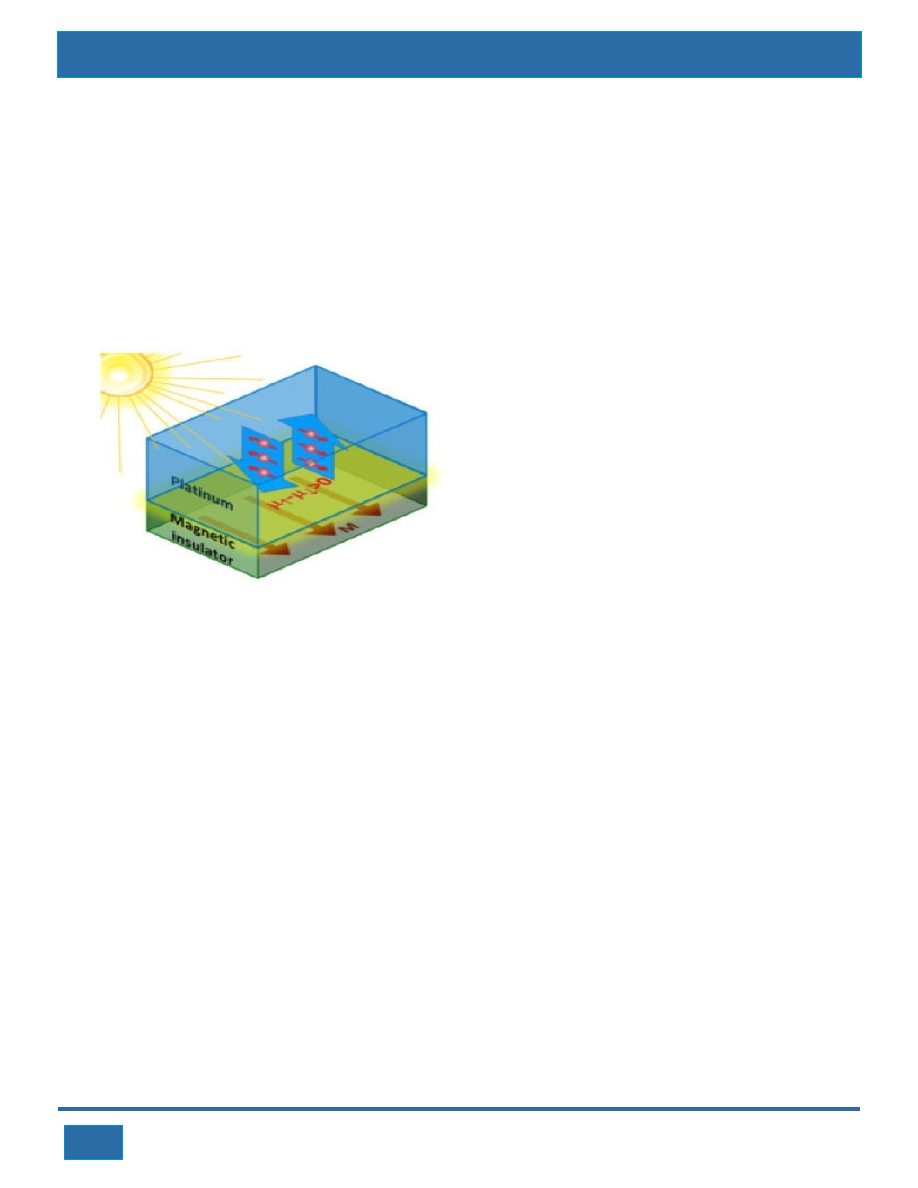
The scientists, led by Professor of Physics Mingzhong
Wu in CSU's College of Natural Sciences, are the first to
demonstrate using non-polarized light to produce in a
metal called a spin voltage a unit of power produced
from the quantum spinning of an individual electron.
Controlling electron spins for use in memory and logic
applications is a relatively new field called spin
electronics, or spintronics. Wu and his group's passion is
to find new, better ways to control electron spins.
Spintronics exploits the notion that electron spins can be
manipulated and used to process and store information,
with a fraction of the power needed in ubiquitous,
conventional electronics
.
Consider that the iPhone and every electronic device out
there is built upon centuries of science around charge
current -- the physics of positive or negative charges
flowing through a device. The perennial problem is the
enormous power consumption of charge-current devices, and the electrical resistance that causes power loss in the form of
heat which is why laptop keeps overheating. It is these power and heat barriers that are holding smaller, more powerful
electronics back. And it is why science is turning to spintronics, because it offers a completely new way of making a device
work. To utilize power from an electron spin, there no charge current necessary. All that is needed is a magnetic field or a
magnetic material, which can orient the spins "up" or "down." The up and down spins are the analogue to positive and
negative charges. What CSU scientists have found a brand-new method for creating spin currents. Existing methods include
using a charge current, microwaves or a heat source. But for the first time, the CSU team demonstrates using light to
generate their spin currents. Other scientists have done similar things, but they used a special kind of polarized light. But, the
CSU scientists used unpolarized, plain light -- "a halogen bulb purchased at Ace Hardware”. They demonstrated a "pure"
spin current involving no charge movement whatsoever. It was an unprecedented feat. The breakthrough came about while
the scientists were studying a different way to make spin currents, using heat from their halogen bulb, called the Spin
Seebeck effect. They noticed some background data they could not explain. Ever curious, they checked all possibilities and
determined this seemingly light-induced spin current could be a new quantum phenomenon. They tested it by designing
unique control measurements involving different magnetic insulators and metallic thin films, such as platinum. After
replicating their results in the lab, they turned to theoreticians at UC Irvine and Fudan University to help them interpret the
physics of what they had discovered, and who are co-authors on the Nature Physics paper.
There have been tremendous technical advances in controlling light. But now in this discovery they have linked light to spin
control. Using a simple light source to produce a spin current offers new opportunities for power control and generation. The
researchers will continue exploring making spin currents with light by swapping out materials and trying different light
sources. They demonstrated light control in the infrared range said. Moving into the visible or UV range would likely offer
more robust applications for devices. The framework for generating and detecting spin currents is non-trivial, meanwhile,
www.spectrumhealth.org
The Light Stuff: New way to Produce Electron Spin Currents

7
Technology Roundup
there are hundreds of years of generating charge currents and knowing how to measure them and manipulate them and
characterize them. Spintronics is a new field, and devices are just now coming onto the market that utilizes some small
part of this.
Researchers at the University of Bath have developed an innovative miniature fuel cell that can generate electricity from
urine, creating an affordable, renewable and carbon-neutral way of generating power. In the near future this device could
provide a means of generating much needed electricity to remote areas at very little cost of £1-£2. With growing global
pressures to reduce reliance on fossil fuels and the associated greenhouse gas emissions, microbial fuel cells could be an
exciting alternative. A microbial fuel cell is a device that uses natural biological processes of 'electric' bacteria to turn
organic matter, such as urine, into electricity. These fuel cells are efficient and relatively cheap to run, and produce nearly
zero waste compared to other methods of electricity generation. In practice, urine will pass through the microbial fuel cell
for the reaction to happen. From here, electricity is generated by the bacteria which can then be stored or used to directly
power electrical devices.
The research team from the University's Department of Chemical Engineering, Department of Chemistry and the Centre
for Sustainable Chemical Technologies (CSCT), have worked
with Queen Mary University of London and the Bristol
Bioenergy Centre, to devise this new kind of microbial fuel cell
that is smaller, more powerful and cheaper than other similar
devices. This novel fuel cell measures one inch squared in size
and uses a carbon catalyst at the cathode which is derived from
glucose and ovalbumin, a protein found in egg white. This
biomass-derived catalyst is a renewable and much cheaper
alternative to platinum, commonly used in other microbial fuel
cells. The researchers worked on the cell's design to maximize
the power that could be generated. By increasing the cell's
electrodes from 4mm to 8mm, the power output was increased
tenfold. Furthermore, by stacking multiple units together, the
power was proportionally increased. Currently, a single
microbial fuel cell can generate 2 Watts per cubic metre,
enough to power a device such as a mobile phone. Whilst this value is not comparable with other alternative technologies
such as hydrogen or solar fuel cells and other methods of bioenergy digesters, the significant advantage of this technology
is its extremely cheap production cost and its use of waste as a fuel, a fuel that will never run out and does not produce
harmful gasses. The research team is now looking at ways of improving the power output of the microbial fuel cell and is
confident that by optimising the design of the cell, they will be able to increase the cell's performance.
According to Dr Mirella Di Lorenzo, if they can harness the potential power of this human waste, they could revolutionise
how electricity is generated. Microbial fuel cells can play an important role in addressing the triple challenge of finding
solutions that support secure, affordable, and environmentally sensitive energy, known as the energy trilemma.There is
no single solution to this 'energy trilemma' apart from taking full advantage of available indigenous resources, which
include urine. According to Jon Chouler, Microbial fuel cells could be a great source of energy in developing countries,
particularly in impoverished and rural areas. Head of the Department of Chemical Engineering, Dr Tim Mays said that
Renewable 'pee-power' is a brilliant idea and its use in developing countries will have huge positive impact on people's
lives in areas of energy poverty.
www.colostate.edu
Urine turned into Sustainable Power Source for Electronic Devices
www.bath.ac.uk
7
Technology Roundup
78
Clean Energy generated using Bacteria-Powered solar panel
www.binghamton.edu
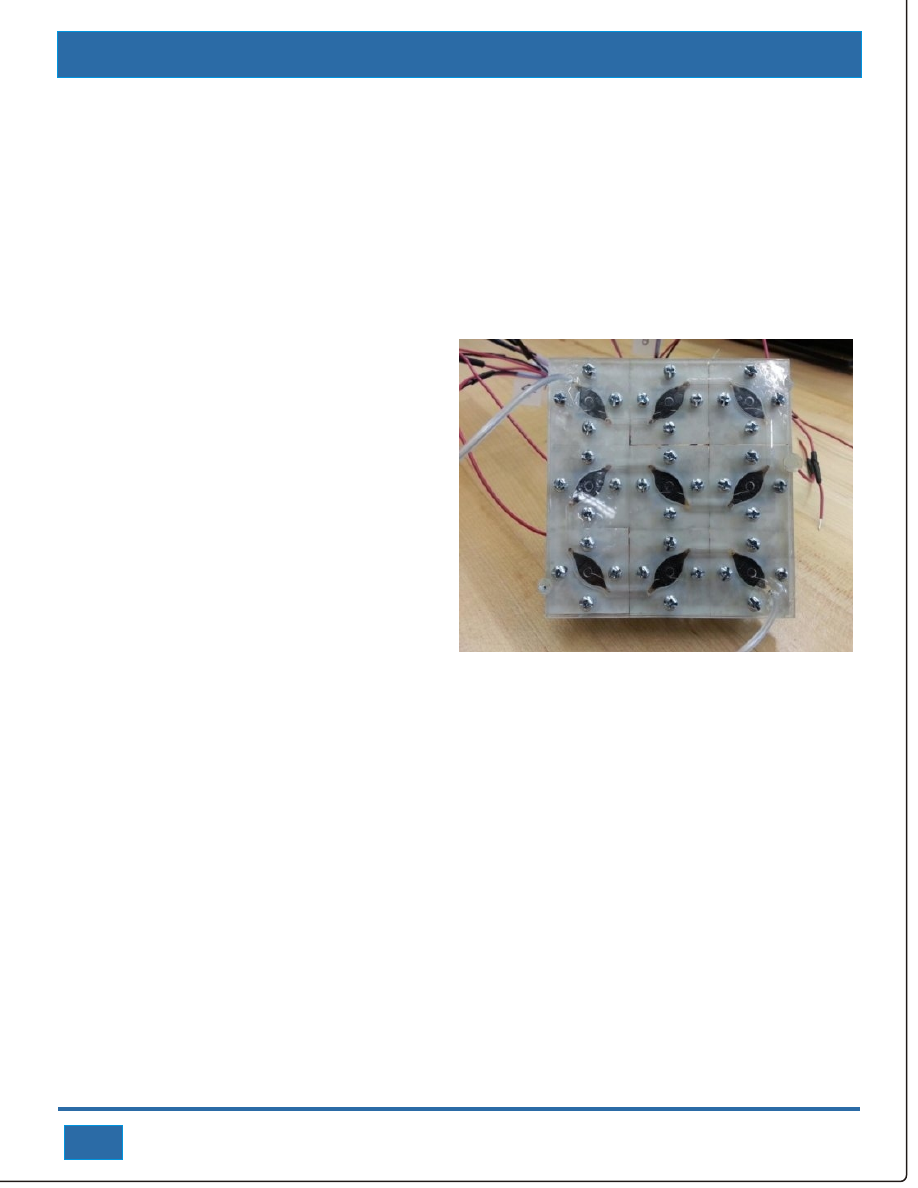
Researchers have taken the next step in the evolution of bacteria-powered energy. For the first time researchers
connected nine biological-solar (bio-solar) cells into a bio-solar panel. Then they continuously produced electricity from
the panel and generated the most wattage of any existing small-scale bio-solar cells 5.59 microwatts. According to
researcher, Seokheun "Sean" Choi, an assistant professor in Binghamton University's Thomas J. Watson School of
Engineering and Applied Science, once a functional bio-solar panel becomes available, it could become a permanent
power source for supplying long-term power for small, wireless telemetry systems as well as wireless sensors used at
remote sites where frequent battery replacement is impractical. This research could also enable crucial understanding of
the photosynthetic extracellular electron transfer processes in a smaller group of microorganisms with excellent control
over the microenvironment, thereby enabling a versatile platform for fundamental bio-solar cell studies.
The current research is the latest step in using
cyanobacteria (which can be found in almost every
terrestrial and aquatic habitat on the planet) as a source of
clean and sustainable energy. Last year, the group took
steps toward building a better bio-solar cell by changing
the materials used in anodes and cathodes (positive and
negative terminals) of the cell and also created a
miniature microfluidic-based single-chambered device
to house the bacteria instead of the conventional, dual-
chambered bio-solar cells. However, this time the group
connected nine identical bio-solar cells in a 3x3 pattern to
make a scalable and stackable bio-solar panel.
The panel continuously generated electricity from
photosynthesis and respiratory activities of the bacteria in
12-hour day-night cycles over 60 total hours. Bio-solar
cell performance has improved significantly through
miniaturizing innovative device architectures and
connecting multiple miniature cells in a panel. This could
result in barrier-transcending advancements in bio-solar cells that could facilitate higher power/voltage generation with
self-sustainability, releasing bio-solar cell technology from its restriction to research settings, and translating it to
practical applications in real-world. Even with the breakthrough, a typical "traditional" solar panel on the roof of a
residential house, made up of 60 cells in a 6x10 configuration, generates roughly 200 watts of electrical power at a given
moment. The cells from this study, in a similar configuration, would generate about 0.00003726 watts.
According to researchers it is not efficient just yet, but the findings open the door to future research of the bacteria itself. It
is time for breakthroughs that can maximize power-generating capabilities/energy efficiency/sustainability. The
metabolic pathways of cyanobacteria or algae are only partially understood, and their significantly low power density
and low energy efficiency make them unsuitable for practical applications. There is a need for additional basic research
to clarify bacterial metabolism and energy production potential for bio-solar applications.

Technology Roundup
Technology Roundup
National
International Events
Power Technology Pakistan
National Conference on Agricultural Engineering and Sciences
th
56 International Conference on Nanoscience, Nanotechnology and Advanced
Materials IC2NM
South Asian International Conference
th
8 International Conference on Environmental Science and Technology
International Energy and Sustainability Conference 2016
th
9 Nano Congress for Next Generation
th
5 International Conference on Agriculture, Science and Engineering (ICASE2016)
19-21, May 2016 Expo Center Lahore
www.pogeepakistan.com
30-31, May 2016
Bahauddin Zikria University Multan
23-24 July, 2016 Rawalpindi
24-26, August
Serena Hotel Islamabad
June 6-10, 2016
Houstan Texas, USA
www.aasci.org
30th June-1st July 2016
TH Kolin Germany,
www.farmingdale.edu
August 1-2, 2016
Manchaster, United Kingdom
www.nanocongress.conferenceseries.com
26-29 September 2016
Abuja Nigeria
www.iatel.net
Forthcoming Tech Events
9

Tech & Trade Offers
About PASTIC
PASTIC serves as a gateway for
Scientific & Technological
Information for R&D by
catering to the information
n e e d s o f r e s e a r c h e r s ,
entrepreneurs, industrialists,
educationists, policy makers
a n d p l a n n e r s t h r o u g h
anticipatory and responsive
information services.
T e c h n o l o g y I n f o r m a t i o n
Service Section of PASTIC
works exclusively for support
and promotion of technological
information on trade and
industry in the country.
“Technology Roundup” is a
news bulletin that provides
l a t e s t a n d i n n o v a t i v e
technology news, forthcoming
events, etc. It also promotes
products, technologies and
services globally in sectors
such as Agro-Industry, Bio-
Technology, Building Material,
B u s i n e s s , C h e m i c a l s ,
Electronics, Energy, Fisheries,
Food Processing, Machinery,
P a c k a g i n g , M i n i n g
Pharmaceuticals and Textiles.
LOAD BANKS UPTO 1 MEGA WATT.
!
Engine Generator Sets.
!
To reduce "Wet stacking" problems.
!
Periodic exercising of stand - by engine Generator sets.
!
UPS system testing.
!
Ground power testing.
!
Load optimization in prime power
Company Contact:-
Punjab Engineering Services (PVT) LTD.
Head Office
Oppposite Saeed Munzil,
M.A Jinnah Road Karachi-74200
Tel: 92-21-32775757,32776767, Fax 32722920
psel@punjab.engg.com,
www.punjabengg.com
Technology Roundup
Please give us your feedback and address queries to editorpastic@gmail.com
10