
Patron/Executive Editor
Dr. Muhammad Akram Shaikh
Director General, PASTIC
Managing Editors
Ms. Nageen Ainuddin
Mr. M. Aqil Khan
Editor
Saima Siddique Tariq
Composer
Kashif Farooqui
T
ECHNOLOGY
R
OUNDUP
Technology Information Section (TIS)
Pakistan Scientific & Technological Information Centre
PASTIC
July-August, 2016
Vol. 8, No.4
A NEWS BULLETIN FROM
Tech News Headlines
Tech & Trade Offers
Phone: 051-9248103-4, 9248111
Fax: 051-9248113
Email:editorpastic@gmail.com
Web: www.pastic.gov.pk
PASTIC National Centre
Quaid-i-Azam University Campus
P.O. Box 1217, Islamabad
Editorial Board
l
l
l
l
l
l
l
l
Power-Control Strategy for High Power Induction Melting
An Optimal Neural Technique for Breast Cancer Detection
Carbon Nanotube “Stitches” to Strengthen Composites
US offshore Wind Farm can Power an Entire Island
First Autonomous Soft Robot: Octobot
DNA Data Storage
Soil Bacteria work as Electrical Wires
Converting Gaseous Carbon Dioxide to Fuel
The Ultimate Choice for
Insulation
Forthcoming Tech Events
l
First International Conference on Emerging Trends in
Science and Technology (ICETST)
RD
l 3 International Multi disciplinary Research Conference
l International Conference on Innovative Computing
Technology
l Frontiers of information Technology
l Tech Expo North America
l Key Energy 2016
th
l 6 International Workshop on Integration of Solar Power
into Power Systems
l Event Tech

Technology Roundup
2
Indigenous
Technology
Power-Control Strategy for High Power Induction Melting
Courtesy:
Induction melting is a type of heat-treatment process that works on the principle of electromagnetic induction. The
induction heat treatments such as melting, tempering, forging and brazing etc. have evolved very rapidly in recent
years. This research presents a power control scheme of a current source converter (CSC), which delivers a constant
current to the load for induction melting applications. The proposed control scheme with SVPWM pattern regulates
the power of a high Q- resonant load by controlling the DC current according to the defined target. The PI controller
adjusts the manipulated variable by SVPWM in such a way that the error signal is reduced to a minimum value and a
constant current is maintained uninterruptedly for the load. In order to validate this constant current requirement to
the load, the output power analysis of the resonant inverter is also carried out. A power-control strategy with space
vector pulse width modulation of current source converter has been presented for a parallel resonant inverter in
induction melting applications. The system is modeled with proposed control strategy and simulated in MATLAB
Simulink.
The analysis of the model has proved that the presented approach is an effective solution for the control of power in
induction melting. The proposed control scheme is described through simulation in Matlab and the results show its
effectiveness in induction melting applications.The constant current is maintained through this strategy and is
desired for parallel resonant inverter to avoid the power fluctuation. Moreover, the output power of the resonant
inverter is also confirmed by giving a constant current to the load.
Pak. J. Engg. & Appl. Sci. Vol. 18 January, 2016 ( 11–20)
Muhammad Nawaz and Muhammad Asghar Saqib Department of Electrical Engineering, University of
Engineering and Technology, Lahore (Pakistan)

Technology Roundup
3
Indigenous
Technology
An Optimal Neural Technique for Breast Cancer Detection
Courtesy:
Cancer describes the pathological condition of the uncontrolled growth of the affected body cells. The well-
known cancer includes carcinoma (lung, breast and ovarian), Sarcoma (bones and cartilage), Lymphoma
(lymph nodes) and Leukemia (blood cancer). According to World Health Organization (WHO), the rate of
breast carcinoma is more than any other form of cancer in both advanced and developing countries. Breast
cancer, although is considered to be the ailment of the established countries of the world, yet almost 50% of
mammary carcinoma cases and 58% of fatalities occur in developing countries. Hence, early breast cancer
detection and treatment is a major public health matter. Early identification of breast carcinoma could be
beneficial for in time treatment of the disease. This research presents an efficient classification method for
benign and malignant breast cancer. The proposed method employs an optimal feature classification
employing artificial neural network.
The proposed architecture has five input nodes, two hidden layers with eight neurons each and one output
node. Five features (cluster thickness, uniformity of {cell size, cell shape}, marginal attachment and radius
of circle enclosing the abnormality) are nominated as input features to the ANN to predict the benign or
malignant breast carcinoma. The network is trained, tested and validated on data bases that comprises of a set
of previously extracted features provided by Wisconsin and Essex Universities. For the established neural
networks comparative analysis is performed to study the optimum parameters required for prime mass
classification. The execution of suggested methodology is estimated using ROC curve. The accuracy rate of
developed method is 93.1% or 0.93 with sensitivity of 0.99 and specificity of 0.83 according to the receiver
operating characteristic (ROC). In future it would be fascinating to see, how the proposed method performs
in noisy clinical images and it would be also interesting to observe the effect upon the accuracy of
performance by increasing the number of cases/database.
J. Engg. and Appl. Sci. 2016 Vol. 35 No( 1) Pages 39-46
Kulsoom Iftikhar, Shahzad Anwar, Izhar Ul Haq, Muhammad Tahir Khan and Sayed Riaz Akbar
Institute of Mechatronics Engineering, University of Engineering & Technology, Peshawar,
(Pakistan)
4
Technology Roundup
Carbon Nanotube “Stitches” to Strengthen Composites
US offshore Wind Farm can Power an Entire Island
The aerospace engineers from MIT have found a way to strengthen composites, helping make airplane frames
lighter and more damage-resistant. The newest Airbus and Boeing passenger jets flying today are made primarily
from advanced composite materials such as carbon fiber reinforced plastic extremely light, durable materials that
reduce the overall weight of the plane by as much as 20 percent compared to aluminum-bodied planes. Such
lightweight airframes translate directly to fuel savings, which is a major point in advanced composites favor. But
composite materials are also surprisingly vulnerable: While aluminum can withstand relatively large impacts
before cracking, the many layers in composites can break apart due to relatively small impacts, a drawback that is
considered the material's Achilles' heel. Now MIT aerospace engineers have found a way to bond composite layers
in such a way that the resulting material is substantially stronger and more resistant to damage than other advanced
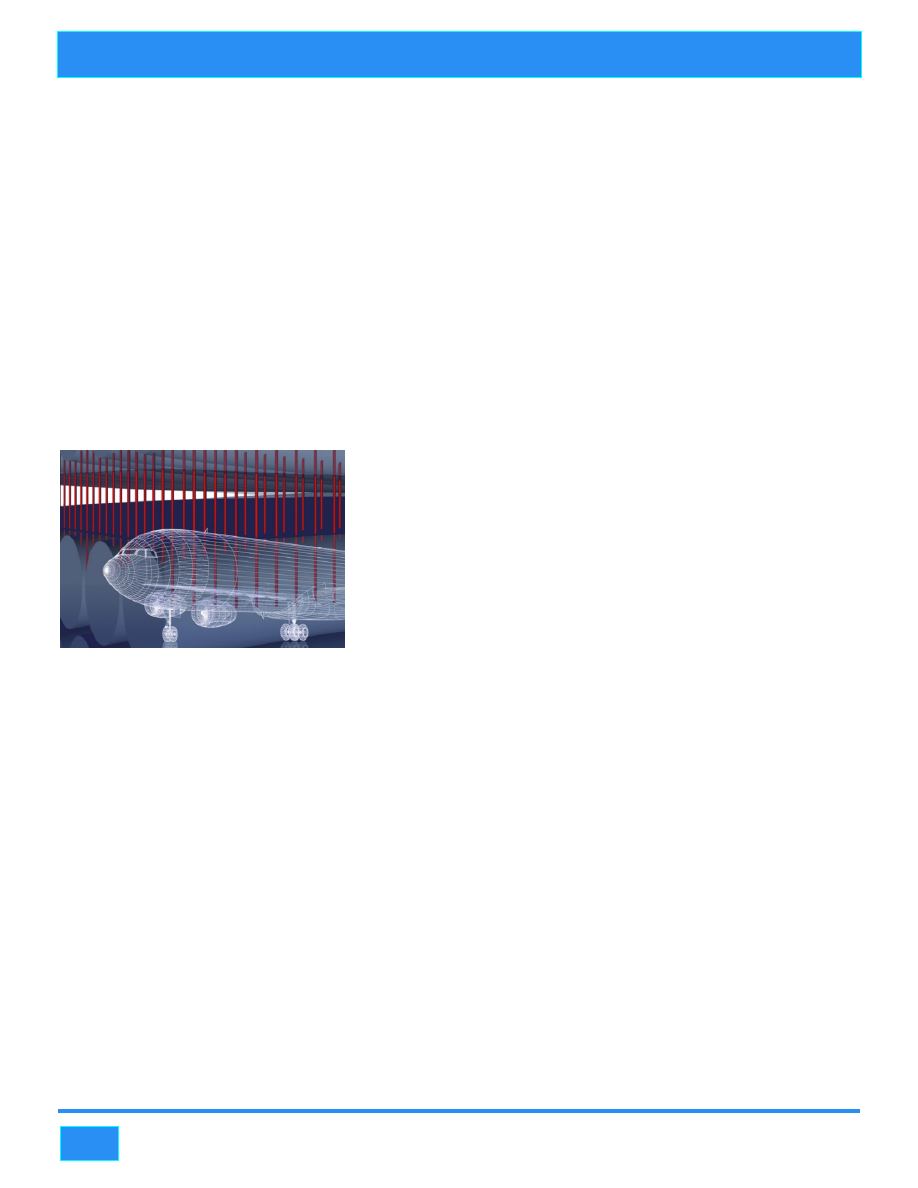
composites. The researchers fastened the layers of composite materials together using carbon nanotubes atom-
thin rolls of carbon that, despite their microscopic stature, are incredibly strong. They embedded tiny “forests” of
carbon nanotubes within a glue-like polymer matrix, and then pressed the matrix between layers of carbon fiber
composites. The nanotubes, resembling tiny, vertically-aligned stitches, worked themselves within the crevices of
each composite layer, serving as a scaffold to hold the layers together.
In experiments to test the material's strength the team found that as
compared with existing composite materials, the stitched composites
were 30 percent stronger, withstanding greater forces before breaking
apart. Roberto Guzman, who led the work as an MIT postdoc in the
Department of Aeronautics and Astronautics (AeroAstro), said that the
improvement may lead to stronger, lighter airplane parts particularly
those that require nails or bolts, which can crack conventional
composites. The researchers' technique integrates a scaffold of carbon
nanotubes within polymer glue. They first grew a forest of vertically-
aligned carbon nanotubes and transferred it onto a sticky, uncured
composite layer. Then they repeated the process to generate a stack of 16
composite plies, with carbon nanotubes glued between each layer. Carbon nanotubes are about 10 nanometers in
diameter nearly a million times smaller than the carbon fibers. Researchers are able to put these nanotubes in
without disturbing the larger carbon fibers, and that's what maintains the composite's strength. What helps in
enhancing strength is that carbon nanotubes 1,000 times more surface area than carbon fibers, which lets them
bond better with the polymer matrix. The strength enhancements suggest this material will be more resistant to any
type of damaging events or features. Since the majority of the newest planes are more than 50 percent composite
by weight, improving these state-of-the art composites has very positive implications for aircraft structural
performance. With their intrinsically light weight, there is nothing on the horizon that can compete with composite
materials to reduce pollution for commercial and military aircraft. According to Tsai, who did not contribute to the
study but he says the aerospace industry has refrained from wider use of these materials, primarily because of a
lack of confidence in [the materials'] damage tolerance. The work by Professor Wardle lead researcher of the team
addresses direct how damage tolerance can be improved, and how higher utilization of the intrinsically unmatched
performance of composite materials can be realized.
The turbines at the first offshore wind farm in the US were installed last week, and their blades are set to start
generating power by the end of the year. The Block Island Wind Farm, developed by Deepwater Wind in
www.scitechdaily.com/news/technology

3
5
Technology Roundup
Providence, Rhode Island, will be able to produce enough power for
17,000 homes up to 30 megawatts. That is much less than many of
the offshore wind farms in the UK and Europe generate, some of
which contain more than 100 turbines and together have the capacity
for 11,000 megawatts of electricity. The US already gets about 5 per
cent of the electrical power it produces from inland wind energy.
According to Deepwater Wind CEO Jeffrey Grybowski wind tends
to be stronger and more stable over the ocean and is also generally
strongest during the late afternoon and early evening, when
electricity demand peaks. This makes offshore areas an attractive
location for future development.
For large population centres here in the north-east, there is a need to find a way to generate clean energy locally.
Wind could be the answer; it is clearly the biggest clean energy resource in the north-east.The five-turbine Block
Island Wind Farm sits about 5 kilometres off the coast of Rhode Island's Block Island. The farm will supply
electricity to the island's 1000 or so permanent residents who currently rely on diesel-generated power as well as
to the mainland grid. The offshore wind farm is a first for the country, but its turbines won't be lonely for long.
There are 21 offshore wind projects in development in the US, collectively expected to produce more than
15,000 megawatts of power once they are completed.The Block Island project sets the stage for future offshore
wind installations. Christopher Kearns, the chief of programme development at the Rhode Island Office of
Energy Resources told that this is a win for Rhode Island,” They are certainly excited to be the first in the nation.
www.newscientist.com
First Autonomous Soft Robot: Octobot
A team of Harvard University researchers with expertise in 3D printing, mechanical engineering, and
microfluidics has demonstrated the first autonomous, untethered, entirely soft robot. This small, 3D-printed
robot the octobot could pave the way for a new generation of completely soft, autonomous machines. Soft
robotics could revolutionize how humans interact with machines. But researchers have struggled to build
entirely compliant robots. Electric power and control systems such as batteries and circuit boards are rigid and
until now soft-bodied robots have been either tethered to an off-board system or rigged with hard components.
One long-standing vision for the field of soft robotics has been to create robots that are entirely soft, but the
struggle has always been in replacing rigid components like batteries and electronic controls with analogous soft
systems and then putting it all together, this research
demonstrates that we can easily manufacture the key
components of a simple, entirely soft robot, which lays the
foundation for more complex designs. Through hybrid
assembly approach, researchers were able to 3D print each of
the functional components required within the soft robot
body, including the fuel storage, power and actuation, in a
rapid manner. The octobot is a simple embodiment designed
to demonstrate integrated design and additive fabrication
strategy for embedding autonomous functionality. Octopuses
have long been a source of inspiration in soft robotics. These
curious creatures can perform incredible feats of strength and
dexterity with no internal skeleton. Harvard's octobot is
By Emily Benson
6
Technology Roundup
pneumatic-based, i.e., it is powered by gas under pre
ransforms a small amount of
liquid fuel (hydrogen peroxide) into a large amount of gas, which flows into the octobot's arms and inflates them
like a balloon. Fuel sources for soft robots have always relied on some type of rigid components. The wonderful
thing about hydrogen peroxide is that a simple reaction between the chemical and a catalyst in this case platinum
allows to replace rigid power sources. To control the reaction, the team used a microfluidic logic circuit based on
pioneering work by co-author and chemist George Whitesides, the Woodford L. and Ann A. Flowers University
Professor and core faculty member of the Wyss. The circuit, a soft analog of a simple electronic oscillator,
controls when hydrogen peroxide decomposes to gas in the octobot. The entire system is simple to fabricate, by
combining three fabrication methods soft lithography, molding and 3D printing. These devices can quickly be
manufactured. The simplicity of the assembly process paves the way for more complex designs. Next, the
Harvard team hopes to design an octobot that can crawl, swim and interact with its environment.
ssure. A reaction inside the bot t
www.dailymail.co.uk
DNA Data Storage
Over the past few decades, it has become apparent that Moore's Law has started to come apart. The 1965
observation, named after Gordon E. Moore, stated that the number of components on a chip seemed to double
every year, but we are reaching the limit of silicon's storage capabilities. To keep pushing the boundaries of
computing technology, we will need to rethink the basic components of computers themselves. And the field of
DNA storage could offer a solution to a problem growing ever more apparent in our digital world: Where do we
store billions of gigabytes of data that make up the Internet? A large part of building better computers is about
finding better materials to build computers with, So, silicon happens to be a fantastic material, but it is reaching a
point where it is unclear that we can continue pushing forward with silicon. It is fascinating that biology has
evolved many molecules that are useful for building better computers in the future. Current archival facilities,
such as the data storage center Facebook recently built in Oregon, occupy entire warehouses and can store about
an exabyte 1 billion gigabytes of data at a maximum. That's just a fraction of the entire internet, which is forecast
to reach 16 zettabytes, or 16,000 exabytes, by 2017. By encoding information using DNA, the blueprint for life on
Earth, researchers say that they could take all of that information and fit it in your living room. By taking bits of
information and translating them from the 1s and 0s on a computer chip into the four letters of DNA, scientists can
create strands of DNA that encode for anything you like, from a Taylor Swift song to the Library of Congress.
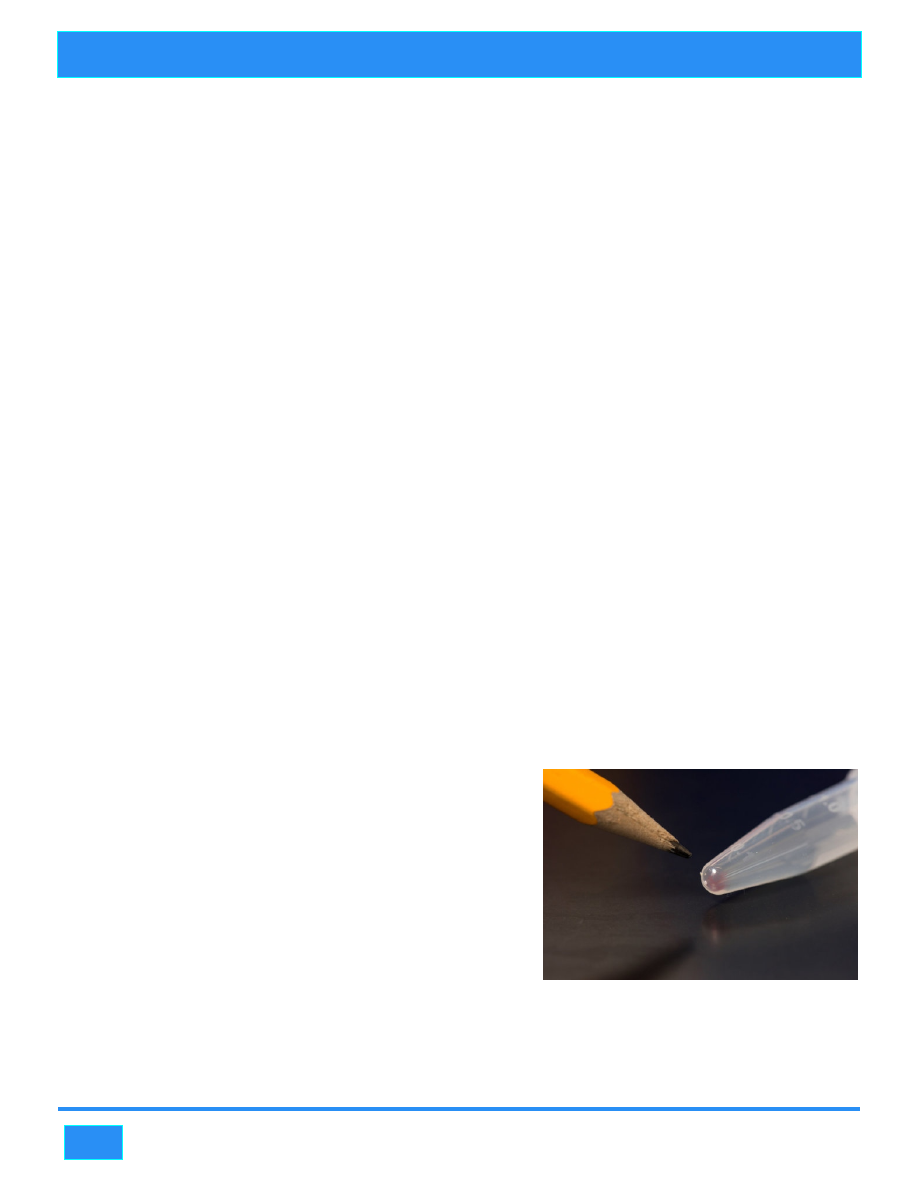
To accomplish this, researchers build an index that links the four
nucleotides that make up DNA (A,T,C and G) to the strings of 1s
and 0s we already use on our computers. DNA synthesizer creates
short strands of DNA that each hold a part of a file's code. Once all
of the information has been converted to DNA, the information
can be stored and retrieved by a DNA sequencer that reads
combinations of nucleotides. Ceze is part of a team of researchers
at the University of Washington that has developed a new method
of encoding and reading information stored in synthetic DNA.
They looked to a widely used audio compression tool called the
Huffman code, which is a way to express strings of binary code in
a shorter way. He says that their method allows for even greater
storage capacity by reducing redundancies the process of making multiple identical strands to account for errors
and allows individual pieces of the data to be read without sequencing all of the DNA stored, something that had
not previously been done. The method includes unique “primers” in individual strands of DNA that can be
targeted during the sequencing process to highlight a particular strand. They say that this improves functionality

7
Technology Roundup
of their system, eliminating the need to sequence the entire database just to read a single strand. As a proof-of-
concept, the team encoded the information for several image files in synthetic DNA and successfully sequenced
the strands to redraw the pictures. While they only encoded several megabytes of information, Ceze told that
the process could be scaled up to hold much larger databases. If we compare flash to DNA in terms of density, or
the number of bits in a certain volume, DNA will be at least a billion times denser. Ceze emphasizes that
synthesizing DNA to store data is not related to genetic engineering. Instead of attempting to put together the
right strands of DNA to create an organism, their method is entirely synthetic.
Storing data in strand of DNA has one significant drawback: it is slow. Unlike computer chips, which
communicate at nearly the speed of light using electrons, DNA data storage relies on physically moving
molecules around. For this reason, researchers should not expect to see DNA hard drives at your local computer
store in the near future. Instead, he envisions using DNA data storage to preserve massive data archives, such as
those used by Facebook and cloud storage services, where speed is not as crucial. The technology also remains
expensive. But, even compared to five years ago, prices have dropped precipitously.
Scientists sponsored by the Office of Naval Research (ONR) have genetically modified common soil bacteria
to create electrical wires that not only conduct electricity, but are thousands of times thinner than a human hair.
As electronic devices increasingly touch all facets of people's lives, there is growing appetite for technology
that is smaller, faster and more mobile and powerful than ever before. Thanks to advances in nanotechnology
industry can manufacture materials only billionths of a meter in thickness. The researchers led by
microbiologist Dr. Derek Lovley at the University of Massachusetts Amherst told that their engineered wires
can be produced using renewable "green" energy resources
like solar energy, carbon dioxide or plant waste; are made of
non-toxic, natural proteins; and avoid harsh chemical
processes typically used to create nanoelectronic materials.
Research could lead to the development of new electronic
materials to meet the increasing demand for smaller, more
powerful computing devices. Being able to produce
extremely thin wires with sustainable materials has enormous
potential application as components of electronic devices
such as sensors, transistors and capacitors. The centerpiece of
Lovley's work is Geobacter, a bacteria that produces
microbial nanowires hair-like protein filaments protruding
from the organism enabling it to make electrical connections
with the iron oxides that support its growth in the ground.
Although Geobacter naturally carries enough electricity for its own survival, the current is too weak for human
use, but is enough to be measured with electrodes. Dr. Lovley's team tweaked the bacteria's genetic makeup to
replace two amino acids naturally present in the wires with tryptophan which is blamed (incorrectly, some say)
for the sleepiness that results from too much Thanksgiving turkey. Food allegations aside, tryptophan actually
is very good at transporting electrons in the nanoscale. As they learned more about how the microbial
nanowires worked, they realized it might be possible to improve on nature's design; they rearranged the amino
acids to produce a synthetic nanowire that might be more conductive. They hoped that Geobacter might still
form nanowires and double their conductivity.
www.blogs.discovermagazine.com
Soil Bacteria work as Electrical Wires
7
Technology Roundup
78
The results surpassed the team's expectations as the synthetic, tryptophan-infused nanowires were 2,000 times
more conductive than their natural counterparts. And they were more durable and much smaller, with a
diameter of 1.5 nanometers (over 60,000 times thinner than a human hair), thousands of nanowires could
possibly be stored in the tiniest spaces, having potential applications as electronic and computing devices
continue to shrink in size they might be installed in medical sensors, where their sensitivity to pH changes can
monitor heart rate or kidney function.
From a military perspective, the nanowires could feed electrical currents to specially engineered microbes to
create butanol, an alternative fuel. This would be particularly useful in remote locations like Afghanistan,
where fuel convoys are often attacked and it costs hundreds of dollars per gallon to ship fuel to warfighters.
Nanowires also may play a crucial role in powering highly sensitive microbes (which could be placed on a
silicon chip and attached to unmanned vehicles) that could sense the presence of pollutants, toxic chemicals or
explosives. This research is part of ONR's efforts in synthetic biology, which creates or re-engineers microbes
or other organisms to perform specific tasks.
A team of scientists from the University of Toronto have found a way to convert all emissions into energy-rich
fuel in a carbon-neutral cycle that uses a very abundant natural resource: silicon. Silicon, readily available in
sand, is the seventh most-abundant element in the universe and the second most-abundant element in the
earth's crust. The idea of converting carbon dioxide emissions to energy is not new: there has been a global race
to discover a material that can efficiently convert sunlight, carbon dioxide and water or hydrogen to fuel for
decades. However, the chemical stability of carbon dioxide has made it difficult to find a practical solution.
According to Geoffrey Ozin, a chemistry professor in U of T's Faculty of Arts & Science, the Canada Research
Chair in Materials Chemistry and lead of U of T's Solar Fuels Research Cluster, a chemistry solution to climate
change requires a material that is a highly active and selective catalyst to enable the conversion of carbon
dioxide to fuel. It also needs to be made of elements that are low
cost, non-toxic and readily available. Ozin and colleagues report
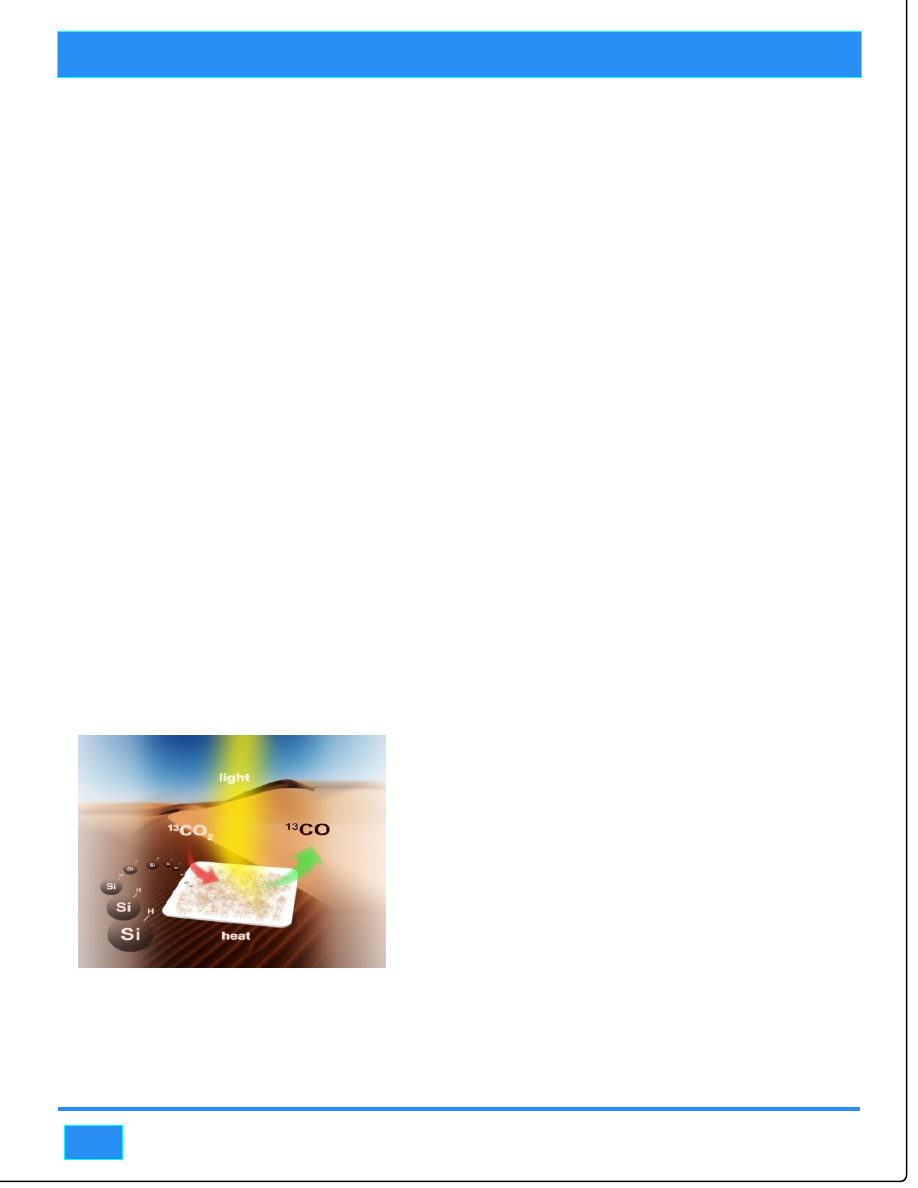
silicon nanocrystals that meet all the criteria. The hydride-
terminated silicon nanocrystals nanostructured hydrides for
short have an average diameter of 3.5 nanometres and feature a
surface area and optical absorption strength sufficient to
efficiently harvest the near-infrared, visible and ultraviolet
wavelengths of light from the sun together with a powerful
chemical-reducing agent on the surface that efficiently and
selectively converts gaseous carbon dioxide to gaseous carbon
monoxide.The potential result is energy without harmful
emissions. Ozin told that making use of the reducing power of
nanostructured hydrides is a conceptually distinct and
commercially interesting strategy for making fuels directly from sunlight. The U of T Solar Fuels Research
Cluster is working to find ways and means to increase the activity, enhance the scale, and boost the rate of
production. Their goal is a laboratory demonstration unit and, if successful, a pilot solar refinery.
www.onr.navy.mil
www.utoronto.ca
Converting Gaseous Carbon Dioxide to Fuel

Technology Roundup
Technology Roundup
National
First International Conference on Emerging Trends in Science and Technology
(ICETST)
RD
3 International Multi disciplinary Research Conference
International Conference on Innovative Computing Technology
Frontiers of information Technology
Tech Expo North America
Key Energy 2016
th
6 International Workshop on Integration of Solar Power into Power Systems
Event Tech
6-10 September, 2016
Pearl Continental Hotel, Rawalpindi
www.fjwu.edu.pk
27-28 September, 2016
Peshawar , Khyber Pakhtunkhwa
www.suit.edu.pk
22-24, November 2016
Bahawalpur, Pakistan
www.intech-bahawalpur
22-24, November 2016
COMSATS Institute of Information Technology, Pakistan
International Events
20-21, October 2016
Santa Clara, United States
www.iotevents.org
8-11, November 2016
Rimini, Italy
www.en.keyenergy.it
14-15, November
Vienna, Austria
www.solarintegrationworkshop.org
14-16 November
The Paris Las Vegas
www.eventtech.eventmarketer.com
Forthcoming Tech Events
9
Tech & Trade Offers
About PASTIC
PASTIC serves as a gateway for
Scientific & Technological
Information for R&D by
catering to the information
n e e d s o f r e s e a r c h e r s ,
entrepreneurs, industrialists,
educationists, policy makers
a n d p l a n n e r s t h r o u g h
anticipatory and responsive
information services.
T e c h n o l o g y I n f o r m a t i o n
Service Section of PASTIC
works exclusively for support
and promotion of technological
information on trade and
industry in the country.
“Technology Roundup” is a
news bulletin that provides
l a t e s t a n d i n n o v a t i v e
technology news, forthcoming
events, etc. It also promotes
products, technologies and
services globally in sectors
such as Agro-Industry, Bio-
Technology, Building Material,
B u s i n e s s , C h e m i c a l s ,
Electronics, Energy, Fisheries,
Food Processing, Machinery,
P a c k a g i n g , M i n i n g
Pharmaceuticals and Textiles.
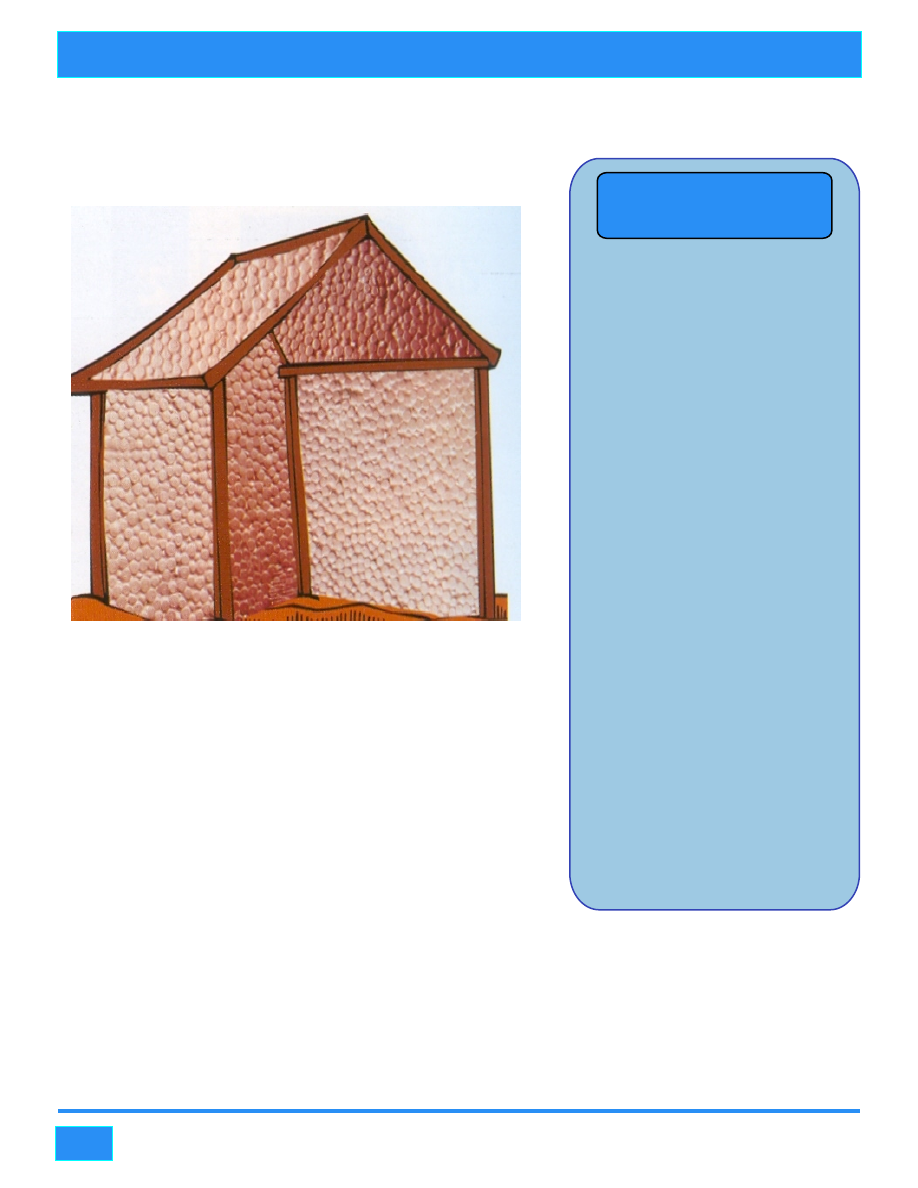
The Ultimate Choice for Insulation
E-mail: info@styropax.com.pk
Www.styropax.com.pk
!
Up to 50% reduction in energy bills
!
Up to 80% reduction in heat transfer
!
Provides excellent Protection against extreme weather conditions
!
Excellent noise insulator
!
Economical to use and highly energy efficient
!
Environmentally and life time durable
!
Ideal alternative construction material in disaster and earthquake
prone areas
!
Can be Installed on already constructed Homes and building
!
Dansity Rang 10 kg to 35 kg
Company Contact:-
Saudagar EPS Industries Pvt Ltd.
49 A, Palace Market, 3 Cooper Road, Lahore
UAN: 042-111-000-129
Technology Roundup
Please give us your feedback and address queries to editorpastic@gmail.com
10