
Patron/Executive Editor
Dr. Muhammad Akram Shaikh
Director General, PASTIC
Managing Editors
Ms. Nageen Ainuddin
Mr. M. Aqil Khan
Editor
Dr. Saima Tanveer
Composer
Kashif Farooqui
T
ECHNOLOGY
R
OUNDUP
Technology Information Section (TIS)
Pakistan Scientific & Technological Information Centre
PASTIC
July-August, 2015
Vol. 7, No. 4
A NEWS BULLETIN FROM
Tech News Headlines
Tech & Trade Offers
Phone: 051-9248103-4, 9248111
Fax: 051-9248113
Email:editor@pastic.gov.pk
Web: www.pastic.gov.pk
PASTIC National Centre
Quaid-i-Azam University Campus
P.O. Box 1217, Islamabad
Editorial Board
l
Frequency Control in Cigre Low Voltage Distribution Network with
Significant Amounts of Inverter Based Generators
l
Finite Capacity Energy Efficient Femtocell Network
l
l
Computer Vision and Mobile Technology can Help Blind People
l Online Computer Game can Help Shed Weight
l
l
Compound in Magnolia may Combat Head and Neck Cancers
Bio-fueled Jet Plane
Renewable Energy from Evaporating Water
Deep Cycle Gel range VRLA
Forthcoming Tech Events
l
l
l
l
l
l
l
l
Conference on Life Sciences Research-2015
st
1 Multi Disciplinary Research Conference
International Conference on Information Management &
Libraries
th
15 International Nutrition & Diagnostics Conference October
5-8, 2015
Euro Food Chem 2015 XVIII
Integrated Continuous Biomanufacturing II
International Conference on Lipid Science & Technology
2nd International Energy and Environment Conference (IEEC-
2015)

Technology Roundup
2
Indigenous
Technology
Frequency Control in Cigre Low Voltage Distribution Network with Significant Amounts of Inverter
Based Generators
Researchers from the Department of Electrical Engineering & Department of Electronics Engineering,
Quaid-E-Awam University of Engineering Sciences and Technology, Nawabshah
e studied Frequency
Control in Cigre Low Voltage Distribution Network with Significant Amounts of Inverter Based Generators
hav
Maintaining demand side supply and regulating frequency in power networks are the prime requirements of the
modern power systems. The frequency of the power system deviates from its nominal value if there is mismatch
between power generation and consumption. If the active power demand is higher than the active power production
in the network, the frequency decreases and vice versa. The increase or the decrease in the frequency can be
compensated by balancing the generation and load demands. This is normally done by allocating reserve units or by
using inverter based generators such as Battery Energy Storage Devices (BESDs). The main idea of the study
proposed here is about the frequency stability in the CIGRE low voltage distribution network. This is done by
matching load-generation balance in the network the CIGRE network is not performed here but the CIGRE network
is split into a very simple network comprising finite grid (i.e. a synchronous generator with the active power
capability of 30 kW), one battery unit and a load. This is done in order to show the detailed procedure about the
control of frequency within the power networks and same procedure is proposed for the frequency stability within
the CIGRE low voltage network The work is done on a simple network and simulations are carried out by using
DIgSILENT power factory software version 15.0. The procedure of modeling BES which should operate as Battery
Energy Storage equipped Static Compensator (BES-STATCOM) developed in DIgSILENT power factory is also
described in this research.
The Load-generation must be corrected within short duration; otherwise it might leads to the power line frequency
to deviate from the rated value (e.g., 50 Hz in this study). Large deviations in the frequency of the power network
cause the threats to the stability and the security of power systems and might cause permanent damage to the
equipments Different scenarios such as load reduction or generation deficit have been studied in this research. It has
been proved with the help of the simulation results that the ESDs in all the conditions have successfully restored the
frequency of the network within a short duration.
Quaid-E-Awam University of Engineering Sciences and Technology, Nawabshah 2015 14(1) (Pages 19-24)
Ghullam Mustafa Bhutto*Muhammad Usman Keerio*, Rameez Akbar Talani*, (Department of Electrical
Engineering, Quaid-E-Awam University of Engineering Sciences and Technology, Nawabshah Pakistan) Ehsan
Ali Buriro** : (Department of Electronics Engineering, Quaid-E-Awam University of Engineering Sciences and
Technology, Nawabshah Pakistan)
Courtesy:
www.quest.edu.pk

Technology Roundup
3
Indigenous
Technology
Finite Capacity Energy Efficient Femtocell Network
Researchers from the Department of Electronic Engineering, Mehran University of Engineering &
Technology, Jamshoro have studied Finite Capacity Energy Efficient Femtocell Network
The rapid growth in the number of subscribers leads to an increased bandwidth demand which results into
higher energy expenditure in current cellular networks. This in turn increases the CO2 emission which is a
critical issue nowadays. Furthermore, the increased number of users also leads to the problem of spectrum
scarcity.
The issue of energy efficiency in ICT (Information Communication Technology) sector has motivated many
researchers from academia and industry to propose and develop new communication architectures and
protocols. Many countries have committed to reduce the carbon footprint of ICT sector. In this regard, the
United Kingdom is aiming to achieve energy efficiency of 80% by year 2050. The research statistics show
that current cellular communication causes only 1-2% of the total emission. However, the ever increasing
number of subscribers and rapidly growing demand of data services will cause exponential increase in
carbon emission. A hybrid cellular architecture consisting Macrocell and few femtocells is a practicable
solution to address the issue of energy efficiency and to improve reliability in present cellular systems. This
study presents the performance analysis of a finite capacity energy efficient femtocell network. A FAP
(Femtocell Access Point) provides continuous connectivity for M communicating nodes in this network. The
data transmission from M communicating nodes to the central entity (FAP) is represented using M/M/1/K
queue. To save energy, the server, in this case, takes exponentially distributed vacations during idle periods.
Due to finite buffer size of FAP, this network represents a finite capacity system. The network model where
sever takes vacation to save energy is solved with help of MGM (Matrix Geometric Method). For different
system capacities, the network performance is analyzed in terms of power savings and QoS (Quality of
Service) parameters such as utilization, average packet delay, and packet blocking probability. Results show
that with small traffic intensity the energy savings is high, whereas utilization, delay and blocking are low.
Moreover, the maximum energy can be saved when system in quite underutilized. An economical solution to
wireless spectrum scarcity is the deployment of small cells (called femtocells) with already available or new
macrocells. This hybrid architecture escalates the problem of bad signal quality for indoor users, achieves
energy savings, and increases the spatial reuse. Moreover, users can communicate at higher data rates.
J R Khan*, Wanod Kumar*, Imtiaz Hussain*, AND Sara Qadeer (Department of Electronic Engineering,
Mehran University of Engineering & Technology, Jamshoro, Pakistan)
Courtesy:
www.muet.edu.pk
Mehran University Research Journal of Engineering & Technology, 2014 33( 2) (Pages245-252)

4
Technology Roundup
Compound in Magnolia may Combat Head and Neck Cancers
www.research.va.gov
Magnolias are prized for their large, colorful, fragrant flowers. This attractive tree can harbors a
potent cancer fighter. According to a growing number of studies, including one from VA and
the University of Alabama at Birmingham, the study focused on squamous cell head and neck
cancers. According to the National Cancer Institute, at least 3 in 4 head and neck cancers are
caused by the use of tobacco and alcohol.
The cancers have only a 50 percent
survival rate, killing some 20,000
Americans each year.
Honokiol( C18H18O2) is one of the
major active compounds in magnolia
extract, the phytochemical has been used
for centuries in traditional Chinese and
Japanese medicine to treat anxiety and
other conditions. More recently, scientists
have been discovering that the compound,
found in magnolia bark, is a wily and
versatile adversary of cancer. It seems to
exploit many biochemical pathways to
shrink tumors of various types, or to keep
them from growing in the first place.
The Alabama scientists have now shown how it works against head and neck cancers: It blocks
a protein called epidermal growth factor receptor, or EGFR. Prior research has found that
almost all head and neck cancer cells display an over-abundance of the protein.
The VA-UAB team based on its lab studies told that honokiol binds more strongly with EGFR
than does the drug gefitinib (sold as Iressa), which is commonly used to treat head and neck
cancers.
The researchers tested honokiol on cell lines derived from human cancers of the oral cavity,
larynx, tongue, and pharynx. In all cases, the botanical shut down the aberrant cells. The team
also tested it against tumors implanted into mice, with similar results.
Senior author Dr. Santosh K. Katiyar and his colleagues, honokiol appears to be an attractive
bioactive small molecule phytochemical for the management of head and neck cancer which
can be used either alone or in combination with other available therapeutic drugs. Katiyar has
published extensively in the past on other natural substances that work against tumors,
especially skin cancer.

3
5
Technology Roundup
Computer Vision and Mobile Technology can Help Blind People
www.lncoln.ac.uk
Computer scientists are developing new adaptive mobile technology that could enable blind and visually-
impaired people to 'see' through their smartphone or tablet.
Specialists in computer vision and machine learning at the University of Lincoln, UK are aiming to embed a
smart vision system in mobile devices to help people with sight problems navigate unfamiliar indoor
environments.
Based on preliminary work on assistive
technologies done by the Lincoln Centre for
Autonomous Systems, the team plans to use
colour and depth sensor technology inside
new smart phones and tablets to enable 3D
mapping and localization, navigation and
object recognition. The team will then develop
the best interface to relay that to users
whether that is vibrations, sounds or the
spoken word.
Dr Nicola Bellotto, an expert on machine
perception and human-centred robotics told
that this project will build on our previous
research to create an interface that can be
used to help people with visual impairments.
There are many visual aids already available, from guide dogs to cameras and wearable sensors. Typical
problems with the latter are usability and acceptability. If people were able to use technology embedded in
devices such as smartphones, it would not require them to wear extra equipment which could make them feel
self-conscious. There are also existing smartphone apps that are able to, for example, recognise an object or
speak text to describe places. But the sensors embedded in the device are still not fully exploited. The
research aim to create a system with 'human-in-the-loop' that provides good localisation relevant to visually
impaired users and, most importantly, that understands how people observe and recognise particular
features of their environment.
The research team, includes Dr Oscar Martinez Mozos, specialist in machine learning and quality of life
technologies, and Dr Grzegorz Cielniak, in mobile robotics and machine perception, aim to develop a system
that will recognise visual clues in the environment. This data would be detected through the device camera
and used to identify the type of room as the user moves around the space.
A key aspect of the system will be its capacity to adapt to individual users' experiences, modifying the
guidance it provides as the machine 'learns' from its landscape and from the human interaction. So, as the
user becomes more accustomed to the technology, the quicker and easier it would be to identify the
environment.
The research team is working with a Google sponsor and will be collaborating with specialists at Google
throughout the Active Vision with Human-in-the-Loop for the Visually Impaired project.
6
Technology Roundup
Online Computer Game can Help Shed Weight
www.exeter.ac.uk
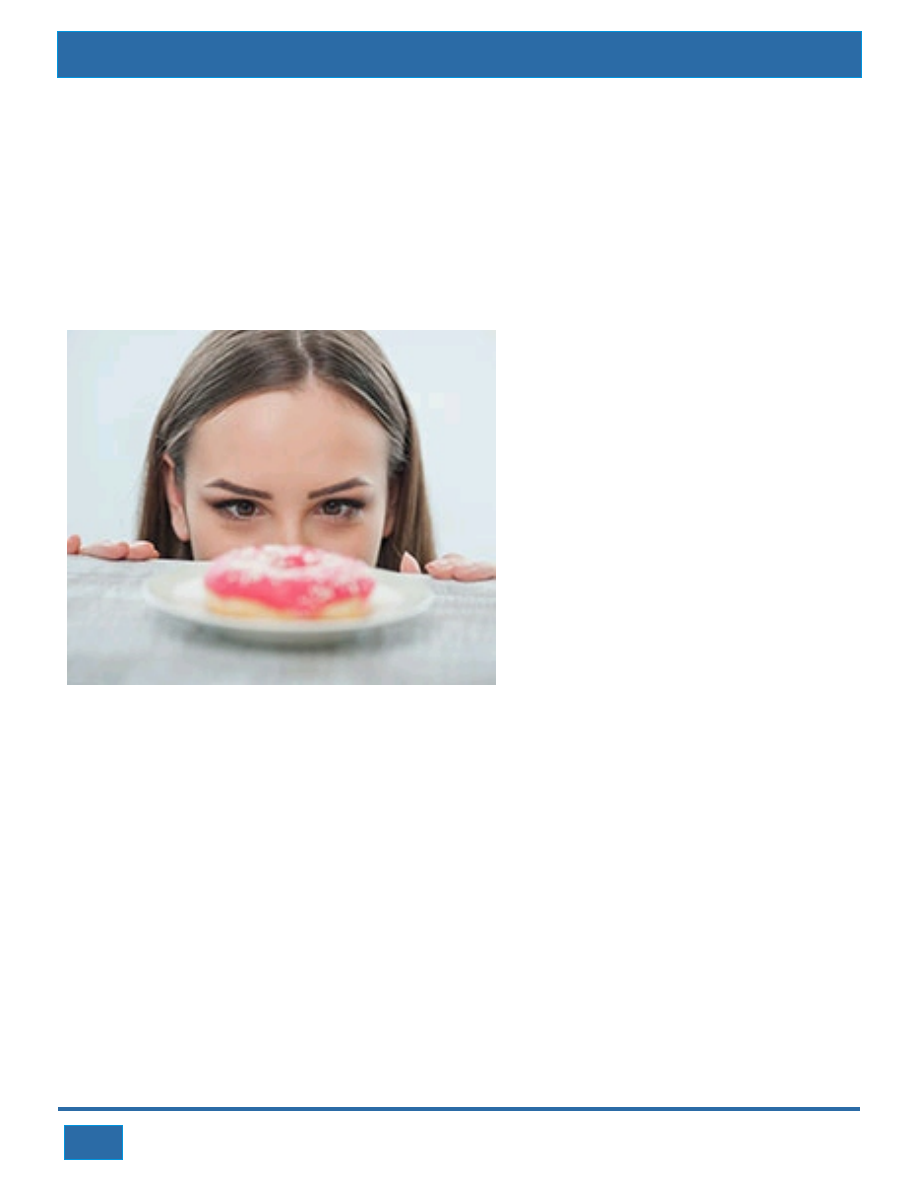
A simple new computerized game could help people control their snacking impulses and lose weight. A study that
shows that participants lost an average of 0.7kg and consumed around 220 fewer calories a day whilst
undergoing the week of training. The team of researchers, led by Dr Natalia Lawrence, has developed a simple
online computer game that trains people to resist unhealthy snack foods. The game requires people to
repeatedly avoid pressing on pictures of certain images (e.g. of biscuits), whilst responding to other images (e.g.
fruit, clothes), and therefore trains people to associate calorie-dense foods with 'stopping'. The team previously
showed that this training reduces how much food people eat in laboratory tests.
Now their new study published in the journal
Appetite, has found that 41 adults who completed
four 10-minute sessions of the training online lost
a small but significant amount of weight and ate
fewer calories. The training also reduced how
much the calorie-dense 'stop' foods were liked.
The reduction in weight and unhealthy snacking
was maintained six months after the study. These
effects were observed relative to a control group
of 42 adults who completed the same "stop versus
go" training, but involving pictures of non-food
objects (e.g. pens).
Dr Natalia Lawrence of the University of Exeter,
lead researcher in both the original research and
the new studies told that these findings are among
the first to suggest that a brief, simple
computerized tool can change people's everyday
eating behaviour. It is exciting to see the effects of
our lab studies translate to the real world. This
research is still in its infancy and the effects are modest. However, findings suggest that this cognitive training
approach is worth pursuing: It is free, easy to do and 88% of the participants said they would be happy to keep
doing it and would recommend it to a friend. This opens up exciting possibilities for new behaviour change
interventions based on underlying psychological processes. Eighty-three adults from the local community aged
23-65 with BMIs ranging from 21 to 46 (healthy to obese) were involved in the study. Participants had to report
regular intake (at least three times per week) of energy-dense snack foods (crisps, chocolate, biscuits) and some
problems controlling their food intake on a screening questionnaire. Most participants were recruited from the
NIHR Exeter Clinical Research Facility's Exeter 10,000 participant panel.Participants were weighed by
researchers and given food rating tasks and food diaries to complete one week before, and one week after the
training, which they completed online at home or work. They were randomly allocated to receive the active (food-
related) or control training intervention. Results showed that participants in the active group lost weight (~ 0.7 kg),
consumed less (~ 220 kcal a day) and reported lower 'liking' of the snack foods they were trained to stop to.

Bio-fueled Jet Plane
www.sciencedaily.com
Alexis Bell, a chemical engineer with joint appointments at Berkeley Lab and UC Berkeley combined chemical catalysis with
life-cycle greenhouse gas modeling to create a new process for producing bio-based aviation fuel as well as automotive
lubricant base oils. The recyclable catalysts are capable of converting sugarcane biomass into a new class of aviation fuel and
lubricants with superior cold-flow properties, density and viscosity
that could achieve net life-cycle greenhouse gas savings of up to
80-percent. Bell is one of three corresponding authors of a paper
published in the Proceedings of the National Academy of Sciences
(PNAS). Titled "Novel pathways for fuels and lubricants from
biomass optimized using life-cycle greenhouse gas assessment."
Corinne Scown, a research scientist with Berkeley Lab's Energy
Analysis and Environmental Impacts Division,
and Dean Toste, a
chemist with joint appointments at Berkeley Lab and UC Berkeley,
are the other two authors.
The concentrations of carbon and other greenhouse gases in Earth's
atmosphere are now at their highest levels in the past three million
years, primarily as a result of the burning of petroleum and other
fossil fuels. Biofuels synthesized from the sugars in plant biomass help mitigate climate change. However, jet fuels have
stringent requirements that must be met. Jet fuels must be oxygen-free, have the right boiling point distribution and lubricity,
and a very low pour point, meaning the fuel can't become gelatinous in the cold temperatures of the stratosphere. According to
Bell, Bio-fuel solutions, such as farnesane, mixed directly with petroleum jet fuel have been tested, but offer only modest
greenhouse gas reduction benefits. This is the first process to generate true drop-in aviation bio-fuels. Scown cites the
Intergovernmental Panel on Climate Change (IPCC). 2014 report, that drop-in biofuels are the only viable alternative to
conventional jet fuels. according to Scown to reduce dependence on petroleum, air travel is going to require renewable liquid
fuels because batteries and fuel cells simply are not practical.
The process developed at EBI can be used to selectively upgrade alkyl methyl ketones derived from sugarcane biomass into
trimer condensates with better than 95-percent yields. These condensates are then hydro-deoxygenated into a new class of
cycloalkane compounds that contain a cyclohexane ring and a quaternary carbon atom. These cycloalkane compounds can be
tailored for the production of either jet fuel, or automotive lubricant base oils. Lubricant base oils can produce even more
greenhouse gas emissions on a per-mass basis than petroleum-derived fuels if even a fraction of the lubricant is repurposed as
fuel. The ability of the EBI process to yield jet fuel or lubricants should be a significant advantage for biorefineries.
According to Gokhale, a chemical engineer,Sugarcane biorefineries today produce ethanol, sugar and electricity, expanding
the product slate to include aviation fuels and lubricant base oils could allow for operators to manage their market risks better,
which is exactly how petrochemical refinery complexes operate today. Rather than optimize for one product, they try to
optimize the overall product slate.
Scown adds that another important advantage offered by the process is that it enables refineries to convert a portion of the
bagasse, the fibrous residue into fuels and other products. The rest of the waste biomass can be combusted to produce process
heat and electricity to operate the refinery. This new EBI process for making jet fuel and lubricants could also be used to make
diesel and additives for gasoline as Gokhale explains.
Although the goal of this study is to develop a strategy for the flexible production of jet fuels and lubricant base oils yet the
strategy behind the process could also be applied to biomass from other non-food plants and agricultural waste that are
fermented by genetically engineered microbes. Scown expects that further research will make this option increasingly
attractive. The study shows that biorefineries can use inexpensive catalysts to produce a suite of hydrocarbon fuels and
lubricants by strategically piecing together biological and thermochemical processes, biorefineries can also operate without
any fossil-derived inputs.
7
Technology Roundup
7
Technology Roundup
7
Renewable Energy from Evaporating Water
www.columbia.edu
Columbia University scientists report the development of two novel devices that derive power directly from evaporation -- a
floating, piston-driven engine that generates electricity causing a light to flash, and a rotary engine that drives a miniature car.
According to Ozgur Sahin, associate professor biological
sciences and physics Columbia University, when
evaporation energy is scaled up it could one day produce
electricity from giant floating power generators that sit on
bays or reservoirs, or from huge rotating machines akin to
wind turbines that sit above water.
Evaporation is a fundamental force of nature. It is
everywhere, and it is more powerful than other forces like
wind and waves. Sahin found that when bacterial spores
shrink and swell with changing humidity, they can push and
pull other objects forcefully. They pack more energy, pound
for pound, than other materials used in engineering for
moving objects, he reported in a paper published in Nature
Nanotechnology.
Building on last year's findings, Sahin and his Columbia
colleagues sought to build actual devices that could be powered by such energy. To build a floating, piston-driven engine, the
researchers first glued spores to both sides of a thin, double-sided plastic tape akin to that in cassette tapes, creating a dashed
line of spores. They did the same on the opposite side of the tape, but offset the line so dashes on one side overlapped with
gaps on the other.
When dry air shrinks the spores, the spore-covered dashes curve. This transforms the tape from straight to wavy, shortening
the tape. If one or both ends of the tape are anchored, the tape tugs on whatever it's attached to. Conversely, when the air is
moist, the tape extends, releasing the force. The result is a new type of artificial muscle that is controlled by changing
humidity.
Sahin and Xi Chen, then placed dozens of these tapes side by side, creating a stronger artificial muscle that they then placed
inside a floating plastic case topped with shutters. Inside the case, evaporating water made the air humid. The humidity
caused the muscle to elongate, opening the shutters and allowing the air to dry out. When the humidity escaped, the spores
shrunk and the tapes contracted, pulling the shutters closed and allowing humidity to build again. A self-sustaining cycle of
motion was born.
The spore-covered artificial muscles function as an evaporation-driven piston. Coupling that piston to a generator produced
enough electricity to cause a small light to flash. They turned evaporation from a pool of water into light. With its current
power output, the floating evaporation engine could supply small floating lights or sensors at the ocean floor that monitors
the environment, speculating that an improved version with stickier plastic tape and more spores could potentially generate
even more power per unit area than a wind farm.
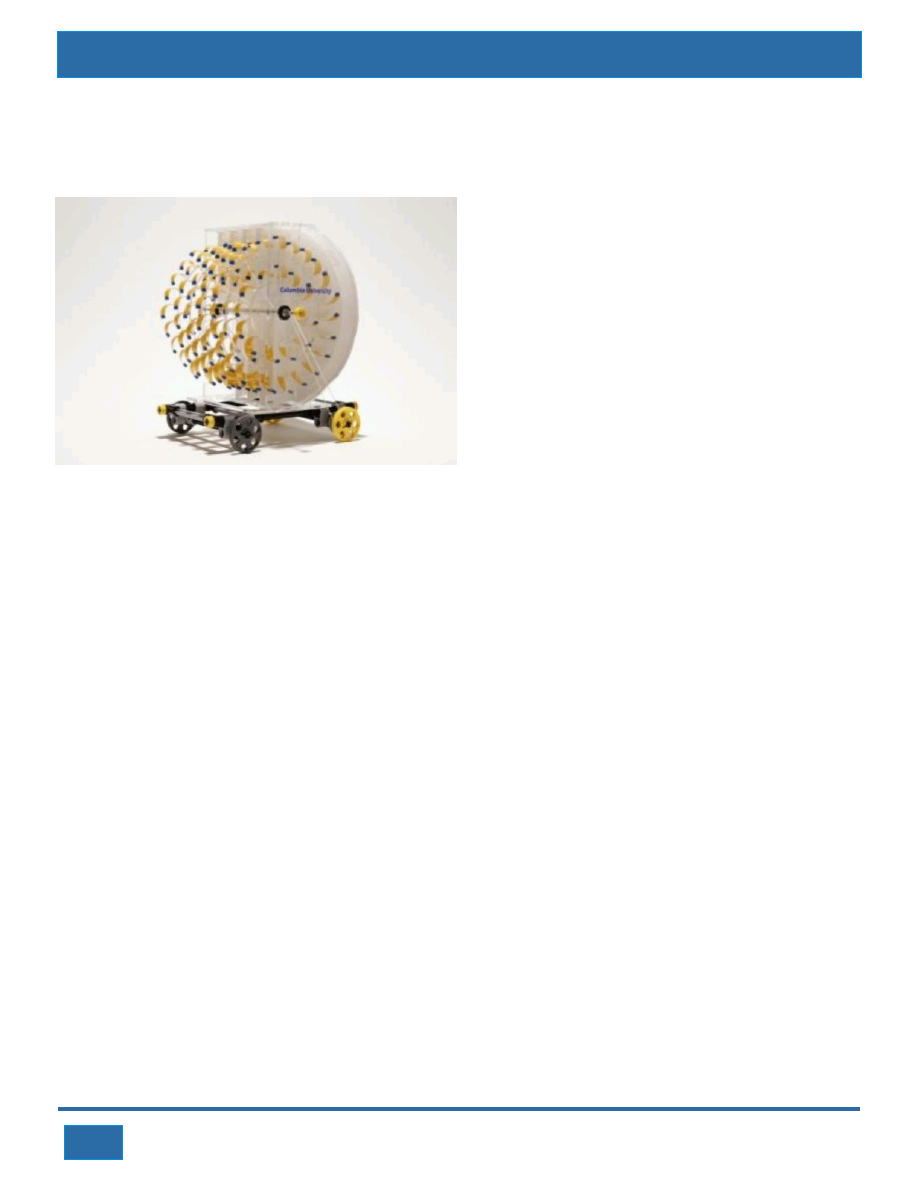
The Columbia team's other new evaporation-driven engine -- the Moisture Mill -- contains a plastic wheel with protruding
tabs of tape covered on one side with spores. Half of the wheel sits in dry air, causing the tabs to curve, and the other half sits in
humid environment, where the tabs straighten. As a result, the wheel rotates continuously, effectively acting as a rotary
engine. The researchers next built a small toy car, powering it with the Moisture Mill and were successful in getting the car to
roll on its own, powered only by evaporation. In the future, Sahin said, it may be possible to design engines that use the
mechanical energy stored in spores to propel a full-sized vehicle. Such an engine would require neither fuel to burn nor an
electrical battery. Sahin told a larger version of the Moisture Mill could also produce electricity, suggesting a wheel that sits
above a large body of water and evaporates saltwater, causing the wheel to rotate and generate electricity. This development
would steadily produce as much electricity as a wind turbine.
8

Technology Roundup
Technology Roundup
National/International Events
Conference on Life Sciences Research-2015
st
1 Multi Disciplinary Research Conference
International Conference on Information Management & Libraries
15th International Nutrition & Diagnostics Conference October 5 – 8,
2015
Euro Food Chem 2015 XVIII
Integrated Continuous Biomanufacturing II
International Conference on Lipid Science & Technology
2nd International Energy and Environment Conference (IEEC-2015)
4- 6 September 2015
Islamabad, ICT, Pakistan
12 September 2015
Mandi Bahauddin,
Www.mdrc2015.com
13-16 October, 2015
Madrid, Spain
www.ictan.csic.es
1-5, November, 2015
California, USA
www.engconf.org
30 November- 02 December, 2015
USA
www.lipids.conferenceseries.com/
22-24 December, 2015
Dubai, United Arab Emirates
www.warponline.org
www.clsr.com.pk
10-13 November, 2015
Lahore, Pakistan
www. Pu.edu.pk
5-8 October 2015
Prague 6, Czech Republic
www.pnds.org
Forthcoming Tech Events
9
Tech & Trade Offers
About PASTIC
PASTIC serves as a gateway for
Scientific & Technological
Information for R&D by
catering to the information
n e e d s o f r e s e a r c h e r s ,
entrepreneurs, industrialists,
educationists, policy makers
a n d p l a n n e r s t h r o u g h
anticipatory and responsive
information services.
T e c h n o l o g y I n f o r m a t i o n
Service Section of PASTIC
works exclusively for support
and promotion of technological
information on trade and
industry in the country.
“Technology Roundup” is a
news bulletin that provides
l a t e s t a n d i n n o v a t i v e
technology news, forthcoming
events, etc. It also promotes
products, technologies and
services globally in sectors
such as Agro-Industry, Bio-
Technology, Building Material,
B u s i n e s s , C h e m i c a l s ,
Electronics, Energy, Fisheries,
Food Processing, Machinery,
P a c k a g i n g , M i n i n g
Pharmaceuticals and Textiles.
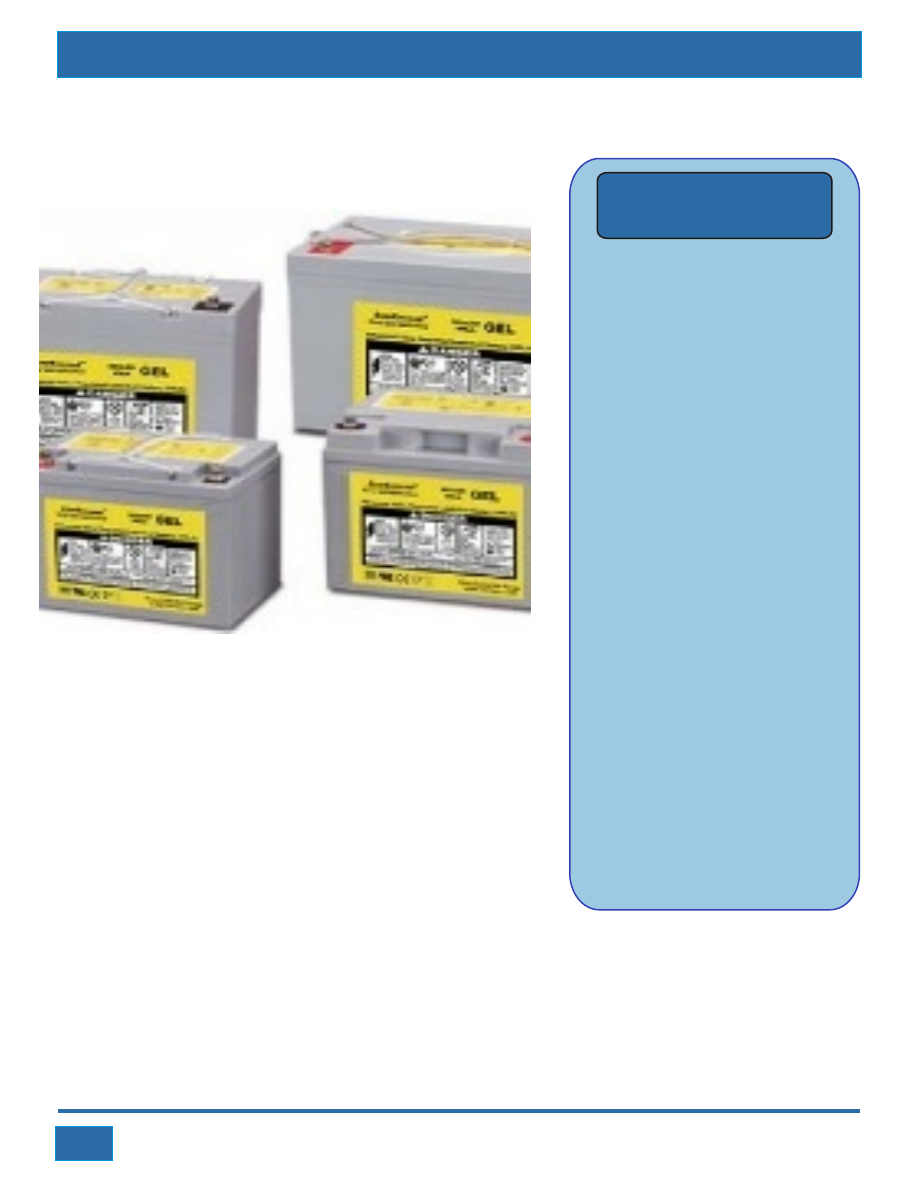
Deep Cycle Gel range VRLA
!Exeptional energy Storage capicity combined with llong e life -
BCI Classification
!Thick poisitive plate design for maximum service float life 12 year
design life @20 C(68 F)
!SU UL Recognized component
!Spill proof and leak proof
!Maintenance free (no topping up) during the service life due Ever
Exceed Gel Technology
! Flame arresting on way pressure relief vent for safe and long life
!Electrolyte in solid gel form will not stratify no equlization charge
required
!Increased durability and deep cycle ability for heavey duty
applications
Company Contact:-
Sharif International
House # 151-A Street # 8 Chaklala Scheme 3, Rawalpindi
Tel: 92-51-5766380, Fax: 92-51-5598354
www.sharifinternational.net
Technology Roundup
Please give us your feedback and address queries to editor@pastic.gov.pk
10