Patron/Executive Editor
Dr. Muhammad Akram Shaikh
Director General, PASTIC
Managing Editors
Ms. Nageen Ainuddin
Mr. M. Aqil Khan
Editor
Dr. Saima Tanveer
Composer
Kashif Farooqui
T
ECHNOLOGY
R
OUNDUP
Technology Information Section (TIS)
Pakistan Scientific & Technological Information Centre
PASTIC
July-August, 2014
Vol. 6, No. 4
A NEWS BULLETIN FROM
Tech News Headlines
Tech & Trade Offers
Phone: 051-9248103-4, 9248111
Fax: 051-9248113
Email:editor@pastic.gov.pk
Web: www.pastic.gov.pk
PASTIC National Centre
Quaid-i-Azam University Campus
P.O. Box 1217, Islamabad
Editorial Board
l
Toward a New Way to keep Electronics from Overheating
Using Sand to Improve Battery Performance
Microbes Engineered for Direct Conversion of Biomass to Fuel
Rotten Egg Gas holds key to Healthcare Therapies
Link between Antibiotics, Bacterial Biofilms and Chronic Infections
Found
Solar Cells: Powered by Nanoholes
Chemists Develop Novel Catalyst With Two Functions
Variable K-Anonymity: An Approach for Minimizing Data Loss and
Maintining Usefulness of Data
Prediction of an Optimum Biodiesel-Diesel Blended Fuel for
Compression Ignition Engine Using GT-Power
l
l
l
l
l
l
l
l
Forthcoming Tech Events
l
l
l
l
l
l
l
l
rd
3 International Conference on Forensic Research Technology
st
31
IASP World Conference of the International Association of
Science
th
6
IEEE
International Conference on Adaptive Science &
Technology
International Conference on Local Representation of Power in
South Asia
National Software Engineering Conference (NSEC 2014)
International Conference on Management Research (ICMR)2014
International Conference on Energy Systems and Policies (ICESP-
2014)
International Conference on Nanoscience and Nanotechnology

Technology Roundup
Indigenous
Technology
Variable K-Anonymity: An approach for Minimizing data Loss and Maintining
Usefulness of Data
A team of researchers from
have
proposed Variable K-Anonymity: An approach for Minimizing data Loss and Maintining Usefulness of
Data.
, ,
Fatima Liaqat, Azhar Rauf Shah Khusro, Saeed Mahfooz,
Department of Computer Sciences, University of Peshawar, Pakistan
Many hospitals and organizations publish patients data that contain useful information for research purpose.
Preserving privacy and security of this data is of paramount value. This data should be published in such a form, that
the privacy of individuals should not be compromised and at the same time information in the data should be useful.
The data which is published in the raw form is called micro-data. Many methods and techniques have been
suggested for the preservation of privacy of individuals in the micro data.
This sensitive information can be leaked out indirectly by different types of malicious activities, such as linking and
inference attacks. K-anonymity model has been proposed in the existing literature to secure the confidentiality of
individuals from such types of attacks. It uses generalization and suppression techniques for providing security to
the data. But as the generalization increases, the data becomes less meaningful. A new approach has been proposed
in the presented study which is termed as variable K-anonymity technique. In this approach, the data is generalized
in such a way so as to keep the data loss minimal while maintaining the privacy of data. In the proposed variable K-
anonymity technique, the nature of data is taken into account, on the basis of which the value of K is decided.
Therefore, the value of K is not fixed and varies depending on the nature of data. Left-over records, which are
usually left for the next release or the attributes that are suppressed, are also adjusted in a more efficient manner in
the variable K-anonymity technique. The proposed technique is a natural way of maintaining the anonymity of the
data. An algorithm is proposed, which decides the best value of K for the given data with minimum generalization
and suppression. The algorithm is applicable on large and growing data sets..
NED University Journal of Research-Applied Sciences 2014, 11(2): 27-36
(Department of Computer Sciences, University of Peshawar, Pakistan)
Courtesy:
2

Technology Roundup
Indigenous
Technology
3
Prediction of an Optimum Biodiesel-Diesel Blended Fuel for Compression Ignition
Engine Using GT-Power
A team of researchers from Department of Mechanical Engineering, University of Engineering and
Technology, Lahore and BZU College of Engineering and Technology, Multan have investigated Optimum
Biodiesel-Diesel Blended Fuel for Compression Ignition Engine Using GT-Power
Biodiesel, consisting of alkyl monoester of fatty acids from vegetable oils or animal fats, is gaining considerable
attentions as an alternative fuel for CI engine on account of its better physicochemical properties and flexibility to
be used either in neat or in blended form. It has the potential to alleviate the pollutants such as total hydrocarbons
(THC), carbon monoxide (CO), particulate matter (PM) and smoke. NOx emissions, however, are increased when
CI engine is fueled with neat biodiesel owing to improved combustion efficiency caused by higher MCP and
temperature.
This study describes the development of a turbocharged direct-injection compression ignition (CI) engine model
using fluid-dynamic engine simulation codes through a simulating tool known as GT Power. The model was first
fueled with diesel, and then with various blends of biodiesel and diesel by allotting suitable parameters to predict an
optimum blended fuel. During the optimization, main focus was on the engine performance, combustion, and one
of the major regulated gaseous pollutants known as oxides of nitrogen (NOx). The combustion parameters such as
Premix Duration (DP), Main Duration (DM), Premix Fraction (FP), Main Exponent (ME) and ignition delay (ID)
affect the start of injection (SOI) angle, and thus played significant role in the prediction of optimum blended fuel.
The SOI angle ranging from 5.2 to 5.7 degree crank angle (DCA) measured before top dead center (TDC) revealed
an optimum biodiesel-diesel blend known as B20 (20% biodiesel and 80% diesel by volume). B20 exhibited the
minimum possible NOx emissions, better combustion and acceptable engine performance. Moreover, experiments
were performed to validate the simulated results by fueling the engine with B20 fuel and operating it on AC
electrical dynamometer. Both the experimental and simulated results were in good agreement revealing maximum
deviations of only 3%, 3.4%, 4.2%, and 5.1% for NOx, maximum combustion pressure (MCP), engine brake power
(BP), and brake specific fuel consumption (BSFC), respectively. Meanwhile, a positive correlation was found
between MCP and NOx showing that both the parameters are higher at lower speeds, relative to higher engine
speeds.
Pak.J.Engg & Appl. Sci. 2014, 14(1): 102-114
Asad Naeem Shah, Fiaz H. Shah, Ejaz M. Shahid (Department of Mechanical Engineering, University of
Engineering and Technology, Lahore 54000, Pakistan) Syed Asad Gardazi. (Department of Mechanical
Engineering, BZU College of Engineering and Technology, Multan Pakistan)
Courtesy:

4
Technology Roundup
Toward a New Way to keep Electronics from Overheating
www.pubs.acs.org/
Using Sand to improve Battery Performance
Computer technology has transformed the way we
live, but as consumers expect ever more from their
devices at faster speeds, personal computers as
well as larger electronic systems can overheat.
This can cause them to slow down, or worse,
completely shut down. New research shows that
liquids containing nanoparticles could help
devices stay cool and keep them running
Researchers from
point out that consumers demand a lot
out of their gadgets. But that puts a huge strain on
the tiny parts that whir away inside desktops and
mainframe computers, which do the major data
crunching for them. The result is overheating.
Recent research has shown that substances called
nanofluids have the potential to help keep
electronics cool. They are made of metallic
nanoparticles that have been added to a liquid, such as water. But there are many different kinds, and past research on their
coolant abilities has been limited. To help sort through them, The researchers set out to determine which ones might work
best. Using something called a microchannel heat sink to simulate the warm environment of working electronic systems.
They analyzed three nanofluids for the traits that are important in an effective coolant. These include how well they transfer
heat, how much energy they lose, the friction they cause and their pumping power. All three performed better than water as
coolants with the nanofluid mixture of copper oxide and water topping them all.
Researchers at the University of California, Riverside's Bourns College of Engineering have created a lithium ion battery
that outperforms the current industry standard by three times. The key material is sand.
A low cost, non-toxic, environment friendly way to produce high performance lithium ion battery anodes. The idea came to
the researcher six months ago. He was relaxing on the beach after surfing in San Clemente, Calif. when he picked up some
sand, took a close look at it and saw it was made up primarily of quartz, or silicon dioxide. His research is centered on
building better lithium ion batteries, primarily for personal electronics and electric vehicles. He is focused on the anode, or
negative side of the battery. Graphite is the current standard material for the anode, but as electronics have become more
powerful graphite's ability to be improved has been virtually tapped out.
Researchers are already focused on using silicon at the nanoscale, or billionths of a meter, level as a replacement for graphite.
The problem with nanoscale silicon is that it degrades quickly and is hard to produce in large quantities. This team set out to
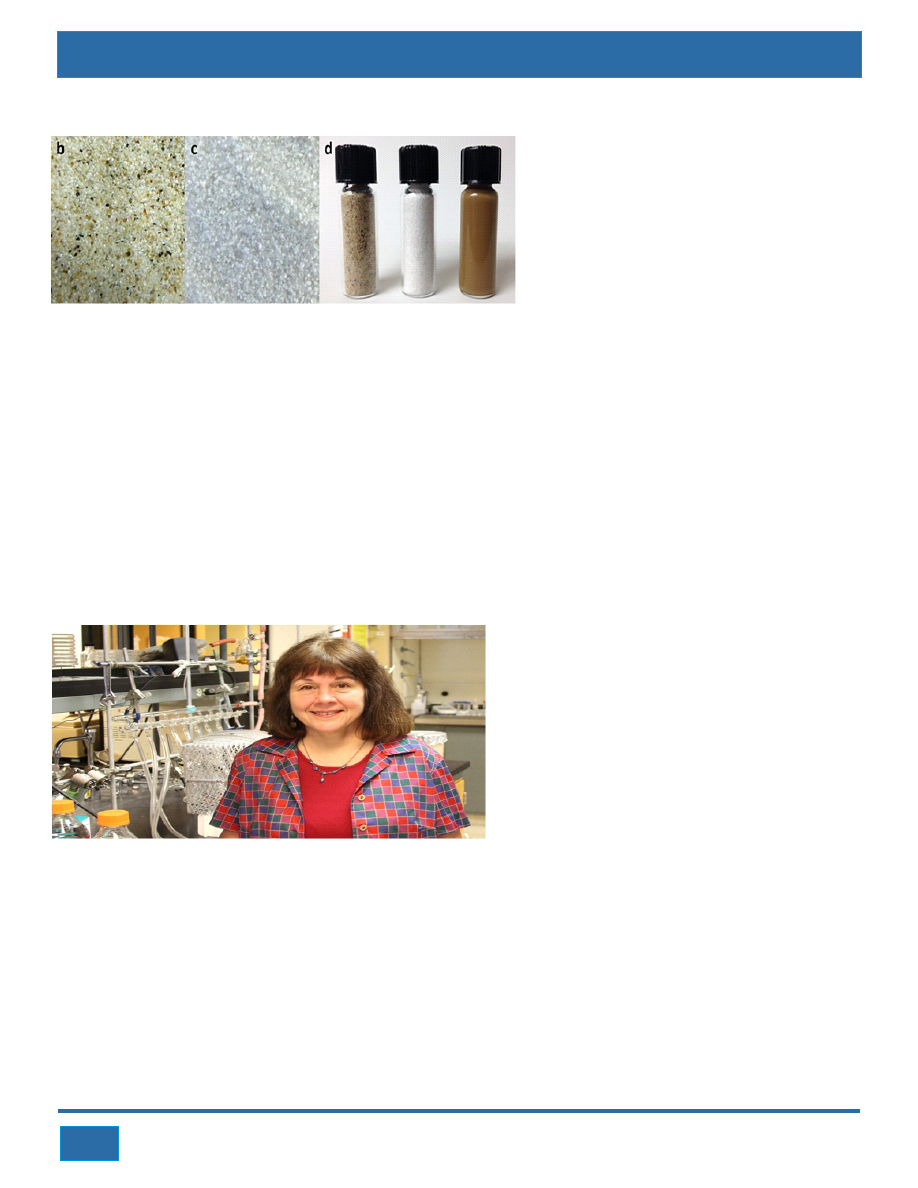
solve both these problems. They milled down the sand into the nanometer scale, followed by a series of purification steps
changing its color from brown to bright white, similar in color and texture to powdered sugar.
After that, they ground salt and magnesium, both very common elements found dissolved in sea water into the purified
quartz. The resulting powder was then heated. With the salt acting as a heat absorber, the magnesium worked to remove the
Department of Mechanical
Engineering, Faculty of Engineering, University
of Malaya
5
Technology Roundup
oxygen from the quartz, resulting in pure silicon. The team was pleased with how the process went. They also encountered
an added positive surprise. The pure nano-silicon
formed in a very porous 3-D silicon sponge like
consistency. That porosity has proved to be the
key to improving the performance of the batteries
built with the nano-silicon.
The improved performance could mean
expanding the expected lifespan of silicon-based
electric vehicle batteries up to 3 times or more,
which would be significant for consumers,
considering replacement batteries cost thousands
of dollars. For cell phones or tablets, it could mean having to recharge every three days, instead of every day. The findings
were just published in the journal Nature Scientific Reports.
The researchers from the University of Georgia has discovered direct conversion of switchgrass to fuel. The study
documents the direct conversion of biomass to biofuel without pre-treatment, using the engineered bacterium
Caldicellulosiruptor bescii.
Pre-treatment of the biomass feedstock, non-food crops such as switchgrass and miscanthus is the step of breaking down
plant cell walls before fermentation into ethanol. This pre-treatment step has long been the economic bottleneck hindering
fuel production from lignocellulosic biomass feedstocks.
The Team succeeded in genetically engineering the
organism C. bescii to deconstruct un-pretreated plant
biomass.The researcher who spent two and a half years
developing genetic methods for manipulating the C.
bescii bacterium to make the current work possible
explained that Giving a choice between teaching an
organism how to deconstruct biomass or teaching it
how to make ethanol, the more difficult part is
deconstructing biomass. The research group
engineered a synthetic pathway into the organism,
introducing genes from other anaerobic bacterium that
produce ethanol, and constructed a pathway in the
organism to produce ethanol directly.
Now, without any pretreatment, they can simply take switchgrass, grind it up, add a low-cost, minimal salts medium and get
ethanol out the other end, This is the first step toward an industrial process that is economically feasible. The recalcitrance of
plant biomass for the production of fuels, a resistance to microbial degradation evolved in plants over millions of years,
results from their rigid cell walls that have been the key to their survival and the major impediment to biofuel production. To
take a virtually unknown and uncharacterized organism and engineer it to produce a biofuel of choice within the space of a
few years is a towering scientific achievement of the team. Caldicellulosiruptor bacteria have been isolated around the
world-from a hot spring in Russia to Yellowstone National Park. The researchers described that systems biology allows for
the engineering of artificial pathways into organisms that allow them to do things they cannot do otherwise. Ethanol is but
one of the products the bacterium can be taught to produce. Others include butanol and isobutanol (transportation fuels
www.sciencedaily.com
Microbes Engineered for direct Conversion of Biomass to Fuel
3
6
Technology Roundup
comparable to ethanol), as well as other fuels and chemicals-using biomass as an alternative to petroleum. "This is really the
beginning of a platform for manipulating organisms to make many products that are truly sustainable.
Rotten Egg Gas Holds key to Healthcare Therapies
www.thehindu.com/sci-tech
It may smell of flatulence and have a reputation for being highly toxic, but when used in the right tiny dosage, hydrogen
sulfide is now being found to offer potential health benefits in a range of issues, from diabetes to stroke, heart attacks and
dementia. A new compound (AP39) could hold the key to future therapies, by targeting delivery of very small amounts of the
substance to the right (or key) places inside cells.
Scientists in Exeter (UK) have already found that the compound protects mitochondria the "powerhouse" of cells, which
drive energy production in blood vessel cells. Preventing or reversing mitochondrial damage is a key strategy for treatments
of a variety of conditions such as stroke, heart failure, diabetes and arthritis, dementia and aging. Mitochondria determine
whether cells live or die and they regulate inflammation. In the clinic, dysfunctional mitochondria are strongly linked to
disease severity.
"When cells become stressed by disease, they draw in
enzymes to generate minute quantities of hydrogen
sulfide. This keeps the mitochondria ticking over and
allows cells to live. If this doesn't happen, the cells die
and lose the ability to regulate survival and control
inflammation.
The researchers have exploited this natural process by
making a compound, called AP39, which slowly delivers
very small amounts of this gas specifically to the
mitochondria. The results indicate that if stressed cells
are treated with AP39, mitochondria are protected and
cells stay alive."
Although hydrogen sulfide is well known as a pungent,
foul-smelling gas in rotten eggs and flatulence, it is
naturally produced in the body and could in fact be a healthcare hero with have significant implications for future therapies for
a variety of diseases."
This research is being conducted in several models of disease, and pre-clinical results are promising. For example, in models
of cardiovascular disease, research shows that more than 80 per cent of the powerhouse mitochondria cells survive under
otherwise highly destructive conditions, if the AP39 is administered. Professors Whiteman and Wood are now working
towards advancing the research to a stage where it can be tested in humans.

7
Technology Roundup
Link Between Antibiotics, Bacterial Biofilms and Chronic Infections found
www.biomedox.com/
Solar Cells: Powered by Nanoholes
Researchers from the University of Southern California and the Oak Crest Institute of Science have discovered the link
between antibiotics and bacterial biofilm formation leading to chronic lung, sinus and ear infections.
This research addresses the long standing issues
surrounding chronic ear infections and why some children
experience repeated ear infections even after antibiotic
treatment, Once the biofilm forms, it becomes stronger
with each treatment of antibiotics. During the study, non-
typeable Haemophilus influenzae (NTHi) bacteria a
common pathogen of humans was exposed to non-lethal
doses of ampicillin, a class of antibiotics commonly used to
treat respiratory, sinus and ear infections, or other beta-
lactam antibiotics. The dose of the antibiotic was not
enough to kill the bacteria which allowed the bacteria to
react to the antibiotic by producing glycogen, a complex
sugar often used by bacteria as a food source, to produce
stronger biofilms when grown in the laboratory.
Biofilms are highly structured communities of
microorganisms that attach to one another and to surfaces.
The microorganisms group together and form a slimy,
polysaccharide cover. This layer is highly protective for the organisms within it, and when new bacteria are produced they
stay within the slimy layer. With the introduction of antibiotic-produced glycogen, the biofilms have an almost endless
food source that can be used once antibiotic exposure has ended.
There are currently no approved treatments for biofilm-related infections. Therefore, bacteria forced into forming stronger
biofilms will become more difficult to treat and will cause more severe chronic infections. Adults will suffer protracted
lung infections as the bacteria hunker down into their protective slime, and children will have repeated ear infections. What
may appear to be antibiotic resistance when an infection does not clear up may actually be biofilms at work.
The researchers believe that modern medicine needs to find ways of detecting and treating biofilm infections before the
bacteria are able to form these protective structures. The difficulties of treating biofilm infections, which can be up to 1,000
times more resistant to antibiotics, have prompted some physicians to propose a gradual move away from traditional
antibiotic treatments and toward non-antibiotic therapies.
A simple and inexpensive fabrication procedure boosts the light-capturing capabilities of tiny holes carved into silicon
wafers. Increasing the cost-effectiveness of photovoltaic devices is critical to making these renewable energy sources
competitive with traditional fossil fuels. One possibility is to use hybrid solar cells that combine silicon nanowires with
low-cost, photoresponsive polymers. The high surface area and confined nature of nanowires allows them to trap
significant amounts of light for solar cell operations. Unfortunately, these thin, needle-like structures are very fragile and
tend to stick together when the wires become too long.
The findings of research team from the A*STAR Singapore Institute of Manufacturing Technology and Nanyang

7
Technology Roundup
Technological University could turn the tables on silicon nanowires by improving the manufacturing of silicon 'nanoholes',
narrow cavities carved into silicon wafers that have enhanced mechanical and light-harvesting capabilities.
Nanoholes are particularly effective at capturing light because photons can ricochet many times inside these openings until
absorption occurs. Yet a practical understanding of how to fabricate these tiny structures is still lacking. One significant
problem is the control of the initial stages of nanohole formation , a crucial period that can often induce defects into the solar
cell. Instead of traditional time-consuming lithography, the researchers identified a rapid, 'maskless' approach to producing
nanoholes using silver nanoparticles. First, they deposited a nanometre-thin layer of silver onto a silicon wafer which they
toughened by annealing it using a rapid-burst ultraviolet laser. Careful optimization of this procedure yielded regular arrays
of silver nanospheres on top of the silicon surface, with sphere size and distribution controlled by the laser annealing
conditions.
Next, the nanosphere-silicon complex was immersed into a solution of hydrogen peroxide and hydrofluoric acid , a mixture
that eats away at silicon atoms directly underneath the catalytic silver nanospheres. Subsequent removal of the silver
particles with acid produced the final, nanohole-infused silicon surface. The team analyzed the solar cell activity of their
nanohole interfaces by coating them with a semiconducting polymer and metal electrodes. Their experiments revealed a
remarkable dependence on nanohole depth: cavities deeper than one micrometer showed sharp drops in power conversion
efficiency from a maximum of 8.3 per cent due to light scattering off of rougher surfaces and higher series resistance
effects.
Their simple process for making hybrid silicon nanohole devices can successfully reduce the fabrication costs which
impede the solar cell industry. In addition, this approach can be easily transferred to silicon thin films to develop thin-film
silicon-polymer hybrid solar cells with even higher efficiency."
Chemists at the Ruhr-University Bochum have made a decisive step towards more cost-efficient regenerative fuel cells and
rechargeable metal-air batteries. They developed a new type of catalyst on the basis of carbon, which can facilitate two
opposite reactions: electrolysis of water and combustion of hydrogen with oxygen. A catalyst of this kind might make the
storage of wind and solar energy and the manufacture of cost-efficient batteries, for example for electric cars, possible.
When energy is supplied, the so-called bi-functional catalysts can split water into hydrogen and oxygen- referred to as
electrolysis. They can then store the energy in the chemical bonds of the thus formed hydrogen. The same catalysts can also
have their polarity reversed to become fuel cells; they combust hydrogen with oxygen to water, generating electricity at the
same time. So far, researchers have been using noble-metal catalysts for this purpose. However, these catalysts have the
disadvantage of being either good for electrolysis or good for combustion, but not for both.
The novel catalysts from Bochum are made from manganese-oxide or cobalt-oxide nano particles which are embedded in
specially modified carbon, into which the researchers have integrated nitrogen atoms in specific positions. The team
analysed the catalysts using a number of spectroscopic and electrochemical methods. They have thus determined which
properties are essential for bi-functionality.
www.sciencedaily.com
Chemists Develop Novel Catalyst With Two Functions
Www.sciencedaily.com
8

Technology Roundup
National Events
International Events
International Conference on Local Representation of Power in South
Asia
www.gcu.edu.pk
National Software Engineering Conference (NSEC 2014)
www.nsec.mcs.edu.pk
CLT14 - 5th Conference on Language and Technology 2014
www.cs.dsu.edu.pk
International Conference on Management Research (ICMR) 2014
www.superior.edu.pk
International Conference on Nanoscience and Nanotechnology,
Colombo (ICNSNT 2014)"
www.nanoconference.co
rd
3 International Conference on Forensic Research and Technology
www.forensicresearch2014.conferenceseries.net
ICSTI 2014 General Assembly and Annual Conference
www.icsti.org
31st IASP World Conf. of the Int. Association of Science
www.medspring.eu
15-17 October, 2014
Lahore, Pakistan
11 - 12 November, 2014
Rawalpindi, Pakistan
05-07 November, 2014
Karachi, Pakistan
20 - 21 November, 2014
Lahore, Pakistan
12-13 August, 2014
6-8 October, 2014
San Antonio, USA
18-21 October, 2014
Tokyo, Japan
,
Colombo, Sri Lanka,
19-22 October, 2014
Doha, Qatar
8
Forthcoming Tech Events
99
Tech & Trade Offers
About PASTIC
PASTIC serves as a gateway for
Scientific & Technological
Information for R&D by
catering to the information
n e e d s o f r e s e a r c h e r s ,
entrepreneurs, industrialists,
educationists, policy makers
a n d p l a n n e r s t h r o u g h
anticipatory and responsive
information services.
T e c h n o l o g y I n f o r m a t i o n
Service Section of PASTIC
works exclusively for support
and promotion of technological
information on trade and
industry in the country.
“Technology Roundup” is a
news bulletin that provides
l a t e s t a n d i n n o v a t i v e
technology news, forthcoming
events, etc. It also promotes
products, technologies and
services globally in sectors
such as Agro-Industry, Bio-
Technology, Building Material,
B u s i n e s s , C h e m i c a l s ,
Electronics, Energy, Fisheries,
Food Processing, Machinery,
P a c k a g i n g , M i n i n g
Pharmaceuticals and Textiles.
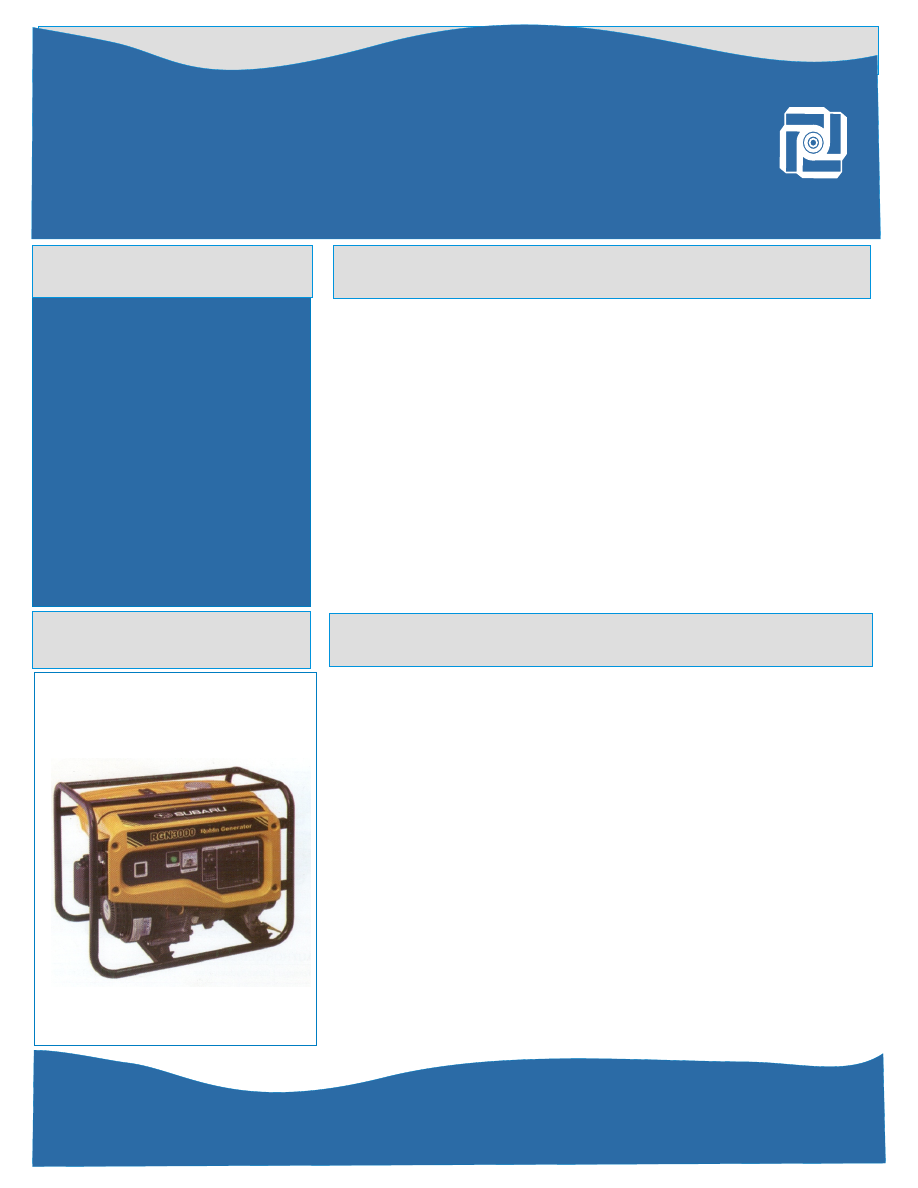
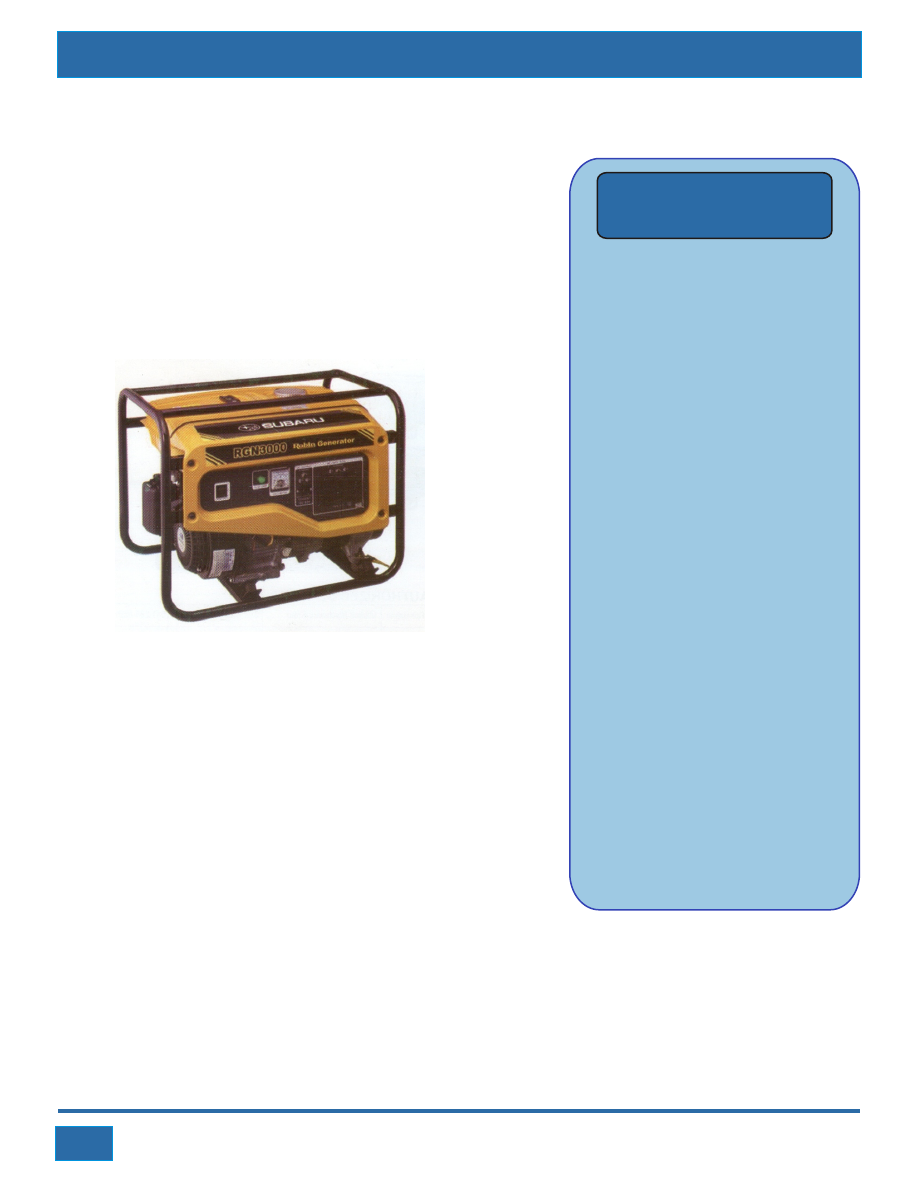
SUBARU
New RGN Series Robbin Generator
Optional Equipment
Electric Starter & Battery Frame
!
Hour Meter
!
4-Weel Kit
!
Life Hook
F
uel Tank Capacity
(i) 15.5 Litters
(ii) 23.5 Litters
(Make sure to fill below the “LEVEL” position for safety.)
Company Contact:-
MOSAK Consultant
M-1, Regent Plaza Hotel, Shahrah-e-Faisal Karachi
Phone No 021-35631262-6 Fax 35361267
Email: robin_mosak@yahoo.com
Technology Roundup
Please give us your feedback and address queries to editor@pastic.gov.pk
10