
Executive Editor
Prof. Dr. Muhammad Akram Shaikh
Director General, PASTIC
Managing Editors
Ms. Nageen Ainuddin
Dr. Saima Huma Tanveer
Editor
Dr. Syed Aftab Hussain Shah
Composer
Kashif Farooqui
T
ECHNOLOGY
R
OUNDUP
Technology Information Services Section (TIS)
Pakistan Scientific & Technological Information Centre
PASTIC
March-April, 2019
Vol.11 No 2
A NEWS BULLETIN
Tech News Headlines
Tech & Trade Offers
Phone: 051-9248103-4, 9248128
Fax: 051-9248113
Email: tis.pastic@gmail.com
Web: www.pastic.gov.pk
PASTIC National Centre
Quaid-i-Azam University Campus
P.O. Box 1217, Islamabad
Editorial Board
l
LTE and GPS based Deca Band Printed Antenna for Cellular
Mobile Handset Communication Applications
l
A Robust Color Image Watermarking Scheme using Chaos for
Copyright Protection
l
Imaging Method Reveals long-lived Patterns in Cells of the Eye
l
Fisheries Science and Management in the Face of Climate Change
l
Could Computer Games Help Farmers Adapt to Climate Change?
l
High-powered Fuel Cell Boosts Electric-Powered Submersibles,
Drones
l
Scientists print first 3D heart using patient's biological materials:
Engineered heart completely matches the immunological, cellular,
biochemical and anatomical properties of the patient
l
Deciphering the Walnut Genome
Forthcoming Tech Events
l
l
International Conference on Mechanical And Automobile
Engineering
International Academic Conference on Engineering Technology &
Innovations
l
l
l
l Wind Energy Science Conference 2019
l
l International Conference on Recent Innovations in Engineering
Technology
1st International Conference on Language, Literature and Culture
International Conference of Electrical and Electronics
Engineering
International Conference on Innovative Engineering Technologies
International Conference on Engineering & Technology
General Foundry
Engineering Works

Technology Roundup
2
LTE and GPS based Deca Band Printed Antenna for Cellular Mobile
Handset Communication Applications
Source:
A novel mobile phone antenna has been developed for radiations simultaneously in ten frequency bands for
applications of LTE (Long-Term Evolution), GPS (Global Positioning System), GSM (Global System for
Mobile Communications), PCS (Public and Commercial Services), DCS (Distributed Control System),
UMTS (Universal Mobile Telecommunications System) and WiMAX (Worldwide Interoperability for
Microwave Access).
The antenna demonstrates novel characteristics for resolving the challenge of simultaneous radiation
capabilities for the GSM and GPS applications with frequencies of 850/900 and 1575 MHz respectively,
along with resonances at frequency band of 700 MHz for LTE applications, 1800 and 1900 MHz for PCS and
DCS applications, 2100 MHz for UMTS applications, 2400 and 2500 MHz for LTE applications and 3300
MHz for WiMAX applications with S11 = - 6 dB matching criteria (VSWR 3:1). The antenna architecture
comprises top and bottom copper layers embedded with monopole radiating element, branch line, slots and
various stub lines. The desired operating bands are achieved in a compact area with overall dimensions of
0.8x60x120 mm for the height, width and length respectively of the antenna providing suitable platform for
mobile handset applications. Omni-directional radiation pattern characteristics are achieved throughout the
range of frequencies by designing the proposed antenna in monopole configuration.
Proposed antenna is fabricated and results for the surface currents, s-parameters and 3D (Three-
Dimensional) gain plots are illustrated for the proof of concept.
MOHANI, Syed Sheraz -ul- Hasan ; RAZA, Kamran . LTE and GPS based Deca Band Printed Antenna for
Cellular Mobile Handset Communication Applications. Mehran University Research Journal of Engineering
and Technology, 2019 38( 2) 313-320

Technology Roundup
3
A Robust Color Image Watermarking Scheme using Chaos for
Copyright Protection
Source:
A novel spatial domain symmetric color image robust watermarking scheme based on chaos is presented
in this research. An exponential growth in multimedia applications has led to fast adoption of digital
watermarking phenomena to protect the copyright information and authentication of digital contents. The
watermark is generated using chaotic logistic map and optimized to improve inherent properties and to
achieve robustness. The embedding is performed at 3 LSBs (Least Significant Bits) of all the three color
components of the host image. The sensitivity of the chaotic watermark along with redundant embedding
approach makes the entire watermarking scheme highly robust, secure and imperceptible.
In this paper, various image quality analysis metrics such as homogeneity, contrast, entropy, PSNR (Peak
Signal to Noise Ratio), UIQI (Universal Image Quality Index) and SSIM (Structural Similarity Index
Measures) are measured to analyze proposed scheme. The proposed technique shows superior results
against UIQI. Further, the watermark image with proposed scheme is tested against various image-
processing attacks.
The robustness of watermarked image against attacks such as cropping, filtering, adding random noises
and JPEG compression, rotation, blurring, darken etc. is analyzed. The proposed scheme is symmetric;
therefore, reversible process at extraction requires successful extraction of embedded watermark.
ASIF KHAN, Muhammad et al. A Robust Color Image Watermarking Scheme using Chaos for
Copyright Protection. Mehran University Research Journal of Engineering and Technology,
2019 Volume 38(2), 361-378
.
4
Technology Roundup
Imaging Method Reveals long-lived Patterns in Cells of the Eye
Source:
www.nih.gov/news-events/news-releases/imaging-method-reveals-long-lived-patterns-cells-eye
Fisheries Science and Management in the Face of Climate Change
Technique could aid early detection and treatment of certain eye diseases.
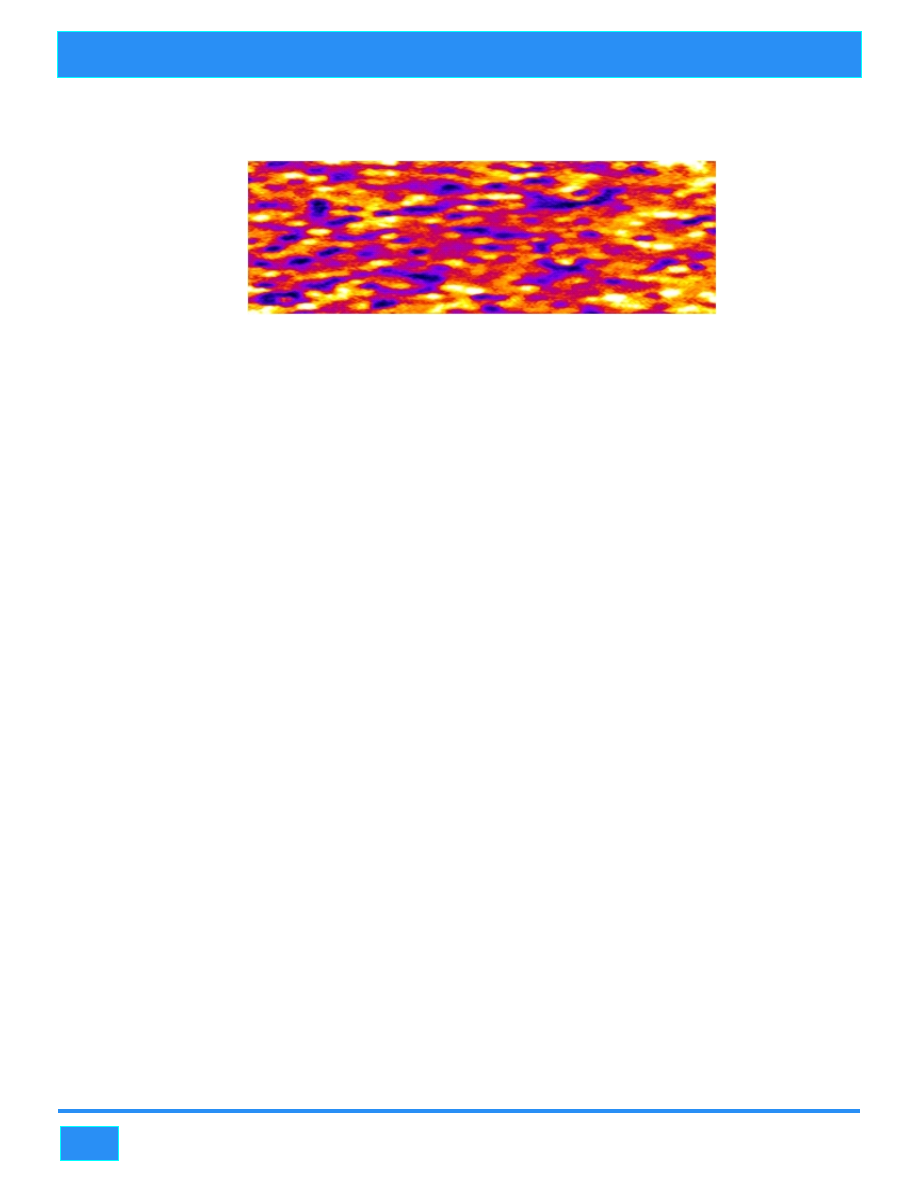
Mosaic of retinal pigment epithelial cells.Johnny Tam, Ph.D., NEI
Cells of the retinal pigment epithelium (RPE) form unique patterns that can be used to track changes in this
important layer of tissue in the back of the eye, researchers at the National Eye Institute (NEI) have found. Using a
combination of adaptive optics imaging and a fluorescent dye, the researchers used the RPE patterns to track
individual cells in healthy volunteers and people with retinal disease. The new finding could provide a way to
study the progression and treatment of blinding diseases that affect the RPE.
This study is proof-of-concept that we can use a fluorescent dye to reveal this unique fingerprint of the RPE, and to
monitor the tissue over time. The RPE is a cell layer that lies next to and maintains the health of the retina's light-
sensing photoreceptors. Because the cells contain pigment, and thus absorb incoming light, the thin layer of RPE
tissue is difficult to image. Even using adaptive optics, a specialized imaging technology that can distinguish
individual cells in the eye visualizing the RPE layer was found challenging.
This is to note that while the dye fades from the blood vessels quickly, within about thirty minutes, the dye persists
in the RPE for several hours, revealing a fluorescent mosaic pattern, with some cells appearing more brightly and
others more dimly. Software was designed to recognize RPE patterns and then computing changes that occur from
one imaging session to the next. For healthy volunteers, there was very little change in the RPE over several
months, with the vast majority of the cells retaining a stable amount of ICG staining.
This study uses adaptive optics imaging, it would be possible in future to image this RPE mosaic pattern with
conventional imaging methods. Being able to visualize this pattern over time will help researchers better
understand how the RPE layer changes over time, and eventually help guide the development of new treatments to
prevent damage to or repair the RPE.
A new report from National Oceanic and Atmospheric Administration (NOAA, an American scientific agency)
identifies fisheries challenges and recommendations to better detect, understand, assess, and manage shifting
distributions and changing productivity of marine species with changing climate and ocean conditions.

3
5
Technology Roundup
Climate-ready fisheries management process.
Researchers from Sweden and Finland have developed the interactive web-based Maladaptation Game, which
can be used to better understand how Nordic farmers make decisions regarding environmental changes and how
they negotiate the negative impacts of potentially damaging decisions. Web-based gaming, such as simulation
games, can promote innovative communication strategies that engage farmers with scientific research and help
them adapt to climate change.
Shifts in species distributions and changes in productivity present challenges for fisheries management. As
ocean temperatures warm, species move to remain within their preferred temperature ranges. These shifts may
cross fishery management boundaries and impact where fishermen have to go to find their catch. Additionally,
changes in climate, ocean, and ecosystem conditions can impact species' vital rates. This could lead to changes in
stock productivity and the amount of fish available to be caught.
To help address the numerous challenges facing fisheries management under changing climate and ocean
conditions, NOAA Fisheries is working to increase the production, delivery, and use of climate and
environmental information to fulfill the agency's living marine resource stewardship mandates as called for in
the National Climate Science Strategy, Ecosystem-Based Fisheries Management Road map, and Implementing a
Next Generation Stock Assessment Enterprise.
The new development by a team of scientists from across the United States identifies recommendations to
strengthen six key steps in the science-to-management process. If enacted at appropriate regional and national
levels, these recommendations would help better prepare for, and respond to, shifting distributions and changing
productivity of marine fish stocks. These initiatives can be equally fruitful for the fisheries sector of Pakistan.
1.
Detect and anticipate changes.
2.
Understand key drivers of changes.
3.
Evaluate priorities and risks.
4.
Conduct assessments and develop forecasts.
5.
Communicate scientific advice to management.
6.
Manage fisheries under changing conditions.
Source:
w w w. f i s h e r i e s . n o a a . g o v / f e a t u r e - s t o r y / f i s h e r i e s - s c i e n c e - a n d - m a n a g e m e n t - f a c e - c l i m a t e -
change?utm_medium=email&utm_source=govdelivery
Could Computer Games Help Farmers Adapt to Climate Change?

6
Technology Roundup
Methods employed to tackle climate change, such as, for example, improving drainage systems to cope with
increased levels of precipitation, are known as adaptation strategies. "Maladaptation" is the implementation of
poor decisions or methods that were initially considered beneficial, but which could actually increase people's
vulnerability in the future. Tested on stakeholders from the agricultural sector in Sweden and Finland, the
Maladaptation Game presents the player with four agricultural challenges: precipitation, temperature
increase/drought, longer growing seasons and increased risk of pests and weeds. For each challenge, the player
must make a strategic decision based on the options given. At the end, the player receives a summary of the
potential negative outcomes based on their decisions.
"While we observed that the conceptual thinking of the game sometimes clashes with the players' everyday
experiences and practice, we believe gaming may function as an eye-opener to new ways of thinking. Serious
games should be designed to include elements of thinking and sharing, which will stimulate reflection and
discussion among stakeholders.
Source:
www.sciencedaily.com/releases/2019/04/190418101614.html
High-powered Fuel Cell Boosts Electric-Powered Submersibles, Drones
Source:
www.sciencedaily.com/releases/2019/02/190225123459.html
A high-powered fuel cell has been developed that operates at double the voltage of today's commercial fuel cells.
It could power underwater vehicles, drones and eventually electric aircraft at a significantly lower cost.
This is an artistic representation of the pH-gradient enabled microscale bipolar interface (PMBI) created by Vijay
Ramani and his lab. The two layers that make up the interface are covering the third bottom layer, which is the
electrode with palladium particles on it. The submarine and drones are envisioned applications of the direct
borohydride fuel cell which incorporates the PMBI. Credit: McKelvey School of Engineering
This advancement using a unique pH-gradient-enabled microscale bipolar interface (PMBI), could power a
variety of transportation modes -- including unmanned underwater vehicles, drones and eventually electric
aircraft -- at significantly lower cost.
This technology allows us to run this fuel cell with liquid reactants and
products in submersibles, in which neutral buoyancy is critical. This
technology also allows us applying it in higher-power applications such
as drone flight. The fuel cell developed at Washington University uses an
acidic electrolyte at one electrode and an alkaline electrolyte at the other
electrode. Typically, the acid and alkali will quickly react when brought in
contact with each other.
The key breakthrough is the PMBI, which is thinner than a strand of
human hair. Using membrane technology developed at the McKelvey
Engineering School, the PMBI can keep the acid and alkali from mixing,
forming a sharp pH gradient and enabling the successful operation of this system.
After development of PMBI, fuel cell device was optimized and the best operating conditions were identified to
achieve a high-performance fuel cell. It has been a tremendously challenging and rewarding pathway to
developing the new ion-exchange membranes that has enabled the PMBI.”
7
Technology Roundup
Scientists Print first 3D Heart using patient's Biological Materials:
Engineered Heart completely matches the Immunological, Cellular,
Biochemical and Anatomical Properties of the Patient
Source
www.sciencedaily.com/releases/2019/04/190415102242.html
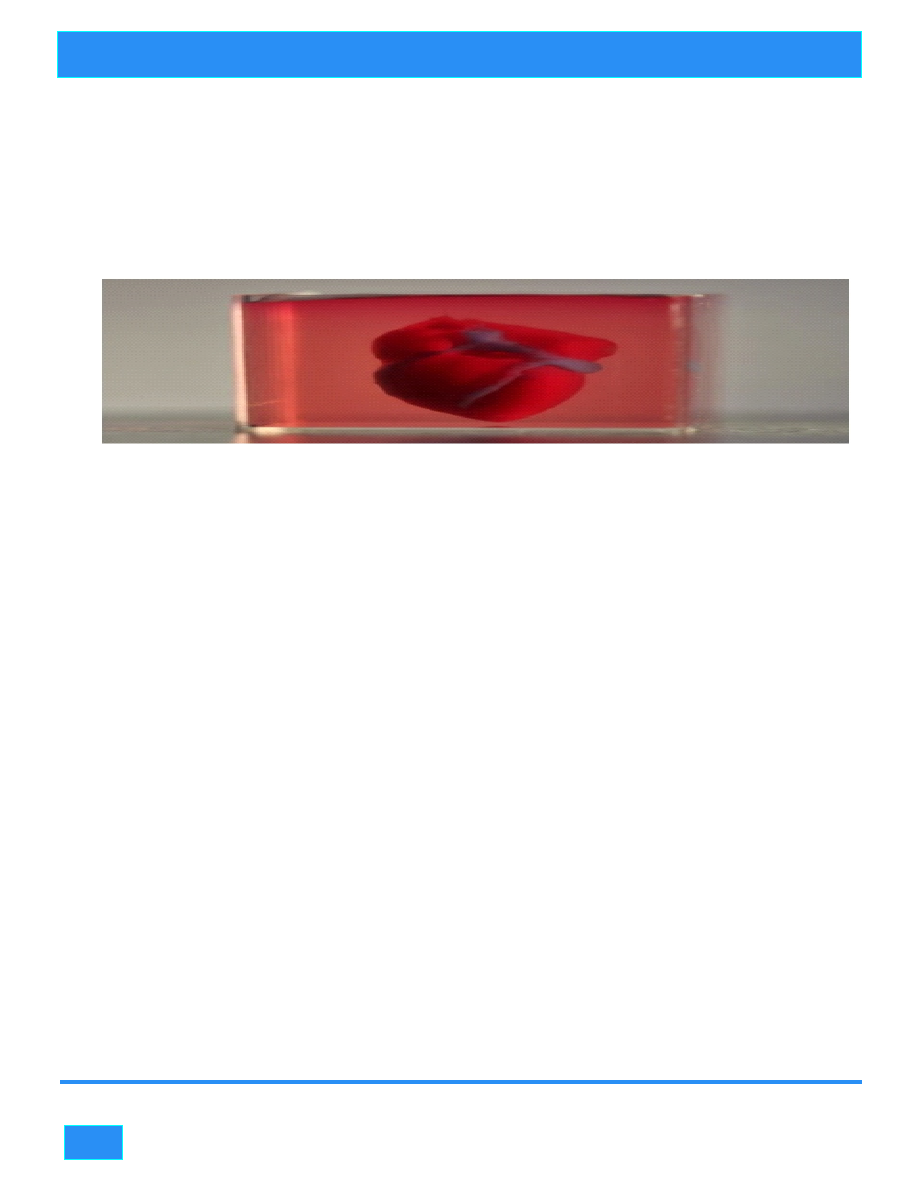
In a major medical breakthrough, researchers have 'printed' the world's first 3D vascularised engineered heart
using a patient's own cells and biological materials.
A 3D-printed, small-scaled human heart engineered from the patient's own materials and cells. Credit:
Advanced Science. © 2019 The Authors.
Until now, scientists in regenerative medicine -- a field positioned at the crossroads of biology and technology -
- have been successful in printing only simple tissues without blood vessels. This is the first time anyone
anywhere has successfully engineered and printed an entire heart replete with cells, blood vessels, ventricles
and chambers.
This heart is made from human cells and patient-specific biological materials. In this process these materials
serve as the bioinks, substances made of sugars and proteins that can be used for 3D printing of complex tissue
models. The results demonstrate the potential of adopting approach for engineering personalized tissue and
organ replacement in the future. The size of this 3D heart is small but improvements are possible as larger
human hearts require the same technology
For the research, a biopsy of fatty tissue was taken from patients. The cellular and a-cellular materials of the
tissue were then separated. While the cells were reprogrammed to become pluripotent stem cells, the
extracellular matrix (ECM), a three-dimensional network of extracellular macromolecules such as collagen
and glycoproteins, were processed into a personalized hydrogel that served as the printing "ink."
After being mixed with the hydrogel, the cells were efficiently differentiated to cardiac or endothelial cells to
create patient-specific, immune-compatible cardiac patches with blood vessels and, subsequently, an entire
heart. The use of "native" patient-specific materials is crucial to successfully engineering tissues and organs.
The biocompatibility of engineered materials is crucial to eliminating the risk of implant rejection, which
jeopardizes the success of such treatments. The researchers are now planning on culturing the printed hearts in
the lab and "teaching them to behave like hearts. They then plan to transplant the 3D-printed heart in animal
models. The cells need to form a pumping ability; they can currently contract, but we need them to work
together. The possibility exists that in ten years, there will be organ printers in the finest hospitals around the
world, and these procedures will be conducted routinely.
:
7
Technology Roundup
78
Decip
ng the Walnut
me
heri
Geno
our
S
ce:
ww .usda-ars-
m s-@sub cribers.usda.gov
w
co m
s
I
new s ud , a t
of s ien i s at the Un versity of al forni
Davi a
SDA' A r cultu al esearch
n a
t
y
eam
c
t st
i
C i
a,
s, nd U
s g i
r
R
er ce ARS
ed
uni ue approach o equ
t
genomes of t
Engli h walnut and it ild
orth
S vi
(
) us
a
q
t s
ence he
he
s
s w
N
mer can relative by tapping i o the capabil ties of two tat of-t
art tech
og es: ong-read D A
A
i
nt
i
s
e-
he-
nol
i
l
N
equ
ng
opt cal genome mapping. The resul ing geno e seque
e
ieved to be o the highest
s
enci
and
i
t
m
nces ar bel
f
qu ity ever ass
b ed of y oo
enn al.
al
em l
an w
dy per
i
This approach co d
applied to enom sequencing of tr
and many her woody
en als opening the
ul be
g
e
ees
ot
per
ni
,
door o a bet er understand ng of th ge
ic uep int of al ond , pecans, pis achios d r
t
t
i
e net bl
r
s
m
s
t
an g apes.
ik w nu , hese ot
crops na ural y cr
-poll nate an are herefor highl v iabl
Vari
lity as
L e al
t t
her
t
l
oss
i
d
t
e
y ar
e.
abi
h
alw
g eatl
pli
ed ou abil t o produce a high-quality genome s quence for uc
ops, but t
ays r
y com
cat
r
i y t
e
s
h cr
hese
new tech
og es now make i possib e.
nol
i
t
l
The assem ed genome s quences f the two walnut pec es so w ll now
lp resear
i ent fy enet c
bl
e
o
s
i
al
i
he
chers d
i
g
i
m ke s t
breeders can u e t vel
vari i
wi h i proved pathogen and pest esis ance.
ar
r hat
s o de
op new
et es t
m
r
t

Technology Roundup
Technology Roundup
National
International Conference on Mechanical And Automobile Engineering
International Academic Conference on Engineering Technology &
Innovations
29-30th May, 2019
Rawalpindi
www.allconferencealert.net/eventdetails-arda.php
www.academicsworld.org/Conference2019
1st International Conference on Language, Literature and Culture
www.academicsworld.org/Conference2019/Pakistan/1/ICLLC/
International Conference on Innovative Engineering Technologies
International Conference on Engineering & Technology
www.wrfconference.com/event/index
Wind Energy Science Conference 2019
www.wesc2019.org
International Conference of Electrical and Electronics Engineering
www.10times.com/conference-electrical-electronics
International Conference on Recent Innovations in Engineering and Technology
www.theiier.org/Conference2019/UAE/6/ICRIET/
28-29 June, 2019
Rawalpindi
28-29 June, 2019
Rawalpindi
28-29 July, 2019
Rawalpindi
www.theires.org/Conference2019/Pakistan/1/ICIET/
International
st
nd
1 -2 June, 2019
New York USA
17-20 June, 2019
Cork Irland
03-05 July 2019
London UK
1-2 September, 2019
United Arab Emirates
Forthcoming Tech Events
9
Tech & Trade Offers
About PASTIC
PASTIC serves as a gateway for
Scientific & Technological
Information for R&D by catering
to the information needs of
researchers, entrepreneurs,
industrialists, educationists,
policy makers and planners
t h r o u g h a n t i c i p a t o r y a n d
responsive information services.
T e c h n o l o g y I n f o r m a t i o n
Section works exclusively for
support and promotion of
technological information on
trade and industry in the
country. “Technology Roundup”
is a news bulletin that provides
latest and innovative technology
news, forthcoming events, etc. It
a l s o p r o m o t e s p r o d u c t s ,
technologies and services
globally in sectors such as Agro-
Industry, Bio-Technology,
Building Material, Business,
Chemicals, Electronics, Energy,
Fisheries, Food Processing,
Machinery, Packaging, Mining
Pharmaceuticals and Textiles.
General Foundry Engineering
Works
Mian Sansi Puli Near Siddique Sadiq Hospital,
Sheikhupura Road,
Gujranwala - Pakistan
Cell: +92 323-8106072, 0323-8106073
Phone number 055-4272862
It was 1958 when General Foundry started its business activities in Gujranwala
City in the supervision of Haji Abdul Aziz Batalvi as the founder of the
Company.
For all kinds of iron cost/dies and machinery parts or any queries, Kindly
refer to our contact details.
At a time of rapid change, sudden
alternations and constant progress,
it was essential to be able to react
effectively. Close cooperation,
excellent service and rst class
quality has always format the basis of
this company. Over the years its has
built a reputation for total service
in the industry. Now in the year
2018 after 60 years of continuous
hard work, General Foundry is the
most reliable company having
SBU’ s in casting products in the
city. General Foundry is serving to
repute his clients by providing best
quality and reliable delivery with long-term experience. General Foundry
has skilled labor for the work to be done & engaged in the manufacturing
of following types of quality casting products. Crucibles for melting
Aluminum, Zinc & Led.
Technology Roundup
Please give us your feedback and address queries to tis.pastic@gmail.com
10