
Executive Editor
Prof. Dr. Muhammad Akram Shaikh
Director General, PASTIC
Managing Editors
Ms. Nageen Ainuddin
Dr. Saima Huma Tanveer
Editor
Dr. Syed Aftab Hussain Shah
Composer
Kashif Farooqui
T
ECHNOLOGY
R
OUNDUP
Technology Information Services Section (TIS)
Pakistan Scientific & Technological Information Centre
PASTIC
May-June, 2019
Vol.11 No 3
A NEWS BULLETIN
Tech News Headlines
Tech & Trade Offers
Phone: 051-9248103-4, 9248128
Fax: 051-9248113
Email: tis.pastic@gmail.com
Web: www.pastic.gov.pk
PASTIC National Centre
Quaid-i-Azam University Campus
P.O. Box 1217, Islamabad
Editorial Board
l
Performance Analysis of Fiber Wireless Solution in Passive
Optical/Copper Restrained Areas
l
Assessment of Sustainable Groundwater Extraction rate for Quetta
City using Modflow
l
Innovative Technique uses Sensory Nanoparticles to Detect Disease
l
Producing Electricity at Estuaries using Light and Osmosis
l
Researchers 3D Print Wearable Mesh that can function as Flexible
Medical Braces
l
Predictive Machinery Monitoring Nips problems in the Bud
l
Bringing Tech and Agronomy Together
l
Scientists Develop new, rapid Test to Diagnose Bacterial Lower
Respiratory Tract Infections
Forthcoming Tech Events
l
International Conference on Innovative Engineering Technologies
l National Conference on Water and Environment
l International Conference on Arts, Education and Social Science
l International Conference on Science, Engineering & Technology
l International Conference on Recent Innovations in Engineering and
Technology
l International Conference on Researches in Science and Technology
l International Conference on Engineering &
Technology
l International Conference on Science & Technology & Management
SOLUTION
MOBILITY
Technology Roundup
2
Performance Analysis of Fiber Wireless Solution in Passive
Optical/Copper Restrained Areas
Source:
Muhammad Naeem* Abdul Latif, Imran Ali Qureshi, Telecommunication Engineering Dept. Mehran
University of Engineering & Technology Jamshoro Pakistan, Erum Saba Information Technology Dept.
Sindh Agriculture University Tando Jam Pakistan. International Journal of Electrical Engineering &
Emerging Technology, 2019 Vol. 02(1) 28-34.
Assessment of Sustainable Groundwater Extraction Rate for Quetta
City Using Modflow
With the rapid rise of optical fiber access technologies, a new networking form is emerging called fiber-
wireless (Fi-Wi). Wireless part is used where laying-out of fiber is not feasible economically and its operation
and maintenance is problematic. Fi-Wi offers high quality and reliability, better coverage, high signal- to-
noise ratio, low maintenance and less time required for deployment.
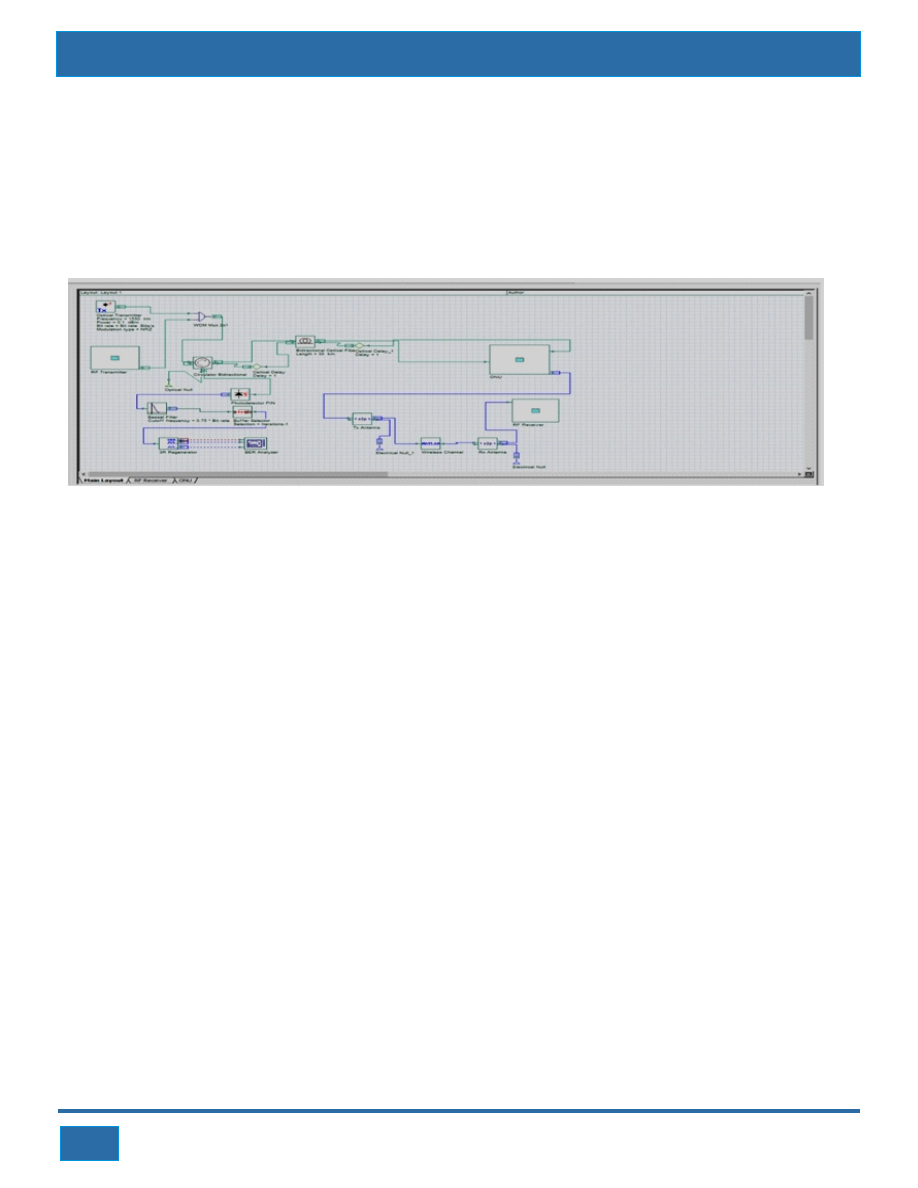
Figure1: Fi-Wi simulation set up
Fi-Wi set up was simulated and analyzed QoS parameters offered by the solution. The results were compared
with access network with fiber only (PON). The proposed Fi-Wi system was simulated with data rates of 1 to
5 Gbps modulated by RF signal, for frequency range of 71-76 GHz, over varying fiber lengths. The
simulation was evaluated using variable data rates, diverse fiber lengths and varying optical launch powers
and their impact on bit error rate (BER) and Q-factor. Simulation results show that this type of network can
provide high data rate services to customers with minimum BER and high SNR values. The signals were
successfully transmitted from 1 Gbps to 3.5 Gbps at the customer premises with acceptable levels of signal
quality, eye opening, Q factor and BER. Simulation results demonstrated that F-Wi networks can be used to
provide multimedia and other high data rate demanding services in the areas where optical fiber cannot be
extended. Moreover, Fi-Wi system gives comparable results in the last mile section against access network
based on PON or Copper.
Quetta is the largest population center in Baluchistan province. Its population entirely depends upon the
groundwater. The increasing population of the city and unplanned use have depleted water table in the recent
decades
Technology Roundup
3
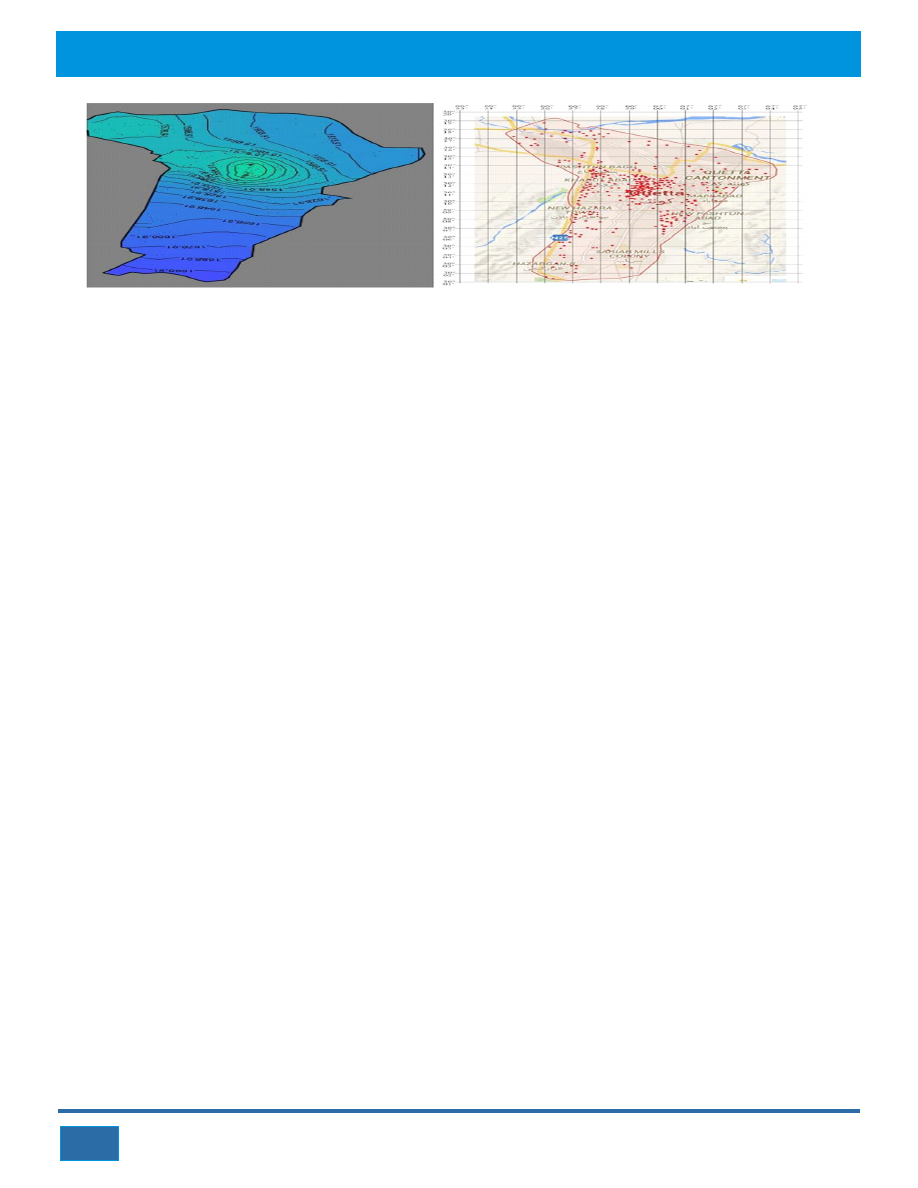
Figure 2: Water Table Profile (m) in the year of 2014
USGS groundwater flow model MODFLOW (MODFLOW Pro) was applied for the Quetta city to
simulate the behavior of aquifer under stresses. The model solves partial differential groundwater flow
governing equation by finite difference method. The data regarding groundwater levels, tube wells,
pumping rates and aquifer parameters etc. were collected from Water and Power Development Authority
(WAPDA). The data showed that the abstraction rate for the city has increased from 32.25 MGPD to
57.76 MGPD over 20 years. The model was calibrated and validated for the available data. Data from year
1995 to 1999 was used for calibration and from 2000 to 2005 for validation. The water balance showed
that 20% of the total precipitation was ultimately going to the groundwater as recharge. It was observed
from the model results that the water table under Quetta city has declined at the average rate of 0.91
m/year since 1995 to 2014. The Vermont Storm Water Management (VSWM) method of volume
recharge was used to calculate the fraction of recharge that is retained by the imperviousness caused by
the urbanization of the city. This fraction comes out to be 0.6 MGPD to 2.9 MGPD per year, depending
upon the amount of precipitation and the amount of imperviousness for the same year.
The water budget calculated by the model showed that the average recharge per year in the study period
was 37.04 MGD and the average abstraction from the aquifer was 84.20 MGD, so there was annual deficit
of 47.11MGD. The inflow through the boundaries was increasing with the passage of time due to fall of
head inside the model area, whereas the outflow through the boundaries was almost zero during the study
period because of higher heads outside the model boundary.
The model was then used to predict different future scenarios by giving the same average recharge rates
and varying abstraction rates, in order to predict the future behavior of the aquifer.
In order to cope with the water scarcity issue, following recommendations are proposed by the authors:
All wells data should be recorded at fixed intervals.
All possible measures should be taken to reduce the rate of abstraction.
As the only source of groundwater recharge is precipitation so delay actions dams should be
constructed to increase the recharge
Care should be taken in urban planning to design depressions for rain water to infiltrate
Agricultural use of groundwater should be reduced in the valley
Provision of infiltration galleries
Studies should be conducted to see opportunities of importing water from external source outside
the valley i.e. Ziarat, Zarghoon Mountains or Bolan etc.
Source: Abdul Ghani, Zulfiqar Ali Chaudary, Habib-Ur-Rehman, Aftab H. Azhar, Muhammad Masood.
Assessment of Sustainable Groundwater Extraction Rate for Quetta City using Modflow. Pakistan
Journal of Engineering and Applied Sciences . 2019 Vol. 24(1) 1-10

4
Technology Roundup
Innovative Technique uses Sensory Nanoparticles to Detect Disease
Source:
www.sciencedaily.com/releases/2019/06/190617071716.html
Producing Electricity at Estuaries using Light and Osmosis
Like dipping a donut hole in powdered sugar, nanoparticles collect a unique coating of proteins from the blood. In
a new study, researchers present a nanoparticle sensor array that they are developing as an early detection test for
cancer and other diseases.
It has been shown that biomolecules in the blood of healthy individuals and patients form various corona profiles
around nanoparticles. Like dipping a donut hole in powdered sugar, nanoparticles collect a unique coating of
proteins from the blood. The Scientists further provide an evidence that these coronas are personalized and
precise, with different compositions or patterns in people with cancers. They have developed a sensor array that
has been tested on blood samples, both from people diagnosed with five different types of cancer as well as
purportedly healthy people who went on to have a cancer diagnosis several years later. The goal is to develop an
early detection test that could be used in the clinic to identify those at risk of cancer and other diseases.
Researchers are working on a technology to exploit osmotic energy -- a source of power that's naturally available
at estuaries, where fresh water comes into contact with seawater. In a laboratory experiment, the team reproduced
the real-world conditions that occur where rivers meet the sea (pH and salt concentration) and showed that, by
shining light on a system comprising salt, water and a membrane three atoms thick, it was possible to optimize
electricity production.
Example of an estuary, in Maine (stock image).Credit: © mandritoiu / Adobe Stock
Most renewable power technologies are weather dependent. Wind farms can only operate when there's a breeze,
and solar power plants rely on sunlight.
Osmosis is a natural process whereby molecules migrate from a concentrated to a more dilute solution across a
semi-permeable membrane in order to balance the concentrations. At river estuaries, electrically charged salt ions
move from the salty seawater to the fresh river water. The idea is to harness this phenomenon to generate power.
Under the effect of light, the system produces twice as much power as it does
in the dark.
The addition of light means the technology has moved one step closer to real-world application. The system
involves two liquid-filled compartments, at markedly different salt concentrations, separated by a molybdenum
disulfide (MoS2)
membrane. In the middle of the membrane is a nanopore -- a tiny hole between three and ten
nanometers (one millionth of a millimeter) in diameter.
Every time a salt ion passes through the hole from the high- to the low-concentration solution, an electron is
transferred to an electrode, which generates an electric current.
3
5
Technology Roundup
The system's power generation potential depends on a number of factors -- not least the membrane itself, which
needs to be thin in order to generate maximum current. The nanopore also has to be selective to create a potential
difference (a voltage) between the two liquids, just like in a conventional battery. The nanopore allows positively
charged ions to pass through, while pushing away most of the negatively charged ones.
The system is finely balanced. The nanopore and the membrane have to be highly charged, and multiple
identically sized nanopores are needed, which is a technically challenging process. The challenge remains to
scale up production of the membrane, addressing a range of challenges such as optimal pore density.
Source:
www.sciencedaily.com/releases/2019/05/190523111359.html
Researchers 3D Print Wearable Mesh that can function as Flexible Medical
Braces
Source:
www.technologynetworks.com/cell-science/news/flexible-mesh-3d-printed-for-ankle-and-knee-braces-
320920
3D printing has enabled the production of medical devices tailored to a patient's needs but, often, they are made
using solid and inflexible materials. As a result, these devices restrict movement; using them can be inconvenient
and uncomfortable. Moreover, they are not ideal to support the recovery of joints and muscles, which are more
complex and nonlinear. Recently, engineers from MIT demonstrated 3D-printed mesh materials that offer
support for softer tissues.
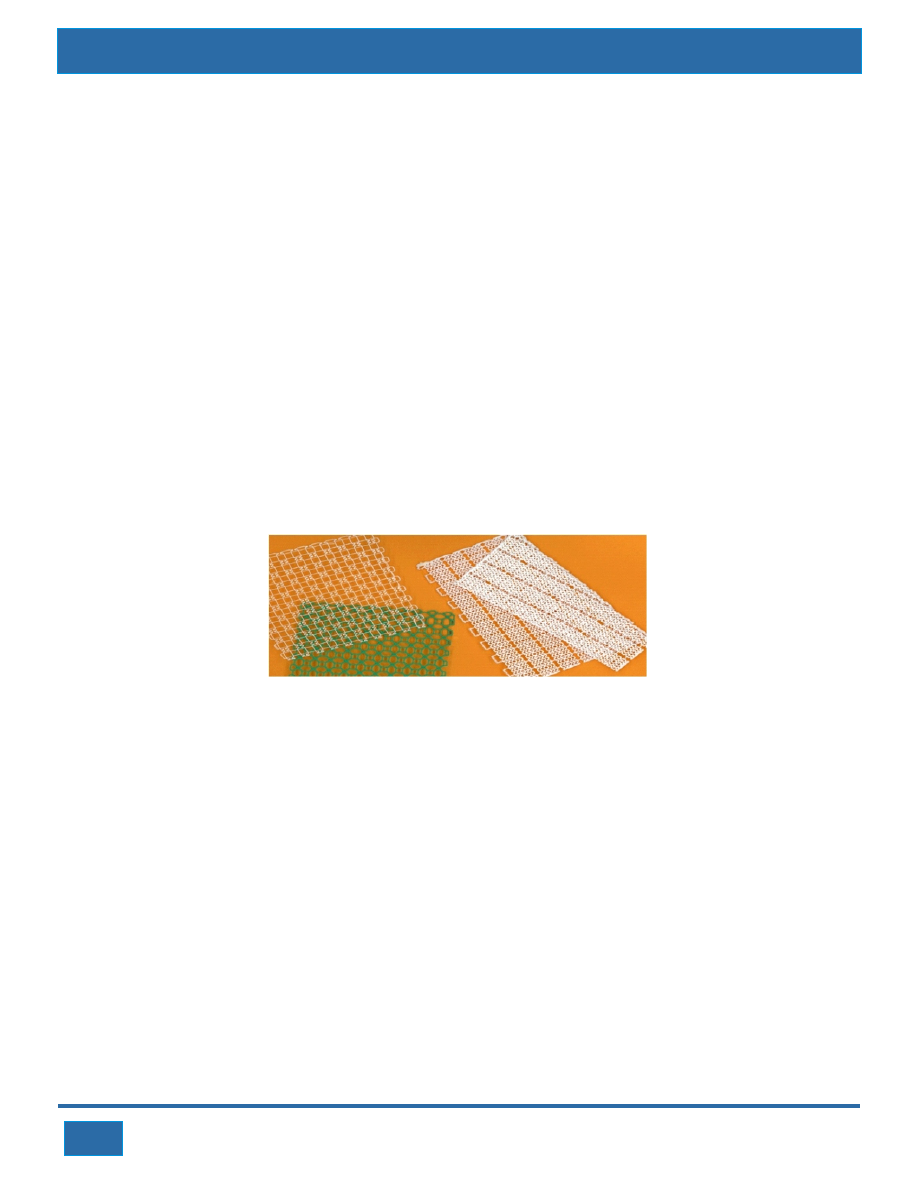
3-D-print stretchy mesh, with customized patterns designed to be flexible yet strong, for use in ankle and knee
braces. Image credit: Felice Frankel
The flexible meshes were inspired by fabrics and collagen, the protein in the body that make up connective
tissues. The materials were designed keeping in view the molecular structure of collagen. The wavy patterns
were created and 3D-printed using thermoplastic polyutherine. A mesh configuration was fabricated having
stretchy, tough, and pliable like fabric.
To test, long strips of mesh were printed and attached them on the outside of the ankle of several healthy
volunteers. An ankle stiffness measurement robot was used, which is aptly named Anklebot, to examine how the
mesh affected movement in different directions. It was observed that the material increased the ankle's stiffness
during inversion, a common cause of injury, but had no effect to movement in other directions.
The researchers also fabricated a knee brace design that conforms to a patient's knee even as it bends and a glove
that conforms to the wearer's knuckles to prevent involuntary clenching following a stroke. The researchers also
discussed the potential of the 3D-printed flexible mesh as an implantable device to support hernia. These 3D-
printed mesh can be used in a variety of ways to make all kind of devices that interface the human body..
6
Technology Roundup
Predictive Machinery Monitoring Nips problems in the Bud
Source:
www.graincentral.com/machinery/predictive-machinery-monitoring-nips-problems-in-the-bud/
NEW machinery monitoring technology that provides real-time data on a tractor or harvester's 'health' is helping
farmers and their service providers identify emerging problems and nip them in the bud before they become full-
blown issues.
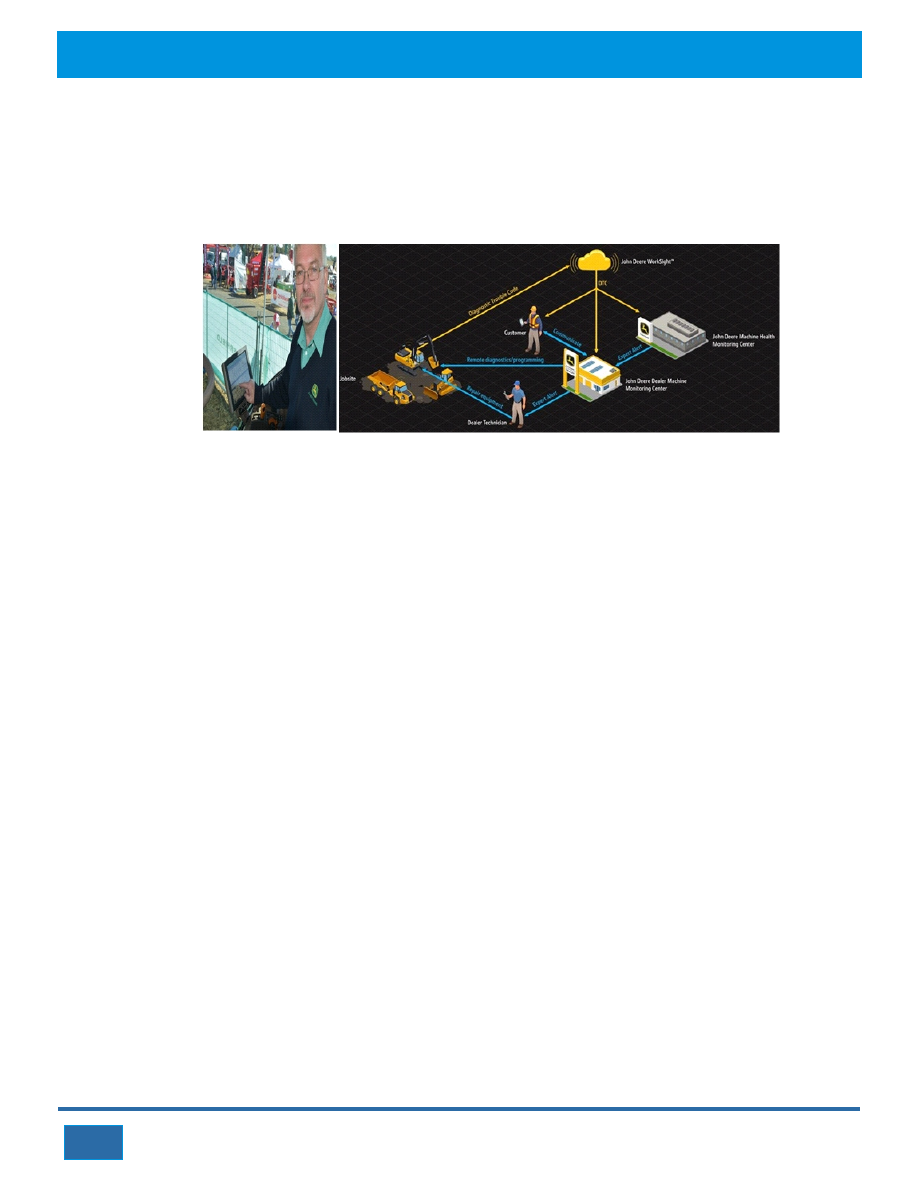
Vanderfield technical support and training specialist, Richard Harris, operates the Connected Support system on a
new John Deere tractor at CRT FarmFest 2019. (Photo: Jim Booth)
Drawing on algorithms that combine the machine's history and current performance indicators, John Deere's
Connected Support remote-monitoring system keeps tabs on the equipment's 'vital signs' as the machines operate
in the field, and provides early warning of impending problems. The Connected Support featured a portfolio of
different programs that allowed the company to remotely monitor customer machines.
“We have a team in the support office who monitor the machines. As the machines are going through the fields,
potentially there could be issues with them such as over-heating or low oil pressure that are being reported back to
our central database. “We have access to that and can monitor it. As a team, we can see if there is a machine that is
starting to look like it is having a problem.” The service department can then contact the owner of the machine to
alert them to the problem and be ready to make a repair before its actually needed. Rather than waiting for the
problem to stop the machine, the technology in effect can predict the problem arising and stop it escalating.
Another element of the Connected Support system is Service Advisor Remote which allows dealers to diagnosis
and repair a problem from a remote location. The dealer is able to analyse machine conditions in real time, or set a
trigger point to record intermittent conditions. Farmers have access to high levels of network connectivity.
The data can be obtained from the machine back to the customer's home-base computer and to service providers.
The system has the ability to send the information back to the central location automatically.
7
Technology Roundup
Bringing Tech and Agronomy Together
Source:
www.farmprogress.com/equipment/bringing-tech-and-agronomy-together
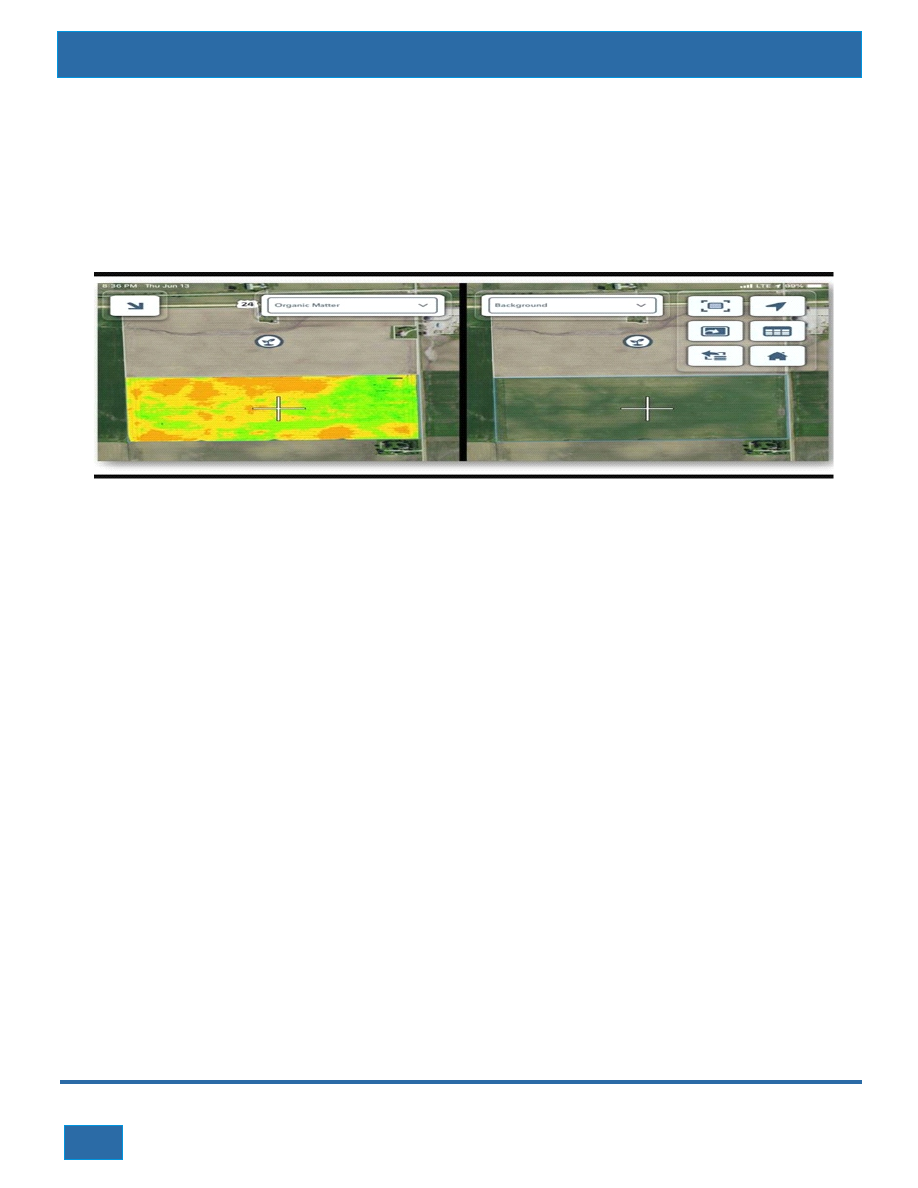
Agco's purchase of Precision Planting is just one tech area where the company continues to evolve; creation of
a new telemetry product enhances machine fleet management
.
AGCO-Organic matter-SIZE-Smart firmer vs Satellite Image. The organic matter map on this page shows the
Smart Firmer information on the left and a satellite map on the right darker areas denote more organic matter.
The world of precision ag technology is evolving well past those colorful maps you often see post-harvest.
Producers, consultants, startup companies and established firms are changing the way they think about
cropping and bringing tools for in-season action that can boost yields. The challenge is having the right tech at
work throughout the season. Agco became the final purchaser of Precision Planting from Bayer (formerly
Monsanto) after that company had first been promised to John Deere. Today, Precision Planting continues its
innovative work, and the parent company is putting those tools into new equipment. They're also marketing
those products to competitors.
The validation of tillage practices in field trials and start building a database of information is the prime
objective of this innovation. The Smart Firmer Precision Planting innovation can map factors at a level not
possible in the past. The organic matter map on this page shows the Smart Firmer information on the left and a
satellite map on the right darker areas denote more organic matter. Having that level of information as a data
layer for evaluating crop performance could be very important
7
Technology Roundup
78
cientis Develo new,
pid tes to Diagno e
cteri l Lo er Respira ry
S
ts
p
ra
t
s Ba
a
w
to
ct Infecti ns
tra
o
So
ce:
ur
www.n ws med cal.n t/ ews/ 0190 24
cie tist -de elo - ew-ra id-t s -t - iag ose-ba ter l
e
-
i
e n
2
6
/S
n
s
v
p n
p
e t o d
n
c
ia -
l
er respi
o
tract-in ecti ns.as x
ow -
rat ry-
f
o
p
cien i s a he Quad am nstitut and t
U versi y of E t Angl a
EA) have developed new rapi w
S
t st
t t
r
I
e
he ni
t
as
i (U
a
,
d ay
diagnosi
teri l lowe res irat r
ract infections in ho s rath t an ays, hat coul
mpr
e atient
of
ng bac
a
r
p
o y t
ur
er h
d
t
d i
ov p
ca e and sl
t
p ead of ant mi obial esi ance.
r
ow he s r
i
cr
r
st
Lower r p rat y nfect ons, such a p
on a, accou for around 3 mi li
deat orl
ide each year.
es i
or i
i
s neum
i
nt
l on
hs w
dw
Current d agnostic met
ds ely on gr wing bact r a f
patien sam es, but his akes t o t
hree days and
i
ho r
o
e i
rom
t
pl
t
t
w
o t
ay ti l not i
if th
s Du ing t is ti e, p ient are given broad-spect u anti ioti
hich may not
m
s l
dent y e cau e.
r
h
m
at
s
r m
b
cs, w
ork if th nfection s caused
a res st
t
hog
and could tr gger si
- f
s. Over ut lizati
of broad-
w
e i
i
by
i an pat
en
i
de ef ect
i
on
pec rum an i io i
is so a know iver f the evel
en of
im crobial resistance.
s
t
t b t cs al
n dr
or
d
opm
t
ant
i
A cl nical etagenomi test ge
ic analysis of mul ipl
rganisms o ained fr
ngle sam e) has been
i
m
cs
(
nom
t
e o
bt
om a si
pl
successf ly d
oped t preci ely identify he bact ial causes of low
r
rat y i ecti
s w thin 6 h
.
ul
evel
o
s
t
er
er espi
or nf
on i
ours
It can als
ermin if he pathogens ar resi tant o any of th anti oti
used to reat hese i ecti
o det
e t
e
s
t
e
bi
cs
t
t
nf
ons.
This al ows r
d reat ent with targeted anti oti , esult ng n im
pat ent outcomes wh l reducing
l
api t
m
bi
cs r
i
i
proved
i
i st
th use of br
- p
rum
ibi ics a
ping i the f gh agai
ant mi ob al esis ance.
e
oad s ect
ant
ot
nd hel
n
i
t
nst
i
cr
i r
t
he r ocol s
bei
asses
in a l ger mul i- t clin cal tr al to
lua e ts perfor ance for t e
T
p ot
i now
ng
sed
ar
t si e
i
i
eva
t i
m
h
agn is f ho pit -acquir
m
a.
di
os o s
al
ed pneu oni

Technology Roundup
Technology Roundup
Pakistan
International Conference on Innovative Engineering Technologies
www.theires.org/Conference2019/Pakistan/1/ICIET/
National Conference on Water and Environment
www.ncwe.water.muet.edu.pk
International Conference on Arts, Education and Social Science
www.allconferencealert.net
International Conference on Science, Engineering & Technology
www.allconferencealert.net
International
International Conference on Recent Innovations in Engineering and
Technology
www.theiier.org/Conference2019/UAE/6/ICRIET/
International Conference on Researches in Science and Technology
www.allconferencealert.net
International Conference on Engineering & Technology
www.allconferencealert.net
International Conference on Science, Technology & Management
www.allconferencealert.net
28-29 July, 2019
Rawalpindi
th
4 October, 2019
Berlin, Germany
22-23 August, 2019
US-Pakistan Center Jamshoro
28-29 September, 2019
Rawalpindi
28-29 October, 2019
Rawalpindi
1-2 September, 2019
United Arab Emirates
th
5 November, 2019
Washington DC,USA
th
7 December, 2019
Port Moresby, Papua New Guinea
Forthcoming Tech Events
9
Tech & Trade Offers
About PASTIC
PASTIC serves as a gateway for
Scientific & Technological
Information for R&D by catering
to the information needs of
researchers, entrepreneurs,
industrialists, educationists,
policy makers and planners
t h r o u g h a n t i c i p a t o r y a n d
responsive information services.
T e c h n o l o g y I n f o r m a t i o n
Section works exclusively for
support and promotion of
technological information on
trade and industry in the
country. “Technology Roundup”
is a news bulletin that provides
latest and innovative technology
news, forthcoming events, etc. It
a l s o p r o m o t e s p r o d u c t s ,
technologies and services
globally in sectors such as Agro-
Industry, Bio-Technology,
Building Material, Business,
Chemicals, Electronics, Energy,
Fisheries, Food Processing,
Machinery, Packaging, Mining
Pharmaceuticals and Textiles.
SOLUTION MOBILITY
Business Solution
3rd Floor Asif Plaza 106 East Fazl-e-Haq Road
Blue Area Islamabad
Phone No +92 51 8489300 ext 102 &+92 51 8311322
Fax: 92 51 8318081
Cell + 92 3008712407
www.solution.mobility
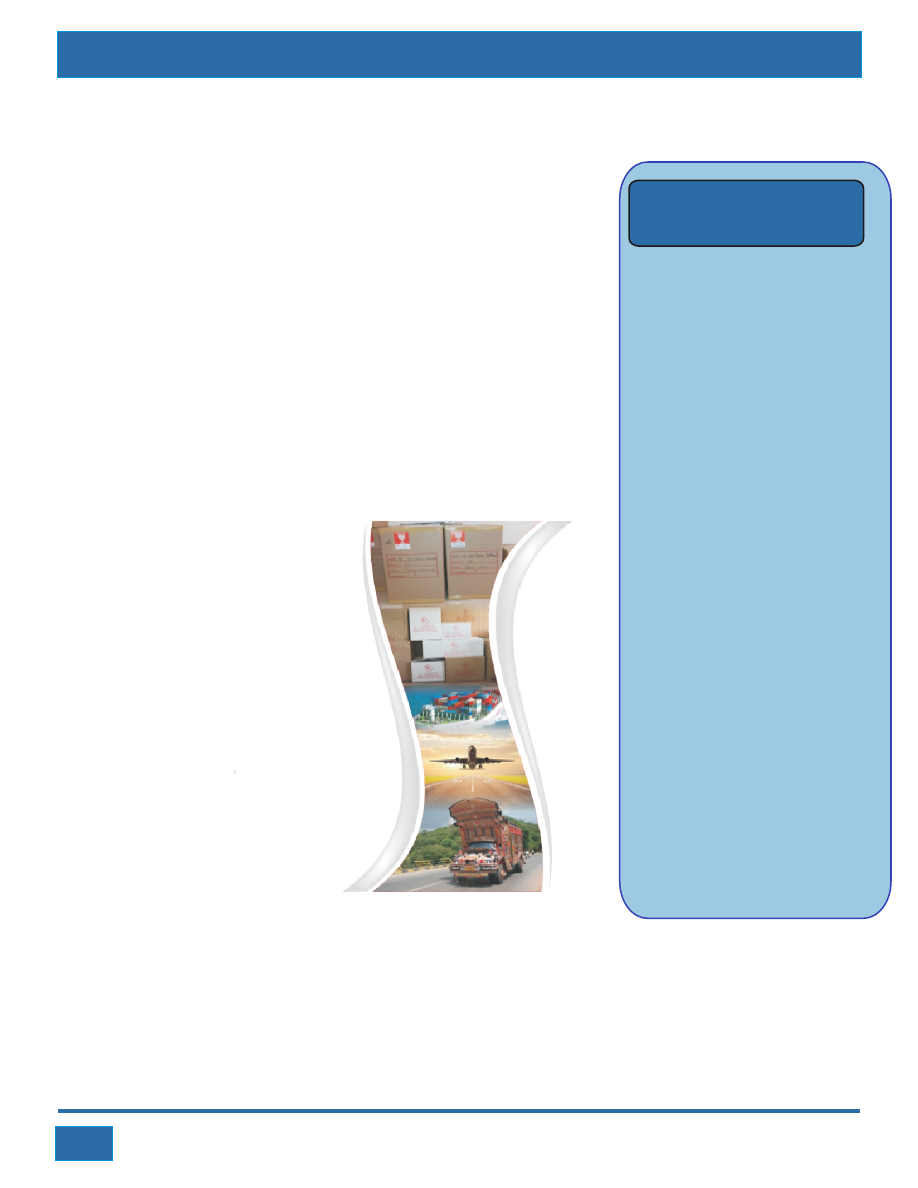
Business Solution is fully committed to provide unsurpassed customer service
and quality in global relocation and moving services. From an individual move
across town to global corporate relocations, they focus on listening to the
customers and providing not only customized but personalized services to meet
their unique needs. Solution Mobility understands that behind every move there
is a human element that has entrusted them with move of their precious goods.
They leave no stone unturned to make the transition as smooth as possible. With
more than a decade of experience in the moving industry, they know just about
every nook and cranny of the business, so you can be sure that your goods will
reach the intended destination safely, reliably, and on time each time every time.
With a global network of agents across six continents they are fully capable to
going above and beyond the call of duty to make your part as stress free and
possible.
Branches: Karachi-Lahore-Peshawar-Kabul
Technology Roundup
Please give us your feedback and address queries to tis.pastic@gmail.com
10