Executive Editor
Prof. Dr. Muhammad Akram Shaikh
Director General, PASTIC
Managing Editor
Dr. Saima Huma Tanveer
Editor
Dr. Syed Aftab Hussain Shah
Composer
Kashif Farooqui
T
ECHNOLOGY
R
OUNDUP
Technology Information Services Section (TIS)
Pakistan Scientific & Technological Information Centre
PASTIC
January-February, 2021
Vol.13 No. 1
A NEWS BULLETIN
Tech News Headlines
Tech & Trade Offers
Phone: 051-9248103-4, 9248128
Fax: 051-9248113
Email: tis.pastic@gmail.com
Web: www.pastic.gov.pk
PASTIC National Centre
Quaid-i-Azam University Campus
P.O. Box 1217, Islamabad
Editorial Board
l
PASTIC-UAF EXPO on “Science, Technology, ICTs and Industry
Response to COVID-19 Pandemic and Societal Preparedness” to be
TH
held on 17 March 2021 at University of Agriculture Faisalabad.
l
Team Invictus from the Ghulam Ishaq Khan Institute of Engineering
nd
Sciences and Technology secures 2 Position among 115 teams in the
proposal of American Institute of Aeronautics and Astronautics
(AIAA) DBF (Design/Build/Fly)
l
Turbulence model could enhance Rotorcraft, Munitions performance
l
Fabricating the future with a new Environment friendly method of
Polymerization
l
Graphene 'Nano-Origami' creates Tiniest Microchips yet
l
Concept for a new Storage Medium
l
Biosensors Monitor Plant well-being in Real time
Forthcoming Tech Events
l International Conference on Science, Engineering & Technology
l
World Congress on Information Technology
l
World Conference on Soil, Water, Energy and Air
l
International Conference on Science Technology and Management
l
International Conference on Multidisciplinary Research
l
International Conference on Science and Technology
l
International Conference on Nursing and COVID
l
International Conference on Science & Technology Research
SITARA CHEMICAL
Technology Roundup
2
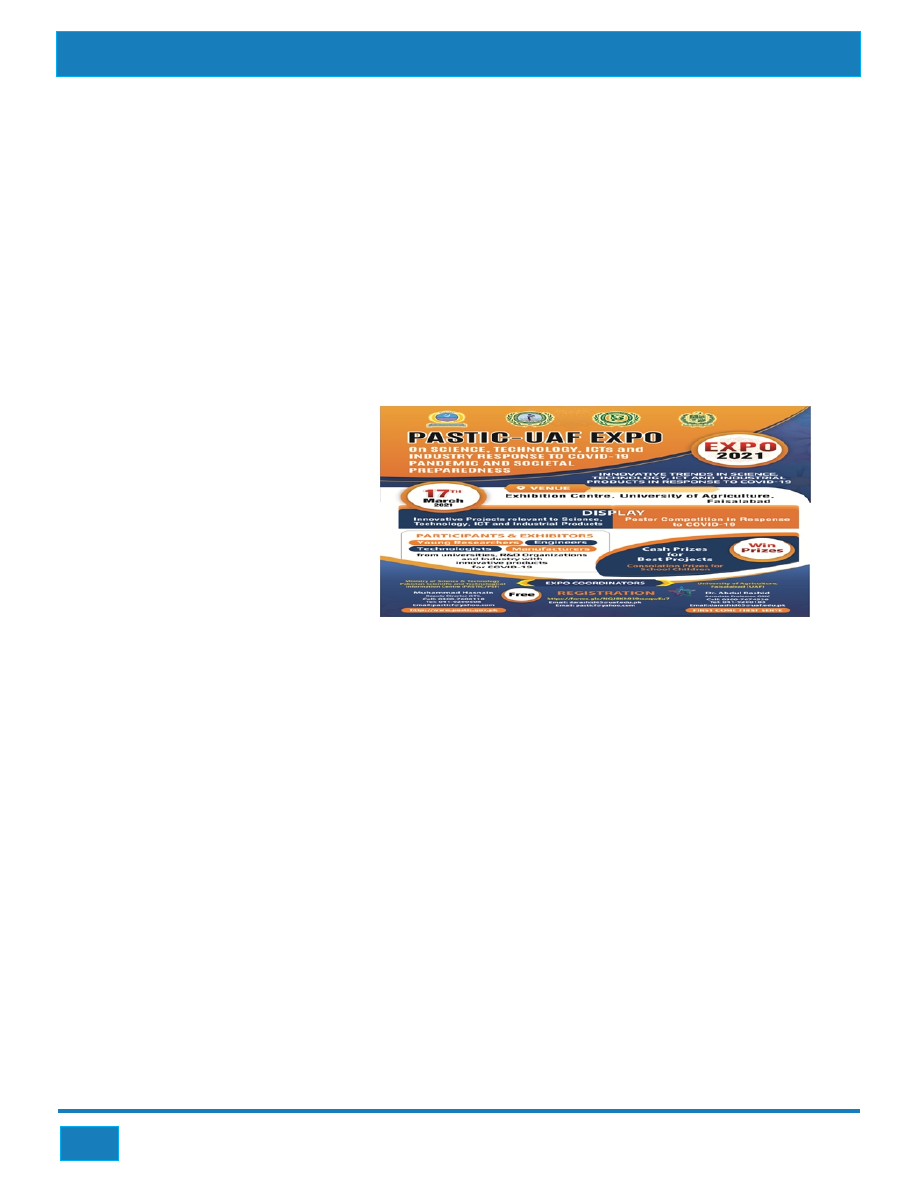
PASTIC-UAF EXPO on “SCIENCE, TECHNIOLOGY, ICTs AND INDUSTRY RESPONSE TO
TH
COVID-19 PANDEMIC AND SOCIETAL PREPAREDNESS” TO BE HELD ON 17 MARCH
2021 AT UNIVERSITY OF AGRICULTURE FAISALABAD
COVID-19 pandemic has led to more than more than 110 million reported cases and caused more than more
than 2.5 million deaths world-wide. During the pandemic, electric, pneumatic and process automation have
greatly helped to interconnect engineering-related workers. Industry 4.0 and Industrial Internet of Things
(IIoT) support had enabled optimizing the automation architectures; bionics (robotics mimicking nature)
inspired the engineers in science, technology, engineering, and math (STEM) to integrate into various
activities to develop innovative materials. New digital health solutions have been introduced in many ways
from tracking and tracing apps to deep learning for analysis of computerized tomography images or audio-
based diagnosis and early symptom recognition. Latest digital/distance learning practices & resources had
been introduced that have tremendously helped the governments, schools, teachers, parents
In Pakistan, many R&D solutions both IT
based apps and technologies in multiple
fields were developed including health
care, education, business, industry. The
industrial productions of critically needed
medical products/equipment were also
produced to meet the local demand during
the pandemic. However, there are many
technologies and innovations that remain
unexploited with vast potential in
improving the reliability and utility in
healthcare services: including the speed
and quality of diagnosis, healthcare process
and results. In addition, novel technology solutions and innovations to adapt processes and technologies are
desperately needed.
In this connection, showcasing of the latest R&D technologies/apps/products developed during the
th
pandemic has been planned collaboratively through PASTIC and UAF-Faisalabad at UAF on March 17 ,
2021. The objectives of the Expo include:
·
Display latest R&D technologies/apps/products developed during the COVID-19 crises.
·
Create awareness among youth and general public about our national preparedness to cope with
Pandemic
·
Provide a platform to the youth to meet/discuss/review their developments with
experts/entrepreneurs.
·
P r o v i d e a n o p p o r t u n i t y t o a c a d e m i c i n n o v a t o r s / S M E s t o m a r k e t p l a c e t h e i r
projects/innovations/products
For registration contact:
Muhammad Husnain, Dy. Director (STI), PASTIC Sub-Centre, Faisalabad;
;
0300-7600118
Dr. Abdul Rashid, Associate Professor/ ORIC;
; 0300-7674526
Source:
www.pastic.gov.pk

Technology Roundup
3
Team Invictus from the Ghulam Ishaq Khan Institute of Engineering
nd
Sciences and Technology secures 2 Position among 115 teams in the
proposal of American Institute of Aeronautics and Astronautics (AIAA)
DBF (Design/Build/Fly)
Team Invictus from the Ghulam Ishaq Khan Institute of Engineering Sciences and Technology has been
the sole representative of Pakistan in the American Institute of Aeronautics and Astronautics (AIAA)
DBF (Design/Build/Fly) Competition for the past 10 consecutive years.
Credit:
https://www.giki.edu.pk
AIAA DBF is an international Remote Controlled(R/C) aircraft competition sponsored and organized by
the American Institute of Aeronautics and Astronautics, Cessna Aircraft Company, and Raytheon Missile
Systems. Every year, hundreds of engineering institutes send in their proposals, out of which this year
only 115 proposals were accepted. Teams from all 5 continents take part, including many world-
renowned engineering institutes, such as MIT, UC Berkeley, and Stanford. Each team is then required to
design and manufacture an electric powered R/C aerial vehicle which fulfills the annually changing
mission statement. A 60-page technical report is submitted by each team followed by the fly-offs that take
place alternately in Kansas and Arizona, USA. This year's COVID situation meant that the team faced the
additional challenge of working remotely, and so digital collaboration tools were used for the first time.
After achieving their best position in the competition last year, Invictus broke all expectations this year
nd
st
securing a record best 2 position across the world, and 1 in Asia in the proposal phase. This year's
mission required the team to design an Unmanned Aerial Vehicle (UAV) capable of carrying a remotely
deployable sensor suite to carry out reconnaissance missions, as well as carry cargo-containers. The team
set about designing a revolutionary plane, with advanced manufacturing techniques such as 3D-printed
parts, and a pod and boom aircraft configuration. Utilizing the latest technology, and a well-organized
team structure enabled the team to secure its highest proposal score of 85.9.
The team is ecstatic and hopes to build on the ever-improving string of results. The team is looking
forward to raising the country's flag even higher and hopes to bring further good news to the aviation
industry of Pakistan. The team would like to thank its sponsors, as well as GIKI for their everlasting
support. Invictus GIKI aims to be the face of the radio-controlled aircraft industry in Pakistan and use its
national presence and international experience to help promote this hobby in the country.
Source:
www.giki.edu.pk/News/View/1300/GIK-Team-Invictus-Secures-2nd-Position-Among-1 15-Teams-in-
The-Proposal-of-AIAA-DBF-21
4
Technology Roundup
Turbulence model could enhance Rotorcraft, Munitions performance
Design of aerial vehicles and weapon systems relies on the ability to predict aerodynamic behavior, often aided by
advanced computer simulations of the flow of air over the body. High-fidelity simulations assist engineers in
maximizing how much load a rotorcraft can lift or how far a missile can fly, but these simulations aren't cheap. A
new turbulence model could change that.
Credit: https://army.mil/article/242670/turbulencemodelcouldenhancerotorcraftmunitionsperformance
The Army Research Office, an element of the U.S. Army Combat Capabilities Development Command, now
known as DEVCOM, Army Research Laboratory, funded researchers at Purdue University to advance a
turbulence model known as the Coherent-vorticity-Preserving Large-Eddy Simulation, known as CvP LES. The
new methodology simulates the entire process of a vortex collision event up to 100 times faster than current state-
of-the-art simulation techniques.
The approach uses information about the flow physics to decide the best tactic for computing the flow physics.
There is enormous potential for this to have a real impact on the design of vehicle platforms and weapons systems
that will allow our Soldiers to successfully accomplish their missions. The fluid dynamics of aircraft turbulence
are complex, and simulating them accurately in the computer is nearly impossible. Prof. Carlo Scalo has modelled
the collision of vortices in two ways: once with direct numerical simulation, and once with large-eddy simulation.
This model can now be used by engineers to design better aircraft, without having to wait months for
supercomputer calculations.
The model can be used to simulate vortices over any length of time to best resemble what happens around an
aircraft. For instance, as a rotor blade moves through the air, it generates a complex system of vortices that are
encountered by the next blade passage. The interaction between the blade and the vortices can lead to vibration,
noise, and degraded aerodynamic performance. Understanding these interactions is the first step to modifying
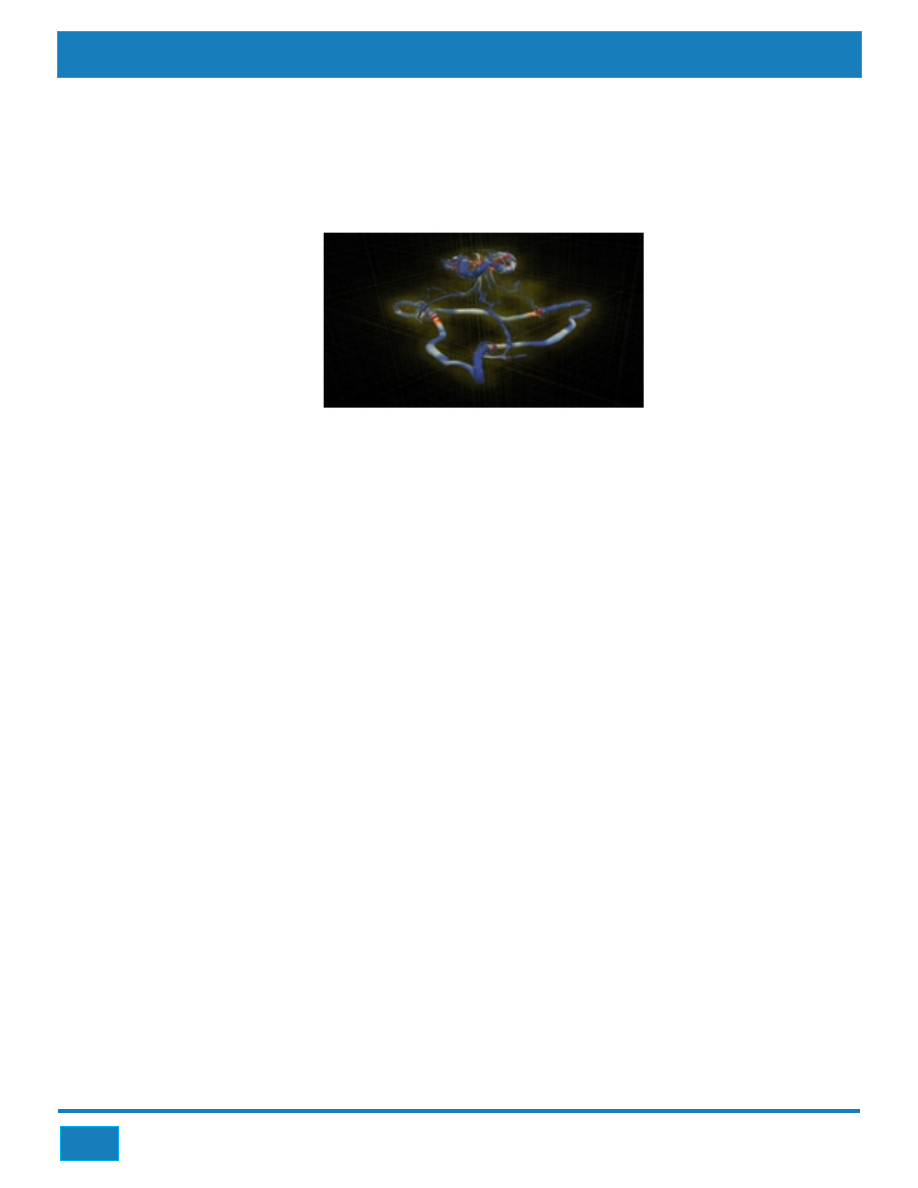
designs to reduce their impact on the vehicle's capabilities. The researchers simulated the collision events of two
vortex tubes called trefoil knotted vortices. This interaction shares many common features to the vortices often
present in Army applications. Simulating the evolution of the collision requires extremely fine resolution,
substantially increasing the computational cost. The methodology relies on clever techniques that balance cost and
accuracy. It is capable of rapidly detecting regions of the flow characterized by fine turbulent scales and then
determining, on-the-fly, and the appropriate numerical scheme and turbulence model to apply locally. This also
allows computational power to be applied only where most needed, achieving a solution with the highest possible
fidelity for a given budgeted amount of computational resources.
The team is now working with the Department of Defense to apply the model to large-scale test cases pertaining to
Army vehicle and weapons systems.
Source:
www.sciencedaily.com/releases/2021/01/210125144619.htm
3
5
Technology Roundup
Fabricating the future with a new Environment friendly method of
Polymerization
The current use of metal catalysts to develop polymers leads to suboptimal quality polymers that contain metallic
impurities and involves a reaction process that is not environment friendly. Now, scientists have successfully
demonstrated the room temperature formation of vinyl and styrene polymers -- two most abundantly found
polymers in plastics -- using non-ionic, non-metallic organocatalysts, which pave the way for a low cost,
environment friendly, efficient polymer-driven future.
Credit: https://pubs.rsc.org/en/content/articlelanding/2020/PY/D0PY01207F#!divAbstract
Many materials in the modern world -- from the plastics that dominate it to the electronic chips that drive it -- are
constructed of polymers. Given their ubiquity and the evolving requirements of our world, finding better and
more efficient methods of making them is an ongoing research concern. In addition, current environmental
issues necessitate the use of methods and input materials that are environment friendly.
Recent research by scientists from Nagoya Institute of Technology, Japan, has been in this vein, adding a new
twist to a polymerization technique that has been around and successful since the 1980s: living cationic
polymerization, where the polymer chain growth does not have the ability to terminate until the monomer is
consumed.
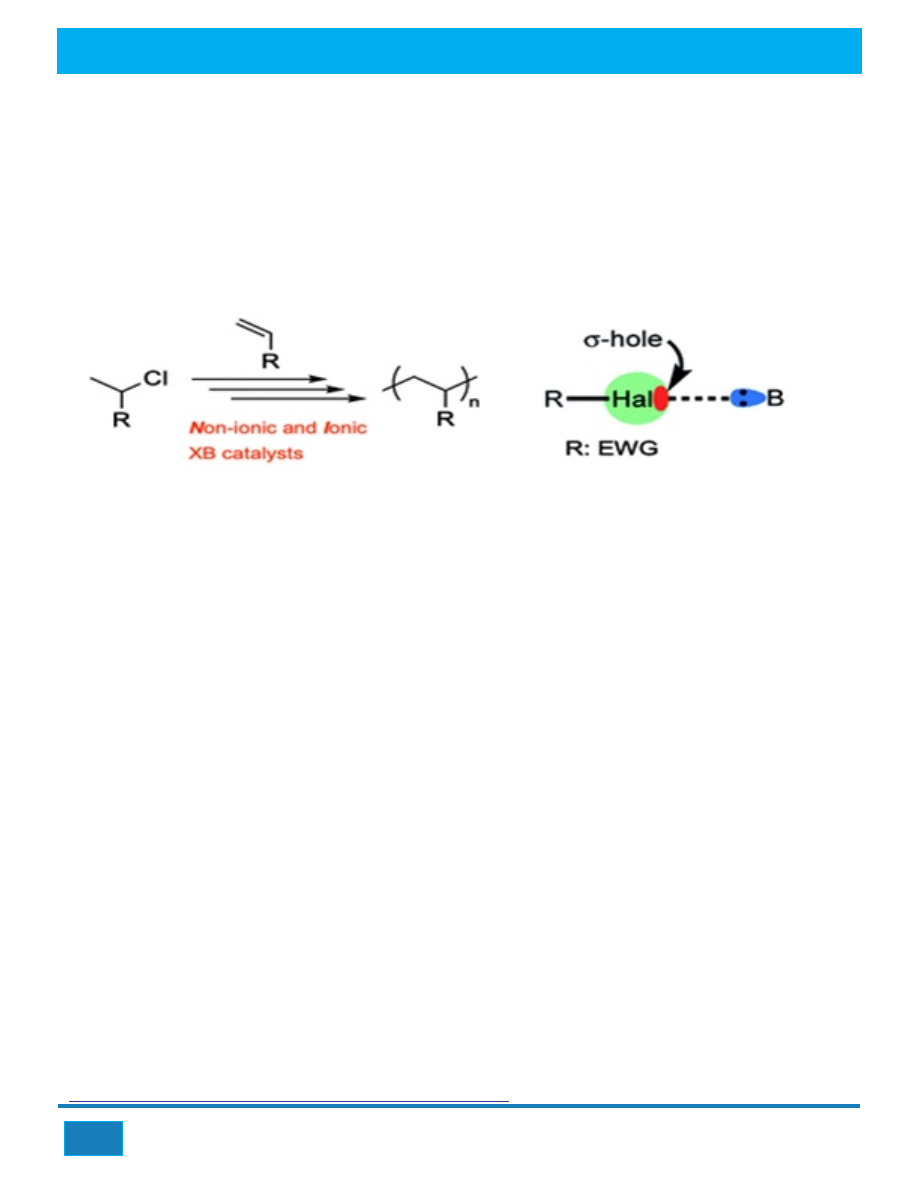
The scientists have, for the first time, demonstrated metal free organocatalysis for this reaction at room
temperature for vinyl and styrene polymers, two of the most common polymers used in plastics. Their method is
not only more efficient than current metal-based methods, but also environment friendly.
In their study, they first tested the applicability of non-ionic and multidentate (or several electron-pair accepting)
halogen bonding organocatalysts, specifically two iodine-carrying polyfluoro-substituted oligoarenes, to the
living cationic polymerization of isobutyl vinyl ether. Mentioning one of their reasons for choosing this, Dr. Koji
Takagi, lead scientist in the study, explains in an aside: "The non-ionic characteristic is advantageous because the
catalyst is soluble in less polar solvents like toluene which is more suitable for such polymerization of vinyl
monomers."
They found that with the tridentate variant, the reaction smoothly progressed even at room temperature,
producing good yield -- though less than the theoretical limit -- in a reasonable amount of time, without the
catalyst decomposing or appearing as an impurity in the product. As Dr. Takagi explains, this could be a good
advantage over existing metallic catalysts used in industry: "While metal-based catalysts have significantly
contributed to the materials sciences over the past century, the contamination of remaining metallic impurities
often brings about a decrease in the produced materials' lifetime and performance. We believe that the present
finding will lead to the production of highly pure and reliable polymeric materials."
Source:
www.sciencedaily.com/releases/2021/02/210224100846.htm
6
Technology Roundup
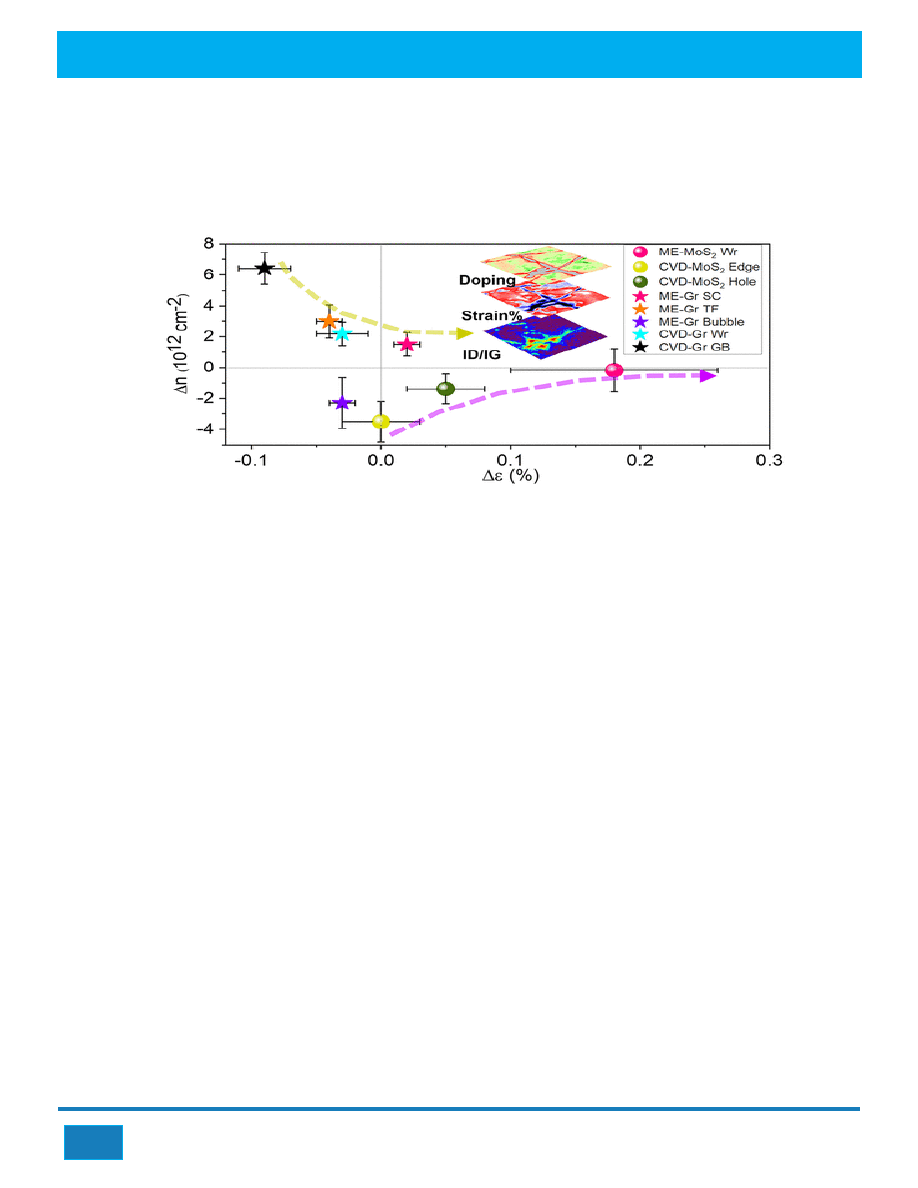
Graphene 'Nano-Origami' creates Tiniest Microchips Yet
Experimental physicists have developed the smallest microchips ever - 100 times smaller than conventional
microchips. They believe that this next generation of microchips could lead to computers and phones running
thousands of times faster.
Credit: DOI: https://pubs.acs.org/doi/10.1021/
The tiniest microchips yet can be made from graphene and other 2D-materials, using a form of 'nano-origami',
physicists at the University of Sussex have found.
By creating kinks in the structure of graphene, researchers have made the nanomaterial behave like a transistor,
and have shown that when a strip of graphene is crinkled in this way, it can behave like a microchip, which is
around 100 times smaller than conventional microchips.
This kind of technology -- "straintronics" using nanomaterials as opposed to electronics -- allows space for more
chips inside any device. The researchers can create structures from graphene and other 2D materials simply by
adding deliberate kinks into the structure. By making this sort of corrugation they can create a smart electronic
component, like a transistor, or a logic gate.
The development is a greener, more sustainable technology. Because no additional materials need to be added,
and because this process works at room temperature rather than high temperature, it uses less energy to create.
Source:
www.sciencedaily.com/releases/2021/02/210216100141.html

7
Technology Roundup
Concept for a new storage Medium
Physicists from Switzerland, Germany and Ukraine have proposed an innovative new data storage medium. The
technique is based on specific properties of antiferromagnetic
materials that had previously resisted experimental examination.
Using nanoscale quantum sensors, researchers have succeeded
in exploring certain previously uncharted physical properties of
an antiferromagnetic material and to develop a concept for a new
storage medium. The project was coordinated by researchers
from the Department of Physics and the Swiss Nanoscience
Institute at the University of Basel.
Antiferromagnets make up 90 percent of all magnetically ordered materials. Unlike ferromagnets such as iron,
in which the magnetic moments of the atoms are oriented parallel to each other, the orientation of the magnetic
moments in antiferromagnets alternates between neighboring atoms. As a result of the cancelation of the
alternating magnetic moments, antiferromagnetic materials appear non-magnetic and do not generate an
external magnetic field.
Antiferromagnets hold great promise for exciting applications in data processing, as the orientation of their
magnetic moment -- in contrast to the ferromagnets used in conventional storage media -- cannot be
accidentally overwritten by magnetic fields. In recent years, this potential has given rise to the budding
research field of antiferromagnetic spintronics, which is the focus of numerous research groups around the
world.
In collaboration with the research groups under Dr. Denys Makarov (Helmholtz-Zentrum in Dresden,
Germany) and Professor Denis D. Sheka (Taras Sevchenko National University of Kyiv, Ukraine), the team
led by Professor Patrick Maletinsky in Basel examined a single crystal of chromium(III) oxide (Cr2O3). This
single crystal is an almost perfectly ordered system, in which the atoms are arranged in a regular crystal lattice
with very few defects. "We can alter the single crystal in such a way as to create two areas (domains) in which
the antiferromagnetic order has different orientations," explains Natascha Hedrich, lead author of the study.
These two domains are separated by a domain wall. To date, experimental examinations of domain walls of
this sort in antiferromagnets have only succeeded in isolated cases and with limited detail. "Thanks to the high
sensitivity and excellent resolution of our quantum sensors, we were able to experimentally demonstrate that
the domain wall exhibits behavior similar to that of a soap bubble," Maletinsky explains.
The researchers can use the orientation of the raised squares to direct the domain wall to one side of the square
or the other. This is the fundamental principle behind the new data storage concept: if the domain wall runs to
the "right" of a raised square, this could represent a value of 1, while having the domain wall to the "left" could
represent a value of 0. Through localized heating with a laser, the trajectory of the domain wall can be
repeatedly altered, making the storage medium reusable.
The researchers now plan to look at whether the domain walls can also be moved by means of electrical
fields," Maletinsky explains. "This would make antiferromagnets suitable as a storage medium that is faster
than conventional ferromagnetic systems, while consuming substantially less energy."
Source:
www.sciencedaily.com/releases/2021/02/210222095016.html

7
Technology Roundup
78
Biosensors Monitor Plant well being in Real time
The research group at Linköping University led by Eleni Stavrinidou, together with Totte Niittylä and his
group from Umeå Plant Science Centre has developed biosensors that make it possible to monitor sugar levels
in real time deep in the plant tissues - something that has previously been impossible. The information from the
sensors may help agriculture to adapt production as the world faces climate change. The plants used in the
experiments were hybrid aspen, Populus tremula.
https://ars.els-cdn.com/content/image/1-s2.0-S2589004220311639-fx1.jpg
The primary source of nutrition for most of the Earth's population is mainly plants, which are also the
foundation of the complete ecosystem on which we all depend. Global population is rising, and rapid climate
change is at the same time changing the conditions for crop cultivation and agriculture.
The biosensors can monitor the sugar levels of trees in real time, continuously for up to two days. The
information from the sensors can be related to growth and other biological processes. Plants use sugars for
energy, and sugars are also important signal substances that influence the development of the plant and its
response to changes in the surrounding environment.
While biosensors for monitoring sugar levels in humans are widely available, in particular the glucometer used
by people who have diabetes, this technology has not previously been applied to plants.
"The sensors now are used for basic plant science research but in the future they can be used in agriculture to
optimise the conditions for growth or to monitor the quality of the product, for example. In the long term, the
sensors can also be used to guide the production of new types of plant that can grow in non-optimal conditions,"
says Eleni Stavrinidou.
The mechanisms by which plant metabolism is regulated and how changes in sugar levels affect growth are
still relatively unknown. Previous experiments have typically used methods that rely on detaching parts of the
plant. However, the sensor developed by the research group gives information without damaging the plant and
may provide further pieces of the puzzle of how plant metabolism works.
Source:
www.sciencedaily.com/releases/2021/02/210211090120.htm

Technology Roundup
Technology Roundup
Pakistan
International Conference on Science, Engineering & Technology
28 - 29 Apr 2021
Best Western Hotel, Islamabad
www.10times.com/icset-pakistan
World Congress on Information Technology
1st-2nd May, 2021
Peshawar
www.conferencealerts.org/event_detail.php?ev_id=286105
World Conference on Soil, Water, Energy and Air
22-23 May, 2021
Islamabad
www.eurasiaweb.com/Conference/21148/EUWCSWEA/
International Conference on Science Technology and Management
28-29 July, 2021
Rawalpindi
www.astem.org/Conference2021/Pakistan/1/ICSTM/
International
International Conference on Multidisciplinary Research
1-2 June, 2021
Berlin, Germany
www.icmr.igrnet.org/101/australia
International Conference on Science and Technology
8-9 July, 2021
Pathum Thani, Thailand
https://10times.com/science-and-technology-bangkok
International Conference on Nursing and COVID
29-30, September 2021
Singapore
www.larixconferences.com/nursing
International Conference on Science & Technology Research
7-8, October 2021
Istanbul, Turkey
www.10times.com/icrst-istanbul
Forthcoming Tech Events
9
Tech & Trade Offers
About PASTIC
PASTIC serves as a gateway for
Scientific & Technological
Information for R&D by catering
to the information needs of
researchers, entrepreneurs,
industrialists, educationists,
policy makers and planners
t h r o u g h a n t i c i p a t o r y a n d
responsive information services.
T e c h n o l o g y I n f o r m a t i o n
Section works exclusively for
support and promotion of
technological information on
t r a d e a n d i n d u s t r y i n t h e
country. “Technology Roundup”
is a news bulletin that provides
latest and innovative technology
news, forthcoming events, etc. It
a l s o p r o m o t e s p r o d u c t s ,
t e c h n o l o g i e s a n d s e r v i c e s
globally in sectors such as Agro-
I n d u s t r y , B i o - T e c h n o l o g y ,
Building Material, Business,
Chemicals, Electronics, Energy,
Fisheries, Food Processing,
Machinery, Packaging, Mining
Pharmaceuticals and Textiles.
!
SITARA CHEMICALS
Vision
!
Strive to develop and employ innovative technological
solutions to add value to business with progressive and
proactive approach.
Mission
!
Continuing growth and
diversification for bottom
line results with risks well
contained.
!
Integrity and Honesty
O p e n , R e s p e c t f u l a n d
Supportive
!
Prepared to take challenges
and see them through
!
D e e p r e g a r d s f o r
C u s t o m e r s , B u s i n e s s
partners and employees
!
Self-critical and accountable
!
Quality in products and
dealings
Contact:-
Phone: +92-41-4689141-5
Fax: +92-41-4689147, 4689148
Email: scil@sitara.com.pk
Address: 32 KM, Sheikhupura Road, Faisalabad
Website: www.sitara.com.pk
Technology Roundup
Please give us your feedback and address queries to tis.pastic@gmail.com
10