
Executive Editor
Prof. Dr. Muhammad Akram Shaikh
Director General, PASTIC
Managing Editor
Dr. Saima Huma Tanveer
Editor
Dr. Syed Aftab Hussain Shah
Composer
Kashif Farooqui
T
ECHNOLOGY
R
OUNDUP
Technology Information Services Section (TIS)
Pakistan Scientific & Technological Information Centre
PASTIC
November-December, 2020
Vol.12 No 6
A NEWS BULLETIN
Tech News Headlines
Tech & Trade Offers
Phone: 051-9248103-4, 9248128
Fax: 051-9248113
Email: tis.pastic@gmail.com
Web: www.pastic.gov.pk
PASTIC National Centre
Quaid-i-Azam University Campus
P.O. Box 1217, Islamabad
Editorial Board
l
Pakistani Developers Ranked #1 in Global JavaScript Speed Coding
Challenge
l
Enhanced Biometric-Based User Authentication Scheme for Wireless
Sensor Networks Using Fuzzy Extraction and Elliptic Curve
Cryptography
l
Light Signal Emitted during Photosynthesis Used to Quickly Screen
Crops
l
Better Diabetes Treatment: New Insulin molecule can self-regulate
Blood sugar
l
Tiny Quantum Computer Solves Real Optimization Problem
l
New Blended Solar Cells Yield High Power Conversion Efficiencies
l
Climate Change: Threshold for Dangerous Warming will Likely be
Crossed between 2027-2042
Forthcoming Tech Events
l
International Conference on Engineering & Technology
l
World Congress on Information Technology
l
International Conference on Cancer Research and Drug
Development
l
International Conference on Science Technology and
Management
rd
l
3 International Conference on Multidisciplinary Research
rd
l
3 International Conference on Research in Science,
Engineering & Technology
l
International Conference on Science & Technology
Research
l
International Congress on History of Science and
Technology
Hassan Textile

Technology Roundup
2
Pakistani Developers Ranked #1 in Global JavaScript Speed Coding Challenge
Pakistani developers flexed their blazing coding speeds at this year's TopTal JavaScript Speed Coding
Challenge by bagging the most top 50 finishes out of any country, despite having lesser participants in the
competition than neighbouring India.
.
As one of the most popular coding competitions in the world, the TopTal Speed Coding Challenge features a
collection of intriguing challenges that need to be solved as quickly as possible by participants in order to
earn points. Naturally, points are assigned based on the difficulty of the task and the speed at which one solves
it, with extra points assigned for the amount of time left upon early completion of the task. Around 2,000
passionate coders and developers from a total of 137 countries participated in the JavaScript Speed Coding
Challenge. India fielded the highest number of participants, with 251 JavaScript coders hailing from the
South Asian nation. With 128 developers, Pakistan contributed the second-highest number of participants,
followed by Nigeria with 88, Bangladesh with 82, Malaysia with 74, and the United States with 67.
When it came to the actual competition, there was one country clearly standing out. With a total of five
participants bagging top 50 finishes in the final leaderboard, Pakistan attained the honor of fielding the most
Top 50 Finishers of any country participating in the challenge. With an impressive total of 3494 points,
MALLU was the highest-ranking Pakistani developer in the speed coding challenge with a fourth-place
finish.
Bangladesh, Brazil, and Serbia ended up tying for the second-highest number of top 50 finishes, as each
nation was represented by three participants in Top 50 Finishers. This was followed by Croatia, Malaysia,
Nigeria, Sri Lanka, and Turkey, with two Top 50 Finisher positions each.
Source:
www.techjuice.pk/pakistani-developers-ranked-1-in-global-javascript-speed-coding-challenge
Technology Roundup
3
Enhanced Biometric-Based User Authentication Scheme for Wireless Sensor Networks Using
Fuzzy Extraction and Elliptic Curve Cryptography
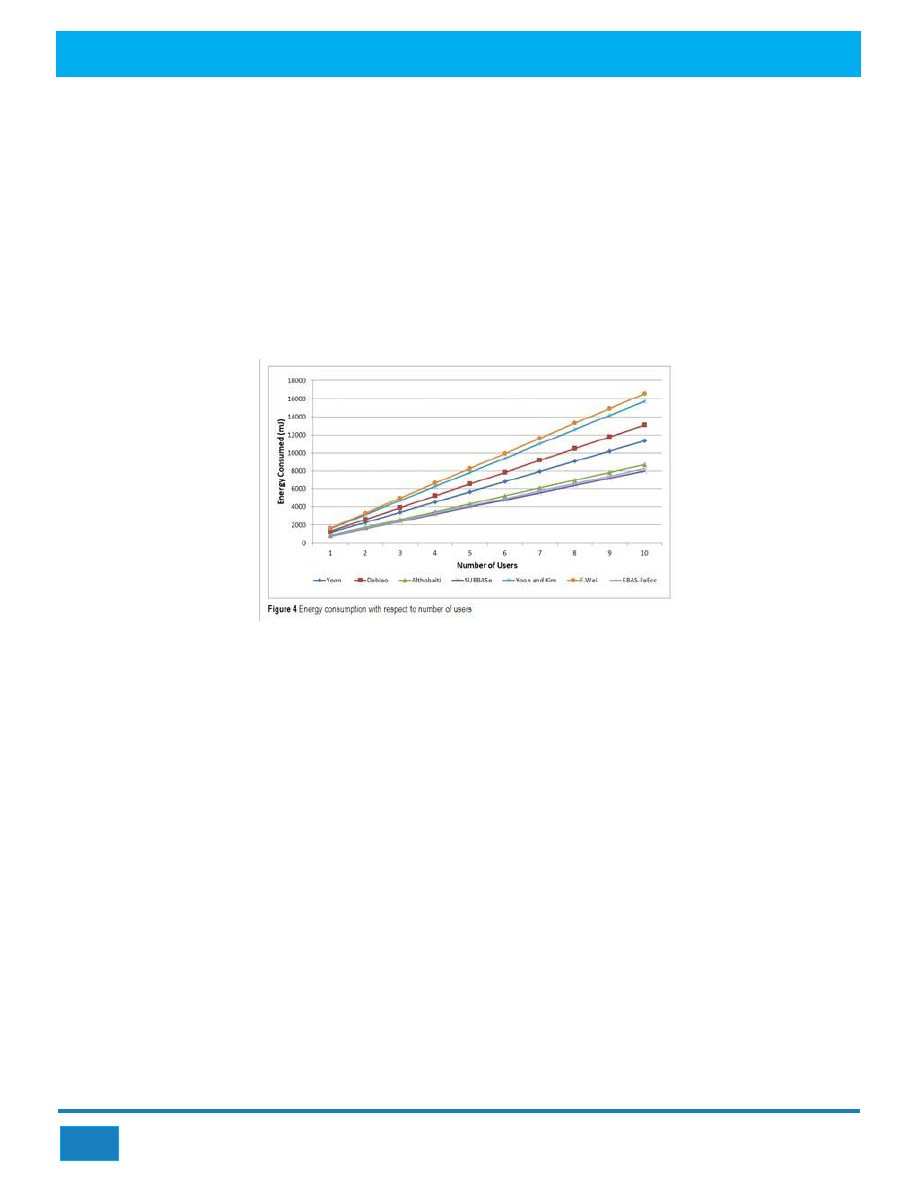
Wireless sensor networks are used to monitor physical and environmental conditions. User
authentication is required to achieve consistent access control. However, authenticating a user or sensor
in a network is a challenging task owing to the limited resources of the sensor nodes. Therefore, to provide
secure and efficient communication, numerous authentication schemes have been designed. Traditional
schemes have several security vulnerabilities and significant computational overhead. An Enhanced
biometric-based user Authentication Scheme has been proposed using Fuzzy extraction and Elliptic
curve cryptography (EBAS-FeEcc) for wireless sensor networks to achieve the high-security level and
improve the performance as well as the lifetime of the entire network.
Credit:
http://www.jictra.com.pk/index.php/jictra/article/view/190/115
The presented technique consists of easy operations and light computations. The analysis shows that
previous schemes have various security weaknesses such as a biometric recognition error, user
verification problem, lack of anonymity, session key exposure by the gateway node, and perfect forward
secrecy. The current proposed technique overcomes these network security issues. This scheme
additionally increases the performance of the network by reducing network traffic, defending sensor
networks against DOS attack, and increasing nodes battery life. Therefore, the functionality and
performance of the entire network gets improved.
Source:
R. Riaz, S. Shokat, S. Rizvi, and M. Shaheen, “Enhanced Biometric-Based User Authentication
Scheme for Wireless Sensor Networks Using Fuzzy Extraction and Elliptic Curve Cryptography”,
jictra, pp. 1-14, Jun. 2020.
4
Technology Roundup
Light Signal Emitted during Photosynthesis used to Quickly Screen Crops
Researchers have revealed a new approach to estimate the photosynthetic capacity of crops to pinpoint their
top-performing traits and speed up the plant screening process.
Credit:
https://academic.oup.com/jxb/advance-article/doi/10.1093/jxb/eraa537/6042157
An international effort called Realizing Increased Photosynthetic Efficiency (RIPE) aims to transform crops'
ability to turn sunlight and carbon dioxide into higher yields. To achieve this, scientists are analyzing thousands of
plants to find out what tweaks to the plant's structure or its cellular machinery could increase production.
University of Illinois researchers have revealed a new approach to estimate the photosynthetic capacity of crops to
pinpoint these top-performing traits and speed up the screening process.
Photosynthesis is the entry point for carbon dioxide to become all the things that allow plants to grow, but
measuring canopy photosynthesis is really difficult. Most methods are time-consuming and only measure a single
leaf when it's the function of all leaves on all plants that really matters in agriculture.
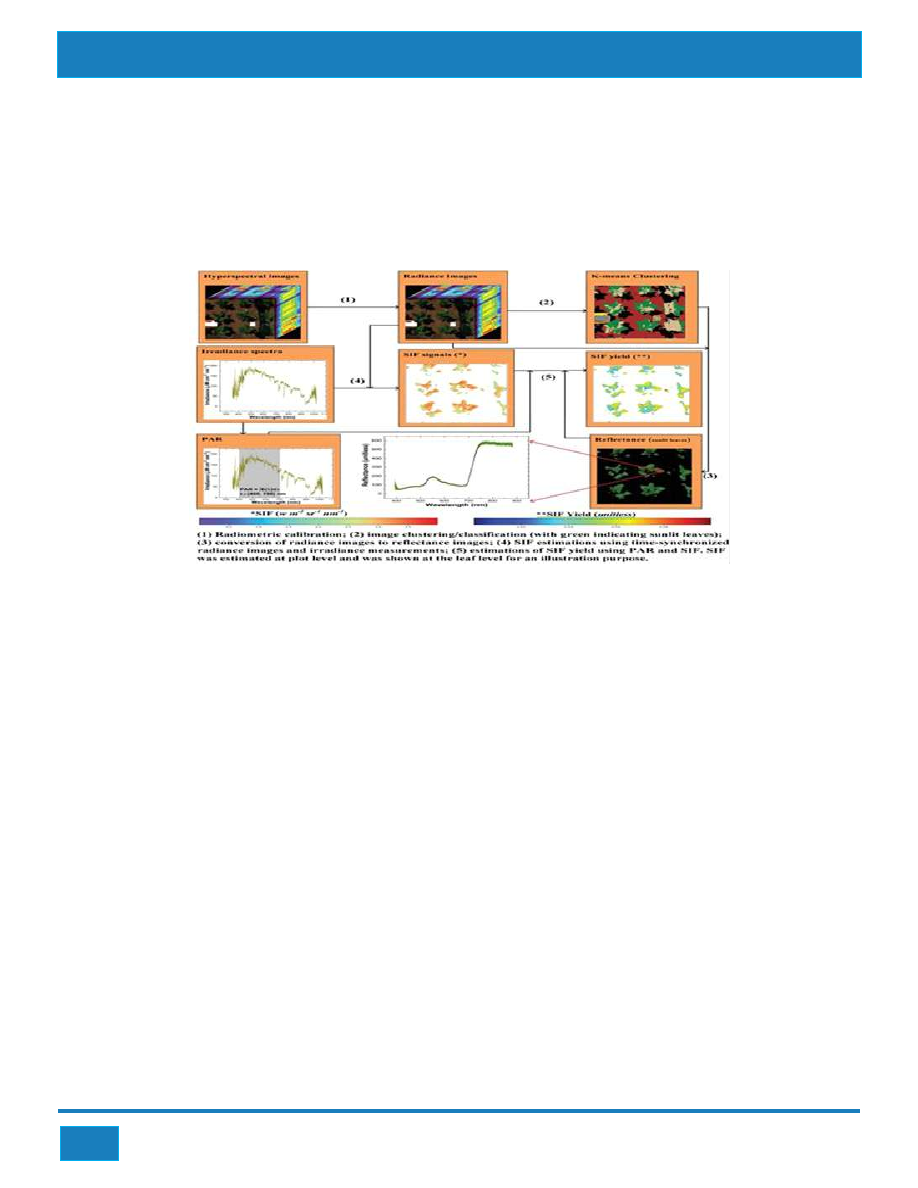
The researchers use two spectral instruments simultaneously -- a hyperspectral camera for scanning crops and a
spectrometer used to record very detailed information about sunlight -- to quickly measure a signal called Solar
Induced Fluorescence (SIF) that is emitted by plants when they become 'energy-excited' during photosynthesis.
With this SIF signal, the team gains critical insights about photosynthesis that could ultimately lead to improving
crop yields. They discovered that a key part of the SIF signal better correlates with photosynthetic capacity. This
'SIF yield' accounts for only a fraction of the energy emitted as SIF by plants to the energy captured by plants in
total, but it carries important information.
With this insight, we can use a couple of instruments in a synergistic way to make more accurate estimates, and we
can make these tools and pipelines more accessible to people who are interested in advancing the translation of
photosynthesis.
Source:
3
5
Technology Roundup
Better Diabetes Treatment: New Insulin Molecule can self-regulate Blood Sugar
Researchers have developed a new insulin molecule that will make blood sugar regulation both easier and safer
for those with type 1 diabetes.
Credit:
https://chemistry-europe.onlinelibrary.wiley.com/doi/10.1002/chem.202004878
Everyday life for the more than 46 million people around the world who suffer from type 1 diabetes could
become much easier and safer.
Researchers from the University of Copenhagen and biotech firm Gubra have developed a new insulin molecule
that, in the future, will ensure that diabetics receive just the right amount of insulin. The insulin on the market
today is unable to identify whether a patient with type 1 diabetes needs a small or large effect from the insulin,
which lowers blood sugar.
"That is why we have developed the first step towards a kind of insulin that can self-adjust according to a patient's
blood sugar level. This has tremendous potential to vastly improve the lives of people with type 1 diabetes,"
explains Professor Knud J. Jensen, of the University of Copenhagen's Department of Chemistry, one of the
researchers behind a new study on this new insulin.
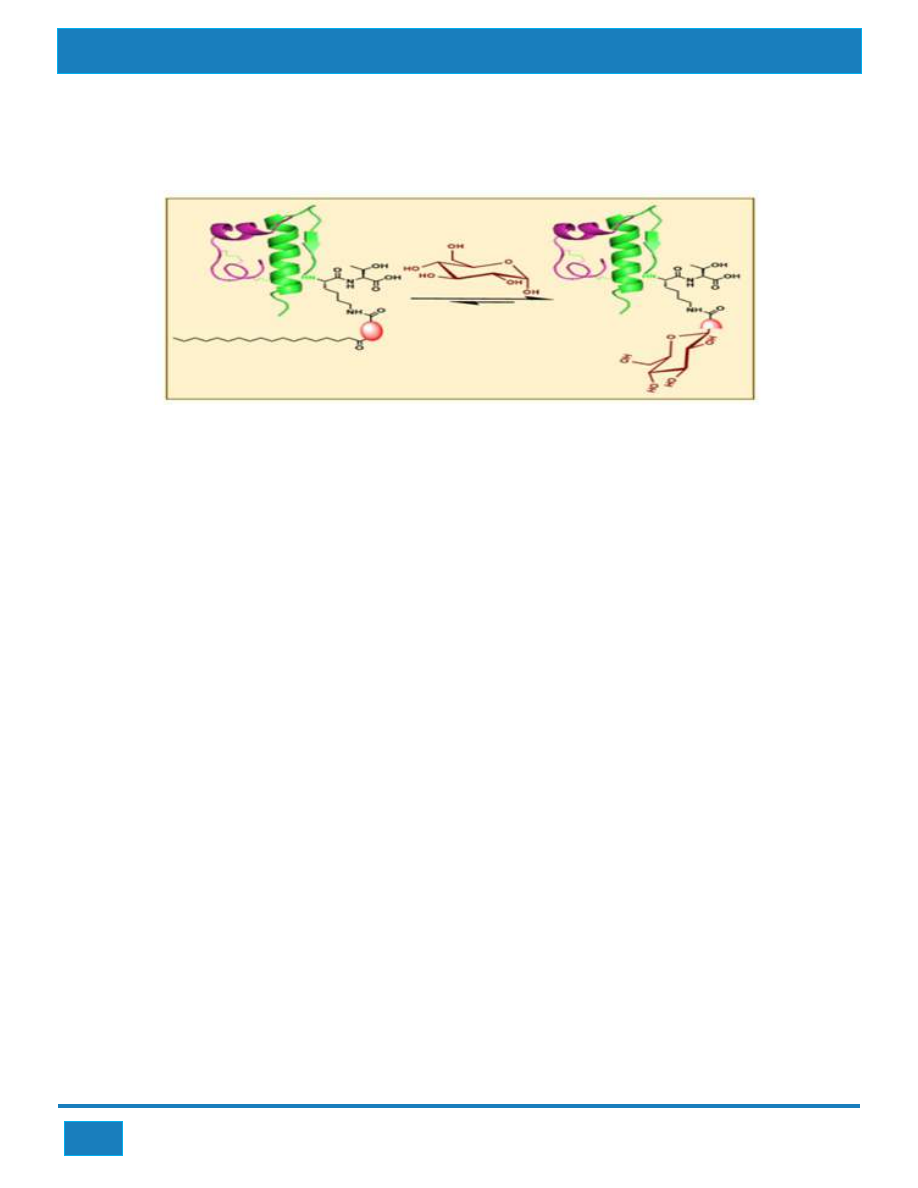
The researchers behind the study developed a type of insulin with a built-in molecular-binding that can sense
how much blood sugar is in the body. As blood sugar rises, the molecule becomes more active and releases more
insulin. As blood sugar drops, less is released. "The molecule constantly releases a small amount of insulin, but
varies according to need," says Knud J. Jensen, who continues:
The difficult thing with diabetes is that insulin always works the same way. It lowers blood sugar, even though
that might not be what a patient requires. This is what we seek to address with our new molecule.”
Source:
6
Technology Roundup
New Blended Solar Cells Yield High Power Conversion Efficiencies
Researchers have blended together various polymer and molecular semiconductors as photo-absorbers to create a
solar cell with increased power efficiencies and electricity generation.
Credit:
https://pubs.acs.org/doi/10.1021/acs.macromol.0c01787
These types of solar cells, known as organic photovoltaics (OPV), are devices that generate electricity when light
is incident upon their photo-absorbers. The efficiency of a solar cell is determined by comparing how much
electricity is generated to how much light is incident upon the cell. This is referred to as "photon harvest," or how
many particles of light are converted into electrical current. The more efficient the solar cell, the more cost
effective and pragmatic the cell is for commercial use.
The team at the Graduate School of Advanced Science and Engineering
Hiroshima University, Japan
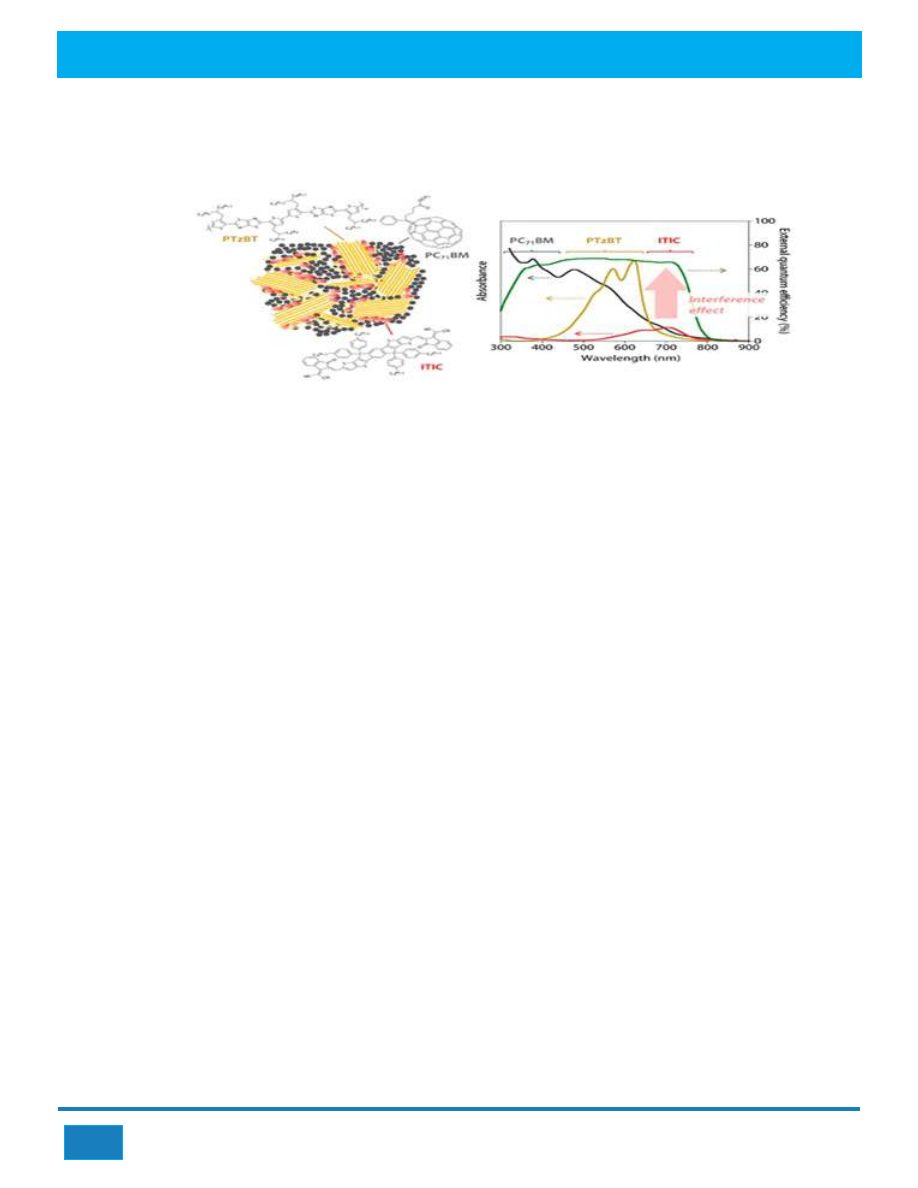
added only a
small amount of a compound that absorbs long wavelengths of light resulting in an OPV that was 1.5 times more
efficient than the version without the compound. The compound was able to enhance the absorption intensity due
to the optical interference effect within the device. The group went on to show that how they are distributed is key
to further improved power generation efficiency.
"This leads to a significant increase in the photocurrent and thereby the power conversion efficiency due to the
amplified photon absorption that originates in the optical interference effect. A key is to use a very specific
polymer, one that allows us to have a very thick semiconductor layer for OPV cells, which significantly enhances
optical interference effect compared to a thin layer."
As for future work, Osaka has his eyes set on pushing the boundaries of state of the art solar cells.
"Our next step is to develop better semiconducting polymers as the host material for this type of OPV and better
sensitizer materials that can absorb more photons in the longer wavelength regions. This would lead to the
realization of the world's highest efficiency in OPV cells."
Source:
7
Technology Roundup
Tiny Quantum Computer solves real optimization problem
Quantum computers have already managed to surpass ordinary computers in solving certain tasks -
unfortunately, totally useless ones. The next milestone is to get them to do useful things. Researchers have now
shown that they can solve a small part of a real logistics problem with their small, but well-functioning
quantum computer.
Credit:
journals.aps.org/prapplied/abstract/10.1103/PhysRevApplied.14.034009
Interest in building quantum computers has gained considerable momentum in recent years, and feverish
work is underway in many parts of the world. In 2019, Google's research team made a major breakthrough
when their quantum computer managed to solve a task far more quickly than the world's best supercomputer.
The downside is that the solved task had no practical use whatsoever -- it was chosen because it was judged to
be easy to solve for a quantum computer, yet very difficult for a conventional computer.
Therefore, an important task is now to find useful, relevant problems that are beyond the reach of ordinary
computers, but which a relatively small quantum computer could solve.
Together with Göran Johansson, Giulia Ferrini led the theoretical work when a team of researchers at
Chalmers, including an industrial doctoral student from the aviation logistics company Jeppesen, recently
showed that a quantum computer can solve an instance of a real problem in the aviation industry.
The algorithm proven on two qubits All airlines are faced with scheduling problems. For example, assigning
individual aircraft to different routes represents an optimisation problem, one that grows very rapidly in size
and complexity as the number of routes and aircraft increases.
Researchers hope that quantum computers will eventually be better at handling such problems than today's
computers. The basic building block of the quantum computer -- the qubit -- is based on completely different
principles than the building blocks of today's computers, allowing them to handle enormous amounts of
information with relatively few qubits.
However, due to their different structure and function, quantum computers must be programmed in other ways
than conventional computers. One proposed algorithm that is believed to be useful on early quantum
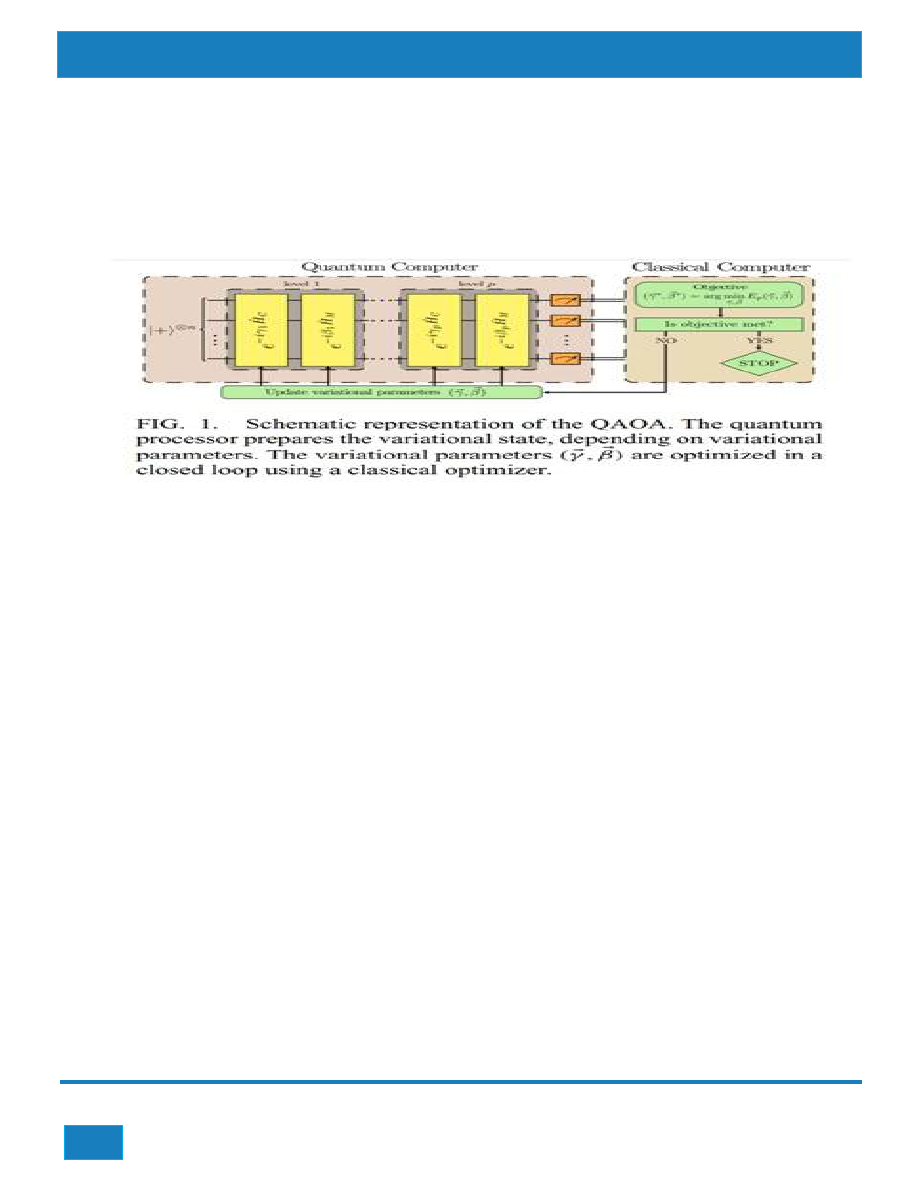
computers is the so-called Quantum Approximate Optimization Algorithm (QAOA).
The Chalmers research team has now successfully executed said algorithm on their quantum computer -- a
processor with two qubits -- and they showed that it can successfully solve the problem of assigning aircraft to
routes. In this first demonstration, the result could be easily verified as the scale was very small -- it involved
only two airplanes.
Potential to handle many aircraft With this feat, the researchers were first to show that the QAOA algorithm

7
Technology Roundup
78
can solve the problem of assigning aircraft to routes in practice. They also managed to run the algorithm one
level further than anyone before, an achievement that requires very good hardware and accurate control.
The theorists in the research team also simulated solving the same optimisation problem for up to 278 aircraft,
which would require a quantum computer with 25 qubits. The plan is to reach at least 20 qubits by 2021 while
maintaining the high quality.
Source:
www.sciencedaily.com/releases/2020/12/201217090404,html
Climate change: Threshold for Dangerous Warming will Likely be Crossed between
2027-2042
The threshold for dangerous global warming will likely be crossed between 2027 and 2042 -- a much narrower
window than the Intergovernmental Panel on Climate Change's estimate of between now and 2052.
Researchers introduce a new and more precise way to project the Earth's temperature. Based on historical data,
it considerably reduces uncertainties compared to previous approaches.
Photo concept, hourglass on beach (stock image).
Credit: © denyasapozhnik / stock.adobe.com
Scientists have been making projections of future global warming using climate models for decades. These
models play an important role in understanding the Earth's climate and how it will likely change. But how
accurate are they?
Climate models are mathematical simulations of different factors that interact to affect Earth's climate, such as
the atmosphere, ocean, ice, land surface and the sun. While they are based on the best understanding of the
Earth's systems available, when it comes to forecasting the future, uncertainties remain. The new approach to
projecting the Earth's temperature is based on historical climate data, rather than the theoretical relationships
that are imperfectly captured by the GCMs. The approach allows climate sensitivity and its uncertainty to be
estimated from direct observations with few.
In a study for
Climate Dynamics, the researchers introduced the new Scaling Climate Response Function
(SCRF) model to project the Earth's temperature to 2100. Grounded on historical data, it reduces prediction
uncertainties by about half, compared to the approach currently used by the IPCC. In analyzing the results, the
researchers found that the threshold for dangerous warming (+1.5C) will likely be crossed between 2027 and
2042. This is a much narrower window than GCMs estimates of between now and 2052. On average, the
researchers also found that expected warming was a little lower, by about 10 to 15 percent. They also found,
however, that the "very likely warming ranges" of the SCRF were within those of the GCMs, giving the latter
support. With the new climate model and its next generation improvements, there's less wiggle room."
Source:

Technology Roundup
Technology Roundup
Pakistan
International Conference on Engineering & Technology
18 February, 2021
Karachi
https://www.iirst.com/event/index.php?id=1318294
World Congress on Information Technology
st
nd
1 -2 March, 2021
Peshsawar
www.worldresearchsociety.com/Conference/20301/WCIT/
International conference on Cancer Research and Drug Development
16-17 April, 2021
Quetta
www.universal-conference.com/Conference/18342/ICCRDD
International Conference on Science Technology and Management
28-29 July, 2021
Rawalpindi
www.astem.org/Conference2021/Pakistan/1/ICSTM/
International
rd
3 International Conference on Multidisciplinary Research
11-12 March, 2021
Melbourne, Australia
www.icmr.igrnet.org/101/australia
rd
3 International Conference on Research in Science, Engineering &
Technology
11-13 March, 2021
Oxford UK
www.icsthttps://www.icrset.org/
International Conference on Science & Technology Research
26-27 March, 2021
Singapure
www.straevents.org/conference/singapore
International Congress on History of Science and Technology
25-31 July, 2021
Czech Republic Prague
www.ichst2021.org
Forthcoming Tech Events
9
Tech & Trade Offers
About PASTIC
PASTIC serves as a gateway for
Scientific & Technological
Information for R&D by catering
to the information needs of
researchers, entrepreneurs,
industrialists, educationists,
policy makers and planners
t h r o u g h a n t i c i p a t o r y a n d
responsive information services.
T e c h n o l o g y I n f o r m a t i o n
Section works exclusively for
support and promotion of
technological information on
trade and industry in the
country. “Technology Roundup”
is a news bulletin that provides
latest and innovative technology
news, forthcoming events, etc. It
a l s o p r o m o t e s p r o d u c t s ,
technologies and services
globally in sectors such as Agro-
Industry, Bio-Technology,
Building Material, Business,
Chemicals, Electronics, Energy,
Fisheries, Food Processing,
Machinery, Packaging, Mining
Pharmaceuticals and Textiles.
!
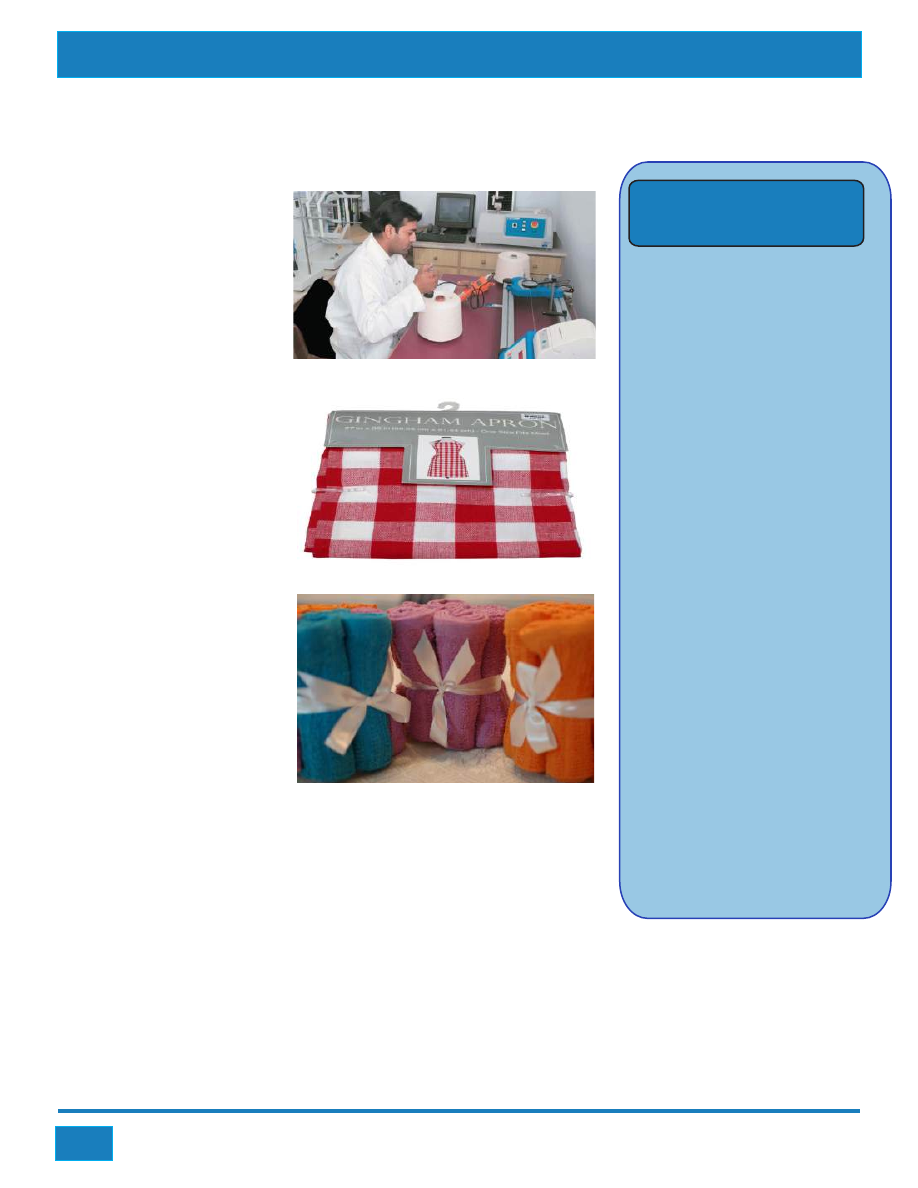
HASSAN TEXTILES
M a n u f a c t u r e s Te r r y
products love what they
do. They are a family run
enterprise established in
2002, that after initial
years of struggle has
finally stepped on to the
global arena. As a small
yet effective team, we
aspire to deliver the best to
those who seek the best, at
f a i r r e c o m p o s e t o
ourselves and our team of
dedicated professional
and workers.
Their goal is to create
work that is honest and
solution that are creative.
We value Your time and
money. We manufactures
with the belief that process
and collaboration are as
exciting and fun as the end
result. We seek to change
p e r c e p t i o n s a n d
contribute positively to our community specifically, and
communities at large generally – both human and otherwise.
Contact:-
A-130, SITE Superhighway Scheme 33, Postal Code 75320
Karachi, Pakistan.
Tel : +92 (213) 688-0731 & Fax : +92 (213) 688-1555
E-mail : info@hassantextiles.net
Technology Roundup
Please give us your feedback and address queries to tis.pastic@gmail.com
10