
Executive Editor
Prof. Dr. Muhammad Akram Shaikh
Director General, PASTIC
Managing Editors
Ms. Nageen Ainuddin
Dr. Saima Huma Tanveer
Editor
Dr. Syed Aftab Hussain Shah
Composer
Kashif Farooqui
T
ECHNOLOGY
R
OUNDUP
Technology Information Services Section (TIS)
Pakistan Scientific & Technological Information Centre
PASTIC
January-February, 2020
Vol.12 No 1
A NEWS BULLETIN
Tech News Headlines
Tech & Trade Offers
Phone: 051-9248103-4, 9248128
Fax: 051-9248113
Email: tis.pastic@gmail.com
Web: www.pastic.gov.pk
PASTIC National Centre
Quaid-i-Azam University Campus
P.O. Box 1217, Islamabad
Editorial Board
l
l
l
l
l
l
l
l
Performance Improvement using Simulation Tool in a Tiles
Production Facility
Pashtu Numerals Recognition through Convolutional Neural
Networks
New Biochemical compound breaks down Environmental Pollutants
New Quantum Switch turns Metals into Insulators
New World record for Conversion of Solar Energy to Electricity
using Quantum Dots
New Tech takes Radiation out of Cancer screening
Skin-like Sensors bring a Human Touch to Wearable Tech
Boost Soybean Yields by adapting Photosynthesis to Fleeting
Shadows, according to model
Forthcoming Tech Events
l
l Invention to Innovation Summit Islamabad
l World Congress on Pollution Control
l International Conference on Science, Engineering & Technology
l International Science, Technology and Engineering Conference
l International Conference On Science Technology And Management
l EU Sustainable Energy Week
l World Congress On Materials Science And Engineering
Solar Pakistan Exhibition
POLLANI TEXTILE
Technology Roundup
2
Performance Improvement using Simulation Tool in a Tiles Production
Facility
Source:
In recent times, the globalization of markets due to the improvement of utilization of resources has
significant impact on the manufacturing systems. International competition forced companies to establish
efficient and effective production facilities that provide best possible outcome in terms of profitability,
throughput and lead time. In this background, every industrial facility is in competition to remain
competitive in the market and be flexible for future changes. It is not easy to change the environment of any
facility in order to check the results beforehand therefore simulation is a viable option. Simulation tools are
used to help analyze performance measures for improvement.
This study was conducted at FORTE Ceramic Industries, Industrial State Peshawar, Pakistan to improve its
production using simulation tool.Models for both improved and current systems are developed in the
simulation tool. Data analyzed in the simulation tool shows better results that represent a significant
improvement in productivity, cycle time and throughput time to optimize the system. It is also observed that
by decreasing the inter arrival time there is increase in the throughput which improves the revenue.
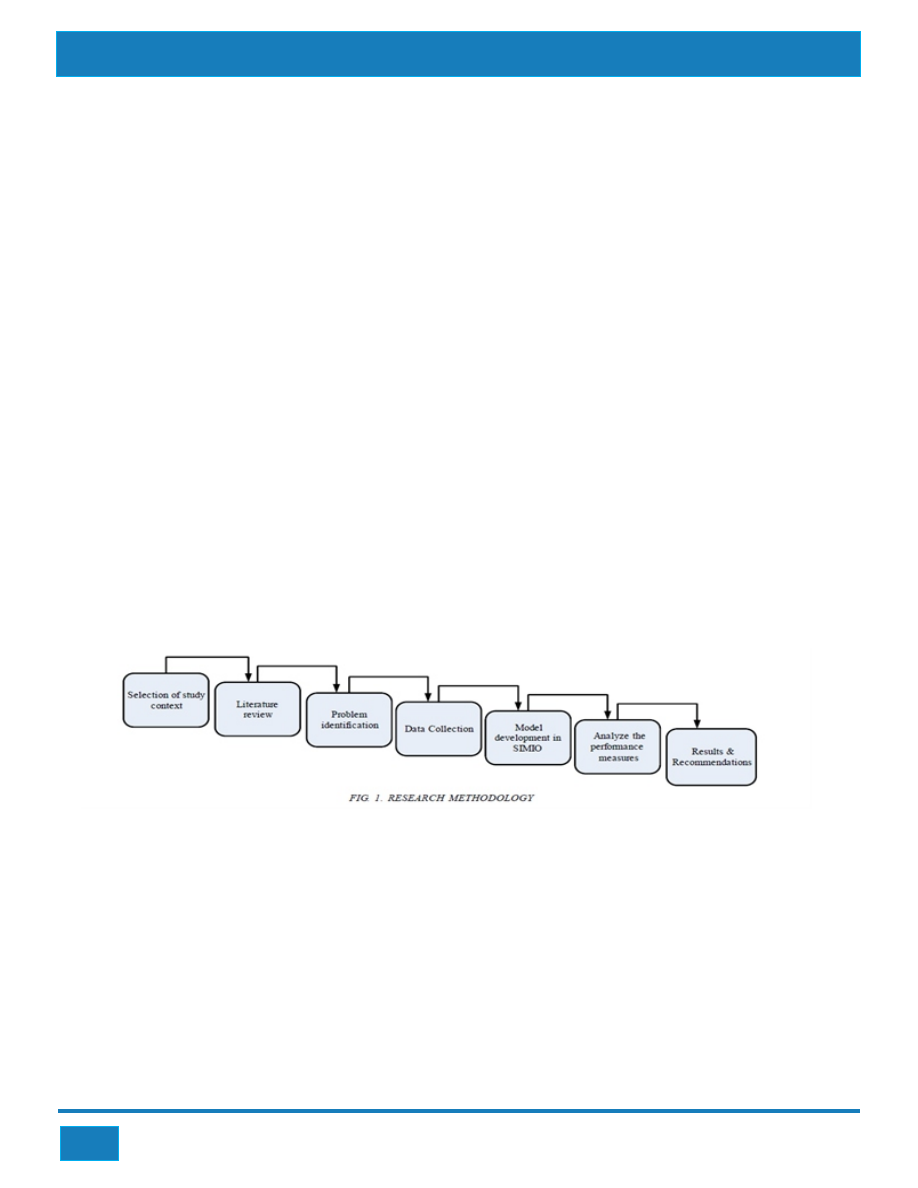
The research process consists of several steps. First, a detailed study was conducted about the manufacturing
processes of the proposed industry to know about the existing issues. It has been observed that the proposed
company is using traditional manufacturing processes with no consideration of improving the tiles
production. After detailed literature review and problem identification, data was collected about the
production process of tiles. Then this data was used to develop a simulation model. This model was created
and simulated in SIMIO software of the current production process at different cycle times to analyze the
performance measures. The results were analyzed to find the respective processes. Finally, based on these
results recommendations were made to the said industry for making necessary improvements.
The process flow layout of FORTE ceramics starts from raw material and ends at tiles packing. Some of the
processes are continuous and some are discrete. The green color boxes show continuous processes and blue
color boxes represent discrete processes.The results represent a significant improvement of the production
process in productivity, cycle time and throughput time to optimize the system. There is a substantial increase
in production of each type of tile by changing the inter-arrival time from 7.15-6.25 seconds.
Uroosa Nadir, Tufail Habib, Sikandar Bilal Khattak, and Ishrat Noor. Performance Improvement
using Simulation Tool in a Tiles Production Facility. Mehran University Research Journal of
Engineering and Technology, 2020 Volume 39(1) Pages 117-132
Technology Roundup
3
Pashtu Numerals Recognition through Convolutional Neural Networks
The researchers have introduced a new Pashtu numerals dataset recognition model having handwritten
scanned images. Pashtu language is used by more than fifty million people both for oral and written
communication, but still no efforts are devoted to the Optical Character Recognition (OCR) system for
Pashtu language. A main drawback of the deep learning-based method is the requirement of large training
data. We collected data from different regions to bring diversity in writing style. We collected these
images from faculty members, staff, and students of three universities, namely, the University of Azad
Jammu and Kashmir, University of Malakand, and the University of Peshawar.
The make the dataset publically available for scientific and research use. A new method has been
introduced for handwritten numerals recognition of Pashtu language through the deep learning based
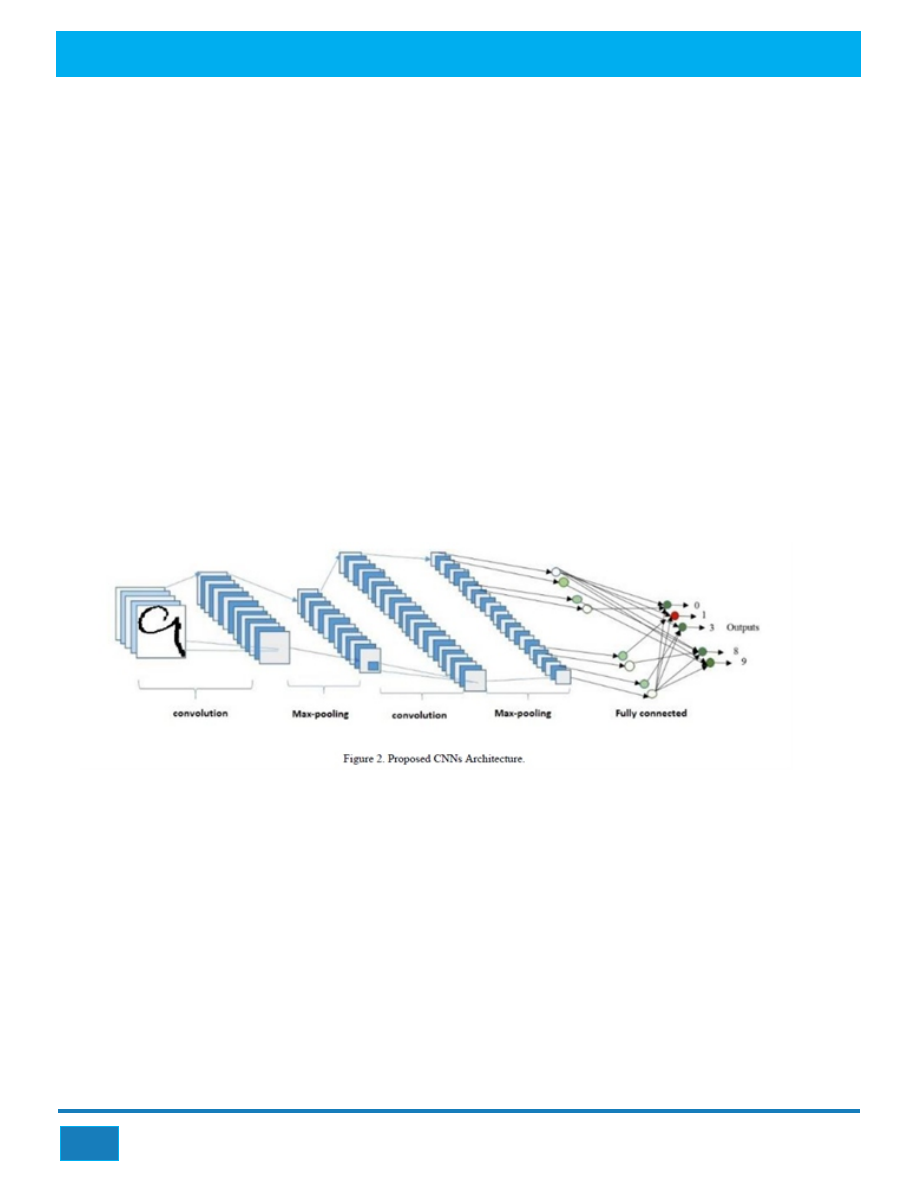
models. We use convolutional neural networks (CNNs) both for features extraction and classification
tasks. The researchers assess the performance of the proposed CNNs based model and obtained
recognition accuracy of 91.45%. A CNNs model has three main parts i.e., convolutional layers, pooling
layers and fully connected layers. We represented the kernels as N×M×C. N and M are representing
height a width of the filter and C channel. The pooling layers filters are represented by P×Q, where P and
Q represent height and width of the filter, respectively. The fully connected layer is the final layer which
performs the task of classification (Fig. 2).
This study is part of long term research strategy regarding cursive script languages. The researchers aim
to build a complete Pashtu database for ligatures in future. In the next step, complete OCR for the Pashtu
language will be developed the researchers will explore the OCR system both for offline and online
Pashtu text recognition. The researchers also have planning towards translation of Pashtu language text
to other languages. The researchers further intend to apply this proposed deep learning-based method to
other cursive script languages passing through the same un-developed phase, such as Sindhi, Punjabi, etc.
Source:
Khalil Khan, Bilawal Shah, Muhammad Waheed, Adeel Shams, Daniyal Munir Pashtu Numerals
Recognition through Convolutional Neural Networks. Journal of Applied and Emerging Sciences,
2019, Volume 9 (2) 91-96

4
Technology Roundup
New Biochemical compound breaks down Environmental Pollutants
www.sciencedaily.com/releases/2020/02/200218124348.html
New Quantum Switch turns Metals into Insulators
Enzymes with flavin cofactor play an important part in plants, fungi, bacteria and animals: as oxygenases they
incorporate oxygen into organic compounds. For instance this allows people to excrete foreign substances more
effectively. Until now scientists were agreed that such flavin-dependent oxygenases use flavin C a-peroxide as
4
oxidizing agent. This is formed by the C a-atom of the flavin cofactor reacting with atmospheric oxygen (O ),
4
2
before one of the two oxygen atoms are transferred to the compound.
The researchers from Institute of Biology II at the University of Freiburg, Germany have discovered that O also
2
reacts to flavin N -peroxide with the N5-atom of the flavin cofactor. The newly-discovered flavin N -peroxide has
5
5
different reactive characteristics than the flavin C a-peroxide. Some bacteria use this to break down stable
4
chemical compounds, including environmental pollutants such as dibenzothiophene, a component of crude oil, or
hexachlorobenzene, a plant protection agent. Using X-ray structural analysis and mechanistic studies the
scientists were able to clarify how the formation of this flavin N5-peroxide is controlled at an enzymatic level.
Scientists, now, are focussed to study biochemistry of this novel flavin in nature to improve understanding of the
role, reactivity and functionality of the flavin N -peroxide. This endeavour will allow the prediction of flavin
5
enzyme functionality or modification using biotechnology in future.
Most modern electronic devices rely on tiny, finely-tuned electrical currents to process and store information.
These currents dictate how fast our computers run, how regularly our pacemakers tick and how securely our
money is stored in the bank. The researchers at the University of British Columbia, Canada have demonstrated an
entirely new way to precisely control such electrical currents by leveraging the interaction between an electron's
spin (which is the quantum magnetic field it inherently carries) and its orbital rotation around the nucleus. The
results will help in developing understanding about working of electrical conduction as well as further exploration
of known properties such as conductivity, magnetism and superconductivity, and discover new ones that could be
important for quantum computing, data storage and energy applications."
Broadly, all materials can be categorized as metals or insulators, depending on the ability of electrons to move
through the material and conduct electricity.However, not all insulators are created equally. In a Mott insulator,
electrostatic repulsion prevents the electrons from getting too close to one another, which creates a traffic jam and
limits the free flow of electrons. Until now, there were two known ways to free up the traffic jam: by reducing the
strength of the repulsive interaction between electrons, or by changing the number of electrons.
Courtesy: phys.org/news/2020-02-biochemical-compound-environmental-pollutants
Source:

3
5
Technology Roundup
Courtesy: phys.org/news/2020-02-quantum-metals-insulators
Source:
www.sciencedaily.com/releases/2020/02/200203141439.html
New World record for Conversion of Solar Energy to Electricity using
Quantum Dots
www.sciencedaily.com/releases/2020/02/200218182208.html
Using a technique called angle-resolved photoemission spectroscopy, Mott insulator Sr2IrO4, monitoring the
number of electrons, their electrostatic repulsion, and finally the interaction between the electron spin and its
orbital rotation were monitored. The study found that coupling the spin to the orbital angular momentum slows
the electrons down to such an extent that they become sensitive to one another's presence, solidifying the traffic
jam. "Reducing spin-orbit coupling in turn eases the traffic jam and we were able to demonstrate a transition from
an insulator to a metal for the first time using this strategy.”
The findings expand the potential of modern electronics, if microscopic understanding these phases of quantum
matter and their emergent electronic phenomena is explored, it would be landmark achievement to exploit them
by engineering quantum materials atom-by-atom for new electronic, magnetic and sensing applications.
Researchers, from the University of Queensland, Australia, have set a world record for the conversion of solar
energy to electricity via the use of tiny nanoparticles called 'quantum dots', which pass electrons between one
another and generate electrical current when exposed to solar energy in a solar cell device.
The technology has a huge range of potential applications, including the possibility to use it as a flexible,
transparent skin to power cars, planes, homes and wearable technology.
The development of next generation solar power technology, as a potential source of flexible 'skin' over hard
surfaces, has moved a step closer. The development represents a significant step towards making the technology
commercially-viable and supporting global renewable energy targets. This new generation of quantum dots is
compatible with more affordable and large-scale printable technologies. The world needs to rapidly reduce
carbon emissions and this requires us to invest much more in research to improve existing energy-generation
technologies and develop entirely new ones.
Source:
6
Technology Roundup
New Tech takes Radiation out of Cancer screening
www.sciencedaily.com/releases/2020/02/200218182208.html
Researchers have developed a new, inexpensive technology that could save lives and money by routinely
screening women for breast cancer without exposure to radiation. The system uses harmless microwaves and
artificial intelligence (AI) software to detect even small, early-stage tumors within minutes.
The system, developed
by researchers at the University of Waterloo, Canada, uses harmless microwaves and artificial intelligence (AI) software to
detect even small, early-stage tumors within minutes. This technology has fast detection and is inexpensive.
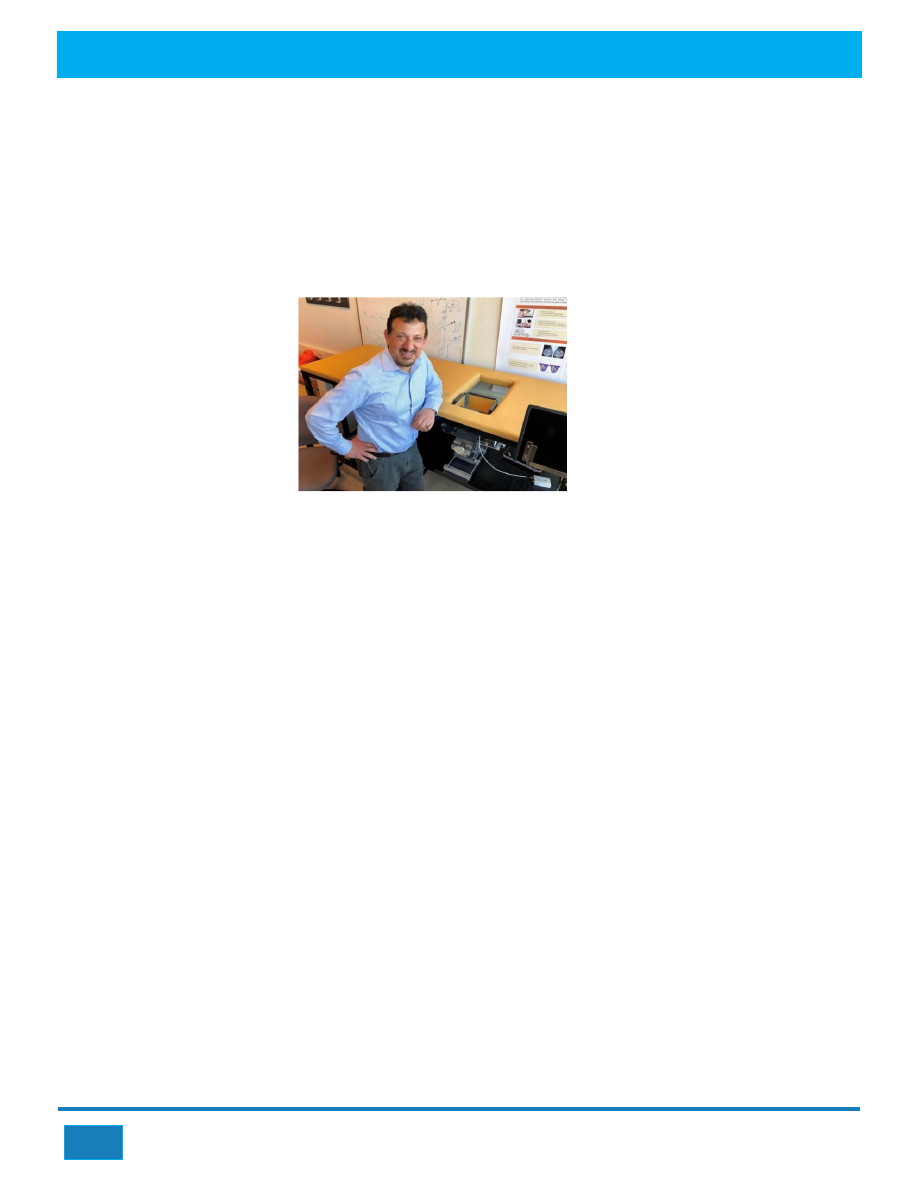
A prototype device -- the culmination of 15 years of work on the use of microwaves for tumor detection, not
imaging -- cost less than $5,000 to build. It consists of a small sensor in an adjustable box about 15 centimetres
square that is situated under an opening in a padded examination table. Patients lie face-down on the table so that
one breast at a time is positioned in the box. The sensor emits microwaves that bounce back and are then processed
by AI software on a laptop computer. By comparing the tissue composition of one breast with the other, the system
is sensitive enough to detect anomalies less than one centimeter in diameter. The negative result could quickly
rule out cancer, while a positive result would trigger referral for more expensive tests using mammography or
magnetic resonance imaging (MRI).
In addition to reducing patient wait times and enabling earlier diagnosis, the device would eliminate radiation
exposure, improve patient comfort and work on particularly dense breasts, a problem with mammograms. It
would also save health-care systems enormous amounts of money and, because of its low cost and ease of use,
dramatically increase access to screening in the developing world.
Researchers have applied for a patent and started a company, Wave Intelligence Inc. of Waterloo, to
commercialize the system and hope to begin trials on patients within six months. Three rounds of preliminary
testing included the use of artificial human torsos known as phantoms.
Courtesy: uwaterloo.ca/research/news/new-tech-takes-radiation-out-cancer-screening
Source:
7
Technology Roundup
78
Boost Soybean Yields by adapting Photosynthesis to Fleeting Shadows,
according to model
www.sciencedaily.com/releases/2020/02/200224130931.html
Scientists, from University of Illinois, USA report a new mathematical computer model that is used to
understand how much yield is lost as soybean crops grapple with minute-by-minute light fluctuations on
cloudy and sunny days. Komorebi is a Japanese word that describes how light filters through leaves -- creating
shifting, dappled "sunflecks" that illustrate plants' ever-changing light environment. Crops harness light
energy to fix carbon dioxide into food via photosynthesis. "Soybean is the fourth most important crop in terms
of overall production, but it is the top source of vegetable protein globally.
The study found that soybean plants may lose as much as 13 percent of their productivity because they cannot
adjust quickly enough to the changes in light intensity that are standard in any crop field. It may not sound like
much, but in terms of the global yield -- this is massive."
is an international research project that aims to improve photosynthesis to equip farmers worldwide with
higher-yielding crops needed to ensure everyone has enough food to lead a healthy, productive life. RIPE is
sponsored by the Bill & Melinda Gates Foundation, the U.S. Foundation for Food and Agriculture Research
(FFAR), and the U.K. Government's Department for International Development (DFID).
Past models have only examined hour-by-hour changes in light intensity. For this study, the team created a
dynamic computational ray-tracing model that was able to predict light levels to the millimeter across every
leaf for every minute of the day in a flowering soybean crop. The model also takes into account two critical
factors: photoprotection and Rubisco activase. Photoprotection protects plants from sun damage. Triggered by
high light levels, this process dissipates excess light energy safely as heat. But, when light levels drop, it can
take minutes to hours for photoprotection to relax, or stop -- costing the plant potential yield. The team
evaluated 41 varieties of soybean to find out the fastest, slowest, and average rate from induction to the
relaxation of photoprotection. Less than 30 minutes is considered "short-term," and anything longer is "long-
term" photoprotection.
Using this new model, the team simulated a sunny and cloudy day in Champaign, Illinois. On the sunny day,
long-term photoprotection was the most significant limitation of photosynthesis. On the cloudy day,
photosynthesis was the most limited by short-term photoprotection and Rubisco activase, which is a helper
enzyme -- triggered by light -- that turns on Rubisco to fix carbon into sugar. The RIPE project has already
begun to address photoprotection limitations in soybean and other crops, including cassava, cowpea, and rice
to attain full potential of crops.
Realizing Increased Photosynthetic Efficiency (RIPE)
Courtesy: aces.illinois.edu/news/boost-soybean-yields-adapting-photosynthesis-fleeting-shadows-
according-model
Source:

7
Technology Roundup
Skin-like Sensors bring a Human Touch to Wearable Tech
www.sciencedaily.com/releases/2020/01/200108123149.html
Researchers have developed a super-stretchy, transparent and self-powering sensor that records the complex
sensations of human skin. Dubbed artificial ionic skin -- or AISkin for short -- the researchers believe the
innovative properties of AISkin could lead to future advancements in wearable electronics, personal health
care and robotics.
University of Toronto Engineering researchers, Canada, have developed a super-stretchy, transparent
and self-powering sensor that records the complex sensations of human skin.
Being hydrogel material, it's inexpensive and biocompatible -- you can put it on the skin without any toxic
effects. It's also very adhesive, and it doesn't fall off, so there are so many avenues for this material. The
adhesive AISkin is made of two oppositely charged sheets of stretchable substances known as hydrogels. By
overlaying negative and positive ions, the researchers create what they call a "sensing junction" on the gel's
surface. When the AISkin is subjected to strain, humidity or changes in temperature, it generates controlled ion
movements across the sensing junction, which can be measured as electrical signals such as voltage or current.
AISkin is also uniquely tough and stretchable. Our human skin can stretch about 50 per cent, but AISkin can
stretch up to 400 per cent of its length without breaking. The new AISkin could open doors to skin-like Fitbits
that measure multiple body parameters, or an adhesive touchpad you can stick onto the surface of your hand. It
could work for athletes looking to measure the rigour of their training, or it could be a wearable touchpad to
play games.It could also measure the progress of muscle rehabilitation.
Another application is in soft robotics -- flexible bots made completely out of polymers. An example is soft
robotic grippers used in factories to handle delicate objects such as light bulbs or food. The researchers
envision AISkin being integrated onto soft robots to measure data, whether it's the temperature of food or the
pressure necessary to handle brittle objects.
The next goal is to shrink the size of AISkin sensors through microfabrication. Bio-sensing capabilities to the
material will also be added, allowing it to measure biomolecules in body fluids such as sweat. This could also
be helpful for developing smart bandage as wound healing requires breathability, moisture balance -- ionic skin
feels like the natural.
Courtesy: startupheretoronto.com/partners/uoft/skin-like-sensors-bring-a-human-touch-to-wearable-tech
Source:

Technology Roundup
Technology Roundup
Pakistan
Solar Pakistan Exhibition
World Congress on Pollution Control
www.sciencenet.co/event/index.php?id=1181640
International Conference on Science, Engineering & Technology
www.10times.com/icset-pakistan
International
International Science, Technology and Engineering Conference
www.10times.com/istec-penang
International Conference On Science Technology And Management
https://10times.com/icstm-b
EU Sustainable Energy Week
World Congress On Materials Science And Engineering
19-21 March, 2020
Expo Centre, Lahore, Pakistan
15-16 April, 2020
28-29 July, 2020
Pearl Continental Hotel, Rawalpindi
8-10 April, 2020
George Town, Malaysia
www.10times.com/solar-pakistan-exhibition
Invention to Innovation Summit Islamabad
www.pastic.gov.pk
www.https://10times.com/eusew
Quaid-i-Azam University, Islamabad
28-29 April, 2020
Hotel & Golf Course Gulshan-I-Maymar Road, Karachi
13-14 May, 2020
Brussels, Belgium
23-25, June 2020
Belgium
24-25 August, 2020
Czech Republic
Forthcoming Tech Events
9
Tech & Trade Offers
About PASTIC
PASTIC serves as a gateway for
Scientific & Technological
Information for R&D by catering
to the information needs of
researchers, entrepreneurs,
industrialists, educationists,
policy makers and planners
t h r o u g h a n t i c i p a t o r y a n d
responsive information services.
T e c h n o l o g y I n f o r m a t i o n
Section works exclusively for
support and promotion of
technological information on
trade and industry in the
country. “Technology Roundup”
is a news bulletin that provides
latest and innovative technology
news, forthcoming events, etc. It
a l s o p r o m o t e s p r o d u c t s ,
technologies and services
globally in sectors such as Agro-
Industry, Bio-Technology,
Building Material, Business,
Chemicals, Electronics, Energy,
Fisheries, Food Processing,
Machinery, Packaging, Mining
Pharmaceuticals and Textiles.
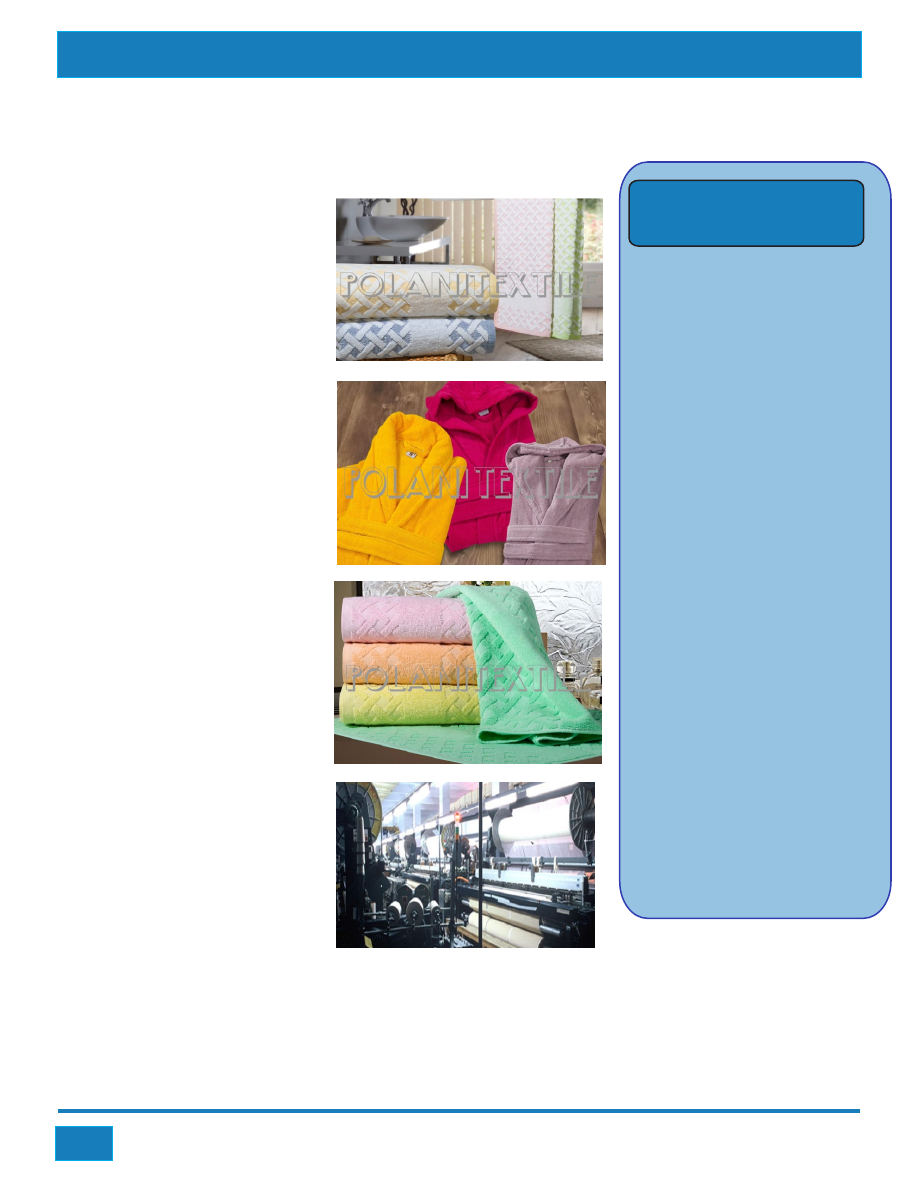
POLLANI TEXTILE
P o l a n i Te x t i l e s i s a l e a d i n g
manufacturer and exporter of terry
products in Pakistan.
Strong business ethics, excellence in
b u s i n e s s , p r o d u c t i v e w o r k
e n v i r o n m e n t , c o n t i n u o u s
improvement through sound corporate
governance and dynamic employee
engagement have been at the
foundation of the success of the
company.
We are an ISO 9001:2008 certified
company, we produce best quality
towels and bathrobes for our
c u s t o m e r s g l o b a l l y f o r b o t h
institutional and retail purpose and are
known in the international market for
quality, service and commitments.
Contct us:
Plot # B-24/A, S.I.T.E.
Karachi – 75700,
Phone +92-21-3258-2791/4
Nadeem Polani (CEO)
Website: https://www.polanitex.com
Email : npolani@polanitex.com
Technology Roundup
Please give us your feedback and address queries to tis.pastic@gmail.com
10