
Executive Editor
Prof. Dr. Muhammad Akram Shaikh
Director General, PASTIC
Managing Editors
Ms. Nageen Ainuddin
Dr. Saima Huma Tanveer
Editor
Dr. Syed Aftab Hussain Shah
Composer
Kashif Farooqui
T
ECHNOLOGY
R
OUNDUP
Technology Information Services Section (TIS)
Pakistan Scientific & Technological Information Centre
PASTIC
November-December, 2019
Vol.11 No 6
A NEWS BULLETIN
Tech News Headlines
Tech & Trade Offers
Phone: 051-9248103-4, 9248128
Fax: 051-9248113
Email: tis.pastic@gmail.com
Web: www.pastic.gov.pk
PASTIC National Centre
Quaid-i-Azam University Campus
P.O. Box 1217, Islamabad
Editorial Board
l
l
l
l
l
l
l
l
Recognition of Off-Line Hand-Written Alphabets using Knowledge-
Based Computational Intelligence
First Pakistani Startup receives an investment directly from the Bill
& Gates Foundation to develop Innovative Artificial Intelligence
Models for Data Collection
Diabetes Drug relieves Nicotine withdrawal
New Antenna Tech to equip ceramic coatings with heat Radiation
Control
The Smell of old books could help preserve them: Development of
Electronic Nose
Study on greatest benefits of global renewable energy investments
New Artificial Intelligence System automatically evolves to evade
internet censorship
Coated Seeds may enable Agriculture on Marginal Lands
Forthcoming Tech Events
l
l
International Bhurban Conference on Applied Sciences &
Technology
International Conference on Computing, Mathematics Engineering
Technologies
Solar Pakistan Exhibition
International Conference on Science, Engineering & Technology
International Conference on Science Technology and Management
International Conference on Research in Science and Technology
International Conference on Information and Education Technology
International Science, Technology and Engineering Conference
l
l
l
l
l
l
P
AKISTAN
STEEL
Technology Roundup
2
Recognition of Off-Line Hand-Written Alphabets Using Knowledge-Based
Computational Intelligence
Source:
G. Abbas, “Recognition of Off-Line Hand-Written Alphabets Using Knowledge-Based Computational
Intelligence”, PakJET, vol. 2, no. 1, pp. 1-8, Aug. 2019.
The handwritten character recognition is considered an active recognition problem under the field of image
processing and pattern recognition. Both area of research has gained so much popularity in last few years due
to technology advancements and necessity of time. The handwritten character recognition also becomes
popular due to globalization and technology improvements. In previous time, the information was stored in
written form only. To utilize that information, one needs such an advanced method which can do this task
efficiently and without reliance on human.
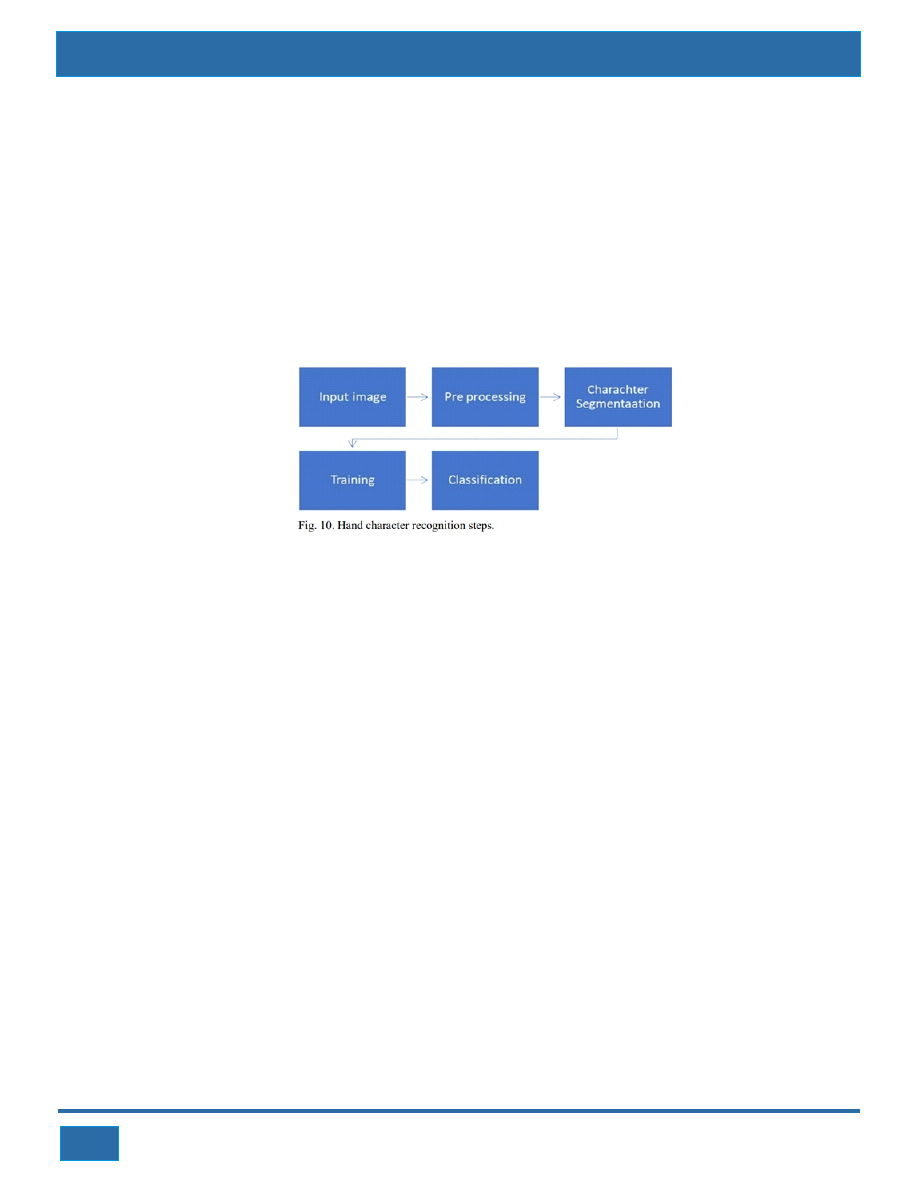
This work provides such a simplified and accurate method for the recognition of handwritten characters. A
system is proposed to recognize characters using convolutional neural network and is evaluated on a
benchmark dataset named as EMNIST to show the performance of the proposed technique. The proposed
system gained the accuracy of 97.62% which is better than various existing methods.
Technology Roundup
3
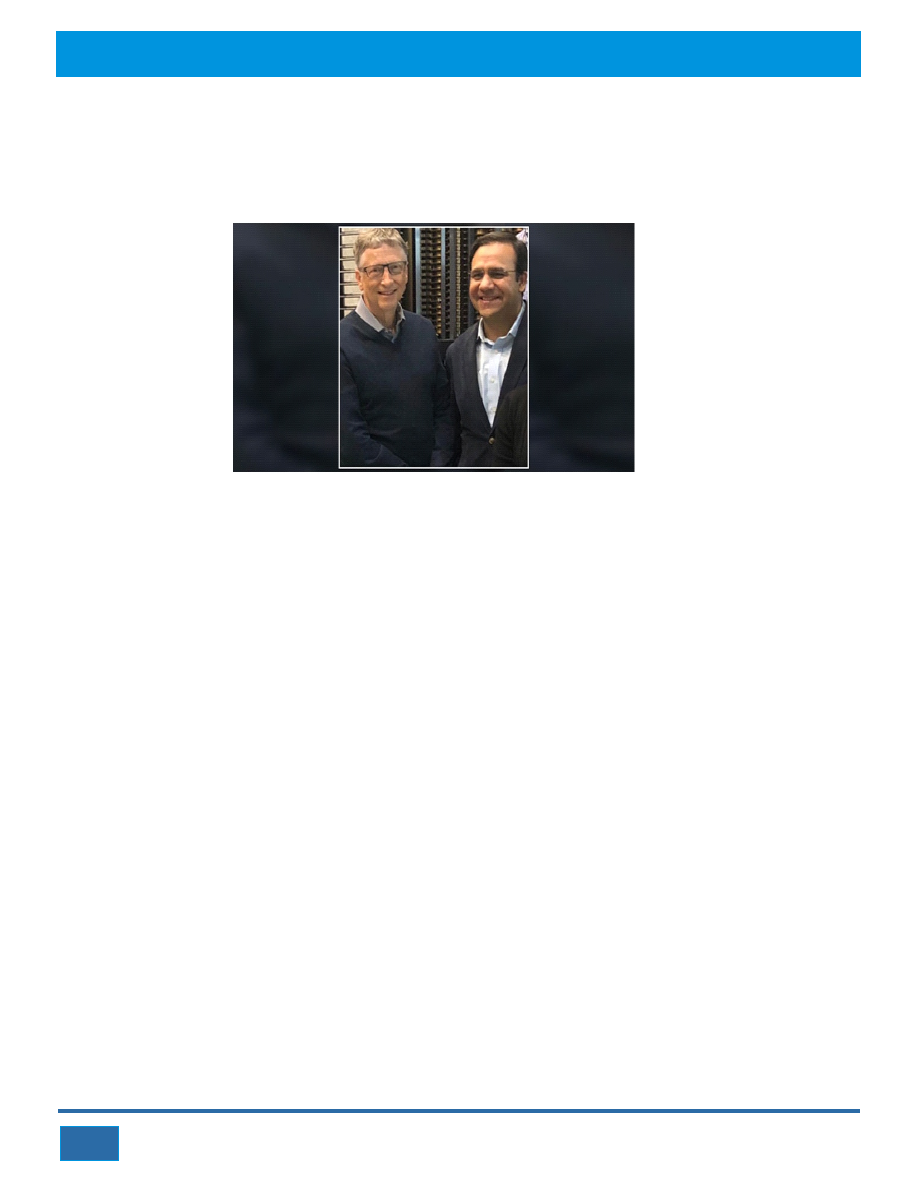
First Pakistani Startup receives an investment directly from the Bill &
Gates Foundation to develop Innovative Artificial Intelligence Models
for Data Collection.
Source:
www.suchtv.pk/technology/item/92179-former-pitb-chairman-dr-umar-saif-s-startup-receives-
investment-from-bill-melinda-gates-foundation.html
The startup is aiming to disrupt $75 Billion market research industry using recent advances in Artificial Intelligence.
An industry expert familiar with the company termed it as an “uber” for field data collection, where SurveyAuto relies on
local community members with smartphones to report data rather than relying on expensive dedicated teams. “What
Uber has done to taxi services, they are aiming to do the same to traditional market research companies like Neilsen and
Gallup.”
“SurveyAuto uses a crowd sourcing model and relies on machine learning to decide who reports data, where it is
collected, and when and how often it is reported. This reduces cost and minimizes human errors,” said Dr. Umar Saif,
founder and CEO of SurveyAuto. SurveyAuto uses machine learning on satellite imagery and open street maps to
accurately identify survey targets, tracks and monitors enumerators in real-time using smartphone applications, and uses
speech and image analysis to automatically analyze the quality of collected data.
The investment marks the latest in a series of large-scale engagements for SurveyAuto. SurveyAuto is working on
several global projects with the World Bank, Innovations in Poverty Action (IPA), ITA, UNESCO and other
development organizations. SurveyAuto is headquartered in Lahore, Pakistan with offices in Amsterdam and Boston,
MA.
4
Technology Roundup
Diabetes Drug relieves Nicotine Withdrawal
Source:
www.sciencedaily.com/releases/2019/11/191104130439.html
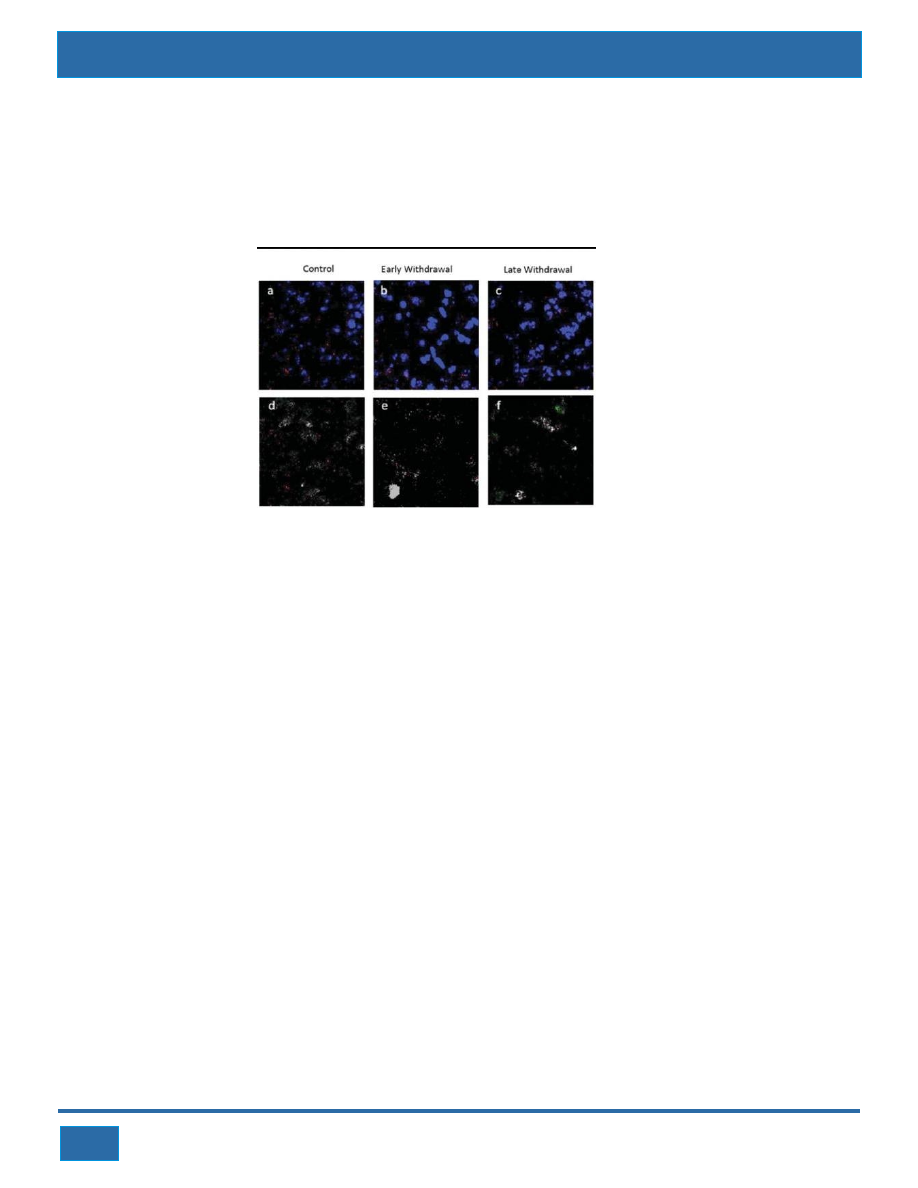
A drug commonly used to treat Type II diabetes abolishes the characteristic signs of nicotine withdrawal in rats and
mice, according to new research published in Jneurosci.
Smokers trying to quit face potent side effects from nicotine withdrawal, including cravings, increased appetite,
restlessness, anxiety, irritability, and depression. Even though they may want to quit, many smokers continue to
smoke simply because the experience is so unpleasant. The diabetes drug, pioglitazone, targets a specific form of
the peroxisome proliferator-activated receptors in the nucleus. This receptor, PPARγ, is found in areas of the brain
involved in drug addiction. Direct injections of pioglitazone into the hippocampi of male mice reduced the signs of
physical nicotine withdrawal, including paw tremors, chattering, and head shakes. Injecting pioglitazone into the
amygdala of male mice ameliorated signs of anxiety associated with nicotine withdrawal.
Nicotine abusers face a 30% higher risk of developing Type II diabetes. The researchers suggest pioglitazone may
help diabetic smokers quit by lessening the physical and emotional withdrawal symptoms while reducing insulin
resistance.
3
5
Technology Roundup
New Antenna Tech to equip ceramic coatings with heat Radiation Control
Source:
www.sciencedaily.com/releases/2019/11/191121183927.html
The Smell of old books could help preserve them: Development of Electronic
Nose
Researchers from Purdue University, Indiana, USA have developed a way for ceramic coatings to control heat
radiation, a feature that could increase the performance of aircraft engines operating at high temperatures.
Researchers have developed a way for ceramic coatings to control heat radiation, a feature that could increase the
performance of aircraft engines operating at high temperatures.
They have engineered ceramic "nanotubes" that behave as thermal antennas, offering control over the spectrum
and direction of high-temperature heat radiation. By controlling radiation at these high temperatures, we can
increase the lifetime of the coating. The performance of the engine would also increase because it could be kept
hotter with more isolation for longer periods of time.
These boron nitride nanotubes control radiation through oscillations of light and matter, called polaritons, inside
the ceramic material. High temperatures excite the polaritons, which the nanotubes -- as antennas -- then couple
efficiently to outgoing heat radiation.
The antennas could bring the ability to accelerate the radiation, perform enhanced cooling of a system or send
information in very specific directions or wavelengths.
Old books give off a complex mélange of odors, ranging from pleasant (almonds, caramel and chocolate) to
nasty (formaldehyde, old clothes and trash). Detecting early signs of paper degradation could help guide
preservation efforts, but most techniques destroy the very paper historians want to save. Now, researchers have
developed an electronic nose that can non-destructively sniff out odors emitted by books of different paper
compositions, conditions and ages.
Courtesy: Marta et al., 2019. DOI:
10.1021/acssensors.9b01279

6
Technology Roundup
Paper is made primarily of cellulose, along with other plant components, and additives that improve the paper's properties.
Cellulose is resistant to ageing, but the other paper components are much more vulnerable to degradation by heat, humidity
and UV light. Before 1845, paper was made mainly from cotton and linen rags, which were relatively pure forms of cellulose
and therefore quite stable. Then, in 1845, inventors developed a process to make paper from wood-pulp fibers. This paper is
less durable than that made from cotton, but wood is cheaper and more readily available. In 1980, the advent of acid-free
paper was a boon to preservationists because it degrades much more slowly than acidic wood-pulp paper.
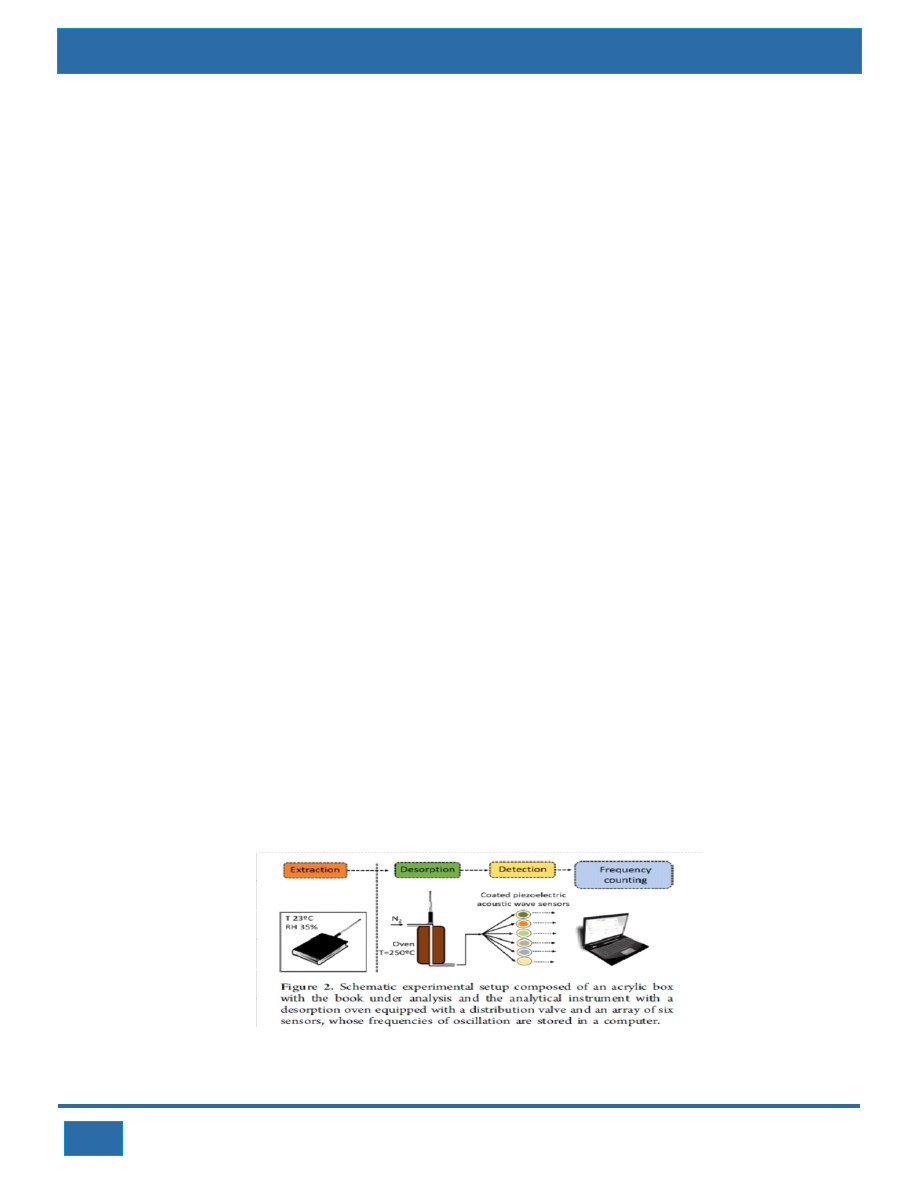
The researchers from University of Aveiro, Portugal have developed an electronic nose that could non-destructively detect
early signs of paper degradation from the volatile organic compounds (VOCs) books emit. The researchers collected 19
books published from 1567 to 2016. They classified the books by time period, paper composition, color and visible state.
Then, the researchers collected VOCs released from the books and detected the gases with an electronic nose containing six
sensors that selectively bound different VOCs.
The electronic nose clearly distinguished between paper from cotton or linen rags and paper from wood, as well as among
books from three different time periods. Unexpectedly, some books published after 1990 still contained acidic paper, which
the sensor discriminated from books with acid-free paper. And finally, the device sniffed out yellowing books, and new and
used books from the same time period. The sensitive new method could help identify books in need of preservation, as well
as help protect books from VOCs emitted by their neighbors on a shelf.
Source:
www.sciencedaily.com/releases/2019/11/191113112004.html
Study on greatest benefits of Global Renewable Energy Investments
New study finds that the amount of climate and health benefits achieved from renewable energy depends on the country
where it is installed. Countries with higher carbon dioxide (CO2) emissions and more air pollution, such as India, China, and
areas in Southeast Asia and Eastern Europe, achieve greater climate and health benefits per megawatt (MW) of renewable
energy installed than those operating in areas such as North America, Brazil, and parts of Europe.
Researchers from Harvard T.H. Chan School of Public Health measured two types of benefits -- climate benefits
(reductions in carbon emissions) and health benefits (decreased mortality attributable to harmful air pollution) -- and
developed a user-friendly model to compare how those benefits vary based on where renewable energy is operating. They
found climate benefits are greatest in countries where the electricity grid is largely powered by coal with less-efficient
plants, including Mongolia, Botswana, Estonia, Iraq, and Australia. Health benefits are greatest in countries with higher
population densities where people are living downwind of emissions sources, including Myanmar, Bangladesh, Ethiopia,
India, and large parts of Eastern Europe.
This new global model allows us to estimate benefits from renewables at the country-level, both from reducing greenhouse
gas emissions, and including the massive health benefits achieved from reductions in air pollution. That hasn't been done

7
Technology Roundup
before in the sustainable investment world," said lead author Jonathan Buonocore, a research associate at Harvard C-
CHANGE. "For example, the results show that a wind turbine or solar panel can save 30 times more lives if it is placed in
India -- where air pollution is often a major public health issue -- than if that same turbine or panel is placed in the U.S.,
and climate benefits will be about twice as high.
This framework can be used by policymakers and investors to reach the Sustainable Development Goals set by the UN in
2015. The goals include ensuring access to clean and affordable energy (SDG 7) and promoting good health and
wellbeing (SDG 3) by 2030.
Computer Scientists from University of Maryland developed a tool called Geneva (short for Genetic Evasion), which
automatically learns to circumvent censorship. Tested in China, India and Kazakhstan, Geneva found dozens of ways to
circumvent censorship by exploiting gaps in censors' logic and finding bugs that the researchers say would have been
virtually impossible to find manually.
Internet censorship by authoritarian governments prohibits free and open access to information for millions of people
around the world. Attempts to evade such censorship have turned into a continually escalating race to keep up with ever-
changing, increasingly sophisticated internet censorship. Censoring regimes have had the advantage in that race, because
researchers must manually search for ways to circumvent censorship, a process that takes considerable time.
Known as a genetic algorithm, Geneva is a biologically inspired type of artificial intelligence developed to work in the
background as a user browses the web from a standard internet browser. Like biological systems, Geneva forms sets of
instructions from genetic building blocks. But rather than using DNA as building blocks, Geneva uses small pieces of
code. Individually, the bits of code do very little, but when composed into instructions, they can perform sophisticated
evasion strategies for breaking up, arranging or sending data packets.
The researchers plan to release their data and code in the hopes that it will provide open access to information in countries
where the internet is restricted. If Geneva can be deployed on the server side and work as well as it does on the client side,
then it could potentially open up communications for millions of people.
Source:
www.sciencedaily.com/releases/2019/11/191112090642.html
New Artificial Intelligence System Automatically Evolves to Evade
Internet Censorship
Source:
www.sciencedaily.com/releases/2019/11/191113124822.html
7
Technology Roundup
78
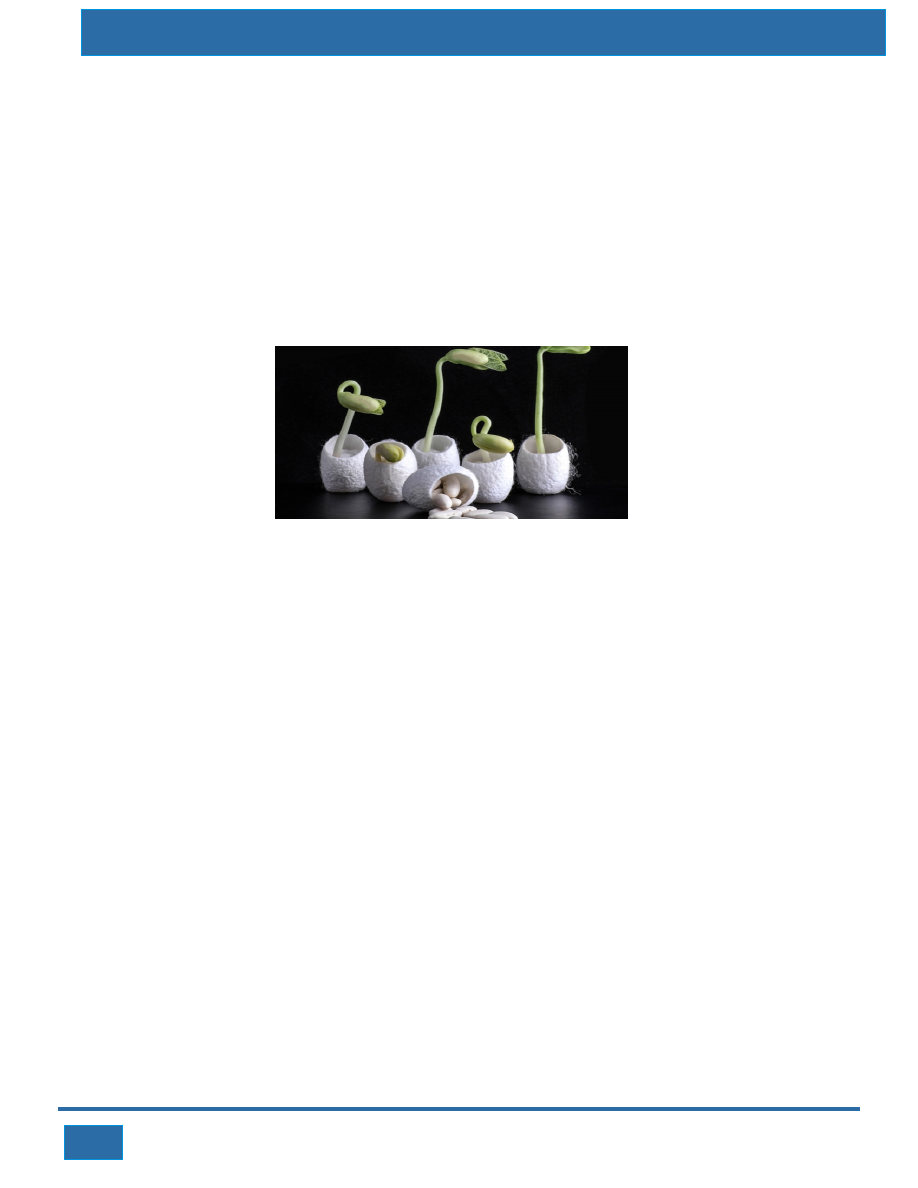
Co ted S d ma enabl griculture o M rg nal and
a
ee s
y
e A
n
a
i
L
s
Source:
ww.sci
daily.com rel
/2019/11/191
153004.html
w
ence
/
eases
125
s eciali
l
ver ng cou d prot
seeds f o sal nity whi e als
ding fer ilizer gen ati
A p
zed si k co
i
l
ect
r m
i
l
o provi
t
-
er
ng
microbes
Providi
seeds wi h prot
ive coati
that al o s ppl es essential n ri
s to he
r inat ng lan
d
ng
t a
ect
ng
s
u
i
ut ent
t
ge m
i
p
t coul
make it poss ble to grow o in th wise unproducti
o l acco ding t
res
ch
i
cr ps
o er
ve s i s,
r
o new
ear
.
The engi eer have
ed s
s w th silk t
as been treated wi h kind bact ia that natur ly p od
a
n
s
coat
eed i
hat h
t a
of
er
al
r
uce
ni rogen fer il zer, to help t
inat ng plant
op T ts have show
hat t
eed can
ow
t
t i
he germ
i
s devel
. es
n t
hese s
s
gr
s
fully i soils hat e t
sal y t allow
reat d seeds o develop
mal y. T
resear
er hope this
uccess
n
t
ar
oo
t
o
unt
e
t
nor
l
he
ch s
s, w ch can be appl ed inexpensi
y and w thout the need f specialized equi
en , coul
n
proces
hi
i
vel
i
or
pm
t
d ope up
eas of and to f mi
hat ar n
consi
u u t ble for r cult e.
ar
l
ar
ng t
e ow
dered ns i a
ag i
ur
Al hough thes nit og
fixin bacter a occur
ural y i soils ar
nd he w ld, ith differ
t l
varieti
t
e
r
en-
g
i
nat
l
n
ou
t
or
w
en ocal
es
found in different egions, they are very hard t pr
ve
si e of t
r natur soil
ronment But silk can
r
o
eser
out d
hei
al
envi
.
preser
bi ogical
aterial, so Marel i and his eam decided to t y t out n t
itr gen-f xing bacter a,
ve ol
m
l
t
r i
o
hese n o
i
i
known as rhizobact r a.
e i
The si k, bact r a, and trehalose ere l
p
n w er, and the esearchers sim y soaked t
seeds i the
l
e i
w
al sus ended i
at
r
pl
he
n
s uti
for a few seconds to produ
an even coat ng. T
n the seeds wer t
ed b h
T
a research
ol
on
ce
i
he
e est
at ot MI and
a l ty
ed by he
am ed I P ytechni Uni
sity i B
Guerir Morocco. "It s ow
t e
f ci i
operat
t
Moh
m
V
ol
c
ver
n
en
,
h
ed h
echnique w
very w l.
t
orks
el
T e esult ng pl
ts, hel ed
goi
fert lizer product on by t e
eri
d
ope in etter
th han
h r
i
an
p
by on
ng
i
i
h bact
a, evel
d
b
heal
t
those fr
ntreated seeds and
successf lly in soil rom fi ds that ar pr
ly not producti
f
om u
grew
u
f
el
e
esent
ve or
agri
lture.
cu

Technology Roundup
Technology Roundup
Pakistan
International Bhurban Conference on Applied Sciences & Technology
www.researchsociety.co
International Conference on Computing, Mathematics Engineering
Technologies
www.10times.com/icomet-sukkur
Solar Pakistan Exhibition
International Conference on Science, Engineering & Technology
www.10times.com/icset-pakistan
International
International Conference on Education and Management Innovation
www.wikicfp.com
International Conference on Research in Science and Technology
www.rstconf.org
International Conference on Information and Education Technology
www.iciet.org
International Science, Technology and Engineering Conference
www.10times.com/istec-penang
14-18, January 2020
Islamabad
29-30 January, 2020
Sukkur Institute of Business Administration, Sukkur
19-21 March, 2020
Expo Centre, Lahore, Pakistan
www.10times.com/solar-pakistan-exhibition
28-29 July, 2020
Pearl Continental Hotel, Rawalpindi
13-15 February, 2020
Barcelona, Spain
20-22 March, 2020
Berlin, Germany
28-30 March, 2020
Okayama University, Japan
8-10 April, 2020
George Town, Malaysia
Forthcoming Tech Events
9
Tech & Trade Offers
About PASTIC
PASTIC serves as a gateway for
Scientific & Technological
Information for R&D by catering
to the information needs of
researchers, entrepreneurs,
industrialists, educationists,
policy makers and planners
t h r o u g h a n t i c i p a t o r y a n d
responsive information services.
T e c h n o l o g y I n f o r m a t i o n
Section works exclusively for
support and promotion of
technological information on
trade and industry in the
country. “Technology Roundup”
is a news bulletin that provides
latest and innovative technology
news, forthcoming events, etc. It
a l s o p r o m o t e s p r o d u c t s ,
technologies and services
globally in sectors such as Agro-
Industry, Bio-Technology,
Building Material, Business,
Chemicals, Electronics, Energy,
Fisheries, Food Processing,
Machinery, Packaging, Mining
Pharmaceuticals and Textiles.
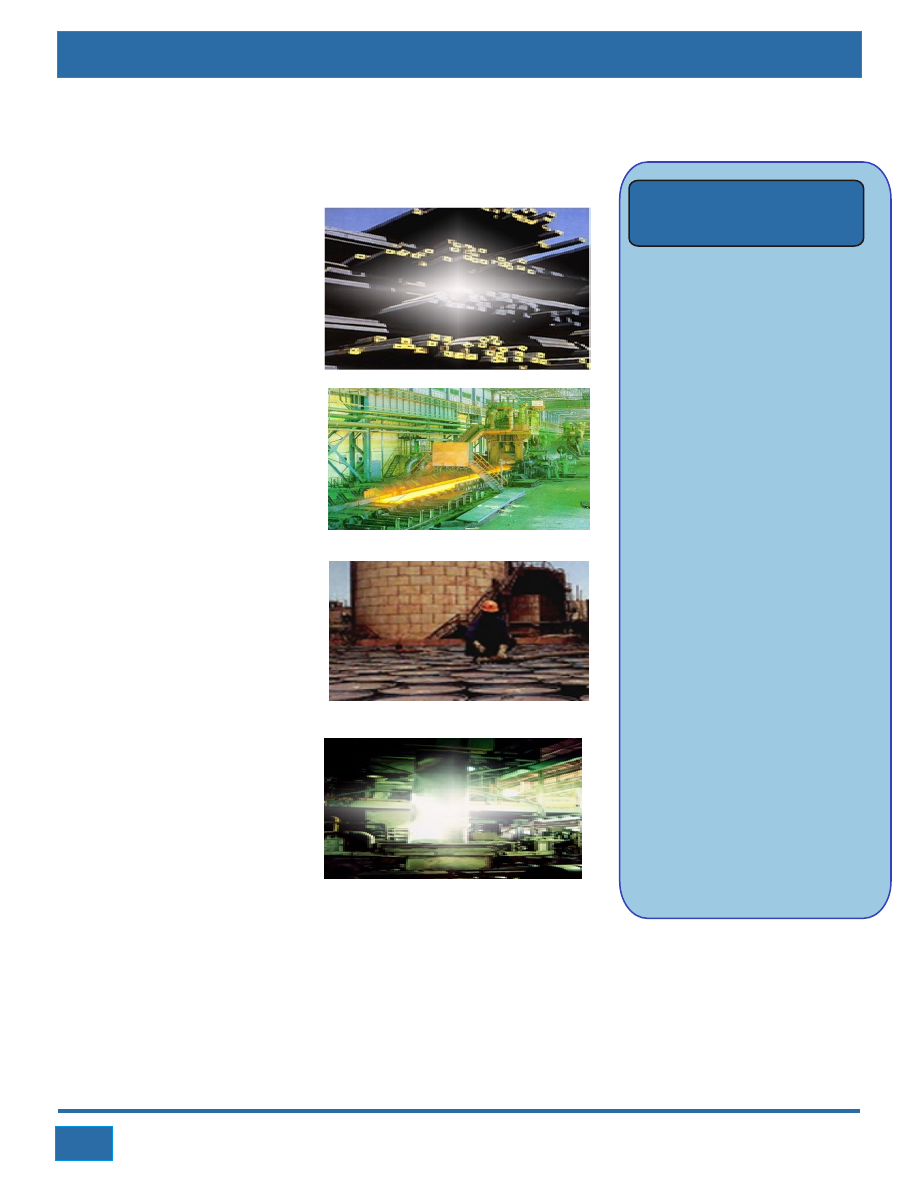
PAKISTAN STEEL
Pakistan Steel is strategically located
40km south east of Karachi in close
vicinity to port Muhammed Bin Qasim.
Pakistan Steel is a costal site which lies
on the National Highway and is linked
to the railway network. Spread over an
area of 18,600 acres (29 square miles)
with 10,390 acres for the main plant,
8070 acres for the township and 200
acres for the water reservoir Pakistan
Steel is Pakistan's largest industrial
complex, comprising component units
numbering more than 20. It specialises in
the production of flat steel products
including, billets, slabs, hot rolled coils,
c o l d r o l l e d c o i l s , g a l v a n i s e d
sheets/coils/formed sections and
corrugated sheets. It supplies high
quality and cost effective steel products
to the domestic market. Pakistan Steel's
c o n s t a n t e ff o r t s i n c o n t i n u o u s
improvement and quality management
have resulted in accreditation in ISO
9001, 14001, 17025, SA 8000 and
OHSAS 18001.
Engineering Design Services
Electronics Services
Electrical Services
Mechanical Services
Metallurgical Services
Engineering Testing Services
Electrical Testing & Calibration
!
!
!
!
!
!
Contact us
Pakistan Steel Bin Qasim
Karachi 75000
+92 - 21 -9 9264222
+92 - 21 - 34750271
Email: info@paksteel.com.pk
Website http: www.paksteel.com.pk
Technology Roundup
Please give us your feedback and address queries to tis.pastic@gmail.com
10