
Executive Editor
Prof. Dr. Muhammad Akram Shaikh
Director General, PASTIC
Managing Editor
Dr. Syed Aftab Hussain Shah
Composer
Mrs. Shazia Parveen
T
ECHNOLOGY
R
OUNDUP
Technology Information Services Section (TIS)
Pakistan Scientific & Technological Information Centre
PASTIC
Nov-Dec, 2021
Vol.13 No 6
A NEWS BULLETIN
Tech News Headlines
Tech & Trade Offers
Phone: 051-9248103-4, 9248128
Fax: 051-9248113
Email: tis.pastic@gmail.com
Web: www.pastic.gov.pk
PASTIC National Centre
Quaid-i-Azam University Campus
P.O. Box 1217, Islamabad
Editorial Board
l
The Catalyst GIK Incubator inaugurated
l
Pakistani Startup EPTeck Won Silver Medal in Global
Innovation Challenge Organized by FAO United Nations
l
Scientists demonstrate a novel rocket for deep-space exploration
l
Researchers develop advanced catalysts for clean hydrogen
production
l
N-type conductive tin sulfide thin films: Towards
environmentally friendly solar cells
l
First model to predict lifetime risk of heart failure
l
Automatic, non-invasive identification of Holstein cows by their
coat pattern
l
IT security: Computer attacks with laser light
Forthcoming Tech Events
l
Pakistan Science Expo
l
Build 2022 Construction Trade Fair
l
International Conference on Science, Engineering & Technology -
ICSET 2022.
l
World Congress on Industrial Biotechnology (WCIB)
l
International Conference on Engineering & Technology
l
IMPACT 2022
l
MicroStrategy World 2022
l
Developer Week
l
Digital Geospatial Intelligence (DGI)
GREENOVATION
COMMERCIAL FUEL
WASTE MANAGEMENT
THERMAL INSULATION

Technology Roundup
2
The Catalyst GIK Incubator inaugurated
The Catalyst GIK Incubator has been inaugurated by Mr. Atif Khan, Minister for Science and Technology &
Information Technology, Department Khyber Pakhtunkhwa on December 14th, 2021.
To create an atmosphere for nurturing ideas into commercialized products, GIK University in partnership
with the provincial Government of Khyber Pakhtunkhwa, has set up a state-of-the-art Incubator facility. The
Incubator allows budding entrepreneurs access to the latest technology equipment, machinery and research
know-how necessary to facilitate product design and commercialization. Top teams are selected from
business plan competitions held regularly throughout the year.
The Catalyst GIK Incubator is a technology incubator and the only residential Incubator in Pakistan, where
start-ups live on the campus free of cost and spend most of their time building the next big thing. Funded and
supported by Directorate of Science and Technology, Government of Khyber Pakhtunkhwa.
Atif Khan said that the KP government would extend complete financial support to the GIK Institute and
some of its projects would be included in the current financial year and the remaining in the 2022-23 annual
development programme.
For further information visit:
https://giki.edu.pk/the-catalyst-gik-incubator/
c
Technology Roundup
Pakistani Startup EPTeck Won Silver Medal in Global Innovation
Challenge Organized by FAO United Nations
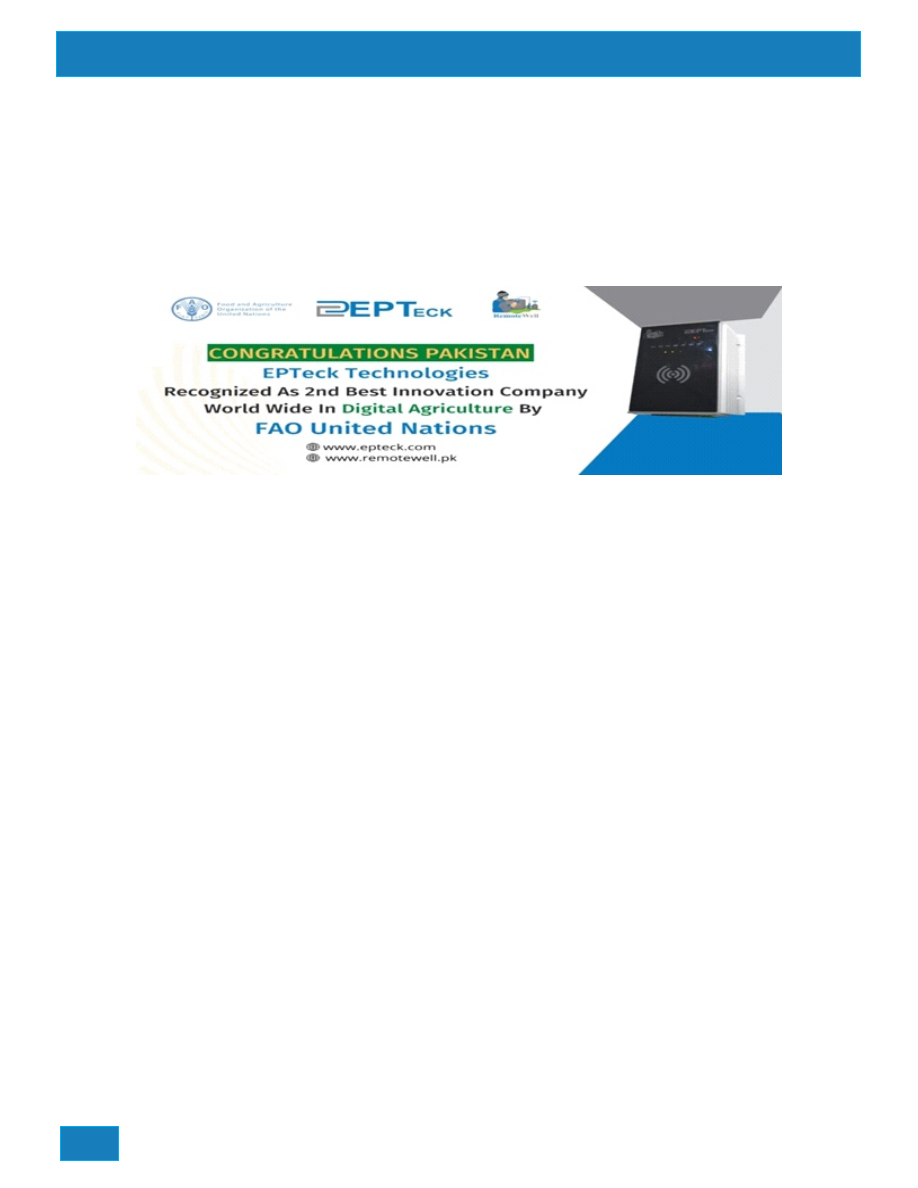
According to the official source of Startup Pakistan, Pakistani Startup; EPTeck recently got 2nd Position and
a silver medal globally in “Global AgriInno Challenge 2021” by the FAO (Food & Agriculture Organization)
of United Nations
In Global AgriInno Challenge 2021, a total of 157 innovative ideas from 37 countries were submitted.
However, in only four weeks, 9 experts from world-renowned organizations evaluated the innovative
products and also shortlisted the top 10 best products.
The final round of the challenge was quite interesting that consists of 36 hours of online training with
different speakers and trainers to get ready for the final pitches. Moreover, after the final round, the results
were announced which makes Pakistan proud. EPTeck presented its innovative solution for Digital
Agriculture named “RemoteWell” and got 2nd Position (Silver Medal) among 157 innovative products from
37 countries. The event was organized by the Food & Agriculture Organization of United Nations in
cooperation with Zhejiang University, Ministry of Agriculture China, and International Telecommunication
Union.
EPTeck Technologies is an embedded, automation, and software development company led by passionate
Pakistani engineers based in Germany and Pakistan. The company is successfully providing a product
sustainable solution for digital and precision agriculture.
EPTeck provides a solution that is easily adaptable to the existing ecosystem for farmers. It works through the
farmer's mobile app. The company impacts the Socio-Economic sustainable change in our culture and
society.
Smart control of Water Flow/ TubeWells and Smart Control of Drip Irrigation Deployed is handled through a
RemoteWell. It is currently deployed in 7 districts of Pakistan Lahore, Faisalabad, Gujranwala, Pakpattan,
Okara, Lodhran, and Bahawalpur. The company has got a great response from farmers groups and deploying
the product all over the country in 2022. EPTeck is going for RemoteWell “Series B” production and after the
local expansion in Pakistan, the company is ready to take this product to the international market starting
from Turkey, Poland, and Morocco. Tech product exports will add huge value to the economy of Pakistan
which must be encouraged at the highest level. EPTeck is a fast-growing startup with a current headcount of
30+ in many countries. However, its effective team is behind the success of the organization that is
continuously striving to excel not only in domestic but international markets also.
For further information visit:
https://startuppakistan.com.pk
3

4
Technology Roundup
Scientists demonstrate a novel rocket for deep-space exploration.
The growing interest in deep-space exploration has sparked the need for powerful long-lived
rocket systems to drive spacecraft through the cosmos. Scientists at the U.S. Department of
Energy's (DOE) Princeton Plasma Physics Laboratory (PPPL) have now developed a tiny
modified version of a plasma-based propulsion system called a Hall thruster that both increases
the lifetime of the rocket and produces high power.
The miniaturized system powered by plasma -- the state of matter composed of free-floating
electrons and atomic nuclei, or ions -- measures little more than an inch in diameter and
eliminates the walls around the plasma propellent to create innovative thruster configurations.
Among these innovations are the cylindrical Hall thruster, first proposed and studied at PPPL,
and a fully wall-less Hall thruster. Both configurations reduce channel erosion caused by
plasma-wall interactions that limit the thruster lifetime -- a key problem for conventional
annular, or ring-shaped, Hall thrusters and especially for miniaturized low-power thrusters for
applications on small satellites.
The new high-thrust-density rocket can be especially beneficial for tiny cubic satellites, or
CubeSats. Masaaki Yamada, Simmonds' co-doctoral adviser who heads the Magnetic
Reconnection Experiment (MRX) that studies the process behind solar flares, Northern lights
and other space phenomena, proposed the use of a wall-less segmented electrode system to
power a CubeSat. Simmonds and his team of undergraduate students working under the
guidance of Prof. Daniel Marlow, the Evans Crawford 1911 Professor of Physics at Princeton,
took up that proposal to develop a CubeSat and such a rocket -- a project that was halted near
completion by the COVID-19 pandemic and that could be resumed in the future.
For further information visit:
https://www.sciencedaily.com/releases/2021/12/211222153015.htm
3
5
Technology Roundup
Researchers develop advanced catalysts for clean hydrogen production
Oregon State University research into the design of catalysts has shown that hydrogen can be cleanly produced with much
greater efficiency and at a lower cost than is possible with current commercially available catalysts
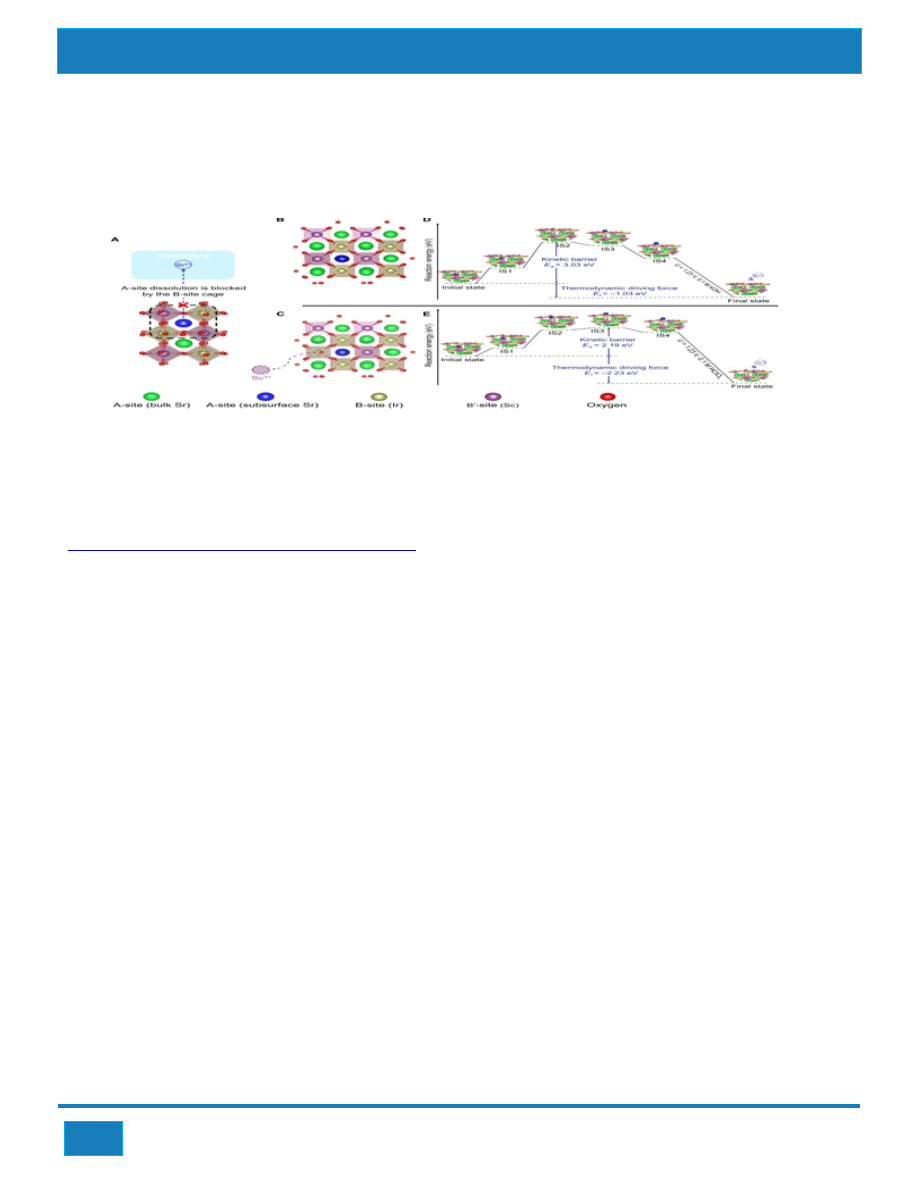
FIG. 1. Theoretical prediction of model perovskites' surface stability. (A) A schematic shows that the dissolution of A-site Sr (the blue
ball), from the subsurface layer of SSI to electrolyte, can be kinetically blocked by the cage composed of B-site (Ir/Sc) octahedra. The
Sr atom away from the surface is considered as bulk Sr (the green ball). (B and C) Surface of SSI without (B) and with (C) a B-site (Sc)
vacancy. (D and E) Energy diagrams that illustrate the dissolution of A-site (Sr) from the subsurface of SSI without (D) and with (E) a
B-site (Sc) vacancy. In (B) to (E), for a better illustration, only the selected subsurface Sr atom, which migrates to the outer surface, is
marked with blue color. All the rest of subsurface Sr atoms are marked with green color. Courtesy:
https://www.science.org/doi/10.1126/sciadv.abk1788
A catalyst is a substance that increases the rate of a chemical reaction without itself undergoing any permanent
chemical change. The findings are significant because the production of hydrogen is important for "many
aspects of our life, such as fuel cells for cars and the manufacture of many useful chemicals such as ammonia,"
said the OSU College of Engineering's Zhenxing Feng, a chemical engineering professor who led the research.
"It's also used in the refining of metals, for producing human-made materials such as plastics and for a range of
other purposes."
Producing hydrogen by splitting water via an electrochemical catalytic process is cleaner and more sustainable
than the conventional method of deriving hydrogen from natural gas via a carbon-dioxide-producing process
known as methane-steam reforming, Feng said. But the cost of the greener technique has been a barrier in the
marketplace.
"Catalysts are critical to promoting the water-splitting reaction by lowering the overpotential, and thus lowering
the total cost for hydrogen production," Feng said. "Our first study in JACS Au laid the foundation for us, and as
demonstrated in our Science Advances article we now can better manipulate atoms on surface to design catalysts
with the desired structure and composition.”
For further information visit:
https://www.sciencedaily.com/releases/2021/12/211210140714.htm
Technology Roundup
3
6
N-type conductive tin sulfide thin films: Towards environmentally friendly
solar cells
Tin sulfide (SnS) is an abundant, safe, and environmentally friendly solar cell material. This inexpensive material is
forecast to be used in next-generation solar cell panels.
A research group led by Issei Suzuki and Sakiko Kawanishi, assistant professors at Tohoku University's Institute of
Multidisciplinary Research for Advanced Materials, has fabricated n-type conductive SnS thin films by impurity
doping for the first time.
Courtesy:
https://journals.aps.org/prmaterials/pdf/10.1103/PhysRevMaterials.5.125405
Conventional SnS thin films are usually p-type conductive. Thus, SnS thin-film solar cells have been fabricated
using a pn heterojunction with p-type SnS thin film and other n-type semiconductor thin films, such as CdS.
However, the conversion efficiency of such heterojunction devices has stagnated at approximately 5%, rendering
their use impractical.
The SnS thin-film solar cells employing a pn homojunction, which uses SnS thin films for both p-type and n-type
layers, is expected to exhibit higher conversion efficiency. Yet, n-type conducive SnS thin films without toxic
elements have never been achieved before.
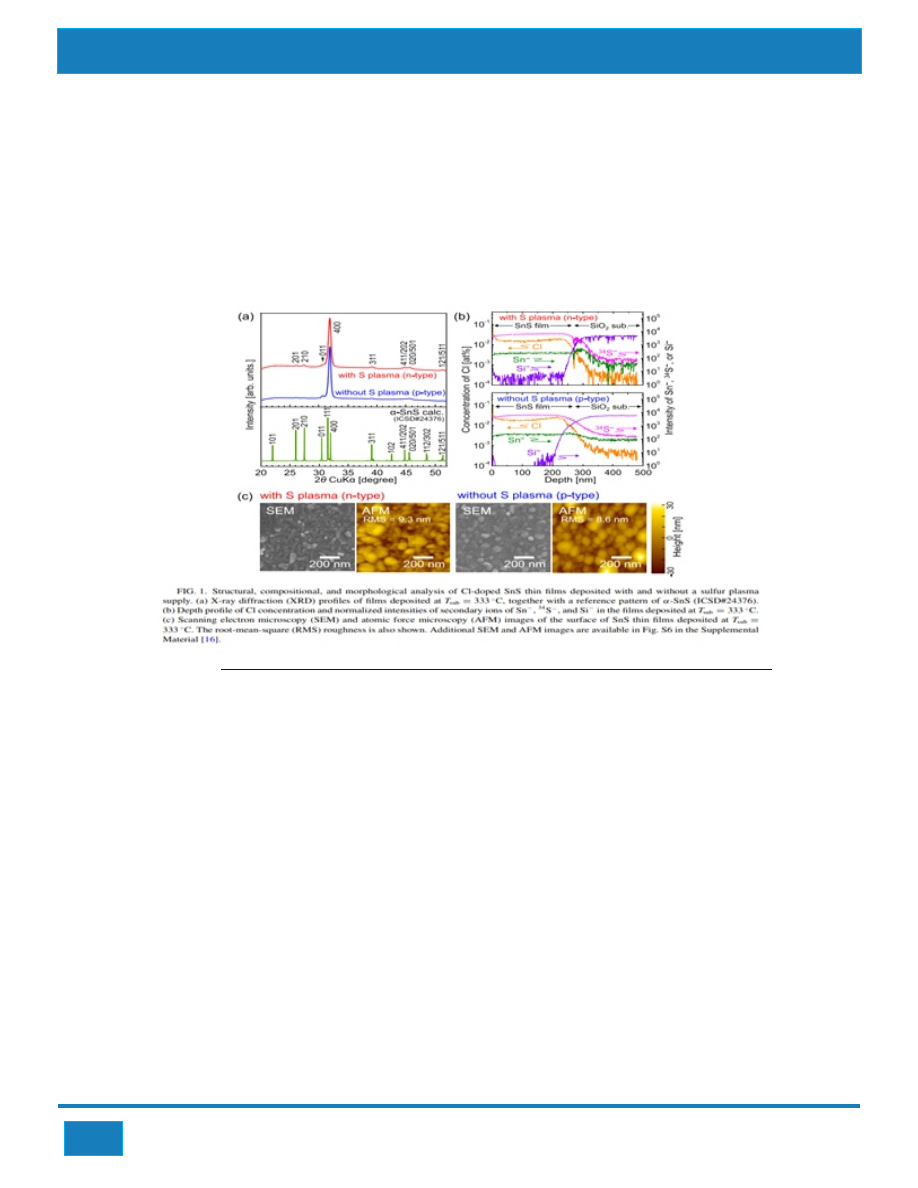
Utilizing chlorine-doping and a sulfur plasma supply, the research group reduced the lattice defects inhibiting the n-
type conversion of SnS, realizing the world's first n-type SnS thin films without toxic elements.
"Our realization paves the way for practical pn homojunction SnS thin-film solar cells," said Suzuki.
For further information visit:
https://www.sciencedaily.com/releases/2021/12/211213121820.htm

7
Technology Roundup
First model to predict lifetime risk of heart failure
By answering a few basic questions, a new heart failure-risk model can provide an on-the-spot
estimate of whether an individual will experience heart failure in the next 30 years. The ability to
identify who is at greatest risk for heart failure -- especially among high-risk young adult
populations -- will allow physicians to start prevention measures sooner.
"Once someone develops symptoms of heart failure, the window for prevention has closed,
which is a missed opportunity, given that the risk of dying in the five years after diagnosis is
50%, similar to a cancer diagnosis," said corresponding study author Dr. Sadiya Khan, assistant
professor of cardiology and epidemiology at Northwestern University Feinberg School of
Medicine and a Northwestern Medicine physician.
"These new models offer the opportunity for clinicians and patients to begin discussions at the
individual level for opportunities to start prevention earlier in the life course," Khan said. "This
moves the field forward by offering a precision approach to prevention and moving beyond risk
associated with having or not having hypertension or diabetes."
Since it is well known that risk of heart failure differs between Black and white men and women,
the risk-prediction models were derived in each individual demographic subgroup, Khan said.
For example, in an average 40-year-old non-smoker with an untreated systolic blood pressure of
140 mm Hg, which is high, and body mass index of 30 kg/m2 , which is considered obese, the
risk of developing heart failure was estimated to be 22.8% in a Black man, 13.7% in a white
man, 13.0% in a Black woman, and 12.1% in a white woman
For further information visit:
https://www.sciencedaily.com/releases/2021/12/211221162720.htm
8
Technology Roundup
Automatic, non-invasive identification of Holstein cows by their coat pattern
C
omputer scientists have devised a methodology that can recognize Holstein cows in the milking station by the
pattern of their coat using artificial intelligence. The long-term vision is to develop a system that can monitor
Holstein cows continuously and anywhere on a farm.
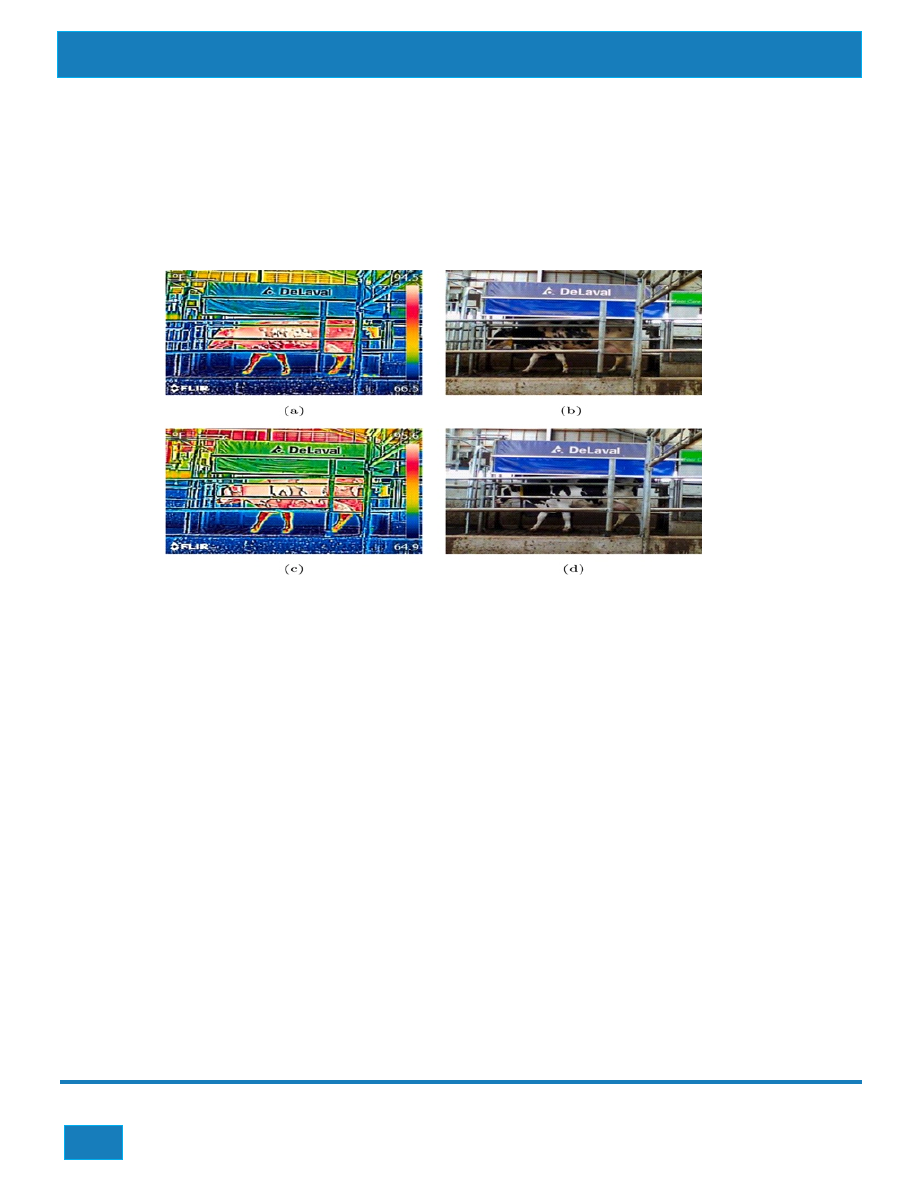
Fig. 1. Examples of pairs of thermal MSX and RGB images acquired simultaneously by the FLIR E6 thermal
camera from a distance of five meters. (a–b) Images of the cow with ID 0094 and (c–d) images of the cow with
ID 0099 were taken from the new data set. Courtesy:
https://www.sciencedirect.com/science/article/pii/S0957417421016511?via%3Dihub#fig1
To further improve animal husbandry and livestock management, there is an urgent need to continuously collect
phenotype data from individual animals. George Azzopardi, a computer scientist from the University of Groningen,
is leading a team that has devised a methodology that can recognize Holstein cows in the milking station by the
pattern of their coat using artificial intelligence. The long-term vision is to develop a system that can monitor
Holstein cows continuously and anywhere on a farm.
Azzopardi explains that there are several advantages in using imaging instead of RFID tags or collars to identify
cows. 'First, it is non-invasive and, thus, better for the welfare of the animals. Second, it is cheaper, as farmers don't
have to buy and manage collars or tags. And third, it is functionally and financially scalable: if the number of cattle
on a farm increases, there is no need for extra collars. You would only need a few images of the new cows and use
them to update the parameters of the respective classification model.'
For further information visit:
https://www.sciencedaily.com/releases/2021/12/211215113304.htm
7
Technology Roundup
79
IT security: Computer attacks with laser light
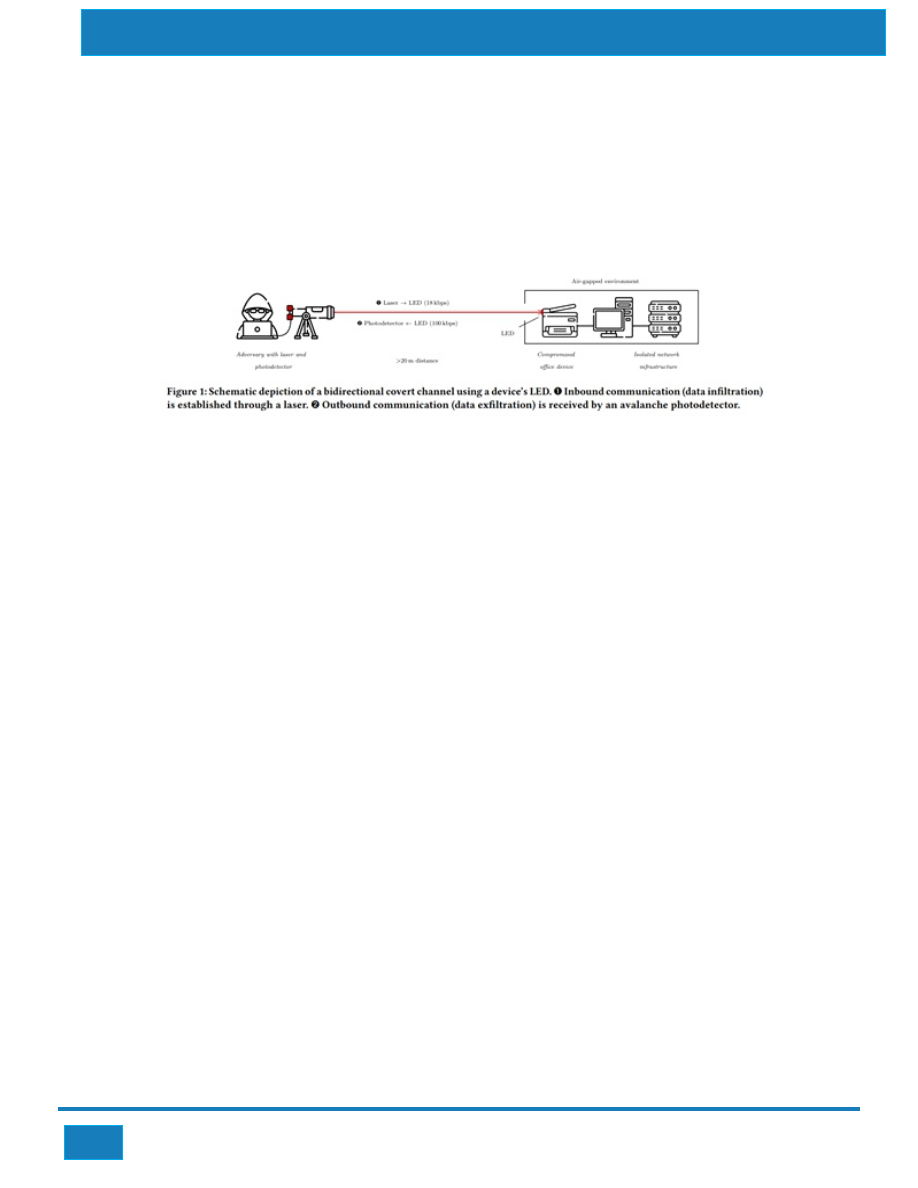
Computer systems that are physically isolated from the outside world (air-gapped) can still be attacked. This is
demonstrated by IT security experts. They show that data can be transmitted to light-emitting diodes of regular
office devices using a directed laser. With this, attackers can secretly communicate with air-gapped computer
systems over distances of several meters. In addition to conventional information and communication
technology security, critical IT systems need to be protected optically as wel
l.
https://intellisec.de/pubs/2021-acsac.pdf
Hackers attack computers with lasers. This sounds like a scene from the latest James Bond movie, but it
actually is possible in reality. Early December 2021, researchers of KIT, TU Braunschweig, and TU Berlin
presented the LaserShark attack at the 37th Annual Computer Security Applications Conference (ACSAC).
This research project focuses on hidden communication via optical channels. Computers or networks in
critical infrastructures are often physically isolated to prevent external access. "Air-gapping" means that these
systems have neither wired nor wireless connections to the outside world. Previous attempts to bypass such
protection via electromagnetic, acoustic, or optical channels merely work at short distances or low data rates.
Moreover, they frequently allow for data exfiltration only, that is, receiving data.
Hidden optical channel uses leds in commercially available office devices. The Intelligent System Security
Group of KASTEL -- Institute of Information Security and Dependability of KIT, in cooperation with
researchers from TU Braunschweig and TU Berlin, have now demonstrated a new attack: With a directed laser
beam, an adversary can introduce data into air-gapped systems and retrieve data without additional hardware
on-side at the attacked device. "This hidden optical communication uses light-emitting diodes already build
into office devices, for instance, to display status messages on printers or telephones," explains Professor
Christian Wressnegger, Head of the Intelligent System Security Group of KASTEL. Light-emitting diodes
(LEDs) can receiving light, although they are not designed to do so.
Data Are Transmitted in Both Directions. By directing laser light to already installed LEDs and recording their
response, the researchers establish a hidden communication channel over a distance of up to 25 m that can be
used bidirectionally (in both directions). It reaches data rates of 18.2 kilobits per second inwards and 100
kilobits per second outwards. This optical attack is possible in commercially available office devices used at
companies, universities, and authorities. "The LaserShark project demonstrates how important it is to
additionally protect critical IT systems optically next to conventional information and communication
technology security measures," Christian Wressnegger says.
For further information visit:
https://www.sciencedaily.com/releases/2021/12/211221102721.htm

Technology Roundup
Technology Roundup
Pakistan
Pakistan Science Expo
Pakistan Science Foundation, Ministry of Science & Technology
th
th
28 -29 , January, 2022, Pak-China Friendship Center, Islamabad
Build 2022 Construction Trade Fair
Rawalpindi Chamber of Commerce and Industry (RCCI)
th
th
11 -13 , February, 2022, Pak-China Friendship Center, Islamabad
hhttps://rcci.org.pk/
International Conference on Science, Engineering & Technology - ICSET 2022
Researchfora.
th
th
28 - 29 January, 2022, Rawalpindi
http://researchfora.com/Conference2022/Pakistan/1/ICSET/
World Congress on Industrial Biotechnology (WCIB)
th
th
12 -13 January, 2022 , Multan
International Conference on Engineering & Technology
World Academics
rd
3 January , 2022, Faisalabad
https://worldacademics.net/event/index.php?id=1516336
IMPACT 2022
st
31 January , 2022
Virtual
https://cmgimpact.com/
MicroStrategy World 2022
st
1 February, 2022
Virtual
https://www.microstrategy.com/en/world-2022
Developer Week
Oakland, CA
nd
2 February , 2022
https://www.developerweek.com/
Digital Geospatial Intelligence (DGI)
London, UK
th
th
7 -9 February , 2022
https://dgi.wbresearch.com/
Forthcoming Tech Events
10
Tech & Trade Offers
About PASTIC
PASTIC serves as a gateway for
Scientific & Technological
Information for R&D by
catering to the information
n e e d s o f r e s e a r c h e r s ,
entrepreneurs, industrialists,
educationists, policy makers
a n d p l a n n e r s t h r o u g h
anticipatory and responsive
information services.
Te c h n o l o g y I n f o r m a t i o n
Section works exclusively for
support and promotion of
technological information on
trade and industry in the country.
“Technology Roundup” is a
news bulletin that provides
latest and innovative technology
news, forthcoming events, etc. It
a l s o p r o m o t e s p r o d u c t s ,
technologies and services
globally in sectors such as Agro-
Industry, Bio-Technology,
Building Material, Business,
Chemicals, Electronics, Energy,
Fisheries, Food Processing,
Machinery, Packaging, Mining
Pharmaceuticals and Textiles.
GREENOVATION
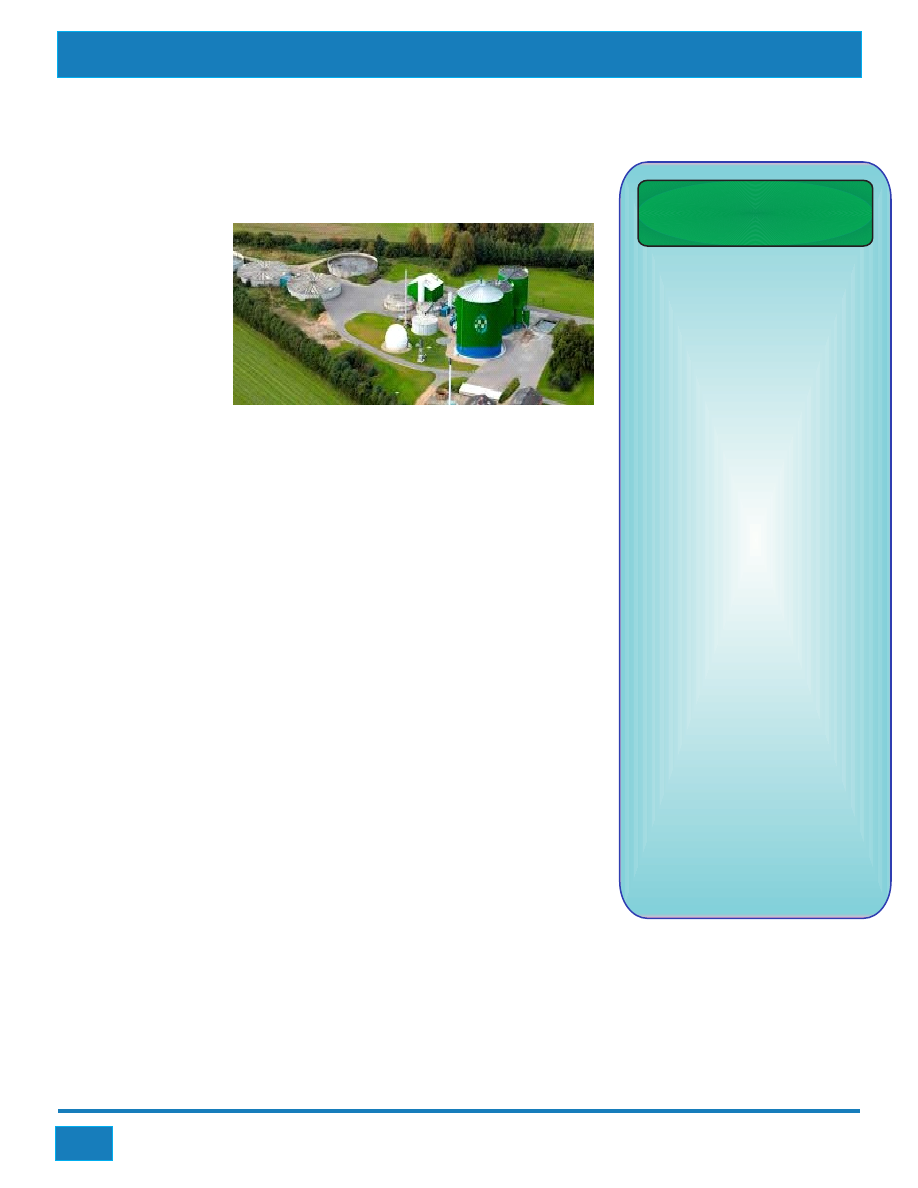
Greenovation is Pakistan's first plastic waste recycling company; we recycled
plastic into Liquefied
P e t r o l e u m G a s .
Through this way we
not only aim to clean
waste from Pakistan but
also help Pakistan in
fulfilling its current
energy demand. The
unique point is we are
producing LPG by
recycling plastic waste
instead of extracting from the earth. As plastic waste is now a global issue, so
the possibilities of going global are very high especially in third world
countries.
Services:
Commercial Fuel
Greenovation will offer online portals in addition to retailers and local
distributors for easy access to LPG in households, commercial regions and in
industries.
Waste Management
Greenovation provides waste management solution by collaborating with the
local government body in form of using the non-bio degradable plastic waste
as a fuel for the conversion process.
Thermal Insulation
Thermal Insulating Wax is the major by-product of the conversion process and
constitutes about 20% of the total waste. This product can be used in houses
and industries to for thermal insulation reducing the overall need for power
consumption that is required in heating and cooling of the building.
Contact:-
NIC, H9, Islamabad
4Phone: +92 321 6886000
Email:
info@greenovation.pk
URL:
https://greenovation.pk/our-services
Technology Roundup
Please give us your feedback and address queries to tis.pastic@gmail.com
11