
Patron/Executive Editor
Prof. Dr. Muhammad Akram Shaikh
Director General, PASTIC
Managing Editors
Ms. Nageen Ainuddin
Mr. M. Aqil Khan
Editor
Dr. Syed Aftab Hussain Shah
Composer
Kashif Farooqui
T
ECHNOLOGY
R
OUNDUP
Technology Information Services Section (TIS)
Pakistan Scientific & Technological Information Centre
PASTIC
January-Februrary, 2018
Vol.10 No.1
A NEWS BULLETIN FROM
Tech News Headlines
Tech & Trade Offers
Phone: 051-9248103-4, 9248128
Fax: 051-9248113
Email: shah_aftab@yahoo.com
Web: www.pastic.gov.pk
PASTIC National Centre
Quaid-i-Azam University Campus
P.O. Box 1217, Islamabad
Editorial Board
l
l
Govt Launches App to Fight Extremism Online
l
Deep-brain Exploration with Nonmaterial
l
New Method to detect illicit Drone Filming Developed
l
Efficient Technique discovered for isolating Embryonic Stem Cells in
Cows
l
New Technology for Accelerated Wound Healing Discovered
l
Global warming could cause key Culinary Crops to release Seeds
Prematurely
l
Chemists Harness Artificial Intelligence to Predict the Future
Online Business Registration Portal launched at Lahore
ENGRO FERTILIZER
Forthcoming Tech Events
l
Solar Pakistan
l International Conference on Advances in Engineering and
Technology
l National Exhibition on IT & Computer Tools for Science and
Education
l ITCN Asia IT & Telecom Show
l International Conference on Renewable and Clean Energy
l Asian Science and Technology Conference on Disaster Risk
Reduction
l
International Energy Conference
l
International Science and Technology Conference
Technology Roundup
2
Indigenous
Technology
Online Business Registration Portal launched at Lahore
In order to facilitate business registration from the comfort of one's home, PITB launched an online portal at the
Lahore Chamber of Commerce and Industry (LCCI), yesterday.The Online Business Registration Portal has been
developed by the Punjab Information
Technology Board for LCCI. Now, the online
portal could be used to register a company
very quickly as the owners will be able to
submit all documents online. A tracking
mechanism has also been added to keep the
users updated about the progress of their
application at run-time.Currently, the portal
has been made functional in the Lahore
district boundary and it will soon be extended
to the rest of the districts in Punjab. In order to cater any queries/issues regarding the portal, government has also
dedicated a telephone helpline which can be accessed by dialing 042-111-425-725.
The portal revolves around the tagline of, “Anytime, anywhere”, indicating the ease of business registration which
comes with it. The portal will increase the productivity and efficiency of the process as the users will not have to
physically visit the offices. Reports say that the registration process, which previously required approximately 17
days, can now be completed in a matter of two days.
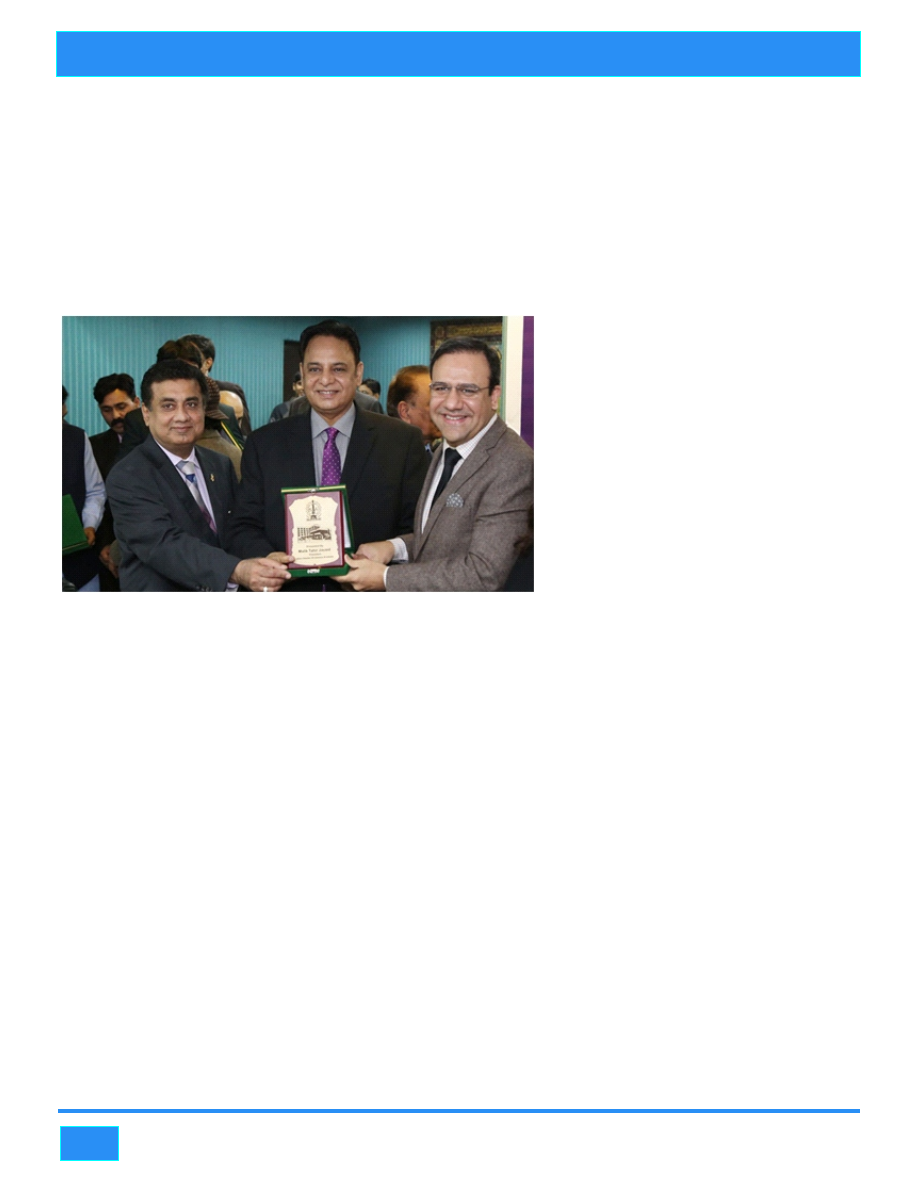
The launching ceremony took place at the Lahore Chamber of Commerce and Industry and was attended by
Chairman PITB Dr. Umar Saif, Provincial Minister for Finance Ms. Ayesha Pasha, and Malik Tahir Javaid, the
President LCCI among many other high order officials.
Source:
www.techjuice.pk/online-business-registration-portal-launched-at-lahore

Technology Roundup
3
Indigenous
Technology
Govt Launches App to Fight Extremism Online
www.techjuice.pk/govt-launches-app-to-fight-extremism-online
Pakistan ranks 5th out of 163 countries on the Global Terrorism Index
. In recent years, terrorism in
Pakistan has become a highly destructive phenomenon and the abuse of internet has also increased
extremism and hate speech. In its efforts to counter extremism online, Pakistani govt has now launched an
application that will enable people to report websites that publish extremist content and hate speech.As
reported by
, the app named
has been developed by the National Counter Terrorism
Authority (NACTA). The app works on both Android and iOS devices. The Surfsafe app is the part of the
implementation of the National Action Plan
(NAP), adopted by the government in 2015 to
crack down on terrorism and extremism.
However, social media experts believe that
restricting the presence of terrorists on the
internet is a difficult task now because militant
networks have become more tech-savvy over
the past few years.
According to Ehsan Ghani NACTA Director, “Strict enforcement of cybercrime laws is absolutely
necessary to overcome this massive challenge of online extremism. Surfsafe is a step in that direction.
Through this programme [application], we will create awareness and block online materials involved in
provoking extremism in any capacity.” As people in Pakistan mostly youth, unfortunately, get attracted to
extremist ideologies without even realizing that what it's all about, hence this app will definitely help at least
by blocking extremist content online.
So far, around 18 URLs were reported on the website and the authorities have flagged 4 of them.
Furthermore, NACTA is also playing an encouraging role for Pakistani community by rolling out e-Scouts.
e-Scouts are the team of volunteers, who will be cyber-policing for NACTA. You can become one by
f
(GDI)
VOA News
Surfsafe
ollowing this link. On the contrary, critics believe that unless the government stops the terrorist groups'
activities on the ground, silencing them on the internet would not be that effective.
Source:
4
Technology Roundup
Deep-brain Exploration with Nanomaterial:
A less invasive way to stimulate the mouse brain with light
www.sciencedaily.com/releases/2018/02/180208141311.html
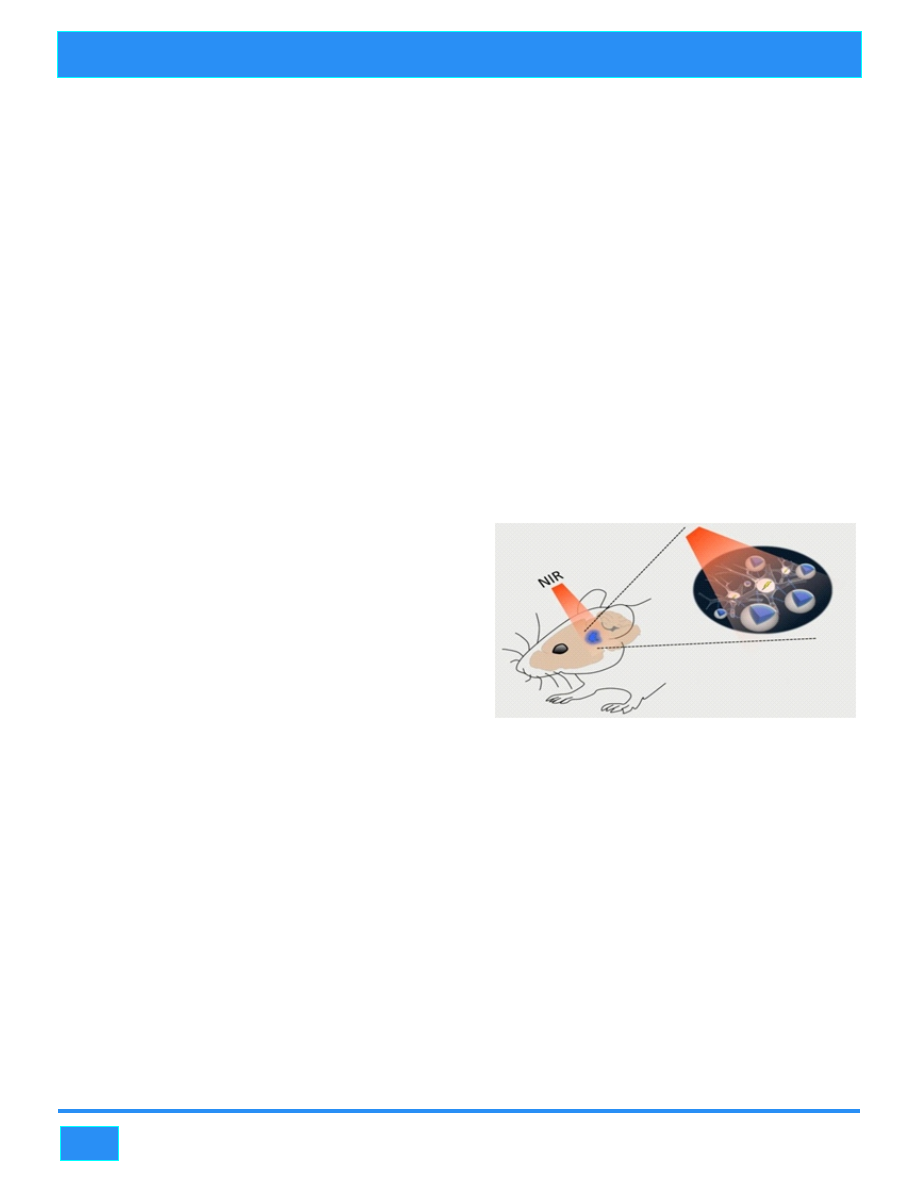
Studying deep brain tissues noninvasively is difficult. Now scientists have developed a way to send light deep into
the brain without invasive optical fibers. The method uses infrared light outside the head to activate upconversion
nanoparticles (UCNPs). When these nanoparticles absorb near-infrared laser light, they emit visible photons to
deep areas in the brain, allowing remote optogenetic stimulation or inhibition of neurons in the brain.
"Optogenetics has been a revolutionary tool for controlling neurons in the lab, and hopefully someday in the
clinic," says Thomas McHugh, research group leader at the RIKEN Brain Science Institute in Japan.
"Unfortunately, delivering light within brain tissue requires invasive optical fibers.”
In optogenetics, blue-green light is used to turn neurons on
or off via light-responsive ion channels. Light at these
wavelengths, however, scatters strongly and is at the other
end of the spectrum from the near-infrared light that can
penetrate deeper into brain tissue. UCNPs composed of
elements from the lanthanide family can act as a bridge.
Their 'optogenetic actuation' turns low-energy near-infrared
laser light into blue or green wavelengths for control of
specifically labeled cells. Though such bursts of light
deliver considerable energy to a small area, temperature
increases or cellular damage were not observed.
In addition to activating neurons, UCNPs can also be used for inhibition, for example to quell experimental
seizures in mice. Memory recall in mice also persisted in tests two weeks later. This indicates that the UCNPs
remained at the injection site, which was confirmed through microscopy of the brains. "The nanoparticles appear
to be quite stable and biocompatible, making them viable for long-term use. This study was collaboration between
scientists at the RIKEN Brain Science Institute, the National University of Singapore, the University of Tokyo,
Johns Hopkins University and Keio University.
Near-infrared (NIR) light applied above the skull can easily pass through brain tissue with minimal scattering and
reach deep structures. Up-conversion nanoparticles (UCNPs; blue) in the tissue can absorb this light and locally
emit visible light sufficient to activate light-sensitive channels expressed in nearby neurons.
Source:

3
5
Technology Roundup
New Method to detect illicit Drone Filming Developed
www.sciencedaily.com/releases/2018/01/180115120558.html
Efficient Technique discovered for isolating Embryonic Stem Cells in Cows
Findings could advance cattle production, help study human disease
A new technique to detect a drone camera illicitly capturing video is revealed in a new study by cyber security
researchers in Israel. The study addresses increasing concerns about the proliferation of drone use for personal
and business applications and how it is impinging on privacy and safety."The beauty of this research is that
someone using only a laptop and an object that flickers can detect if someone is using a drone to spy on them,"
says Ben Nassi, a Ph.D. student in the BGU Department of Software and Information Systems Engineering and a
researcher at the BGU Cyber Security Research Center (CSRC). "While it has been possible to detect a drone,
now someone can also tell if it is recording a video of your location or something else.”
In the first demo, researchers show how a privacy invasion against a house can be detected. They used smart film
placed on a window and entered a few software commands on a laptop to access the encrypted video the drone
operator sees, called the FPV channel. This enabled the researchers to demonstrate how they detect that a
neighbor is using a DJI Mavic drone to capture images of his own home and then illicitly stream video of his
neighbor's house, as well. In a second outdoor test, researchers demonstrate how an LED strip attached to a
person wearing a white shirt can be used to detect targeted drone activity. When researchers flickered the LED
lights on the cyber-shirt, it caused the FPV channel to send an "SOS" by modulating changes in data sent by the
flickering lights.
"This research shatters the commonly held belief that using encryption to secure the FPV channel prevents
someone from knowing they are being tracked," Nassi says. "The secret behind our method is to force controlled
physical changes to the captured target that influence the bitrate (data) transmitted on the FPV channel."This
method can be used on any laptop that runs Linux OS and does not require any sophisticated hacking or
cryptographic breaking skills. "Our findings may help thwart privacy invasion attacks that are becoming more
common with increasing drone use," Nassi says. "This could have significant impact for the military and for
consumers because a victim can now legally prove that a neighbor was invading their privacy."
Scientists have developed a highly efficient method of isolating embryonic stem cells in cows. Producing
embryonic stem cells from large livestock species like cattle is important for genetic testing, genome
engineering, and studying human disease.
In a study published this week in the journal Proceedings of the National Academy of Sciences, scientists at the
University of California, Davis, were able to develop a new culture system that allows them to efficiently derive
stem cells on almost every single attempt.
Source:

6
Technology Roundup
Producing embryonic stem cells from large livestock species like cattle
is important for genetic testing, genome engineering and studying
human disease. If researchers can generate gametes, or sperm and eggs
cells, from the stem cell lines, the ramifications are profound. Such "in
vitro" breeding could decrease the amount of time it takes to produce
genetically superior cattle.
The cow of the future could have more muscle, produce more milk, emit
less methane, or more easily adapt to a warmer climate.Ross envisions
the findings helping the cattle industry become more sustainable.
"Animals that are more efficient and have improved welfare, that may have more disease resistance is better for everyone,"
said Ross.
Researchers have found a new way of accelerating wound healing. The technology and the mode of action
involves using lactic acid bacteria as vectors to produce and deliver a human chemokine on site in the wounds.
The research group is the first in the world to have developed the concept for topical use and the technology could
turn out to be disruptive to the field of biologic drugs.
"We have developed a drug candidate, a next-generation biologic medical product, and are now publishing the
fantastic results from the preclinical part where wound healing was strongly accelerated in mice," says Mia
Phillipson, Professor at the Department of Medical Cell Biology, Division of Integrative Physiology, Uppsala
University. The acceleration of the healing process occurs due to changes in the microenvironment in the wound,
which change the behaviour of specific immune cells. With the newly developed technology, the researchers can
increase the level of a chemokine, CXCL12, for a sufficient time period through continuous delivery directly to
the wound surface. In addition, bioavailability of CXCL12 is synergistically increased within the wound as the
bacterial produced lactic acid causes a slight pH drop that inhibits degradation.
"The chemokine, CXCL12, is endogenously upregulated in injured tissue and by increasing the levels further,
more immune cells are recruited and are more specialised to heal the wound, which accelerates the whole
process," says Professor Phillipson. The potent effect on acceleration of wound healing is demonstrated in
healthy mice but also in two models of diabetes, one model of peripheral ischemia as well as in a model using
human skin biopsies.
There were clear differences in the composition of immune cells in the wounds and the immune cells present
produced higher levels of TGFß at earlier time points. The treatment was local without systemic exposure. "This
is very exciting from a health care perspective. We have a technology that works and now understand the
mechanism behind it, how it accelerates wound healing. The next step is a study in a pig model," says Professor
Phillipson.
Source:
Source:
www.sciencedaily.com/releases/2018/02/180209170526.html
New Technology for Accelerated Wound Healing Discovered
www.sciencedaily.com/releases/2018/02/180205161522.html

7
Technology Roundup
Global warming could cause key culinary crops to release seeds prematurely
www.sciencedaily.com/
R
eleases/2018/02/180212121238.html
C
limate change is threatening crop yields worldwide, yet little is known about how global warming will
confuse normal plant physiology. Researchers now show that higher temperatures accelerate seed dispersal in
crop species belonging to the cabbage and mustard plant family, limiting reproductive success, and this effect
is mediated by a gene called INDEHISCENT.
This photograph shows oilseed rape pods that are opening and spreading the seeds.Credit: Andrew Davies /
John Innes Centre
"In many crops, such as oilseed rape, premature seed dispersal is one of the major causes of crop loss. In the
context of climate change, this could become increasingly severe," says co-senior author Vinod Kumar, a plant
developmental biologist at the John Innes Centre in Norwich, England. "This study exposes the potential
vulnerabilities of crop production in the warming world and paves the way for addressing this problem."
"We were excited by the discovery that what we found in the model plant Arabidopsis also holds true for both
crop plants, such as oilseed rape, as well as non-domesticated species from the Brassicaceae family," Kumar
says. "This highlights the significance of our findings both in the wild as well as in the field."
Based on their study, the research team suggests new strategies for preparing crops for global warming. For
example, plant breeding efforts could focus on developing temperature-resilient varieties capable of coping
with climate change. In addition, gene-editing tools, such as the CRISPR/Cas system, could be used to reduce
the expression of the INDEHISCENT gene, thereby delaying seed release and reducing crop loss.
For their own part, Kumar and Østergaard plan to further investigate the molecular mechanisms underlying
temperature-induced changes in seed dispersal. "We are hopeful that by understanding this in detail, we will be
better equipped to devise strategies to breed for crop resilience to climate change.
Source:
7
Technology Roundup
78
Chemists Harness artificial Intelligence to Predict the Future
(of chemical reactions)
Credit: CC0 Public Domain
WWW
.phys.org/news/2018-02-chemists-harness-artificial-intelligence-future.html
To manufacture medicines, chemists must find the right combinations of chemicals to make the necessary
chemical structures. This is more complicated than it sounds, as typical chemical reactions employ several
different components, and each chemical involved in a reaction adds another dimension to the calculations.
In an ideal world, chemists would like to predict which combination of chemicals would deliver the highest
yield of product and avoid unintended by-products or other losses, but predicting the outcome of these multi-
dimensional reactions has proven challenging. A group of researchers led by Abigail Doyle, the A. Barton
Hepburn Professor of Chemistry at Princeton University, and Dr. Spencer Dreher of Merck Research
Laboratories, has found a way to accurately predict reaction yields while varying up to four reaction
components, using an application of artificial intelligence known as machine learning. They have turned their
method into software that they have made available to other chemists. They published their research Feb. 15 in
the journal Science. "The software that we developed can work for any reaction, any substrate," said Doyle.
"The idea was to let someone apply this tool and hopefully build on it with other reactions."
Vast resources and time are expended to make synthetic molecules, often in a largely ad hoc manner, she said.
Using this new software, chemists can identify high-yielding combinations of chemicals and substrates more
cheaply and efficiently. "We hope this will be a valuable tool in expediting the synthesis of new medicines,"
said Derek Ahneman, who completed his chemistry Ph.D. in Doyle's lab in 2017 and now works for IBM.
"Many of these machine learning algorithms have been around for quite some time," said Jesús Estrada, a
graduate student in Doyle's lab who contributed to the research and the paper. "However, within the synthetic
organic chemistry community, we really haven't tapped into the exciting opportunities that machine learning
offers." "As chemists, we've traditionally veered away from multi-dimensional analysis," said Doyle. "We
only look at one variable at a time, or a single set of conditions for a range of substrates."
Source:

Technology Roundup
Technology Roundup
National
Solar Pakistan
29-31 March, 2018
Expo Center, Lahore
2-3 April, 2018
Quetta, Balochistan
8-9 May, 2018
Pak China Center, Islamabad
25-27 September, 2018
Expo Center, Karachi
www.solarfairpakistan.com
International Conference on Advances in Engineering and Technology
www.indico.cern.ch
National Exhibition on IT & Computer Tools for Science and Education
www.pastic.gov.pk
ITCN Asia IT & Telecom Show
www.itcn.asia.com
International Conference on Renewable and Clean Energy
Asian Science and Technology Conference on Disaster Risk Reduction
International Energy Conference
International Science and Technology Conference
International Events
30 March-1 April, 2018
Tokyo, Japan
www.icrce.com
17-18 April, 2018
Limoassol, Cyprus
www.enegycon2018.org
3-7 June, 2018
Limassol, Cyprus
www.energy.con2018.org
18-20 July, 2018
Paris, France
www.iste-c.net
Forthcoming Tech Events
9

Tech & Trade Offers
About PASTIC
PASTIC serves as a gateway for
Scientific & Technological
Information for R&D by
catering to the information
n e e d s o f r e s e a r c h e r s ,
entrepreneurs, industrialists,
educationists, policy makers
a n d p l a n n e r s t h r o u g h
anticipatory and responsive
information services.
T e c h n o l o g y I n f o r m a t i o n
Section works exclusively for
support and promotion of
technological information on
trade and industry in the
c o u n t r y . “ T e c h n o l o g y
Roundup” is a news bulletin
that provides latest and
innovative technology news,
forthcoming events, etc. It also
p r o m o t e s p r o d u c t s ,
technologies and services
globally in sectors such as
A g r o - I n d u s t r y , B i o -
Technology, Building Material,
B u s i n e s s , C h e m i c a l s ,
Electronics, Energy, Fisheries,
Food Processing, Machinery,
P a c k a g i n g , M i n i n g
Pharmaceuticals and Textiles.
Engro Fertilizer
Engro Corporation Pakistan
8th Floor, Harbor Front Building,
Marine Drive, Block 4,
Clifton, Karachi, Pakistan
+92-21-111-211-211
www.engro.com
!Engro Fertilizers Limited a 87%
owned subsidiary of Engro Corporation
is a premier fertilizer manufacturing and
marketing company having a portfolio of
fertilizer products with significant focus
on balanced crop nutrition and
increased yield.
! As one of the 50 largest fertilizer
manufacturers of the world we have
close to 5 decades of operations as a
world class with a wide range of fertilizer
brands, besides urea, which include
some of the most trusted brand names
by Pakistani farmers.
! These include brands like Engro
Zarkhez, Zingro, Engro DAP and Envy
amongst others.
Technology Roundup
Please give us your feedback and address queries to shah_aftab@yahoo.com
10