Patron/Executive Editor
Ms. Nageen Ainuddin
Director General, PASTIC
Managing Editors
Ms. Nageen Ainuddin
Mr. M. Aqil Khan
Editor
Dr. Syed Aftab Hussain Shah
Composer
Kashif Farooqui
T
ECHNOLOGY
R
OUNDUP
Technology Information Services Section (TIS)
Pakistan Scientific & Technological Information Centre
PASTIC
September-October, 2017
Vol.9 No.5
A NEWS BULLETIN FROM
Tech News Headlines
Tech & Trade Offers
Phone: 051-9248103-4, 9248128
Fax: 051-9248113
Email: shah_aftab@yahoo.com
Web: www.pastic.gov.pk
PASTIC National Centre
Quaid-i-Azam University Campus
P.O. Box 1217, Islamabad
Editorial Board
l
l
l
l
l
l
lA new approach to Cancer Drug Discovery
On the Development of a Novel, Plug and Play SSVEP-EEG based
General Purpose Human Computer Interaction Device
A Proposed Model for Internet of Things (IoT) with Merger of
Cloud Computing and Customer Relationship Management (CRM)
DISTRO: Researchers Create Digital objects from incomplete 3D
Data
Solar-powered Devices made of Wood could help Mitigate Water
Scarcity Crisis
New Dental Imaging method uses squid ink to Fish for Gum Disease
Nanotechnology helps Rewarm Fast-frozen donor Tissue, enabling
Long-term viability
Industrial Power Tech
Forthcoming Tech Events
l National Exhibition on IT Computer Tools for Science and Education
l
International conference on Chemical Engineering
l
International Conference on Advancements in Computational
Sciences
l
International Conference on Advances in Engineering and
Technology
l
Int'l Conference on New Energy and Sustainable Development
l
International Conference on Future Networks Technology
l
International Conference on Energy and Environmental Science
l
2nd International Conference on Materials Engineering and Nano
Sciences

Technology Roundup
2
Indigenous
Technology
On the Development of a Novel, Plug and Play SSVEP-EEG based General
Purpose Human Computer Interaction Device
Brain Computer Interface (BCI) is an emerging technology that enables the Human to interact with the Computer by using
brain signals particularly when a person cannot interact with the computer in any other manner due to cognitive motor
disability or severe stroke. Steady State Visual Evoked Potentials (SSVEP) are the brain signals generated in response of
visualizing or gazing flickering objects. These electrical signals can be obtained from visual cortex of the brain through
electroencephalogram (EEG) electrodes. The signals obtained from the visual cortex contain the same base frequency as of
flickering objects and their aliases. The base frequency can be obtained by proper signal processing performed in a computer
after signal conditioning, amplification and digitalization. This technique allows us to identify the objects that are gazed by the
subject without any other means of communication between computer and subject; thus it enables us to obtain a number of
different commands from the subject through BCI. This paper describes current state of the art in SSVEP based BCIs and
discusses our ongoing research to design a novel, general purpose plug and play control panel from which a healthy person as
well as severely paralyzed subject can operate a computer application or any digital device just by gazing flickering lights of
different frequencies. The proof of concept is established by performing selected frequency encoding SSVEP signal
processing technique on SSVEP recorded dataset for 27 different flickering objects. Initial results confirms that the selected
frequency encoding based SSVEP signal processing is well suited for the implementation of desired system on single board
computer.
Source:
Azhar Dilshad, Vali Uddin, Uzma Naz, Sadia Parveen, Tariq Javid, and Abdul Mujeeb Memon. On the development
of a novel, plug and play SSVEP-EEG based general purpose human computer interaction device. International
Conference on Emerging Trends in Engineering, Sciences & Technology-2016. Asian Journal of Engineering,
Sciences & Technology. Special Issue: 1-5.

Technology Roundup
3
Indigenous
Technology
A Proposed Model for Internet of Things (IoT) with Merger of Cloud
Computing and Customer Relationship Management (CRM)
The Internet of things is an extension of networks and devices. It contains the features of communications of
devices with the related architecture. It is a growing network with wireless and cloud computing services;
more things are now connected on cloud with the help of Internet. IoT is not limited with some devices,
every year many devices come with different technologies and following different architectures. So the
cloud computing along with big data solutions are easy to handle the world of IoT. This research paper
proposed that cloud computing and IoT can work together for CRM. Cloud is a reliable service and a pool of
computing resources. It can help and decrease the latency on CRM software via cloud services that are more
efficient. This model can enhance the availability of data for CRM, so the users can connect easily with the
devices. For future work, we can facilitate the users with some new ideas using this model. We can include
more properties and applications in the hierarchy of this model.
Source:
Ali Ahmed and Huma Ali Ahmed. A Proposed Model for Internet of Things (IoT) with Merger of Cloud
Computing and Customer Relationship Management (CRM). International Conference on Emerging
Trends in Engineering, Sciences & Technology-2016. Asian Journal of Engineering, Sciences &
Technology. Special Issue: 23-25.
4
Technology Roundup
DISTRO: Researchers Create Digital objects from incomplete 3D Data
Depth sensors, such as those of the Microsoft Kinect, are very powerful, but unfortunately they do not work
equally well on all materials, which leads to noisy data or even missing measurements
"
Source:
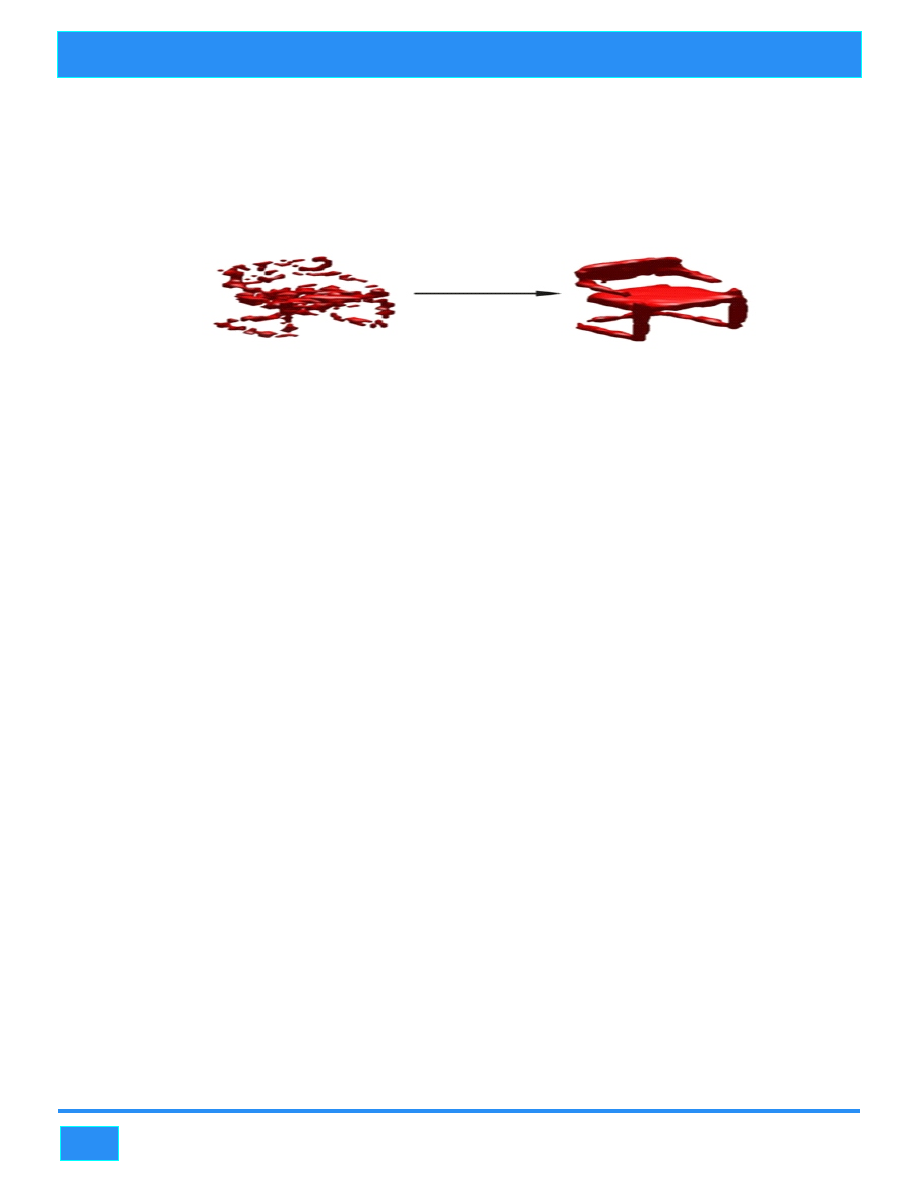
From such faulty data, Saarbrücken computer scientists can reconstruct the original objects. Credit: MPI
Although the 3D scanning technology has made significant progress in recent years, it is still a challenge to
capture the geometry and shape of a real object digitally and automatically," explains Mario Fritz, who leads the
group "Scalable Learning and Perception" at the Max Planck Institute for Informatics. According to Fritz, depth
sensors, such as those of the Microsoft Kinect, are very powerful, but unfortunately they do not work equally well
on all materials, which leads to noisy data or even missing measurements. "The resulting flawed or even
incomplete 3D geometries then pose a real problem for a range of applications, for example in virtual or
augmented reality, working together with robots, or 3D printing," explains Mario Fritz.
Together with other researchers from the US semiconductor manufacturer Intel as well as the Intel Visual
Computing Institute at Saarland University, he therefore developed a method that also works with incomplete
datasets. It uses a special neural network. "Our method requires no supervision during the learning phase, which is
novel for this type," explains Fritz. In this way, the researchers could, for example, reconstruct a flat monitor,
whose digital representation after a 3D scan looked rather like a paneled wall, so that everyone could once again
recognize a monitor in the digital object. The Saarbrücken computer scientists have thereby surpassed previous
methods that improve faulty 3D scans and complete digital shapes. The method from Saarbrücken gives very good
results for the classification of scanned objects as well. In the future, the scientists intend to further develop their
method so that it will also work on deformable objects and larger scenes. “In the future, it will have to be possible to
capture real-world objects simply and quickly, and project them in a realistic way into the digital world," explains
Philipp Slusallek, professor of computer graphics at Saarland University and scientific director of the German
Research Center for Artificial Intelligence (DFKI).
Energy from the sun and a block of wood smaller than an adult's hand are the only components needed to heat
water to its steaming point in these purifying devices. Engineers at the University of Maryland's A. James Clark
School of Engineering have created a novel technological solution to the pressing global challenge of water
scarcity by creating a suite of solar steam generation devices that are at once efficient, easily accessible,
environmentally friendly, biodegradable, and extremely low cost.
www.sciencedaily.com/releases/2017/10/171013091702.htm
Solar-powered devices made of wood could help mitigate water scarcity crisis
3
5
Technology Roundup
Inspired by the process by which water is carried through trees from roots to small pores on the underside of
leaves, the UMD research team created several new ways in which water can be transported through wood,
purifying it for safe use. Energy from the sun and a block of wood smaller than an adult's hand are the only
components needed to heat water to its steaming point in these devices. The global crisis of water scarcity is
a pressing global challenge, and the situation is far worse in developing countries, where safe water is
difficult to secure for 1 billion people.
"Cost and manufacturing are key challenges in using the solar-steam technology for seawater desalination and
for the first time, wood-based structures can potentially provide solutions," said Liangbing Hu, UMD associate
professor of materials science and engineering and the leader of the projects. Hu is interested in scaling up these
devices for commercial use, which includes designing ways to easily manufacture the devices and bring down
their cost. The team is racing other research groups to invent a successful solar steam generation device that is
cost efficient and easy to use. He is also a member of the University of Maryland Energy Research Center and the
Maryland NanoCenter, where the devices were studied closely. The team is trying out a few twists on the basic
idea of using a darkened surface on the wood to heat the water, then pulling it through the wood's natural porous
structures.
Professor Siddhartha Das of UMD's Mechanical Engineering Department and his team studied the flow of water
through the wood. Prof. Bao Yang, also of UMD's Mechanical Engineering Department, and his team
contributed on thermal related measurement. A team from University of Wisconsin-Madison, headed by
Professor Zongfu Yu of the Electrical and Computer Engineering Department, studied the light trapping in
treated wood.
The carbon nanotube-topped version is also flexible, because the component that makes wood stiff, lignin, was
removed. It could be rolled into a tube. The device coated with metal nanoparticles showed a self-cleaning aspect
when it was placed in salt water. During the day, the salt was too heavy to evaporate and was left behind. During
the simulated night (12 hours without sunlight) the salt dissolved off the wet surface. Photos of the wood's
surface before and after any darkening agent was added were produced in the Advanced Imging and Microscopy
(AIM) Lab, part of the Maryland Nanocenter, which is headquartered in College Park.
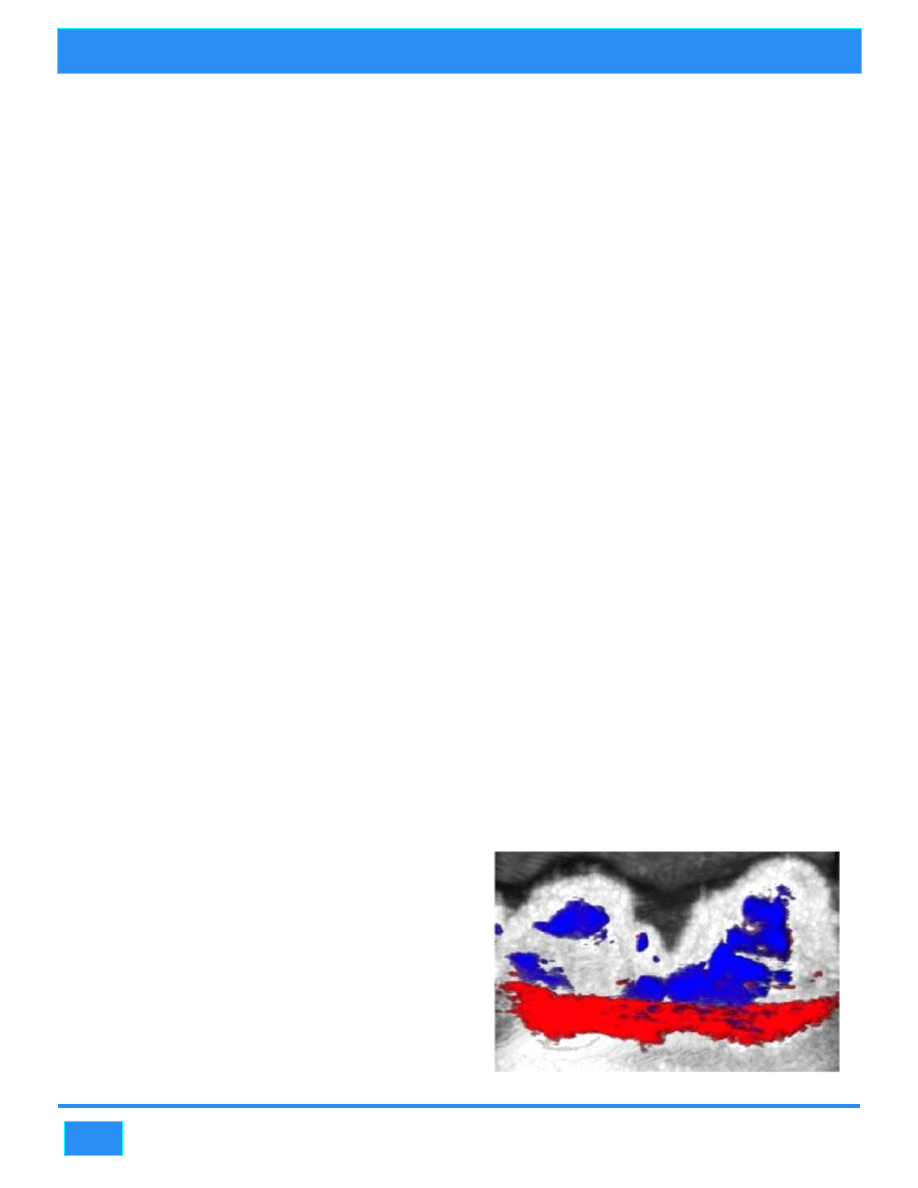
Squid ink could one day make getting checked for gum disease at the dentist less tedious and even painless. By
combining squid ink with light and ultrasound, a team led by
engineers has developed a new dental imaging method to
examine a patient's gums that is noninvasive, more
comprehensive and more accurate than the state of the art.
Squid ink might be a great ingredient to make black pasta, but
it could also one day make getting checked for gum disease at
the dentist less tedious and even painless. By combining
squid ink with light and ultrasound, a team led by engineers at
the University of California San Diego has developed a new
dental imaging method to examine a patient's gums that is
non-invasive, more comprehensive and more accurate than
the state of the art.
Source:
www.sciencedaily.com/releases/2017/10/171010224556.htm
New Dental Imaging Method uses Squid Ink to Fish for Gum Disease
6
Technology Roundup
The last time I was at the dentist, I realized that the tools that are currently being used to image teeth and gums
could use significant updating," said Jesse Jokerst, a nanoengineering Professor at UC San Diego and senior
author of the study. The conventional method for dentists to assess gum health is to use an instrument called a
periodontal probe -- a thin, hook-like metal tool that's marked like a tiny measuring stick and inserted in between
the teeth and gums to see whether and how much the gums have shrunk back from the teeth, creating pockets. This
method of measuring pocket depth is the gold standard used in dentistry. A pocket depth measuring one to two
millimeters indicates healthy gums while three millimeters and deeper is a sign of gum disease. The deeper the
pockets, the more severe the gum disease.
However, procedures using the periodontal probe are invasive, uncomfortable and sometimes painful for the
patient. Measurements can also vary greatly between dentists, and the probe is only capable of measuring the
pocket depth of one spot at a time. In a paper published on Sept. 7 in the Journal of Dental Research, Jokerst and
his team at UC San Diego introduced an innovative method that can image the entire pocket depth around the
teeth consistently and accurately, without requiring any painful poking and prodding. "It's remarkable how
reproducible this technique is compared to the gold standard," Jokerst said. Moving forward, the team will be
collaborating with dentists and testing their method in humans. Future work also includes minimizing the taste of
the squid ink oral rinse -- it's salty and somewhat bitter -- and replacing laser lights with inexpensive, more
portable light systems like LEDs. The team's ultimate goal is to create a mouthpiece that uses this technology to
measure periodontal health.
A team funded in part by the National Institute of
Biomedical Imaging and Bioengineering (NIBIB) and
led by University of Minnesota (UMN) researchers
have developed a new method for thawing frozen tissue
that may enable long-term storage and subsequent
viability of tissues and organs for transplantation. The
method, called nanowarming, prevents tissue damage
during the rapid thawing process that would precede a
transplant.
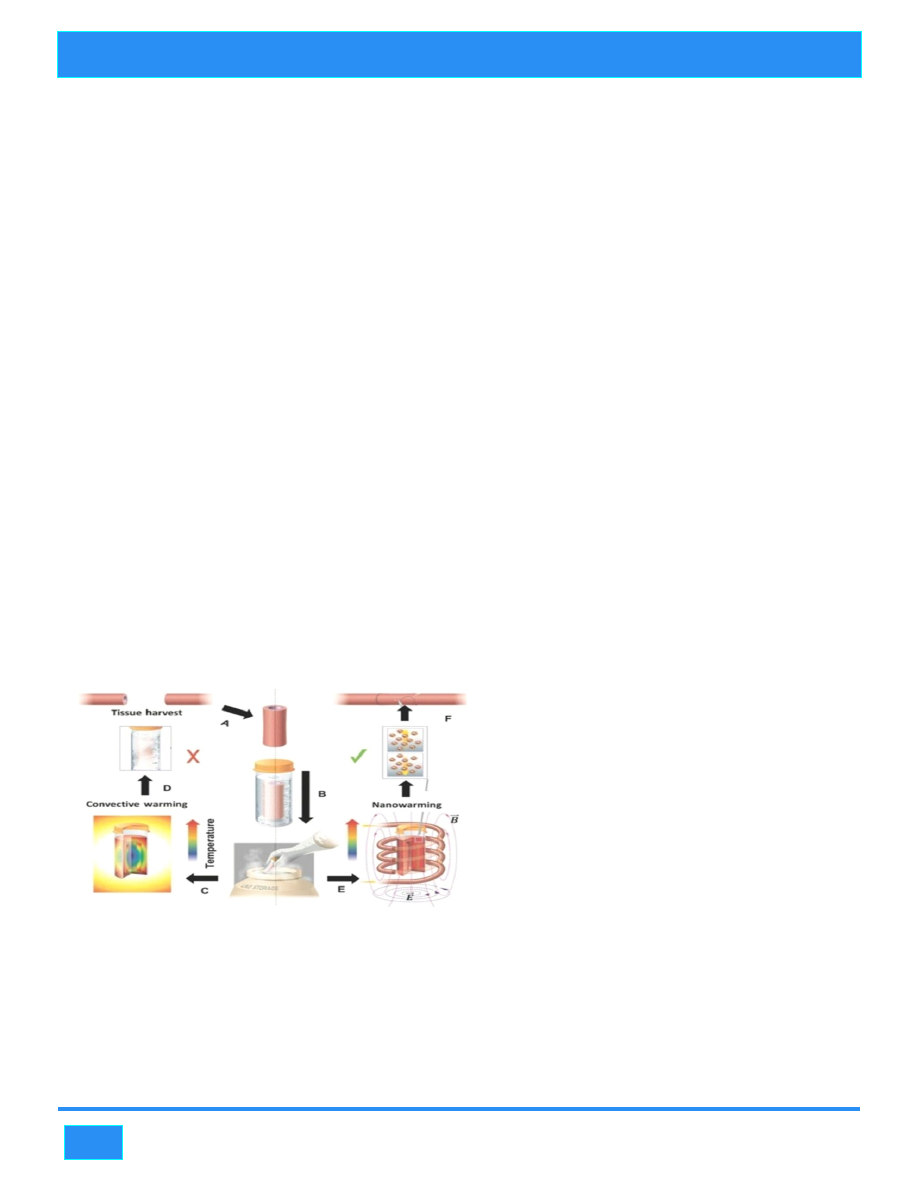
Schematic illustrating tissue vitrification, convective
warming, and nanowarming. A Tissues are harvested from a donor. Representative harvest of a blood vessel is
shown. B Tissues are loaded in a vial with cryopreservative and coated iron-oxide nanoparticles, then vitrified
and stored at cryogenic temperatures. Warming by standard convection C leads to failure in larger 50 milliliter
systems D. Nanowarming in an alternating magnetic field, an inductive RF coil that stimulates nanoparticle
heating E, avoids warming failure and renders the tissue suitable for further testing or use F.
Credit: N Manuchehrabadi et al, Science Tranlational Medicine (2017)
www.sciencedaily.com/releases/2017/09/170907102422.htm
Nanotechnology helps Rewarm Fast-frozen Donor Tissue, Enabling
Long-term Viability

7
Technology Roundup
To make preserved-then-nanowarmed tissues usable, the iron-oxide first must be washed out of the
sample. This key element in assuring tissue viability required a novel imaging technique to confirm
elimination of nanoparticles. The research team included NIBIB-funded experts in biomedical
imaging from the UMN's Center for Magnetic Resonance Research, who adapted a non-invasive
imaging technique, called SWIFT, to study samples following the rewarming process. SWIFT is
based on magnetic resonance imaging (MRI).
In a conventional MRI, magnetized nanoparticles generate only a fleeting, non-uniform signal; with
SWIFT technology, however, the nanoparticles produce bright spots. To preserve the fleeting signal,
the SWIFT method records image data almost simultaneously with the transmission of its
electromagnetic pulse.
"Depending on the brightness of the signal, you can quantify the concentration of nanoparticles," said
Shumin Wang, Ph.D., Director of the NIBIB program in Magnetic Resonance Imaging. "After you
wash out the nanoparticles, you want to see if any residual particles are still in the tissue. If the
concentration is under a certain threshold, you can use the tissue safely.”
Freezing tissue, or cryopreservation, can currently be used for long-term storage only of small
biomaterials samples. A method, called vitrification, cools the samples in solution to between -160
and -196 degrees Celsius so they are preserved in an ice-free, glass-like state. The larger the sample,
however, the more prone it is to crystallization and fracture when rewarmed. To avoid this problem
and to potentially store larger samples that could include heart vessels and transplantable portions of
organs such as a kidney, liver, or lung, the researchers added iron oxide to the preservation solution.
Further, the nanoparticles received silica coating, which had the effect of evenly dispersing them
within the solution.
To rewarm samples without damaging tissue, the researchers used MRI equipment comprised of a
copper coil that creates an alternating magnetic field in and around the sample. The electromagnetic
waves created in the device had limited effect on tissue and cells but stimulated and heated the
nanoparticles distributed throughout the sample. The heated nanoparticles, in turn, rewarmed the
sample. The next steps for the cryopreservation research will be to perform more tests with different
animal and human tissues.
Source:
The scientists at the Scripps Research Institute (TSRI), in collaboration with Pfizer, used their new
approach to find small-molecule inhibitors of a protein that is important for the growth of non-small-
cell lung cancers (NSCLCs). For the study, Cravatt and colleagues, including co-first authors Liron
Bar-Peled, a postdoctoral research associate, and Esther K. Kemper, a graduate student, sought to
apply this proteomics strategy to the discovery of potential drug targets in NSCLCs that are
supported by over-activity of the transcription factor NRF2. NRF2 acts as an on-switch for a
www.sciencedaily.com/releases/2017/08/170821105642.htm
A new Approach to Cancer Drug Discovery

7
Technology Roundup
78
powerful antioxidant response. Some cancer cells use this response -- forcing it to stay active always -- to
protect themselves from the cell-damaging oxidative byproducts of their unusual metabolic activity and
runaway growth.
One of the most promising targets meeting these criteria was in a protein called NR0B1. The scientists found
that NR0B1 normally works in the nucleus in lung cancer cells as part of a larger protein complex to regulate
gene expression. Screening a small-molecule compound library, they found two compounds that attach
covalently to a reactive cysteine in NR0B1, resulting in disruption of its protein complexes. The scientists used
the compounds as probes for studying NR0B1's functions, and confirmed that the protein contributes to
NRF2's program of gene activity. They also used the compounds to provide evidence that targeting NR0B1
could be therapeutic. "We were able to block and disrupt NR0B1's functional output in these NRF2-activated
lung cancers so that the cancers' abnormal growth was reduced," Bar-Peled said. "More generally, the findings
demonstrate the existence of novel druggable proteins in cancer cells. NR0B1 was not previously known to
have an ability to bind small molecules and would have therefore been considered difficult to hit with drugs."
The researchers are now following up by investigating other potentially druggable proteins uncovered in the
study. But they see the research above all as an initial demonstration of the power of their new approach to
uncover new biology and new drug targets in hard-to-treat cancers.
Source:
www.sciencedaily.com/releases/2017/09/170929152220.htm

Technology Roundup
Technology Roundup
National
National Exhibition on IT & Computer Tools for Science and Education
www.pastic.gov.pk
International conference on Chemical Engineering
International Conference on Advances in Engineering and Technology
International Conference on Advancements in Computational Sciences
Int'l Conference on New Energy and Sustainable Development (NESD 2017)
International Conference on Future Networks Technology
International Conference on Energy and Environmental Science
2nd International Conference on Materials Engineering and Nano Sciences
17-19 November, 2017
Pak China Center, Islamabad
22-23, January 2018
Karachi
www.conferencealerts.com
2-3, April 2018
Quetta, Balochistan
www. Indico.cern.ch
19-21, February 2018
Lahore
www.aconf.org
1-3 December 2017
China
www.engii.org
2-4, January 2018
Paris France
Http://www.easychair.org
16-18, January 2018
Malaysia
www.icees.org
11-13 January 2018
Hong Kong, China
www.icmens.org
International Events
Forthcoming Tech Events
9
Tech & Trade Offers
About PASTIC
PASTIC serves as a gateway for
Scientific & Technological
Information for R&D by
catering to the information
n e e d s o f r e s e a r c h e r s ,
entrepreneurs, industrialists,
educationists, policy makers
a n d p l a n n e r s t h r o u g h
anticipatory and responsive
information services.
T e c h n o l o g y I n f o r m a t i o n
Section works exclusively for
support and promotion of
technological information on
trade and industry in the
c o u n t r y . “ T e c h n o l o g y
Roundup” is a news bulletin
that provides latest and
innovative technology news,
forthcoming events, etc. It also
p r o m o t e s p r o d u c t s ,
technologies and services
globally in sectors such as
A g r o - I n d u s t r y , B i o -
Technology, Building Material,
B u s i n e s s , C h e m i c a l s ,
Electronics, Energy, Fisheries,
Food Processing, Machinery,
P a c k a g i n g , M i n i n g
Pharmaceuticals and Textiles.
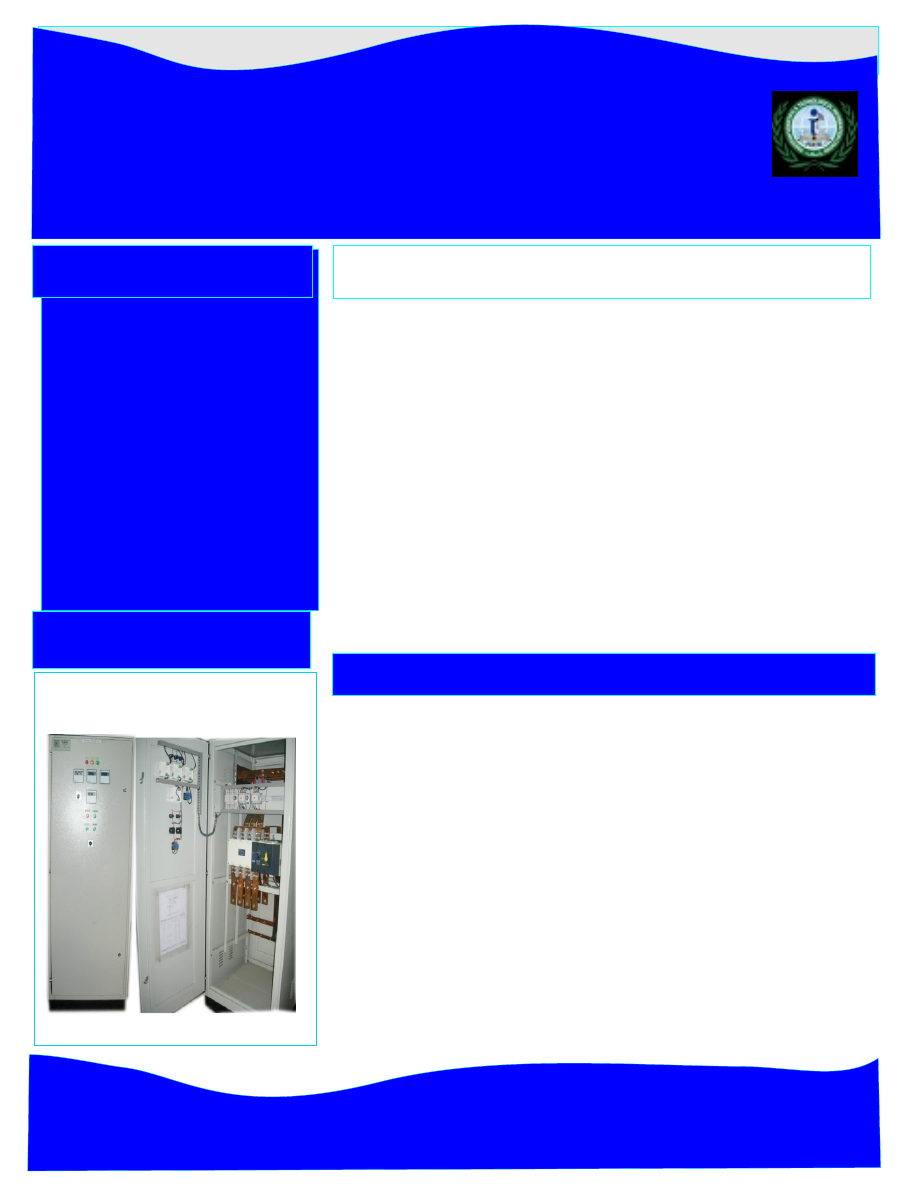
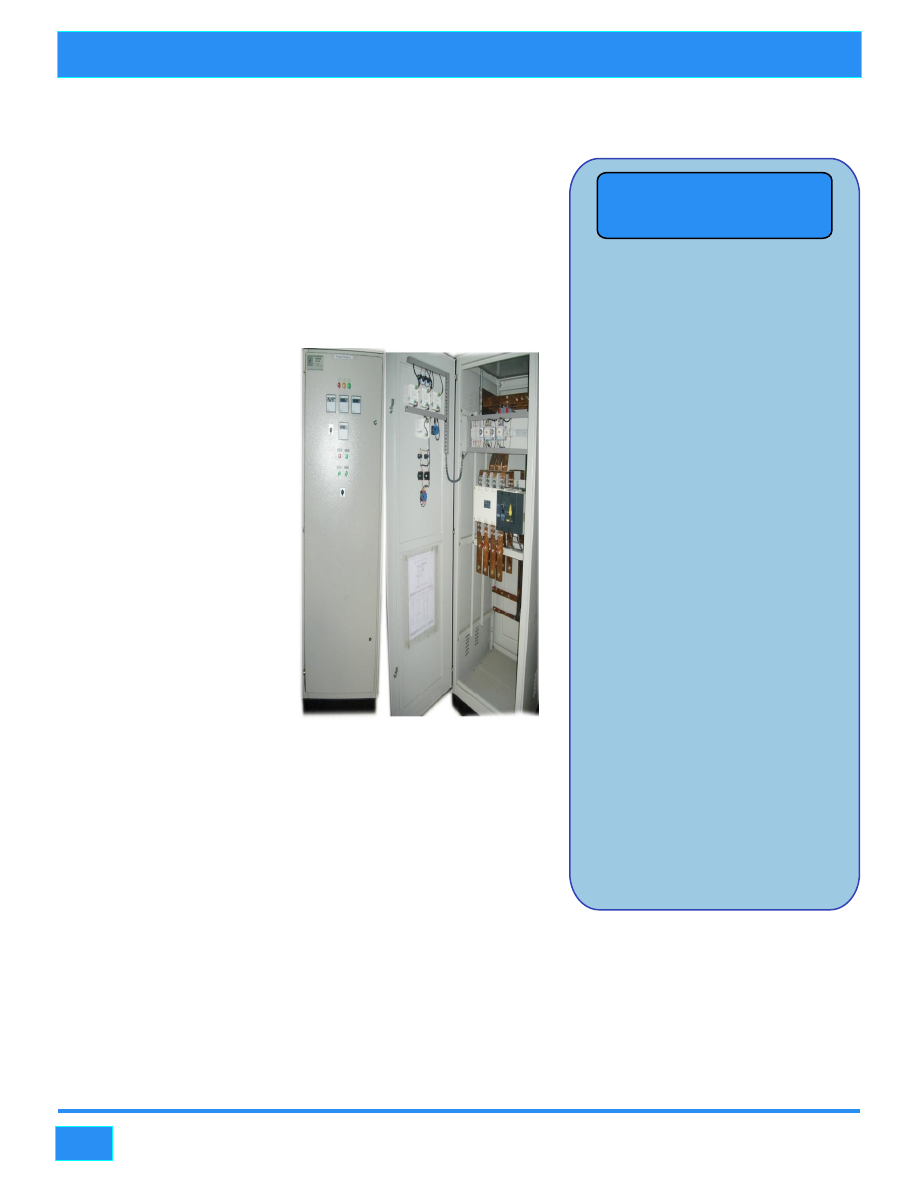
Industrial Power Tech
Products Low Voltage Switchgear
ACCESSORIES
Email:info@inudustrialpowertechl.com
! Low Voltage LV Distribution System
! Synchornizing & Load Sharing System
! Load Take off Panels
!Power Factor Improvement
Plants (PFI)
!Bus Copler Panels
! Bus Tie Ducts
!Power Distribution Board
!Lighting Distribution Board
!MCC Panel Motor Control
Center
!Automation, Control &
Interlocking Pannels
!ATS & MTF Panels
!Electrical itms/Components of
LV Switchgear, MCC & PFI
!
!Cable Trays Hot Dip Galvanized & Electrlytic Painted)
!Cable Leaders Hot Dip Galvanized & Electrolytic Painted
!Distribution Boxes
!Energy Meter Boxes
!Junction Boxes
Head Office
INDUSTRIAL POWER TECH
D-42, HABIB BANK CHORANGI
NEAR HINO PAK SITE AREA KARACHI
Telephone: +92 (21) 32573089, 32550404
Fax: +92 (21) 32584370
Technology Roundup
Please give us your feedback and address queries to shah_aftab@yahoo.com
10