
Editorial Board
Tech & Trade Offers
Tech News Headlines
Forthcoming Tech Events
Executive Editor
Managing Editor/Editor
Assistant Editor
A NEWS BULLETIN
PASTIC
November - December 2023
TECHNOLOGY INFORMATION SERVICES (TIS)
PAKISTAN SCIENTIFIC AND TECHNOLOGICAL INFORMATION CENTRE
Prof. Dr. Muhammad Akram Shaikh
Director General, PASTIC
VOLUME 15 NO. 6
PASTIC National Centre,
T
echnology
R
oundup
Phone: 051-9248103-4, 9248128
Fax: 051-9248113
email: tis.pastic@gmail.com
web: www.pastic.gov.pk
Quaid-i-Azam University Campus,
Islamabad
Dr. Syed Aftab Hussain Shah
Mr. Waqar Ahmad
More inside
•COMSATS Forges Collaborative Partnerships With
DGST-KP & RIHS
•World Science Day for Peace and Development 2023
Celebration in Pakistan
•Pakistan Starts Sovereign VC Fund to Lure Startup
Investors Back
• Pakistan Unveils Strategic Plan for Climate Action,
Sustainable Growth
• A Type of Allergy Medicine Might Help Treat lung Cancer
• Why People with Diabetes are More Prone to Respiratory
Risk
• To Build Better Tuberculosis Vaccines, Researchers Develop
New Model by Leveraging an Old Vaccine
• New Conductive, Cotton-Based Fiber Developed for Smart
Textiles
• Revolutionary Breakthrough in the Manufacture of
Photovoltaic Cells
• AI Alters Middle Managers' Work
• Electronic 'Soil' Enhances Crop Growth
• Drones Capture New Clues About How Water Shapes
Mountain Ranges Over Time
• Researchers Invent 'Methane Cleaner': Could Become a
Permanent Fixture in Cattle and Pig Barns
• Immersive VR goggles for Mice Unlock New Potential for
Brain Science
ØInternational Conference on
Robotics and Automation
(ICRA)
ØInternational Conference on
Business Management and
Social Innovation (ICBMSI)
ØInternational Conference on
Environmental Science and Green
Technology (ICESGT)
th
Ø170 International Conference
on Recent Advances in Engineering
and Technology (ICRAET)
ØOMAN STEAM Education
Conference
ØMalaysia HR Teach Conference
& Expo 2024
ØASME's Premier Conference on
Smart Materials, Adaptive Structures,
and Intelligent Systems
Graphic Desiger
Mr. Zeeshan Ahmad Khan

Technology Roundup
COMSATS Forges Collaborative Partnerships With DGST-KP & RIHS
The partnerships aim to foster a conducive environment for research, innovation, and
the application of technology to create impactful solutions for the benefit of society.
The Commission on Science and Technology for Sustainable Development in the South
(COMSATS) has inked cooperative agreements with the Directorate General of Science and
Technology, Government of Khyber Pakhtunkhwa (DGST-KP) and Rawal Institute of Health
Sciences (RIHS). These agreements aim to foster collaboration in emerging technologies,
focusing on technological solutions to
address developmental challenges.
The agreement between COMSATS
and DGST-KP was formally signed by
Ambassador Dr. M. NafeesZakaria,
Executive Director of COMSATS, and
Dr. Sajid Hussain Shah, Director
General of DGST-KP. The collaboration
spans various areas, including IT and
Digitalization, Climate Change and Environment, Human Resource Development, Skills
Development, Electric Vehicles, Renewable Energy, Natural Resource Exploitation
(Gemstones and Mines), Micro Hydro Plants, and Biomedicine.
World Science Day for Peace and Development 2023 celebration in Pakistan
Celebration of World Science Day for Peace and Development (WSDPD) on November 10
each year has become a regular programme of the Foundation. World Science Day was
proclaimed by UNESCO in the year 2001, since then the Foundation in collaboration with the
Ministry of Science & Technology and UNESCO is celebrating Science Day and organizes
various activities like, Convention of Scientists, Speech Competition among students and
Science Exhibitions.
The World Science Day for Peace and Development 2023 celebration in Pakistan
underscores a collective commitment to building trust in science.
In commemoration of the World Science Day for Peace and Development, a collaborative
initiative brought together the Commission on Science and Technology for Sustainable
Development in the South (COMSATS), UNESCO-Islamabad Office, Pakistan Science
Foundation (PSF), and ECO Science Foundation (ECOSF) for a Convention of Scientists at
the Pakistan Science Foundation.
Since its inception in 2001, the annual
celebration of the World Science Day for
Peace and Development serves as a
poignant reminder of the indispensable
role of science in society. The event
encourages public engagement in
discussions surrounding emerging
scientific issues.
This year's theme, 'Building Trust in Science,' places a spotlight on the pivotal role trust plays
in the development and application of evidence-based solutions to address complex global
challenges.
2

Technology Roundup
Recognizing the ever-growing impact of science on daily life and its influence on scientific
work and societal perceptions, the partners in Pakistan chose to center their commemoration
on 'Strengthening High-Quality and Equitable STEM Education for Sustainable
Development.'
The Convention of Scientists, held at the Pakistan Science Foundation on November 15,
2023, brought together scientists, researchers, science communicators, government officials,
and science journalists. The event provided a dynamic platform for thought-provoking
discussions on the multifaceted importance of science, its interconnectedness with various
aspects of people's lives, and its implications for sustainable development.
As part of the commemoration, the organizers planned three interactive sessions for students
at the Pakistan Museum of Natural History on November 15 and 16, 2023.
These engaging sessions focus on hands-on activities, including DNA extraction from fruits,
effective laboratory and science communication, and experiments exploring the concept of
inertia. The initiatives aim to cultivate students' interest in STEM fields and inspire the next
generation of scientists.
The World Science Day for Peace and Development 2023 celebration in Pakistan
underscores a collective commitment to building trust in science. The emphasis on high-
quality STEM education aligns with the broader vision of fostering sustainable development
through science-based knowledge and education.
The event's theme, 'Building Trust in Science,' resonates with the global recognition of the
importance of trust in scientific endeavors. Trust is closely linked to the understanding of
scientific knowledge and plays a crucial role in informing science-based policy decisions. The
celebration in Pakistan contributes to the international dialogue on the significance of science
in promoting peace, development, and the well-being of societies.
The collaborative efforts of COMSATS, UNESCO-Islamabad Office, PSF, and ECOSF in
observing the World Science Day for Peace and Development 2023 in Pakistan reflect a
commitment to advancing scientific knowledge, fostering trust, and inspiring the next
generation of scientists through innovative STEM education initiatives.
Pakistan Starts Sovereign VC Fund to Lure Startup Investors Back
Pakistan is launching a venture capital fund for
local early-stage startups, seeking to lure
global investors back to the South Asian
country. The fund aims to allocate as much as
$10 million annually, Umar Saif, Pakistan's
minister for information technology and
telecommunications, said in an interview.It'll
back companies that manage to gather most
of the round from other sources, targeting
startups seeking $2 million to $3 million, he
said. The government wants to give global
investors an additional incentive to back young Pakistani companies. Fundraising by the
country's startups has slumped to a fraction of the record $700 million they garnered over
2021 and 2022, according to Invest2Innovate. Venture investors pulled back from emerging
markets as economies slowed and interest rates and inflation levels jumped. “Pakistan is
setting up this fund where they want to entice global investors at an early stage,” Saif said in
Islamabad. Saif, a graduate of the Massachusetts Institute of Technology and Cambridge
University, is a startup industry veteran. He launched a state-backed incubation program in
2012, years before the nation's startup economy took off. He is now part of an interim
3
Technology Roundup
administration in charge until a February general election. Among Saif's other goals is the
introduction of a mandatory internship program for university students. Pakistan's tech
industry lags behind other emerging markets partly because a majority of graduates aren't
skilled enough for employment, he said. To further help the tech industry, Saif plans to create a
network of offices for freelancers. He's also proposing to make Pakistan a hub in China's
project to connect with Africa and Europe through a fiber-optic cable. Pakistan can be used as
a base to link Central Asia into the project, Saif said.
Pakistan Unveils Strategic Plan for Climate Action, Sustainable Growth
Pakistan's Ministry of Planning, Development, and
Special Initiatives on Sunday launched a far-reaching
plan to combat climate change while promoting
sustainable development, as outlined in the National
Climate Change Policy (NCCP). The NCCP, approved in
2021, aims to integrate climate change considerations
with other national policies and build climate-resilient
infrastructure, advancing sustained economic growth.A key element of the policy is the
National Climate Finance Strategy (NCFS), developed to identify priority sectors and amplify
climate finance. The NCFS is described as pivotal to Pakistan's commitment to the Paris
Agreement, emphasizing the mobilization of private sector investment, international climate
finance, and carbon markets.
A type of allergy medicine might help treat lung cancer
Researchers at the Icahn School of
Medicine at Mount Sinai have identified
an allergy pathway that, when blocked,
unleashes antitumor immunity in
mouse models of non-small cell lung
cancer (NSCLC). And in an early
parallel study in humans, combining
immunotherapy with dupilumab -- an
Interleukin-4 (IL-4) receptor-blocking
antibody widely used for treating allergies and asthma -- boosted patients' immune systems,
with one out of the six experiencing significant tumor reduction. "A big focus of our program
TARGET is to use single cell technology and artificial intelligence to identify molecular immune
programs that can dampen tumor immune response to checkpoint blockade." Also known as a
PD1 inhibitor, checkpoint blockade is a type of cancer immunotherapy that can unleash the
cancer-killing activity of T cells.
"Using single cell technologies, we discovered that the immune cells infiltrating lung cancers,
as well as other cancers we studied, exhibited characteristics of a 'type 2' immune response,
which is commonly associated with allergic conditions like eczema and asthma," says first
study author Nelson LaMarche, PhD, a postdoctoral research fellow in the lab of Dr. Merad.
Their findings validate our commitment to funding research across the entire discovery
continuum, from the lab to clinical implementation, driven by cutting-edge technology and
data. We're eager to witness our support delivering new hope by uncovering pathways to
enhance checkpoint blockade responses. We champion this discovery and take pride in being
part of its journey from lab to clinic, reinforcing our commitment to transforming lives," says Jill
O'Donnell-Tormey, PhD, CEO and director of scientific affairs at CRI.
4

Technology Roundup
Why people with diabetes are more prone to respiratory risk
Research has revealed how, in diabetics,
high levels of blood sugar disrupt the
function of key cell subsets in the lungs that
regulate the immune response. It also
identifies a potential strategy for reversing
this susceptibility and saving lives.For decades, it has been known that people with diabetes
are at a substantially increased risk of developing severe lung disease if they become infected
with viruses such as influenza, as well as with bacteria and fungi. When the COVID-19
pandemic started in early 2020, this mysterious phenomenon gained even more pressing
importance: It became clear that people with diabetes were at a significantly higher risk of
coming down with severe, even fatal, lung disease after developing a serious form of the virus,
but no one understood why. In fact, some 35 percent of people with COVID-19 who died during
the pandemic had diabetes.
Now, research conducted at the Weizmann Institute of Science and published in Nature has
revealed how, in diabetics, high levels of blood sugar disrupt the function of key cell subsets in
the lungs that regulate the immune response. It also identifies a potential strategy for
reversing this susceptibility and saving lives.
Importantly, the scientists discovered how high sugar levels in diabetic mice disrupt the
normal function of lung dendritic cells during infection. Altered sugar metabolism in these cells
led to the accumulation of metabolic byproducts that markedly disrupted the normal regulation
of gene expression, leading to aberrant immune protein production. "This could explain why
the functioning of these cells is disturbed in diabetes, and why the immune system is unable to
generate an effective anti-infection defense," says Kolodziejczyk, a postdoctoral fellow who
co-led the study as a first coauthor.
To build better tuberculosis vaccines, researchers develop new model by leveraging
an old vaccine
Each year, tuberculosis (TB) kills more people than any other infectious disease, falling out of
the top spot only temporarily during the COVID-19 pandemic.
Despite TB's wide reach and some
lost progress during the COVID-19
pandemic, researchers believe it is
possible to eradicate TB through
advances in vaccine development
and public health. To cross the
finish line, scientists must find
ways to test new vaccines rapidly
to prevent TB infections more
effectively.Hoft, who also serves as professor and chair of infectious diseases, allergy, and
immunology at the Saint Louis University School of Medicine, sought data that could only be
gathered by challenging the human immune system directly. This approach, Hoft
hypothesized, could provide answers to some TB unknowns. For example, TB animal models
do not fully mimic how the bacteria behaves in people, and vaccine developers do not have
well-defined data about what TB immune responses offer optimal protection against the
bacteria.
Mycobacterium tuberculosis, the bacteria that cause TB, however, is too dangerous for
human challenge with the fully pathogenic bacteria. The team needed to find another, safer
5
Technology Roundup
way to challenge the human immune system to find answers to their questions.
Hoft found a workaround in the Bacillus Calmette-Guérin (BCG) vaccine.
The most widely used vaccine in history, with more than 4 billion doses given to patients since
1921, the BCG vaccine contains a live but weakened version of the TB bacteria. The BCG
vaccine is given to newborns to reduce their TB risk, but it is less effective against pulmonary
TB and often wanes in effectiveness, providing little to no protection in adults.
With the BCG vaccine, Hoft saw a chance to gather data about TB in a human study without
the risk of exposing participants to full strength M. tuberculosis bacteria. To test this idea, the
researchers gave 92 healthy adults the BCG vaccine, with participants receiving one of four
different doses.
With participants' immune response to the BCG vaccine serving as a proxy for their exposure
to a true infection, the researchers gathered much-needed data about how the immune
system responds when it encounters TB.
The team applied a battery of analysis methods to samples collected from the BCG challenge
sites and blood, looking for associations between BCG at the injection site, and immune
responses as well as gene expression changes in blood.
The findings open up new doors for TB vaccine development.
"Our findings are important for two reasons," Hoft said. "First, this approach could enable us to
screen new TB vaccines early in the pipeline and prioritize the most promising concepts,
saving time and money."
"Second, we have a model to better determine what a new vaccine needs to do to protect
against TB. We will be able to identify biomarkers indicating whether new vaccines could
better protect someone against TB.”
New conductive, cotton-based fiber developed for smart textiles
6
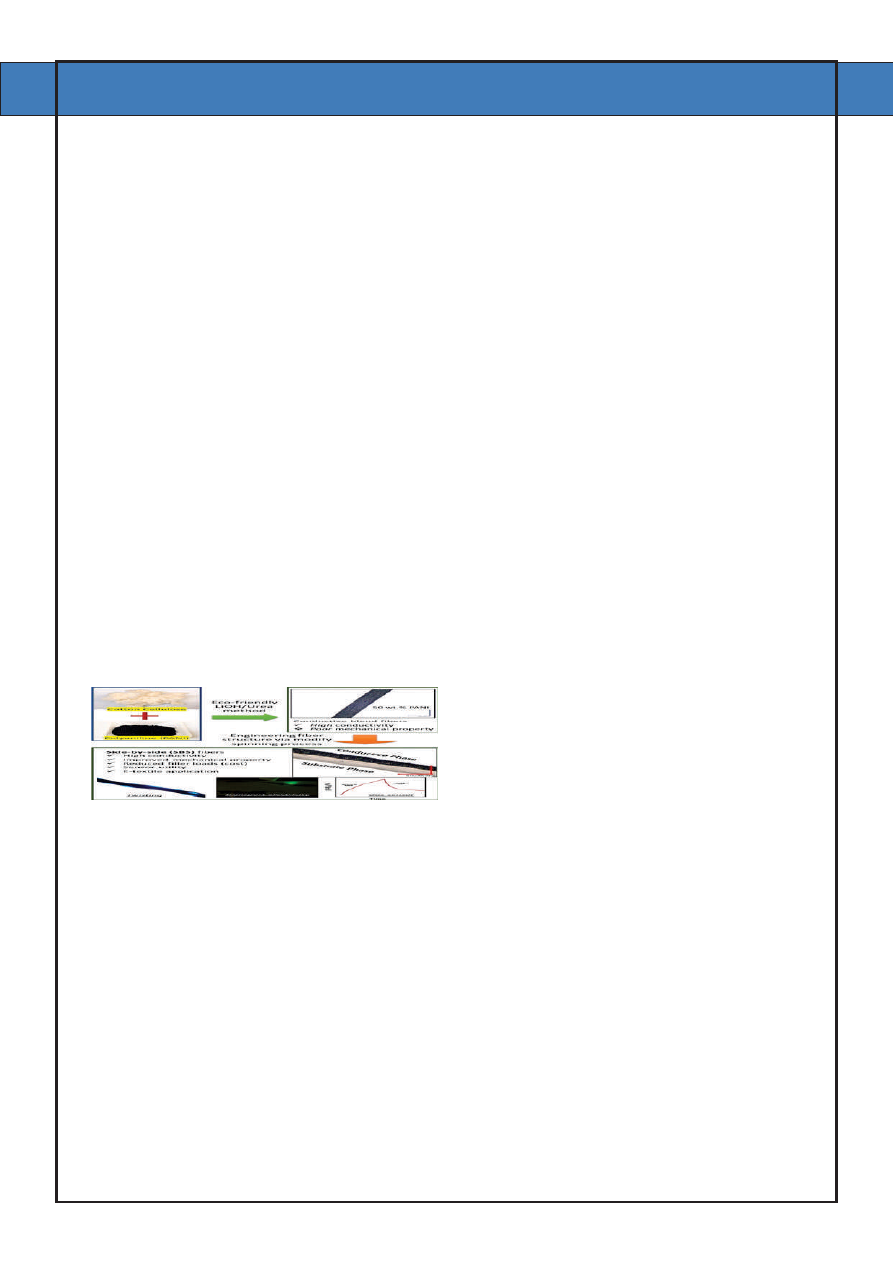
A single strand of fiber developed at
Washington State University has the flexibility
of cotton and the electric conductivity of a
polymer, called polyaniline.The new material
has shown good potential for wearable e-
textiles. The researchers tested the fibers with
a system that powered an LED light and
another that sensed ammonia gas. While intrinsically conductive, polyaniline is brittle and by
itself, cannot be made into a fiber for textiles. To solve this, the researchers dissolved cotton
cellulose from recycled t-shirts into a solution and the conductive polymer into another
separate solution.
The newly developed material showed good potential for wearable e-textiles.
The WSU researchers tested the fibers with a system that powered an LED light and another
that sensed ammonia gas, detailing their findings in the journal Carbohydrate Polymers.
The result showed good interfacial bonding, meaning the molecules from the different
materials would stay together through stretching and bending.
Achieving the right mixture at the interface of cotton cellulose and polyaniline was a delicate
balance, Liu said.
"We wanted these two solutions to work so that when the cotton and the conductive polymer
contact each other they mix to a certain degree to kind of glue together, but we didn't want
them to mix too much, otherwise the conductivity would be reduced," she said.

Technology Roundup
Revolutionary breakthrough in the manufacture of photovoltaic cells
7
The University of Ottawa, together with national and international partners, has achieved a
world first by manufacturing the first back-contact
micrometric photovoltaic cells.The cells, with a size
twice the thickness of a strand of hair, have significant
advantages over conventional solar technologies,
reducing electrode-induced shadowing by 95% and
potentially lowering energy production costs by up to
three times.
The technological breakthrough -- led by Mathieu de
Lafontaine, a postdoctoral researcher at the University of Ottawa and a part-time physics
professor; and Karin Hinzer, vice-dean, research, and University Research Chair in Photonic
Devices for Energy at the Faculty of Engineering -- paves the way for a new era of
miniaturization in the field of electronic devices.
The micrometric photovoltaic cell manufacturing process involved a partnership between the
University of Ottawa, the Université de Sherbrooke in Quebec and the Laboratoire des
Technologies de la Microélectronique in Grenoble, France.
"These micrometric photovoltaic cells have remarkable characteristics, including an
extremely small size and significantly reduced shadowing. Those properties lend themselves
to various applications, from densification of electronic devices to areas such as solar cells,
lightweight nuclear batteries for space exploration and miniaturization of devices for
telecommunications and the internet of things," Hinzer says.
"This technological breakthrough promises significant benefits for society. Less expensive,
more powerful solar cells will help accelerate the energy shift. Lightweight nuclear batteries
will facilitate space exploration, and miniaturization of devices will contribute to the growth of
the internet of things and lead to more powerful computers and smartphones," de Lafontaine
says.
This international partnership between Canada and France illustrates the importance of
innovation and research in micromanufacturing, leading the way to a future in which
technology will become more powerful and accessible than ever.
AI alters middle managers' work
The introduction of artificial intelligence is a significant part of the
digital transformation bringing challenges and changes to the
job descriptions among management. A study conducted at the
University of Eastern Finland shows that integrating artificial
intelligence systems into service teams increases demands
imposed on middle management in the financial services field. In
that sector, the advent of artificial intelligence has been fast and AI applications can implement
a large proportion of routine work that was previously done by people. Many professionals in
the service sector work in teams which include both humans and artificial intelligence
systems, which sets new expectations on interactions, human relations, and leadership.The
study analysed how middle management had experienced the effects of integration of artificial
intelligence systems on their job descriptions in financial services.
"The productivity of work grows when routine tasks can be passed on to artificial intelligence.
On the other hand, a fast pace of change makes work more demanding, and the integration of
artificial intelligence makes it necessary to learn new things constantly. Variation in work
assignments increases and managers can focus their time better on developing the work and
Technology Roundup
8
on innovations. Surprisingly, new kinds of routine work also increase, because the operations
of artificial intelligence need to be monitored and checked," says Assistant Professor Jonna
Koponen.
"Artificial intelligence was sometimes given a name, and some teams even discussed who
might be the mother or father of artificial intelligence. This led to different types of relationships
between people and artificial intelligence, which should be considered when introducing or
applying artificial intelligence systems in the future. In addition, the employees were
concerned about their continued employment, and did not always take an exclusively positive
view of the introduction of new artificial intelligence solutions," Professor Saara Julkunen
explains.
Aspects observed in the study showed that managing service teams with integrated artificial
intelligence requires new skills and knowledge of middle management, such as technological
understanding and skills, interactive skills and emotional intelligence, problem-solving skills,
and the ability to manage and adapt to continuous change.
"Artificial intelligence systems cannot yet take over all human management in areas such as
the motivation and inspiration of team members. This is why skills in interaction and empathy
should be emphasised when selecting new employees for managerial positions which
emphasise the management of teams integrated with artificial intelligence," Koponen
observes.
Electronic 'soil' enhances crop growth
B a r l e y s e e d l i n g s g r o w o n
average 50% more when their
r o o t s y s t e m i s s t i m u l a t e d
e l e c t r i c a l l y t h r o u g h a n e w
cultivation substrate. In a study
published in the journal PNAS,
researchers from Linköping
University have developed an
electrically conductive "soil" for
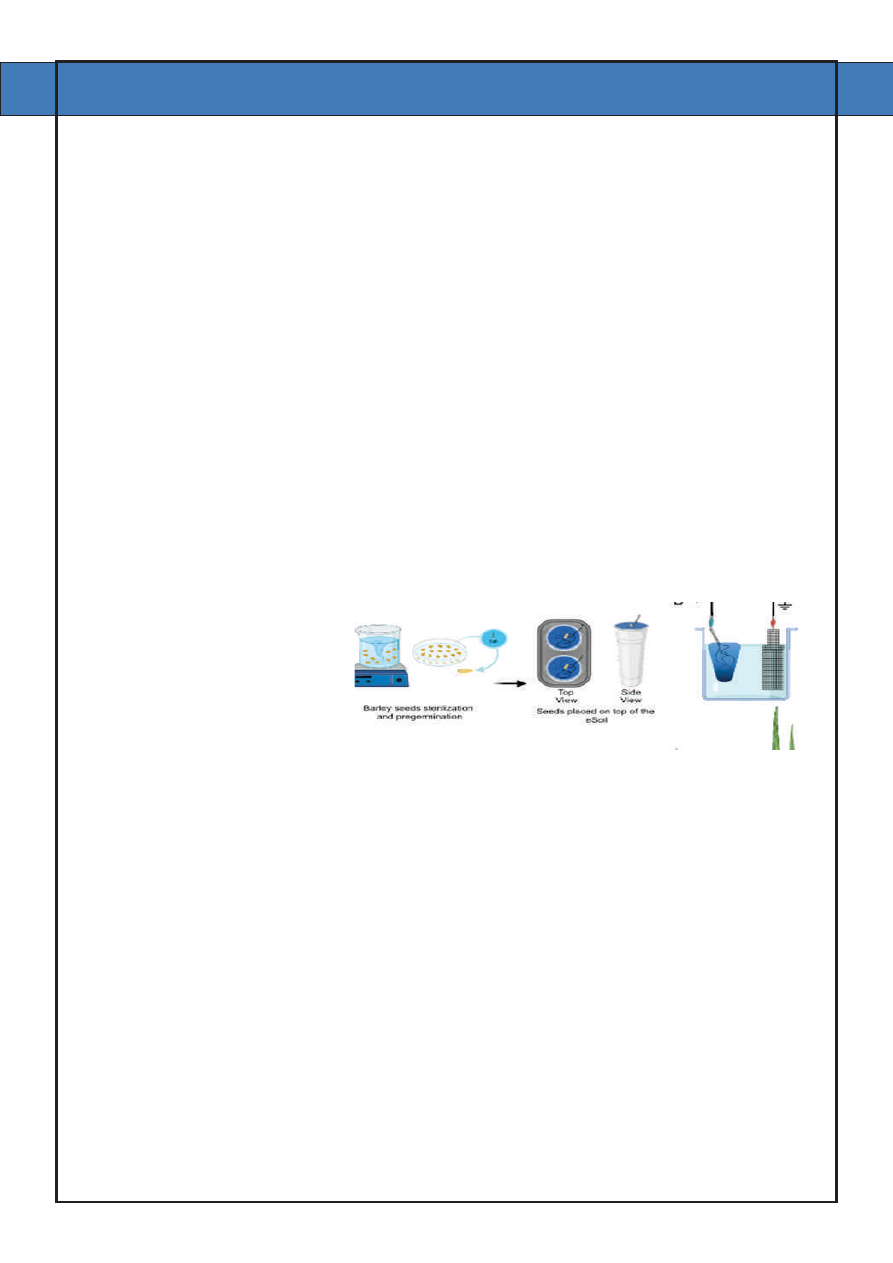
soilless cultivation, known as hydroponics."The world population is increasing, and we also
have climate change. So it's clear that we won't be able to cover the food demands of the
planet with only the already existing agricultural methods. But with hydroponics we can grow
food also in urban environments in very controlled settings," says Eleni Stavrinidou, associate
professor at the Laboratory of Organic Electronics at Linköping University, and leader of the
Electronic Plants group.
Her research group has now developed an electrically conductive cultivation substrate
tailored to hydroponic cultivation which they call eSoil.
The Linköping University researchers have shown that barley seedlings grown in the
conductive "soil" grew up to 50% more in 15 days when their roots were stimulated electrically.
Hydroponic cultivation means that plants grow without soil, needing only water, nutrients and
something their roots can attach to -- a substrate.
It is a closed system that enables water recirculation so that each seedling gets exactly the
nutrients it needs.
Therefore, very little water is required and all nutrients remain in the system, which is not
possible in traditional cultivation.
Hydroponics also enables vertical cultivation in large towers to maximise space efficiency.
Crops already being cultivated in this manner include lettuce, herbs and some vegetables.
Technology Roundup
9
Grains are not typically grown in hydroponics apart for their use as fodder.
In this study the researchers show that barley seedlings can be cultivated using hydroponics
and that they have a better growth rate thanks to electrical stimulation.
"In this way, we can get seedlings to grow faster with less resources. We don't yet know how it
actually works, which biological mechanisms that are involved. What we have found is that
seedlings process nitrogen more effectively, but it's not clear yet how the electrical stimulation
impacts this process," says Eleni Starvrinidou.
Mineral wool is often used as cultivation substrate in hydroponics.
Not only is this non-biodegradable, it is also produced with a very energy intensive process.
The electronic cultivation substrate eSoil is made of cellulose, the most abundant biopolymer,
mixed with a conductive polymer called PEDOT.
This combination as such is not new, but this is the first time it has been used for plant
cultivation and for creating an interface for plants in this manner.
Drones capture new clues about how water shapes mountain ranges over time
Drones flying along miles of rivers in the steep, mountainous
terrain of central Taiwan and mapping the rock properties
have revealed new clues about how water helps shape
mountains over geological time, according to a team led by
Penn State scientists.The researchers found a link between
the size of boulders in the rivers and the steepness of the
rivers. The link shows how rock properties can influence the relationship between tectonic
processes happening deep underground and how mountainous landscapes change shape.
They reported in the journal Science Advances.
As tectonic plates collide and form mountain ranges, rocks that were previously buried in the
Earth's crust are pushed to the surface in a process called uplift. The temperature and
pressure that these rocks experience leads to variability in rock properties -- like rock
hardness or the spacing and orientation of fractures -- that then affect how easily they are
eroded by elements at the surface, the scientists said.
"Determining the controls on river incision into rock is important for understanding how
mountain ranges evolve over geologic time," DiBiase said. "But some key parameters for
testing models of river incision, such as flow depth and sediment cover, are difficult to measure
at large scales.”
Researchers Invent 'Methane Cleaner': Could Become a Permanent Fixture in
Cattle and Pig Barns
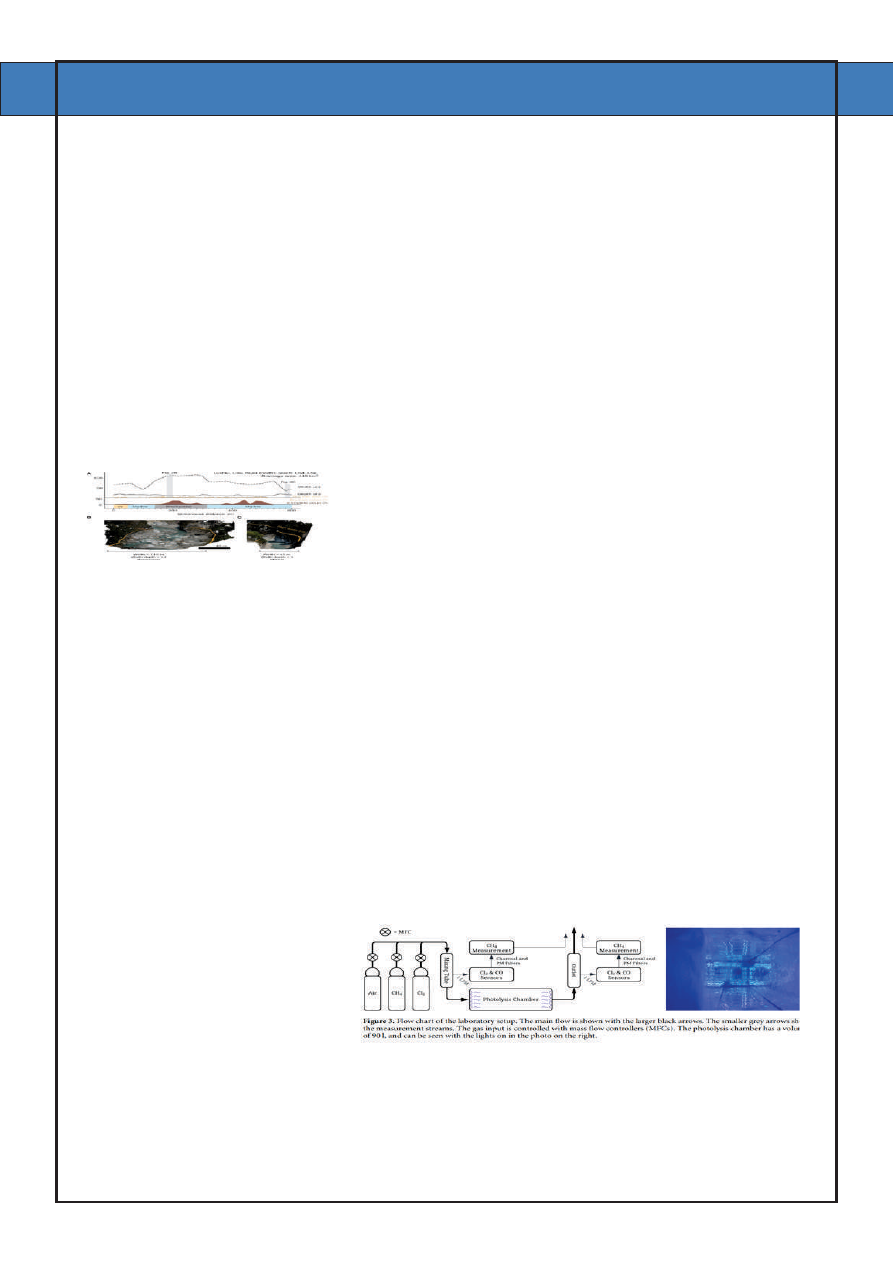
In a spectacular new study,
researchers from the University
of Copenhagen have used light
and chlorine to eradicate low-
concentration methane from air.
The result gets us closer to being
able to remove greenhouse
gases from livestock housing, biogas production plants and wastewater treatment plants to
benefit the climate. The research has just been published in the journal Environmental
Research Letters.The Intergovernmental Panel on Climate Change (IPCC) has determined
that reducing methane gas emissions will immediately reduce the rise in global temperatures.

Technology Roundup
The gas is up to 85 times more potent of a greenhouse gas than CO2, and more than half of it is
emitted by human sources, with cattle and fossil fuel production accounting for the largest
share.
A unique new method developed by a research team at the University of Copenhagen's
Department of Chemistry and spin-out company Ambient Carbon has succeeded in removing
methane from air.
"A large part of our methane emissions comes from millions of low-concentration point
sources like cattle and pig barns. In practice, methane from these sources has been
impossible to concentrate into higher levels or remove. But our new result proves that it is
possible using the reaction chamber that we've have built," says Matthew Stanley Johnson,
the UCPH atmospheric chemistry professor who led the study.
Earlier, Johnson presented the research results at COP 28 in Dubai via an online connection
and in Washington D.C. at the National Academy of Sciences, which advises the US
government on science and technology.
"Methane decomposes at a snail's pace because the gas isn't especially happy about reacting
with other things in the atmosphere. However, we've discovered that, with the help of light and
chlorine, we can trigger a reaction and break down the methane roughly 100 million times
faster than in nature," explains Johnson.
Source: University of Copenhagen - Faculty of Science. "Researchers invent 'methane
cleaner': Could become a permanent fixture in cattle and pig barns." ScienceDaily.
Immersive VR goggles for mice unlock new potential for brain science
Northwestern University researchers have developed new virtual reality (VR) goggles
for mice.Besides just being cute, these
miniature goggles provide more immersive
experiences for mice living in laboratory settings.
B y m o r e f a i t h f u l l y s i m u l a t i n g n a t u r a l
environments, the researchers can more
accurately and precisely study the neural
circuitry that underlies behavior.Compared to
current state-of-the-art systems, which simply
surround mice with computer or projection screens, the new goggles provide a leap in
advancement. In current systems, mice can still see the lab environment peeking out from
behind the screens, and the screens' flat nature cannot convey three-dimensional (3D) depth.
In another disadvantage, researchers have been unable to easily mount screens above
mice's heads to simulate overhead threats, such as looming birds of prey.
The new VR goggles bypass all those issues. And, as VR grows in popularity, the goggles also
could help researchers glean new insights into how the human brain adapts and reacts to
repeated VR exposure -- an area that is currently little understood.
The research will be published on Friday (Dec. 8) in the journal Neuron. It marks the first time
researchers have used a VR system to simulate an overhead threat.
"For the past 15 years, we have been using VR systems for mice," said Northwestern's Daniel
Dombeck, the study's senior author. "So far, labs have been using big computer or projection
screens to surround an animal. For humans, this is like watching a TV in your living room. You
still see your couch and your walls. There are cues around you, telling you that you aren't
inside the scene. Now think about putting on VR goggles, like Oculus Rift, that take up your full
vision. You don't see anything but the projected scene, and a different scene is projected into
each eye to create depth information. That's been missing for mice."
Dombeck is a professor of neurobiology at Northwestern's Weinberg College of Arts and
Sciences. His laboratory is a leader in developing VR-based systems and high-resolution,
laser-based imaging systems for animal research.
10

Technology Roundup
SOURCES AND IMAGE CREDITS
https://www.comsats.org/comsats-inks-cooperative-agreements-with-dgst-kp-and-rihs/
https://www.radio.gov.pk/10-11-2023/world-science-day-for-peace-development-being-observed-today
https://psf.gov.pk/world-science-day.aspx | https://www.technologytimes.pk/wp-content/uploads/2023/11/2023-11-11.pdf
https://www.brecorder.com/news/40282937/pakistan-startup-fund-launched
https://www.x-mol.net/paper/article/1732812574326280192
https://www.nature.com/articles/s41586-023-06803-0
www.sciencedaily.com/releases/2023/11/231129111954.htm
https://ars.els-cdn.com/content/image/1-s2.0-S0144861723007737-ga1_lrg.jpg
www.sciencedaily.com/releases/2023/12/231211114547.htm
https://ars.els-cdn.com/content/image/1-s2.0-S2666386423005325-fx1_lrg.jpg
www.sciencedaily.com/releases/2023/11/231122192353.htm
https://journals.sagepub.com/doi/10.1177/10946705231220462
www.sciencedaily.com/releases/2023/12/231221012822.htm
https://www.pnas.org/doi/10.1073/pnas.2304135120#sec-3
www.sciencedaily.com/releases/2023/12/231227151834.htm
https://www.science.org/doi/10.1126/sciadv.adg6794
www.sciencedaily.com/releases/2023/12/231215015434.htm
https://iopscience.iop.org/article/10.1088/1748-9326/ad0e33/pdf
www.sciencedaily.com/releases/2023/12/231218130025.htm
www.sciencedaily.com/releases/2023/12/231208133129.htm
11
11
11
11
11
11
11

Technology Roundup
12
FORTHCOMING TECH EVENTS
PAKISTAN
Rethinking Teaching (RTT): A Course (Re)Design Workshop January 18 - 23, 2024. Teaching
& Learning Commons, Aga Khan University - Stadium Road Campus, Karachi
st
nd
International Applied Business Research Conferences(IABRC) (21 - 22 feb,2024)
Avenue International Islamic University Islamabad
International Workshop on Curriculum Development Through Project Based Learning and
CDIO January 9th,2024 , Avenue Allama Iqbal Auditorium, Faisal Mosque, Islamabad
Supported By British Council International Islamic University Islamabad.
Ø
Ø
Ø
INTERNATIONAL
International Conference on Robotics and Automation (ICRA)
th
Venue: Dubai, United Arab Emirates
, Date:
International Conference on Business Management and Social Innovation (ICBMSI)
th
January 8 , 2024, Venue: London, United Kingdom
International Conference on Environmental Science and Green Technology (ICESGT)
th
, Date: February 10 , 2024, Venue: Sydney, Australia
170 International Conference on Recent Advances in Engineering and Technology (ICRAET)
st
, Date: February 21 , 2024, Venue: Bangkok, Thailand
st
, Date: February 21 , 2024, Venue: Muscat , Oman
OMAN STEAM Education Conference
th
, Date:March 5 , 2024, Venue: Kuala Lumpur,
Malaysia HR Teach Conference & Expo 2024
Malaysia
ASME's Premier Conference on Smart Materials, Adaptive Structures, and Intelligent
Systems
th
, Date:September 9 , 2024, Venue: Atlanta, United States of America
th
, Date:October 7 ,2024, Venue: Dubai, United Arab Emirates
Ø
Ø
Ø
Ø
Ø
Ø
TECH AND TRADE OFFERS
Shah Trading Corporation
About Shah Trading Corporation
Shah Trading Corporation is the name of quality and trust. we are
importer and distributor of Alphakill Alphamost 10SC, Alphakill
Mostyn SRD 13, Vipona Fipronill 25 EC, Brobait Anticoagulant
Roadenticide Wax Blocks and Vehicle Mountable Fog Generators
With An Excellence of 38 years.
Shah Trading Corporation have done many projects with biggest

Technology Roundup
13
companies and clients all over pakistan with its High
Quality Services and products ,known for the clean-
up mission of insects anywhere.
We have been located on Ferozepur Road Lahore
From the start of the business and providing
services as well with high quality products
Royal Solar Energy Pvt
Royal Solar Energy
About Royal Solar Energy Pvt
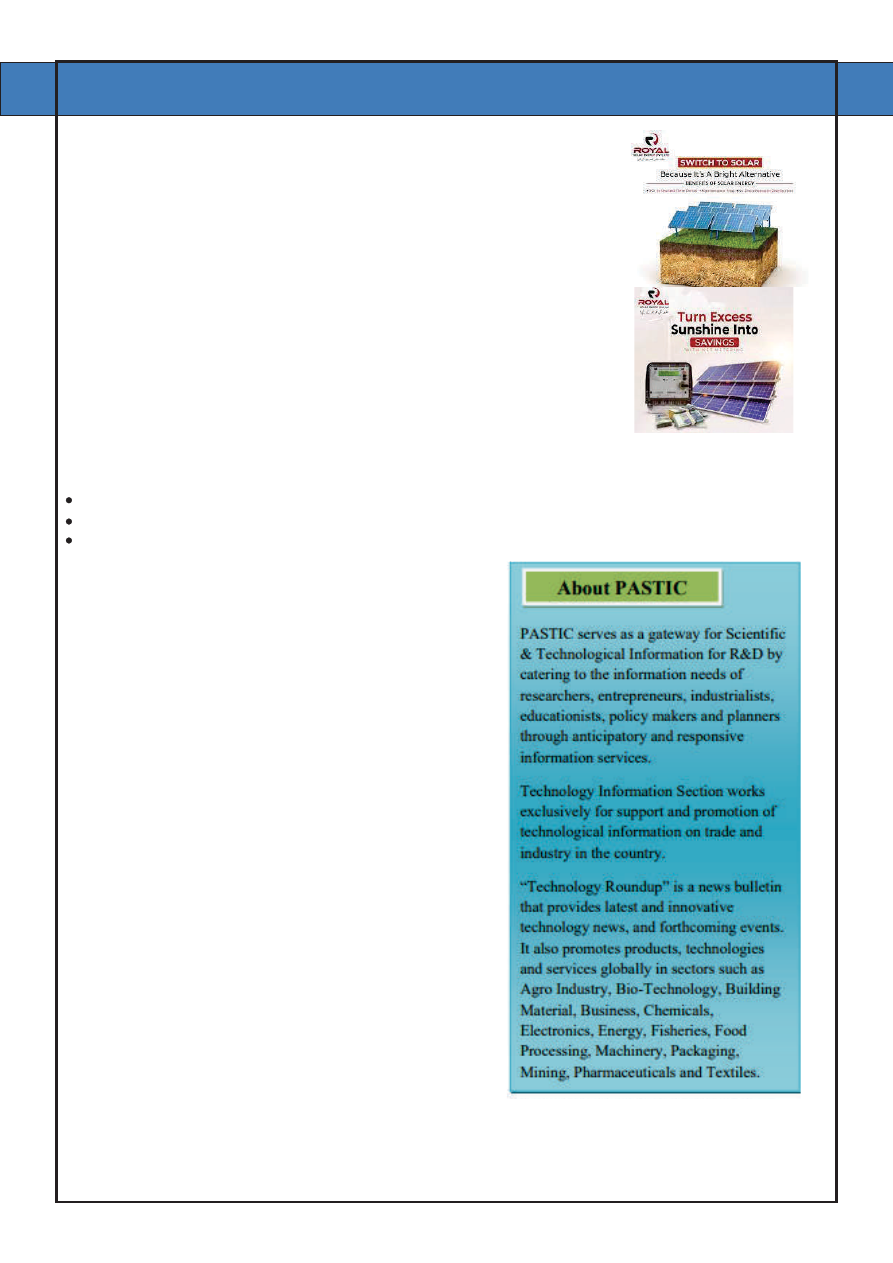
Royal Solar Energy Pvt. Ltd is an Importer, and
wholesale distributor of solar PV system
components with warehouses in Multan, Lahore,
Faisalabad, Islamabad, and Karachi, providing
service across Pakistan. We carry residential and
commercial grid-tie products and products for
industrial and small off-grid applications.
With over eight years of combined experience, we
understand the challenges of the market and have
made it our mission to provide high-quality, reliable,
and innovative products with honest and friendly
service. We proudly employ trained solar
individuals with a background in renewable energy.
Our Services
Fumigation Services
Anti-Termite Treatments
Spray Fogging Services
Rat Treatment Services
Lizard Control Services
All Kind of Small Insect Treatment Services
Contact Us
Office # 178-Ferozepur Road
Building # Near HBL, Shah Jamal Mor
Lahore (54000) Pakistan.
Phone: +92-42-37596343
Email:
Web: https://shahtradingcorp.com
Technology Roundup
14
We continuously train our employees for changes in
technology and refresh their previous learning.
Additionally, staying updated with industry trends,
emerging technologies, and consumer behavior is
crucial to stay ahead in the ever-evolving
Contact Us
Office # Head Office, Chungi No.6 Pace & Pace
Building # 3rd Floor, Gulgasht, Multan.
Islamabad Office, Street 169, G13/3, Islamabad
Phone: +92 306 8671511 +92310 4400999
Web:
Email: info@royalsolar.pk
Our Services
Residential
Commercial
Agriculture
Please give us your feedback and address
queries to
tis.pastic@gmail.com