Technology Roundup
1
KP Govt and
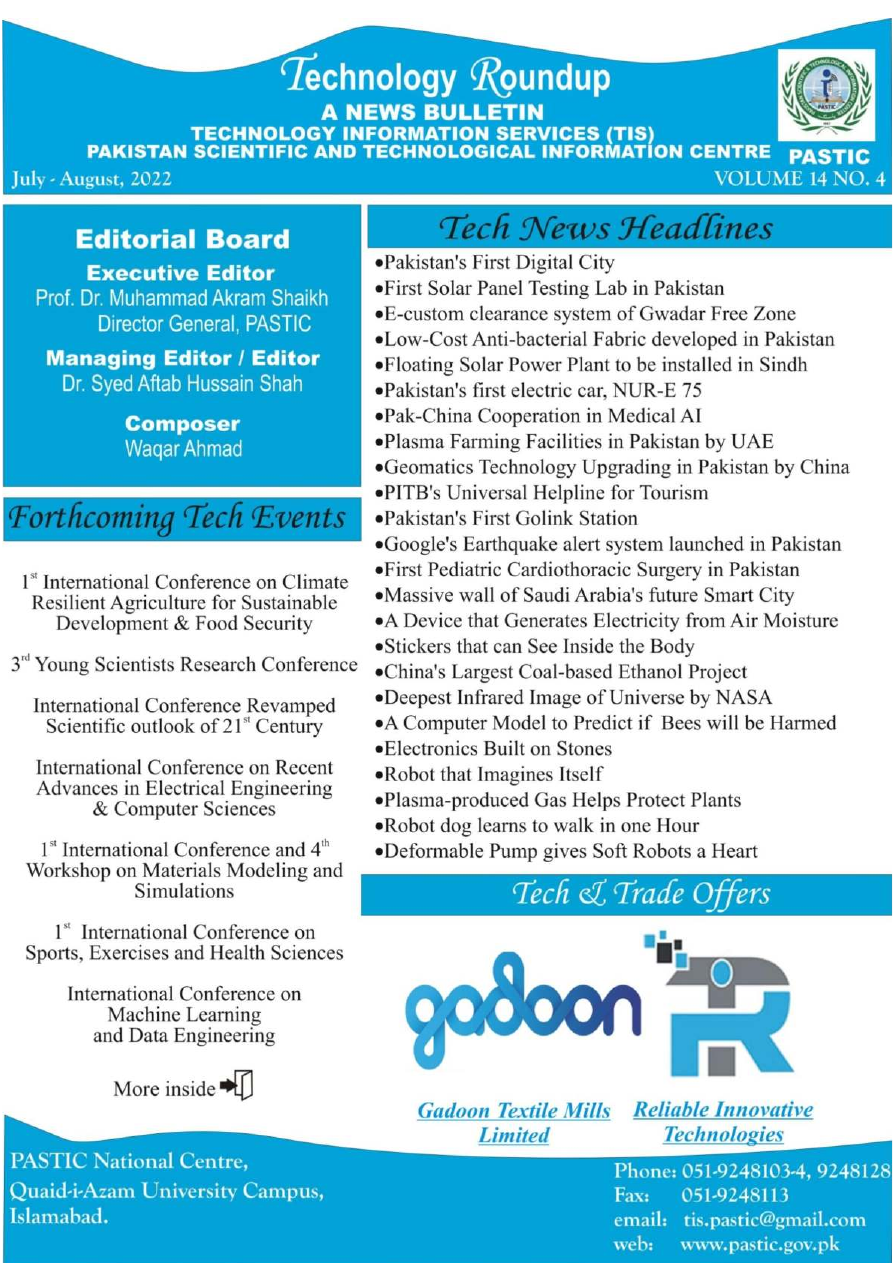
NLC Ink Deal for Pakistan’s First Digital City
The government of Khyber Pakhtunkhwa has recently signed agreements with various
institutions and organizations for technology-based projects. The National Logistics Cell (NLC)
also signed an agreement.
The KP government through its Science & Technology and Information Technology
Department has signed an agreement with NLC for establishing Pakistan Digital City as the first
special technology zone of Khyber Pakhtunkhwa.
The digital city would be established in Haripur, spanning an area of 87 Kanal which
would create more than 20,000 direct, indirect and induced high-tech jobs in the province. The aim
of establishing the Digital City is to facilitate IT industries, promote the business of ICTs and
software companies, encourage innovations and entrepreneurship, and capitalize on the immense
job creation potential of ICTs.
The important technologies to be transferred immediately and introduced under the
program include High-Tech Manufacturing, Artificial Intelligence, Quantum Computing, Cyber-
Physical systems, and Cyber Security.
KP Chief Minister Mahmood Khan attended the signing ceremony as a chief guest. The KP
government also signed agreements with Udacity, NETSOL, GSK, and NADRA. The step is an
important development toward digital transformation in the province.
Image credit source:

Technology Roundup
2
PCRET Set to Establish Solar Panel Testing Lab
Pakistan Council of Renewable Energy Technology (PCRET) is all set to establish a solar
panel testing laboratory under the project, “Establishment of PAK-KOREA Testing Laboratory for
PV Modules and Allied Equipment”.
Federal Secretary for Science and Technology Ghulam Muhammad Memon inaugurated
the establishment of Pak-Korea Testing Laboratory for PV-Modules and Allied Equipment.
Ambassador of Republic of Korea Sangpyo Suh and Director General PCRET Dr. Syed Attaur
Rehman attended the event. The solar panel testing laboratory is being established under a grant-
aid project from Korea International Cooperation Agency (KOICA) amounting 9.5 million USD
and local Public Sector Development Program (PSDP) having share of Rs 71.629 million. Solar
panel testing lab
“The testing laboratory” is planned to achieve the status of Certification Body
Testing Laboratory (CBTL) in collaboration with Pakistan Standards and Quality Control
Authority (PSQCA). The testing laboratory after its completion will be the first testing laboratory
of the country having CBTL status. The KOICA will construct the testing laboratory and provide,
install and commission all the required equipment for the solar panel testing. The KOICA will also
provide one year long training to the PCRET employees for the smooth operation of the project
during and after its completion. Obtaining of international certifications including IEC-61215 and
IEC-61730 along with ISO-17025 will also be sponsored and facilitated by the Korean side.
The PCRET will provide all the local support required for the execution of the project
along with eight kanals of space for the project at Plot no 55, Street 7, Sector H-8/4, Islamabad.
The PCRET will also ensure the involvement of its employees to seek training during the project
and ensure its execution and operation after its completion. The PSQCA has already initiated the
process for adding solar panels in the list of its declared mandatory items.
https://www.brecorder.com/news/40189177/pcret-set-to-establish-solar-

Technology Roundup
3
E-custom clearance system installed in Gwadar Free Zone
In order to give a strategic boost to commercial activities, an e-custom clearance system
“Web Based One Custom” (WeBOC) has been installed in Gwadar Free Zone. It is a milestone
development in the history of Gwadar Port Free Zone consisting of the South Free Zone (Phase I)
and the North Free Zone (Phase II).
Now all foreign and local companies already registered or to be registered in Gwadar Free
Zone will observe a phenomenal growth of their businesses enjoying paperless, ultra-fast, cost-
effective and transparent processes and procedures.
It will be an impetus to foreign investors always asking for the activation of E-custom
functionality in Gwadar Free Zone. After fulfilling the prerequisite, foreign investment is highly
likely to come, which is desperately needed for the struggling Pakistani economy in the current
scenario.
The game-changing e-initiative aims to facilitate companies in Gwadar Free Zone to get
integrated with Gwadar Port, customs, NLC, FBR, banking channels and other institutions to
increase efficiency and reduce the time needed for processing in various departments. WeBOC in
Gwadar Free Zone will help with the automation, standardisation and harmonisation of all trade
procedures and logistic services related to land, air and sea routes under the Pakistan Single
Window (PSW).
Image
credit:
https://www.scmp.com/comment/opinion/article/3158658/could-gwadar-port-
protests-close-china-pakistan-economic-corridors
Source:
https://www.pakistantoday.com.pk/2022/07/25/e-custom-clearance-system-installed-in-
Technology Roundup
4
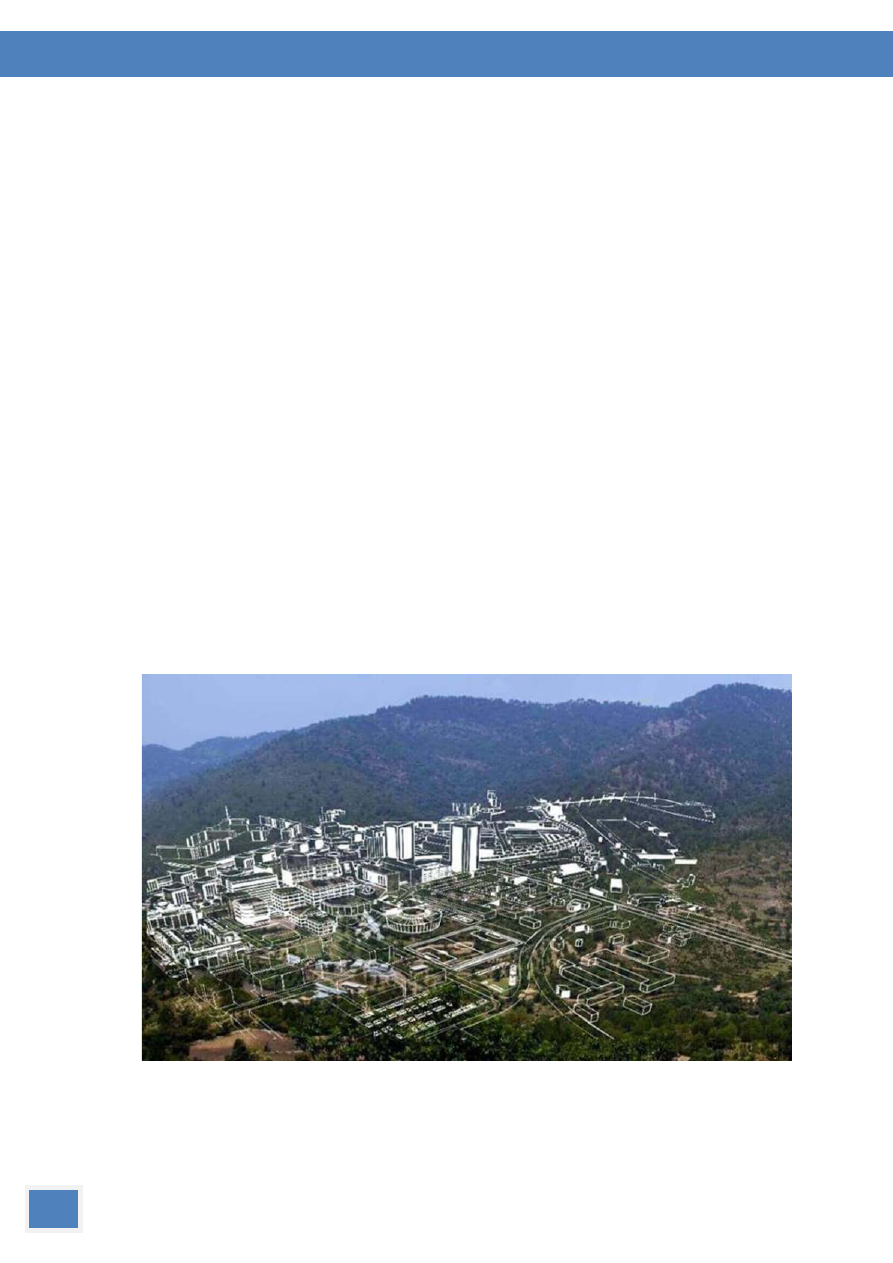
Pakistani Scientists Developed Low-Cost Anti-bacterial Fabric
The fabric can be used in wound dressing, lab coats, masks and various types of packaging
materials. The team led by Saadat Majeed, Associate Professor, Division of Analytical Chemistry
at the Bahauddin Zakariya University in Multan, tested the eco-friendly Chitosan and silver
nanoparticles modified fabric for four common types of bacteria.
The fabric was very effective in preventing microbial contamination. The research team
took the normal fabric and treated it with alkali, which created the active sites in the fabric for
modification. Then they dipped the fabric piece in silver nanoparticles and Chitosan
– a type of
sugar from crabs and lobsters
– which coated the cloth with an extra invisible layer. “This coating
has active antimicrobial properties and kills the bacterial strains immediately upon contact". Many
other methods involve toxic chemicals or expensive equipment, but this method is relatively easy
and affordable. “All we need is a beaker and cost-effective material for modifications," the
researcher added. Chitosan is a biomaterial used for many biomedical applications including
antibacterial activities. It has excellent biocompatibility and biodegradability. The positive ionic
charges created on the backbone of the chitosan during treatment effectively provide the sites for
further modifications and immobilisation. On the other hand, silver nanoparticles are one of the
emerging materials in scientific research and development. These nanomaterials exhibit large
surface area and tuneable particle size which render them an effective tool in combating bacteria.
The coating of these two materials in the fabric can allow protection against microbes with
minimal cytotoxicity and synergistically. To check the antimicrobial properties, the team loaded
the fabric with four common types of microbes, namely Micrococcus luteus, Staphylococcus
aureus, Enterobacter aerogenes, and E. coli, responsible for pneumonia, infections, hospital
contamination and diarrhoea respectively with other diseases. The results showed that the fabric
treatment method has the potential to be used for hospital fabrics, masks, and food packaging
materials.
Source and image credit:
https://tribune.com.pk/story/2368166/pakistani-scientists-develop-low-
Technology Roundup
5
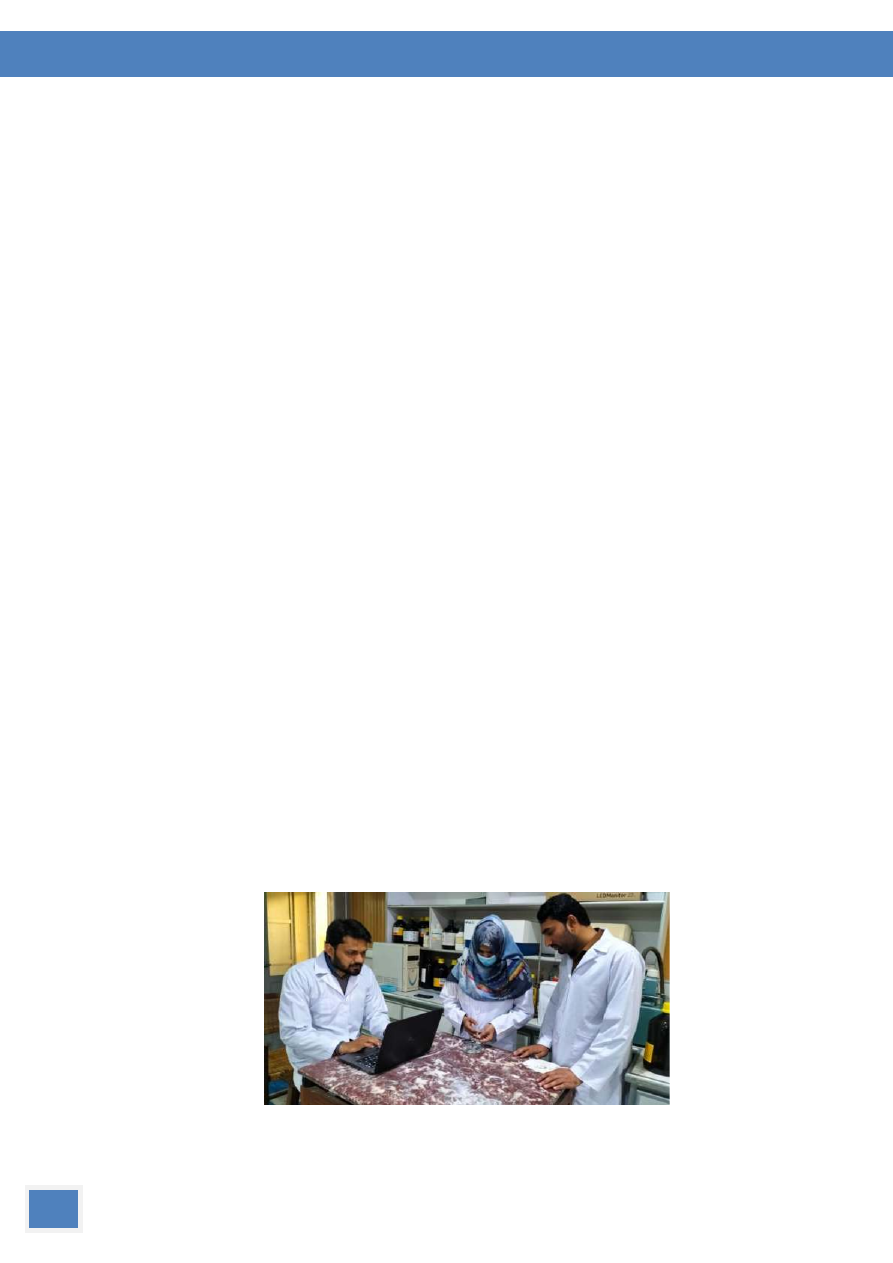
500 MW Floating Solar Power Plant to be installed At Keenjhar Lake, Sindh
Imtiaz Ahmed Sheikh, Provincial Minister of Sindh for Energy, in a meeting with officials
of power companies said that the feasibility study of the project having potential to attract an
investment of US$400 million is in final stages while Letter of Intent (LoI) has been issued in the
regard. The minister hoped that Pakistan’s solar power plant floating on the water of Lake
Keenjhar would start generating electricity in 2 years.
Imtiaz Ahmed Sheikh said that this first and unique floating solar power plant project,
first
of its kind in Pakistan, will not only provide 500 MW of environment friendly electricity but will
also create employment opportunities in the province besides further boosting tourism at famous
local tourist spot of Keenjhar Lake.
He said that this 500 MW eco-friendly solar power plant is going to be another milestone
of the achievements of the Sindh government.
Source and image credit:
https://tribune.com.pk/story/2365112/sindh-govt-plans-to-launch-
Technology Roundup
6
NUR-
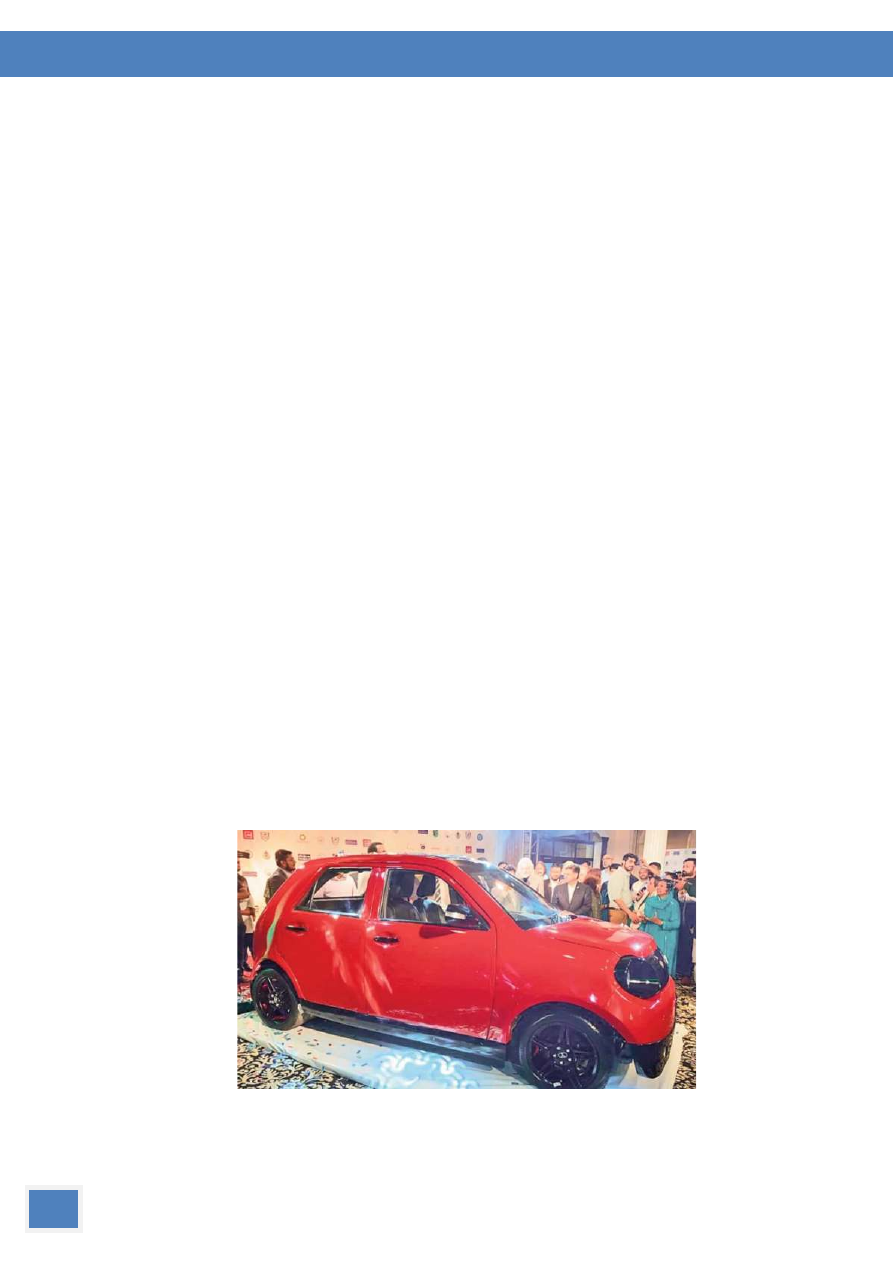
E 75, Pakistan’s first electric car prototype, unveiled
Pakistan’s first electric car prototype, which has been named NUR-E 75, was unveiled on
August 14
th
2022
. The car’s battery capacity would be 35kWh. After being charged, the vehicle
would have enough power for 210km. According to Dr. Khurshid Qureshi, founder and chairman
of the Distinguished Innovation, Collaboration & Entrepreneurship (DICE) Foundation, which
designed and developed the prototype, the car would save a lot of fuel, and help combat climate
change and sustain economic prosperity. DICE Foundation is a US-based non-profit organisation
run by expatriate Pakistanis from the US, the EU and other parts of the world, along with support
from local academias and industries.
Dr. Qureshi, a leading expert on developing autonomous v
ehicles, said the car’s production
has three phases: the first was industrial design, production and launch; in the second production
would be expanded to Sedan and SUV, small commercial trucks and EV platform export; and in
the third the cars would be exported. He said production began in 2019, adding that the fully
functional prototype, EV NUR-E 75, is ready for testing and regulatory approval, while work on
the design of rolling platform to be used for various vehicle segments is underway.
Explaining different features of the five-seater hatchback, he said the car has a peak power
of 80kW or 108hp, and a battery capacity of 35kWh covering 210km with the air conditioner
turned off. The fully electric car has a maximum speed of 120km/h, tyre size of 16 inches, ground
clearance of 190mm and charging capacity at 220V in eight hours, with fast charging also
available, he added. DICE Foundation has been working in Pakistan for the past 15 years
promoting innovation, building capability and converting brain drain into brain gain. Founded in
2007, the organization’s areas of focus are automotive, health, agriculture, energy, creative art and
textile.
Source and image credit:
https://www.thenews.com.pk/print/982315-nur-e-75-pakistan-s-first-
electric-car-prototype-unveiled

Technology Roundup
7
Pak-China Medical AI Cooperation to Boost Chronic Disease Screening
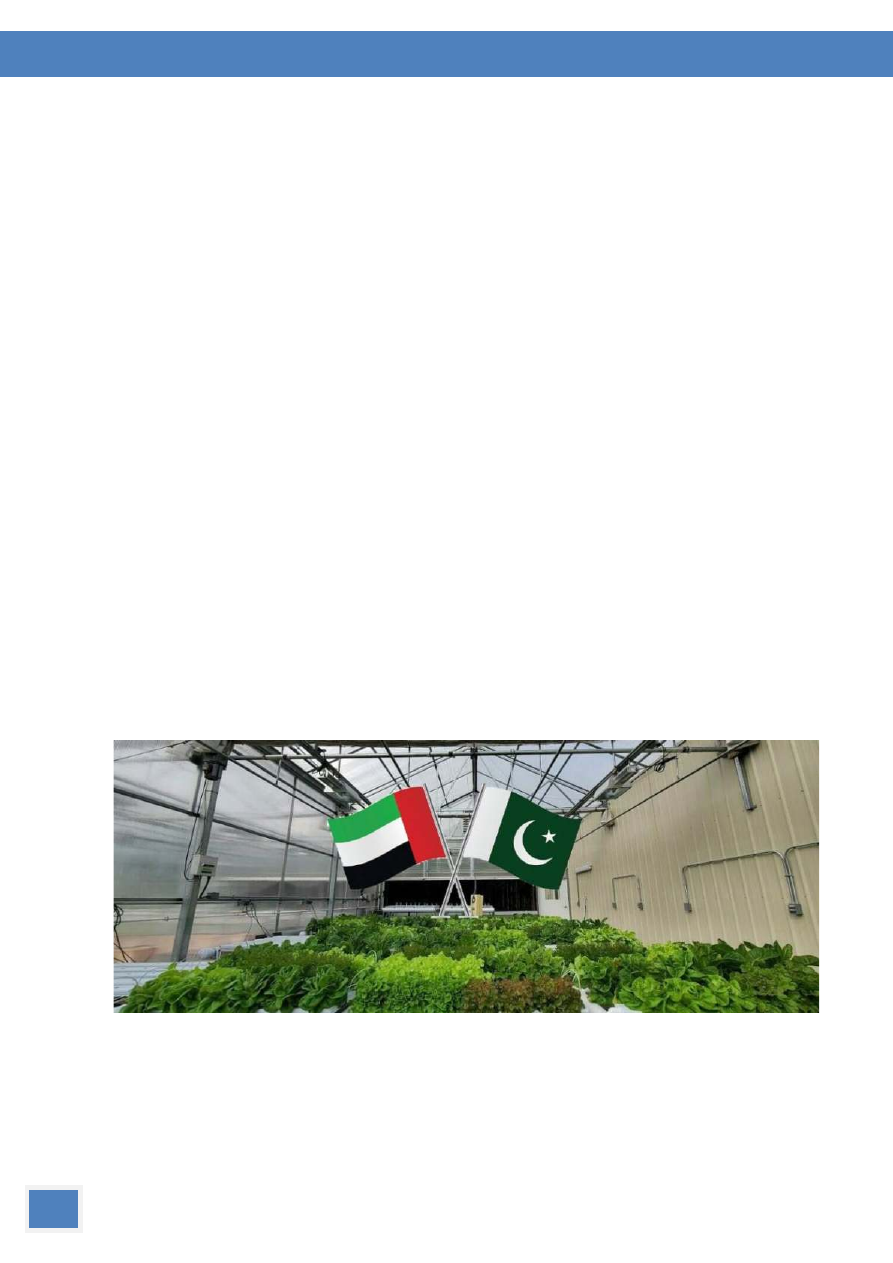
China-Pakistan medical AI (artificial intelligence) cooperation will boost local chronic
disease screening. At the first international “Medical Conference and Exhibition for Next
Generation Healthcare” held in Islamabad, where Chinese medical AI leader Airdoc Technology
and Pakistan’s well-known medical device import and distribution company Dynamic Medical
Company (DMC) officially signed a cooperation agreement to work together to promote the
application of Airdoc retinal imaging AI products in Pakistan. Experts from the medical
technology field, academic heads and professionals from public health sector attended the
conference.
One of the major objectives of this conference was sensitizing the participants, the general
public and the government to genetic disorders, its timely diagnosis and available treatments.
Faced with the increasingly serious disease burden in Pakistan, advanced medical technology is an
inevitable solution at present. Experts agreed that pre-marital testin
g and counseling in Pakistan’s
health care system will effectively relieve the heavy burden of genetic diseases through
technological intervention.
At the meeting, Yang Yaquan, representative of Airdoc’s overseas
business department, gave a keynote speech
on “Artificial Intelligence Solutions for Early
Screening of Chroni
c Diseases”. The retina is the only part of the human body that can directly
observe blood vessels and nerves non-invasively, thus by observing the subtle changes of blood
vessels and nerves on the retina, people can glimpse the clues of more than 200 common chronic
diseases. The application of AI technology has made this test more efficient and accessible,
making large-scale early screening of chronic diseases possible. It was informed that the Airdoc
will promote a portable fundus camera in Pakistan, which looks like a VR glasses, is very
convenient to carry, and can be driven by ordinary power banks. After the user completes retinal
photography according to the voice prompt, it only takes about 1 minute to receive an assessment
report containing dozens of health risks.
Image credit:
https://www.pakistantoday.com.pk/2022/07/08/china-pak-medical-ai-cooperation-to-
boost-chronic-disease-screening/
Source:
https://dailytimes.com.pk/964655/pak-china-medical-ai-cooperation-to-boost-chronic-
Technology Roundup
8
UAE to help Pakistan Set up Plasma Farming Facilities
Ministry of National Health Services (NHS) in a landmark development has discussed
development of the plasma farming facilities (PFF) with United Arab Emirates (UAE). A UAE
mission, which is on a visit to Pakistan, aims to conduct feasibility study for establishment of PFF
in Pakistan based on World Health Organization (WHO) standards as the blood services in country
are mostly provided by hospitals’ blood banks with no functional separation of the plasma
processes into production and utilization. WHO Adviser on Blood Safety Dr Hassan Abbas
Zaheer, said that it was a significant development as Pakistan does not have even a single PFF
despite the fact that there are a few hundred thousand patients suffering from immunodeficiency
disorder. He said that the term to separate blood components was called
“Plasma Fractionation” as
blood was initially divided into three components called Platelets, Red Blood Cells and White
Blood Cells which floated in a fluid called plasma. Dr. Zaheer, who is also former Project Director
of Safe Blood Transfusion Project (
SBTP), said that a huge industry was required to do “Plasma
Fractionation” and if plasma would be separated Pakistan can meet the requirements of the country
and can also export it.
The statement issued by the Ministry stated a mission comprising of members of the ruling
family of Dubai UAE Sheikh Ahmed Dalmook Al Maktoum, members of Hayat biotech limited,
Biotechnology Company in the UAE and contractors from China called on Federal Minister for
Health Abdul Qadir Patel. Secretary Health, Special Secretary Health, Director General Health and
representatives from hospitals and blood banks in Islamabad were present on the occasion.
https://globalaffairs.com.pk/2022/08/uae-to-help-pakistan-set-up-plasma-
Technology Roundup
9
China supports Pakistan in Geomatics Technology Upgrading
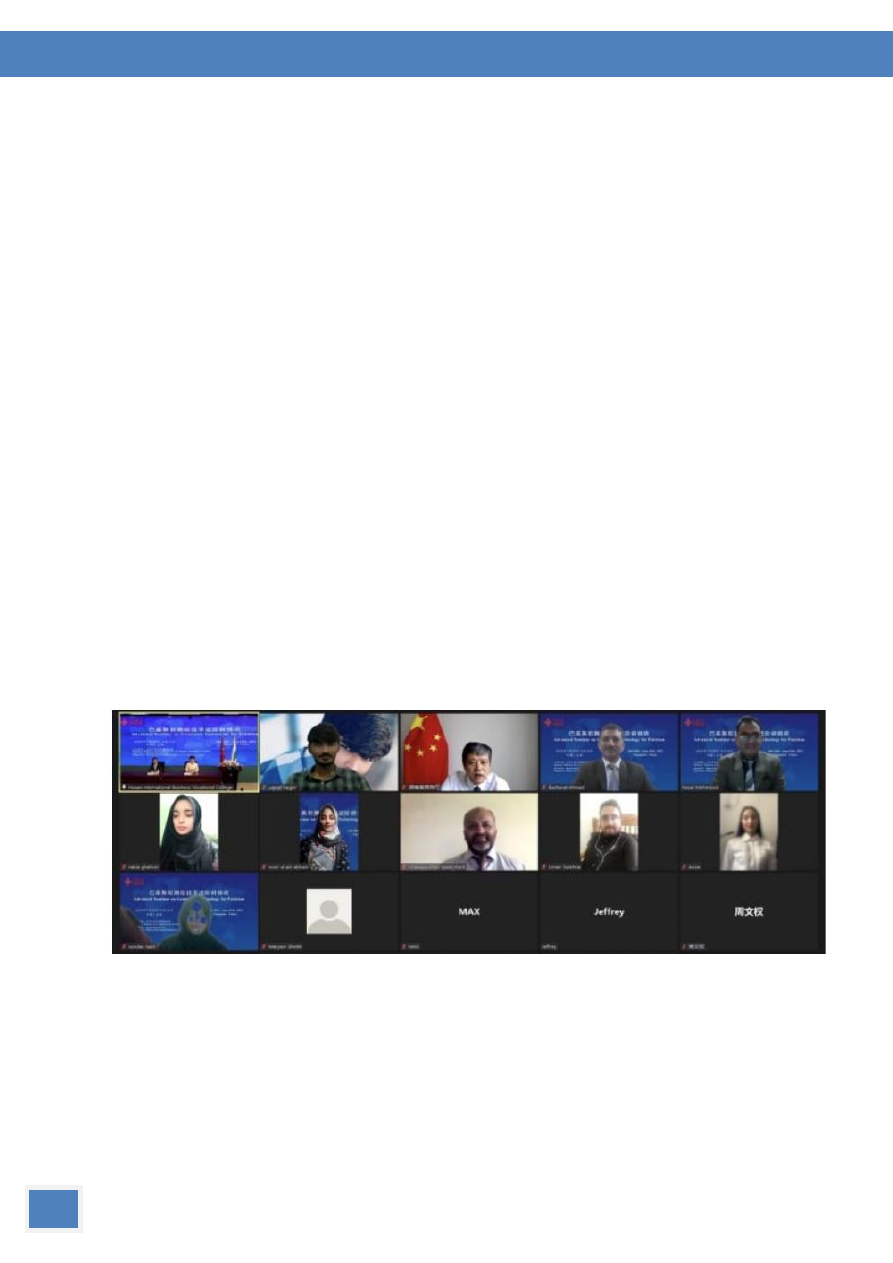
An advanced seminar entitled ‘Geomatics Technology for Pakistan’ sponsored by the
Ministry of Commerce of China is ongoing online to help improve Pakistani scientists and
officers’ expertise in geomatics. A total of 19 Pakistani experts and officers from the Society of
Engineering, National Institute of Computer Sciences, University of AJ & K Muzaffarabad
attended this seminar.
According to seminar’s organizer Hunan International Business Vocational College, the
seminar is specifically designed to meet the actual needs of Pakistani geo-technical experts based
on a series of investigation and research on the development of surveying and mapping technology
in Pakistan.
During the 20-day seminar, Chinese experts have been sharing the latest geomatics
technology of data analysis, processing and application, and the successful experience and practice
in the surveying and mapping industry in China with the Pakistani participants. The seminar is
composed of classroom teaching, discussion on specific topics and visits to renowned Chinese
enterprises and cutting-edge equipment including VR drones have also been used for practice.
“Through this seminar, Pakistani experts can learn about the updated development of geomatics
technology in China, and the Sino-Pak cooperation potential in the field of surveying and
geographic informatics has been fully discussed,” Zhong Huiqun from Hunan International
Business Vocational College told China Economic Net.
http://en.ce.cn/Insight/202208/15/t20220815_37963849.shtml
Technology Roundup
10
PITB Launch
es Universal Helpline ‘1421’ for Tourists’ Guidance and Complaints
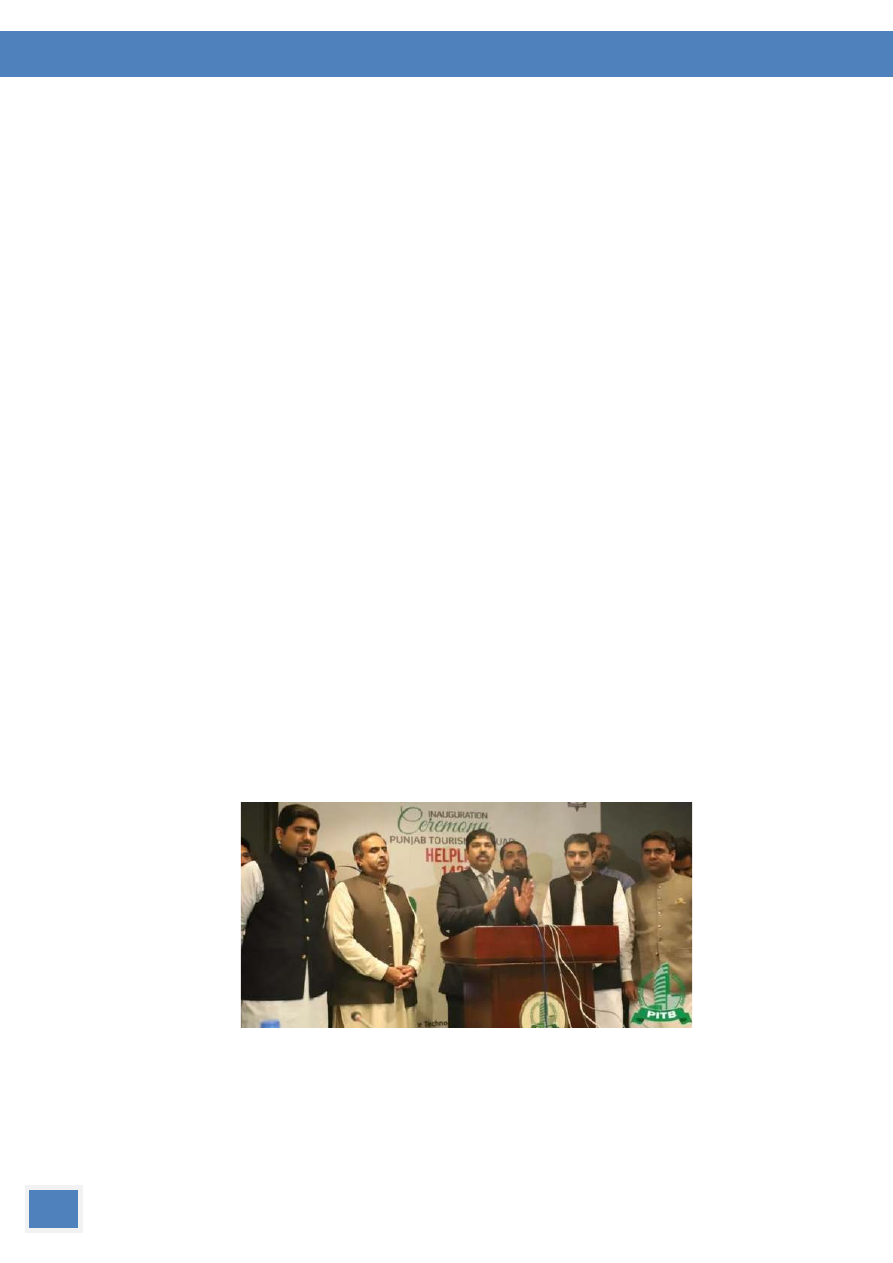
Punjab Information Technology Board (PITB) in collaboration with Department of Tourist
Services (DTS), Punjab has soft-
launched the universal helpline ‘1421’ for guidance and
complaints related to tourist destinations in Punjab during a ceremony held at Arfa Software
Technology Park.
Punjab Tourism Department Secretary Ehsan Bhutta, Deputy Controller Hafiz Ghazanfer,
PITB DG e-Governance Sajid Latif, Project Manager PTEGP Waqas Malik, CCC PITB Joint
Director Ali Zeb and other senior officials from both sides were present on the occasion.
Addressing the ceremony, Punjab Tourism Secretary Ehsan Bhutta said that a special team has
been trained for the convenience of tourists which will not only guide them but will also be
responsible for providing protection and facilities in case of unpleasant incidents. He further stated
that the squads will be deployed at various tourist spots in Punjab, which will be available 24 hours
a day to help the tourists. On this occasion, PITB DG e-Governance Sajid Latif said that the
objective of training of tourism squad by PITB is to provide facilities to the tourists at various
tourist destinations and prevent any untoward incidents. The special tourism squad will comprise
of 106 personnel including 11 female staff members. As many as 82 members of this squad will
perform their duties on field. The tourism squad will be responsible for handling tourist inquiries
and complaints in the field. The squad, which will be initially deployed in Murree, will
subsequently cover all 3 tourist destinations in Punjab, i.e. North, Center and South. In this regard,
extensive trainings are ongoing to equip the squad with required skills. The Department of Tourist
Services, Punjab has also engaged Rescue 1122, Institute of Hospitality Department, Punjab and
PITB for this purpose.
Image
credit:
https://www.economy.pk/punjab-launch-universal-helpline-1421-for-tourists-
Source:
https://nation.com.pk/2022/08/06/pitb-dts-punjab-launch-universal-helpline-1421-for-
tourists-guidance-and-complaints/

Technology Roundup
11
Pakis
tan’s First Golink Station – a Revolutionary Way of Fueling
Gas & Oil Pakistan Ltd. (GO) today announced its plans to roll out its new and innovative
fuel station concept “goLink” across Pakistan. The goLink Station is a mobile fuel station format
that will enable for motorists easy access and convenient fueling services in their direct vicinity. It
is designed to significantly reduce driving time for customers to find a petrol pump as it can be
deployed on existing parking lots or paved areas.
Speaking at the occasion, Mr. Zeeshan Tayyeb, Chief Operating Officer for GO stated that
“goLink Station will significantly reduce the cost of providing vital fueling infrastructure in
Pakistan due to reduced space requirements and significantly lower initial investment with each
mobile station saving approximately 500,000 liters of fuel for motorists along with 1,200 MTs of
reduced carbon emissions every year. It is therefore ideally suited to serve residential, commercial,
and business areas as well as remote/seasonally busy areas with much needed motor fuels. The
goLink Station can also provide a safe and convenient way of fueling for the gensets operating in
Pakistan.” GO has partnered with ENOC Link, the Emirates National Oil Company’s (ENOC)
mobile fuel delivery arm, to bring this unique industry innovation to Pakistan. The UAE is one of
the most advanced fuel distribution markets globally, and a leader in technology innovation.
ENOC Group owns and operates ENOC Link, the digital mobile fuel delivery service in the UAE,
created in 2019 as part of ‘Next’, the Group’s digital accelerator program. ENOC Link also runs
uniquely designed eLink stations, a mobile fueling format that enables motorists and customers
easy access and convenient fueling services. It does not require assembly and can easily move to a
different location on the spot and is also equipped with innovative digital systems giving
customers a new fueling experience.
Source and image credit:
https://www.gno.com.pk/news-events/pakistans-first-golink-station-a-
fueling/#:~:text=3%20August%202022%3A%20Gas%20%26%20Oil,services%20in%20their%20

Technology Roundup
12
Google launches Earthquake alert in Pakistan
Google has launched the Android Earthquake Alerts System in Pakistan today. Android
Earthquake Alerts System is a free and useful Android tool that detects and alerts users to
earthquakes throughout the world. It makes use of sensors found in Android smart phones. The
technology detects seismic activity using accelerometers in active Android devices. It notifies
users in two ways: through Search and directly on the Android mobile device itself. Google Search
receives near-instant information from the system.
People who search for “earthquake” or “earthquake near me” will get relevant results as
well as helpful resources on what to do after an earthquake. Users who do not want to get these
alerts can disable them in their device settings. Pakistan has already experienced multiple
earthquakes, particularly in the country’s north and west. With the introduction of this earthquake
warnings system, Android users in Pakistan may receive automatic early warning messages,
allowing them to be better prepared for an emergency.
The Android Earthquake Notifications System shows two sorts of alerts on mobile devices,
depending on the magnitude and intensity of the earthquake. Be Aware notifies individuals when
earthquakes of magnitude 4.5 or intensity levels 3 or 4 on the MMI scale occur. The notification
includes the location of the earthquake’s epicenter. The notification makes use of the phone’s
current loudness, vibration, and Do Not Disturb settings
.
https://www.globalvillagespace.com/google-launches-earthquake-alert-
Technology Roundup
13
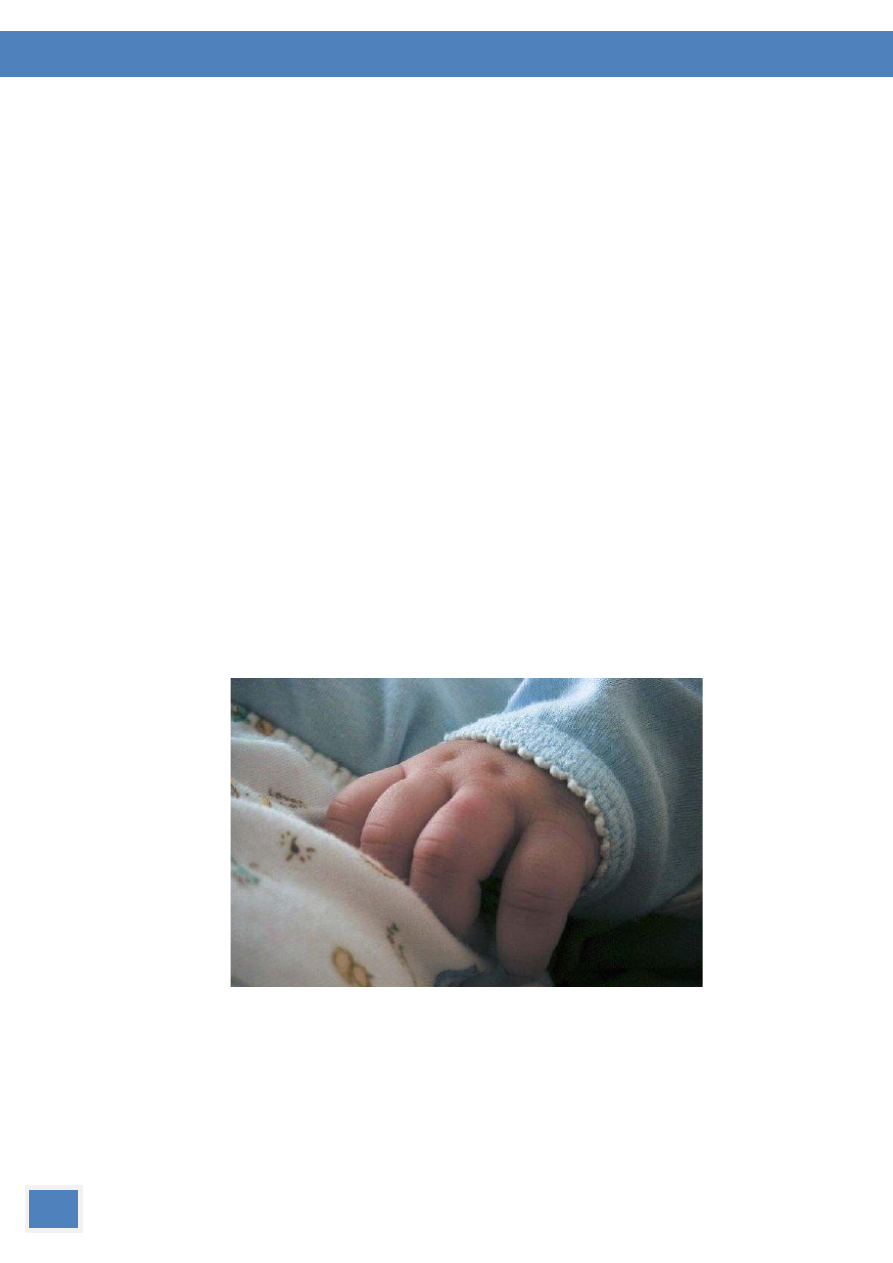
Pakistan Accomplishes First Pediatric Cardiothoracic Surgery
A two-member team of doctors in the capital have successfully conducted pediatric
cardiothoracic surgery on a six-month child. It was first of its kind, successful surgery in Pakistan.
The child had a hole in the septum that separates the lower two chambers of the heart, also known
as ventricular septal defect. This defect allowed oxygen-rich blood to leak into the oxygen-poor
blood chambers of the patient’s heart. A small hole may close on its own, but this little child’s hole
required surgery.
The operation was conducted by Dr. Mahim Akmal Malik, an American Diplomat in
Congenital Cardiac Surgery. Both belonged to Maroof International Hospital, Islamabad. As soon
as the operation was done, the child was discharged from the hospital for his speedy recovery. The
open-heart surgery, valve repair and procedures for infants, children, and adolescents have been
started now. A team of foreign qualified Pediatric Cardiologists and Cardiothoracic Surgeons was
supported by physicians, intensivists, nurses, and anesthesiologists, led by Dr. Mahim Akmal
Malik, Pediatric Cardiothoracic Surgeon, and Dr. Muhammad Tariq Jamil, Pediatric Intensivist.
Sharing details, Dr. Mahim Malik said that congenital heart defects are very different from the
types of heart diseases that are common among adults as repairing hearts in small bodies present
an added challenge. She added that pediatric heart surgeons have the special skills needed to
provide the safest care for even the youngest and smallest patients who require heart surgery.
Image credit:
https://tribune.com.pk/story/2366161/complicated-paediatric-heart-surgery-pulled-
Source:
https://dailytimes.com.pk/969026/pakistan-accomplishes-first-pediatric-cardiothoracic-
Technology Roundup
14
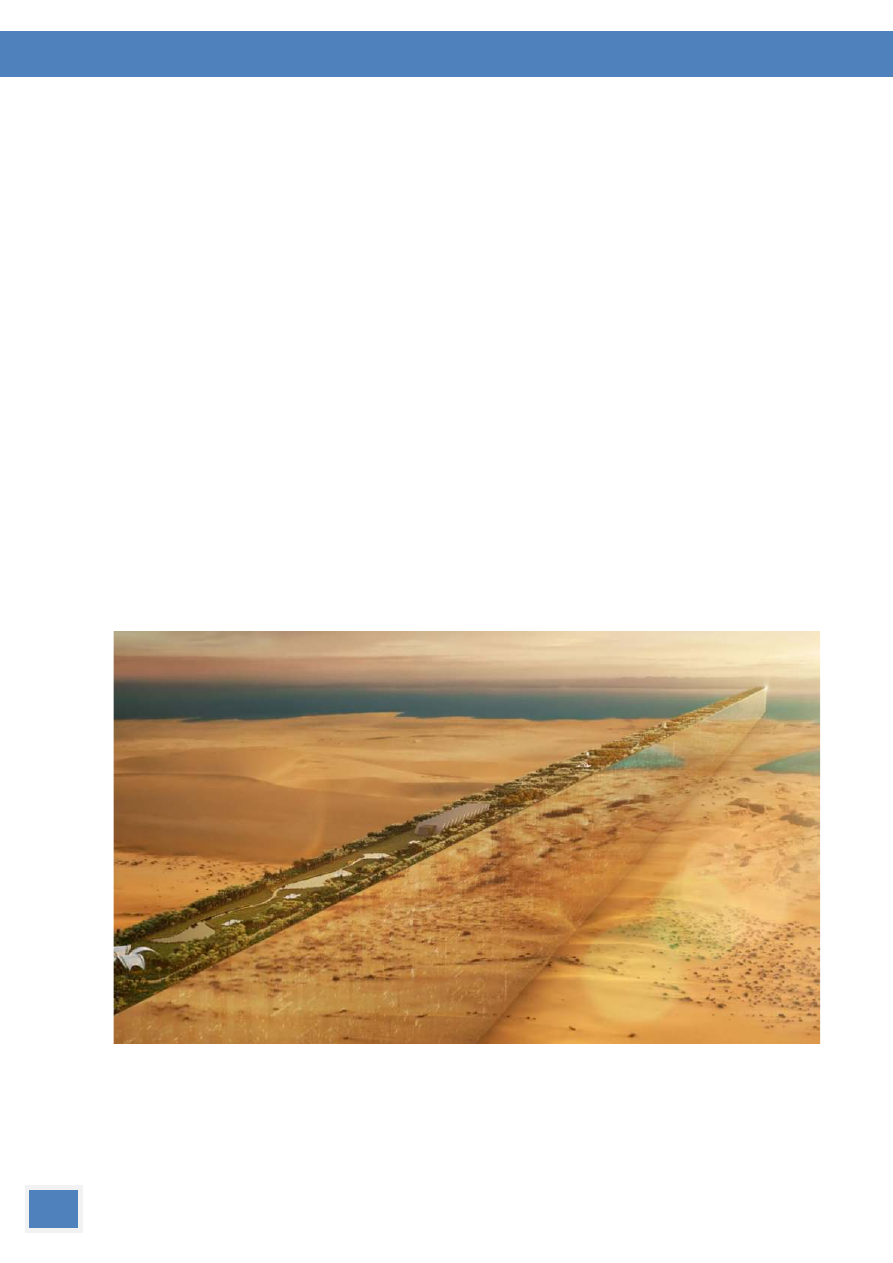
Massive wall of Saudi Arabia's future Smart City will be Home to 9 Million People
New concept pictures of Saudi Arabia's future smart city "The Line" have been released,
and they look breathtaking at the very least. As announced by Saudi Crown Prince Mohammed
Bin Salman, The Line is set to be constructed as a roadless and carless smart city that will run
purely on renewable energy. The width of the city is to be around only 200 meters, but will be 500
meters tall, and will span a length of over 170 kilometers, making it an extremely long vertical
complex that will run along the coast with a capacity for around nine million residents.
From the outside, the city will look like an extremely long wall with mirrored exteriors on
both sides. The lack of roads and cars will necessitate a high-speed rail that will run from one end
of the city to the other to help residents get to and from their intended destinations with a total
travelling time of just over 20 minutes.
As for climate control, the entire city will also boast a natural ventilation system that can
maintain comfortable temperatures and conditions all year round, despite its location. "The
designs revealed today for the city's vertically-layered communities will challenge the traditional
flat, horizontal cities, and create a model for the nature preservation and enhanced human
livability," said the prince in a statement.
https://sea.mashable.com/life/20955/saudi-arabias-future-smart-city-is-
one-massive-wall-thatll-be-home-to-9-million-people
Technology Roundup
15
NUS Researchers invent Self-charging, Ultra-thin Device that Generates Electricity
from Air Moisture
Using sea salt as an eco-friendly moisture absorbent, this rechargeable fabric-
like ‘battery’
provides higher electrical output than a conventional AA battery, being able to potentially power
everyday electronics.
Imagine being able to generate electricity by harnessing moisture in the air around you with
just everyday items like sea salt and a piece of fabric, or even powering everyday electronics with
a non-toxic battery that is as thin as paper. A team of researchers from the National University of
Singapore’s (NUS) College of Design and Engineering (CDE) has developed a new moisture-
driven electricity generation (MEG) device made of a thin layer of fabric, about 0.3 millimeters
(mm) in thickness, sea salt, carbon ink, and a special water-absorbing gel. The concept of MEG
devices is built upon the ability of different materials to generate electricity from the interaction
with moisture in the air. This area has been receiving growing interest due to its potential for a
wide range of real world applications, including self-powered devices such as wearable electronics
like health monitors, electronic skin sensors, and information storage devices.
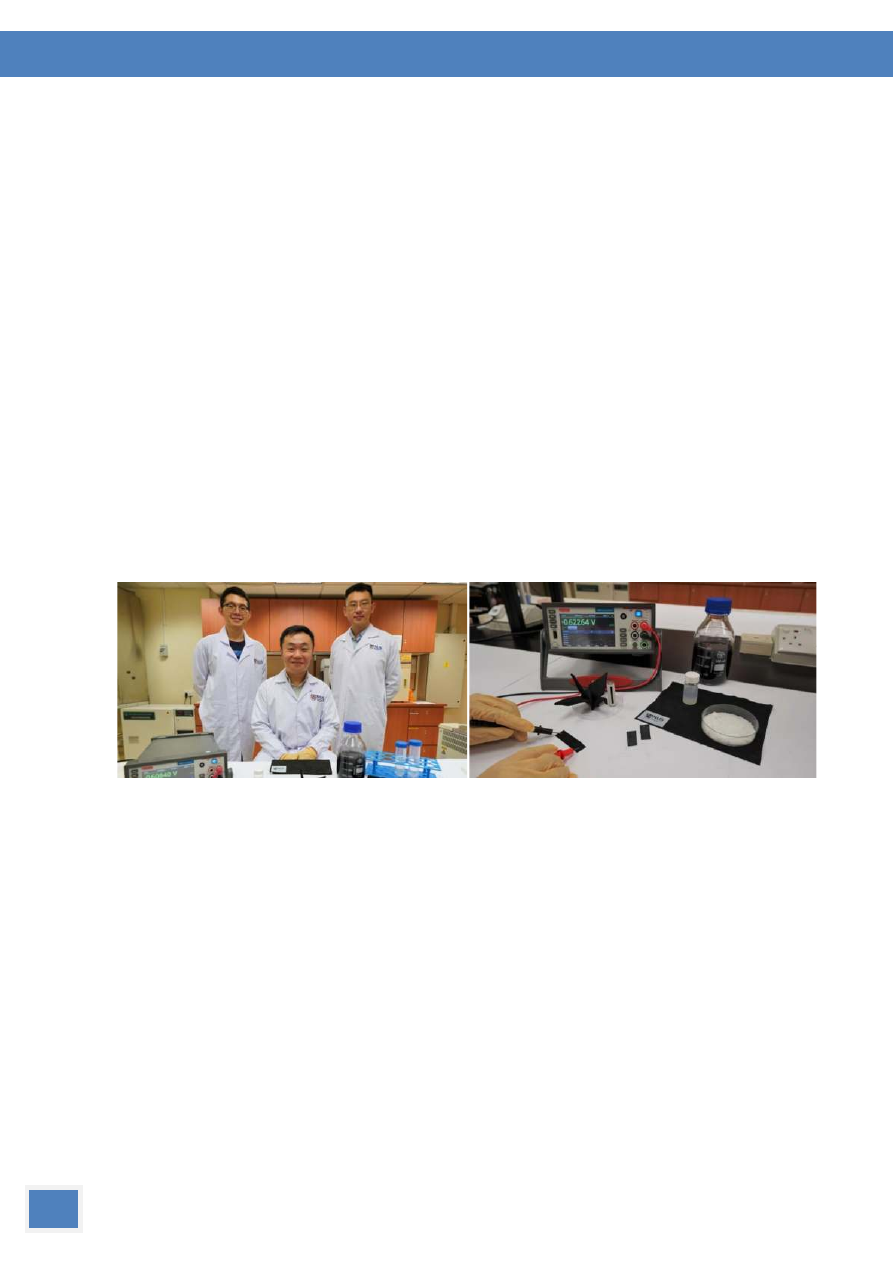
Assistant Prof. Tan Swee Ching (centre), together with Dr. Zhang Yaoxin (left) and Mr. Qu Hao (right), developed a
self-charging fabric (right) that generates electricity from air moisture.
In their study, the team used a commercially available fabric made of wood pulp and
polyester. One region of the fabric is coated with a hygroscopic ionic hydrogel, and this region is
known as the wet region. Made using sea salt, the special water-absorbing gel can absorb more
than six times its original weight, and it is used to harvest moisture from the air. “Sea salt was
chosen as the water-absorbing compound due to its non-toxic properties and its potential to
provide a sustainable option for desalination plants to dispose of the generated sea salt and brine,”
shared Asst Prof Tan.
Source and image credit:
https://news.nus.edu.sg/self-charging-ultra-thin-device-that-generates-

Technology Roundup
16
MIT Engineers Develop Stickers that can See Inside the Body
New stamp-sized ultrasound adhesives produce clear images of heart, lungs, and other
internal organs.
Ultrasound imaging is a safe and noninvasive window into the body’s workings,
providing clinicians with live images
of a patient’s internal organs. To capture these images,
trained technicians manipulate ultrasound wands and probes to direct sound waves into the body.
These waves reflect back out to produce high-
resolution images of a patient’s heart, lungs, and
other deep organs.
Design by Massachusetts Institute of Technology (MIT) engineers might make the
technology as wearable and accessible as buying Band-Aids at the pharmacy. The researchers
applied the stickers to volunteers and showed the devices produced live, high-resolution images of
major blood vessels and deeper organs such as the heart, lungs, and stomach. The stickers
maintained a strong adhesion and captured changes in underlying organs as volunteers performed
various activities, including sitting, standi
ng, jogging, and biking. “We envision a few patches
adhered to different locations on the body, and the patches would communicate with your cell
phone
, where AI algorithms would analyze the images on demand,” says the study’s senior author,
Xuanhe Zhao, professor of mechanical engineering and civil and environmental engineering at
MIT. “We believe we’ve opened a new era of wearable imaging: With a few patches on your body,
you could see your internal organs.” The team is working to make the stickers function wirelessly.
They are also developing software algorithms based on artificial intelligence that can better
interpret and diagnose the stickers’ images. Xuanhe Zhao (author of the study) envisions
ultrasound stickers could be packaged and purchased by patients and consumers, and used not only
to monitor various internal organs, but also the progression of tumors, as well as the development
of fetuses in the womb.
Source and image credit:
https://news.mit.edu/2022/ultrasound-stickers-0728
Technology Roundup
17
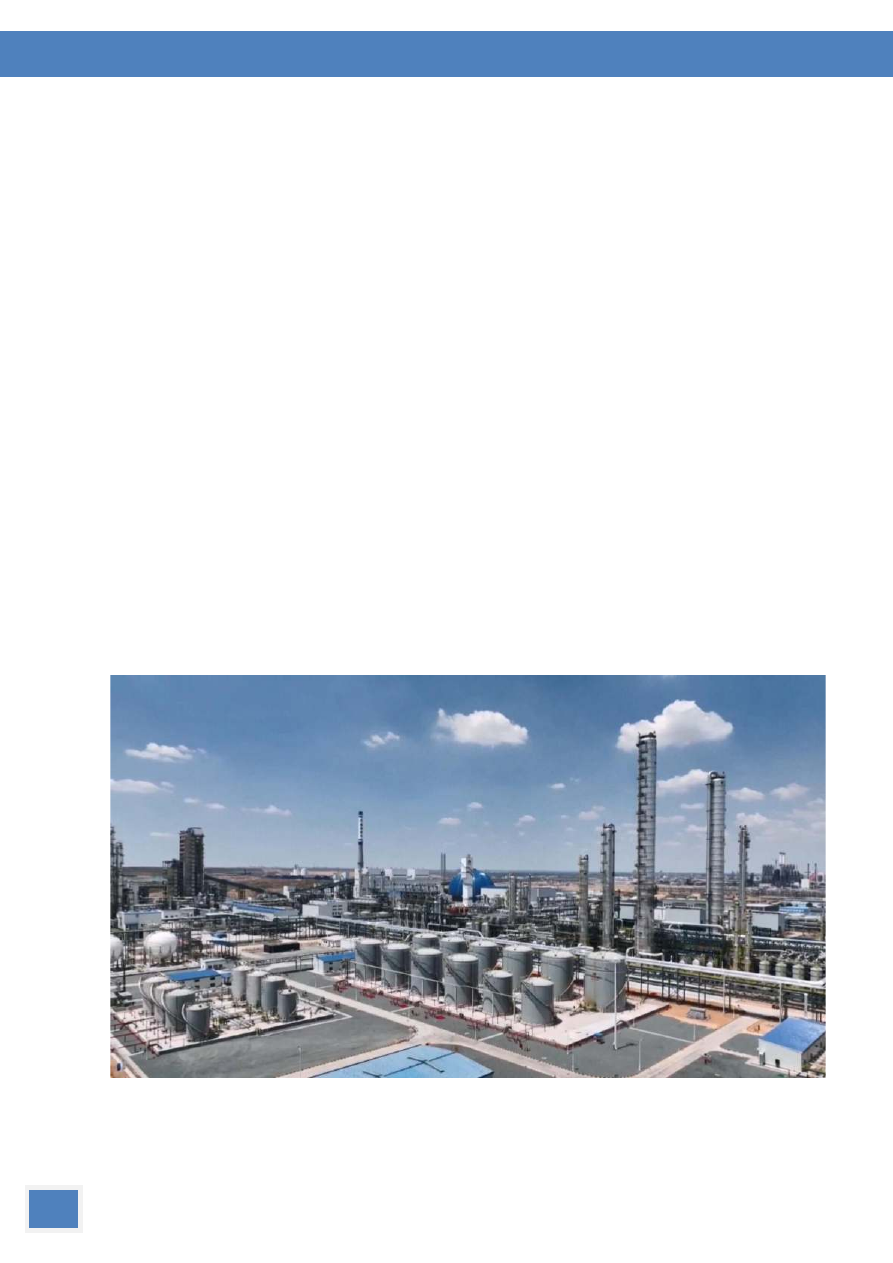
China's Largest Coal-based Ethanol Project Put into Trial Operation
China's largest coal-based ethanol project with an annual output of 500,000 tonnes was put
into trial operation in Yulin City in northwestern Shaanxi Province.
The project uses coal as raw material to produce ethanol and other chemical products, and
it can convert 1.5 million tonnes of coal annually. Experts said three tonnes of grain can produce
one tonne of ethanol, saving 1.5 million tonnes of bio-ethanol raw grain every year when in full
service.
"Compared with the traditional method of producing ethanol with grain fermentation, the
project firstly saves food for us and solves the problem of food security, and it is also of important
and strategic significance for the high-quality utilization of coal in the future," said Li Xianfeng,
deputy director of the Dalian Institute of Chemical Physics, Chinese Academy of Sciences.
Ethanol, also known as industrial alcohol, is a widely used chemical raw material that can produce
more than 300 kinds of related products.
The Yulin project produces ethanol through carbonylation of dimethyl ether, an
internationally leading technology with independent intellectual property rights in China.
In addition to the four methods of using coal to produce olefin, oil, natural gas and ethylene glycol,
the new environment-friendly technology will boost the high-end, diversified and low
carbonization development of China's coal chemical industry.
Source and image credit:
https://news.cgtn.com/news/2022-07-02/China-s-largest-coal-based-
ethanol-project-put-into-trial-operation-1bkYKL9hPaw/index.html
Technology Roundup
18
NASA’s Webb Delivers Deepest Infrared Image of Universe Yet
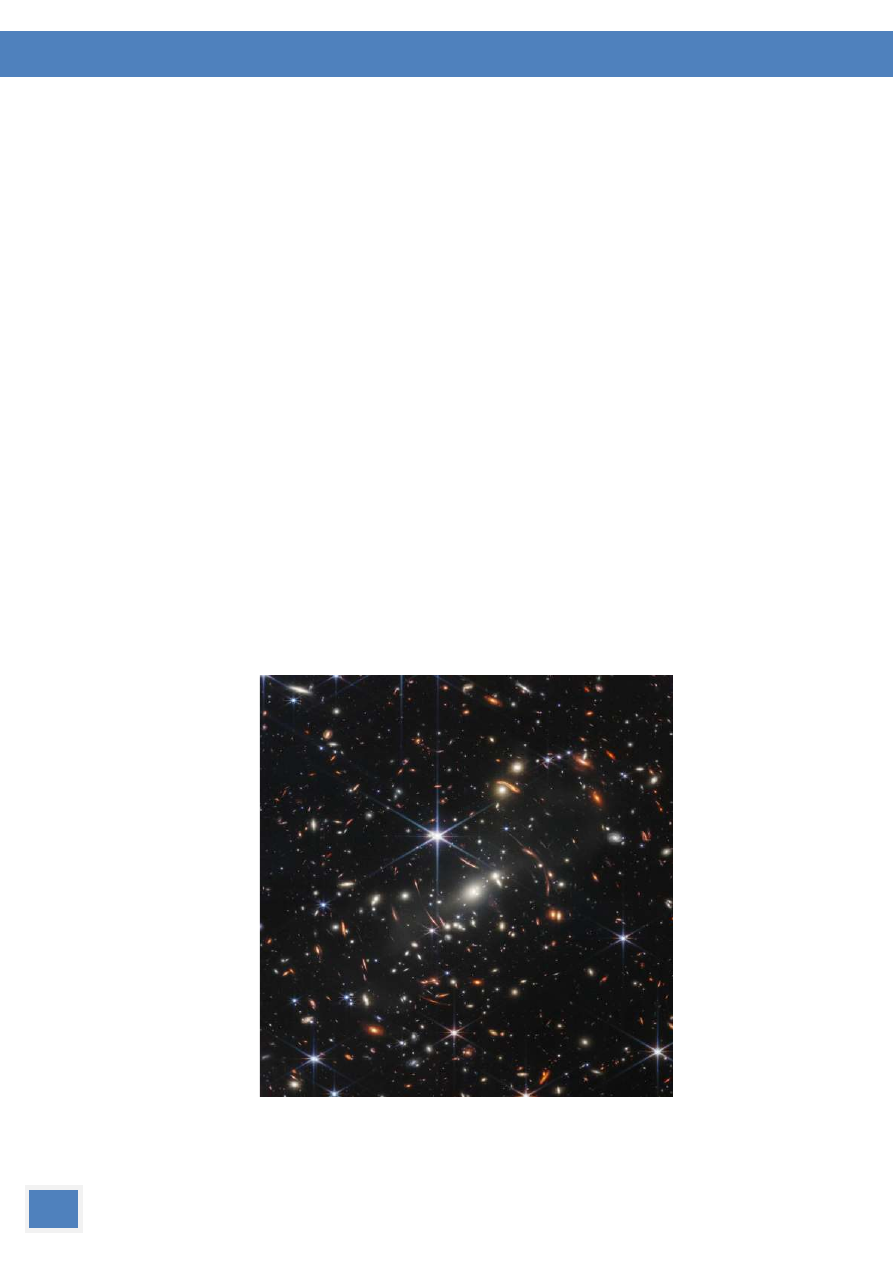
NASA’s James Webb Space Telescope has delivered the deepest and sharpest infrared
image of the distant universe so far. Webb’s First Deep Field is galaxy cluster SMACS 0723 and it
is teeming with thousands of galaxies including the faintest objects ever observed in the infrared.
Webb’s image is approximately the size of a grain of sand held at arm’s length, a tiny sliver of the
vast universe. The combined mass of this galaxy cluster acts as a gravitational lens, magnifying
more distant galaxies, including some seen when the universe was less than a billion years old.
This deep field, taken by Webb’s Near-Infrared Camera (NIRCam), is a composite made from
images at different wavelengths, totaling 12.5 hours, achieving depths at infrared wavelengths
beyond the Hubble Space Telescope’s deepest fields, which took weeks. And this is only the
beginning. Researchers will continue to use Webb to take longer exposures, revealing more of our
vast universe.
This image shows the galaxy cluster SMACS 0723 as it appeared 4.6 billion years ago,
with many more galaxies in front of and behind the cluster. Much more about this cluster will be
revealed as researchers begin digging into Webb’s data. This field was also imaged by
Webb’s Mid-Infrared Instrument (MIRI), which observes mid-infrared light.
Webb’s NIRCam has brought distant galaxies into sharp focus, they have tiny, faint
structures that have never been seen before, including star clusters and diffuse features.
Source and image credit:
https://www.nasa.gov/image-feature/goddard/2022/nasa-s-webb-

Technology Roundup
19
A Computer Model to Predict Whether a Pesticide will Harm Bees
Researchers in the Oregon State University College of Engineering have harnessed the
power of artificial intelligence to help protect bees from pesticides. Cory Simon, assistant
professor of chemical engineering, and Xiaoli Fern, associate professor of computer science, led
the project, which involved training a machine learning model to predict whether any proposed
new herbicide, fungicide or insecticide would be toxic to honey bees based on the compound’s
molecular structure. The findings are important because many fruit, nut, vegetable and seed crops
rely on bee pollination.
Without bees to transfer the pollen needed for reproduction, almost 100 commercial crops
in the United States would vanish. Bees’ global economic impact is annually estimated to exceed
$100 billion. Graduate students Ping Yang and Adrian Henle used honey bee toxicity data from
pesticide exposure experiments, involving nearly 400 different pesticide molecules, to train an
algorithm to predict if a new pesticide molecule would be toxic to honey bees.
“The model represents pesticide molecules by the set of random walks on their molecular
graphs,” Yang said. A random walk is a mathematical concept that describes any meandering path,
such as on the complicated chemical structure of a pesticide, where each step along the path is
decided by chance, as if by coin tosses.
“The algorithm declares two molecules similar if they
share many walks with the same sequence of atoms and bonds,” Yang said. “Our model serves as a
surrogate for a bee toxicity experiment and can be used to quickly screen proposed pesticide
molecules for their toxicity.”
Source and image credit:
https://today.oregonstate.edu/news/oregon-state-researchers-develop-

Technology Roundup
20
Future Smart Homes could be Powered with Electronics Built on Stones
What if you could power the smart thermostats, speakers and lights in your home with a
kitchen countertop? Stones, such as marble and granite, are natural, eco-friendly materials that
many people use in buildings or renovating houses. Now, in a step towards integrating energy
storage with these materials, researchers have fabricated microsupercapacitors onto the surface of
stone tiles. The devices, reported in ACS Nano, are durable and easily scaled up for customizable
3D power supplies. It would be convenient if the surfaces in rooms could charge smart home
devices or other small electronics without being connected to the electrical grid.
Although stone is a widely used material for floors, countertops and decorative
backsplashes, it hasn’t been integrated with energy storage devices, such as batteries and
capacitors. But stones, even those that are polished and seem smooth, have microscopic bumps and
divots, making it difficult to adhere electrical components to them. Researchers have recently
figured out how to place microsupercapacitors, which have fast charging and discharging rates and
excellent power supply storage, onto irregular surfaces with lasers. So, Bongchul Kang and
colleagues wanted to adapt this approach to build microsupercapacitors on marble. The researchers
patterned a copper oxide nanoparticle solution on a marble tile into two comb-like sides whose
prongs were interspersed. They pointed a near-infrared laser on the nanoparticles, producing pure
copper electrodes that were porous, highly c
onductive and strongly attached to the stone’s surface.
To form the microsupercapacitor, the researchers deposited iron oxide onto one of the electrodes to
form a cathode, and manganese oxide on the other to form an anode. The electrolyte layer
connecting the electrodes was made from a lithium perchlorate and polymer solution. In tests, the
device maintained a high energy storage capacity even after 4,000 charge-discharge cycles. When
multiple microenergy devices were strung together in a three-by-three array, enough energy was
stored to light an LED. In addition, the stone energy storage devices were exceptionally durable
against harsh impacts and could be quickly recycled. The researchers say that stone microenergy
devices could provide high-performance, customizable and conveniently accessible power from
natural building materials.
Microsupercapacitors stone array.
Source and image credit:

Technology Roundup
21
A Robot Learns to Imagine Itself
Columbia Engineers build a robot that learns to understand itself, rather than the world
around it. As every athletic or fashion-conscious person knows, our body image is not always
accurate or realistic, but it’s an important piece of information that determines how we function in
the world. When you get dressed or play ball, your brain is constantly planning ahead so that you
can move your body without bumping, tripping, or falling over.
A Columbia Engineering team announced today they have created a robot that, for the first
time, is able to learn a model of its entire body from scratch, without any human assistance. In
a new study published by Science Robotics, the researchers demonstrate how their robot created a
kinematic model of itself, and then used its self-model to plan motion, reach goals, and avoid
obstacles in a variety of situations. It even automatically recognized and then compensated for
damage to its body. The researchers placed a robotic arm inside a circle of five streaming video
cameras. The robot watched itself through the cameras as it undulated freely. Like an infant
exploring itself for the first time in a hall of mirrors, the robot wiggled and contorted to learn how
exactly its body moved in response to various motor commands. After about three hours, the robot
stopped. Its internal deep neural network had finished learning the relationship betwe
en the robot’s
motor actions and the volume it occupied in its environment. “We were really curious to see how
the robot imagined itself,” said Hod Lipson, professor of mechanical engineering and director of
Columbia’s Creative Machines Lab, where the work was done. “But you can’t just peek into a
neural network; it’s a black box.” After the researchers struggled with various visualization
techniques, the self-
image gradually emerged. “It was a sort of gently flickering cloud that
appeared to engulf the robot’s three-dimensional body,” said Lipson. “As the robot moved, the
flickering cloud gentl
y followed it.” The robot’s self-model was accurate to about 1% of its
workspace.
Source and image credit:
https://www.engineering.columbia.edu/news/hod-lipson-robot-self-

Technology Roundup
22
Plasma-produced Gas Helps Protect Plants against Pathogens
The flash of lightning and the dance of auroras contain a fourth state of matter known as
plasma, which researchers have harnessed to produce a gas that may activate plant immunity
against wide-spread diseases. "Currently, chemical pesticides are the mainstay of disease control in
agriculture, but they can contaminate the soil and harm the ecosystem," said paper author Sugihiro
Ando, associate professor in the Graduate School of Agricultural Science at Tohoku University.
"We need to develop plant disease control technologies that can help establish a sustainable
agricultural system.
The use of plant immunity is one of the most effective disease control methods because it
utilizes the innate resistance of plants and has a low environmental impact." Using their previously
developed device that derives plasma from the air, the researchers produced dinitrogen pentoxide,
a reactive nitrogen species (RNS). This molecule is related to reactive oxygen species (ROS), in
that both damage cells and trigger specific stress responses in organisms. The researchers exposed
thale cress, a small plant commonly used as a model system for scientific research, to dinitrogen
pentoxide gas for 20 seconds a day for three days. The plants were then infected with one of three
common plant pathogens: a fungus, a bacterium or a virus. The plants with the fungus or the virus
showed suppressed progression of the pathogen, while those with the bacterium had a similar
proliferation as the control plants. "These results suggest that the dinitrogen pentoxide gas
exposure could control plant disease depending on the type of pathogen," Ando said. A genetic
analysis revealed that the gas specifically activated the jasmonic acid and ethylene signaling
pathways and appeared to lead to the synthesis of antimicrobial molecules, which Ando said may
have contributed to the observed disease resistance.
"Dinitrogen pentoxide gas can be used to activate plant immunity and control plant
diseases," Ando said. "Through plasma technology, the gas can be produced from air and
electricity, without special materials.
Source and image credit:
https://www.tohoku.ac.jp/en/press/plasma_produced_gas_helps_protect_plants_against_pathogens
Technology Roundup
23
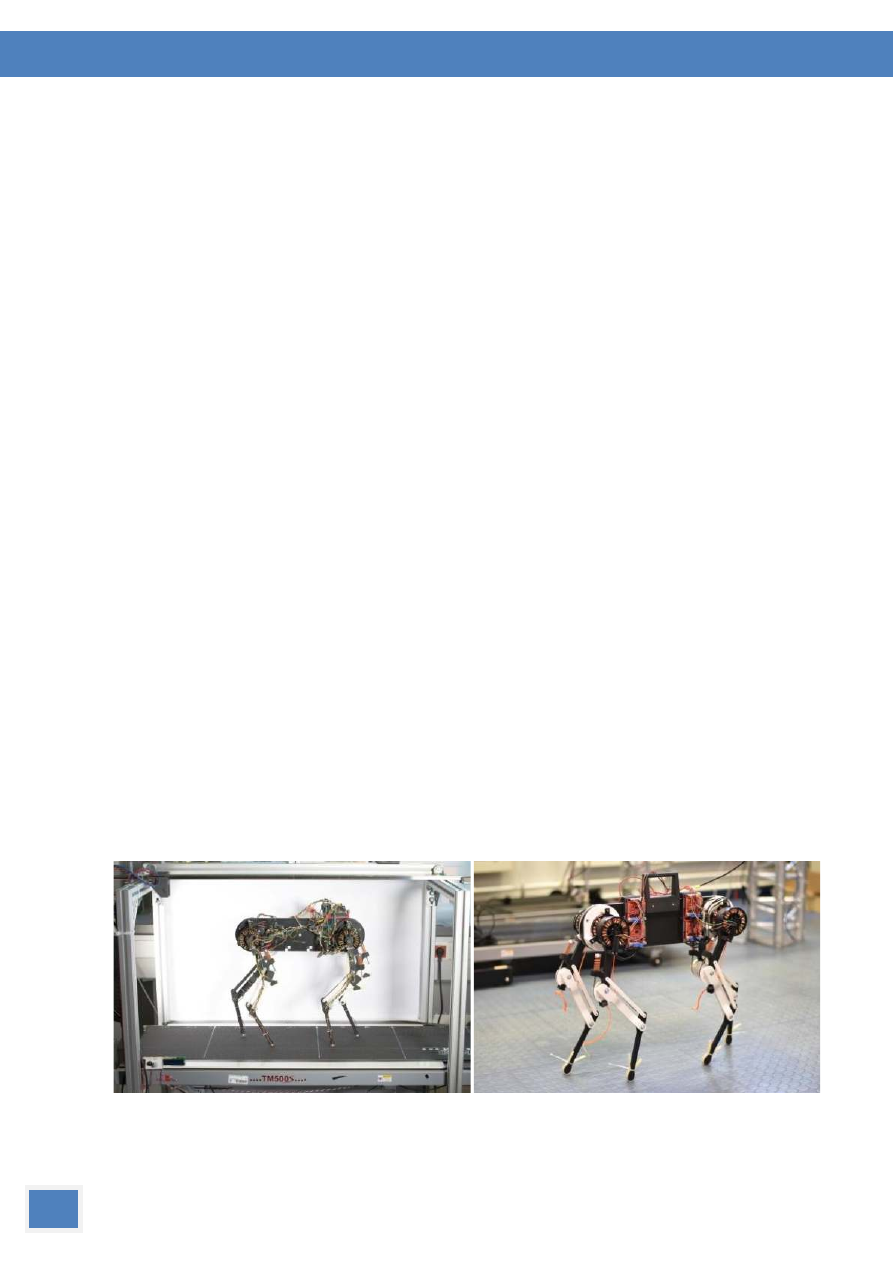
Robot dog learns to walk in one Hour
Like a newborn animal, a four-legged robot stumbles around during its first walking
attempts. But while a foal or a giraffe needs much longer to master walking, the robot learns to
move forward fluently in just one hour. A computer program acts as the artificial presentation of
the animal’s spinal cord, and learns to optimize the robot's movement in a short time. The artificial
neural network is not yet ideally adjusted at the beginning, but rapidly self-adjusts. On July 18, the
research work which is at the intersection of robotics and biology was published in the renowned
journal Nature Machine Intelligence.
Researchers at the Max Planck Institute for Intelligent Systems (MPI-IS) in Stuttgart
conducted a research study to find out how animals learn to walk and learn from stumbling. They
built a four-legged, dog-sized robot that helped them figure out the details.
"As engineers and roboticists, we sought the answer by building a robot that features
reflexes just like an animal and learns from mistakes," says Felix Ruppert, a former doctoral
student in the Dynamic Locomotion research group at MPI-IS. "If an animal stumbles, is that a
mistake? Not if it happens once. But if it stumbles frequently, it gives us a measure of how well the
robot walks."
After learning to walk in just one hour, Ruppert's robot makes good use of its complex leg
mechanics. A Bayesian optimization algorithm guides the learning: the measured foot sensor
information is matched with target data from the modeled virtual spinal cord running as a program
in the robot’s computer. The robot learns to walk by continuously comparing sent and expected
sensor information, running reflex loops, and adapting its motor control patterns. The learning
algorithm adapts control parameters of a Central Pattern Generator (CPG). In humans and animals,
these central pattern generators are networks of neurons in the spinal cord that produce periodic
muscle contractions without input from the brain.
Source and image credit
Technology Roundup
24
Deformable Pump gives Soft Robots a Heart
Collaboration between Cornell researchers and a U.S. research laboratory has leveraged
hydrodynamic and magnetic forces to drive a rubbery, deformable pump that can provide soft
robots with a circulatory system, in effect mimicking the biology of animals.
“These distributed soft pumps operate much more like human hearts and the arteries from
which the blood is delivered,” said Rob Shepherd, associate professor of mechanical and aerospace
engineering in the College of Engineering, who led the Cornell team.
Shepherd’s Organic Robotics Lab has previously used soft material composites to design
stretchable sensor “skin” to combustion-driven braille displays and clothing that
– plus a menagerie of soft robots that can walk and crawl and swim
and sweat
. Many of the lab’s creations could have practical applications in the fields of patient care
and rehabilitation.
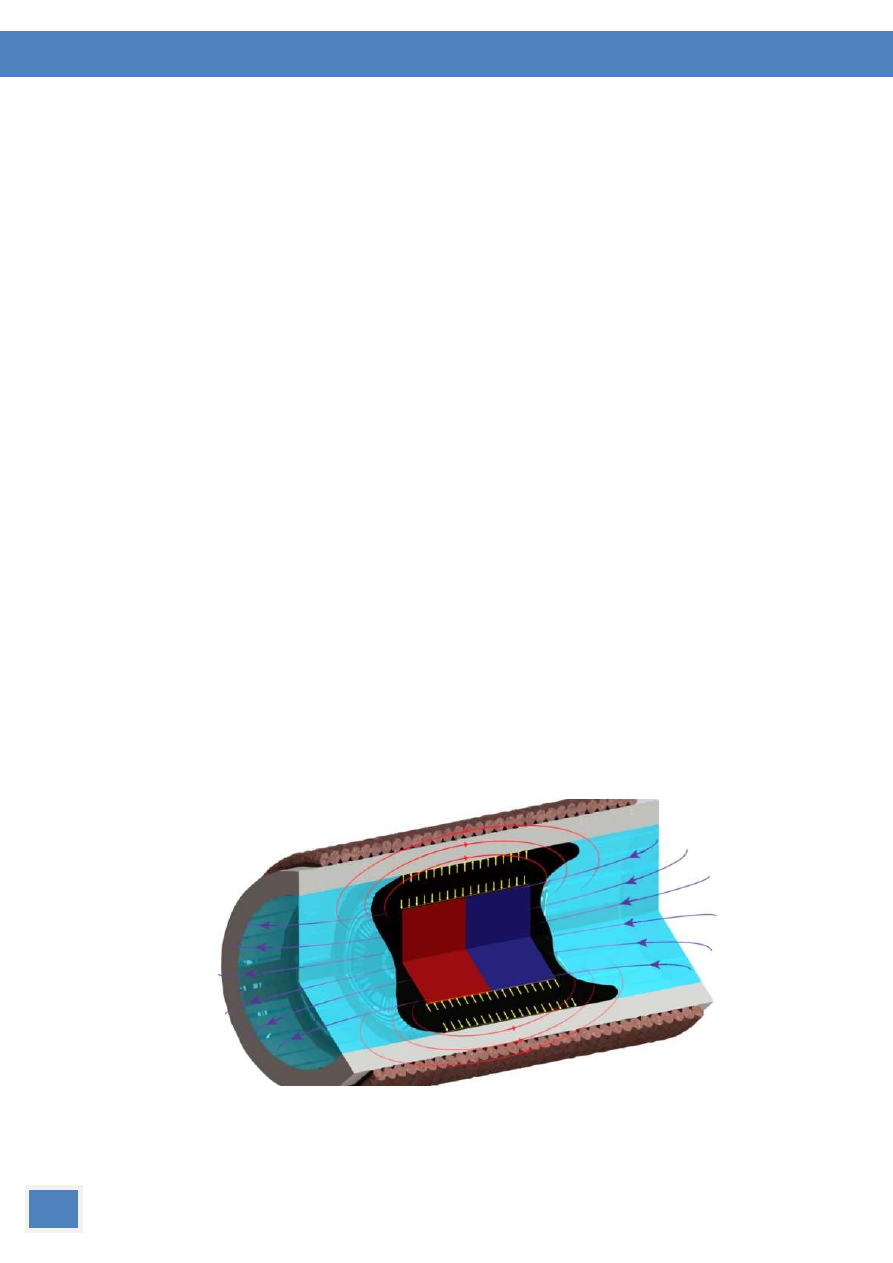
The new elastomeric pump consists of a soft silicone tube fitted with coils of wire
– known
as solenoids
– that are spaced around its exterior. Gaps between the coils allow the tube to bend
and stretch. Inside the tube is a solid core magnet surrounded by magnetorheological fluid
– a fluid
that stiffens when exposed to a magnetic field, which keeps the core centered and creates a crucial
seal. Depending on how the magnetic field is applied, the core magnet can be moved back and
forth, much like a floating piston, to push fluids
– such as water and low-viscosity oils – forward
with continuous force and without jamming.
The researchers conducted an experiment to demonstrate that the pump system can
maintain a continuous performance under large deformations, and they tracked the performance
parameters so future iterations can be custom-tailored for different types of robots.
Source and image credit
https://news.cornell.edu/stories/2022/07/deformable-pump-gives-soft-

Technology Roundup
25
FORTHCOMING TECH EVENTS
PAKISTAN
➢ 1
st
International Conference on Climate Resilient Agriculture for Sustainable Development &
Food Security
September 5
– 7, 2022, Allama Iqbal Open University, Islamabad
➢ 3
rd
Young Scientists Research Conference
September 28th, 2022, Foundation University School of Health Sciences, Islamabad
https://fui.edu.pk/3YSRC/#location
➢ International Conference Revamped Scientific outlook of 21
st
Century
October 12
th
, 2022, Rawalpindi Women University, Rawalpindi
https://conf-fs2022.rwu.edu.pk/conference-themes/
➢ International Conference on Recent Advances in Electrical Engineering & Computer Sciences
October 18
– 20, 2022, Pakistan Institute of Engineering and Applied Sciences, Islamabad
http://www.pieas.edu.pk/images/_proclaim-images/101/_proclaim-101-pdf.pdf
➢ 1
st
International Conference and 4
th
Workshop on Materials Modeling and Simulations
October 24
– 26, 2022, University of Malakand, Khyber Pakhtunkhwa
https://uom.edu.pk/icwmms2022/
➢ 1
st
International Conference on Sports, Exercises and Health Sciences
October 25
– 26, 2022, Gomal University, Dera Ismail Khan
INTERNATIONAL
➢ International Conference on Machine Learning and Data Engineering
September 7
– 8, 2022, Dehradun, India
➢ 8
th
International Conference on Computer Science, Engineering and Information Technology
(CSITY 2022)
September 24
– 25, 2022, Toronto, Canada
➢ Meteorological Technology World Expo
October 11
– 13, 2022, Paris, France
https://www.meteorologicaltechnologyworldexpo.com/en/
➢ International Conference on Engineering, Science and Technology (IConEST)
October 13
– 16, 2022, Austin, USA
➢ 6
th
International Conference on Modern Research in Engineering, Technology & Science
October 14
– 16, 2022, Prague, Czech Republic
➢ 15
th
International Conference on Computer Science and Information Technology (ICCSIT
2022)
October 14
– 16, 2022, Tokyo, Japan
➢ 11
th
International Conference on Computer Technologies and Development
October 16
– 18, 2022, Barcelona, Spain
Technology Roundup
26
TECH AND TRADE OFFERS
Gadoon Textile Mills Limited
About Gadoon Textile Mills Limited
We operate primarily in the textile
industry of Pakistan, the fiber spinning sector
in particular.
We manufacture and process all types
of cotton and man-made fibers, thus operating
in the B2B sector of the industry. Our clients
include some of the biggest names in the
textile industry of Pakistan and abroad. We
enjoy relationships that have been forged,
maintained and strengthened during the past
twenty nine years of our operations history.
Our Products
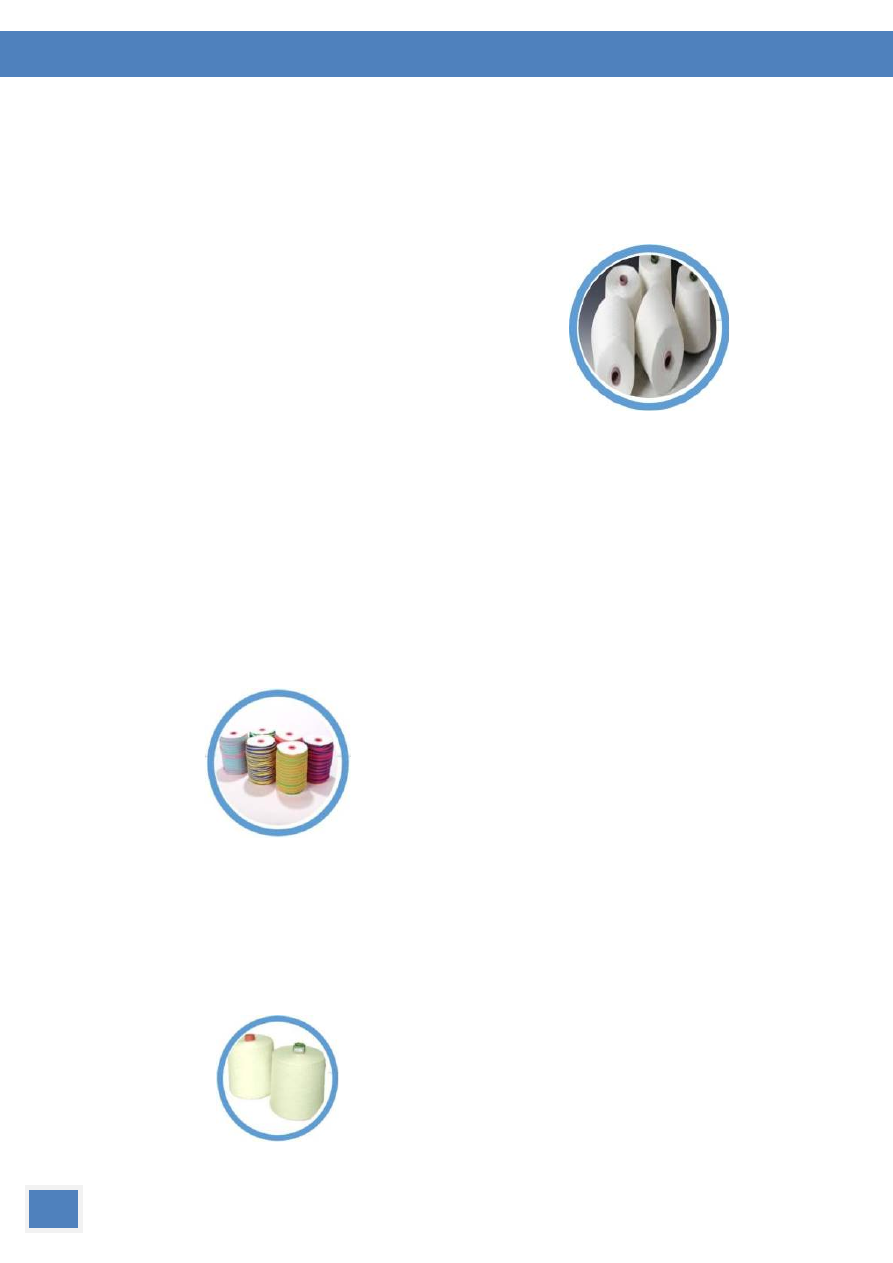
➢ Poly Cotton Yarn
In this type of yarn the cotton part is
usually less than Polyester. The poly cotton
yarn commonly has a blend of polyester and
cotton. Two of the most frequently sold blends
in polyester cotton yarn are of 65:35 and
52:48.
➢ Murata Vortex Spun Yarn (MVS)
Vortex yarn is spun with a unique
technology. Its yarn structure optimizes the
characteristics of its component fibers.
The features of Vortex yarn include, less
hairiness, resistance to pilling, moisture
absorption, and wash resistance.
➢ Slub Yarn
Slub yarn refers to yarn that has been
purposely spun with slubs (thicker sections
along the yarn). Slubs are deliberately created
to produce a desired effect.
Contact us:
Head office
: 7-A, Muhammad Ali Housing
Society, Abdul Aziz Haji Hashim Tabba
Street, Karachi-75350.
Registered Office: 200-201, Gadoon Amazai
Industrial Estate, District Swabi, Khyber
Pakhtunkhwa.
Phone:
021-35205479-80
Fax:
021-34382436
Email:
Reliable Innovative Technologies
About Reliable Innovative Technologies
Reliable Innovative Technologies is a
software company that is providing websites
and custom software development according
to business needs, while principally focusing
on the simplicity and friendly behavior of the
software.
Our mission is to improve the business
growth of our customers with productive plan
and advancement to address market-defining
high-quality
resolutions.
We
help
our
consumers to derive enhanced value from
their information technology investment being
IT consultancy, IT solutions etc. Our aim is
always to create values.

Technology Roundup
27
Our Products
➢ Reliable School Software
Reliable School Software is designed to
speed up various tasks across the institution
system and offers modules from student
robust
features
that
benefit
educators,
students, and staff. An online ERP solution
that can be accessed anytime, anywhere
Reliable School Software provides a verity
of school management related services
incl
uding Student Admission Module, Easy
Attendance
Management,
School
Fees
Management, Time Table Management,
Subject Setup & Management, Expense
Management, Staff Management etc.
➢ Reliable Housing Management Software
Reliable Housing
Management is
a
comprehensive and modern housing society
management software for small scheme
businesses & real estate sectors. It has been
designed for people as well as business as
focal points. It is developed to assist your
office staff with day to day society operations
management and to give unique reporting to
purchase. It assists you with end-to-end
management of processes such as plots sales
& purchase, registration, payment installments
management and much more.
Contact us:
Office: Reliable Innovative Technologies Pvt.
Ltd. Baluchistan head office, Office # F-10
Civic Center Engle Road near M.A Jinnah
road Quetta.
Phone:
+92 (081) 2866011
Cell:
+92335 3689292
Email:
Please give us your feedback and address
queries to
PASTIC serves as a gateway for
Scientific & Technological
Information for R&D by catering
to the information needs of
researchers, entrepreneurs,
industrialists, educationists, policy
makers and planners through
anticipatory and responsive
information services.
Technology Information Section
works exclusively for support and
promotion of technological
information on trade and industry
in the country.
“Technology Roundup” is a news
bulletin that provides latest and
innovative technology news,
forthcoming events, etc. It also
promotes products, technologies
and services globally in sectors
such as Agro Industry, Bio-
Technology, Building Material,
Business, Chemicals, Electronics,
Energy, Fisheries, Food
Processing, Machinery,
Packaging, Mining,
Pharmaceuticals and Textiles.
About PASTIC