
Patron/Executive Editor
Prof. Dr. Muhammad Akram Shaikh
Director General, PASTIC
Managing Editors
Ms. Nageen Ainuddin
Mr. M. Aqil Khan
Editor
Syed Aftab Hussain Shah
Composer
Kashif Farooqui
T
ECHNOLOGY
R
OUNDUP
Technology Information Section (TIS)
Pakistan Scientific & Technological Information Centre
PASTIC
January-February, 2017
Vol.9 No.1
A NEWS BULLETIN FROM
Tech News Headlines
Tech & Trade Offers
Phone: 051-9248103-4, 9248128
Fax: 051-9248113
Email: shah_aftab@yahoo.com
Web: www.pastic.gov.pk
PASTIC National Centre
Quaid-i-Azam University Campus
P.O. Box 1217, Islamabad
Editorial Board
l
Beneficiation Studies on Low-Grade Complex Polymetallic Lead-
Zinc Ore of Duddar (Lasbela) Balochistan, Pakistan
l
Development of Indirect Spectrophotometric Method for
Quantification of Cephalexin in Pure Form and Commercial
Formulation Using Complexation Reaction
l
Discovery of New Genetic Disease Mechanism
l
Electricity Generator that Mimics Trees
l
Bacteria Fed Synthetic Iron-containing Molecules turn into
Electrical Generators
l
L
iquid Metal Nano printing set to revolutionize Electronics
l
Digital Fabrication in Architecture: The challenge to Transform the
Building Industry
l
Living Sensors at your Fingertips: Cell-infused Gloves and Bandages
Light up when in contact with certain Chemicals.
ITTEHAD CHEMICALS
LIMITED (ICL)
Forthcoming Tech Events
l
l
l
l
MTA Manufacturing Technology Asia Singapore Expo,
Singapore
CIMT 2017 - China International Machine Tool Show, China
Oil & Gas Asia Exhibition & Conference
l International Plastic, Packaging & Print Asia Exhibition
l Food Technology Asia
nd
l 2 All Pakistan DICE-Textile Innovation Event
l Dawn Pakistan Agri Expo
EASTEC 2017, USA

Technology Roundup
2
Indigenous
Technology
Source:
Beneficiation Studies on Low-Grade Complex Polymetallic Lead-Zinc Ore of Duddar (Lasbela)
Balochistan, Pakistan
Beneficiation Studies on Low-Grade Complex Polymetallic Lead-Zinc Ore of
Duddar (Lasbela) Balochistan, Pakistan
A bench-scale beneficiation study was performed on low-grade complex lead-zinc ore of Duddar area, District
Lasbela, Balochistan Province, Pakistan. The polymetallic ore under investigation contains galena and sphalerite as
valuable minerals of lead and zinc. The low-grade ore was upgraded by selective sequential froth flotation
technology to recover both minerals. An effort was made to investigate the effect of important variables on grade
and recovery of concentrates and to design the process flow sheet. Different parameters of flotation process such as
particle size of the feed, pH and % solids of the pulp, speed of impeller, type of reagents (collectors, frothers,
regulators and modifiers) and their quantities, conditioning time and flotation time were optimized to attain
maximum grade and recovery of respective concentrates. The rougher concentrates obtained were subjected to one
regrinding and two cleaning operations to achieve higher-grade concentrates of both metals. Bench-scale flotation
tests show that it is possible to obtain a lead concentrate assaying 65.24% Pb with recovery rate of 81.32% and a zinc
concentrate containing 55.63% Zn content with recovery rate of 80.28%. Both the concentrates meet the
specifications required for metallurgical and chemical grades.
Muhammad Arif Bhattia, Kamran Raza Kazmia , Abdul Ahadb , Anila Tabassumc , Rashid
Mehmooda and Adnan Akram.
Pakistan Journal of Scientific and Industrial Research A:
Physical Sciences, 2016 59(3): 130-143.

Technology Roundup
3
Indigenous
Technology
Source:
Development of Indirect Spectrophotometric Method for Quantification of Cephalexin in
Pure Form and Commercial Formulation Using Complexation Reaction
Simple, accurate and indirect spectrophotometric method was developed for the quantification of
cephalexin in pure form and pharmaceutical products using complexation reaction. The developed method
is based on the oxidation of the cephalexin with Fe3+ in acidic medium. Then 1, 10- phenanthroline reacts
with Fe2+ and a red colored complex was formed. The absorbance of the complex was measured at 510 nm
by spectrophotometer. Different experimental parameters affecting the complexation reactions were
-1
studied and optimized. Beer's law was obeyed in the concentration range 0.4 -10 µgmL with a good
-1
correlation of 0.992. The limit of detection and limit of quantification were found to be 0.065 µgmL and
0.218 µgmL-1, respectively. The method have good reproducibility with a relative standard deviation of
6.26 % (n = 6). The method was successfully applied for the determination of cephalexin in bulk powder and
commercial formulation. Percent recoveries were found to range from 95.47 to 103.87 % for the pure form
and 98.62 to 103.35 % for commercial formulations
Muhammad Naeem Khan, Sundus Kalsoom, Rahana Hussain, Zarbad Shah and
Muhammad Saadiq. Development of Indirect Spectrophotometric Method for
Quantification of Cephalexin in Pure Form and Commercial Formulation Using
Complexation Reaction Pakistan Journal of Analytical and Environmental Chemistry, 2016,
17 (2): 118-123
4
Technology Roundup
Discovery of New Genetic Disease Mechanism
Electricity Generator that Mimics Trees
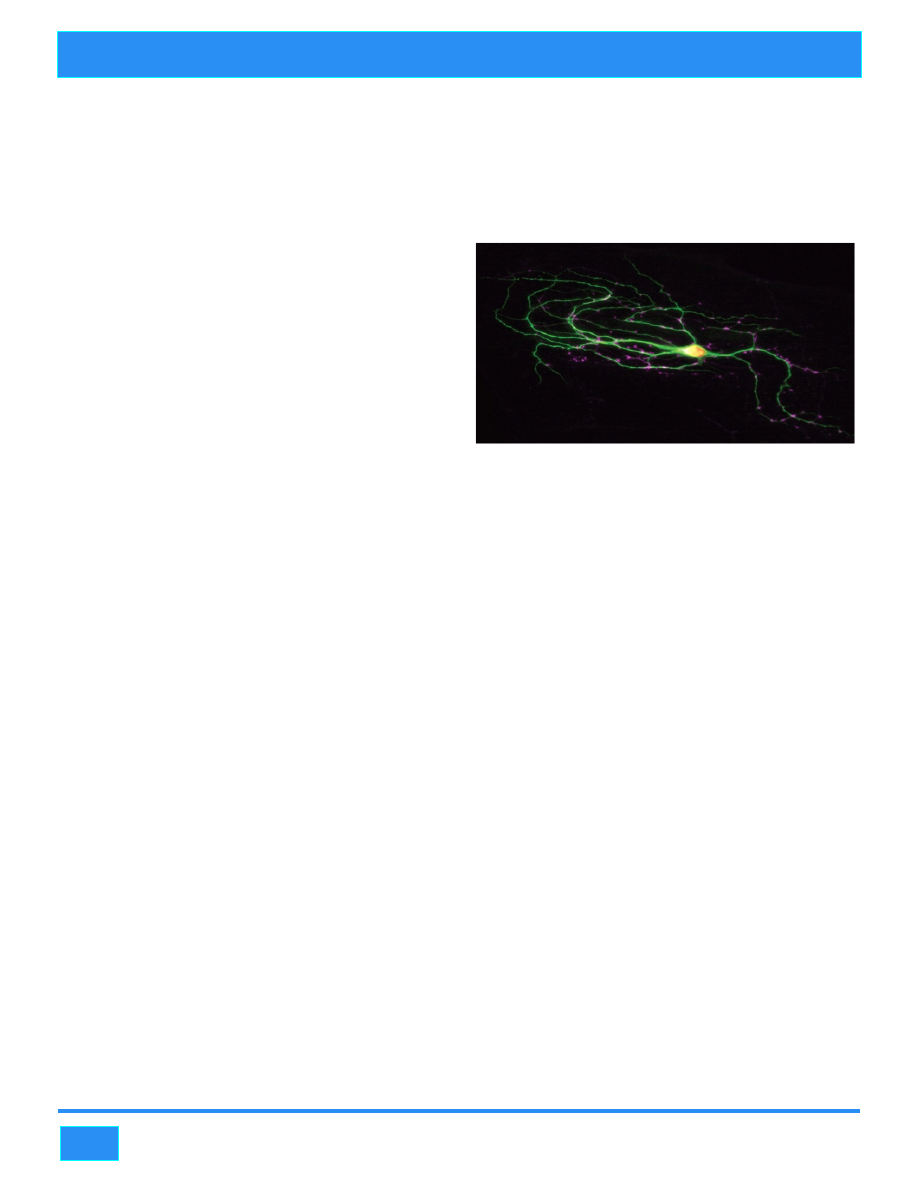
Scientists at the Max Planck Institute for Experimental Medicine in Göttingen reveal that aberrant synapse protein
can lead to neurological and psychiatric disorders. Noa Lipstein-Thoms scientist at the Max Planck Institute for
Experimental Medicine in Göttingen has now discovered a new genetic disease mechanism that affects the
strength and precise timing of neuronal signals and leads to movement disorders (dyskinesia), attention deficit
hyperactivity disorder (ADHD) and autism.
Lipstein-Thoms studies the fundamental mechanisms of
signal transmission between neurons. This process takes
place at the synapses as they are known. A transmitting
neuron triggers the release of a chemical messenger in
response to an electrical stimulus. This chemical
messenger is recognised by the recipient neuron and
converted into an electric signal. A series of regulatory
proteins guarantees that this signal transmission process,
which is biologically extremely complex, operates with
the necessary millisecond precision. The proteins control
the release of the messenger at synapses. One of these
proteins is known by the cryptic name of Munc13-1.
Our genetic research on mice has shown that Munc13-1 is vital for the transmission of signals at synapses,”
explains Lipstein-Thoms. “When it is missing, the brain does not function because the messenger is blocked and
cannot be released at synapses. The affected mouse dies.” Even minor changes to the Munc13-1 protein often has
catastrophic consequences because the precise timing of the synaptic signals is lost.
while the changed transmission characteristics of the synapses are rather small, they can explain the complex
symptoms in the affected patient,” says Lipstein-Thoms, describing the state of her findings. Many neurological
and psychiatric medications already target synapses. “We know which process in the patient's synapses is
damaged and could even try to correct the hyperactivity of synapses that we have described using medications that
are already licensed,” explains Lipstein-Thoms. “That would be a wonderful example of how basic research is
essential to medical application.”
A prototype biomimetic tree has been built that generates electricity when wind blows through its artificial leaves.
The researchers think such technology may help people charge household appliances without the need for large
wind turbines. Iowa State University scientists have built a device that mimics the branches and leaves of a
cottonwood tree and generates electricity when its artificial leaves sway in the wind. Michael McCloskey, an
associate professor of genetics, development and cell biology who led the design of the device, said the concept
won't replace wind turbines, but the technology could spawn a niche market for small and visually unobtrusive
machines that turn wind into electricity.
"The possible advantages here are aesthetics and its smaller scale, which may allow off-grid energy harvesting,"
McCloskey said recently in his ISU laboratory. "We set out to answer the question of whether you can get useful
amounts of electrical power out of something that looks like a plant.
www.sciencedaily.com

3
5
Technology Roundup
The answer is 'possibly,' but the idea will require further development." In a paper published this month in the
peer-reviewed academic journal PLOS ONE, the ISU research team delves into the world of biomimetics, or the
use of artificial means to mimic natural processes. The concept has inspired new ways of approaching fields as
varied as computer science, manufacturing and nanotechnology. It's unlikely that many people would mistake
the prototype in McCloskey's laboratory for a real tree. The device features a metallic trellis, from which hang a
dozen plastic flaps in the shape of cottonwood leaves.
Curtis Mosher, an associate scientist at Iowa State and co-
author of the paper, said it's not that great of a leap from the
prototype the researchers built to a much more convincing
artificial tree with tens of thousands of leaves, each producing
electricity derived from wind power. "It's definitely doable, but
the trick is accomplishing it without compromising efficiency,"
Mosher said. "More work is necessary, but there are paths
available." Small strips of specialized plastic inside the leaf
stalks release an electrical charge when bent by moving air.
Such processes are known as piezoelectric effects.
Cottonwood leaves were modeled because their flattened leaf stalks compel blades to oscillate in a regular
pattern that optimizes energy generation by flexible piezoelectric strips.
Eric Henderson, a professor of Genetics, development and cell biology who also works on the research team,
envisions a future in which biomimetic trees help to power household appliances. Such biomimetic technology
could become a market for those who want the ability to generate limited amounts of wind energy without the
need for tall and obstructive towers or turbines, Henderson said. But McCloskey said making that vision reality
means finding an alternative means of mechanical-to-electrical transduction, or a scheme for converting wind
energy into usable electricity. The piezo method adopted for the ISU experiments didn't achieve the efficiency
the technology will need to compete in the market. Piezoelectricity was an obvious place to start because the
materials are widely available, Henderson said. But taking the next step will require a new approach. Other
transduction methods such as triboelectricity, or the generation of charge by friction between dissimilar
materials, work at similar efficiency and can power autonomous sensors. However, McCloskey said it will
require much greater efficiency -- and further research -- to produce a practical device.
"The concept here is that if we just close the lid of the wastewater treatment tank and then give the bacteria an
electrode, they can produce electricity while cleaning the water," says co-first author Zach Rengert, a chemistry
graduate student at UCSB. "And the amount of electricity they produce will never power anything very big, but it
can offset the cost of cleaning water." The bacteria that inspired this study, Shewanella oneidensis MR-1, live in
oxygen-free environments and can breathe in metal minerals and electrodes -- instead of air -- via current-
conducting proteins in their cell membranes. Most bacterial species, however, do not have such proteins and
www.sciencedaily.com
Bacteria Fed Synthetic Iron-containing Molecules turn into Electrical
Generators
The bacterial world is rife with unusual talents, among them a knack for producing electricity. In the wild,
"electrogenic" bacteria generate current as part of their metabolism, and now researchers at the University of
California, Santa Barbara (UCSB), have found a way to confer that ability upon non-electrogenic bacteria. This
technique could have applications for sustainable electricity generation and wastewater treatment, the
researchers report February 9 in the journal Chem

6
Technology Roundup
therefore naturally do not produce current. Taking
inspiration from S. oneidensis' membrane-spanning
conductive proteins, the team hypothesized that with the
right kind of bio-compatible molecular additive, this
electrogenesis might be conferred to bacteria that have
not evolved to do so.
The researchers, under the guidance of senior author
Guillermo Bazan at UCSB, built a molecule called
DFSO+,
A new technique uses liquid metals to create large wafers around 1.5 nanometres in depth to produce integrated
circuits for the advancement of electronics, report scientists in a new report. The process opens the way for the
production of large wafers around 1.5 nanometres in depth (a sheet of paper, by comparison, is 100,000nm thick).
Other techniques have proven unreliable in terms of quality, difficult to scale up and function only at very high
temperatures -- 550 degrees or more. Distinguished Professor Kourosh Kalantar-zadeh, from the School of
Engineering at RMIT University in Melbourne, Australia, led the project, which also included colleagues from
RMIT and researchers from CSIRO, Monash University, North Carolina State University and the University of
California. He said the electronics industry had hit a barrier. "The fundamental technology of car engines has not
progressed since 1920 and now the same is happening to electronics. Mobile phones and computers are no more
powerful than five years ago. "That is why this new 2D printing technique is so important -- creating many layers
of incredibly thin electronic chips on the same surface dramatically increases processing power and reduces costs.
"It will allow for the next revolution in electronics." Benjamin Carey, a researcher with RMIT and the CSIRO,
which contains an iron atom at its core. To add
the DFSO+ to bacteria, the researchers dissolved a small
amount of the rust-colored powder into water and added that solution to bacteria. Within a few minutes, the
synthetic molecule found its way into the bacteria's cell membranes and began conducting current through its iron
core, providing a new pathway for the bacteria to shuttle electrons from inside to outside the cell. Because the
DFSO+ molecule's shape mirrors the structure of c
ell membranes, it can quickly slip into the membranes and remain
there comfortably for weeks. The approach might need some tweaking before being applied to long-term power generation,
the researchers say, but it's an encouraging initial finding.
This chemical approach to changing bacteria's capabilities will most likely be cheaper than bacteria genetically
engineered to do the same job. "It's a totally different strategy for microbial electrical energy generation," says the
other co-first author, Nate Kirchhofer (@natekirchhofer), formerly a grad student at UCSB and now a
postdoctoral researcher at Asylum Research in Santa Barbara, CA. "Before, we were building these devices, and
we were limited to optimizing them by changing reactor materials and architectures or using genetic engineering
techniques." The researchers call the DFSO+ molecule a "protein prosthetic" because it is a non-protein chemical
that does a protein's job. "It's sort of analogous to a prosthetic limb, where you're using a plastic limb that's not
actually made out of someone else's body," says Rengert. Understanding how electrogenic bacteria consume
organic fuels and use their metabolic processes to generate electric currents could lead to more efficient biological
electricity-generating technology. "It's useful to have a well-defined, well-understood molecule that we can
interrogate," says Kirchhofer. "We know how it's interfaced with the bacteria, so it gives us very precise
electrochemical control over the bacteria. While this molecule might not be the best one that will ever exist, it's the
first generation of this kind of molecule.”
www.sciencedaily.com
Liquid Metal Nano printing set to revolutionize Electronics

7
Technology Roundup
said creating electronic wafers just atoms thick could overcome the limitations of current chip production. It
could also produce materials that were extremely bendable, paving the way for flexible electronics. "However,
none of the current technologies are able to create homogenous surfaces of atomically thin semiconductors on
large surface areas that are useful for the industrial scale fabrication of chips.
"Our solution is to use the metals gallium and indium, which have a low melting point. "These metals produce
an atomically thin layer of oxide on their surface that naturally protects them. It is this thin oxide which we use
in our fabrication method. "By rolling the liquid metal, the oxide layer can be transferred on to an electronic
wafer, which is then sulphurised. The surface of the wafer can be pre-treated to form individual transistors.
"We have used this novel method to create transistors and photo-detectors of very high gain and very high
fabrication reliability in large scale."
Current research on digital fabrication in architecture indicates that the development and integration of
innovative digital technologies within architectural and construction processes could transform the building
industry -- on the verge of a building industry 4.0. Digital technologies in architecture and construction could
increase productivity creating new jobs. The multidisciplinary nature of integrating digital processes remains a
key challenge to establishing a digital building culture. In order to fully exploit the potential of digital
fabrication, an institutional and funding environment that enables strong interdisciplinary research is required.
Traditionally separated disciplines such as: architecture, structural design, computer science, materials
science, control systems engineering, and robotics now need to form strong research connections. During the
AAAS 2017 Annual Meeting in Boston, Jonas Buchli, ETH Zurich -- The Swiss Federal Institute of
Technology in Zurich, Switzerland, Ronald Rael, University of California, Berkeley, U.S.A., and Jane Burry,
RMIT University, Melbourne, Australia reveal the latest developments in digital fabrication in architecture at
1:1 building scale. In their presentations, they show digital technologies can be successfully integrated in
design, planning, and building processes in order to successfully transform the building industry.
Jonas Buchli, Assistant Professor for Agile and Dexterous Robotics at ETH Zurich in Switzerland and
principal investigator in the Swiss National Centre of Competence in Research (NCCR) Digital Fabrication is
proposing a radical focus on domain specific robotic technology enabling the use of digital fabrication directly
on construction sites and in large scale prefabrication. Digital computation has freed designers from the
constraints of the static 2- and 3- dimensional representational techniques of drawing and physical modelling.
Design attributes can be directly linked to extraneous factors: structural or environmental optimization, or
fabrication and material constraints. Mathematical design models contain sufficient information even for
computer numerical controlled (CNC) fabrication machines and techniques. Most materials currently used in
3D printing, were developed to print small scale objects. Ronald Rael, Associate Professor for Architecture at
University of California, Berkeley, U.S.A., reveals how he is developing new materials that can overcome the
challenges of scale and costs of 3D printing on 1:1 construction scale. He demonstrates that viable solutions for
3D printing in architecture involve a material supply from sustainable resources, culled from waste streams or
consideration of the efficiency of a building product's digital materiality. The methods of such architectural
additive manufacturing must emerge from interdisciplinary research.
www.sciencedaily.com
www.sciencedaily.com
Digital Fabrication in Architecture: The challenge to Transform the
Building Industry
7
Technology Roundup
78
Living Sensors at your Fingertips: Cell-infused Gloves and Bandages Light
up when in contact with certain Chemicals.
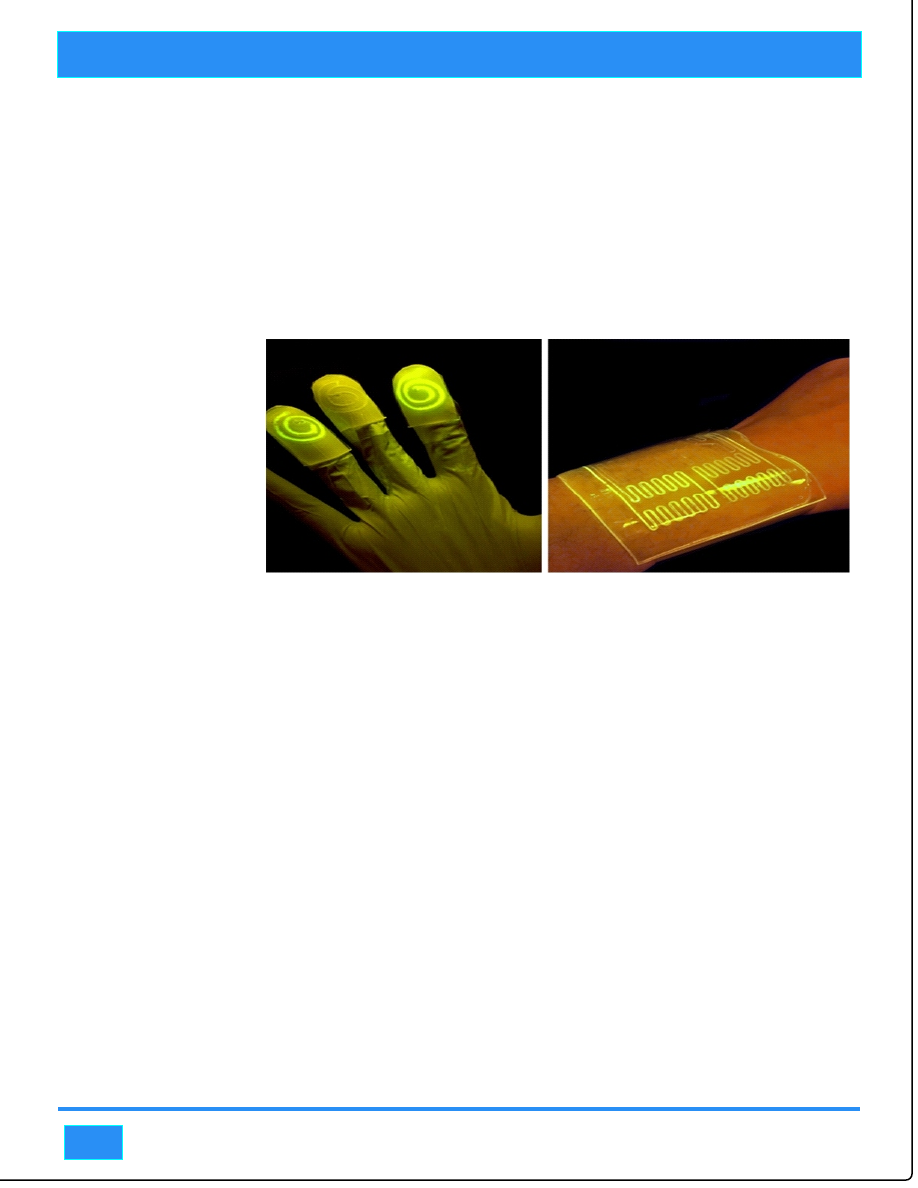
Researchers have found that the hydrogel's mostly watery environment helps keep nutrients and programmed
bacteria alive and active. When the bacteria reacts to a certain chemical, the bacteria are programmed to light
up, as seen on the left. Engineers and biologists at MIT have teamed up to design a new “living material” a
tough, stretchy, biocompatible sheet of hydrogel injected with live cells that are genetically programmed to
light up in the presence of certain chemicals. In a paper published this week in the Proceedings of the National
Academy of Sciences, the researchers demonstrate the new material's potential for sensing chemicals, both in
the environment and in the human body.
The team fabricated
various wearable sensors
from the cell-infused
hydrogel, including a
r u b b e r g l o v e w i t h
fingertips that glow after
touching a chemically
contaminated surface,
and bandages that light
up when pressed against
chemicals on a person's
skin. Xuanhe Zhao, the
Robert N. Noyce Career
Development associate professor of mechanical engineering at MIT, says the group's living material design
may be adapted to sense other chemicals and contaminants, for uses ranging from crime scene investigation
and forensic science, to pollution monitoring and medical diagnostics. “With this design, people can put
different types of bacteria in these devices to indicate toxins in the environment, or disease on the skin,” says
Timothy Lu, associate professor of biological engineering and of electrical engineering and computer science.
“We're demonstrating the potential for living materials and devices.” The paper's co-authors are graduate
students Xinyue Liu, Tzu-Chieh Tang, Eleonore Tham, Hyunwoo Yuk, and Shaoting Lin. Lu and his
colleagues in MIT's Synthetic Biology Group specialize in creating biological circuits, genetically
reprogramming the biological parts in living cells such as E. coli to work together in sequence, much like logic
steps in an electrical circuit. In this way, scientists can reengineer living cells to carry out specific functions,
including the ability to sense and signal the presence of viruses and toxins. However, many of these newly
programmed cells have only been demonstrated in situ, within Petri dishes, where scientists can carefully
control the nutrient levels necessary to keep the cells alive and active an environment that has proven
extremely difficult to replicate in synthetic materials.
“The challenge to making living materials is how to maintain those living cells, to make them viable and
functional in the device,” Lu says. “They require humidity, nutrients, and some require oxygen. The second
challenge is how to prevent them from escaping from the material.”
To get around these roadblocks, others have used freeze-dried chemical extracts from genetically engineered
cells, incorporating them into paper to create low-cost, virus-detecting diagnostic strips. But extracts, Lu says,
are not the same as living cells, which can maintain their functionality over a longer period of time and may
have higher sensitivity for detecting pathogens.
www.news.mit.edu

Technology Roundup
Technology Roundup
National
Oil & Gas Asia Exhibition & Conference
International Plastic, Packaging & Print Asia Exhibition
Food Technology Asia
nd
2 All Pakistan DICE-Textile Innovation Event
Dawn Pakistan Agri Expo
MTA Manufacturing Technology Asia Singapore Expo, Singapore
CIMT 2017 - China International Machine Tool Show,
Www.cimtshow.com
EASTEC USA 2017,
www.easteconline.com
March 14-16, 2017
Karachi Expo Center, Karachi
March 20-22, 2017
Karachi Expo Center in Karachi
March 20-22, 2017
Karachi Expo Center in Karachi
March 28-29, 2017
National Textile University in Faisalabad, Pakistan
www.ogpoasia.com/
Www.foodtechnologyasia.com
www.agroasia.net/
Http://ntu.edu.pk
www.agri.dawn.com/
April 4-5, 2017
Expo Centre Lahore in Lahore, Pakistan
China International Exhibition Center, Beijing, China
16-18 May 2017
West Springfield, Massachusetts, USA
International Events
April 4 - 7, 2017
April 17 - 22, 2017
www.mta-asia.com
/
Forthcoming Tech Events
9
Tech & Trade Offers
About PASTIC
PASTIC serves as a gateway for
Scientific & Technological
Information for R&D by
catering to the information
n e e d s o f r e s e a r c h e r s ,
entrepreneurs, industrialists,
educationists, policy makers
a n d p l a n n e r s t h r o u g h
anticipatory and responsive
information services.
T e c h n o l o g y I n f o r m a t i o n
Section works exclusively for
support and promotion of
technological information on
trade and industry in the
c o u n t r y . “ T e c h n o l o g y
Roundup” is a news bulletin
that provides latest and
innovative technology news,
forthcoming events, etc. It also
p r o m o t e s p r o d u c t s ,
technologies and services
globally in sectors such as
A g r o - I n d u s t r y , B i o -
Technology, Building Material,
B u s i n e s s , C h e m i c a l s ,
Electronics, Energy, Fisheries,
Food Processing, Machinery,
P a c k a g i n g , M i n i n g
Pharmaceuticals and Textiles.
ITTEHAD CHEMICALS LIMITED (ICL)
Email:gmwicl@ittehadchemicals.com
URL: http://www.ittehadchemicals.com
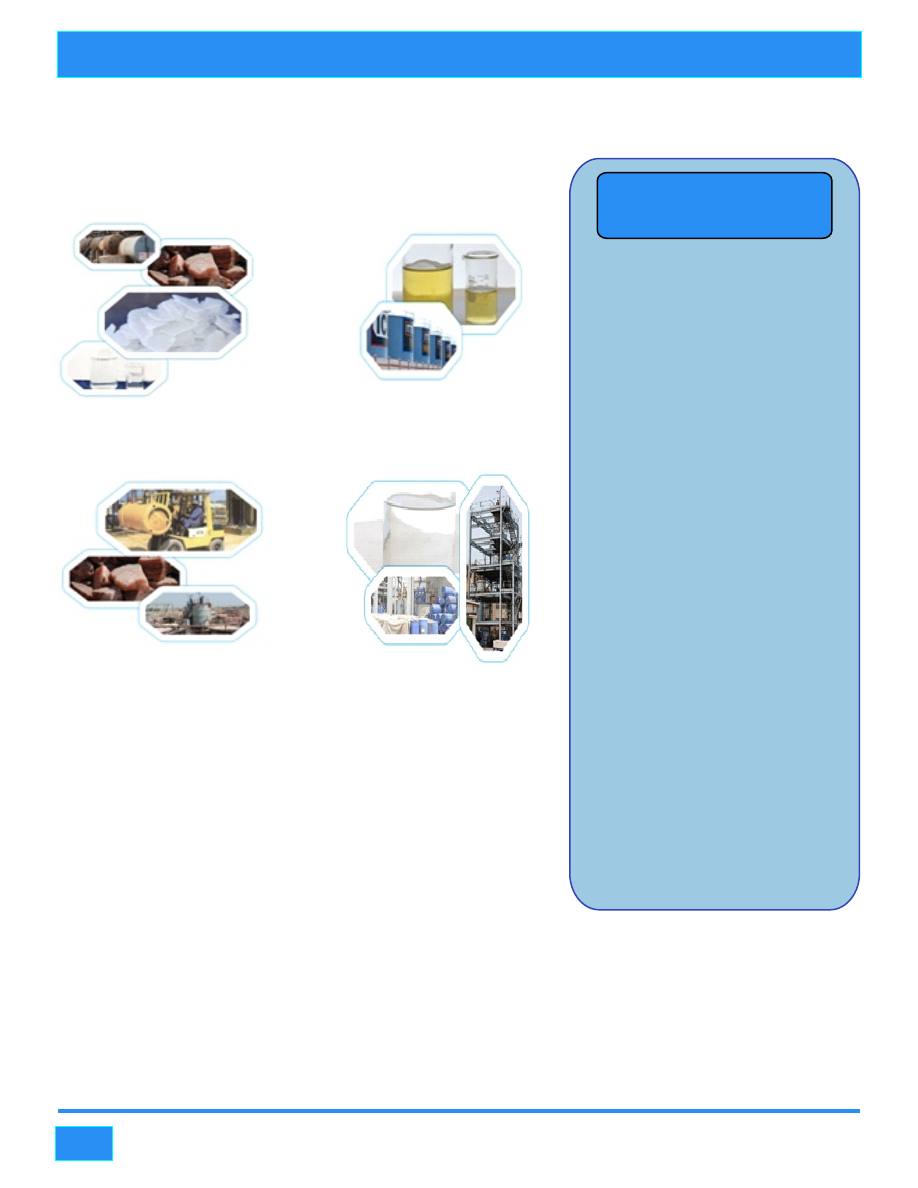
DEALS IN:-
!CALCIUM CHLORIDE
!BARITE AP STANDARD
!CAUSTIC SODA (LIQUID / SOLID / FLAKES)
!HYDROCHLORIC ACID
!LIQUID CHLORINE
!SODIUM HYPOCHLORITE
!ZINC SULPHATE
Company Contact:-
39 Empress Road, Lahore
P.O.Box 1414
Phone: +92 (42) 3795 0222-25
Fax: +92 (42) 3795 0206
Telex: 47851 LPG PK
Technology Roundup
Please give us your feedback and address queries to shah_aftab@yahoo.com
10