
Executive Editor
Prof. Dr. Muhammad Akram Shaikh
Director General, PASTIC
Managing Editor
Dr. Saima Huma Tanveer
Editor
Dr. Syed Aftab Hussain Shah
Composer
Kashif Farooqui
T
ECHNOLOGY
R
OUNDUP
Technology Information Services Section (TIS)
Pakistan Scientific & Technological Information Centre
PASTIC
March-April, 2020
Vol.12 No 2
A NEWS BULLETIN
Tech News Headlines
Tech & Trade Offers
Phone: 051-9248103-4, 9248128
Fax: 051-9248113
Email: tis.pastic@gmail.com
Web: www.pastic.gov.pk
PASTIC National Centre
Quaid-i-Azam University Campus
P.O. Box 1217, Islamabad
Editorial Board
l
A Scientist from MUET- Jamshoro, Sindh Develops NANO-Fiber
Laminated Face Mask
l
Pakistani Engineers Develop Indigenous Ventilator (PAKVENT-1) to
Combat COVID-19
l
Antiviral Remdesivir Prevents Disease Progression in Monkeys with
COVID-19
l
A new Biosensor for the COVID-19 Virus: detection in the
Environment
l
Putting Artificial Intelligence to work in the Lab
l
New type of Indoor Solar Cells for Smart connected Devices
l
Digital Agriculture paves the Road to Agricultural Sustainability
Forthcoming Tech Events
l International Conference on Medical, Biological and Pharmaceutical
Sciences
l
International Conference on Environment and Natural Sciences
l
International Conference on Education and Social Science
l
International Conference on Rehabilitation Science
l
International Conference on Computer Systems Engineering and
Research
l
International Conference on Science Engineering & Technology
l
3rd International Conference on Research in Science, Engineering &
Technology
l
International Congress on History of Science and Technology
PCSIR HAND SANITIZER
& SURFACE
DISINFECTANT
Technology Roundup
2
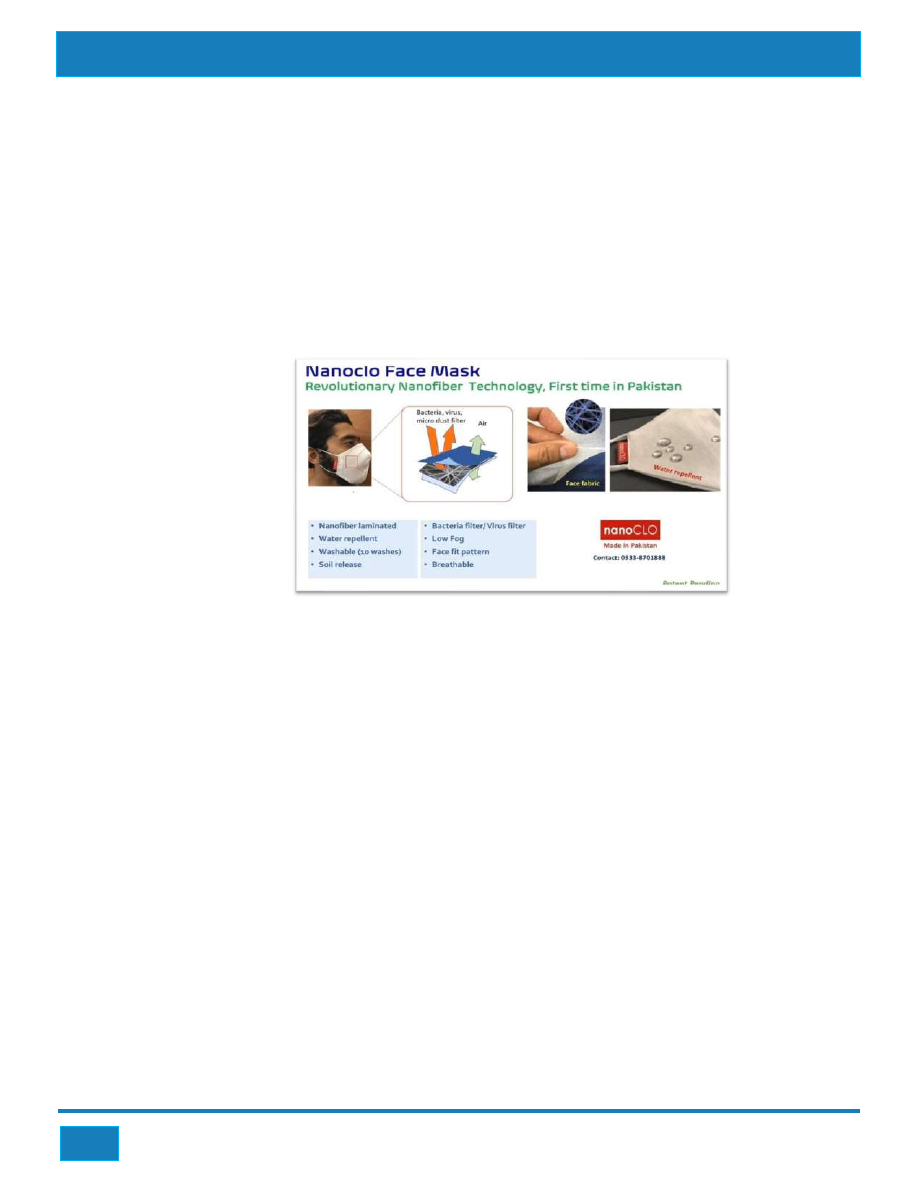
A SCIENTIST FROM MUET- JAMSHORO, SINDH DEVELOPS
NANO-FIBER LAMINATED FACE MASK
Pakistani Scientists are striving their best to offer plausible preventive measures against the novel corona
virus disease 19 (COVID-19) caused by severe acute respiratory syndrome coronavirus 2 (SARS-COV-2). In
this context, a remarkable breakthrough has also been achieved by Dr. Zeeshan Khatri, Associate Professor,
Mehran University of Engineering and Technology (MUET) Jamshoro, Sindh, who has developed a
revolutionary nano-fiber laminated face mask. The mask can effectively be used against COVID-19. The
product has a huge market demand. Masks can be provided on discount rates on limited scale at the moment
(MUET employees) on trial basis. Patent for this product is pending at the moment.
Source:
Zeeshan Khatri (PhD, Engr.), Textile Engineering Department, Mehran University of Engineering
and Technology (MUET) Jamshoro, Pakistan
www.muet.edu.pk/departments/textile/faculty-member
Technology Roundup
3
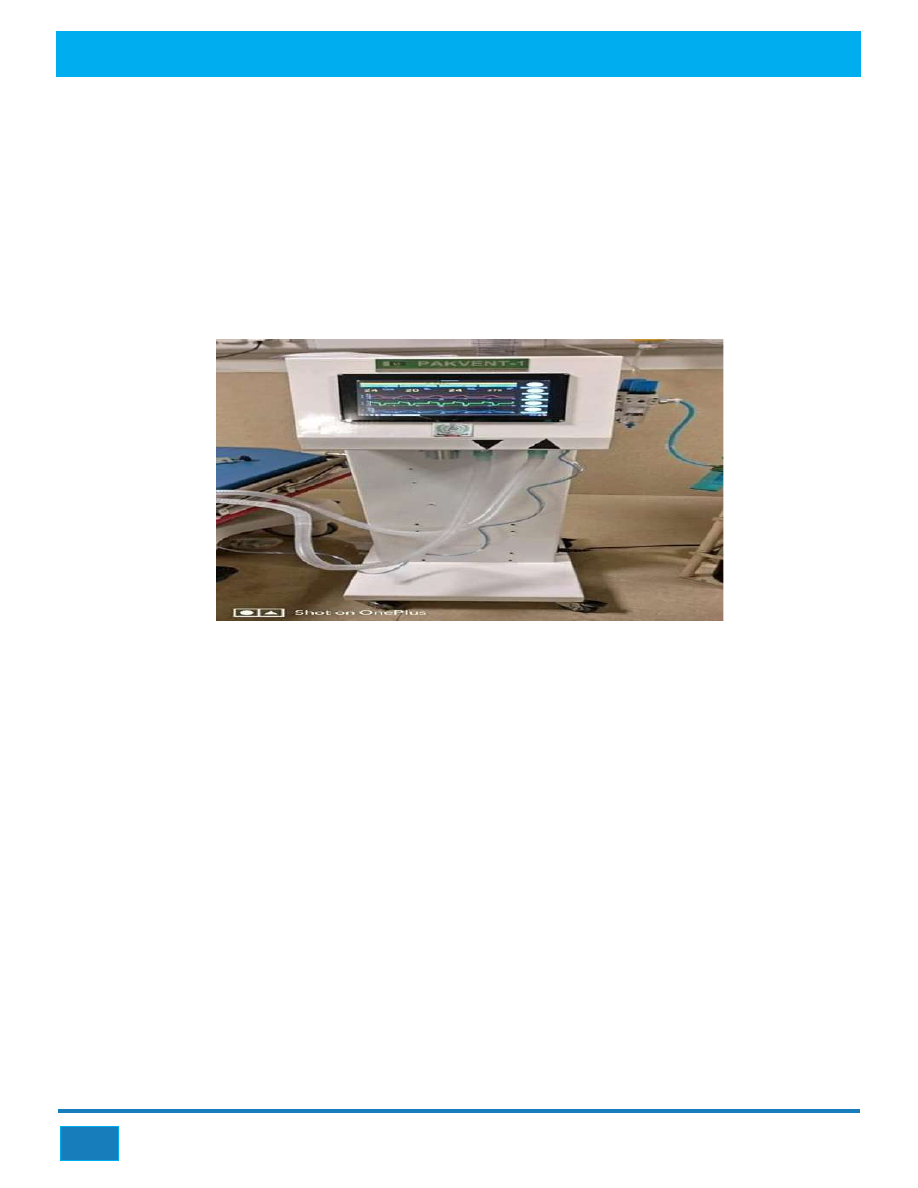
PAKISTANI ENGINEERS DEVELOP INDIGENOUS VENTILATOR (PAKVENT-1) TO
COMBAT COVID-19
The COVID-19 crisis has provided an opportunity for Pakistan to manufacture indigenous medical
equipments and related products. The development of PAKVENT-1, is one of such initiative which has
been jointly undertaken by National Engineering and Scientific Commission (NESCOM), Pakistan
Engineering Council (PEC), and Pakistan Ordinance Factories (P.O.F), Wah, Pakistan
PAKVENT-1 has been indigenously developed to combat COVID-19 in a limited time frame. Trials of
Ventilator Prototype PAKVENT-1 have been started. The product specifications are according to the
Medicines and Healthcare products Regulatory Agency, UK. The advanced version will be developed
after fulfilling the essential requirements
Source:
www.twiter.com/khi_alerts/status/1247529611316957184

4
Technology Roundup
ANTIVIRAL REMDESIVIR PREVENTS DISEASE PROGRESSION IN
MONKEYS WITH COVID-19
Early treatment with the experimental antiviral drug remdesivir significantly reduced clinical disease and damage
to the lungs of rhesus macaques infected with SARS-CoV-2, the coronavirus that causes COVID-19, according to
National Institutes of Health scientists.
This scanning electron microscope image shows SARS-CoV-2 (round gold objects) emerging from the surface of cells cultured in
the lab. SARS-CoV-2, also known as 2019-nCoV, is the virus that causes COVID-19. The virus shown was isolated from a patient in
the U.S.NIAID-RML
The study was designed to follow dosing and treatment procedures used for hospitalized COVID-19 patients
being administered remdesivir in a large, multi-center, clinical trial led by NIH's National Institute of Allergy and
Infectious Diseases (NIAID). The scientists posted the work on the preprint server bioRxiv. A study detailing the
development of the rhesus macaque model of mild- to-moderate human disease, conducted by the same team of
NIAID scientists, was posted to bioRxiv on March 21.
The current study of remdesivir, a drug developed by Gilead Sciences Inc. and NIAID-supported investigators,
involved two groups of six rhesus macaques. One group of monkeys received remdesivir and the other animals
served as an untreated comparison group. Scientists infected both groups with SARS-CoV-2. Twelve hours later
the treatment group received a dose of remdesivir intravenously, and then received a daily intravenous booster
dose thereafter for the next six days. The scientists timed the initial treatment to occur shortly before the virus
reached its highest level in the animals' lungs.
Twelve hours after the initial treatment, the scientists examined all animals and found the six treated animals in
significantly better health than the untreated group, a trend that continued during the seven-day study. They report
that one of the six treated animals showed mild breathing difficulty, whereas all six of the untreated animals
showed rapid and difficult breathing. The amount of virus found in the lungs was significantly lower in the
treatment group compared to the untreated group, and SARS-CoV-2 caused less damage to the lungs in treated
animals than in untreated animals.
The investigators note that the data supports initiating remdesivir treatment in COVID-19 patients as early as
possible to achieve maximum treatment effect.
Source:
www.sciencedaily.com/2020/04/200417141839.html
3
5
Technology Roundup
A NEW BIOSENSOR FOR THE COVID-19 VIRUS: DETECTION IN THE
ENVIRONMENT
Researchers have developed a novel sensor for detecting the new coronavirus. In future, it could be used to
measure the concentration of the virus in the environment -- for example, in places where there are many people
or in hospital ventilation systems.
https://www.europeanpharmaceuticalreview.com/news/117659/developing-a-covid-19-biosensor-for-faster-
diagnostics-and-environmental-monitoring
The optical biosensor combines two different effects to detect the virus safely and reliably: an optical and a
thermal one. The sensor is based on tiny structures of gold, so-called gold nanoislands, on a glass substrate.
Artificially produced DNA receptors that match specific RNA sequences of the SARS-CoV-2 are grafted onto
the nanoislands. The coronavirus is a so-called RNA virus: Its genome does not consist of a DNA double strand
as in living organisms, but of a single RNA strand. The receptors on the sensor are therefore the complementary
sequences to the virus' unique RNA sequences, which can reliably identify the virus.
The technology the researchers use for detection is called LSPR, short for localized surface plasmon resonance.
This is an optical phenomenon that occurs in metallic nanostructures: When excited, they modulate the incident
light in a specific wavelength range and create a plasmonic near-field around the nanostructure. When molecules
bind to the surface, the local refractive index is changed within the excited plasmonic near-field. An optical
sensor located on the back of the sensor can be used to measure this change and thus determine whether the
sample contains the RNA strands in question. However, it is important that only those RNA strands that match
exactly the DNA receptor on the sensor are captured. This is where a second effect comes into play on the sensor:
the plasmonic photothermal (PPT) effect. If the same nanostructure on the sensor is excited with a laser of a
certain wavelength, it produces localized heat.
To demonstrate how reliably the new sensor detects the current COVID-19 virus, the researchers tested it with a
very closely related virus: SARS-CoV. This is the virus that broke out in 2003 and triggered the SARS pandemic.
The two viruses -- SARS-CoV and SARS-CoV2 -- differ only slightly in their RNA. The validation was
successful: Tests showed that the sensor can clearly distinguish between the very similar RNA sequences of the
two viruses in a matter of minutes. At the moment, however, the sensor is not yet ready to measure the corona
virus concentration in the air. A number of developmental steps are still needed to do this -- for example, a system
that draws in the air, concentrates the aerosols in it and releases the RNA from the viruses. But once the sensor is
ready, the principle could be applied to other viruses and help to detect and stop epidemics at an early stage.
Source:
www.sciencedaily.com/2020/04/200421112520html

6
Technology Roundup
PUTTING ARTIFICIAL INTELLIGENCE TO WORK IN THE LAB
Scientists have demonstrated fully-autonomous Scanning Probe Microscopy (SPM) operation, applying
artificial intelligence and deep learning to remove the need for constant human supervision. The new system,
dubbed DeepSPM, bridges the gap between nanoscience, automation and artificial intelligence (AI), and firmly
establishes the use of machine learning for experimental scientific research using SPM.
Image acquired by atomic force microscopy (AFM): a single molecule, similar to chlorophyll. Credit:
FLEET.
https://phys.org/news/2020-03-artificial-intelligence-lab.html
The new system, dubbed DeepSPM, bridges the gap between nanoscience, automation and artificial intelligence
(AI), and firmly establishes the use of machine learning for experimental scientific research. Optimising SPM
data acquisition can be very tedious. This optimisation process is usually performed by the human
experimentalist, and is rarely reported. This new AI-driven system can operate and acquire optimal SPM data
autonomously, for multiple straight days, and without any human supervision.
The SPM methodologies will be improved such as atomically-precise nanofabrication and high-throughput data
acquisition closer to a fully automated turnkey application. The new deep learning approach can be generalized to
other SPM techniques. The researchers have made the entire framework publicly available online as open source,
creating an important resource for the nanoscience research community.
The AI-driven system begins with an algorithmic search of the best sample regions and proceeds with
autonomous data acquisition. It then uses a convolutional neural network to assess the quality of the data. If the
quality of the data is not good, DeepSPM uses a deep reinforcement learning agent to improve the condition of the
probe. DeepSPM can run for several days, acquiring and processing data continuously, while managing SPM
parameters in response to varying experimental conditions, without any supervision.
The study demonstrates fully autonomous, long-term SPM operation for the first time by combining:
1.
an algorithmic approach for sample area selection and SPM data acquisition;
2.
supervised machine learning using convolutional neural networks for quality assessment and
classification of SPM data, and
3.
deep reinforcement learning for dynamic automated in-situ probe management and conditioning.
Source:

7
Technology Roundup
78
NEW TYPE OF INDOOR SOLAR CELLS FOR SMART CONNECTED
DEVICES
In a future where most things in our everyday life are connected through the internet, devices and sensors will
need to run without wires or batteries. Researchers present a new type of dye-sensitized solar cells that harvest
light from indoor lamps.
credit: Uppsala University
https://phys.org/news/2020-03-indoor-solar-cells-smart-devices.html
The Internet of Things, or IoT, refers to a network of physical devices and applications connected through the
internet. It is estimated that by 2025, many facets of our lives will be mediated through 75 billion IoT devices, a
majority of which will be located indoors. Broad installation of such IoT devices requires the devices to
become autonomous, meaning that they should no longer need batteries or a grid connection to operate. To
achieve this, it is crucial to identify a local low-maintenance energy source that can provide local power to IoT
devices, especially in ambient conditions.
The researchers from Uppsala University have developed new indoor photovoltaic cells that can convert up to
34 per cent of visible light into electricity to power a wide range of IoT sensors. The team has designed novel
dye-sensitized photovoltaic cells based on a copper-complex electrolyte, which makes them ideal for
harvesting indoor light from fluorescent lamps and LEDs. The latest promising results establish dye-sensitized
solar cells as leaders in power conversion efficiency for ambient lighting conditions, outperforming
conventional silicon and solar cells made from exotic materials. The research promises to revolutionize indoor
digital sensing for smart greenhouses, offices, shelves, packages and many other smart everyday objects for
the Internet of Things."Knowing the spectra of these light sources makes it possible to tune special dyes to
absorb indoor light. While generating large amounts of energy, these indoor photovoltaics also maintain a high
voltage under low light, which is important to power IoT devices".
The researchers have further designed an adaptive 'power management' system for solar-powered IoT sensors.
In contrast to their battery-limited counterparts, the light-driven devices intelligently feed from the amount of
light available. Computational workloads are executed according to the level of illumination, minimising
energy losses during storage and thus using all light energy to the maximum of its availability. Combining
artificial intelligence and automated learning, the solar cell system can thus reduce energy consumption,
battery waste and help to improve general living conditions.
In the future, scientists expect that billions of IoT devices self-powered by indoor solar cells will provide
everything from environmental information to human-machine and machine-machine communications. Such
advanced sensors can further enhance the next wave of robotics and autonomous systems currently in
development.Ambient light harvesters provide a new generation of self-powered and smart IoT devices
powered by an energy source that is largely untapped. The combination of high efficiency and low cost with
non-toxic materials for indoor photovoltaics is of paramount importance to IoT sustainability.
Source:
www.sciencedaily.com/releases/2020/03/200304141441
7
Technology Roundup
DIGITAL AGRICULTURE PAVES THE ROAD TO AGRICULTURAL
SUSTAINABILITY
Researchers outline how to develop a more sustainable land management system through data collection and
stakeholder buy-in.
Bruno Basso, professor of earth and environmental sciences in the College of Natural Science. Credit:
Michigan State University.
https://phys.org/news/2020-04-digital-agriculture-paves-road-agricultural.html
Digital agriculture is intersecting of agriculture, science, policy and education. Putting that data to use requires
an effective balancing of competing economic and social interests while minimizing trade-offs. Technologies
like genetic modification and crop production automation help produce more food than we need to survive.
And while the modern food system is a monument to human ingenuity and innovation, it is not without
problems.
Agriculture's contributions to greenhouse gas emissions, water pollution and biodiversity loss show that major
agricultural systems are on a largely unsustainable trajectory. With the growing population, energy demands
and pollution would also increase concomitantly. There are too many barriers, too many competing interests
and it is necessary to bring people to the table and design a system that works for everyone -- farmers,
lawmakers, society and future generations.
To meet this challenge, the researchers proposed a two-step process. The initial step focuses on the design of a
sustainable framework -- with goals and objectives -- guided and quantified by digital agriculture
technologies. Implementation, the second step, involves increased public-private investment in technologies
like digital agriculture, and a focus on applicable, effective policy. The advancements in agronomic sciences to
the critical role policymakers must play in implementation and setting the agenda for sustainability in
agriculture. Policymakers must make use of digital agriculture to help drive policy through direct contacts with
farmers and financial support. The targeted tax incentives and subsidies to support farmers working toward a
more sustainable system. If the objective is to increase biodiversity, to reduce nitrogen fertilizer use or to grow
less resource-intensive bioenergy perennials, incentivization is key.
Source
:
www.sciencedaily.com/releases/2020/04/200422214046

Technology Roundup
Technology Roundup
Pakistan
International Conference on Medical, Biological and Pharmaceutical Sciences
28-29 October, 2020
Rawalpindi Pakistan
www.iastem.org/Conference2020/Pakistan/1/ICMBPS/
International Conference on Environment and Natural Sciences
28-29 October, 2020
Rawalpindi Pakistan
www.iastem.org
International Conference on Education and Social Science
28-29 September, 2020
Rawalpindi Pakistan
www.iser.co/conference 2020
International Conference on Rehabilitation Science
27-29 November, 2020
Pearl Continental Hotel Lahore
www.icrsciences.com/
International
International Conference on Computer Systems Engineering and
Research
7-8 January, 2021
Tokyo Japan
www.waset.org/computer-system
International Conference on Science Engineering & Technology
28-29 January, 2021
Singapure
www.icest.net
3rd International Conference on Research in Science, Engineering &
Technology
11-13 March, 2021
Oxford UK
www.icrset.org
International Congress on History of Sceience and Technology
25-31 July, 2021
Czech Republic Prague
www.ichst2021.org
Forthcoming Tech Events
9
Tech & Trade Offers
About PASTIC
PASTIC serves as a gateway for
Scientific & Technological
Information for R&D by catering
to the information needs of
researchers, entrepreneurs,
industrialists, educationists,
policy makers and planners
t h r o u g h a n t i c i p a t o r y a n d
responsive information services.
T e c h n o l o g y I n f o r m a t i o n
Section works exclusively for
support and promotion of
technological information on
trade and industry in the
country. “Technology Roundup”
is a news bulletin that provides
latest and innovative technology
news, forthcoming events, etc. It
a l s o p r o m o t e s p r o d u c t s ,
technologies and services
globally in sectors such as Agro-
Industry, Bio-Technology,
Building Material, Business,
Chemicals, Electronics, Energy,
Fisheries, Food Processing,
Machinery, Packaging, Mining
Pharmaceuticals and Textiles.
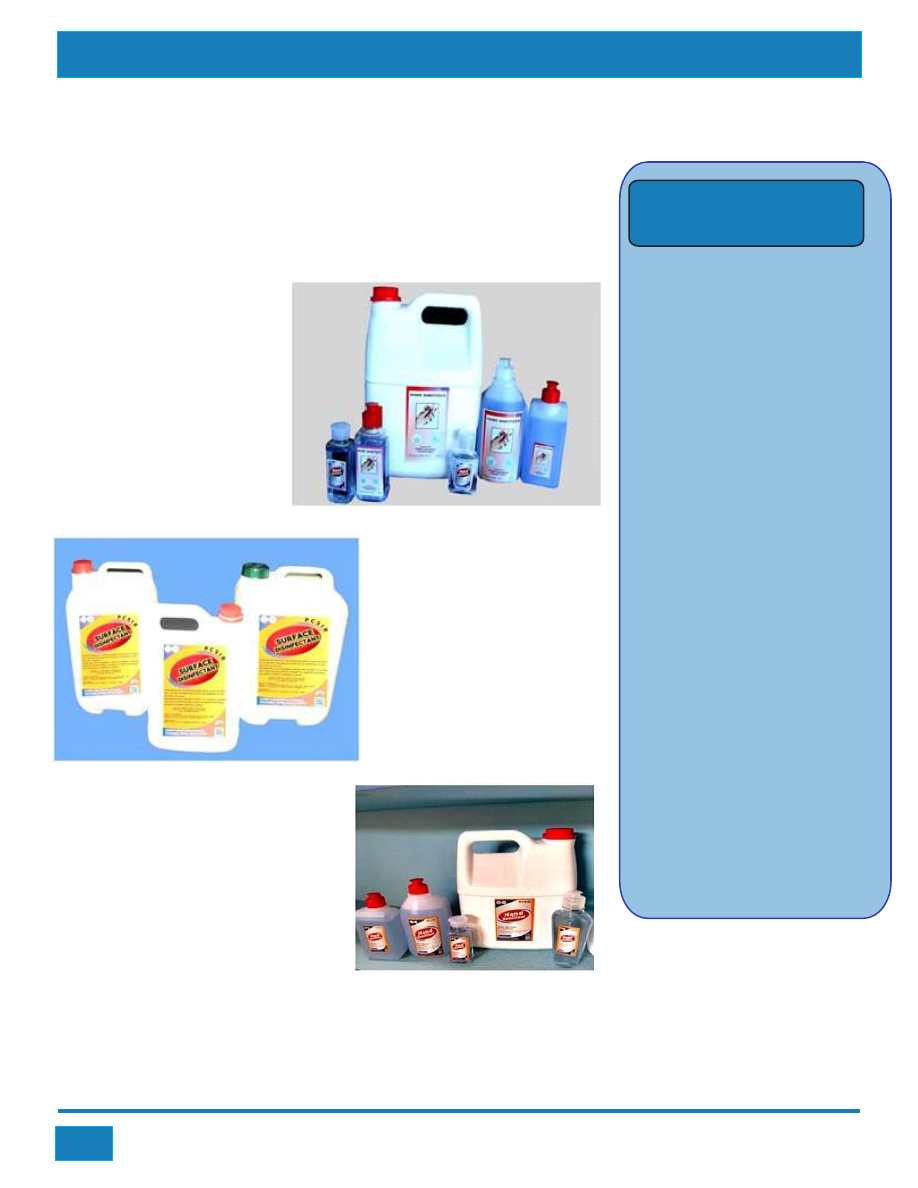
PCSIR HAND SANITIZER & SURFACE
DISINFACTANT
PCSIR OFFERS SALE OF HAND SANITIZER & SURFACE
DISINFECTANT FOR PUBLIC AND ORGANIZATIONS
P a k i s t a n C o u n c i l o f
Scientific and Industrial
Research (PCSIR) Lahore
under Ministry of Science
a n d T e c h n o l o g y ,
Government of Pakistan,
has started sale of Hand
S a n i t i z e r & S u r f a c e
Disinfectant for public
Organizations.
Hand Sanitizer price is 60
ml @ Rs 100, 100 ml @ Rs
170/-, 200 ml @ Rs 320/-,
500 ml @ Rs 700/-, 1L @
1300 5L @ Rs 5000.
Surface Disinfectant price is
5 L (3X) @ Rs 500, 10 L
(3X) @ Rs 700, 5 L (10X )
@ Rs 1900, 10 L (10X) @
Rs 3750 16 L (10X) @ Rs
6000
.
Contact us:
PCSIR Labs Complex, Lahore.
Email:llcpcsir@gmail.com
Technology Roundup
Please give us your feedback and address queries to tis.pastic@gmail.com
10